





LOUISE GIOVANELLI
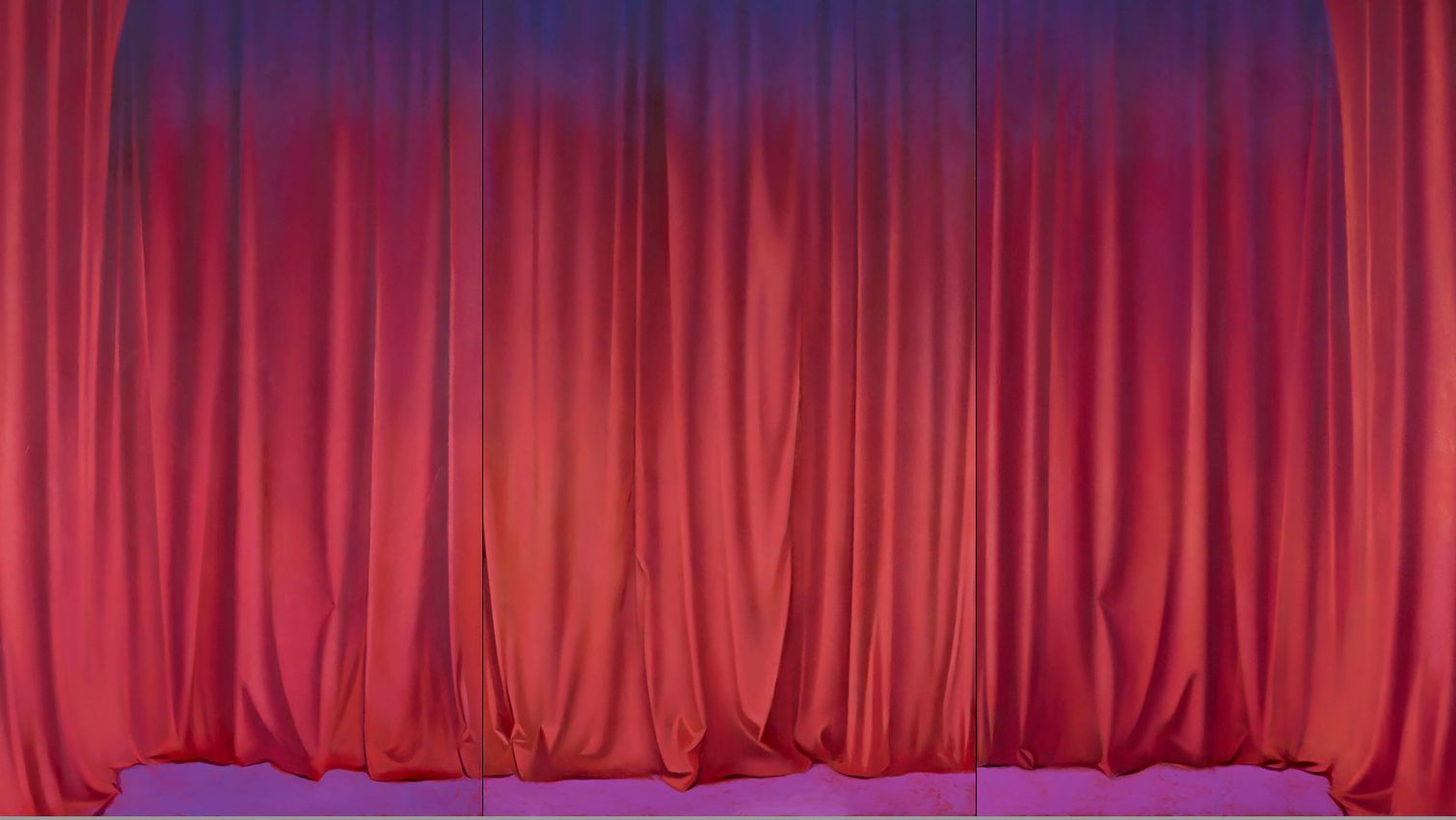
b. 1993, United KingdomLouise Giovanelli creates luminous, delicate works that reference sources from the Renaissance to movie stills. Walking the tightrope between abstraction and figuration, she examines how paint can convey meaning and how the way images are created influences how an audience looks at them.
Early Years
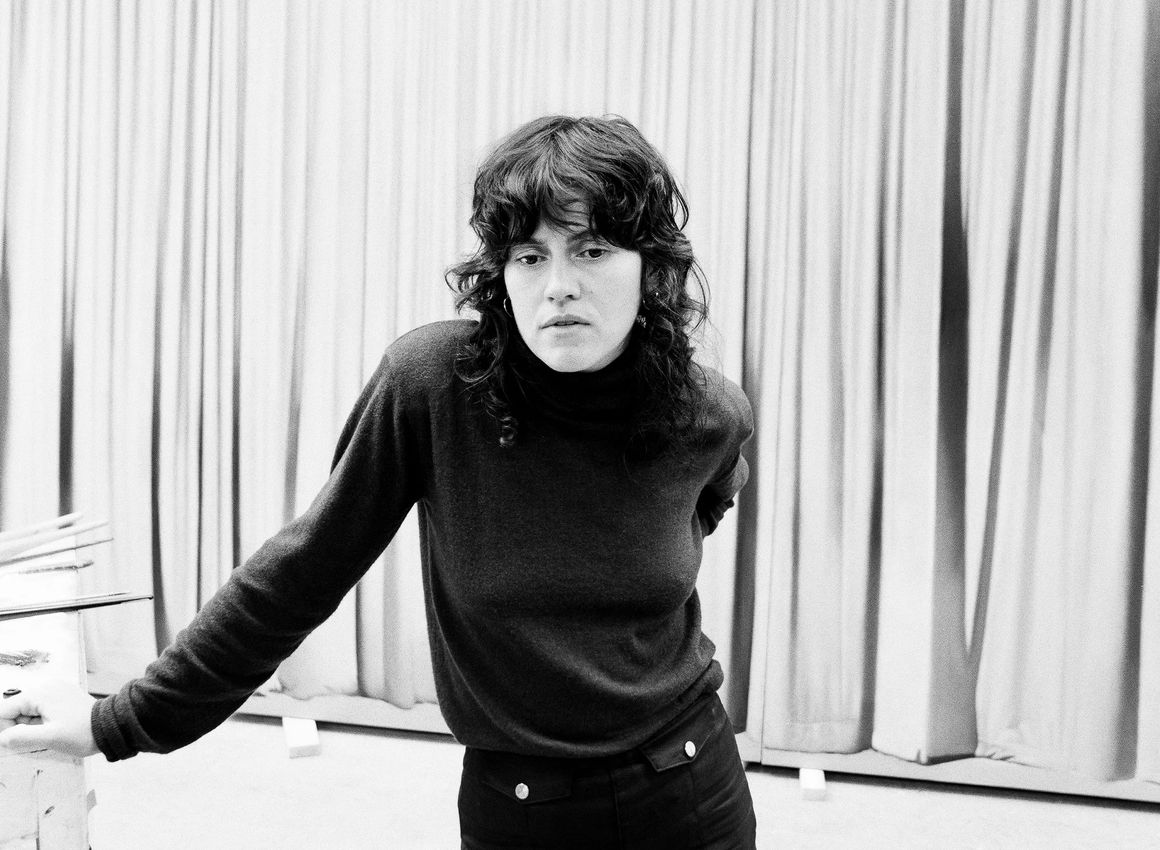
Louise Giovanelli was born in London in 1993 but brought up in Monmouth in Wales. Her Irish mother was a nurse and her Italian father a building surveyor. She was raised Catholic, and spending time in churches would influence her later artistic practice. She graduated from Manchester School of Art with a BA in fine art in 2015 and completed her postgraduate studies at Städelschule, where her professor was Amy Sillman.
Louise Giovanelli: Artworks
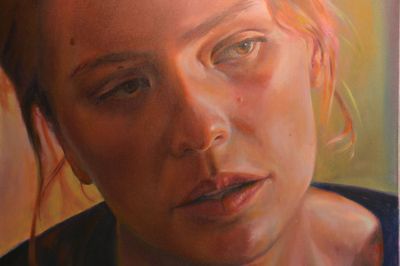
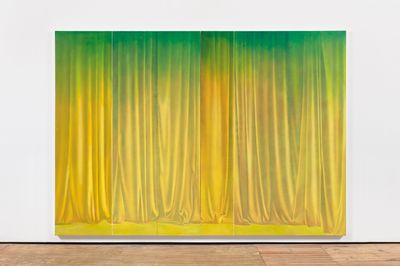
Taking inspiration from religion, movies and Western art history, Louise Giovanelli’s works centre patterns and textures, inviting the viewer to slow down, take stock and examine the effects she has created. She depicts complex, luminous surfaces—such as curtains and shiny hair—with glowing qualities. Speaking in 2025, she discussed how the history of art had introduced her to the “alchemy” of oil paint. “I learned from the Old Masters how to try and render these things,” she said. “How does this artist manage to capture velvet, fur or shiny things like cutlery and jewellery? Part of why we’re drawn to these paintings is because there’s a kind of disbelief – paint is just mud. That is a type of magic.” Light is a key element of her practice: she creates glowing effects, which she attributes partially to the iconography of Catholicism but also to modern ideas of devotion (going to a gig, for example).
- Host (2020) is a great example of Giovanelli drawing from art history: she reworks a detail from The Mocking of Christ (Fra Angelico, 1440–1441). St Dominic’s face is rendered through a diffused lens, created using small pieces of pigment on the surface of the painting.
- In 2022’s Consumer, a wine glass rests between slim fingers. This pointillist-style piece focuses on the detail, but whose fingers are they? It turns out they belong to Joanna Lumley’s character from Absolutely Fabulous, Patsy Stone.
- Altar (2022) is inspired by the classic horror movie Carrie. Giovanelli creates a shimmering luminosity to the flow of blood, as if this is a photo taken in a nightclub.
Louise Giovanelli: Select Exhibitions
Select Solo Exhibitions
- In the Light of False Suns, Mason’s Yard, London (2026)
- Louise Giovanelli: From here to here to here, Grundy Art Gallery, Blackpool (2026)
- Still Moving, Grimm, New York City (2025)
- A Song of Ascents, The Hepworth Wakefield (2024) (and touring)
- Louise Giovanelli: Paintings 2019–2024, He Art Museum, Foshan (2024)
- Here on Earth, White Cube Hong Kong (2024)
- Always Different, Always the Same, Moon Grove, Manchester (2023)
- Soothsay, Grimm, New York City (2023)
- As If, Almost, White Cube, London (2022)
- Auto-da-fé, Grimm, New York City (2021)
- A Priori, Grimm, Amsterdam (2020)
- in medias res, Workplace, London (2020)
- Aerial Silk, Grimm_, New York City (2020)
- Time Inside, Frutta Gallery, Rome (2019)
- Louise Giovanelli, Manchester Art Gallery (2019)
- Louise Giovanelli, Workplace Foundation, Gateshead (2019)
- A Throw to the Side, Warrington Museum and Art Gallery (2018)
- Slow to Respond, Touchstones Gallery, Rochdale (2016)
- From Here to Here (part 1 and 2), The Grundy Gallery, Blackpool (2016)
- Prima Donna, The International 3, Salford (2016)
Select Group Exhibitions
- In Celebration of Shadows, Grimm Gallery, New York City (2026)
- JEM, Sim Smith, London (2025)
- Immortal Apples, Eternal Eggs, Hastings Contemporary (2024)
- Self-Portraits, Grimm, New York City (2024)
- In New York, Thinking of You, Flag Art Foundation, New York City (2023)
- The Belly and the Guts, Alice Amati, London (2023)
- The Embodied Spirit, White Cube Seoul (2023)
- Women of Now: Dialogues of Memory, Place and Identity, Green Family Art Foundation, Dallas (2022)
- Love is the Devil: Studies after Francis Bacon, Marlborough, London (2022)
- Reflections, Part 1, Female Figures by Women Artists, Workplace, London (2021)
- Mixing It Up: Painting Today, Hayward Gallery, London (2021)
- Someone said that the world’s a stage, Grimm, New York City (2021)
- El oro de los tigres, Air de Paris, Romainville (2020)
- Statue, Frutta Gallery, Rome (2019)
- Touching from a Distance, The Conduit, London (2019)
- Städelschule: Rundgang, Städelschule, Frankfurt (2019)
- Hold your tongue, Louise Giovanelli and Pius Fox, Transition Gallery, London (2018)
- One flew east, Louise Giovanelli and Jenny West, CBS Gallery, Liverpool (2018)
- In Residence, The Griffin Gallery, London (2017)
- UK Ones To Watch, Sarow Galerie, Pforzheim (2015)
Further Reading
- Louise Giovanelli’s Instagram
- 2025 interview in AnOther
- Artist profile page at Grimm Gallery
- Artist profile page at White Cube
Louise Giovanelli FAQs
Did Louise Giovanelli put a curtain on a church?
In November 2025, Louise Giovanelli’s first public commission saw her cloak the 300-year-old St Mary le Strand church in central London in a composite image of a draped, shimmering curtain. Marking the pedestrianisation of the area around the church, which made it truly publicly accessible for the first time in decades, the artwork, Decades, featured six cut-outs, revealing the effects of pollution on the building. The name Decades came from the Joy Division song that was playing when she photographed the inspiration for the piece at Denton Working Men’s Club in Manchester.
How important are curtains to Louise Giovanelli’s artistic practice?
Curtains are a central theme in Giovanelli’s painting—“I find them just endlessly fascinating as a motif,” she said in 2025. She is interested in curtains’ repeated appearance throughout art history and also their place in modern society (theatres, working men’s clubs), as well as how they change people’s behaviour, in that when someone stands in front of curtains, they might take a selfie, or feel the need to perform: “[Curtains] give [people] a licence to be a star for a minute.”
Why does Manchester mean so much to Louise Giovanelli?
Louise Giovanelli is one of the “Ardwick Realists”: figurative artists who don’t see the need to move to London and have established a network of studios on the northern city’s Maple Industrial Estate. She is also part of the team (alongside Alice Amati and Ian Hartshorne) that set up the Apollo Painting School, a non-profit that provides arts education to students regardless of economic circumstances.
Ocula








Louise Giovanelli in Ocula Magazine






Explore and Follow Artists Shaping Contemporary Art
A respected voice in contemporary art discourse.
Focusing on ambitious storytelling and insightful art-world commentary. Ocula Magazine publishes in-depth interviews, critical essays and timely analysis on the artists, exhibitions and ideas driving the global art world.
Learn more about Ocula Magazine
Showcasing the best of the art world.
Ocula partners with galleries from around the world to highlight their artists, artworks and exhibitions. Gallery membership is by application and invitation, with each member vetted by an independent panel.
Learn more about Ocula Membership
Specialises in the sale of major artworks.
Led by a team with deep ties to the world’s leading auction houses, galleries and collectors. Ocula’s advisory team offers bespoke services to high-net-worth clients from around the world who are looking to acquire the best of contemporary and modern art.
Learn more about our team and services