





ANICKA YI
b. 1971, South KoreaAnicka Yi is an artist whose practice spans scent, bacteria, and artificial intelligence. Informed by interests in science, feminism, and philosophy, her work often involves collaborations with specialists—from biologists to theorists—resulting in immersive projects that challenge conventional categories in contemporary art.
Early Years
Born in Seoul, South Korea, in 1971, Yi immigrated to the United States as a child and grew up in California. She studied at Hunter College in New York before pursuing art more seriously in her thirties, having previously worked in fashion and advertising. Yi now lives and works in New York City.
Artworks
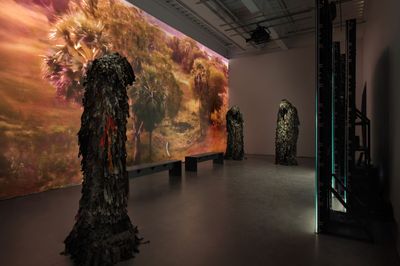
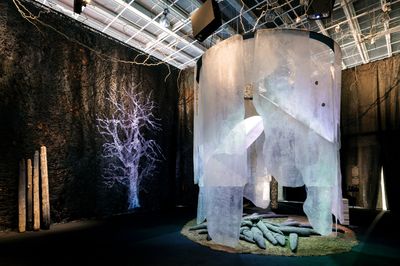
Yi’s contemporary artworks bridge organic material and synthetic systems, pushing the limits of what an artwork can be and how it can be experienced by the senses.
The Politics of Scent
Scent plays a foundational role in Yi’s early artworks, which challenge the dominance of vision in contemporary art. In You Can Call Me F (2015), she collaborated with a synthetic biologist to cultivate a unique scent from bacteria swabbed from 100 women. The resulting installation at The Kitchen in New York created a pungent atmosphere that reflected Yi’s interest in feminism, identity, and the body. By turning smell into a sculptural medium, Yi explored how scent carries both emotional memory and cultural prejudice. Her olfactory art disrupts the gallery’s traditional sensory hierarchy, opening new forms of engagement with ephemeral, affective material.
Bacteria and Biopolitics
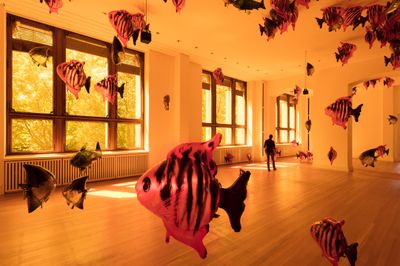
Yi’s interest in microbial life reflects a broader fascination with invisible systems of power, hygiene, and fear. Her acclaimed solo exhibition Life Is Cheap (2017) at the Solomon R. Guggenheim Museum fused biotechnology with conceptual art, incorporating living bacteria, synthetic aromas, and insect-inspired robotic elements. In one installation, live cultures from Chinatown and Koreatown were incubated and displayed, gesturing towards the racialised perceptions of contagion and foreignness. The exhibition drew from biopolitical theory to explore how invisible agents—both biological and ideological—shape contemporary life. Yi’s art here encourages viewers to confront their discomfort with decay, contamination, and the porousness of the body.
Interspecies Interfaces
Anicka Yi’s Biologizing the Machine (2019–ongoing) expands her enquiry into posthumanism and co-evolution. This body of work, presented at venues including the Venice Biennale, features animatronic devices powered by artificial intelligence that mimic the behaviours of algae, jellyfish, or bacteria. Often housed in ecosystems designed to simulate environmental interdependence, these machines perform subtle, lifelike actions that destabilise distinctions between the organic and synthetic. Yi has described these works as “living interfaces” that propose new relational models between humans and machines. Rather than portraying technology as sterile or threatening, Yi’s robotic artworks invite empathy and curiosity toward emerging forms of life.
In Love With the World, Tate Modern (2021)
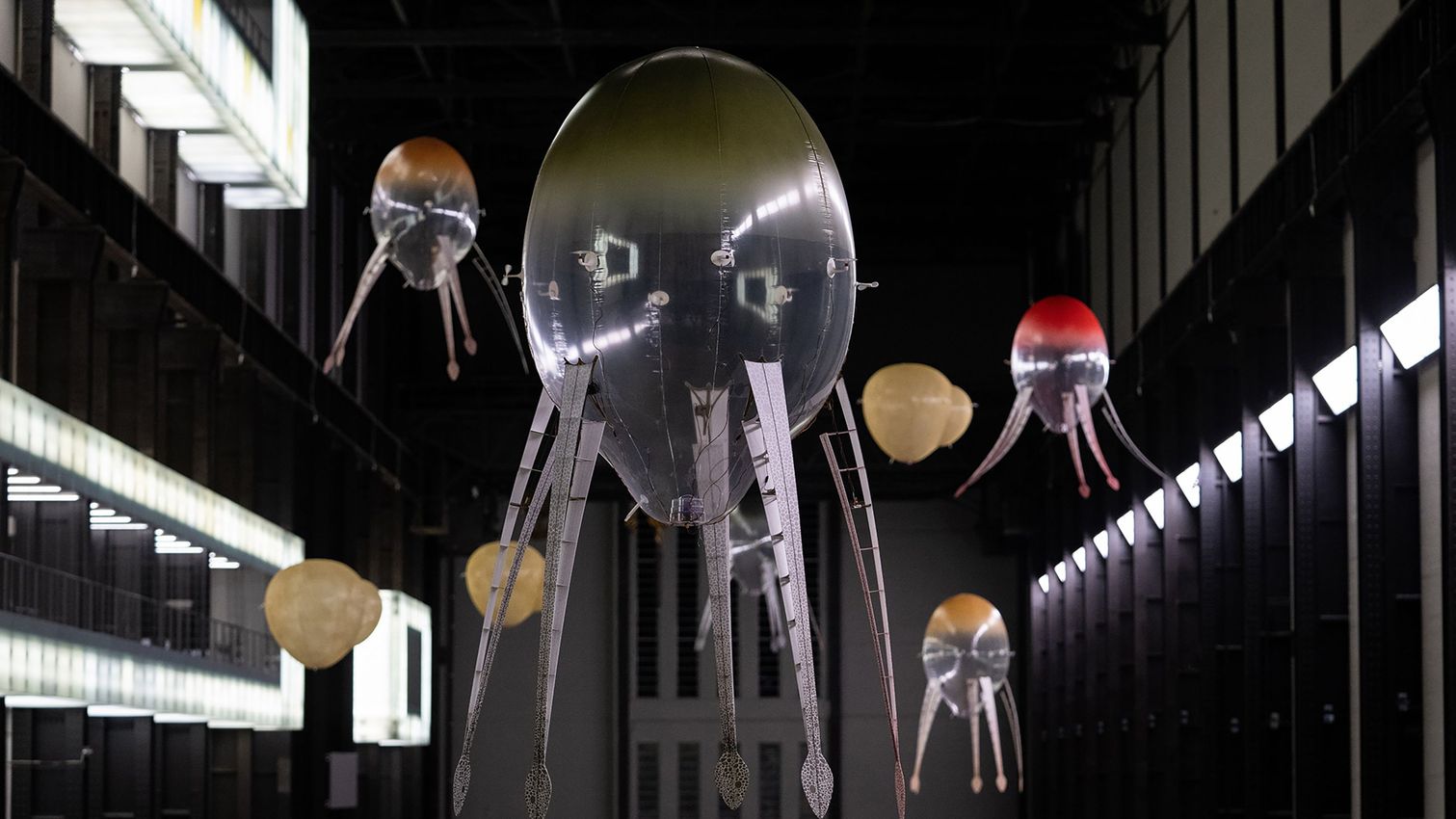
Commissioned for the Hyundai Turbine Hall Commission at Tate Modern in 2021, In Love With the World marked a major milestone in Yi’s career. For this large-scale installation, she introduced floating, self-navigating machines called “aerobes”—translucent, jellyfish-like drones that drifted through the hall’s monumental space. Designed in collaboration with engineers and scent designers, the aerobes emitted odours inspired by various historical periods of London. This multisensory artwork merged biology, history, and robotics, raising questions about how different intelligences perceive and inhabit space. In Love With the World exemplifies Yi’s ongoing mission to rethink contemporary art through the lens of coexistence and nonhuman subjectivity.
Awards and Accolades
- Hugo Boss Prize (2016)
- Louis Comfort Tiffany Foundation Award (2011)
Exhibitions
Anicka Yi exhibitions have been held at important institutions, including:
Solo Exhibitions__
- There Exists Another Evolution, But In This One, Leeum Museum of Art, Seoul (2024), which travelled to UCCA Center for Contemporary Art, Beijing (2025)
- Anicka Yi: Metaspore, Pirelli HangarBicoca, Milan (2022)
- In Love With The World, Hyundai Commission, Turbine Hall, Tate Modern, London (2021)
- Jungle Stripe, Fridericianum, Kassel (2016)
- 7,070,430K of Digital Spit, Kunsthalle Basel, Basel (2015)
- 6,070,430K of Digital Spit, List Visual Arts Center, MIT, Cambridge, Massachusetts (2015)
- Death, Cleveland Museum of Art, Cleveland, Ohio (2014)
Group Exhibitions
- Whose Forest, Whose World, Daegu Art Museum, Seoul (2024)
- AVANT L’ORAGE, Bourse de Commerce, Pinault Collection, Paris, France (2023)
- Mountain/Time, Aspen Art Museum, Aspen (2022)
- Catastrophe and Recovery, Museum of Modern and Contemporary Art, Seoul (2021)
- New Order: Art and Technology in the Twenty-First Century, Museum of Modern Art, New York (2019)
- May You Live in Interesting Times, 58th Venice Biennale (2019)
- The Eighth Climate (What Does Art Do?), 11th Gwangju Biennale (2016)
Website and Instagram
Anicka Yi’s website can be found here, and her Instagram can be found here.
Critical Reception
Anicka Yi’s practice has been widely reviewed in leading publications including ArtReview, Frieze, and The Guardian. Speaking to Ocula Magazine in 2024, Anicka Yi explains: ‘Engaging with uncertainty can spark creativity and freedom, helping us navigate an ever-changing world.’
Anicka Yi FAQs
What materials does Anicka Yi use in her artworks?
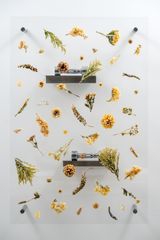
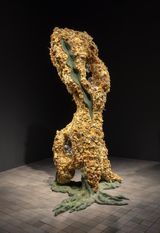
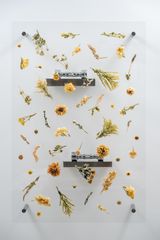
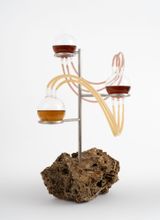
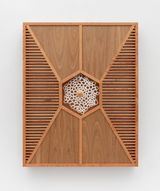
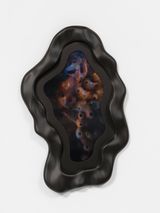
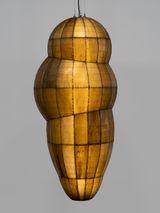
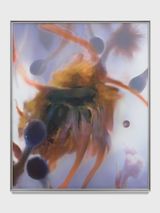
Anicka Yi is known for her innovative use of unconventional materials in contemporary art, combining organic matter with synthetic technologies. Her artworks incorporate bacteria, tempura-fried flowers, kombucha leather, synthetic scents, animatronic machines, and artificial intelligence systems. These materials are often selected for their ephemeral or “living” properties, aligning with Yi’s interest in transformation and sensory experience. By blending biology and technology, Yi challenges traditional definitions of sculpture and installation, offering a radical rethinking of what contemporary art can be and do.
Why is scent important in Anicka Yi’s art?
Scent is central to Anicka Yi’s conceptual practice, allowing her to bypass the visual dominance of the contemporary art world. She uses scent to evoke memory, identity, and cultural perception—areas often inaccessible through sight alone. In works like You Can Call Me F, she explores how smell can reinforce or disrupt societal biases, particularly around gender and race. For Yi, olfactory art creates a visceral, nonverbal connection with viewers, inviting new sensory modes of understanding in gallery and museum contexts.
What is the concept behind the aerobes at Tate Modern?
The aerobes created for Anicka Yi’s In Love With the World at Tate Modern are floating, scent-emitting machines that resemble translucent jellyfish. These autonomous, balloon-like drones were programmed to navigate the airspace of the Turbine Hall, dispersing scents inspired by different eras of London’s history. Yi designed the aerobes to prompt viewers to imagine life from a nonhuman perspective, blurring the boundaries between machine, biology, and environment. The project expands on her interest in posthumanist ideas and the potential for interspecies empathy in contemporary art.
Anna Dickie | Ocula | 2025
View Anicka Yi's Artworks



















Explore Anicka Yi's Exhibitions









Anicka Yi in Ocula Magazine








Explore and Follow Artists Shaping Contemporary Art
A respected voice in contemporary art discourse.
Focusing on ambitious storytelling and insightful art-world commentary. Ocula Magazine publishes in-depth interviews, critical essays and timely analysis on the artists, exhibitions and ideas driving the global art world.
Learn more about Ocula Magazine
Showcasing the best of the art world.
Ocula partners with galleries from around the world to highlight their artists, artworks and exhibitions. Gallery membership is by application and invitation, with each member vetted by an independent panel.
Learn more about Ocula Membership
Specialises in the sale of major artworks.
Led by a team with deep ties to the world’s leading auction houses, galleries and collectors. Ocula’s advisory team offers bespoke services to high-net-worth clients from around the world who are looking to acquire the best of contemporary and modern art.
Learn more about our team and services