





A Haunted Night Bus Ride Through Bangkok with Koki Tanaka
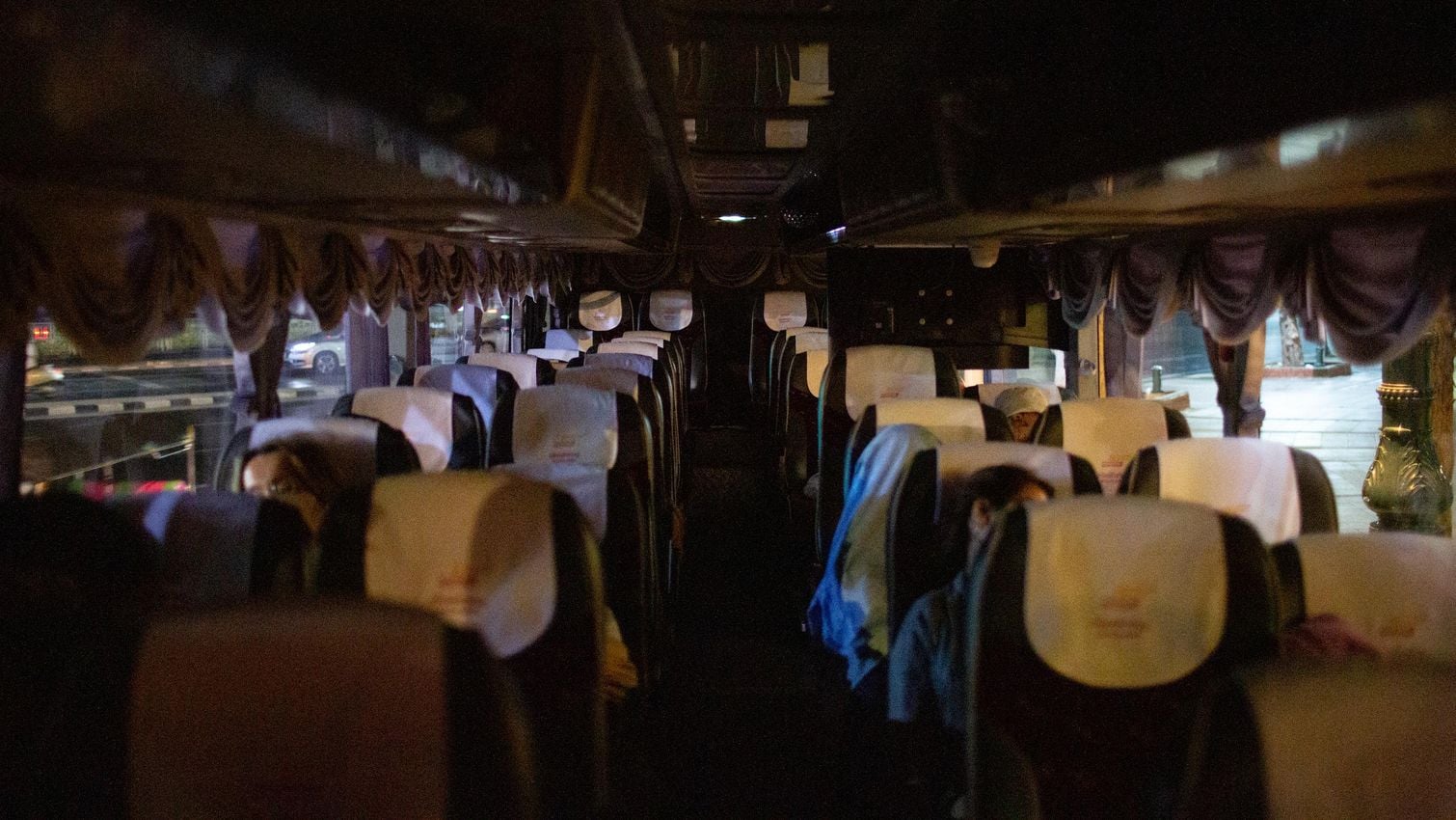
The artist’s dreamlike installation for the latest edition of the Ghost triennial revisits his 2022 bus journey through the city’s symbolic centres of power to confront how we engage with political history. Save to My OculaAmong the most talked-about works at Ghost2565 in 2022 was a 12-hour night bus tour across Bangkok, with passengers guided through exercises in dreaming and bodily consciousness. It was the Japanese artist Koki Tanaka’s Eating an Apple While Lucid Dreaming (2022): a performance staged only twice during the triennial. For some time, I searched for more information—reviews, images, anything beyond the artist’s brief note—but to no avail. For a work so intriguing, its total untraceability felt eerily haunting, leaving me with a sense of unfinished business.
I first heard of Ghost—the Bangkok-based triennial series, which focuses on performance and video art—in 2018 through friends who were travelling to Thailand for its first edition. These friends said Ghost reframed viewing as a worlding practice, bridging imported critical theory from Europe and the U.S. with Thailand’s animistic sensibility. When the second edition, Ghost2565, opened three years ago, curator Christina Li reimagined the concept through site-responsive exhibits and performances orbiting around timeworn buildings in Bangkok’s often-overlooked Chinatown.
Now, for the triennial’s third and final edition, Ghost2568, curator Amal Khalaf embraces that sensation of being haunted by the past, building atop the groundwork of prior editions—a rare gesture in perennial exhibitions, which usually dismantle what came before. Re-engaged for the final edition, Li worked once again with three returning artists, among them Tanaka.
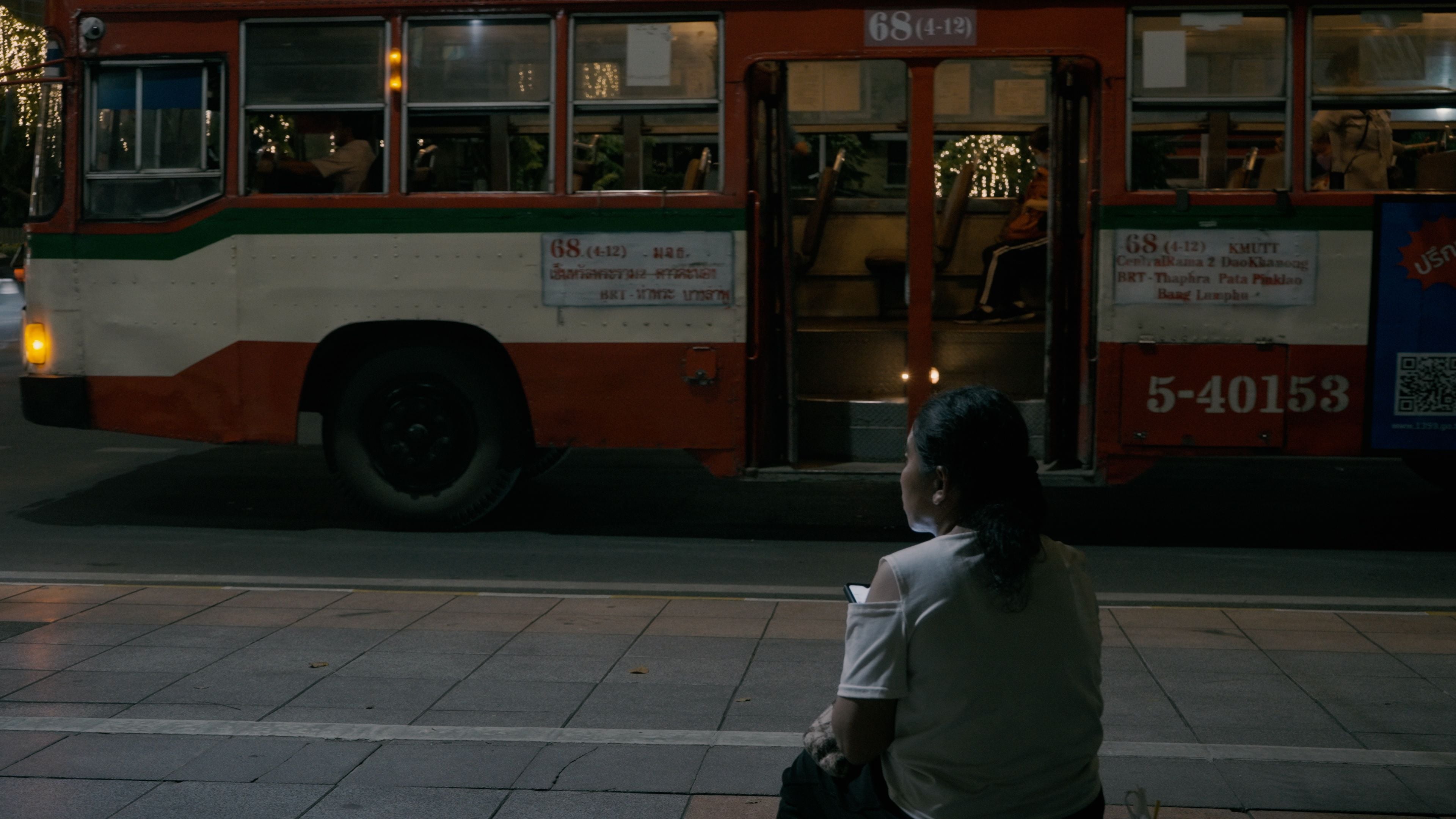
This time, Tanaka collaborated with 11 participants, or ‘hosts’, over a series of workshops, where together they retraced the 2022 bus journey with forensic care, reconstructing both the events themselves and their effects. The resulting installation occupies the former studio complex of a time-honoured film company, now part of the newly established Asvin Cultural and Contemporary Art Space. Past the untouched offices upstairs, the old editing and screening suite is filled with soundscapes collected from revisiting sites from the 2022 bus tour.


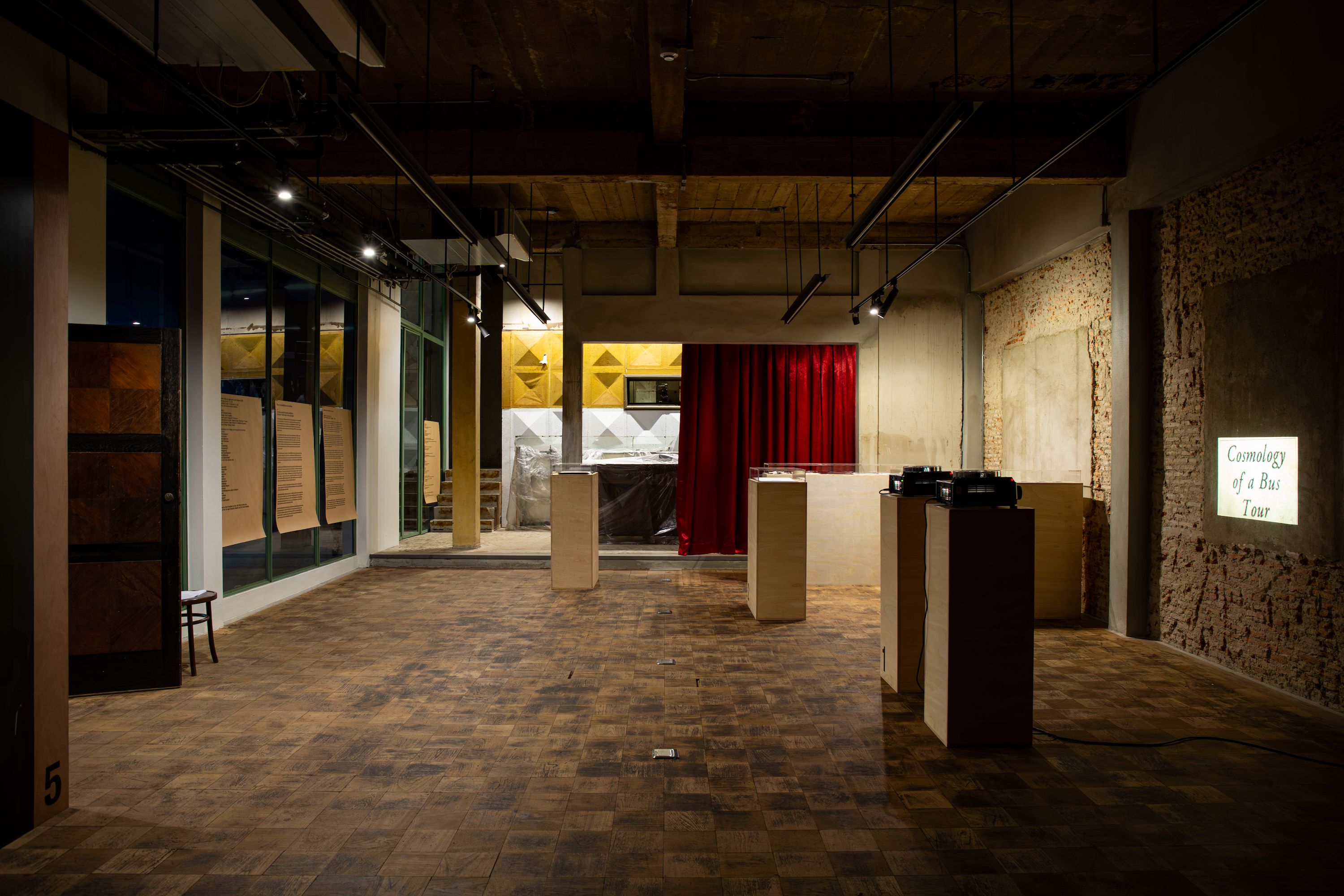
Tanaka’s project unfolds through the hosts’ attentive interpretation of diverse source materials—mixing first- and second-hand accounts, investigative diaries, found objects, and a series of Polaroids documenting the roads travelled. Rather than engage directly with the political and aesthetic histories of toured sites—often the city’s symbolic power centres, where student uprisings take place or protesters seek refuge—the 11 participating hosts brings to the fore alternative techniques for a collective dream state, perhaps reflecting a measured respect for this building’s affiliation that runs counter to its symbolism as a seat of power when it comes to the dissident commentary of local youth.
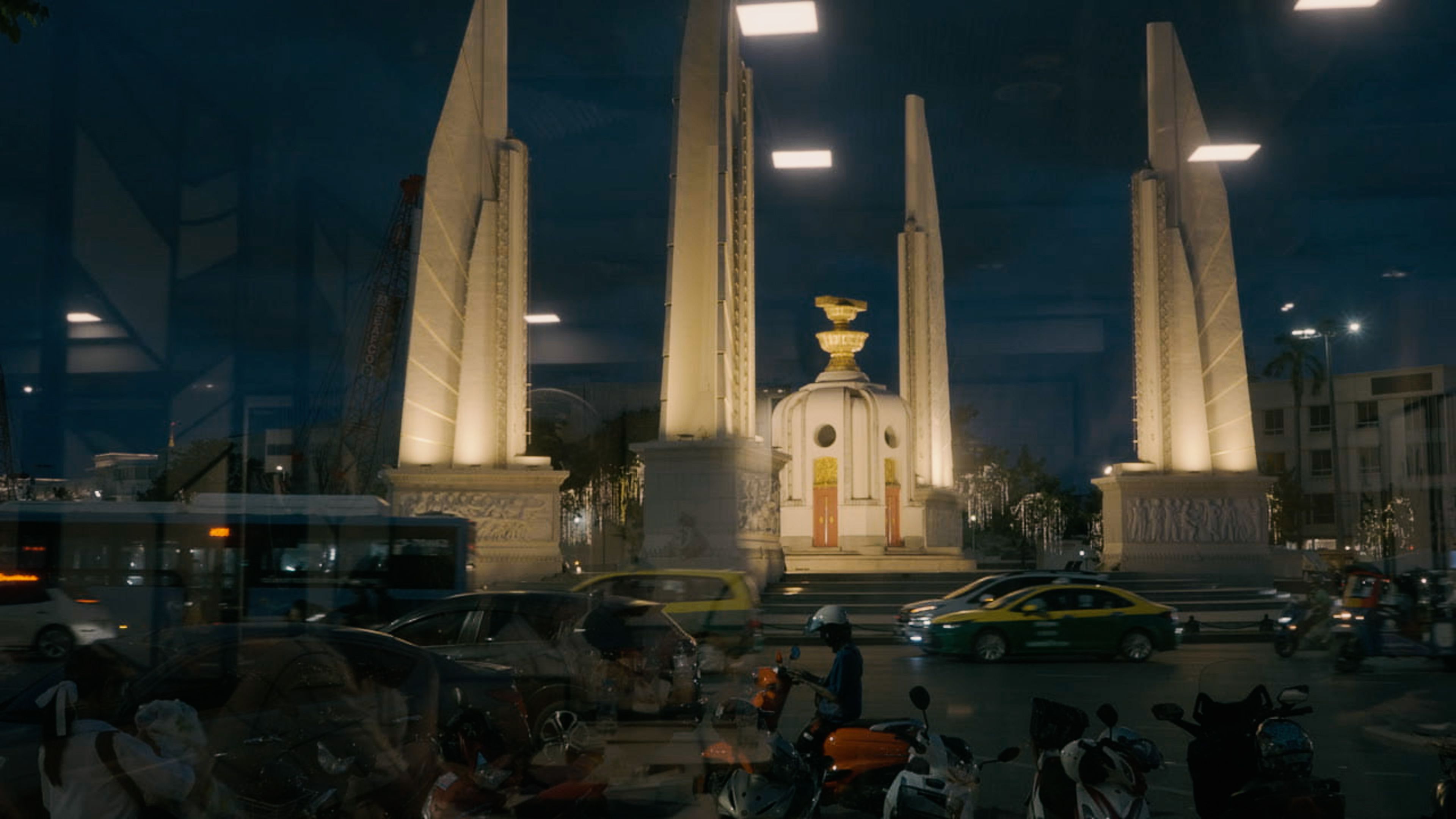
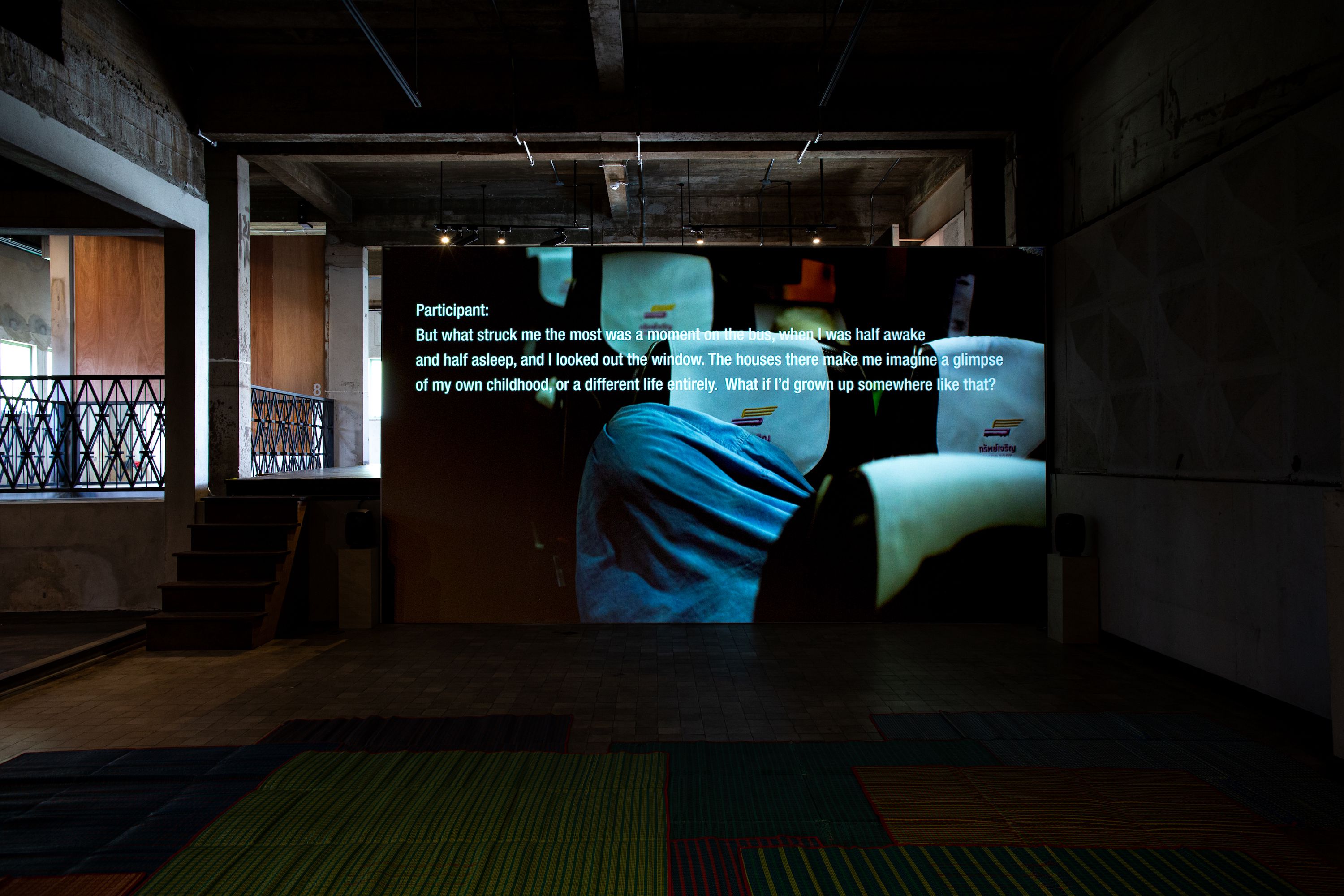
On the next floor, interviews from Tanaka’s former passengers are interwoven with reconstructed footage of the journey, culminating in the 20-minute film Eating an Apple While Lucid Dreaming 2022/2025 (Fragmented Archive) (2025). Its hypnotic montage recalls how the recurring dream—a concept central to Chris Marker’s La Jetée (1962)—gave rise to the still-image mode of cinema. In one scene, an interviewee suggests that Tanaka’s focus on the dream state might, in fact, be a form of realism—after all, ‘Thai society seems half-asleep’, suspended between democracy and authoritarianism. As the protracted bus ride lulls them to sleep, another passenger recalls waking to the same memorial, as if local politics were caught in an endless loop. The dreamlike rhythm thus becomes a way of resetting both individual and collective subjectivities, and of reimagining how to engage with political history.

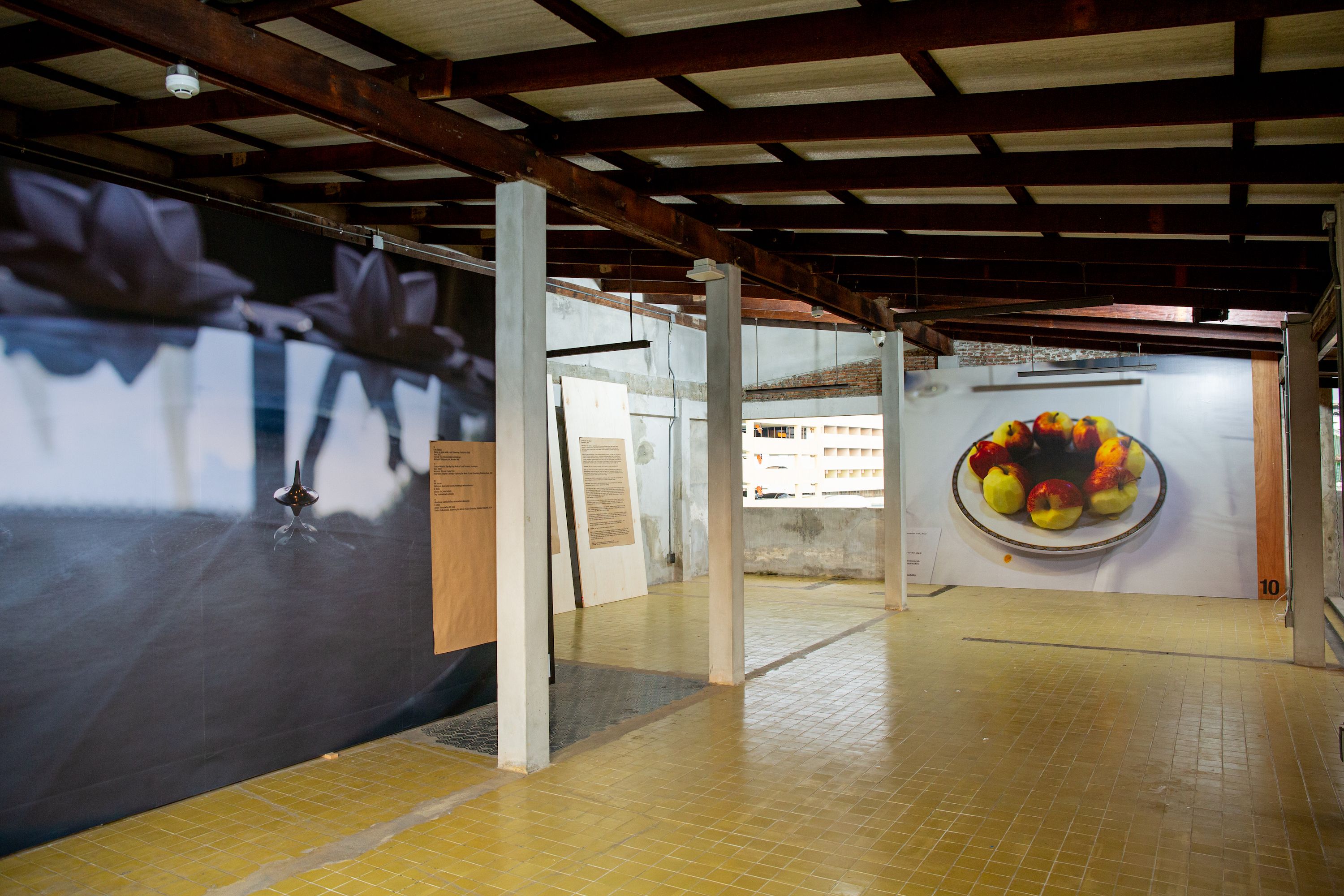
Up on the rooftop, Chinatown’s skyline unfolds alongside enlarged interview transcripts and documentary photographs turned into posters. While the dream–wake analogy inevitably recalls the recent Western discourse of ‘wokeness’—rooted in Black activism as a call for awareness and vigilance, yet later diffused through layers of popular and political reappropriation—Tanaka’s parallel reflection reclaims dreaming as a generative mode of consciousness. It reopens an aesthetic space for visitors to immerse themselves in a merging of perspectives that subtly critiques the political status quo. Across the citywide programme of Ghost2568, visitors are guided by an in-person team of voluntary ‘hosts’, who offer insight into the artworks and their varied locations based upon conversations with local community members. As hosts engage visitors at each site, questions naturally arise about their role in the Asvin presentation. In this way, Tanaka’s Lucid Dreaming, and its hallucination, remains alive. —[O]
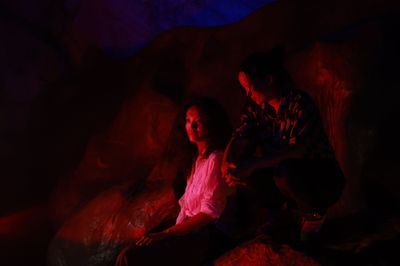
Main image: Documentation from Koki Tanaka’s Eating an Apple While Lucid Dreaming (2022). Courtesy Koki Tanaka.





A respected voice in contemporary art discourse.
Focusing on ambitious storytelling and insightful art-world commentary. Ocula Magazine publishes in-depth interviews, critical essays and timely analysis on the artists, exhibitions and ideas driving the global art world.
Learn more about Ocula Magazine
Showcasing the best of the art world.
Ocula partners with galleries from around the world to highlight their artists, artworks and exhibitions. Gallery membership is by application and invitation, with each member vetted by an independent panel.
Learn more about Ocula Membership
Specialises in the sale of major artworks.
Led by a team with deep ties to the world’s leading auction houses, galleries and collectors. Ocula’s advisory team offers bespoke services to high-net-worth clients from around the world who are looking to acquire the best of contemporary and modern art.
Learn more about our team and services