



Phantasmagorical Utopias: The Summer of Johan Creten

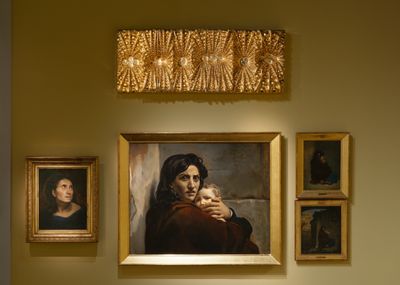
Exhibition view: Johan Creten, Jouer avec le feu, Musée des beaux-arts d'Arts d'Orléans, France (23 March–22 September 2024). Courtesy the artist and Perrotin.

Johan Creten is duly recognised this year with a suite of exhibitions in the U.S. and Europe. Paul Laster looks back on the Flemish sculptor’s illustrious career.
It’s fascinating how a chance encounter can shape the course of a life. For Johan Creten, this moment occurred in his teenage years in Tienen, Belgium.
While painting out on a street, the young Creten met a retired antiquarian couple, the Leonards, marking the beginning of an enduring friendship. He would regularly visit their home to learn about the treasure trove of art and antiques—from mediaeval bronzes and fine Baroque silver to ornate Renaissance fabrics—that filled the space.
Another event in his childhood proved pivotal: Creten has described standing up to a bully in school by frightening him with the prospect of being haunted in his dreams by a bewitching object pulled from his pocket. At that moment, he realised art could be a tool for survival.
Later, while studying painting at the Royal Academy of Fine Arts in Ghent (where his classmates included Wim Delvoye and Jan Van Imschoot), Creten discovered a nearly deserted clay studio. Encouraged by the pioneering Belgian ceramic artist Carmen Dionyse, who taught at the academy, he developed a fascination with the clay medium and began incorporating it into his paintings.


After relocating in 1986 to Paris, where he still lives and works, Creten studied sculpture at the Académie des Beaux-Arts with Georges Jeanclos, a French sculptor. He began creating root-like sculptures from clay, one of the most well-known of which is La Langue (The Tongue/Language) (1986), a complex object reflecting the relation between form and language, which was exhibited at Galerie Meyer. Throughout this exhibition, Creten brought different sculptures out at night to test the public’s response to his work outside the white box of the gallery.
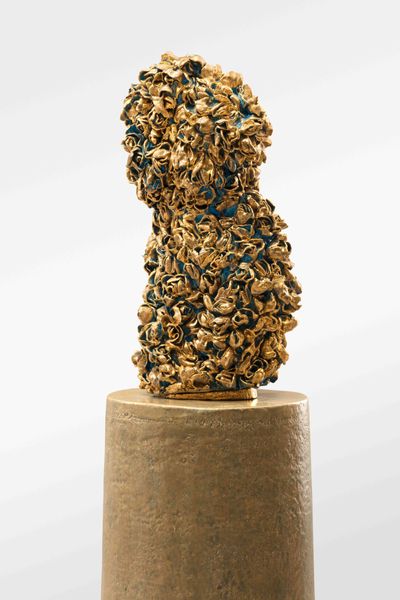
In 1990, he had his first solo show with Galerie Transit in Belgium, and the following year undertook an artist residency at the Villa Saint Clair in Sète. There, he worked on his first ‘Odore di Femmina’ series (1991–ongoing): abstract, hand-built clay figures covered in opulent lustres and patinas. Resembling a rose-covered Venus or barnacle-encrusted figure pulled from the deep sea, these torsos are among Creten’s most surreal and seductive works.
For the next 25 years, Creten travelled around Europe, Mexico, and the United States for various ceramics residencies, making works with local materials. In 2003 he was the first artist-in-residence at France’s national porcelain factory in Sèvres. He worked with craftsmen for three years, creating new work, developing a special porcelain paste for sculptors, and exploring stoneware traditions and historical glazes. David Caméo, then the factory’s director, credited Creten’s contributions to raising the status of the ceramic medium from craftwork to art. In 2005, his Sèvres works were shown at the Musée du Louvre in relation to the work of the French Renaissance ceramicist Bernard Palissy.

Creten’s role in the revival of modern ceramic art is duly recognised this year, with a suite of solo exhibitions dedicated to the artist in New York and France, as well as several group shows in Europe and the U.S.
The symbolist sculptor continues to create some of the most compelling works in clay while adding many bronzes to his dynamic body of work. Though a master of painterly and sculptural techniques, if Creten doesn’t know how to do something, he will either learn it or employ a skilled craftsperson.

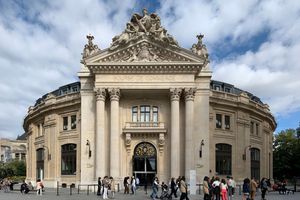
The exhibition Johan Creten: Jouer avec le feu (Playing with fire) at the Musée des beaux-arts d’Arts d’Orléans features 11 monumental bronzes sited around the museum and Orléans’ Gothic cathedral, including the iconic De Vleermuis (The Bat) (2014–19), an idiosyncratic large-scale bronze sculpture that, unlike most works of art, encourages visitors to touch and climb it via a staircase integrated into its back.
In the museum, 75 drawings spanning the artist’s 40-year career are displayed on the walls and in vitrines, while 30 other bronze and ceramic sculptures are seen in dialogue with the museum’s historical collection.
In Clisson, France, Creten’s phantasmagorical survey at the Domaine de La Garenne Lemot, Les Fabriques ou la Rage des Utopies (The Factories or the Rage of Utopias), showcases nearly 80 ceramic and bronze works spread throughout the rooms of the Villa Lemot and its surrounding gardens.
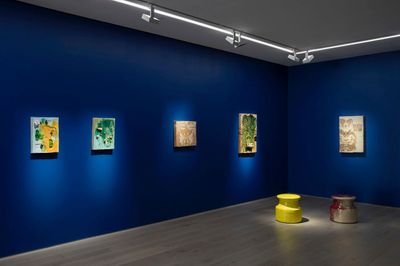
Creten’s Alfred Paintings (2013), a series of wall-mounted three-dimensional ceramic works made during a residency at Alfred University in New York, are among the more whimsical works on view. With surprising cracks, bubbles, and warped surfaces, these marbled clay pieces embody the ravages of time and an exploration of the human spirit. On the quirky, glazed stoneware stools entitled Observation Points (2014–ongoing), visitors can sit and contemplate his ideas at play.

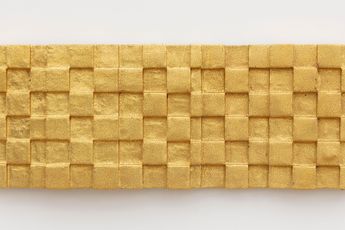
Strangers Welcome, Creten’s solo exhibition at Perrotin New York transports a variety of mythical creatures, lustrous gold forms, and circus-style stools from his acclaimed exhibition, Le Cœur qui déborde (An overflowing heart) (2023) at the Beaulieu-en-Rouergue Abbey in the forests of southwest France to the gallery’s New York space. Complete with floor-to-ceiling photographic views of the show at the abbey, the display includes large, glazed stoneware seahorses on circular ceramic pedestals, a bronze mermaid patinated with the sparkle of the Mediterranean Sea, and shiny gold-glazed ceramics that hint at architectural elements, underwater creatures, and erotic body parts, while projecting a heavenly glow into a different sort of sacred space.
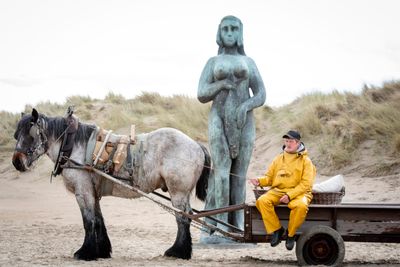
Creten has described beauty as ‘a lubricant’ in his practice, a tool that ‘can help convey difficult meaning.’ He may spend extended periods in the research and development phase, completing sketches and maquettes before realising a finished piece—reflecting his nature to work slowly and meticulously, whether in clay or bronze. Earlier this year The Herring (2022–23), a five-metre-tall bronze that took almost 20 years to develop, was permanently installed on the beach of Koksijde, Belgium.
Admired for his mining of mythologies, impeccable craftsmanship, and poetic interpretations of the human condition, Creten continuously advances his art and storytelling while inviting viewers to encounter his abundant universe. —[O]
Johan Creten: Strangers Welcome is on view at Perrotin, New York, until 26 July 2024. Jouer avec le feu is on view at the Musée des beaux-arts d’Orléans, France, until 22 September 2024; Les Fabriques ou la Rage des Utopies is on view at Domaine de la Garenne Lemot, France, until 29 September 2024.
Main image: Exhibition view: Johan Creten, Jouer avec le feu, Musée des beaux-arts d'Arts d'Orléans, France (23 March–22 September 2024). Courtesy the artist and Perrotin.






A respected voice in contemporary art discourse.
Focusing on ambitious storytelling and insightful art-world commentary. Ocula Magazine publishes in-depth interviews, critical essays and timely analysis on the artists, exhibitions and ideas driving the global art world.
Learn more about Ocula Magazine
Showcasing the best of the art world.
Ocula partners with galleries from around the world to highlight their artists, artworks and exhibitions. Gallery membership is by application and invitation, with each member vetted by an independent panel.
Learn more about Ocula Membership
Specialises in the sale of major artworks.
Led by a team with deep ties to the world’s leading auction houses, galleries and collectors. Ocula’s advisory team offers bespoke services to high-net-worth clients from around the world who are looking to acquire the best of contemporary and modern art.
Learn more about our team and services