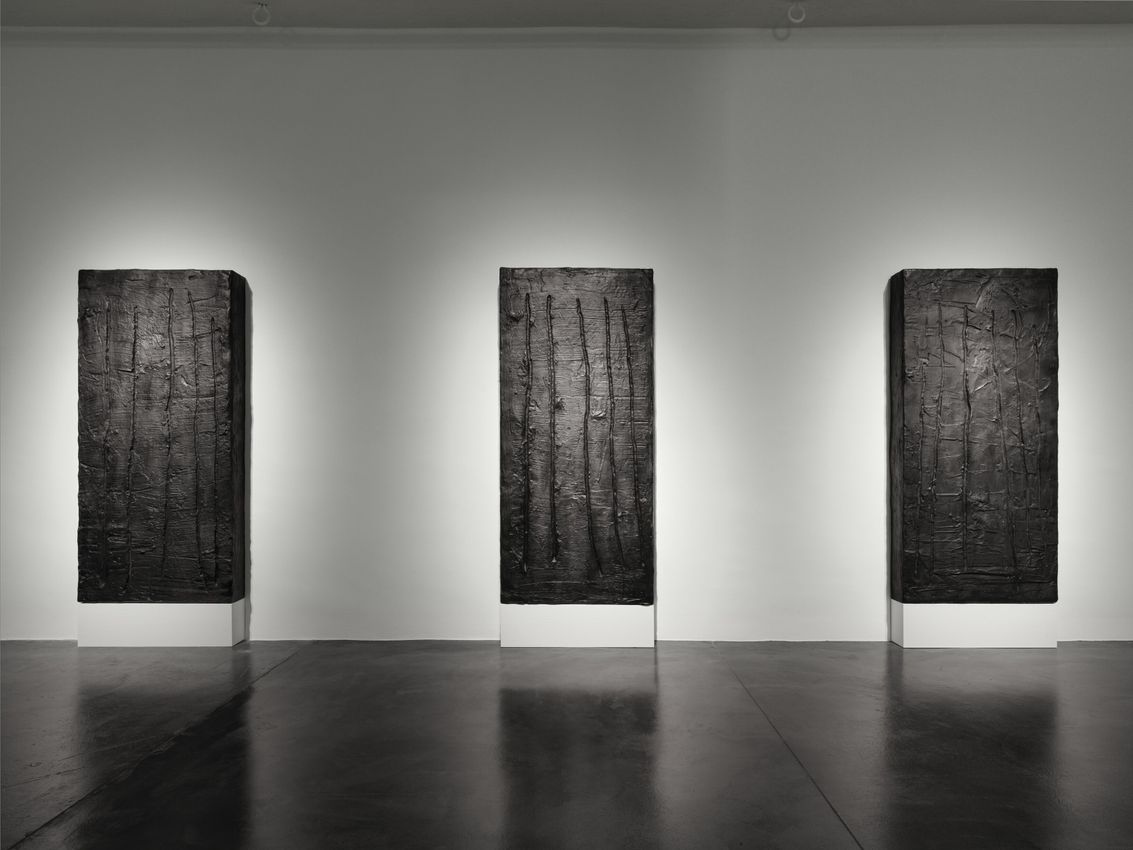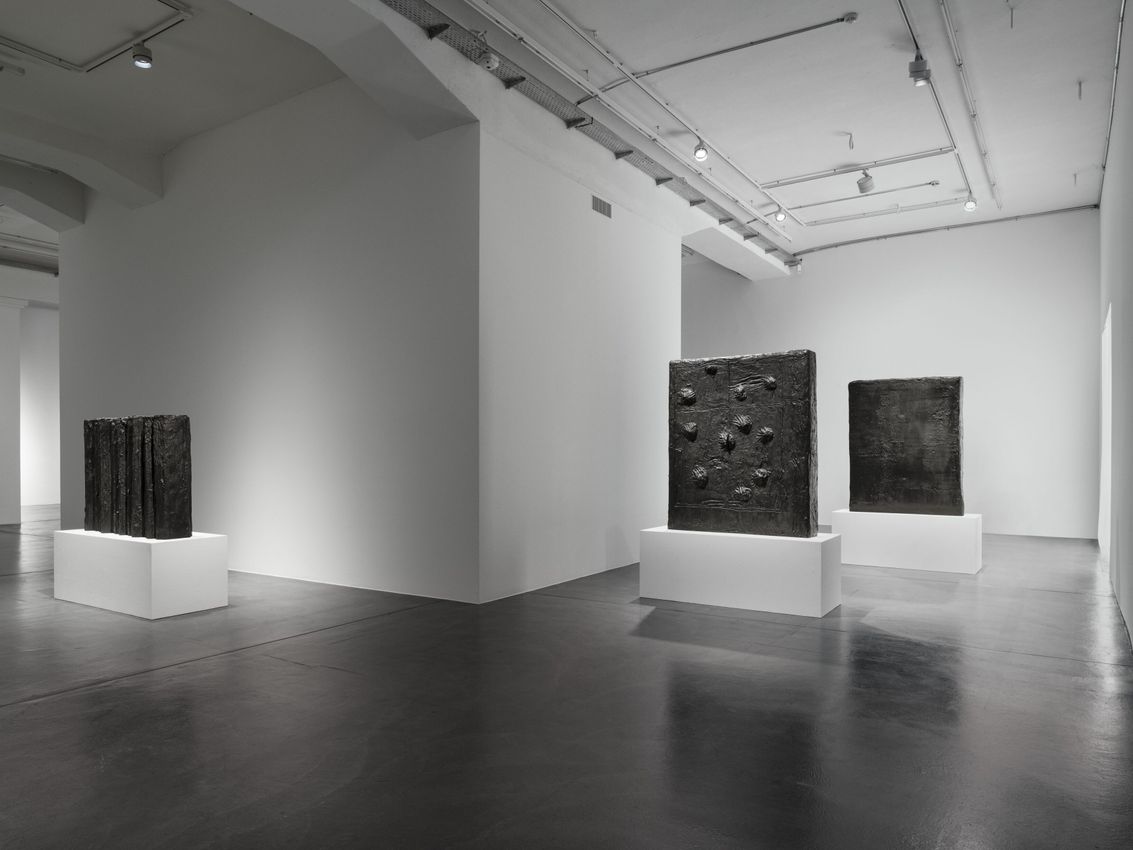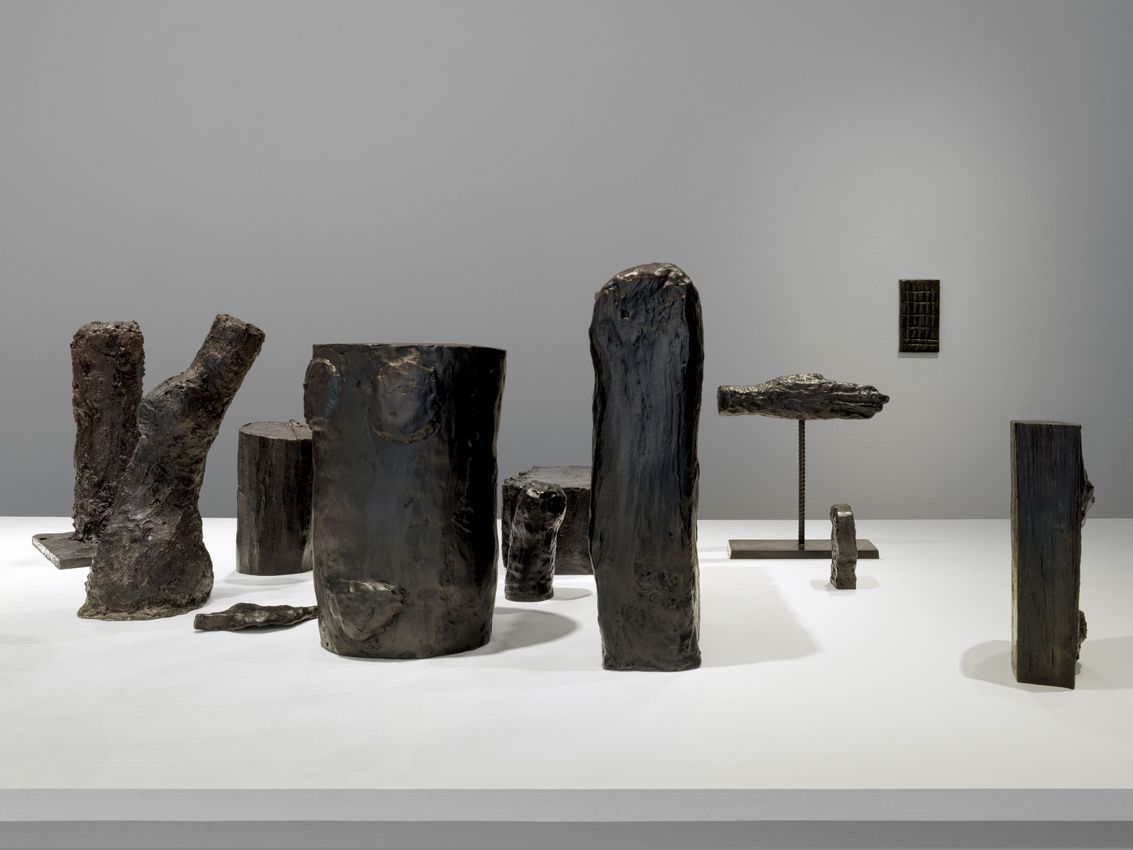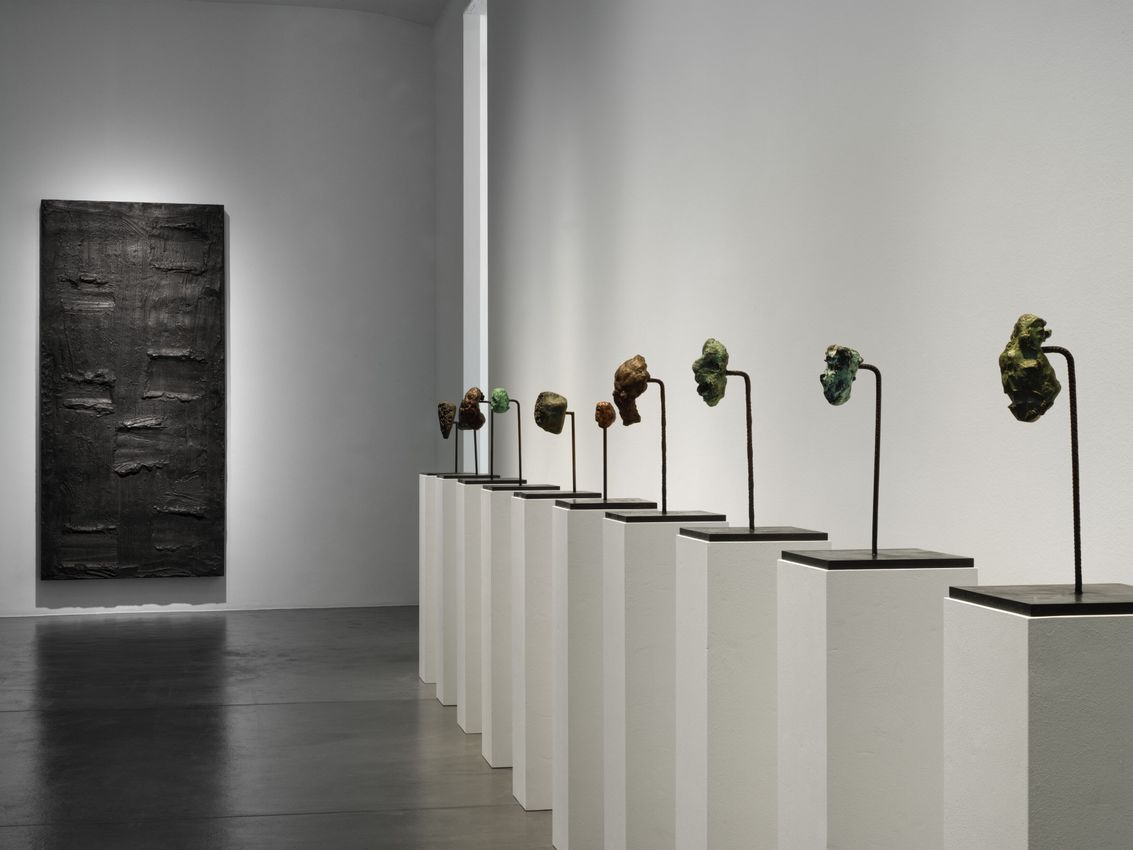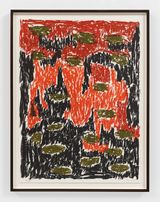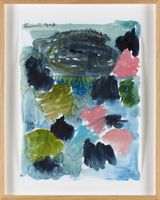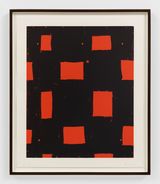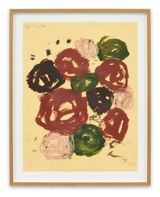


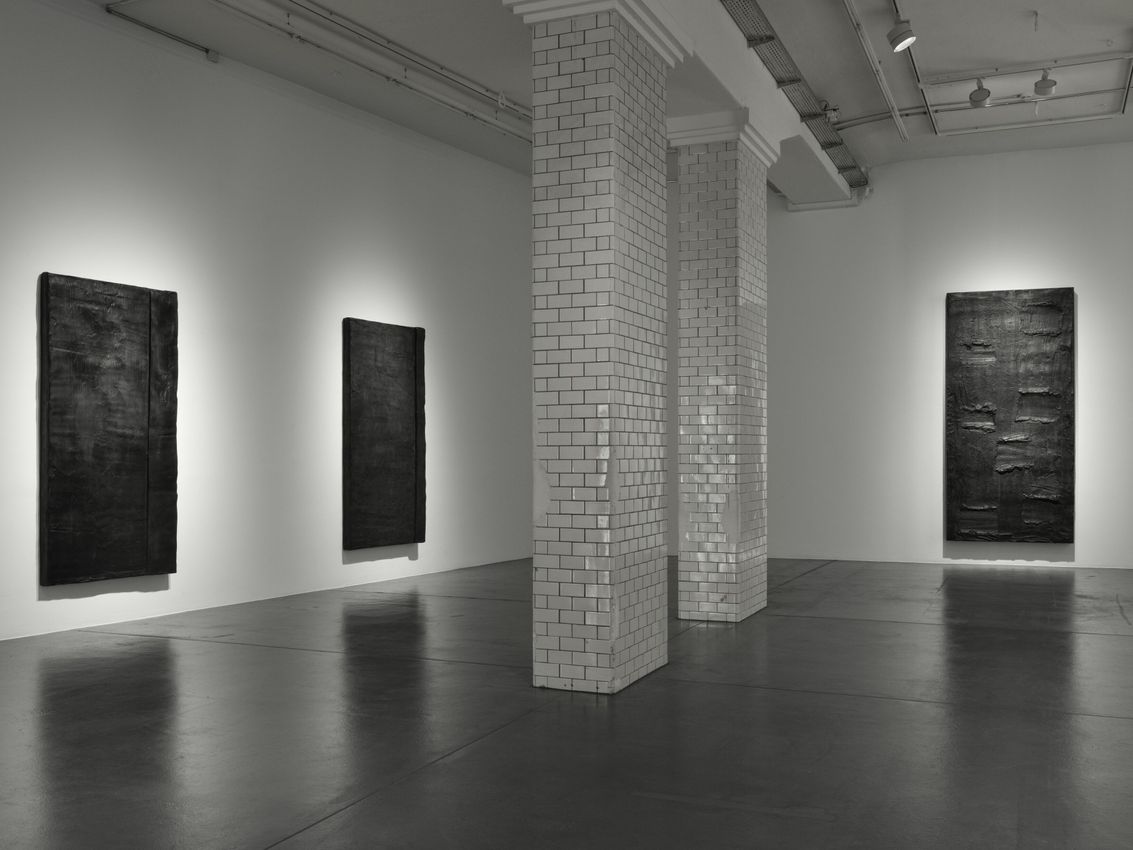
A survey exhibition of Günther Förg‘s sculptures, titled surface of bronze, opens at Hauser & Wirth Zürich, focusing on this artist’s work from the mid 1980’s through to 2008. The exhibition presents rarely, and never before seen, pieces to contextualise this important part of Förg’s multifaceted, complex and varied practice. As an artist he insistently, and resolutely, questioned and expanded upon Modernism’s formal vocabulary in a laconic oeuvre that encompassed painting, photography, drawing and sculpture. This presentation will highlight how he upturned and challenged classical bronze, translating it with his tactile, painterly and spontaneous methods. Förg’s bronze sculptures do not reflect on an aesthetic order or classical perfection but display his delight in the act of making and in the sensual presence of the work. This is evident in the depressions, scratches and imprints strewn over the surfaces of his sculptures, which vary from intimate to monumental and from reliefs to free-standing.
The exhibition charts Förg’s progression and exploration in the medium of sculpture. Inspired by his lead paintings, Förg turned to the three-dimensions in the 1980s, initially producing a suite of untitled bronze reliefs, composing the works directly with his hands in a nod towards gestural, abstract sculpting. These works display how he adapted the formal minimalist language he was utilising in his painting to his sculpture. This is clear not only in the intuitive, painterly quality of the surface, where the indentations and marks are reminiscent of a brushstroke, but in the motifs of lines, squares and rectangles-compositions that he was exploring concurrently in his lead paintings.
In 1990, Förg began to work on a series of ‘Masks’, pieces that not only tested the possibilities and limitations of material but also owed a debt to the masks of André Derain and Jean Fautrier and the technical devices of Willem de Kooning. Their gauged, rapidly worked surfaces imply destruction, they are deliberately imperfect, highlighting Förg’s interest in exploring an idea, more than in achieving an ideal of aesthetic pleasure and perfection. The palpable surfaces are smattered with Förg’s fingerprints, chance circumstances and material accidents, pushing bronze far beyond its hierarchical and classical associations. These works also invite a relationship, it is unclear whether they offer or conceal an identity, abstracting the face with no trace of personal history, they are evasive of a fixed meaning leaving us, the viewer, to decide for ourselves.
Following the masks came torsos, and later fragmented limbs, though unlike classical sculptures they do not stand for idealised or heroic humans. These weighty sculptures take on meaning when displayed, their context is contingent on their surroundings, the architecture, those that perceive them, the history, time and locale of their placement. They are without direct reference, waiting to be filled. They have a fascinating tactile urgency and unmistakable immediacy, seen in the marks that Förg left when manipulating his medium. Squeezing and caressing, working rapidly and leaving hand prints or scrapes of the palette knife before casting them in bronze, the artist immortalises his spontaneous gestures in this material replete with monumental connotations.
The next series Förg turned to, was a group of square and rectangular forms with heavily textured surfaces sitting on roughly hewn bases or rooted directly onto the floor. In 2008, he enlarged these forms to a monumental scale, perhaps befitting of his material. These works transform their surroundings, exploring mass, volume, texture and the relationship between solid matter and empty space. They assert their own independence, like ancient monoliths, leaving us to wonder what lies beneath their drapery, what they hide. Again, by asking so much of the viewer, Förg brings his sculptures to life under our gaze and through our questions.
The works in this show demonstrate the free translation of creative and formal principles, from one medium to another, and highlight the tactile and ephemeral qualities so typical of Förg within his complex, personal vocabulary that operated outside of expected hierarchies. As the artist elucidated, ‘The sculptures were already there and I tried to transfer them into painting with strong colours. It’s a procedure, incidentally, that is typical of my work. I’m always moving between disciplines. Ordinarily, you’d start by making a sketch of a sculpture before you begin work on it; I find it easier to draw a sculpture that has already been made. Maybe because I am not a sculptor.’1
1 Gavin Delahunty, Lisa Le Feuvre, Gunther Förg: A Fragile Beauty, 2018, New Haven CT, Yale University Press, p. 115
Günther Förg was born in 1952 in the region of Allgäu, Germany. His career began in the early 1970s as student at The Academy of Fine Art Munich. During his studies, Förg developed a practice grounded almost exclusively in grey and black monochrome. These early investigations into grey–also called Gitter paintings–demonstrate the beginning of a lifelong commitment to conceptualism. As he stated, ‘Grey is nothing: not white, not black. Something in between. Not concerned with the figure. Something free.’ While the artist later incorporated color into his monochrome series, his use of grey represents a neutral foundation from which he conceived his oeuvre.


Hauser & Wirth was founded in 1992 in Zurich by Iwan Wirth, Manuela Wirth and Ursula Hauser, who were joined in 2000 by Partner and Vice President Marc Payot. A family business with a global outlook, Hauser & Wirth has expanded over the past 26 years to include outposts in Hong Kong, London, New York, Los Angeles, Somerset and Gstaad. The gallery represents over 70 artists and estates who have been instrumental in shaping its identity over the past quarter century, and who are the inspiration for Hauser & Wirth’s diverse range of activities that engage with art, education, conservation and sustainability.

A respected voice in contemporary art discourse.
Focusing on ambitious storytelling and insightful art-world commentary. Ocula Magazine publishes in-depth interviews, critical essays and timely analysis on the artists, exhibitions and ideas driving the global art world.
Learn more about Ocula Magazine
Showcasing the best of the art world.
Ocula partners with galleries from around the world to highlight their artists, artworks and exhibitions. Gallery membership is by application and invitation, with each member vetted by an independent panel.
Learn more about Ocula Membership

Specialises in the sale of major artworks.
Led by a team with deep ties to the world’s leading auction houses, galleries and collectors. Ocula’s advisory team offers bespoke services to high-net-worth clients from around the world who are looking to acquire the best of contemporary and modern art.
Learn more about our team and services