





June Yap on Curating Beyond Borders
Launched in April 2012, the Guggenheim UBS MAP Global Art Initiative charted contemporary art practice across South and Southeast Asia, Latin America, and the Middle East and North Africa through a five-year programme of curatorial residencies, touring exhibitions, educational activities, and acquisitions for the Guggenheim’s permanent collection.


No Country: Contemporary Art for South and Southeast Asia was the Initiative’s inaugural exhibition. First presented at the Solomon R. Guggenheim Museum in New York (22 February–22 May 2013), the exhibition travelled to Asia Society Hong Kong Center (30 October 2013–16 February 2014) and NTU Centre for Contemporary Art Singapore (10 May–20 July 2014). Featuring artists including Shilpa Gupta, Ho Tzu Nyen, Khadim Ali, and The Propeller Group, the exhibition examined shifting creative practices across Vietnam, Cambodia, Thailand, Indonesia, Singapore, Malaysia, the Philippines, Myanmar, Bangladesh, and India.
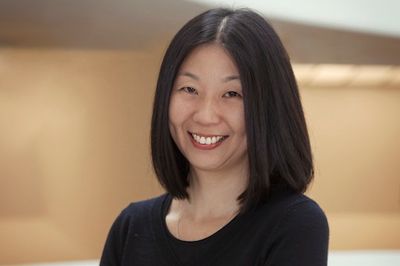
June Yap, Guggenheim UBS MAP Curator for South and Southeast Asia, organised the exhibition. A Singapore-based independent curator since 2008, Yap previously curated Ho Tzu Nyen’s presentation for the Singapore Pavilion at the 54th Venice Biennale in 2011.
Anna Dickie spoke to Yap about No Country: Contemporary Art for South and Southeast Asia, the challenges of selecting works for the exhibition, and her hopes for its legacy and impact.
“There is the other more literal level of ‘no country’ referring to borderlessness, to suggest alternative relationships within the region, relationships that we either have forgotten or that may inspire our future interactions.”
AD: The exhibition draws upon the opening line of W.B. Yeats’s poem “Sailing to Byzantium” (1928), which was later adopted by Cormac McCarthy for his novel No Country for Old Men (2005) and adapted by the Coen Brothers into their 2007 film. How does this title reflect on the works selected for the exhibition?
JY: The title works on a couple of levels. There is the intertextual reference, which is the metamorphosis of the familiar themes of existence, impermanence, morality, human pursuits, truth and fate, across the media of poem, novel and filmic adaptation, which I compare with cultural and historical influence within the region, that historically are not delineated by the countries as we know them today.
There is the other more literal level of ‘no country’ referring to borderlessness, to suggest alternative relationships within the region, relationships that we either have forgotten or that may inspire our future interactions. And finally of course the nation-state itself as the overarching global and economic framing of peoples which defines a particular worldview that I think is not inevitable.
How do you see the exhibition as exploring the notion of ‘country’?
Curatorially, for me, there always exists the question of how an exhibition might be productive at a discursive level. And in this case to demonstrate the tensions of representation, challenging and incorporating very real contradictions in the activity of portrayal and presentation that is unavoidable, and this is somewhat made visible here.
There are quite a few works in the exhibition that deal with the subject of nation, of country as homeland, country as identity, and country as historical encumbrance. These works prompt questions of how we might understand the contexts the artists are speaking from, how we take on certain depictions as inherent, and how with this we might reflect upon our own understanding of the spaces, identities and relations that we ourselves occupy.
AD: From a curatorial perspective, what were the first steps you undertook to break down the enormity of tackling ‘South and Southeast Asia’?
JY: Well, I’ve been working within the region for a while, so it was not too daunting, though naturally there would be many approaches possible. It was a matter of understanding also the nature of the project, the museum, the exhibition, the audiences, and of course the artists and artworks that could become part of this—and then somewhere in there, there is a convergence of direction and purpose that make up the exhibition.
“There are quite a few works in the exhibition that deal with the subject of nation, of country as homeland, country as identity, and country as historical encumbrance.”
AD: Tell me about the process of selecting the works for the exhibition.
JY: I was traveling for three months around the region, meeting and conversing with artists, curators, galleries, et cetera, to have a clearer picture of what was possible. Then there were the conversations within the project itself to determine what and how the exhibition might shape itself to be.
AD: How did you deal with the practical logistics of researching and exploring artwork across such a vast region?
JY: The region may be large but it is also very interesting, and in a way dealing with it is less about logistics alone, even if is a practical aspect that one can’t escape from. However, its the artworks and the artists, and what one can discover, remarkable insights and dialogues, that make it worthwhile.
The art and expressions are wonderful, they are the reason and driving force behind all exhibitions, and it is a boon that there is so much that the region offers, rather than the problem.
AD: The title is interesting in that it is Contemporary art ‘for’ South and Southeast Asia not Contemporary Art ‘of’ South and Southeast Asia. Was this a conscious choice? Why?
JY: It’s a fairly simple but deliberate turn of phrase that expresses the nature of a relation. In this case, I was interested not simply in a preposition that connected the two elements, of art and the region, but one that challenged the exhibitionary tendency to merely represent, to push it further to one demonstrating engagement and commitment, a reciprocity even perhaps.
‘For’ implies an extension of oneself, a reflection upon one’s position, and an act of giving rather than taking, a consciousness of the relation itself.

AD: To what extent do you think an exhibition of this type is vital for a region that lacks the institutional structures that are typical in Europe or America?
JY: Lack is subjective in some ways. There may not be the institutional structures of museums, schools, markets or even organisations that are assumed to define art as professional activity in the region as much as one might observe in Europe or America. But that is overlooking the communities, the artist spaces, the sharing of knowledge and expressions that the region richly has, and always had. That said, an exhibition of this type certainly turns economic and global attention towards the region.
“The artworks powerfully concentrate histories, ideas and aesthetics in a single expression, but a statement, a dialogue can too have as much as an impact.”
AD: The Guggenheim is presenting an extensive series of discussions and commentaries, accessible both at participating venues in South and Southeast Asia and New York City, and online on the Initiative’s website. To what extent do you see the objects in the exhibition as being as important, or even less important than these discussions and the dialogues that will ensue?
JY: Being involved in both, the online dialogues and contributions are as important to me as the artworks. It’s about what one learns and what opens one to new ideas and thus better understanding of another. The artworks powerfully concentrate histories, ideas and aesthetics in a single expression, but a statement, a dialogue can too have as much as an impact.
The exhibition recently closed in New York and will reopen in Hong Kong. How will the Hong Kong presentation differ from New York?
It is a different space and a different audience. I think it is interesting to bring these works, as well as the project, back to the region. It raises different questions beyond mere representation or introduction, to issues that I think are important for us from within the region. In some ways the word ‘for’ in the title suggests this too.
AD: What would you like the legacy of this exhibition to be?
JY: Legacy is something beyond one’s control really... Perhaps the legacy is another exhibition? It sounds rather basic but the reality is that there was obviously a limit to what could be included in a single project such as this, but I hope that in a way it has and would continue to have significant effect for the artists who have been involved, and there being so much else to do, so many other wonderful artists I know, that I’d like to continue doing this, for this exhibition to lead to more such possibilities for all of us. —[O]



A respected voice in contemporary art discourse.
Focusing on ambitious storytelling and insightful art-world commentary. Ocula Magazine publishes in-depth interviews, critical essays and timely analysis on the artists, exhibitions and ideas driving the global art world.
Learn more about Ocula Magazine
Showcasing the best of the art world.
Ocula partners with galleries from around the world to highlight their artists, artworks and exhibitions. Gallery membership is by application and invitation, with each member vetted by an independent panel.
Learn more about Ocula Membership
Specialises in the sale of major artworks.
Led by a team with deep ties to the world’s leading auction houses, galleries and collectors. Ocula’s advisory team offers bespoke services to high-net-worth clients from around the world who are looking to acquire the best of contemporary and modern art.
Learn more about our team and services