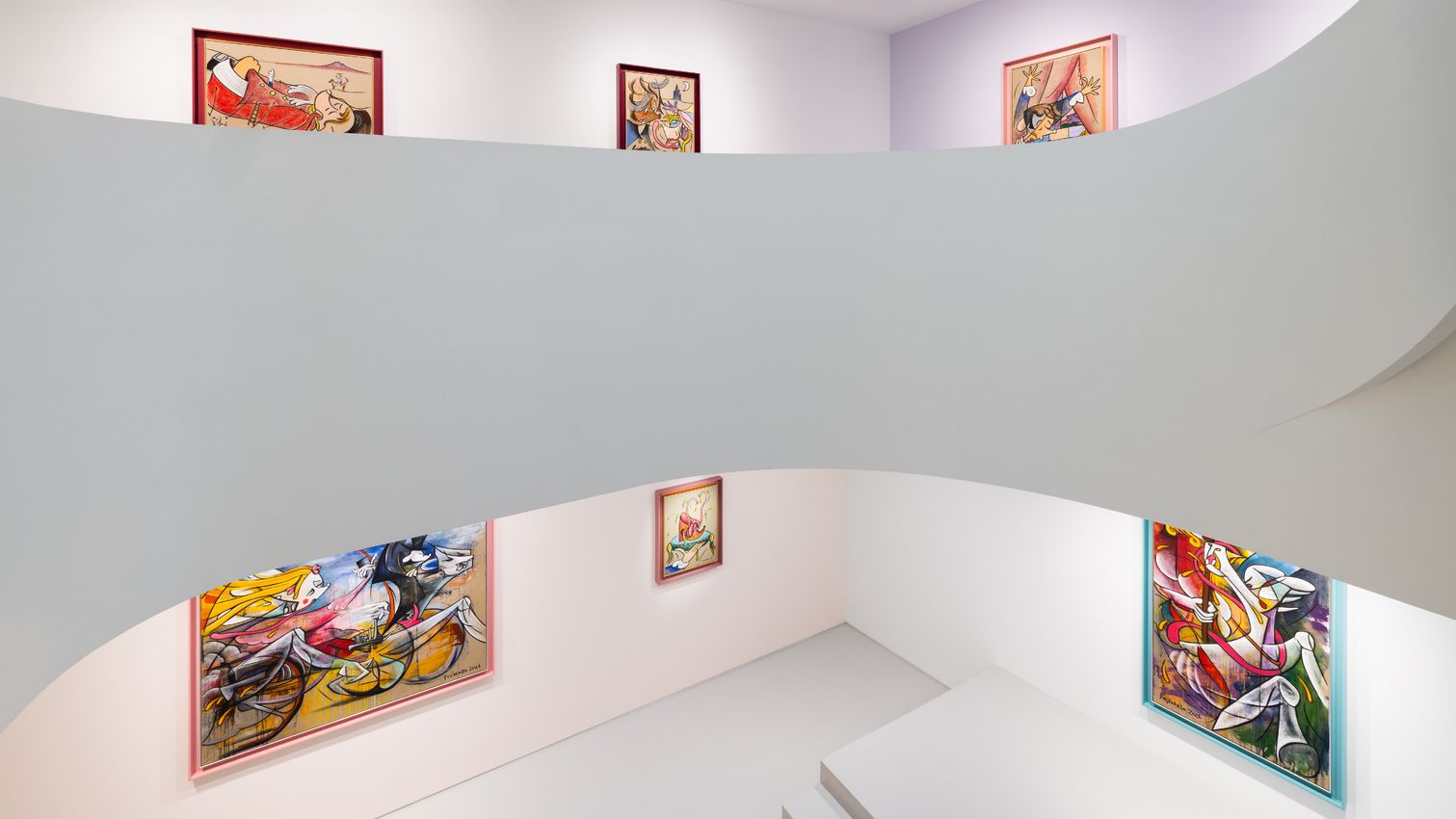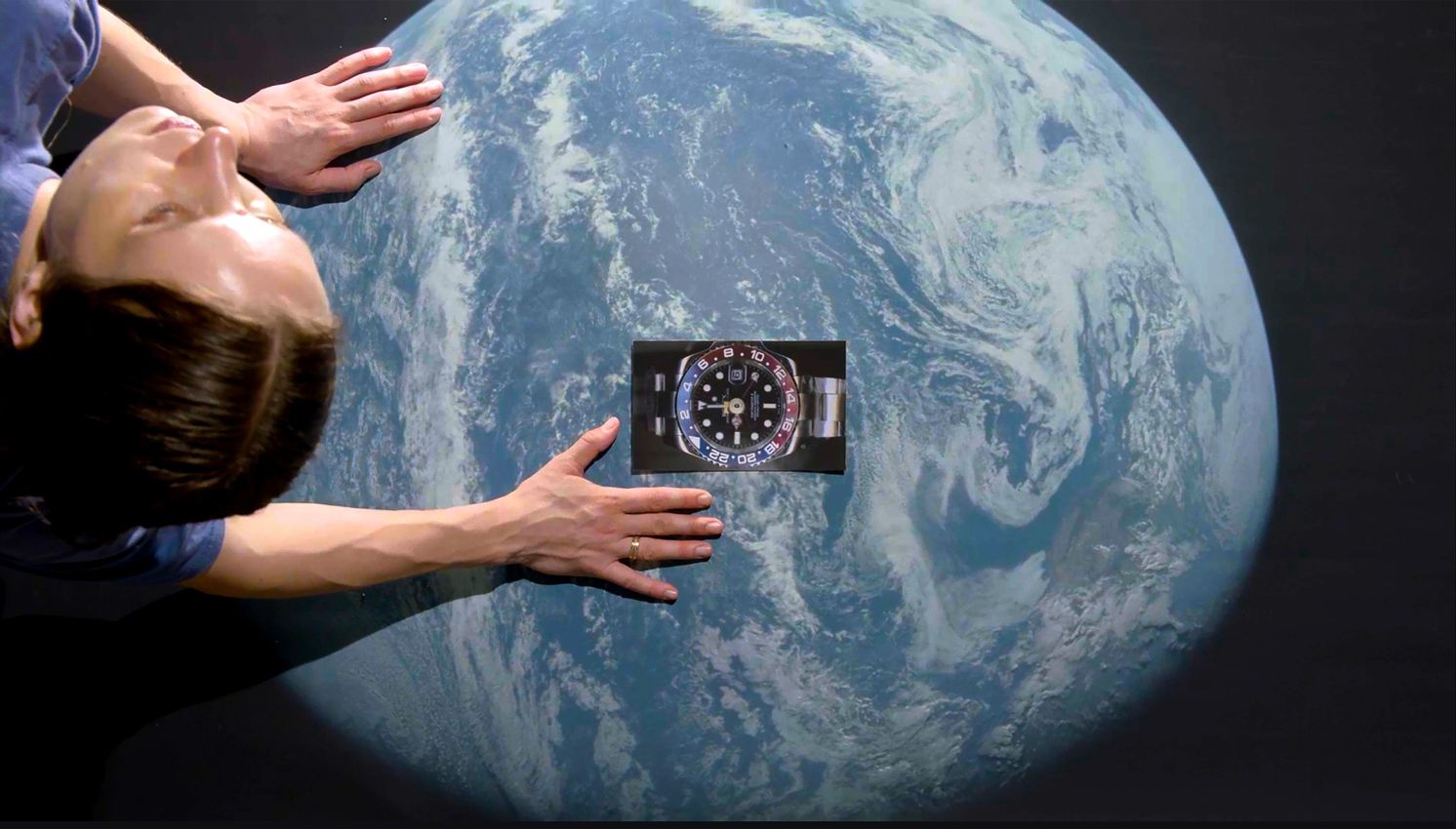
Esther Schipper is pleased to present Noli Me Tangere, a solo exhibition by Anri Sala, theartist’s second with the gallery and first in Seoul. On view will be a new series of frescoes and awork from the artist’s series of animated modified snare drums.
Anri Sala is best known for his films and cinematic installations that interweave the properties ofone medium with that of another—filming music, editing film according to musicalcompositions, employing architecture to structure content, form and presentation of art worksand entire exhibitions. Sala has had solo exhibitions at major institutions such as the Bourse deCommerce-Pinault Collection, Serpentine Galleries, Centre Pompidou, Mudam Luxembourgand The New Museum and has participated in major biennials such as the Venice Biennale(where he represented France in 2013), the São Paulo Biennale, the Berlin Biennale, theGwangju Biennale, and Documenta. His work is held in many prestigious art institutions, amongthem Centre Pompidou, Paris, The Museum of Modern Art, New York, Tate Gallery, London,Fondation Luis Vuitton, and Pinault Collection.
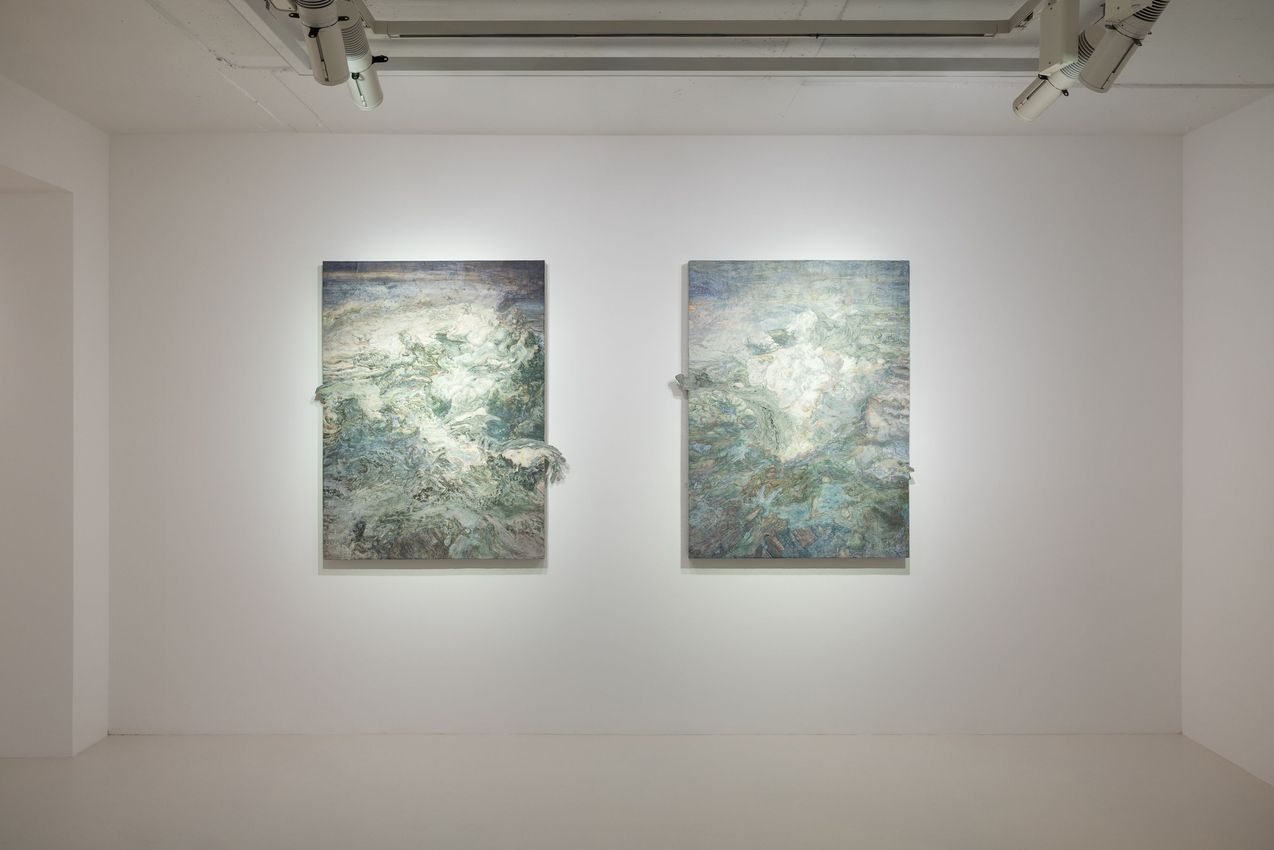
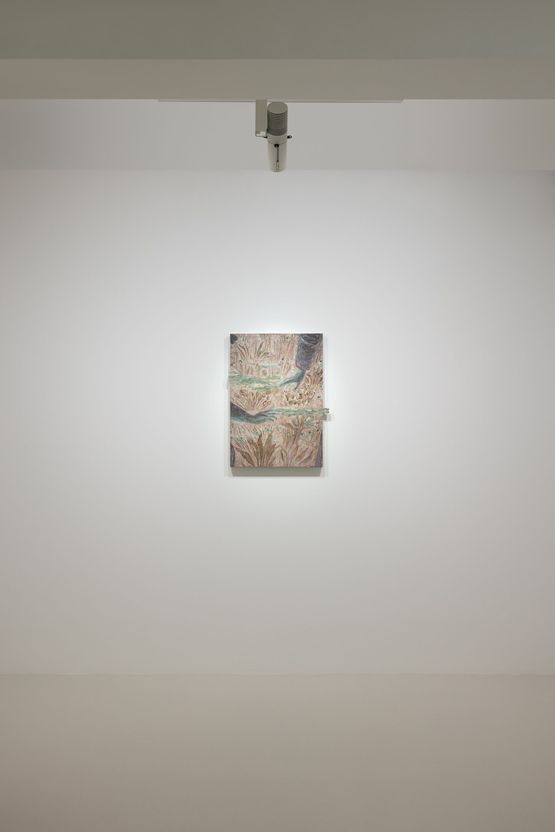
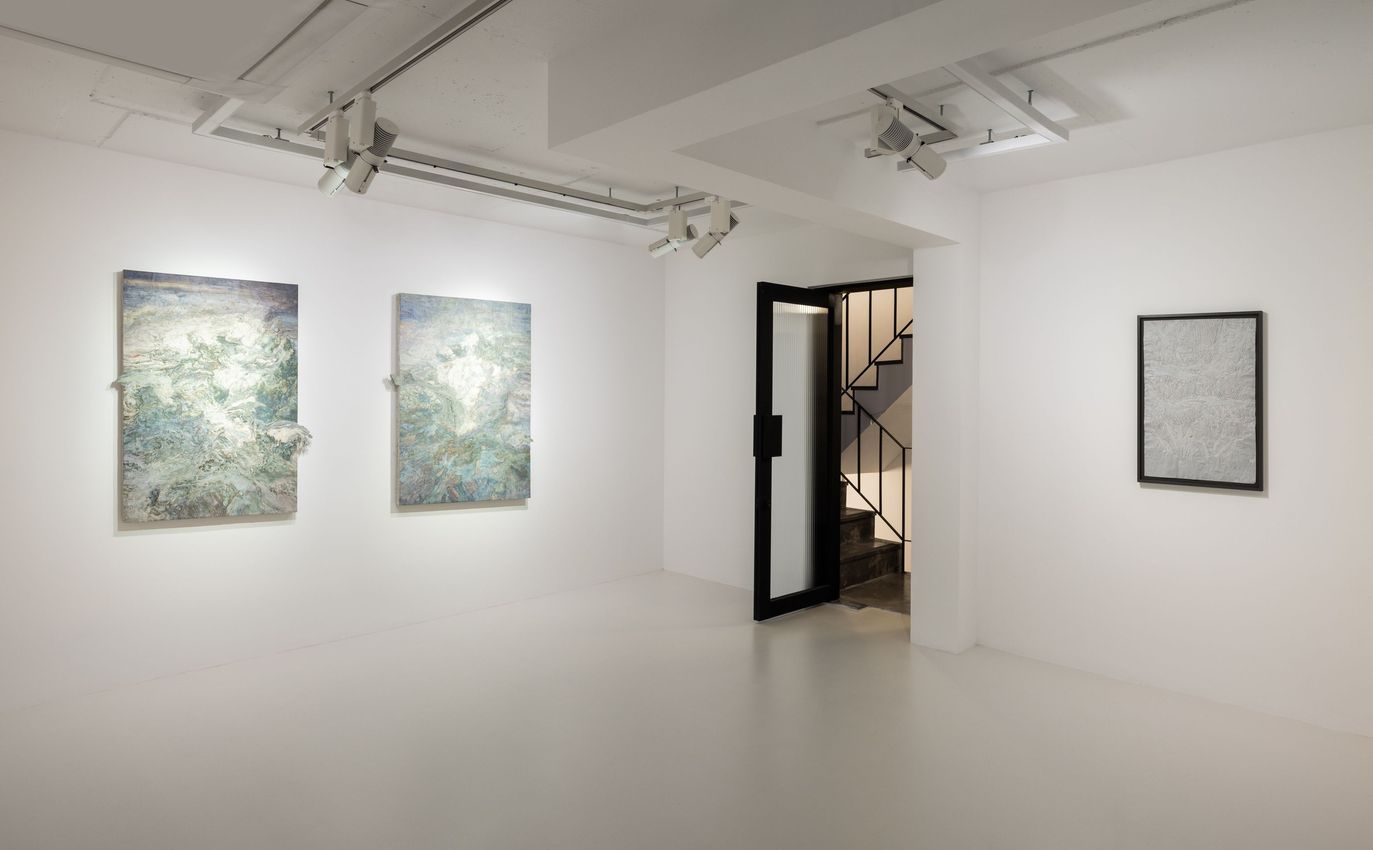
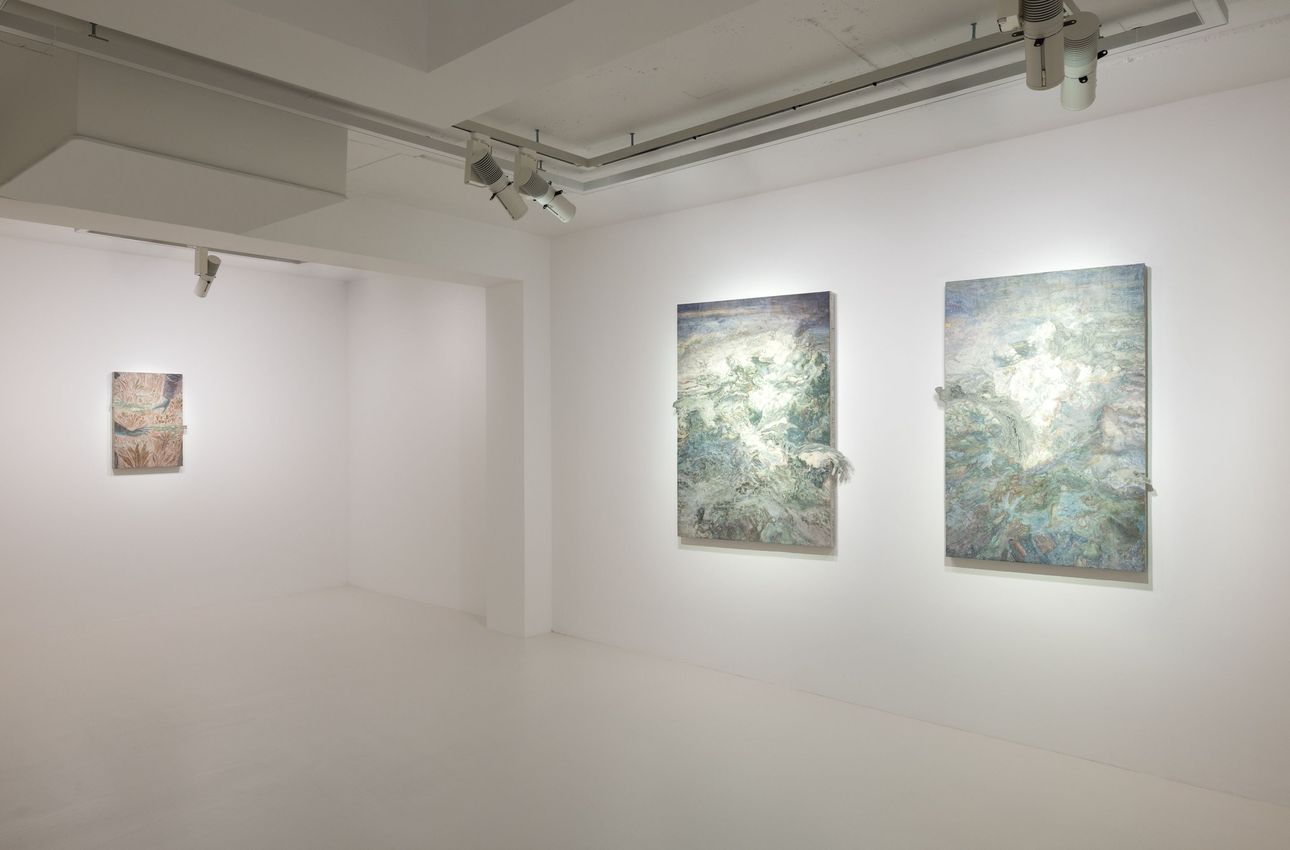
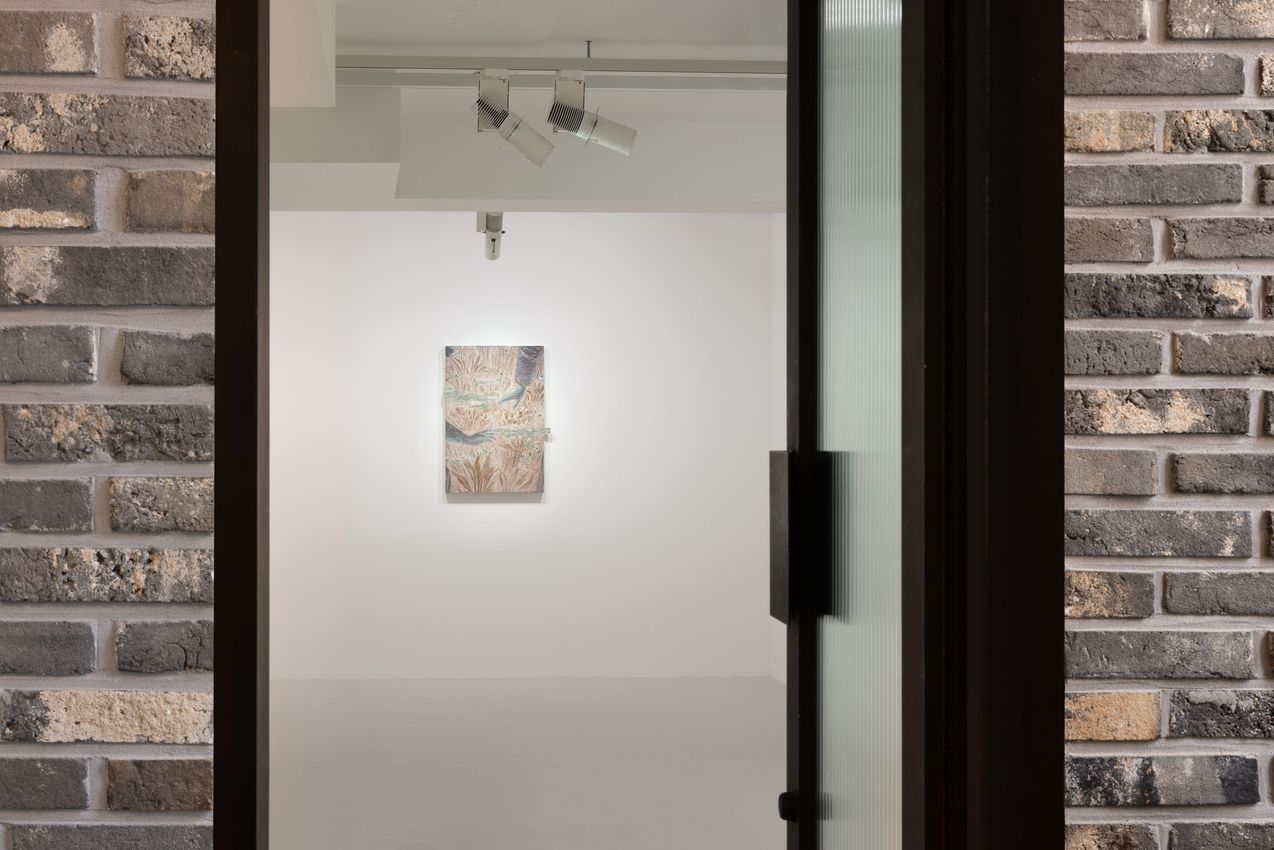
The new body of work, presented for the first time in Korea is conceived with the al frescotechnique, combining different geological and historical temporalities, once again creating alush interweaving of formal, historical and conceptual associations. A technique practiced inItaly for centuries, the frescoes are painted on specially prepared panels using the ancientmethod of painting with pigment dissolved in water onto wet plaster (intonaco). Set into theintonaco are also pieces of marble that are integrated into the compositions, flush with thesurface of the plaster. Varying in size between 63 x 41 cm and 120 x 102 cm, the works arehung on the wall.
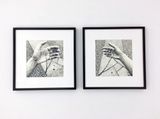
The new frescoes have different motifs. Noli Me Tangere Inversa (Fragment 1) is based on afamous fresco by the Italian Renaissance artist Fra Angelico, painted between 1425-30 in theSan Marco convent in Florence. Fra Angelico’s work depicts the moment of before theresurrection of Jesus Christ (in which Jesus tells Mary Magdalene Noli Me Tangere, ‘don’t totouch me’, not to hold him back, as he ascends to heaven after death). By using a detail fromFra Angelico’s work, Sala makes clear the link to the history of the medium. Yet, he inverts thecolours and brings into play another, more recent but perhaps soon equally anachronisticmedium: the effect is known from analog photography when the colours of a negative arereversed.
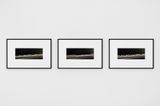
Another group of frescoes, entitled Surface to Air, takes as point of departure the artist’s ownphotographs of clouds captured from airplanes. Their billowing abstract shapes represent theepitome of changeability and constant flux, introducing to the new frescoes a layer of temporaldissonance. Thus, fresco—a medium that necessitates an execution of multiple layers ofpigment within a relatively short time (giornata), but then can survive over centuries or, underthe right conditions, even millennia—and photography—a medium that records a moment in time—here capture a meteorological phenomenon, a formation created by an unimaginablycomplex interaction of unseen natural forces.
Another important aspect of these new works is the marble inlays. Playing on the colours of thefresco, the distinct material recalls the marble dust traditionally included in the rough ground(arriccio) on which the finer plaster (intonaco) is applied. The pattern of the marble pieces recallthe frequent painting of faux-marble surfaces and the practice of intarsia, the creation ofimages from inlaid pieces marble, popular in the Italian Renaissance. At the same time, theinlays also evoke an even broader temporal register, that of the geological time it took toproduce the crystallized stone with its distinct colours and striations.
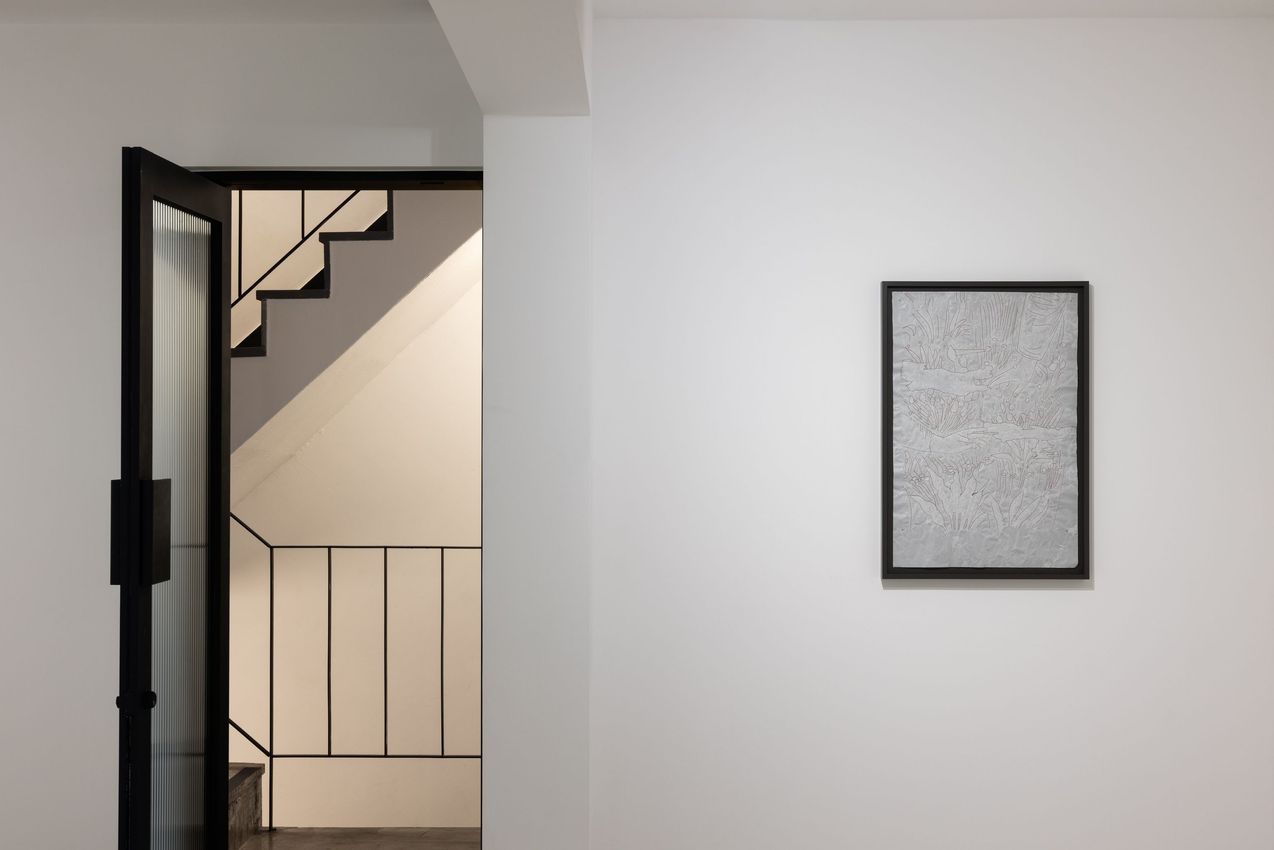
The framed drawing Transfert (Noli Me Tangere, Fragment 1) gives insight into the productionprocess of Sala’s frescoes. Akin to the cartoons used by Renaissance artists to transfer themotif onto the wet plaster. The sheet’s back surface is lightly covered with dried plaster,evidence of the process.
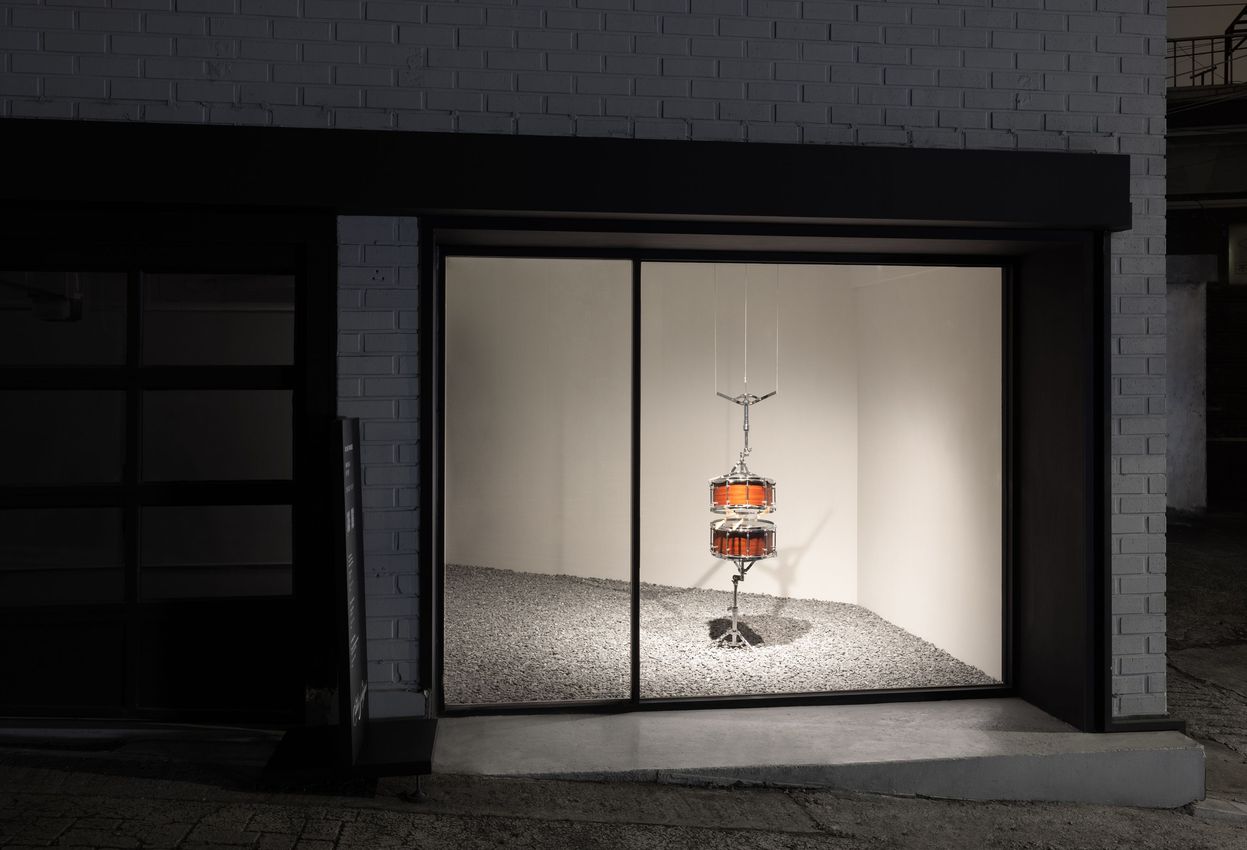
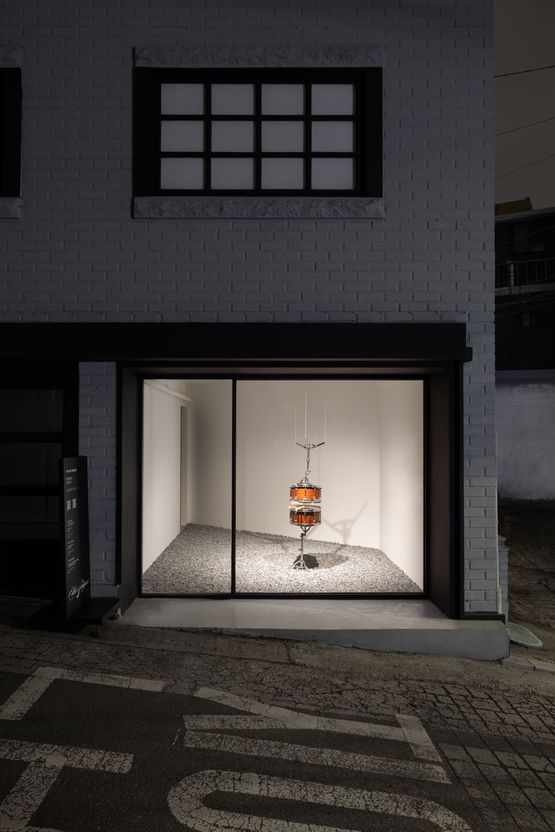
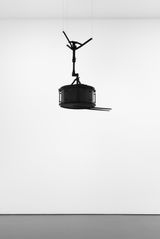
In the Window, Sala presents In-Between the Doldrums (Pac-Man), two custom-made snaredrums–one standing on the gravel-covered floor, mirrored by another suspended from theceiling at a slight angle. The custom-made snare drums conceal a set of inbuilt speakers,playing high and midrange frequencies (corresponding to the audible sounds) and inaudible lowfrequencies (that create vibrations on the drum skin, prompting the rat-a-tat of drumsticks).Notwithstanding its mechanical aesthetic, the work is also very touching. Not only because it isindeed about tactility but because the reciprocal contact of the two drums seems to beanimated by more than just mechanics: It feels as if we are witnessing an intimate dialogue.
This emphasis on an unlikely dialogue represented by hands (or drumsticks) makes In-Between the Doldrums (Pac-Man) a cornerstone of Sala’s exhibition concept, linking frescoesand sculpture. It finds an echo in Noli Me Tangere Inversa (Fragment 1) which takes the motifof two hands not touching from Fra Angelico’s depiction. The space between the non-touchinghands in the biblical scene marks the tension between the corporal and the divine, and in thecontext of this exhibition perhaps has a broader meaning, invoking a space between theconcrete and the abstract, a moment when sand, limestone and pigment take form andbecome art.
Press release courtesy Esther Schipper
Anri Sala’s oeuvre explores the relationships between music and narrative, architecture and film, interleaving qualities of different media in both complex and intuitive ways to produce works in which one medium takes on the qualities of another. His practice encompasses sound and video installation, film, sculpture, photographs, drawings, books, scores and, as Mark Godfrey has noted, ‘the exhibitions wherein individual works are arranged into ensembles.’
A respected voice in contemporary art discourse.
Focusing on ambitious storytelling and insightful art-world commentary. Ocula Magazine publishes in-depth interviews, critical essays and timely analysis on the artists, exhibitions and ideas driving the global art world.
Learn more about Ocula Magazine
Showcasing the best of the art world.
Ocula partners with galleries from around the world to highlight their artists, artworks and exhibitions. Gallery membership is by application and invitation, with each member vetted by an independent panel.
Learn more about Ocula Membership

Specialises in the sale of major artworks.
Led by a team with deep ties to the world’s leading auction houses, galleries and collectors. Ocula’s advisory team offers bespoke services to high-net-worth clients from around the world who are looking to acquire the best of contemporary and modern art.
Learn more about our team and services