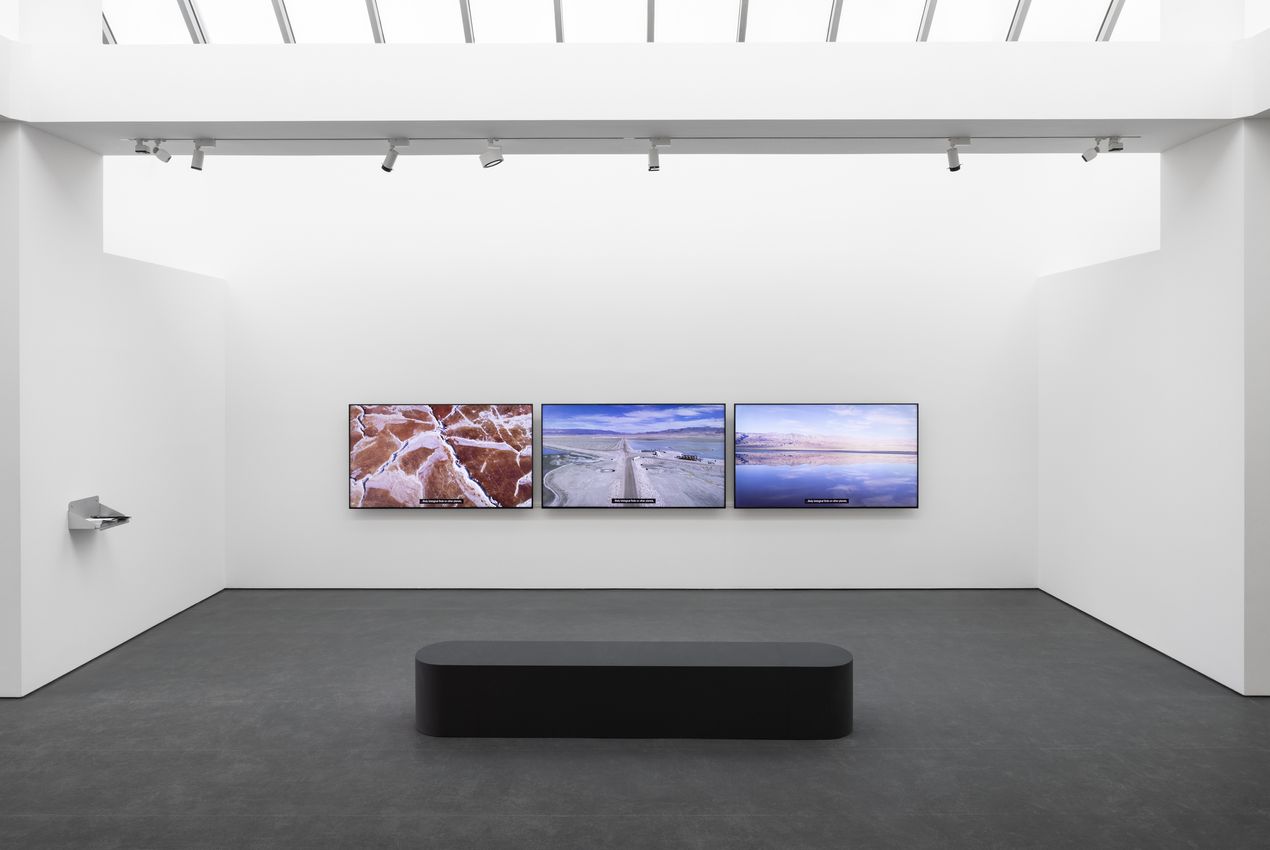
Esther Schipper is pleased to announce a special presentation by Christoph Keller who since joining in 1997 has had six solo exhibitions with the gallery. On view will be Future Archeologists, a new three-channel video installation.
With Future Archeologists Christoph Keller revisits the subjects of his own past as a trained hydrologist. The three-channel video installation presents an artistic survey into the environmental conditions in the Owens Valley on the eastern side of the Sierra Nevada in California.
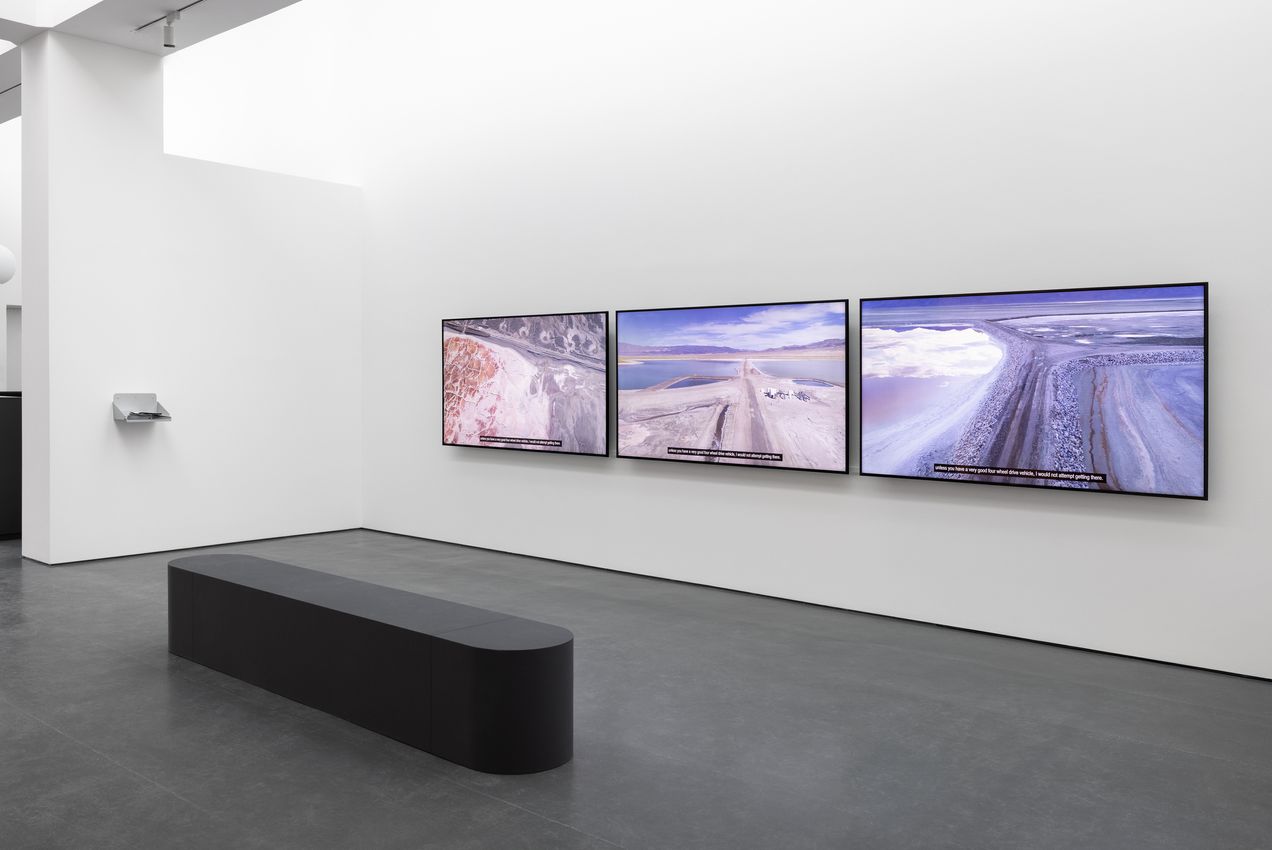
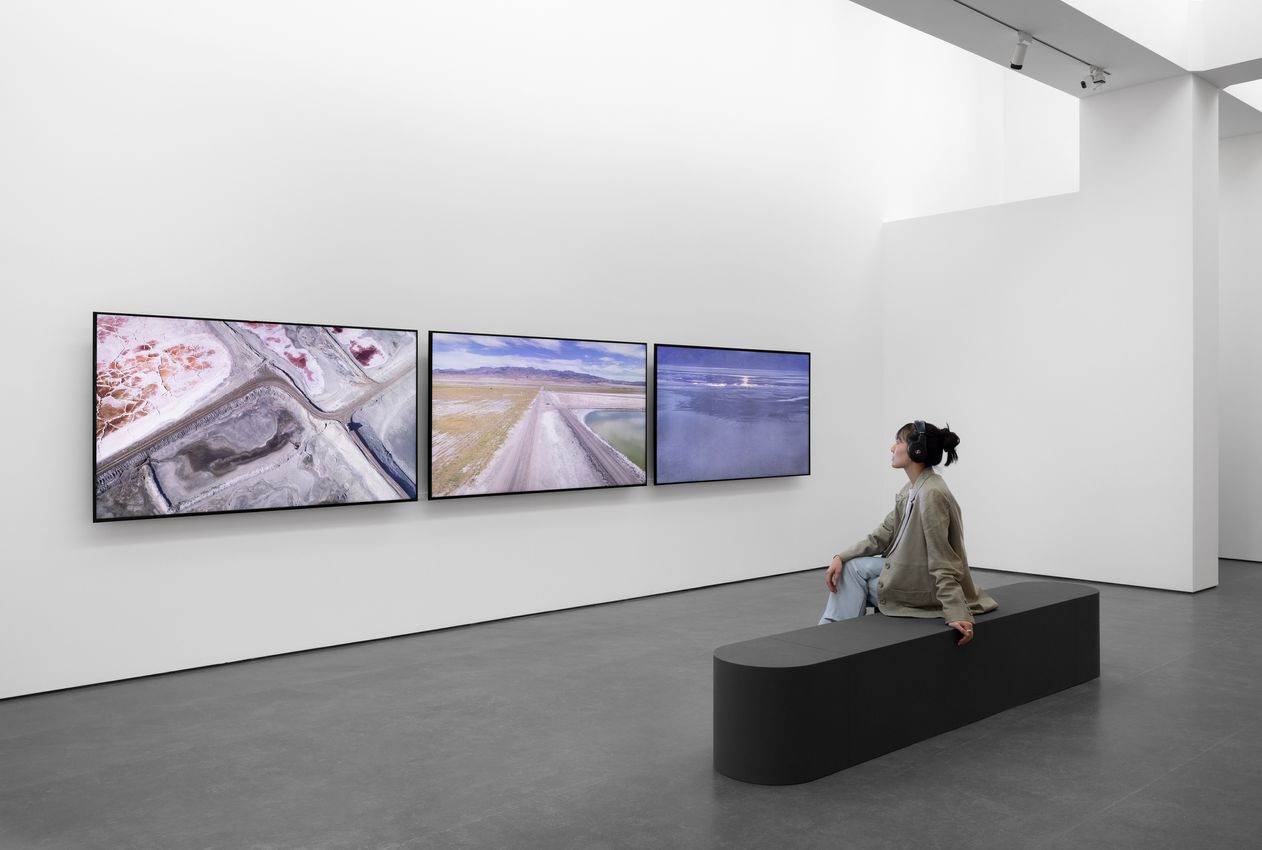
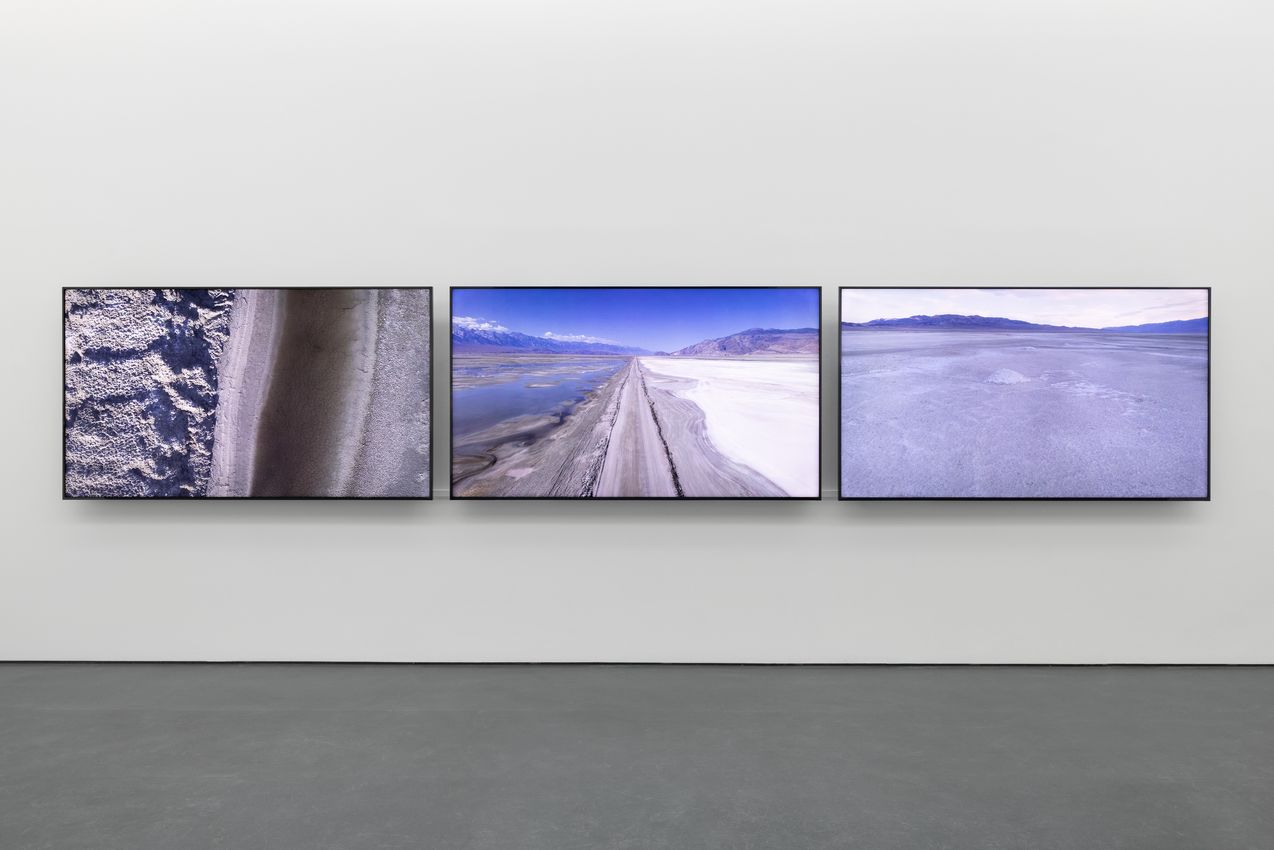
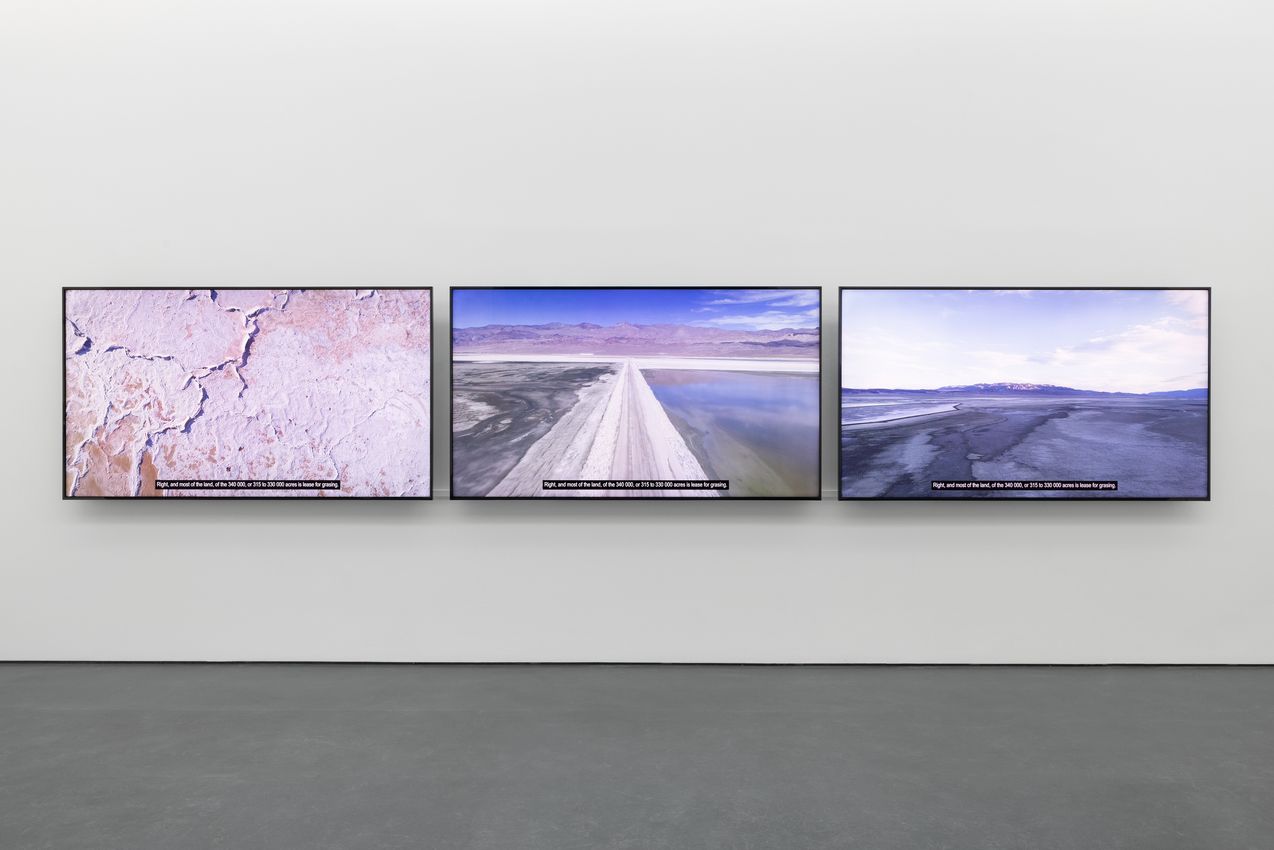
Point of departure and formal centre of Keller’s video installation are three filmic perspectives shot over the vast landscape of the now desiccated Owens Lake.
The Owen Valley and the surroundings of the lake was once flourishing, and its indigenous Paiute people maintained complex irrigation systems. In 1913, an aqueduct to provide for the city of Los Angeles was constructed, diverting Owens valley’s waters and letting the lake dry out in just 15 years. Subsequently, the area became infamous as a source of dust pollution. In the early 2000s an extensive landscape transformation program was launched in some parts of the former lakebed, seeking to alleviate the development of toxic dust clouds travelling as far as Los Angeles. This dust mitigation project is in the focus of Keller’s filmic inquiry.
Keller’s three-channel video installation presents the Owens Lake landscape from an aerial viewpoint. The video on the right channel moves in spiralling sweeps across the landscape, the central video relentlessly follows along the main supply road of the dust mitigation project, while the footage on the right channel moves in steadily sweeping movements toward the centre of the former lake with disconcertingly beautiful vistas of mountainous terrain surrounding the dry lake’s plain. As the camera travels across the mesmerising landscape, we hear a conversation between Keller and a geologist, accompanied by a constant digitally generated glissando music, carefully calibrated to create a mixture of aesthetic detachment and dystopian realism. The images of the ecological desolation are subtly compounded by the dialogue which reveals—in what sounds like mild-mannered understatement—the breath-taking futility of a monumental industrialised process developed to contain the effects of an environmental destruction in perpetuity.
Keller’s work carefully draws from a dialectical aggregate of wide-ranging references: literary and pictorial representations, science and science fiction, colonial histories and community politics, timelessness and timefullness of the landscape.
Christoph Keller’s practice constitutes an examination of the history of science and of the way in which knowledge is gathered and organised and how this organisation in turn influences our thinking. For Future Archeologists, the artist’s training in hydrology constitutes the subtext for Keller’s continued exploration of specific areas of scientific inquiries and their consequences in wider cultural and philosophical contexts as well as the real-life repercussions such discourses can entail.
The video footage for the project was filmed during Christoph Keller’s fellowship at the Villa Aurora in Pacific Palisades, Los Angeles, California in 2019. The artist wishes to thank Claudia Gordon and Friedel Schmoranzer and the Villa Aurora & Thomas Mann House e. V. for their support.
Christoph Keller’s work constitutes an examination of the history of science and of the way in which knowledge is gathered and organized. Long-term projects concern, for instance, anthropology (in particular the history of Western European engagement with the Amazon region), fringe science and parapsychology.


Esther Schipper founded the gallery in 1989 in Cologne. In 1997 the gallery relocated to Berlin. Through more than three decades of continuous exhibition practice, the gallery has established itself as a major force not only in Germany but in an international context, with offices in Paris and Seoul and representatives in France, Spain, the United States, Latin America, South Korea, Taiwan and China. The gallery holds up to ten gallery exhibitions as well as multiple off-site projects each year and participates in leading art fairs across the globe.

A respected voice in contemporary art discourse.
Focusing on ambitious storytelling and insightful art-world commentary. Ocula Magazine publishes in-depth interviews, critical essays and timely analysis on the artists, exhibitions and ideas driving the global art world.
Learn more about Ocula Magazine
Showcasing the best of the art world.
Ocula partners with galleries from around the world to highlight their artists, artworks and exhibitions. Gallery membership is by application and invitation, with each member vetted by an independent panel.
Learn more about Ocula Membership

Specialises in the sale of major artworks.
Led by a team with deep ties to the world’s leading auction houses, galleries and collectors. Ocula’s advisory team offers bespoke services to high-net-worth clients from around the world who are looking to acquire the best of contemporary and modern art.
Learn more about our team and services