Press Release

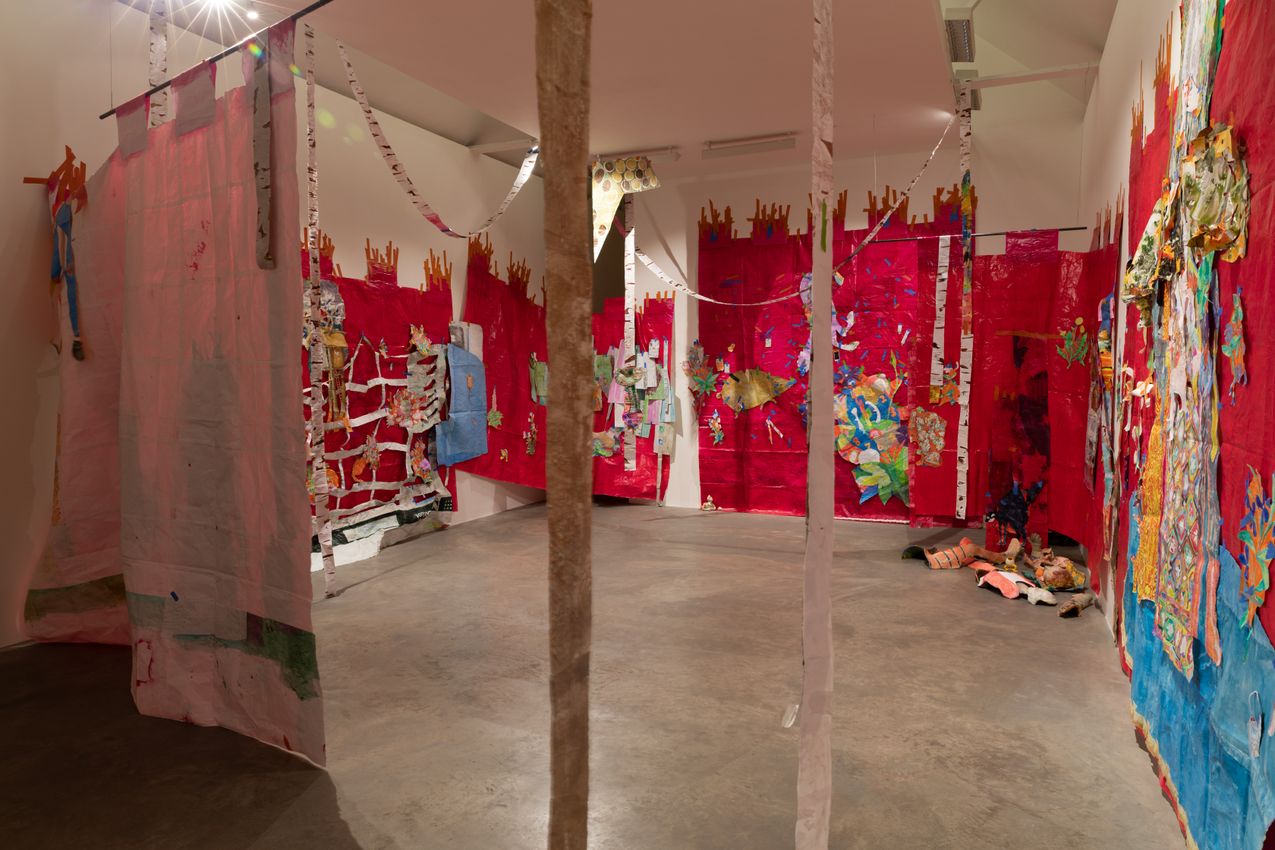
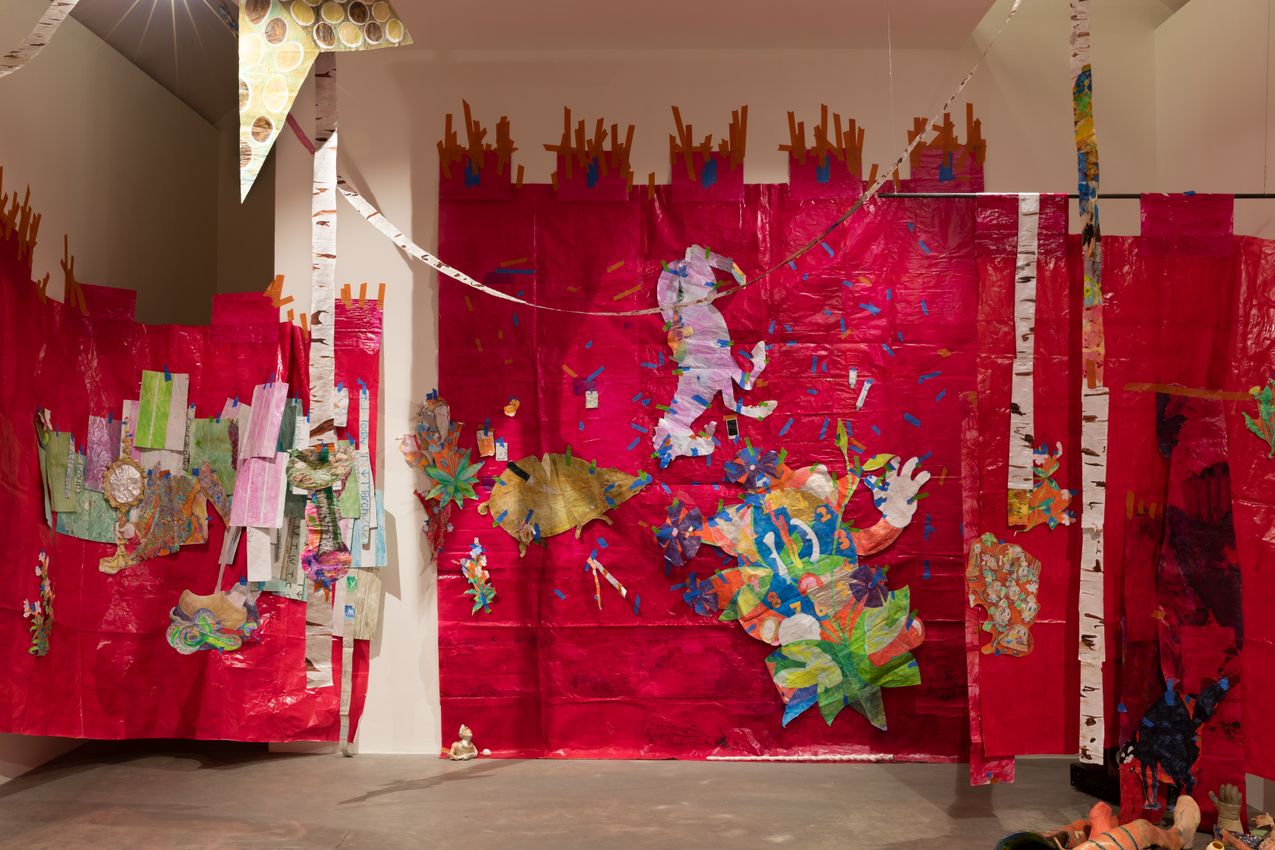
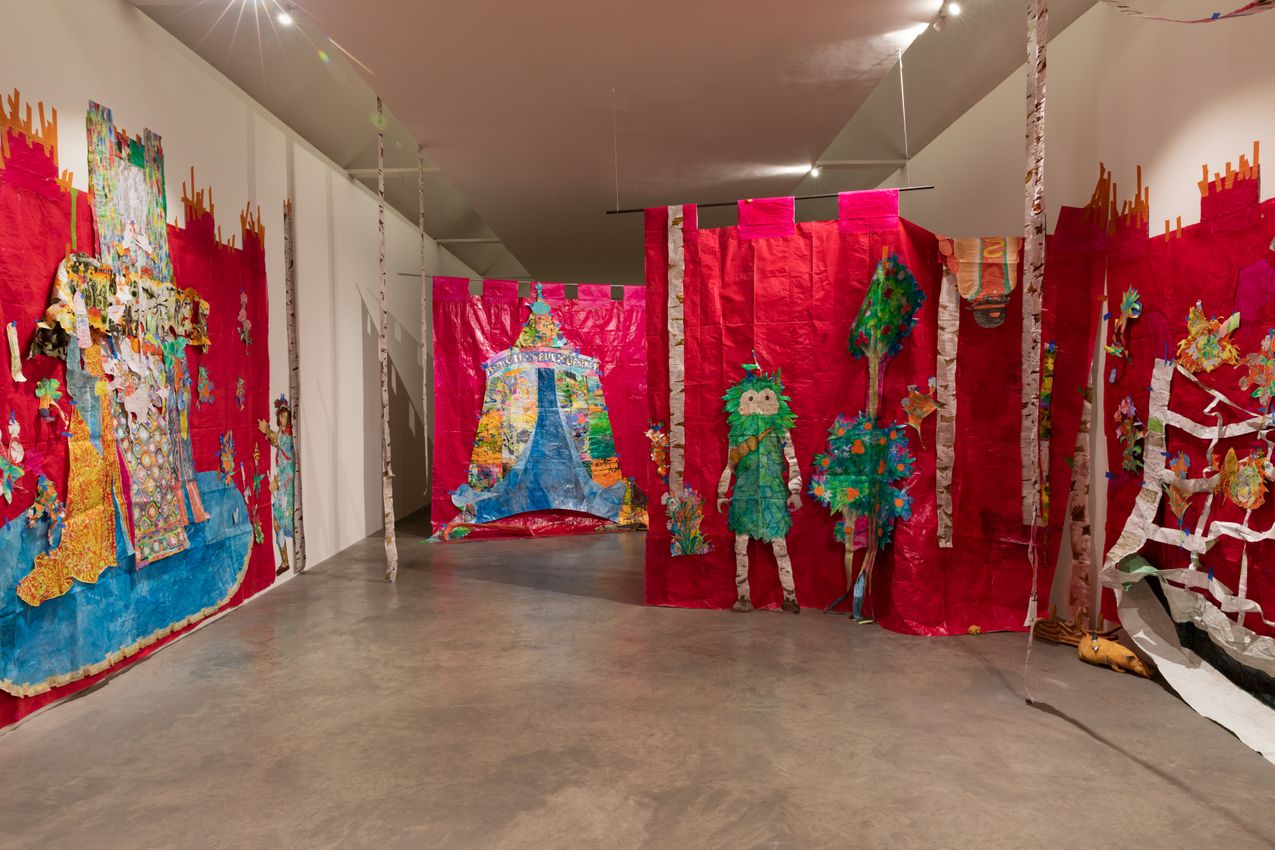
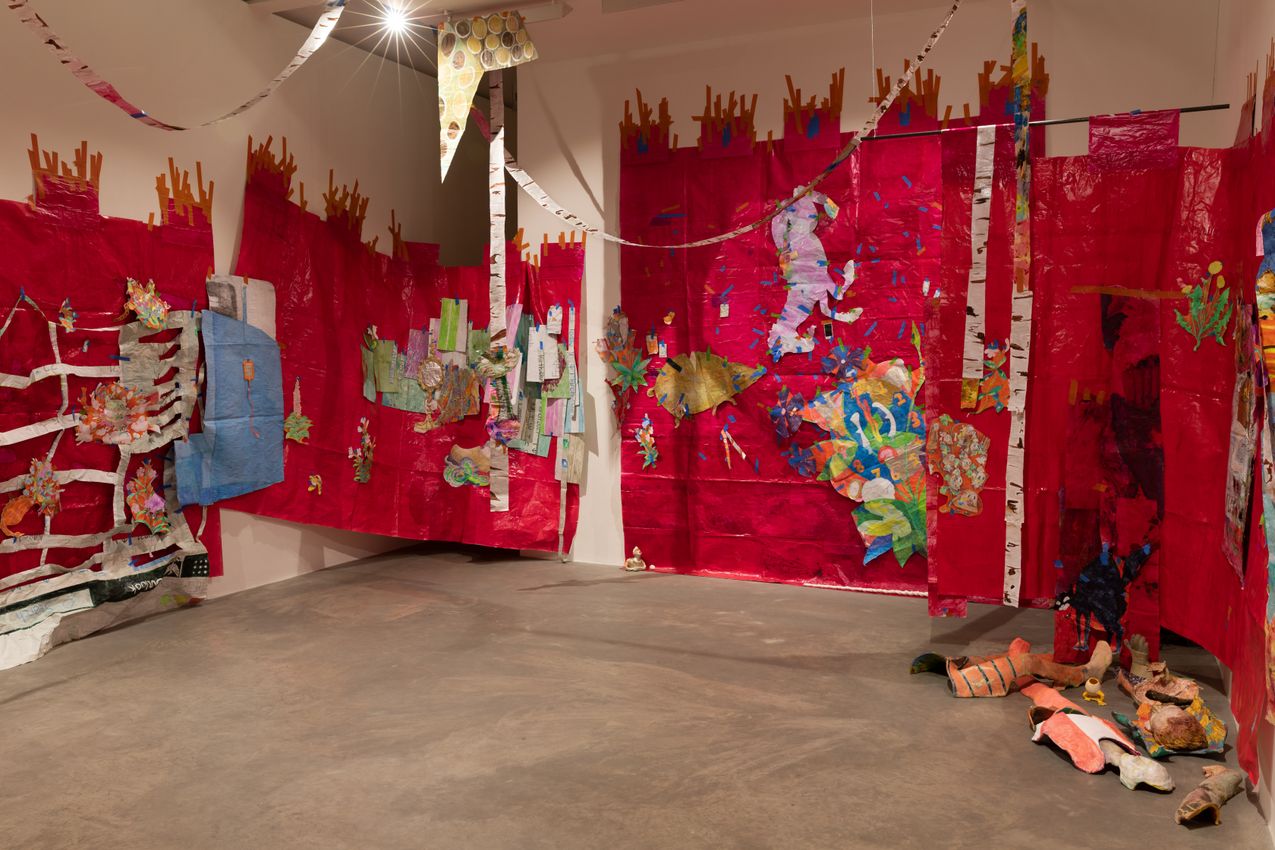
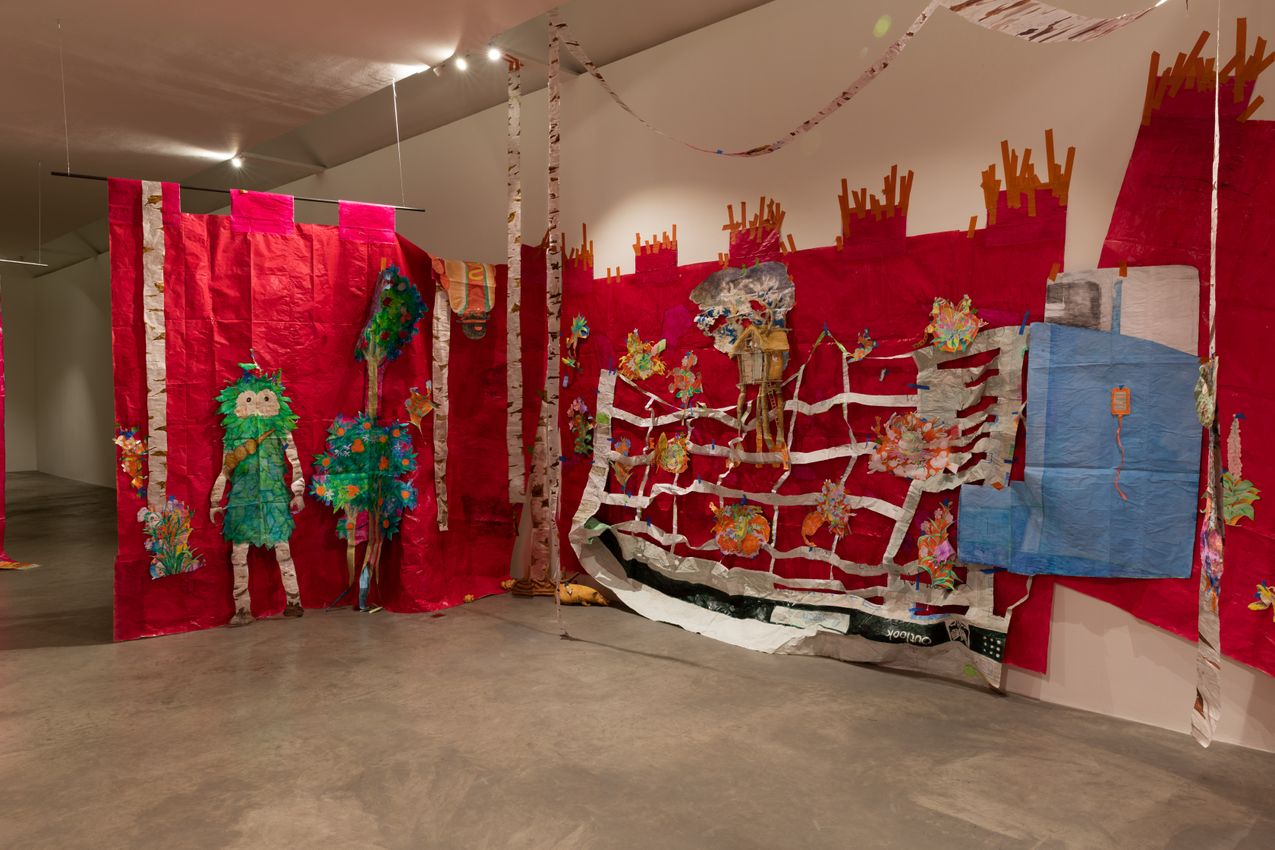
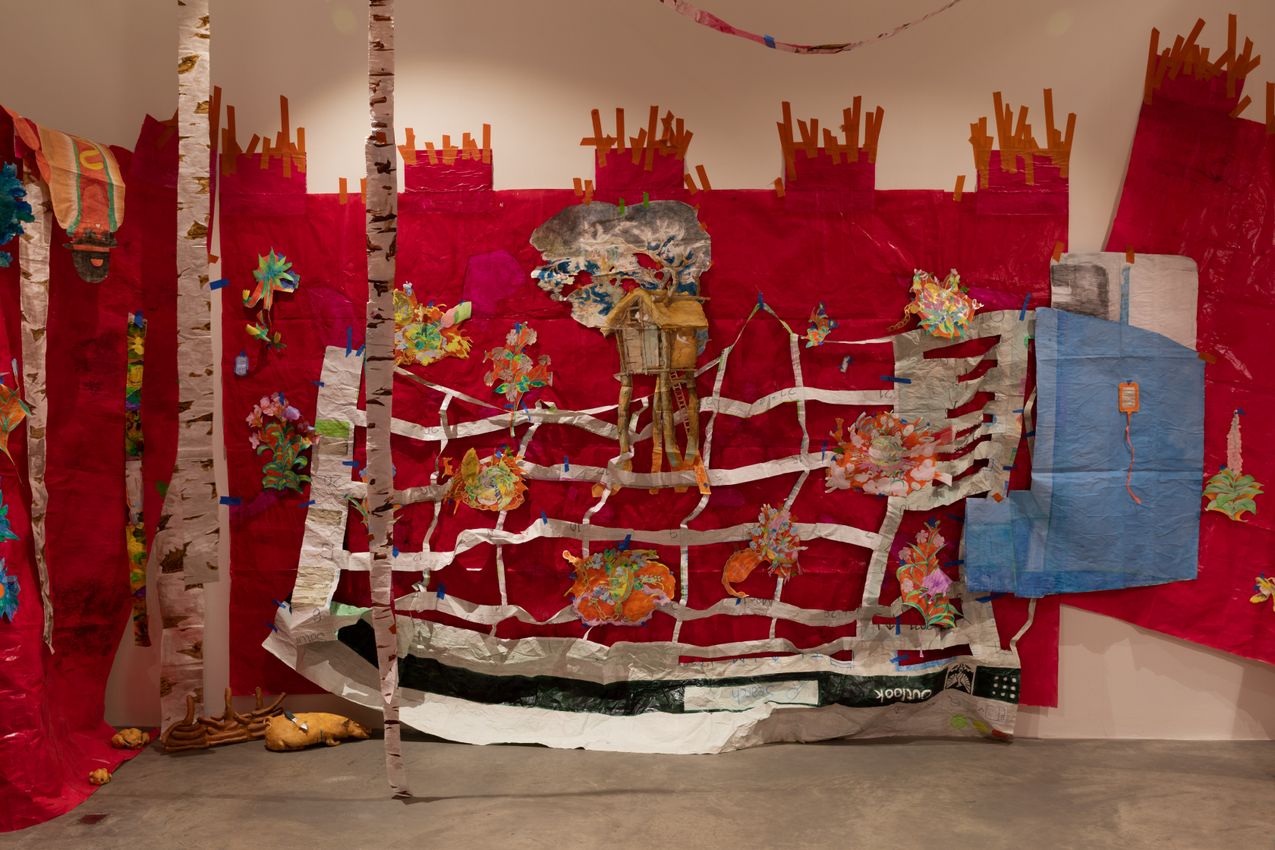
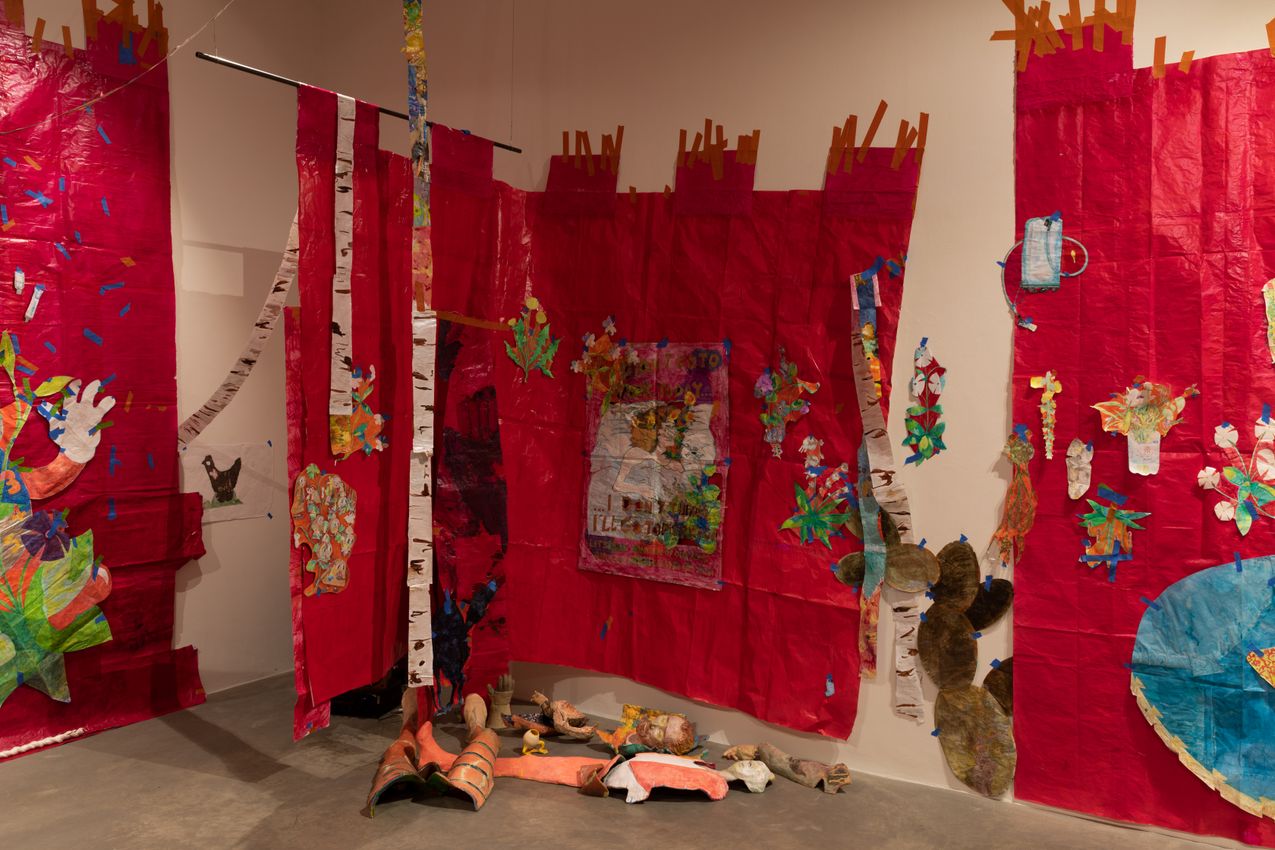
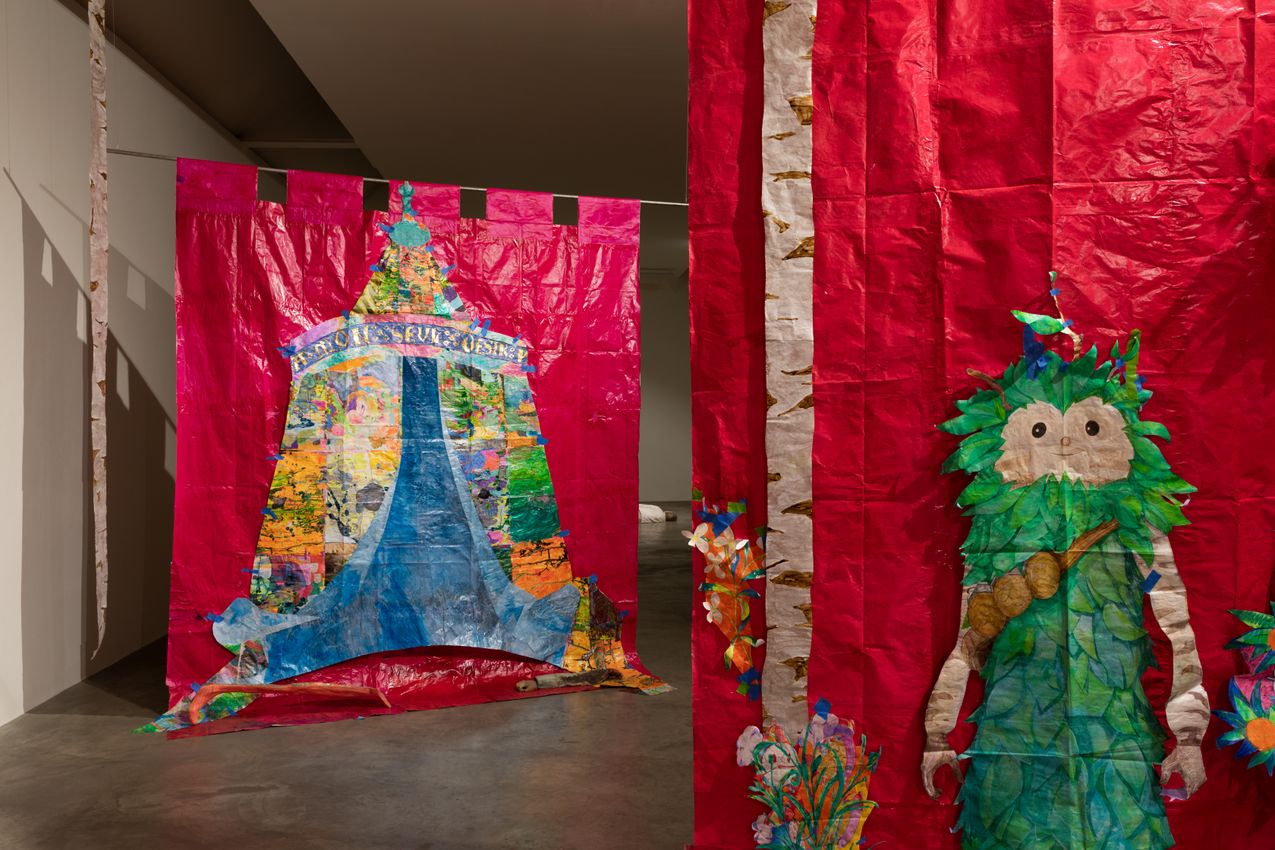
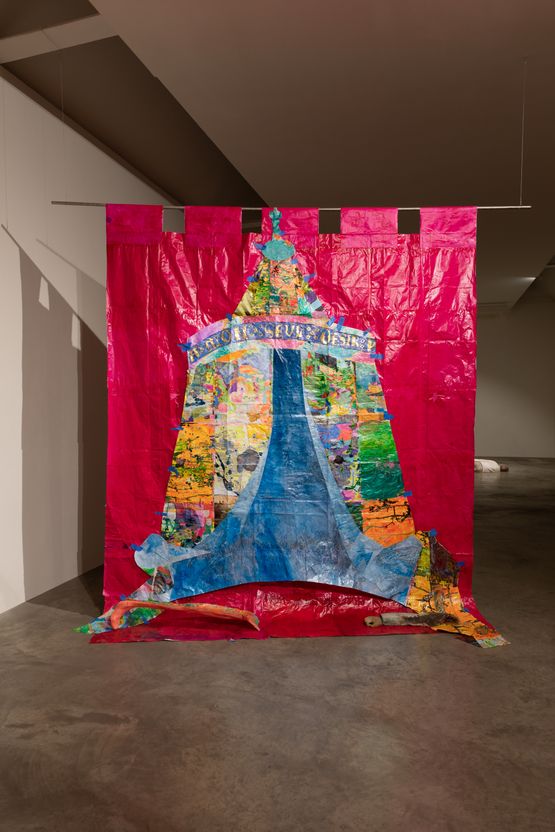
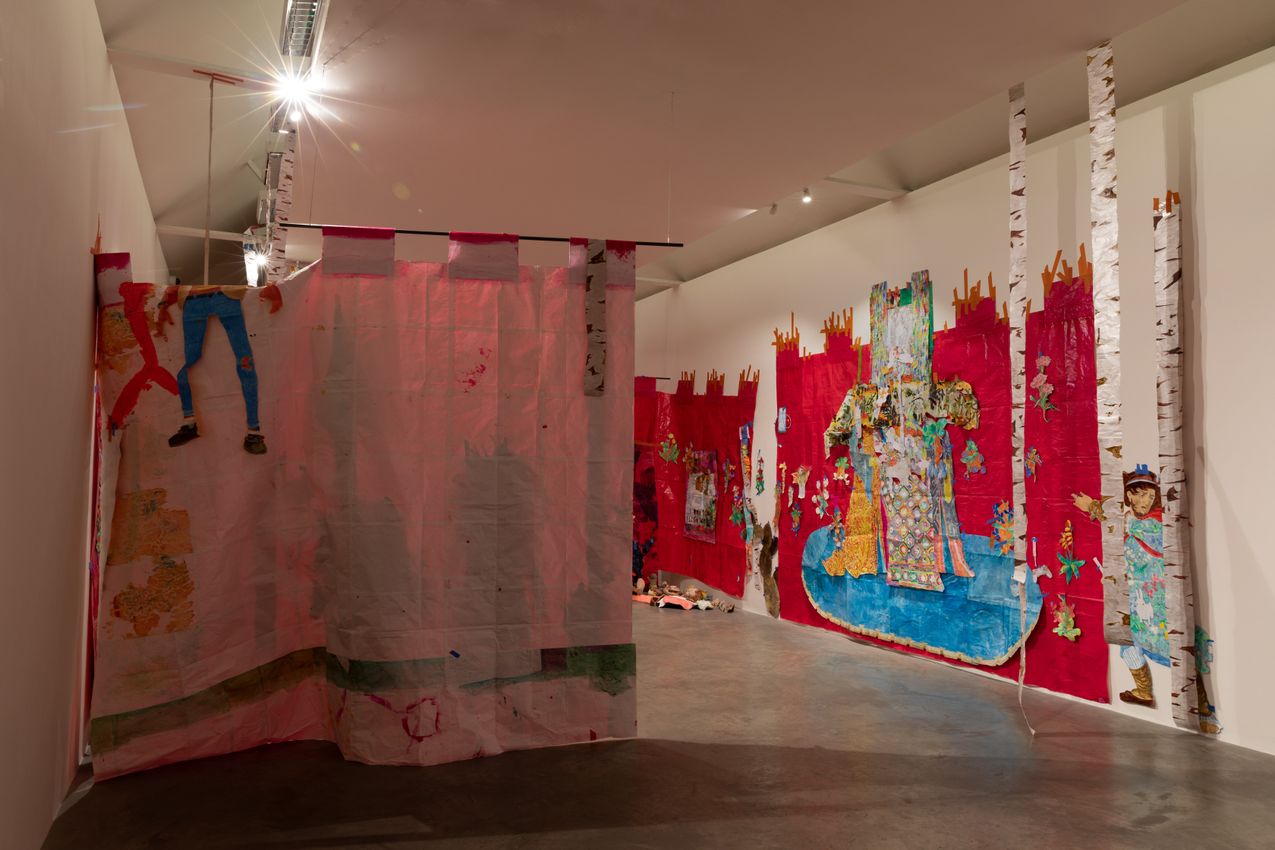
A series of large red rectangular surfaces are clustered at one end of the gallery, festooned with drawings of flowers and hands as well as a giant inhaler, a life size anthropomorphic hotdog and a pig with a knife in its side. Ceramic sculptures act as paper weights for some of them–a roast duck, a boiled egg with feet, as well as bits of reclining bodies piled on top of each other. Elsewhere in the gallery, a lone figure lays on its side, its back to the viewer. His hip and shoulder seem sunk into the polished concrete floor. As you walk around his form, you see that his eyes are open, but pupiless and vacant. A man’s voice reverberates throughout the space. It’s telling a story which links these disparate images and objects together.

Sam Keogh’s Sated Peasant, Sated Soldier, Sated Scribe was originally commissioned for the basement galleries of Goldsmiths CCA in 2021. Slightly reconfigured for Kerlin, the exhibition of sculpture, collage and audio draws on pre-modern myths and motifs of abundance.

The medieval myth of Cockaigne; a land of plenty where food is bountiful (it rains cheese), work abolished, and sexuality liberated features in both verse and visual traditions; most powerfully for Keogh in Bruegel the Elder’s painting The Land of Cockaigne, 1567, which shows three figures sprawled in a circular motif under a table bearing food and drink in a rural idyll (a wandering pig in the background bears a knife on its back to aid ease of carving).

Keogh mines this image for its utopian radicalism at a time of strict feudal power relations and peasant revolt. The fantasy of rest, pleasure and perpetual feasts depicted here might be read as an important contribution to a proto-communist imaginary. But Cockaigne is also a place where everything is cooked, and so closer to being dead than alive. The main figures are bloated, heavy and immobilised by their gluttony in this world of beige and brown where nothing seems to be growing, but instead slouches toward decomposition as time has slowed or stopped. In this sense, Bruegel’s The Land of Cockaigne can be read as a moralising warning to the ‘work-shy’, that they would end up in a pleasurable but stodgy purgatory rather than Heaven. Keogh see’s these contradictory elements of the myth as being part of its persistence as fantasy. Its qualities of nonsense and impossibility don’t amount to a workable image of a potential future world, but instead appeal to the libidinal or bodily desires of the audience–things which don’t need to be understood to function.

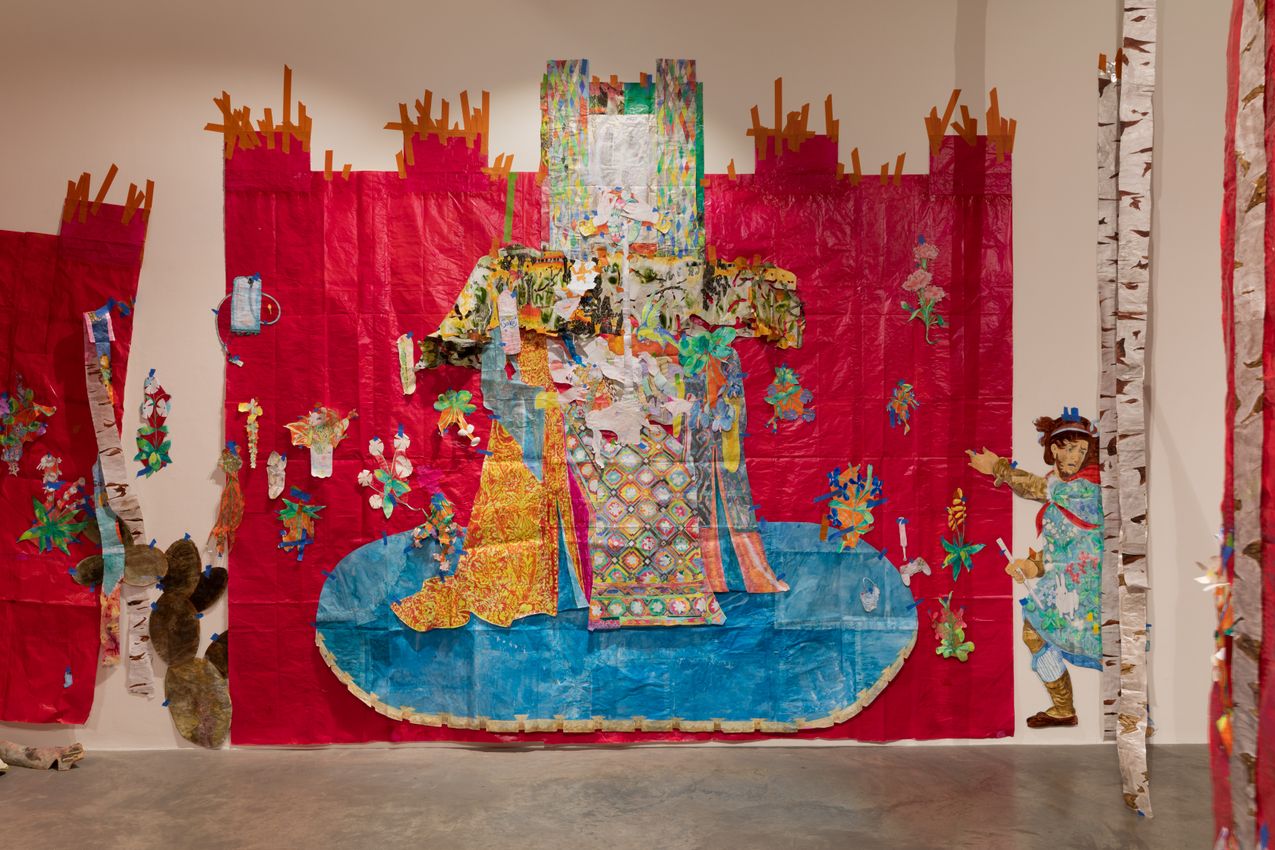
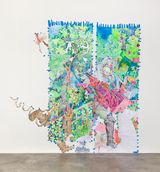
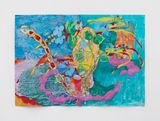
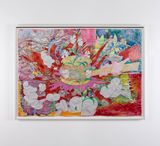
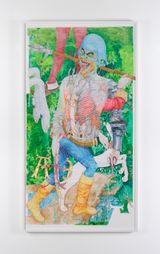
The exhibition also includes large collages from cut out painting and drawing on paper. Keogh made these works as ‘cartoons’; 1:1 scale blueprints used by tapestry weavers to reproduce a design in wool and silk. Cartoons were often worked into, cut up and glued back together numerous times before the artist designing the tapestry was satisfied with the composition. The ‘Lady and the Unicorn’ tapestries made in the 15th century Flanders are an important point of departure for Keogh’s collages. The original meaning of the tapestries’ complex system of allegorical symbols is lost, but they are thought to depict the five senses, plus a sixth. The main figures of the tapestries are surrounded by the millefleur (‘thousand flowers’) motif made up of multiple plants in simultaneous fruit and bloom–time and space again collapsed into an image of abundance.

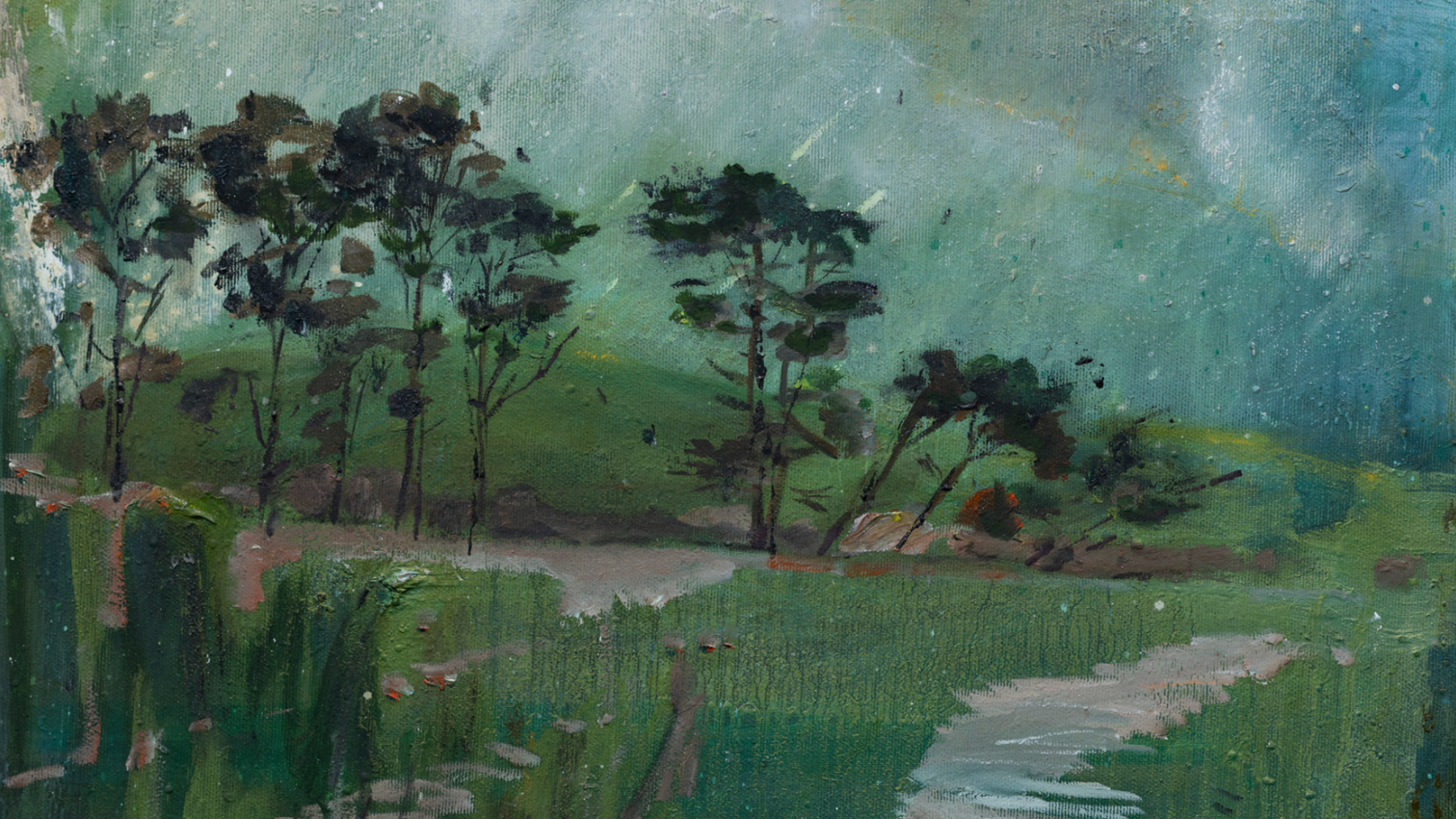
Together, the physical elements of the exhibition form a phantasmagorical garden of abundance and suspended time, blossoming with images of worried cartoon clocks; sloths; inhalers; videogame avatars; unicorns and roast chickens that fly into your open mouth.

The sculptures and college are animated by an audio recording of a story read by Keogh which pulls these ideas through each other in a tangled monologue, extending Keogh’s use of objects, images and speech to create environments that coagulate memory, narrative, and history.

Read More

Installation Views

About the Artist

Sam Keogh works with installation, sculpture, performance, drawing and collage. Live performances unfold in intricate built environments: installations incorporating diverse materials, from collages and painted panels to plastic skeletons, ceramics to gunge-soaked computer desks, sculptures of severed hands and discarded apple cores, plants and bits of rubbish. These grotesque concoctions of image, object and detritus serve as props and visual cues for performances, but spill over with idiosyncratic detail and extraneous information – the physical remnants of a fictional world, they present an indeterminate space in which materials, memories and affects begin to smudge into each other. Keogh’s performances interweave research on diverse topics into meandering semi-fictional monologues that make surprising connections between political movements, biological processes, archaeology, housing, science fiction, or pop cultural phenomena. Like the sprawling and rebellious environments that house them, they present “a strange and abject cosmology of trash, contamination and revolt”.

View Artist Profile

Also Exhibiting at Kerlin Gallery

About the Gallery

Kerlin Gallery was founded in Dublin in 1988. It has built an international reputation for its dedicated, meaningful representation of leading contemporary artists through its exhibition, publishing and art fair programmes. Its current site was designed by the minimalist architect John Pawson in 1994 and offers 3,600 square feet of exhibition space over two floors in the heart of Dublin City Centre.

View Gallery Profile
Address
Anne's Lane
South Anne Street
Dublin
Ireland
Opening Hours
Tuesday – Friday, 10am – 5:30pm
Saturday, 11am – 4:30pm
(1)
Dublin Anne's Lane, South Anne Street
Kerlin Gallery
Anne's Lane, South Anne Street, Dublin, Ireland
+35 316 709 093
http://www.kerlin.ie

Opening hours
Tuesday – Friday, 10am – 5:30pm
Saturday, 11am – 4:30pm
The art world in focus