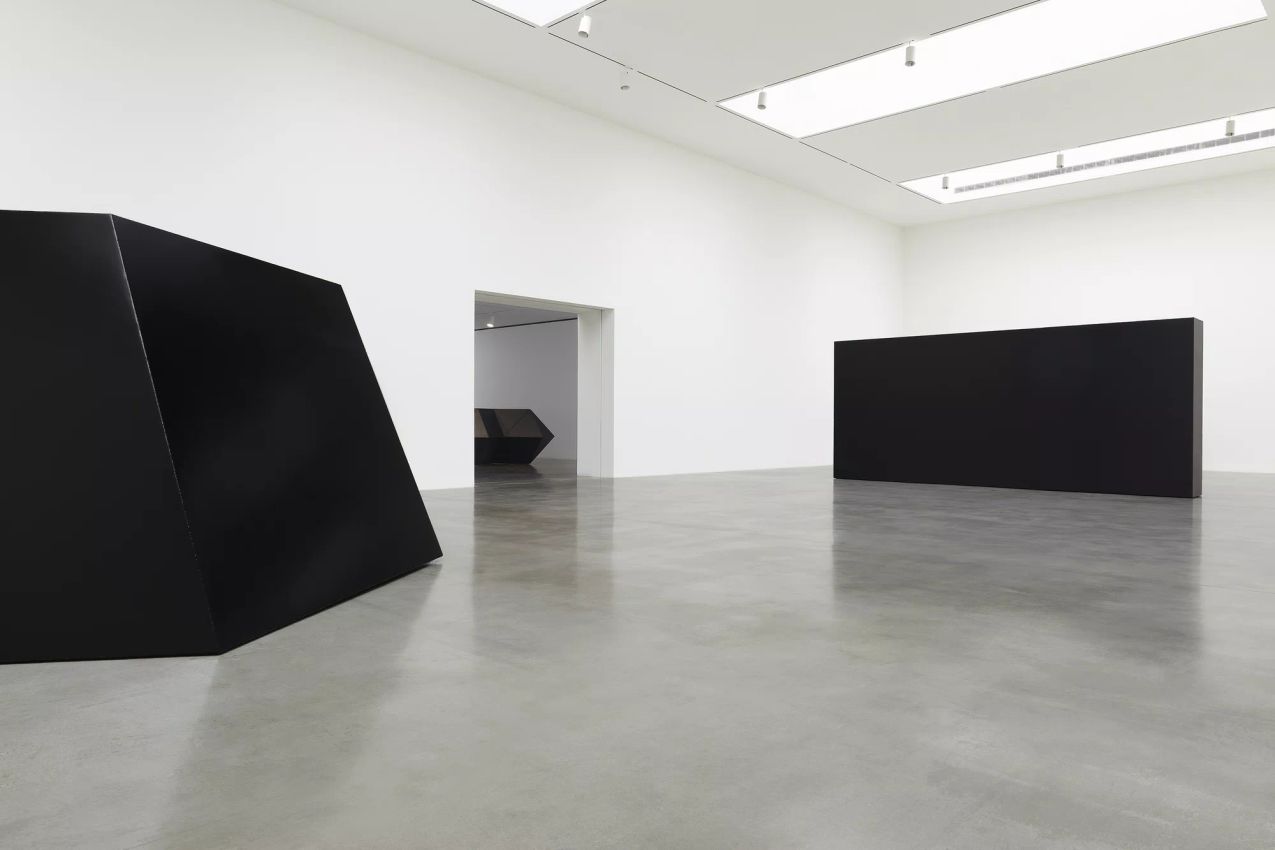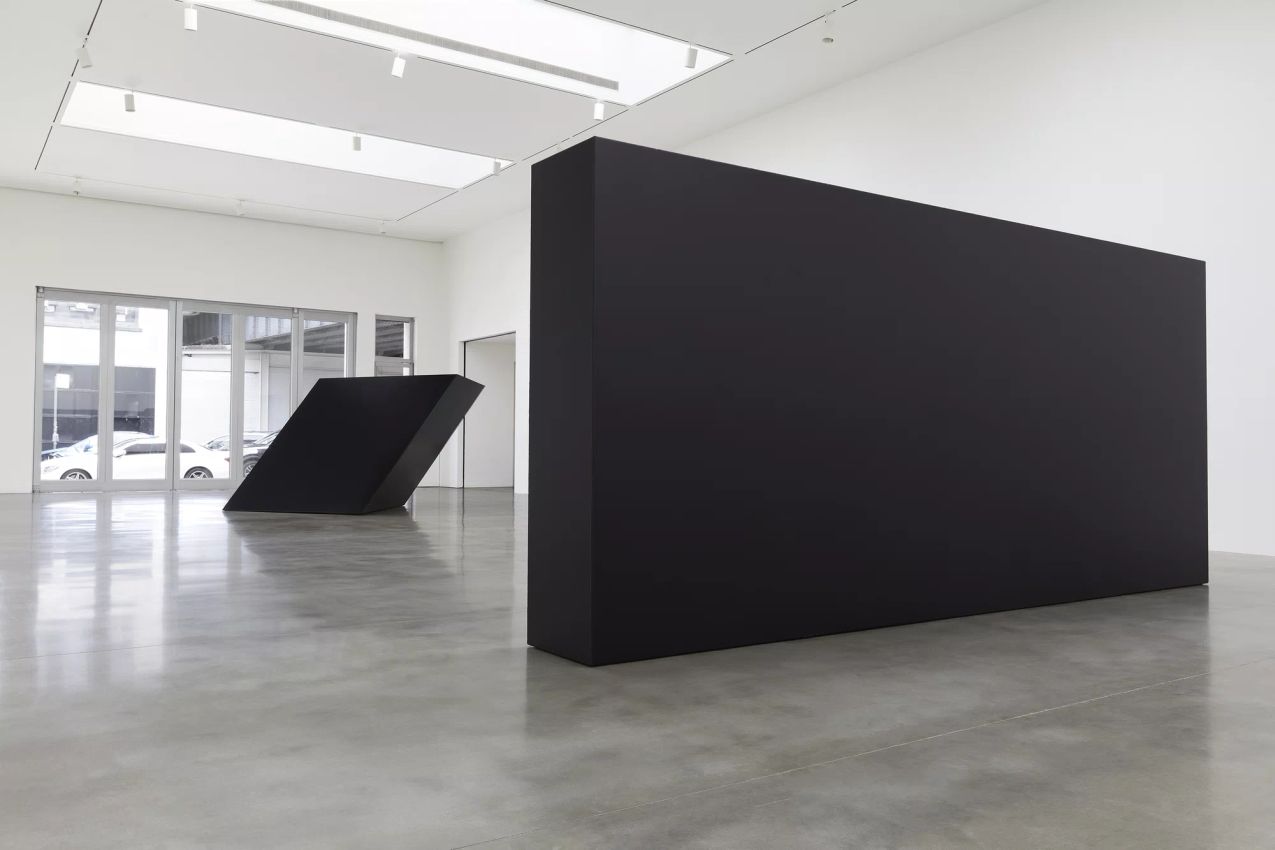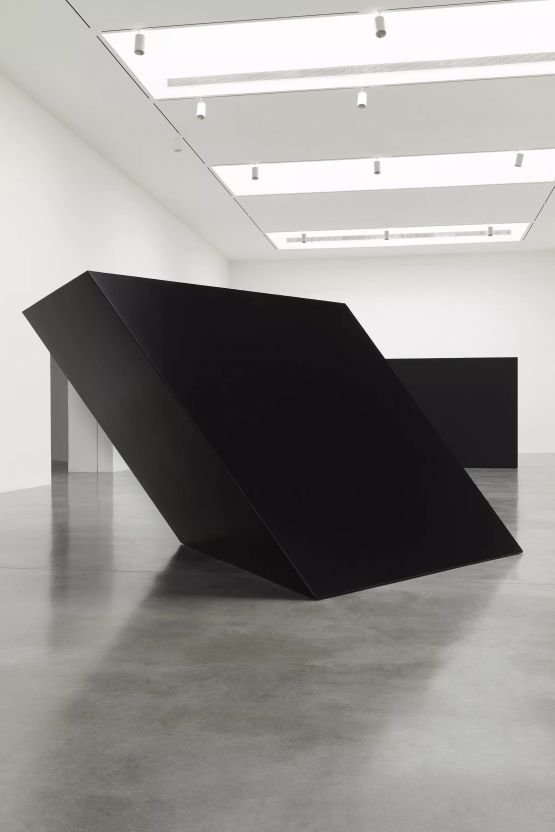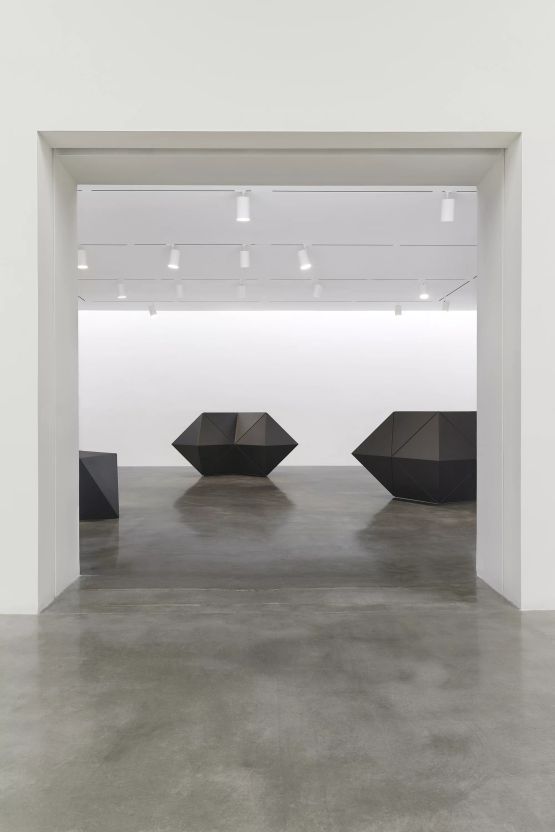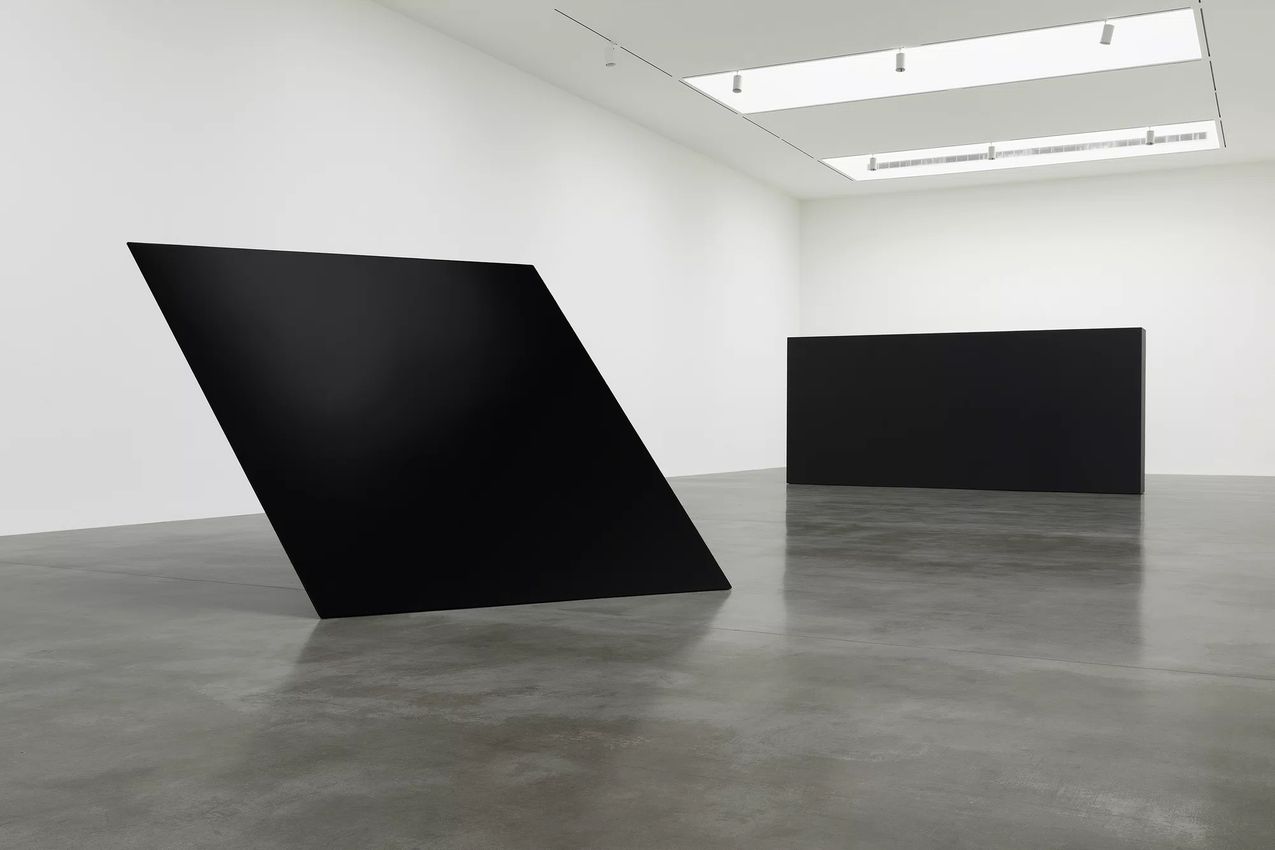
Pace is pleased to present an exhibition of large-scale sculptures by Tony Smith at its 510 West 25th Street gallery in New York.
On view from July 14 to August 19, the show will offer a unique opportunity for viewers to experience Smith’s monumental works, highlighting the evolution of the artist’s sculptural practice during the 1960s and 1970s.
Though he would become widely known for his sculpture, Smith began his career as an architect, working with Frank Lloyd Wright on Usonian homes and other projects in the late 1930s. The artist was an independent architectural designer from the early 1940s through the 1950s, crossing over into sculpture in the late 1950s and early 1960s.
Smith often drew inspiration for his dynamic geometric abstractions from phenomena in the natural world. Through his artworks, Smith investigated the formal possibilities of crystalline structures, including octahedrons and tetrahedrons. Embracing the imaginative effects of chance and chaos, the artist produced sculptures that forged a new language of abstraction amid the rise of Minimalism. Deeply engaged with architecture, science, mathematics, and philosophy, Smith’s works propose new modes of understanding and experiencing their surrounding environments. Pace maintained a long relationship with Smith during his lifetime, and it began representing the Tony Smith Estate in 2017.
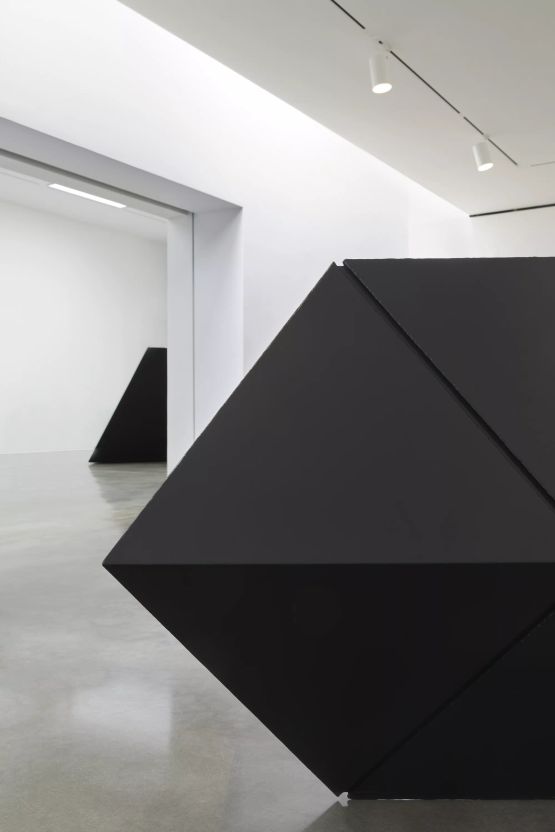
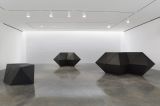
The gallery’s focused presentation in New York this summer will spotlight three of the artist’s large-scale, black-painted steel sculptures: Wall (1964), New Piece (1966), and One-Two-Three, A.P. (1976). Inhabiting non-linear planes of space, these sculptures are meant to be experienced from a wide range of perspectives. As viewers move around Smith’s shapeshifting works—which speak to the complex relationships between sculpture, the body, and the environment—new forms and meanings are revealed. Together, Wall, New Piece, and One-Two-Three, A.P. reflect Smith’s ability to imbue his lyrical abstractions with spiritual import.
Tony Smith (b. 1912, South Orange, New Jersey; d. 1980, New York) studied painting at the Art Students League, New York (1934–1936) and attended the New Bauhaus, Chicago (1937–1938), before apprenticing with Frank Lloyd Wright (1938–1939). For the following two decades, he worked professionally as an architect and held teaching positions at numerous institutions in New York and Vermont. In the early 1960s, Smith turned his focus to sculpture, with his architectural background informing one of his most radical innovations—having his work industrially fabricated. Widely recognized for his large-scale, modular works produced throughout the 1960s and 1970s, Smith was included in the seminal group exhibition Primary Structures at the Jewish Museum, New York, in 1966. His profound achievements in American sculpture have been honoured with retrospectives of his work at The Museum of Modern Art, New York (1998); Institut Valencià d’Art Modern (2002); and Menil Collection, Houston (2010).


A respected voice in contemporary art discourse.
Focusing on ambitious storytelling and insightful art-world commentary. Ocula Magazine publishes in-depth interviews, critical essays and timely analysis on the artists, exhibitions and ideas driving the global art world.
Learn more about Ocula Magazine
Showcasing the best of the art world.
Ocula partners with galleries from around the world to highlight their artists, artworks and exhibitions. Gallery membership is by application and invitation, with each member vetted by an independent panel.
Learn more about Ocula Membership

Specialises in the sale of major artworks.
Led by a team with deep ties to the world’s leading auction houses, galleries and collectors. Ocula’s advisory team offers bespoke services to high-net-worth clients from around the world who are looking to acquire the best of contemporary and modern art.
Learn more about our team and services