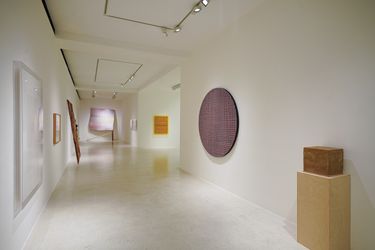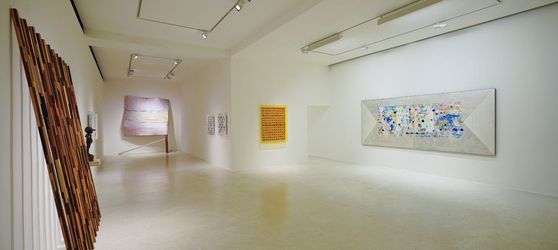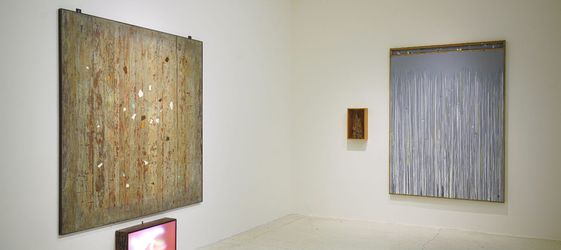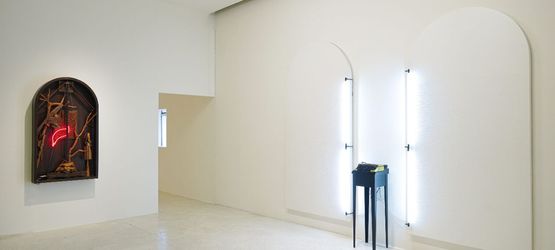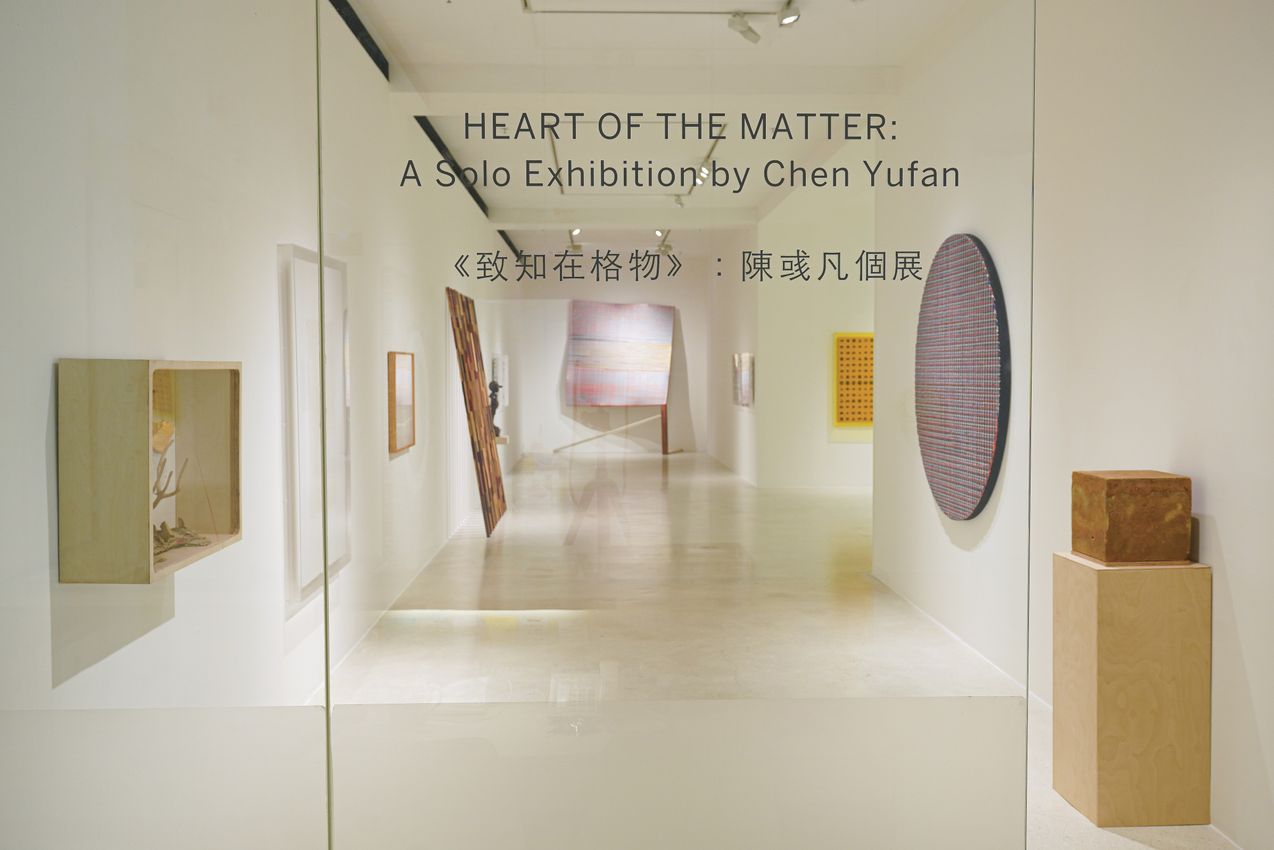
Hong Kong—Pearl Lam Galleries is pleased to present Heart of the Matter, a solo exhibition by Shanghai-based artist Chen Yufan. On view are different series of two- and three-dimensional objects together with a selection of installation works. Chen explores the subject of regional geography and examines how it can shape our perception. Heart of the Matter invites viewers to pay attention to the nature of our consciousness and, in particular, our association with a physical object to reveal kinship among individuals, communities, and society as a whole.
The artist is known for Mulan River Project (2011), a collaboration with his brother Chen Yujun, which delves into the migratory patterns of people and goods of the Mulan River located in their hometown, Putian in Fujian Province. This signature project has paved the way for Chen’s investigation on the fluidity of our self-identity. At a time when we can no longer differentiate between art, cultural commodities, and objects of appropriation, Chen has become sceptical of the use of art to initiate any positive changes in society. Conversely, his counter strategy is to turn inward. Using the neo-Confucius principle of metaphysics《格物致知》as a guide, Chen provokes new meanings of objecthood from a socioeconomic standpoint.
Bombarded by disparate histories, incessant urban development, and often conflicting demands of our surroundings, human existence appears to have become increasingly uncertain. How best should art be utilised as a tool for practising self-discipline to recover a fragmented self? Chen states, “Space is no longer a flat image. It is a tangible and psychological presence that can be experienced. While the dimensions of physical space cannot be altered, we can transform our mental and spiritual spaces through art.”
Chen’s works offer a glimpse into the transformative potential of art with the aim of evoking new thoughts and emotions. His two-dimensional hybrid paintings and installations are formally linked to convey an adaptable quality and are open to different interpretations with their material means. The movement of colours, dots, and lines duly transforms our reading of both space and time.
The placement of artworks in this exhibition conveys a narrative, from first presenting the unity of an object to shedding light on Chen’s use of material to reflect on social order. The next section then focuses on our collective ambivalence with remnants and the derivative nature of art in an era of dematerialisation. Heart of the Matter concludes with an intervention that provides the audience with multiple endings, knowingly offering people the possibility of embarking on a new existential journey, seeking a containment for spiritual mourning, or accepting the predicament of life becoming increasingly derivative.
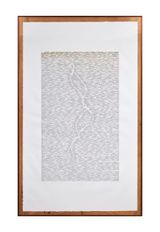
For Into One, Chen used an electric soldering iron to inscribe minute dots onto a sheet of paper as a practice of daily ritual. This meditative work expresses his psychological detachment towards past family memories and childhood imagination. One can see a cube at the centre of this drawing, possibly suggesting a private interior that severs all ties with society. Using the technique of rammed earth to combine demolished wall fragments from his over 300-year-old ancestral house with soil, straw, reed, and acrylic paint, Cube of Space-Time is a spirited yet generic vessel. Our longing for permanence and material culture is met with an infatuation with its fleeting quality. Ideal Country is a specimen drawing that illustrates a frog in detail; this imagery is juxtaposed with its faint profile in front of an imaginary emblem on the right side of the drawing.
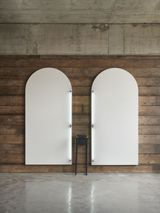
Rods of Civilisation is composed of multiple free-standing wooden rods that are made from scraps and offcuts of redwood gathered from Putian. Putian is one of the main distribution woodworking centres in the Asia Pacific region. The use of wood fragments with different colours simulates the integration of different communities into a homogenous whole. Throw in the Air—Scale of Freedom II represents the imbalanced rights of women from a global perspective. The flow and direction of paint on the painted surface connote a constant state of flux and instability. Slice of Civilisation deconstructs the notion of conformity by slicing wooden sceptres into equal parts and displaying them in a grid format on a flat surface. Uncertain Landscape—Spring experiments with the layering of paint until the original contour of the landscape image disappears. In the Derivative series, Chen integrates various mediums onto a simple, austere, and monochromatic surface, which he then rearranges in a playful manner. Through this process, he transforms the surface into a proportioned and serial grid that blurs the boundary between painting and sculpture. With stylistic reference to a reliquary that includes wooden elements and neon light, Morgue suggests a temporary place for honouring the deceased. For 1,2,1,1,3..., an automatic typewriter is placed in the middle of two large arch-shaped white paintings. The pairing of white light encourages audiences to enter a pristine and unknown space whereby the script for recording our experiences that lie beyond is to be written.


Chen Yufan was born in 1973 in Putian, Fujian Province in China. He graduated from the College of Fine Arts at the Fujian Normal University in 1997, before graduating from the Integrate Art Department at China's Academy of Art in 2007. He now lives in Hangzhou.
Pearl Lam Projects is an international programme of off-site exhibitions and artistic collaborations. Building on the gallery’s permanent space in Shanghai, the programme operates across numerous cities, including Hong Kong, enabling the gallery to present work by and expand opportunities for its diverse roster of international artists beyond its year-round gallery programme.

A respected voice in contemporary art discourse.
Focusing on ambitious storytelling and insightful art-world commentary. Ocula Magazine publishes in-depth interviews, critical essays and timely analysis on the artists, exhibitions and ideas driving the global art world.
Learn more about Ocula Magazine
Showcasing the best of the art world.
Ocula partners with galleries from around the world to highlight their artists, artworks and exhibitions. Gallery membership is by application and invitation, with each member vetted by an independent panel.
Learn more about Ocula Membership

Specialises in the sale of major artworks.
Led by a team with deep ties to the world’s leading auction houses, galleries and collectors. Ocula’s advisory team offers bespoke services to high-net-worth clients from around the world who are looking to acquire the best of contemporary and modern art.
Learn more about our team and services