Press Release

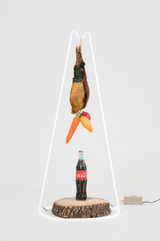
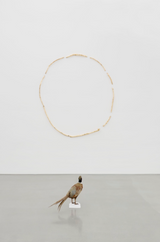
The most recent body of work by Gabriel Rico, an artist fromGuadalajara, Mexico, coalesces non-western knowledge of firstnation, or indigenous, people with the intention to build a strongerconnection with nature. Realised through his own methods offound object collection and organisation, fabrication of newobjects, and his extensive collaboration with the local Wixárikatribe, Rico has built an alternative perception of how physics,geometry, logic, and spirituality balance our existence with ourpotential.

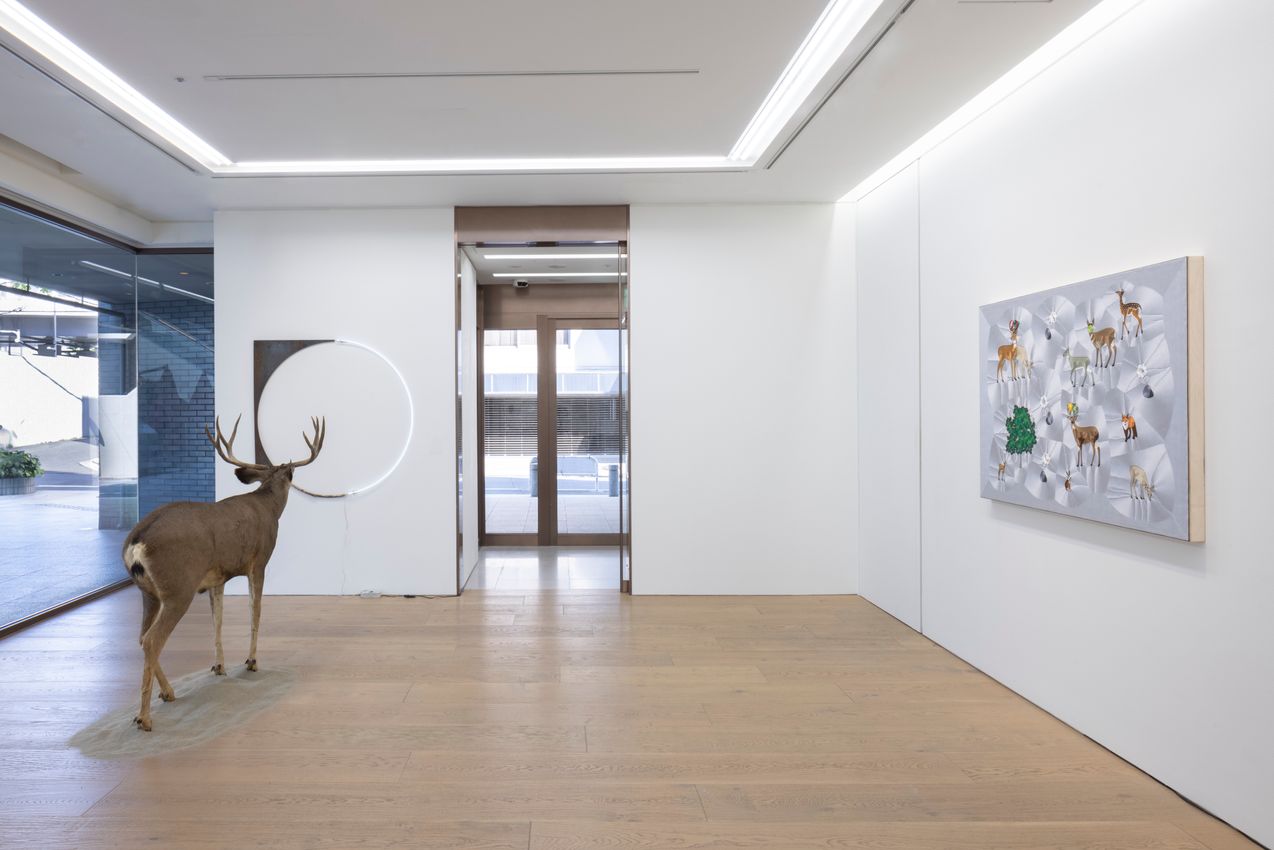
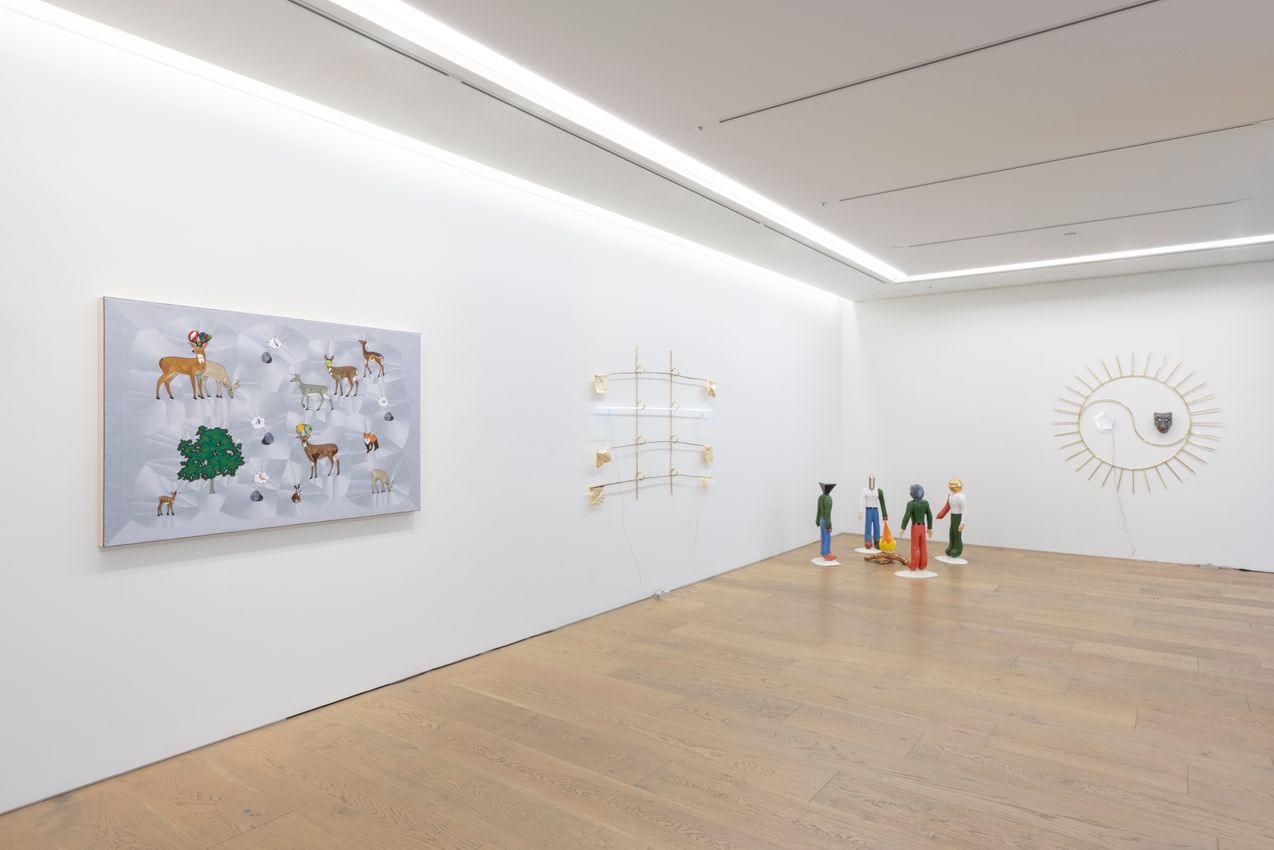
_The Propogation of Teurár_i is dedicated to the native group with whomRico has worked over the last decade. He has collaborated with themby utilising their traditional artisanal techniques of nierika, or yarnpaintings that can be seen in The second cause is meant to be anexplanation of the first (Páramo, The oak tree), as well as through theuse of chaquiras, or glass beads. The techniques lend themselves to aprocess of folkloric imagination, allowing the Wixárika artisans toconstruct new universal compositions that employ deer and othernatural elements as sacred. The name Teurári refers to a deer manifestedin the identity of God. Their nature-based religion inspires Rico andcountless others to rethink our relationship with the Earth from aconservation and evolutionary perspective. This perspective reflectsthe belief systems of the artisans and what Rico sees as the pathtoward humanity’s salvation.

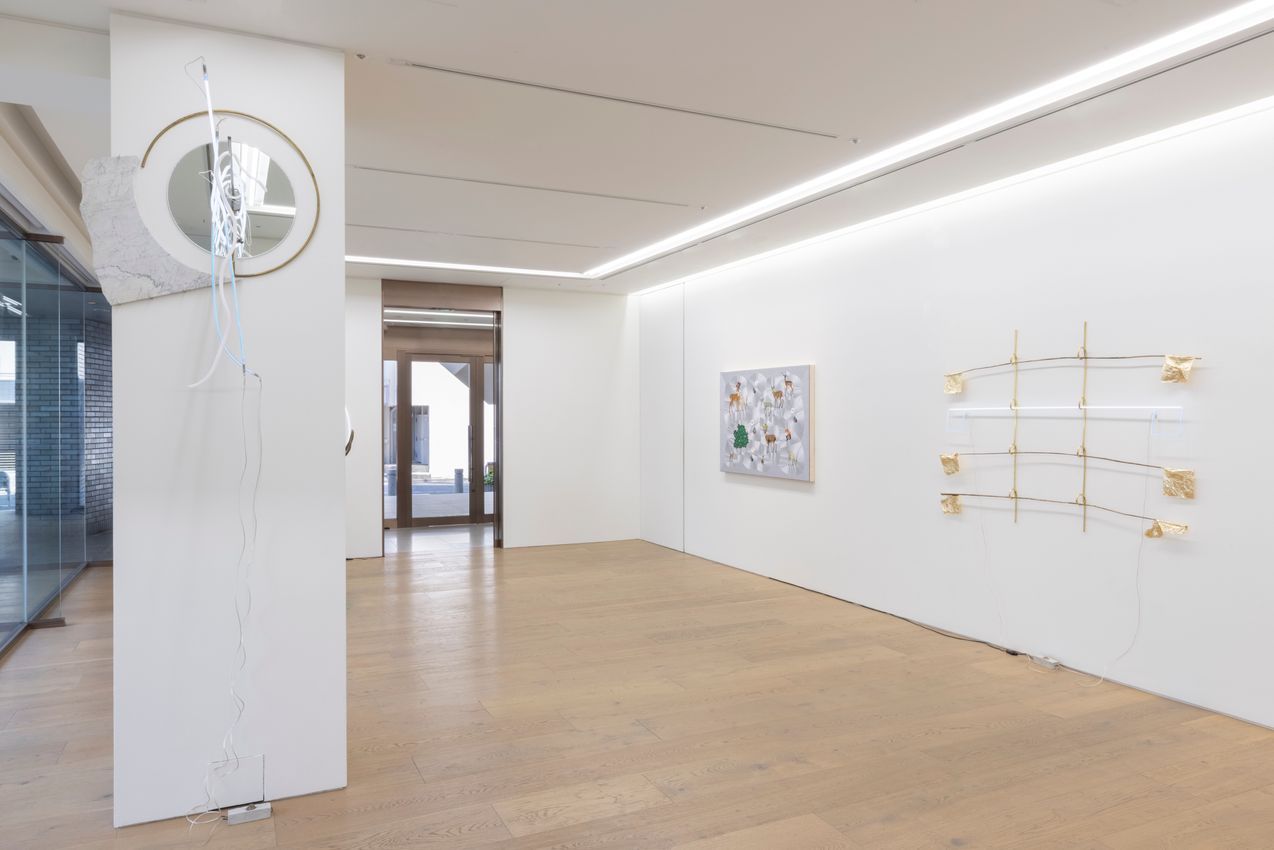
Upon further inspection, the perception of nature through native beliefsinvolves rhythm, balance, and harmony that can only be found in thesubtlety of natural movements and geometric forms. In VII from theseries -The taste of superlative and the admirable holiness-, the breezecaused by the passing of a human causes the suspended gold leaf toflutter for just a moment; a tactile connection of invisible atoms betweenthe human and the artwork. It is juxtaposed with light, a symbol of theethereal and metaphor for the light at the end of the tunnel, a heaven-like space in limbo. The symmetry of the work is comforting, much likethe Yin and Yang of No podemos ver el interior del sol directamente(pentágono y máscara), a product of precise calculation that furthersthe sense of balance and form found in nature.

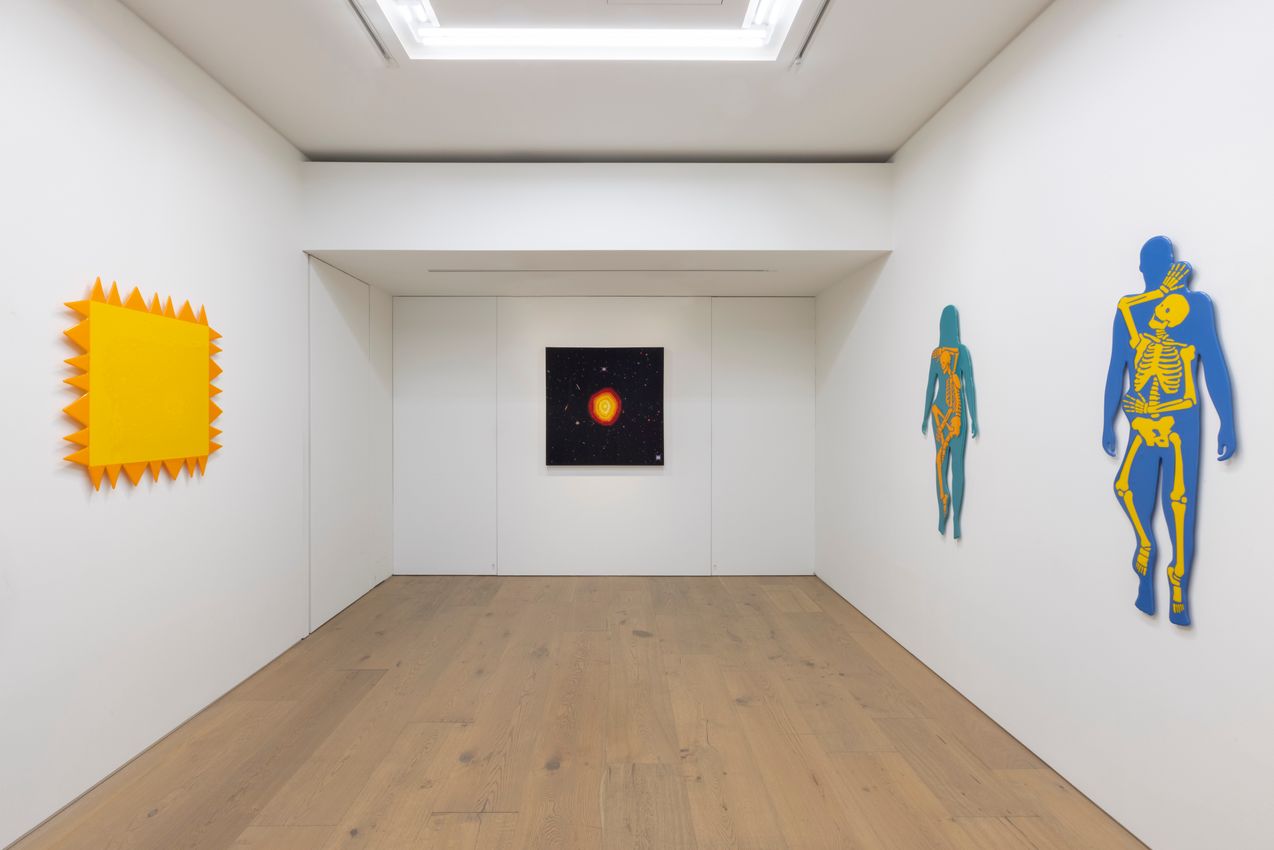
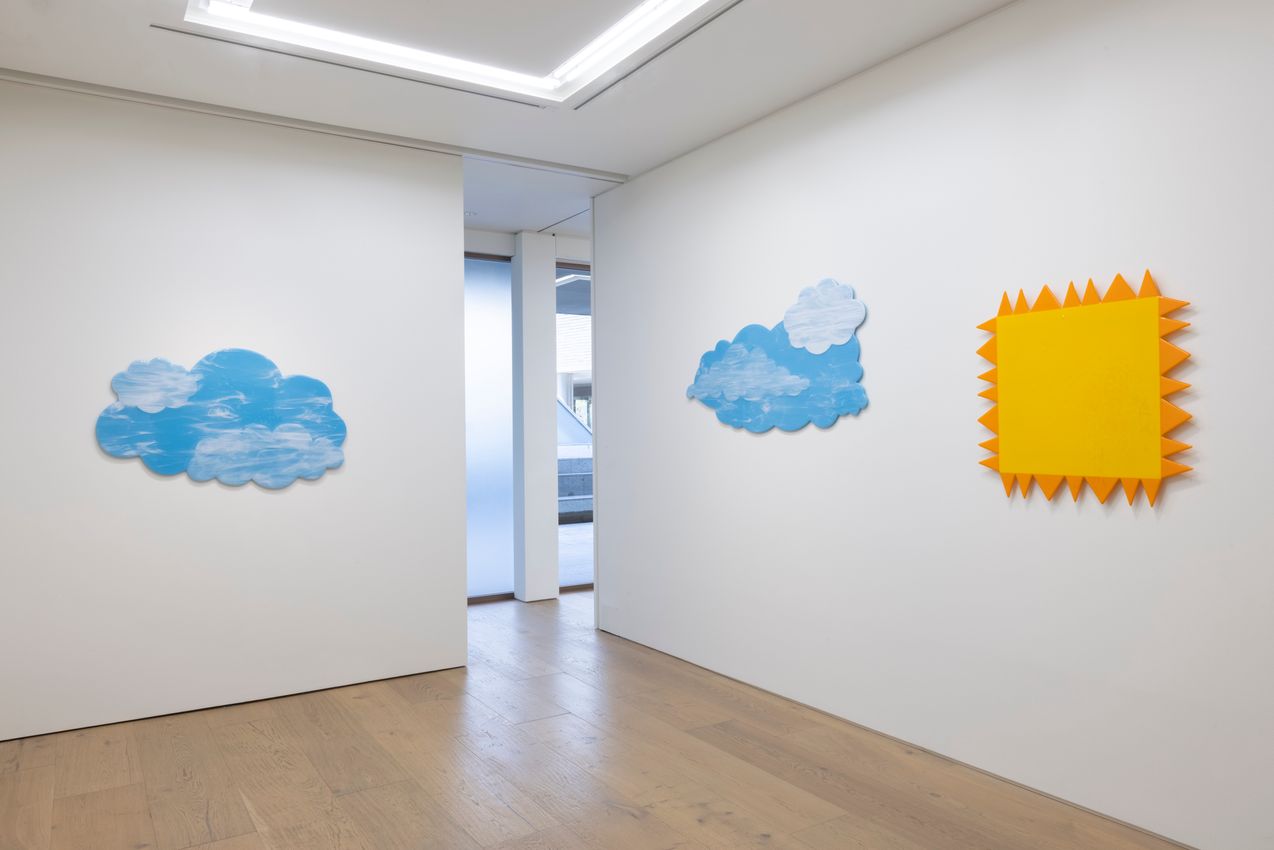
The connection between the object (the sun), the function (the sunsupports life on Earth), the logic (mathematics of geometry and physicalfunction), and the interpretation (the symbolism and artisticrepresentation), constructs a symbiosis between that which we seeand that which we represent. Rico aligns with the understanding ofnature’s function as well as humanity’s common misperception of howit is consumed. By altering the shape and traditional expectation ofnatural geometry he calls forth the absurdity of our rejection of natureand the use of art itself as an absurd form of representation. This isexemplified in the work If the Sun had been reduced in size because ofthe space between I and Us, much more would it have lost its color(glass square), which converts the sun into a rectangular form andemphasises the astrophysical components of the photosphere (yellow)and solar spicules (orange).

Parallel to this process is Rico’s conversion of the intangible intotangible. In his Metawoman series, clouds embody the ever-evolving,omnipresent feminine identity through the physicality of an etherealform: vapour. The ubiquity of nebulous forms consistently ties ourexistence to a more spiritual connection with nature’s elements and thedirect effect that humanity has on them: the clouds as a gate to theheavens.

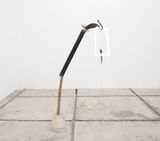
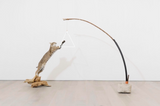
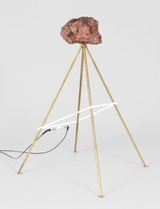
Similar to his approach to the intangible, Rico displays the evolution oftangibility as tied to a throughline of human-nature connection, bridgingthe manipulated matter of our present towards a speculative future ofhuman potential. A single branch acts as inspiration for the manipulation of neon, brass, and stone, creating a symbiosis of materials both man-made and natural that justify our current circumstance of authority andpower over nature. As Rico describes, ‘I am showing how contemporarysociety is searching for how to reconnect with nature and how to saveourselves from our own actions.’

In an act of human-to-nature extravagance, the artist soars through theEarthly heavens and into the amorphous identity of space. Scientifically,logically, we prove that our terrestrial connection to nature exhibits onlya portion of our understanding of the universe. The potential to connectto the greater ‘beyond’ unveils our unending desire to solidify our placeas the most intelligent species. The creation of the Hubble SpaceTelescope captures these images of distant lands and stardustformations that are nebulous and intoxicatingly beautiful. They are proofof our power to see.

In Rico’s work To compound the small differences VII, he presents tomaster craftsman Heriberto Castro Montoya, or Tikitemai as he isknown in Wixárika, images from Hubble and asks him to imagine, ormake tangible the ambiguous forms discovered at the distant reachesof our galaxy and beyond. The translation of these images with _chaquiras_transforms the identity of cosmic objects into relatable figures thatfurther connect us to the ethereal sense of nature. The delicatecraftsmanship of this artisan reflects the care with which representationof nature is of the utmost importance and highlights the expansiverelationship that indigenous knowledge has with Earth and the universe.

The gray space–the space in between–that surrounds the divinecreatures and objects of nature found in The second cause is meant tobe an explanation of the first (Páramo, The oak tree) is not empty.Rather, it is a space for imagining where care, trust, and potentialprovide an opportunity to align our identities and actions with ourunending connection to the natural world both on Earth and in theheavens beyond.

Read More

Installation Views

About the Artist

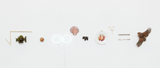
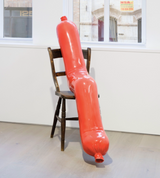
Born in 1980 in Lagos de Moreno, Mexico, Gabriel Rico now lives and works in Guadalajara, Mexico. His work is characterised by the interrelation of seemingly disparate objects. Self-proclaimed ‘ontologist with a heuristic methodology’, Gabriel Rico pairs found, collected, and manufactured materials to create sculptures that invite viewers to reflect on the relationship between humans and our natural environment. Rico frequently uses neon, taxidermy, ceramics, branches and more personal pieces of his past to create an equation or formulation. His works achieve a precise geometry despite the organic, roughly hewn character of their materials. His installations ironically and poetically combine natural and unnatural forms, insisting on a necessary contemplation on their asymmetry as well as our own cultural and political flaws.

View Artist Profile

Also Exhibiting at Perrotin

About the Gallery
Emmanuel Perrotin founded his first gallery in 1989 at the age of 21. He has opened since then over 17 different spaces, with the aim of continuing to offer increasingly vibrant and creative environments to experience artists work. He has worked closely with his roster of artists, some since more than 25 years, to help fulfill their ambitious dreams and projects. The gallery is now based in New York, Paris, Hong Kong, Seoul, Tokyo, and participates in all the significant worldwide art fairs each year (Art Basel (Hong Kong, Miami, Basel), Frieze (London, New York), FIAC (Paris), Dallas Art Fair, Art Cologne, Art Stage Jakarta, Expo Chicago, Art021 & West Bund Art & Design, Shanghai, Zona Maco Mexico, amongst others).
View Gallery Profile
Address
Piramide Building 1F
6-6-9 Roppongi
Minato-Ku
Tokyo
Japan
Opening Hours
Tuesday – Saturday
11am – 7pm
(1)
Tokyo Piramide Building 1F, 6-6-9 Roppongi
Perrotin
Piramide Building 1F, 6-6-9 Roppongi, Minato-Ku, Tokyo, Japan
+81 367 210 687
http://www.perrotin.com

Opening hours
Tuesday – Saturday
11am – 7pm
The art world in focus