



Perrotin Paris is pleased to present an installation of recent workby New York and Houston based artist Leslie Hewitt. Drawing fromher understanding of the convergence of time and spatialrelationships, Hewitt juxtaposes disparate images or objects, whichshe unifies to create a cohesive whole.
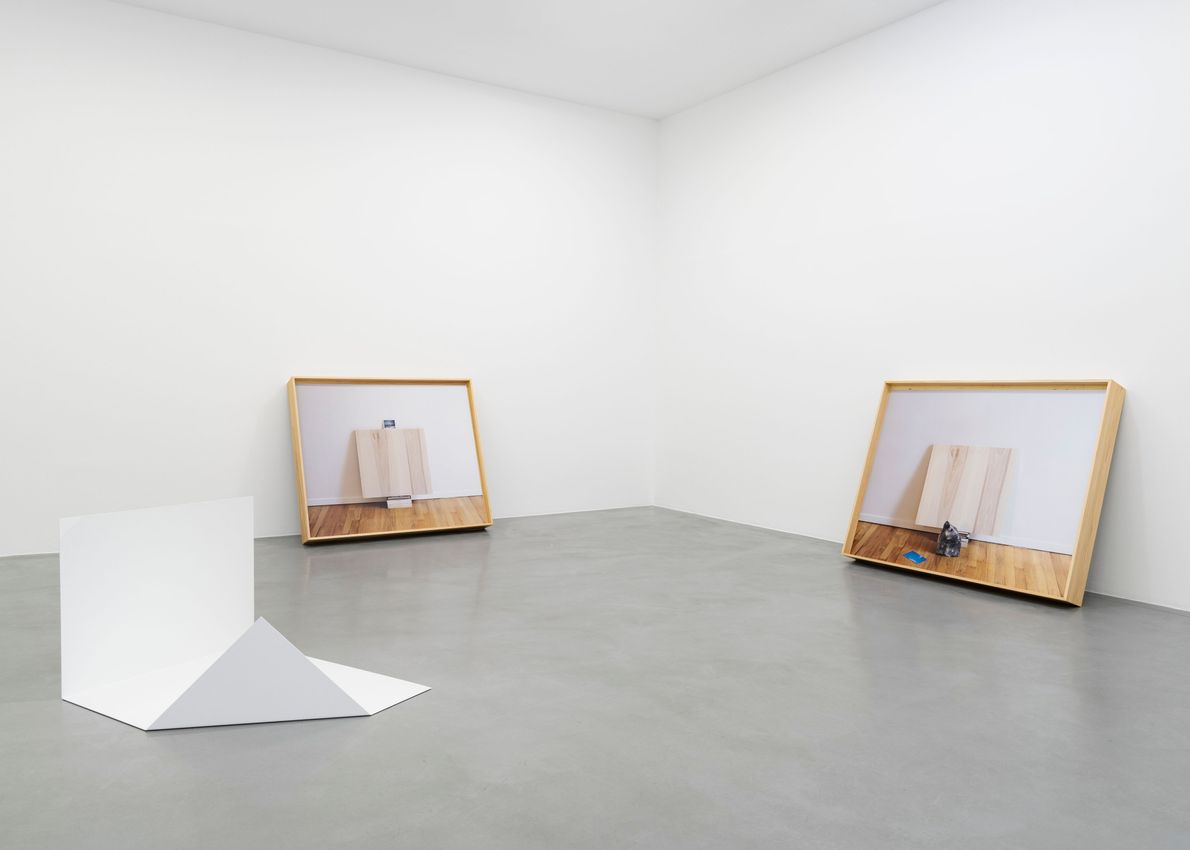
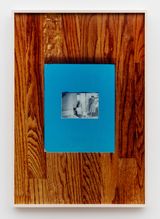
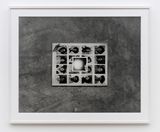
In her photo-sculpture series, titled Spiral and Loop, Hewitt presentsa collection of still-life photographs encased in custom-crafted wooden frames, leaning against the wall at a precise 15 degree angle.Hewitt captures these images in her studio, utilizing a fixed cameraangle and playing with the soft illumination of the natural light floodingthrough the windows. Within each of the compositions, Hewittthoughtfully juxtaposes personal objects–a stack of books, an abstract drawing, or found photographs from family and friends–with rawmaterials–wood and stone. Hewitt’s meticulous placement of objectsconfines these materials within a transitional space where theyundergo a choreographic and geometric arrangement, but are ultimately all influenced by her own hands. By displacing and repositioningthese objects in the camera’s fixed space, Hewitt is able to achieve aprofound sense of balance and harmony, manifesting in each work asa gentle and nuanced unfolding of visual phrases.
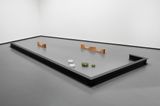
Alongside her photo-sculptures, Hewitt presents two industrially fabricated steel sculptures. These sheets of metal were folded at differentpoints along the same plane, forming an array of visually striking90-degree angles. These geometric forms not only captivate theviewer with their aesthetics, but also mirror an industrial environmentin the way they embody themes of navigation, perspective, and orientation. Through their dimensions and sharp angles, the structures respond to the doors, windows, and corners of the space, blending intothe gallery’s architecture, further emphasizing Hewitt’s understandingof spatial relationships.
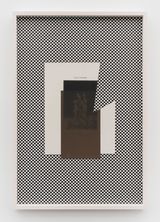
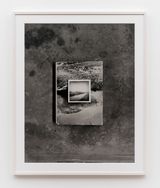
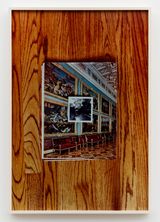
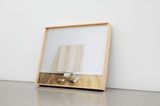
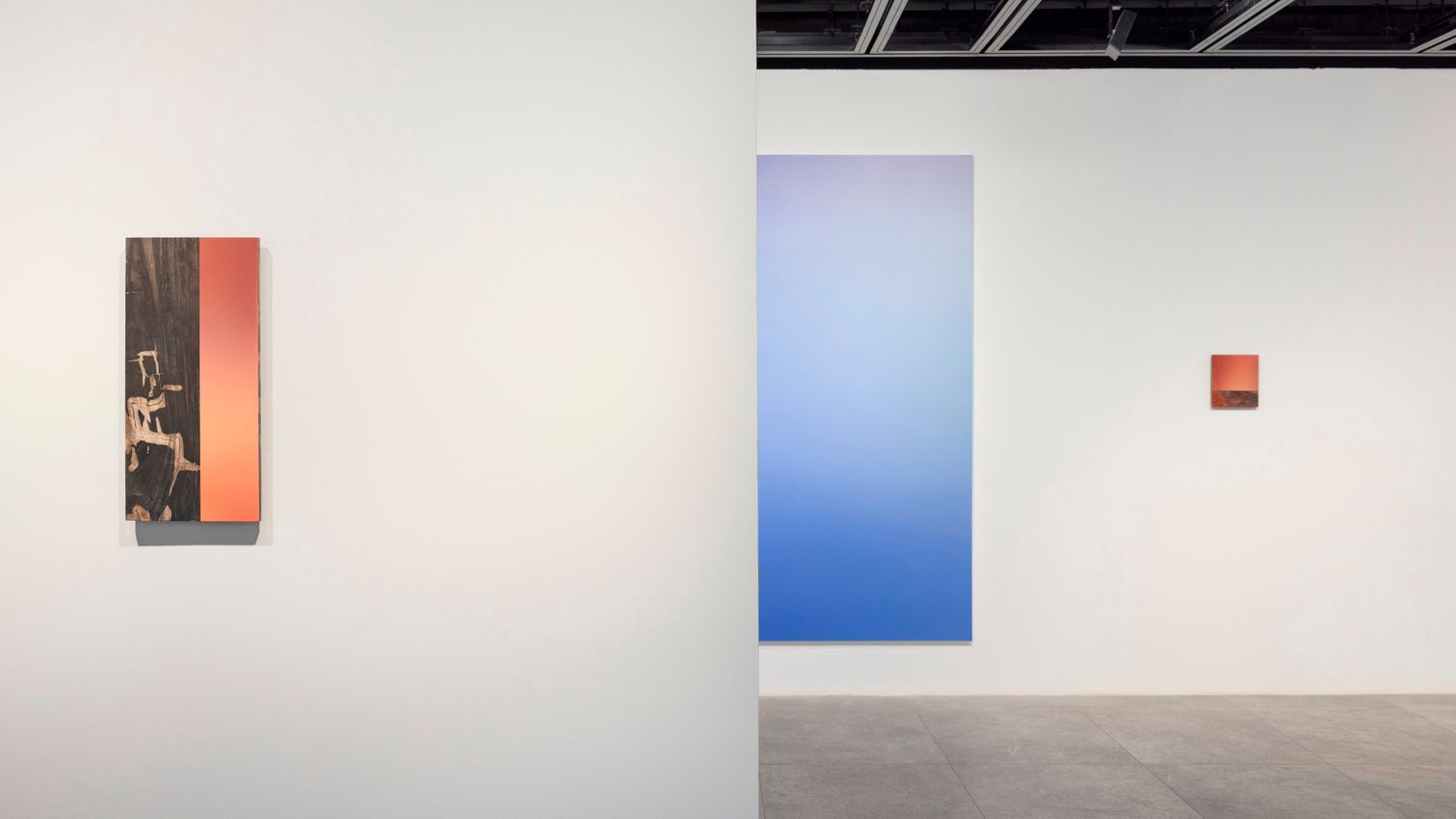
In the series Daylight/Daylong, Leslie Hewitt encapsulates herresearch conducted at the Chinati Foundation, in Marfa, Texas througha captivating collection of diptych photographs. Each composition features a striking interplay between the left and right side. On the left,Hewitt captures the magnificent and radiant sunrise stretching acrossthe West Texas horizon. In response, the right side depicts an abstractrepresentation of her sensory encounter with Dan Flavin’s 1996 lightinstallation, Untitled (Marfa Project) which, through low-pressure mercury-vapor gas-discharge in fluorescent tubes produces intense ultraviolet light. Her frames are set at varying depths within artist-designedwooden boxes, adding a three-dimensional quality to the works. Theseslanted frames entice viewers to walk around the works and engagewith them from varying angles, thus prompting a personal contemplation of altered perspective. The works blend light and color, and workto bridge the gap between past and present, time and space.

Working with photography, sculpture, and site-specific installations, Leslie Hewitt addresses fluid notions of time. Her work oscillates between the illusionary potential of photography and the physical weight of sculpture. In her photographed arrangements, she isolates personal effects and the residue of material culture to consider the fragile nature of everyday life. Her approach to photography and sculpture revisits the still life genre from a post-minimalist/civil-rights perspective. Her geometric compositions, which she frames and crystallizes through the spare assemblage of ordinary things, suggests the porosity between intimate and sociopolitical lives. Whether discreetly arranged in conceptually entangled layers or presented plainly, Hewitt often includes or is inspired by mementos such as family pictures, as well as books and vintage magazines that reference the Black literary and popular-cultures of her upbringing. Her practice as an artist points to the mechanisms of the construction of meaning and memory through decisively challenging both by unfolding formal, rather than didactic, connections in her contrapuntal compositions and distinctive take on spatiality.
Emmanuel Perrotin founded his first gallery in 1989 at the age of 21. He has opened since then over 17 different spaces, with the aim of continuing to offer increasingly vibrant and creative environments to experience artists work. He has worked closely with his roster of artists, some since more than 25 years, to help fulfil their ambitious dreams and projects.

A respected voice in contemporary art discourse.
Focusing on ambitious storytelling and insightful art-world commentary. Ocula Magazine publishes in-depth interviews, critical essays and timely analysis on the artists, exhibitions and ideas driving the global art world.
Learn more about Ocula Magazine
Showcasing the best of the art world.
Ocula partners with galleries from around the world to highlight their artists, artworks and exhibitions. Gallery membership is by application and invitation, with each member vetted by an independent panel.
Learn more about Ocula Membership

Specialises in the sale of major artworks.
Led by a team with deep ties to the world’s leading auction houses, galleries and collectors. Ocula’s advisory team offers bespoke services to high-net-worth clients from around the world who are looking to acquire the best of contemporary and modern art.
Learn more about our team and services