Press Release

Perrotin is pleased to announce Summertime, a solo exhibition by New York-based artist Josh Sperling. This is his first exhibition in Japan, and fourth with the gallery.

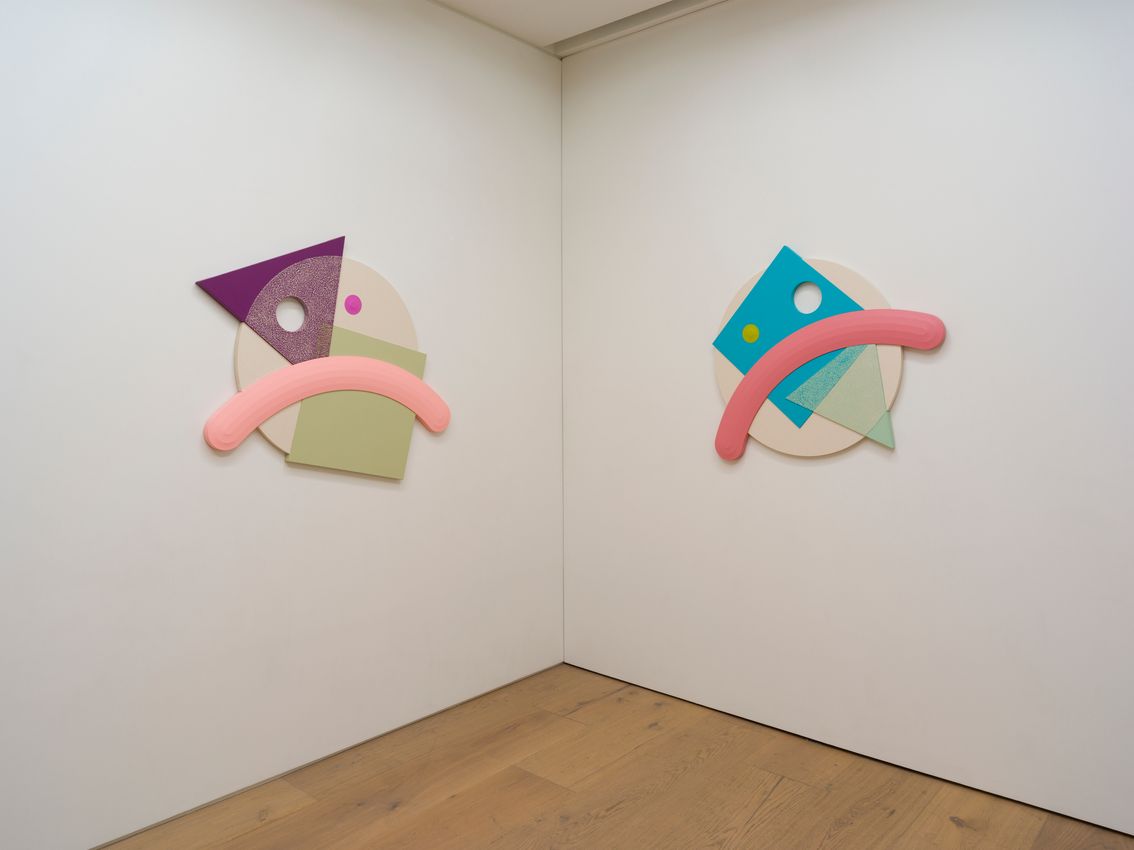
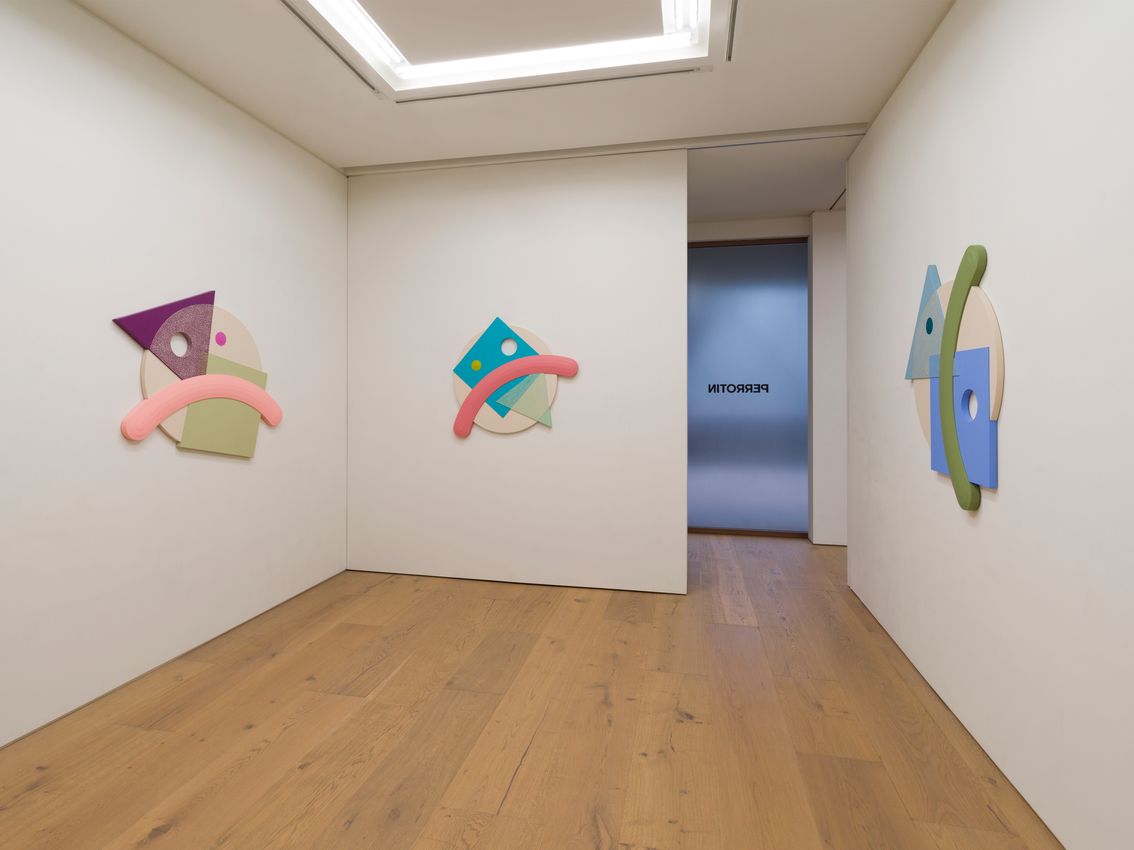
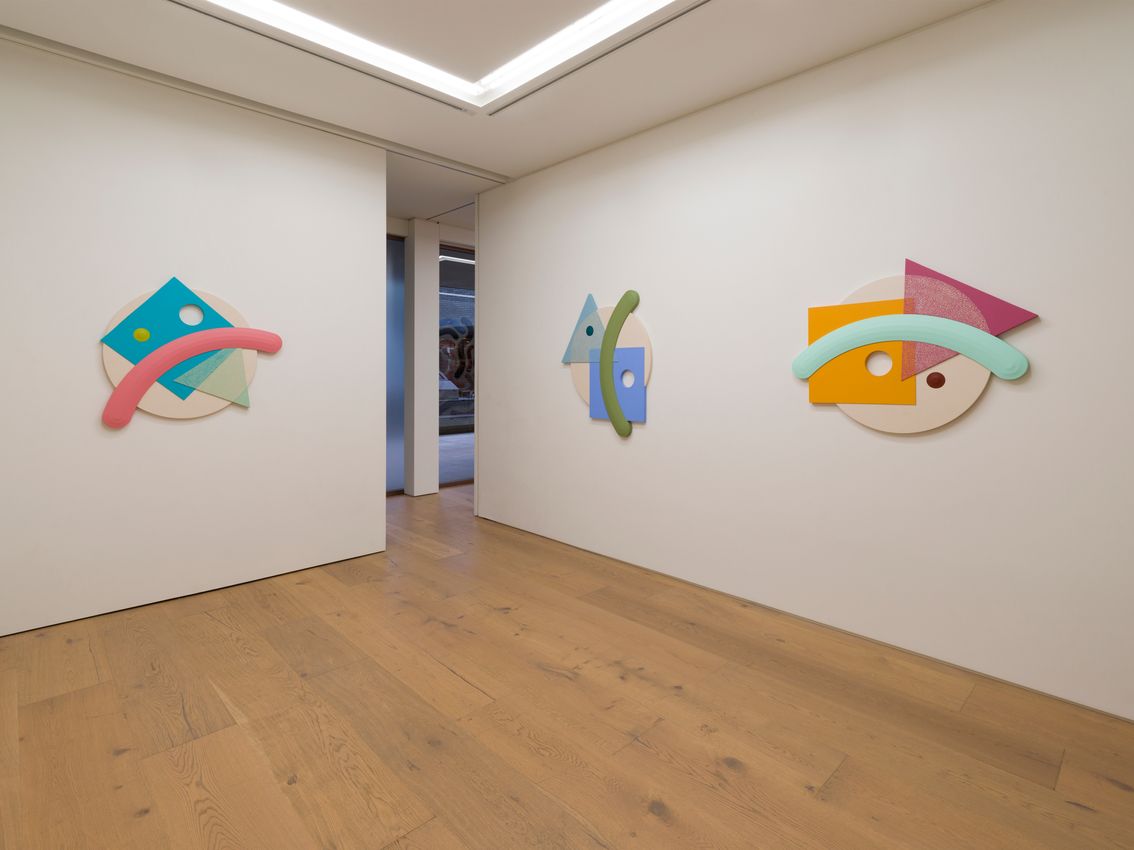
Sperling, whose work is noted for his expressive sculptural paintings (playful forms meticulously wrapped in energetically coloured canvases), has divided the exhibition into two constituent parts. These separate spaces each feature distinct visual approaches and compositions relevant to Sperling’s practice, merging his interest in canonical art historical movements to more popular postmodernist expressions of form.

To create his works, Sperling begins the process working with graphic design software to generate digital tiered forms that are then physically fabricated from plywood by an automated hi-tech router, ensuring a degree of perfection unattainable by hand. Sperling stretches swaths of canvas over the resultant forms, then choosing a decidedly manual process to paint the surfaces and eschewing digital techniques of colouring in favour of the nuance offered by traditional hand mixed paints.

In some ways, Sperling’s adherence to shaped canvases can be seen as an evolution of the work by noted artists such as Hans Arp and Frank Stella. It’s also important to understand the influence of more vernacular American forms on the artist, though. Having been raised in rural New York—away from the orbit of the broader art world—Sperling has acknowledged the influence of furniture design on his practice. In this, it’s worth noting work of the Memphis Group1 and their influential excessive forms in the 1980s as a clear reference. Additionally, pops of Americana find its way into his work, with forms recalling punctuating devices that appear in comic books and cartoons of the mid-to-late 20th Century. One only has to look at The Jetsons—with its aping of the space age and Googie architecture—to see subtle echos of retrofuturist forms and colours visible in Sperling’s work.

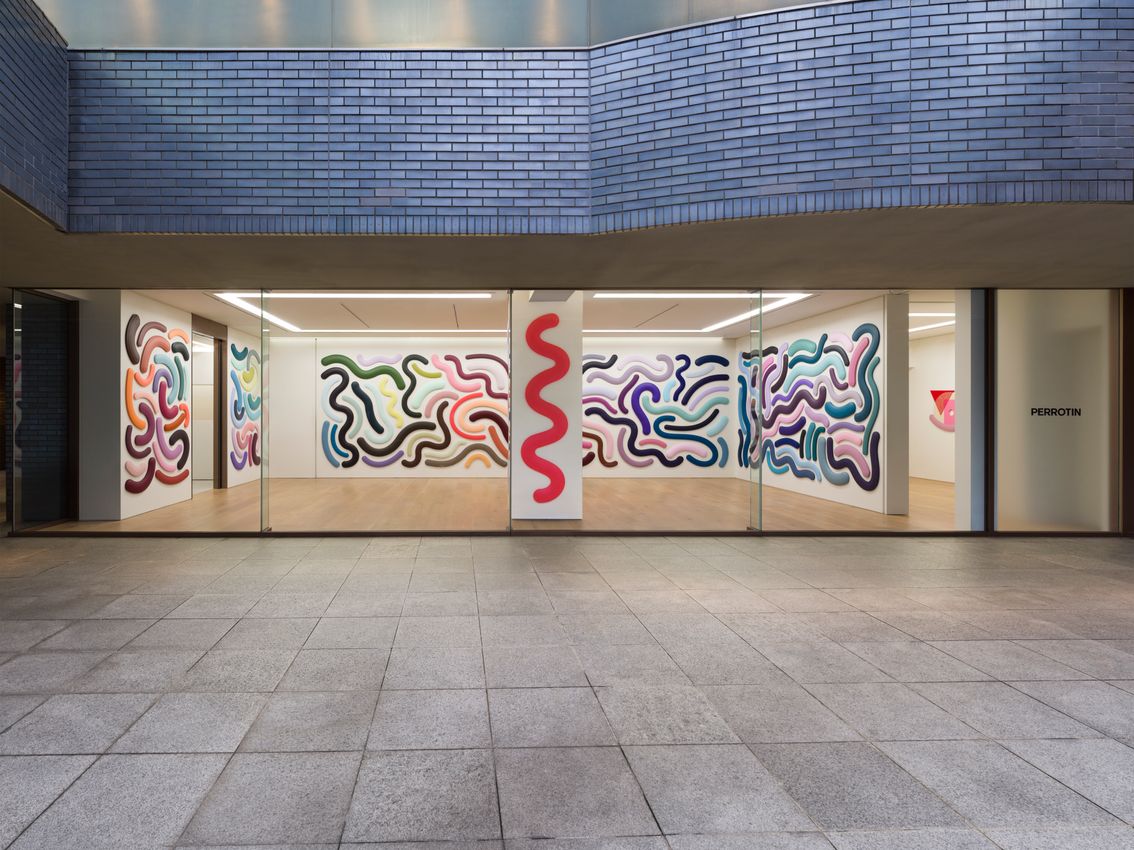
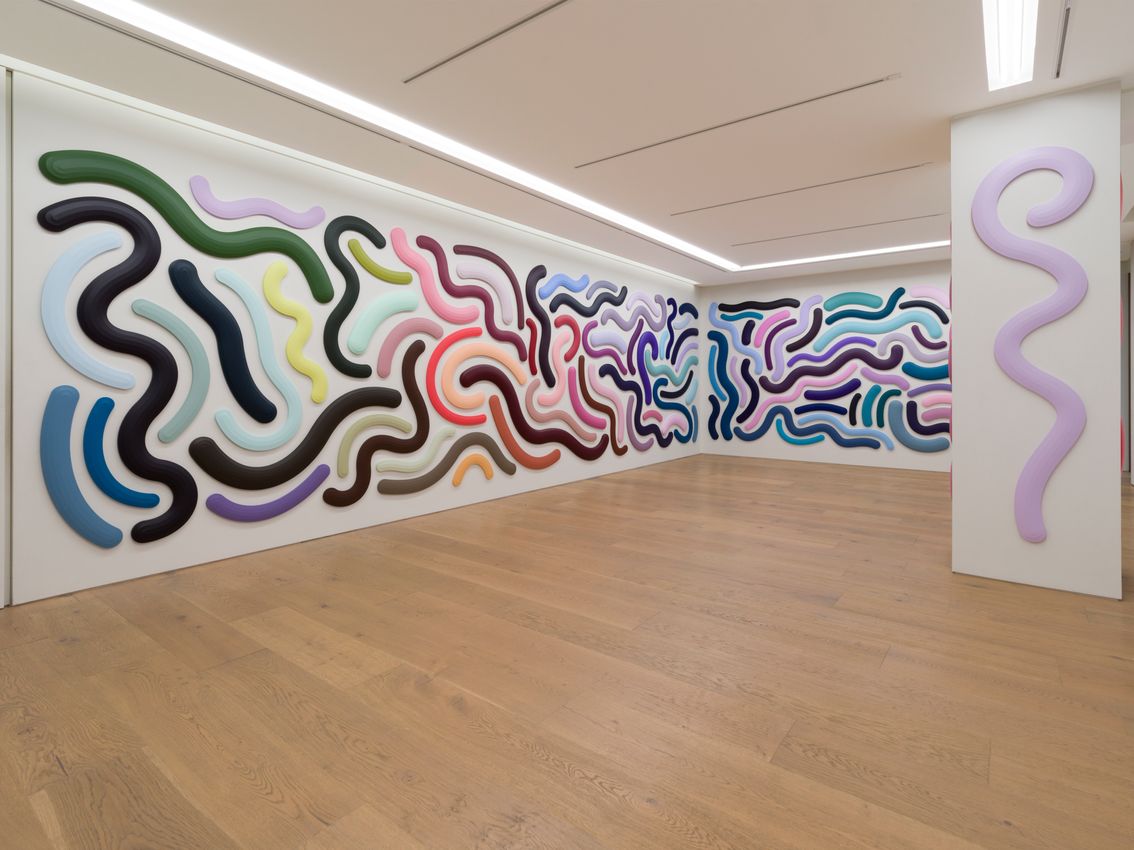
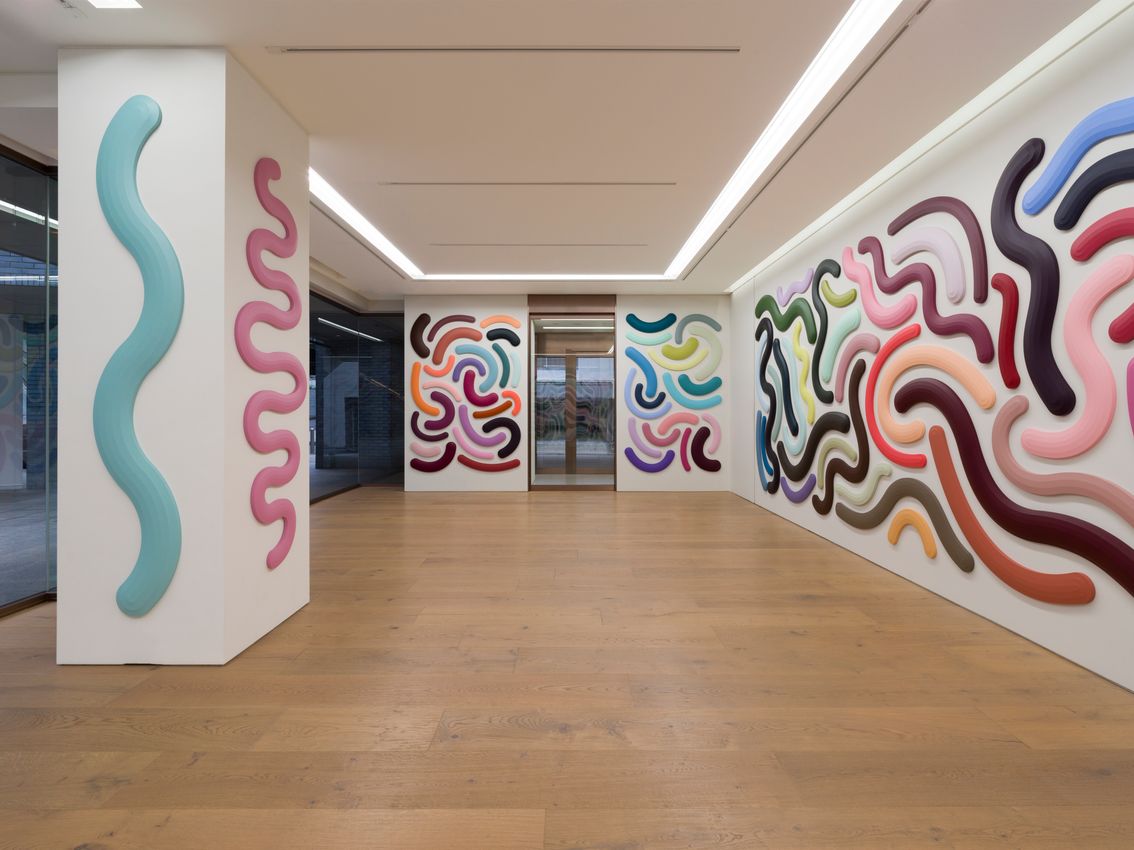
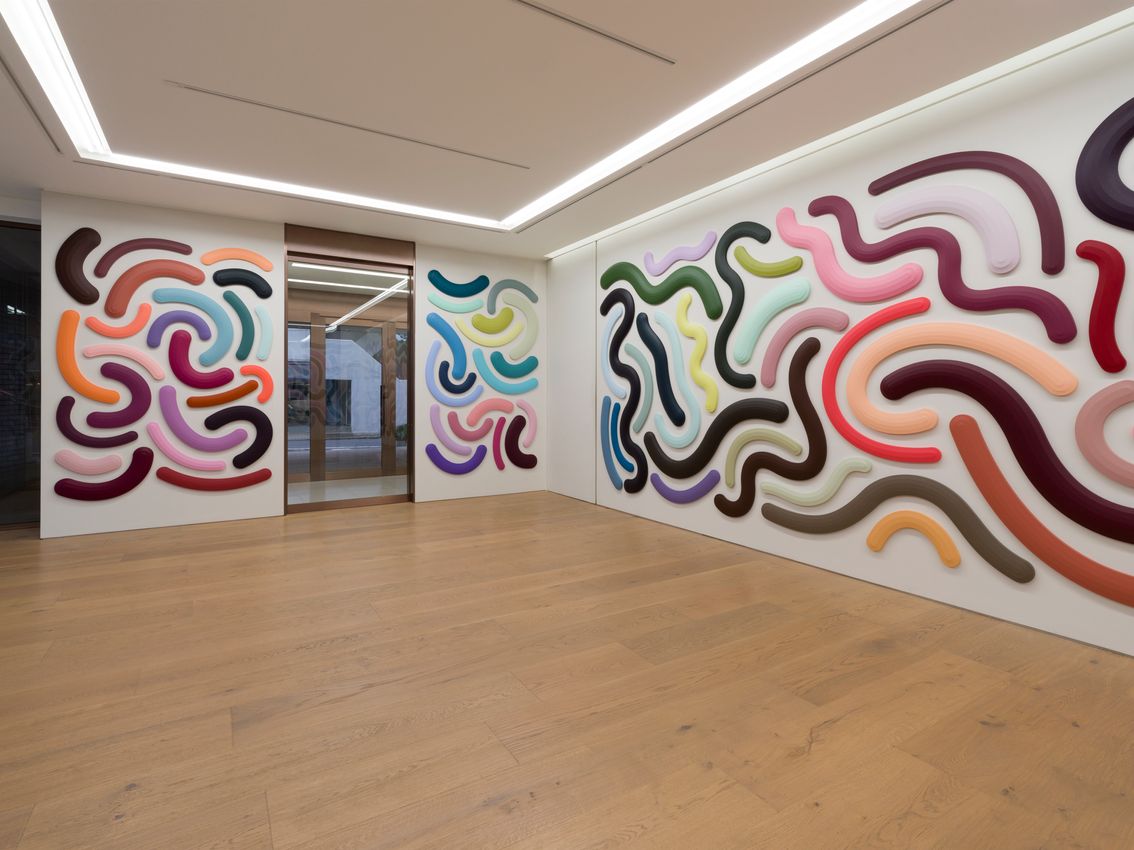
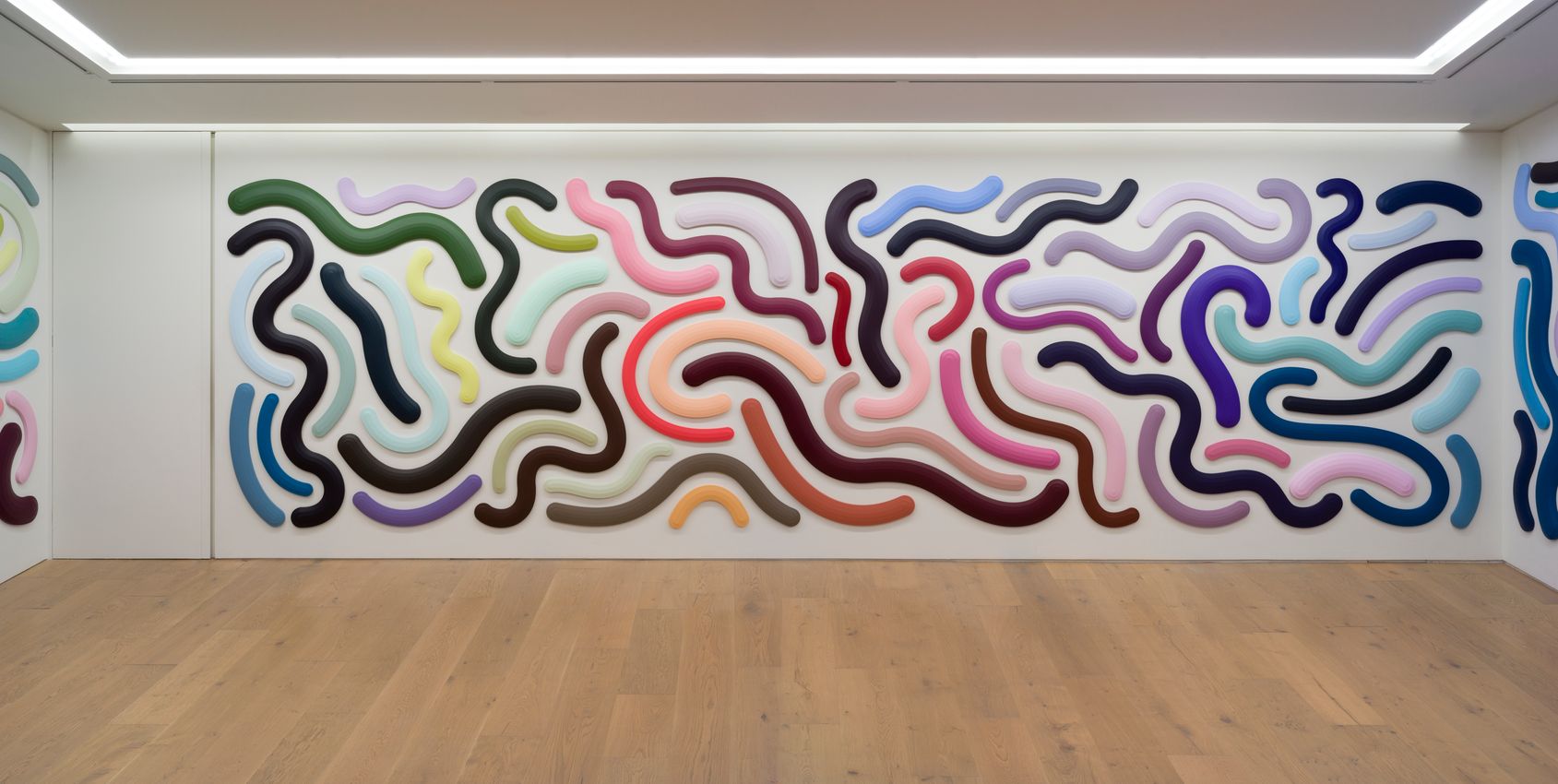
Within the first space, Sperling suffuses all vertical surfaces with an immersive and expansive ‘squiggle’ installation. Inspired by the room’s existing architecture, the pieces are in constant dialogue with their surroundings. During conception, Sperling envisioned the room as a sort of diorama, viewable from outside the gallery through the gallery’s large wall of glass windows. With this in mind, he began the work with the compositional placement of various serpentine forms throughout the extant wall space, then painted the work in a kaleidoscopic array of colours of varying tone. For this exhibition, Sperling displays a new development to his already masterful command of colour—mixing shades of grey paint into his palette of brighter colours, creating a nuanced and contemplative conversation throughout the room.

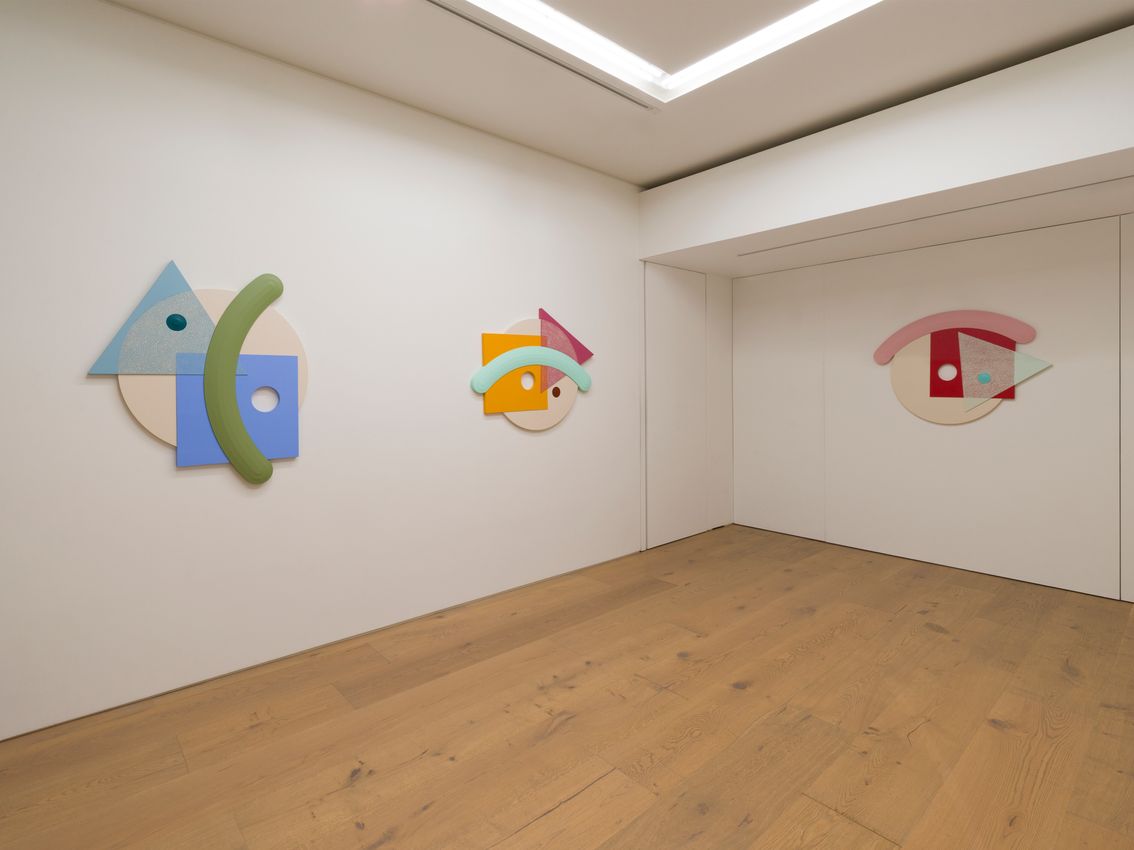
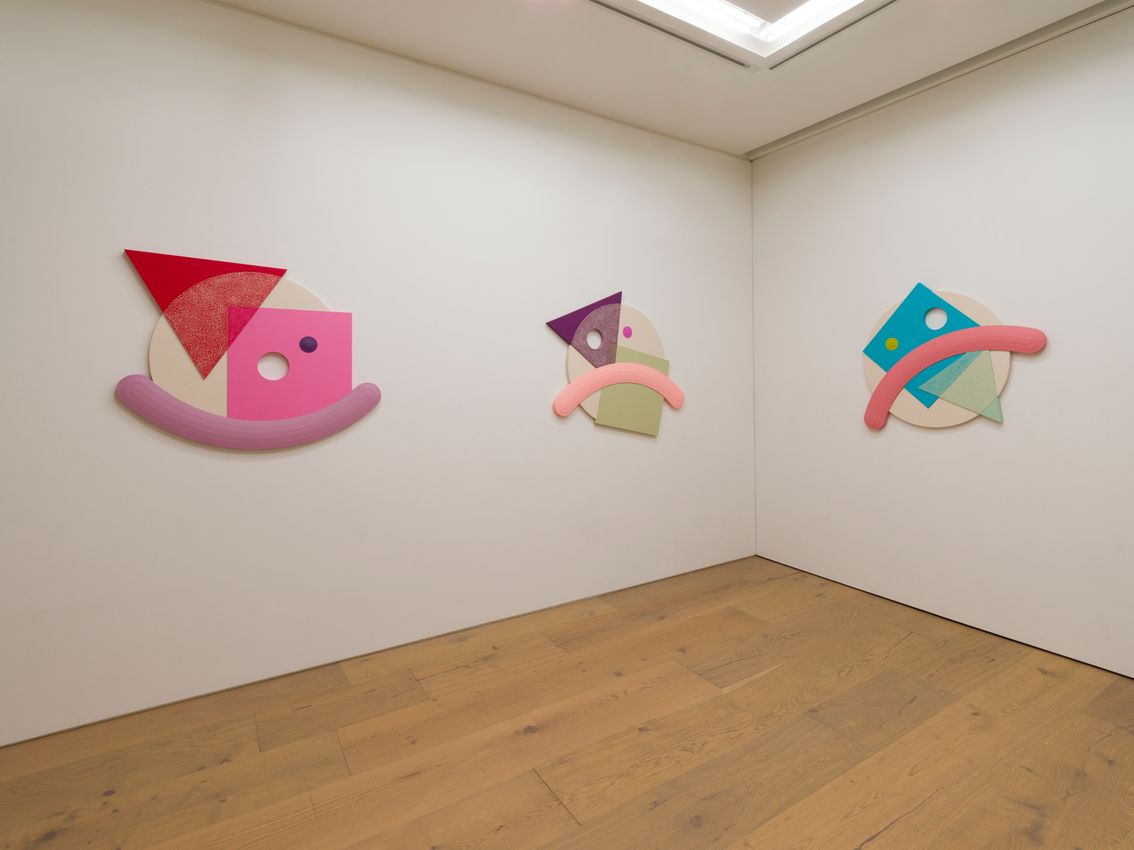
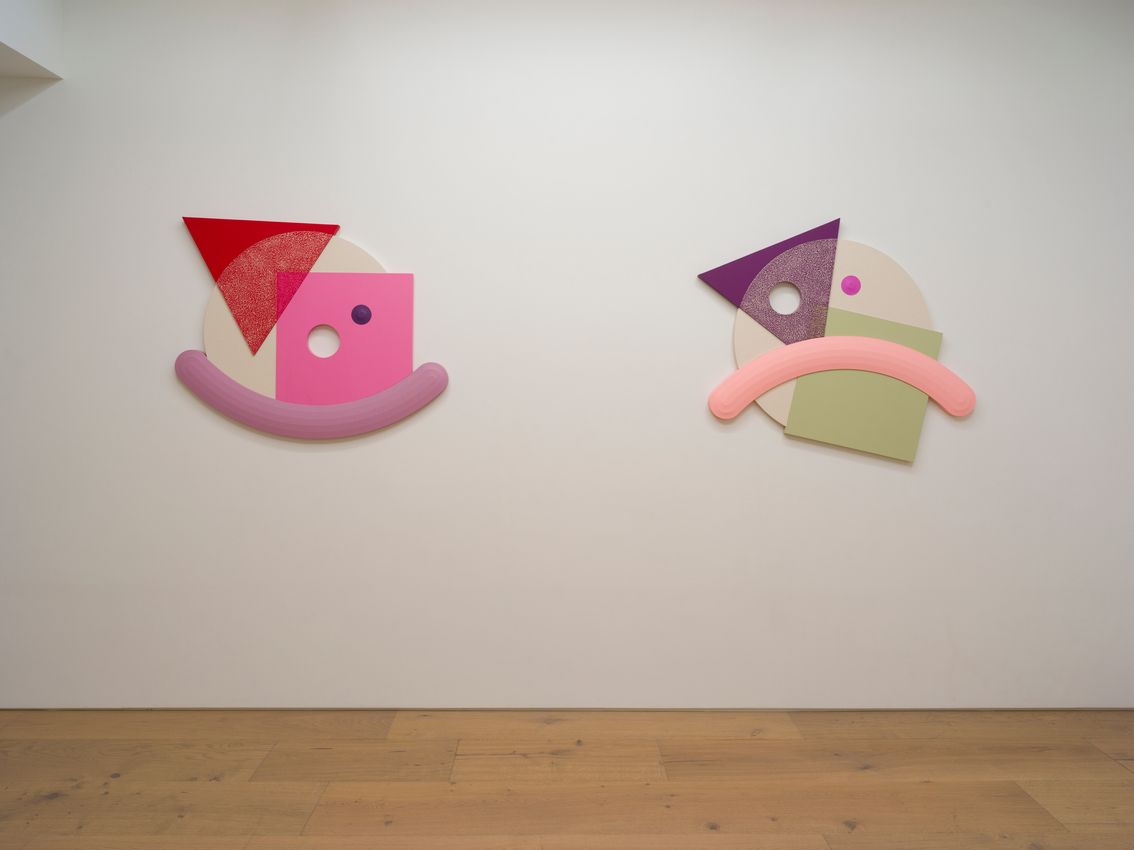
A series of Sperling’s ‘composite’ panels line the walls of the gallery’s second exhibition room —clusters of shaped and coloured canvases. Each composite is composed with the same recurrent shapes as its neighbours. Bauhaus meets the playhouse; these mixtures call to mind the ethos of modernist design and compositional exercise, plumped up with a nod to post-modernist form. At the junctures of various panels, Sperling merges the colours of both surfaces through a graphic crackled effect (recalling formica-esque laminates created by Etore Sottsass or the composition notebook painted by Roy Lichtenstein), creating a feeling of transparency and suspending disbelief about the solidity and opacity of the constructions standing before us.

James Casey

1: The Memphis Group is an Italian design and architectural movement founded in 1981 by designer Ettore Sottsass. Drawing inspiration from Art Deco and Pop Art, their crea-tions was characterized by ephemeral design featuring colorful and abstract decorationas well as asymmetrical shapes. The group produced and exhibited furniture and designobjects, annually from 1981 until 1988.

Read More

Installation Views

About the Artist

Sperling’s work draws on the language of Minimalist painting from the 60s and 70s, with shaped canvases as his main recourse. For these, he crafts intricate plywood supports over which canvas is stretched and painted over in a signature palette of saturated, sometimes clashing colours. In their three-dimensionality, Sperling’s works blur the lines between painting and sculpture, image and object. Mining a wide range of sources, from design to art history, Josh Sperling has crafted a unique visual vocabulary remarkable for its expressive quality and irrepressible energy.

View Artist Profile

Also Exhibiting at Perrotin

About the Gallery
Emmanuel Perrotin founded his first gallery in 1989 at the age of 21. He has opened since then over 17 different spaces, with the aim of continuing to offer increasingly vibrant and creative environments to experience artists work. He has worked closely with his roster of artists, some since more than 25 years, to help fulfill their ambitious dreams and projects. The gallery is now based in New York, Paris, Hong Kong, Seoul, Tokyo, and participates in all the significant worldwide art fairs each year (Art Basel (Hong Kong, Miami, Basel), Frieze (London, New York), FIAC (Paris), Dallas Art Fair, Art Cologne, Art Stage Jakarta, Expo Chicago, Art021 & West Bund Art & Design, Shanghai, Zona Maco Mexico, amongst others).
View Gallery Profile
Address
Piramide Building 1F
6-6-9 Roppongi
Minato-Ku
Tokyo
Japan
Opening Hours
Tuesday – Saturday
11am – 7pm
(1)
Tokyo Piramide Building 1F, 6-6-9 Roppongi
Perrotin
Piramide Building 1F, 6-6-9 Roppongi, Minato-Ku, Tokyo, Japan
+81 367 210 687
http://www.perrotin.com

Opening hours
Tuesday – Saturday
11am – 7pm
The art world in focus