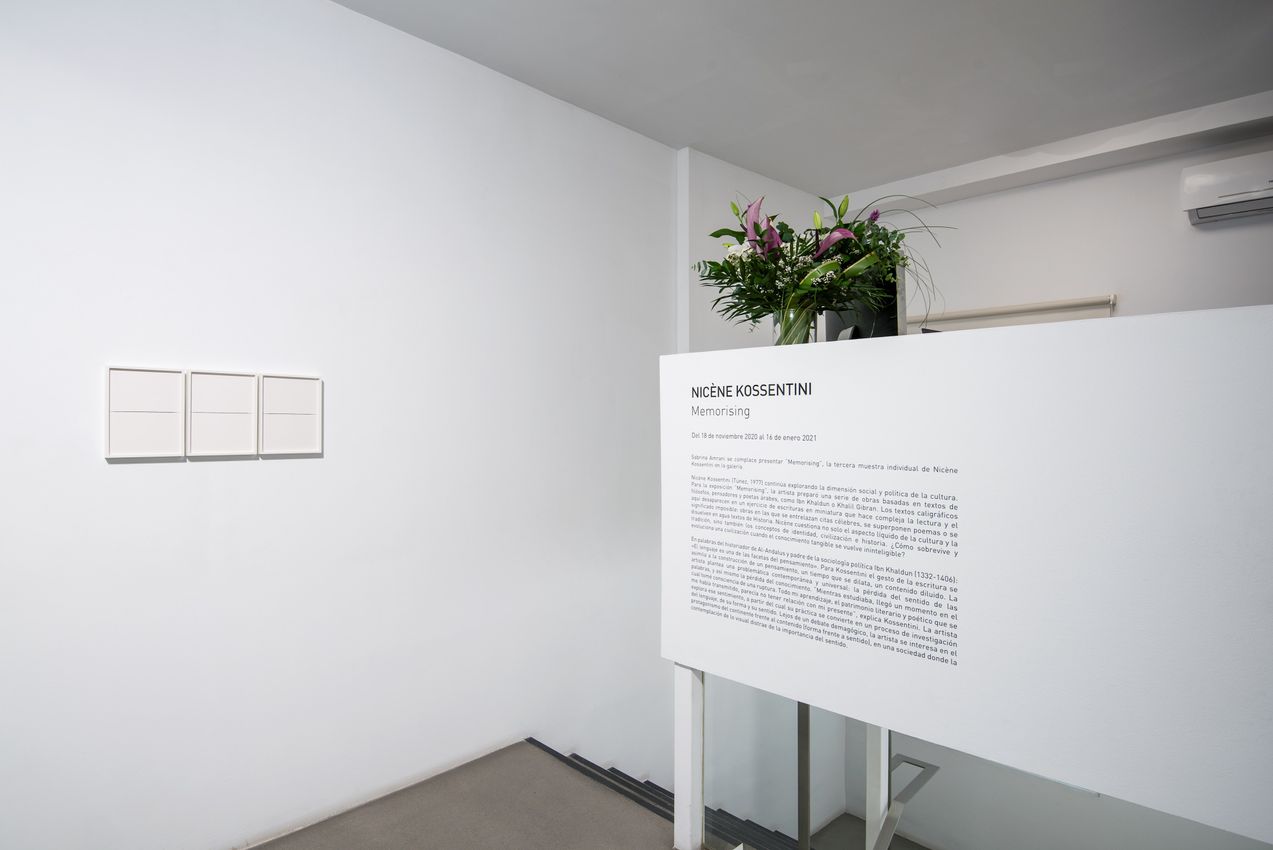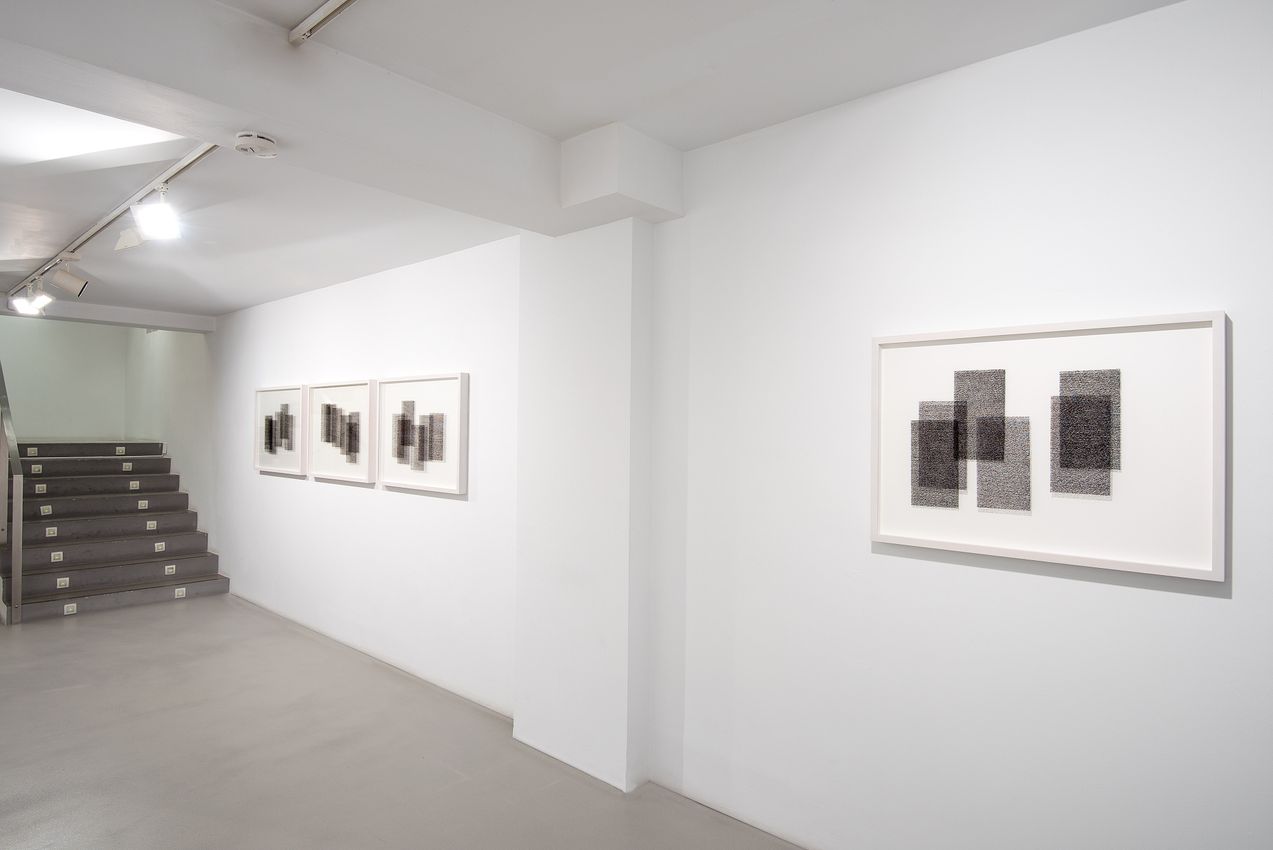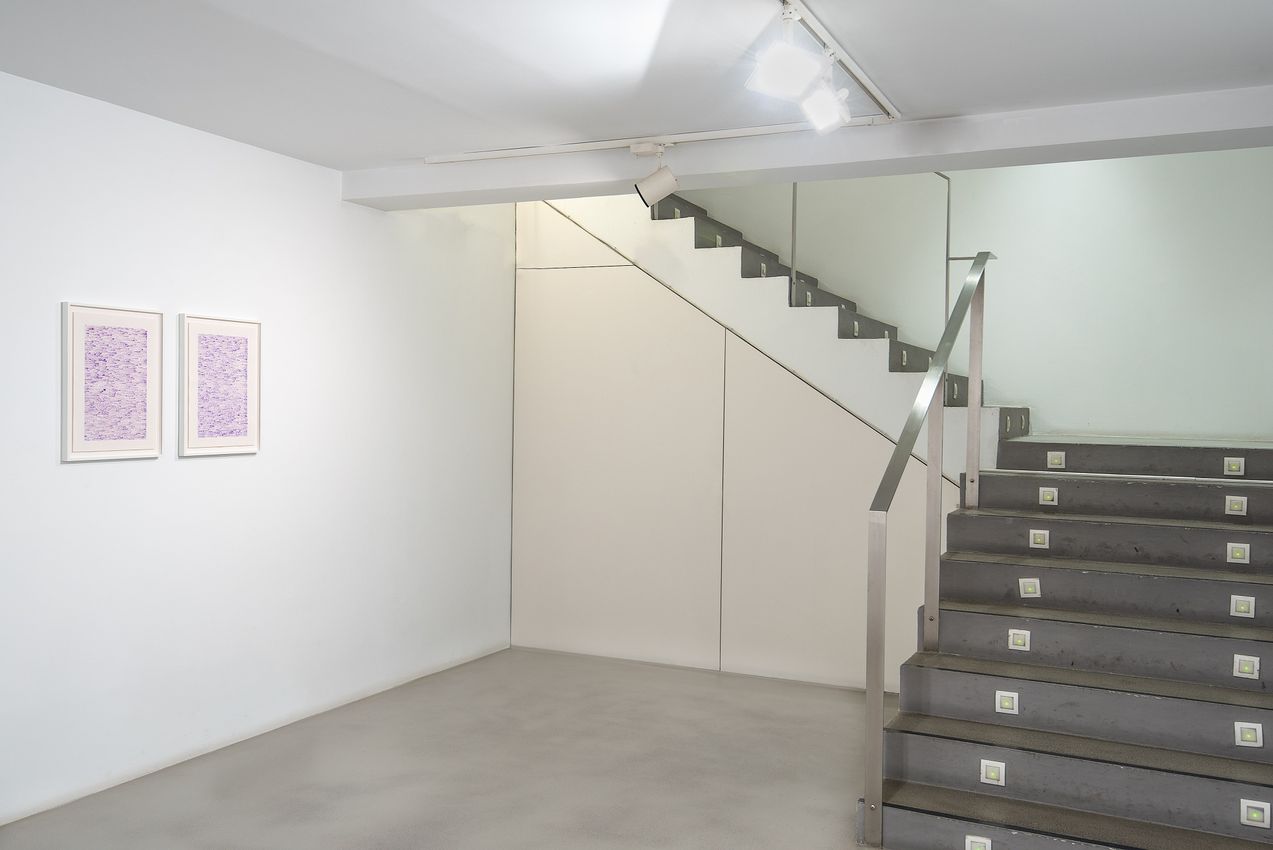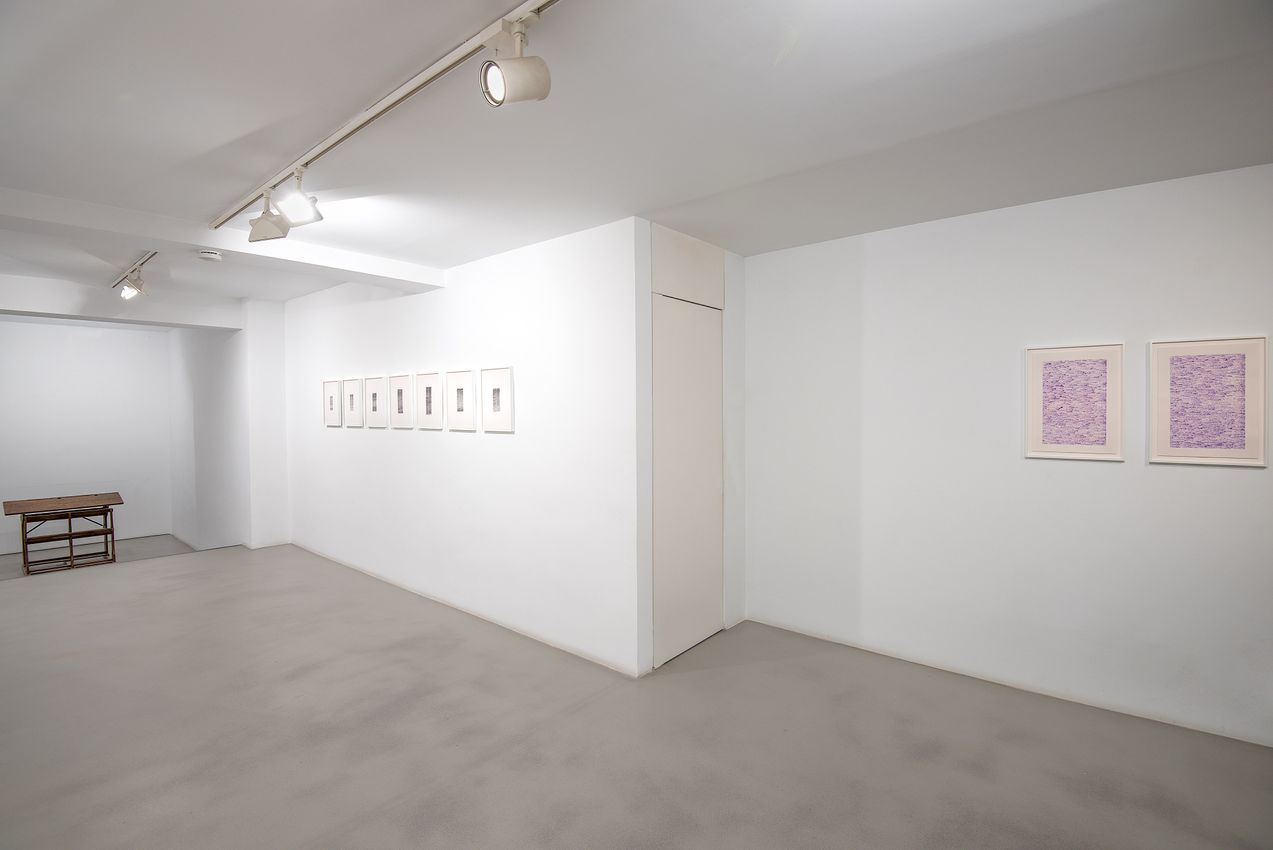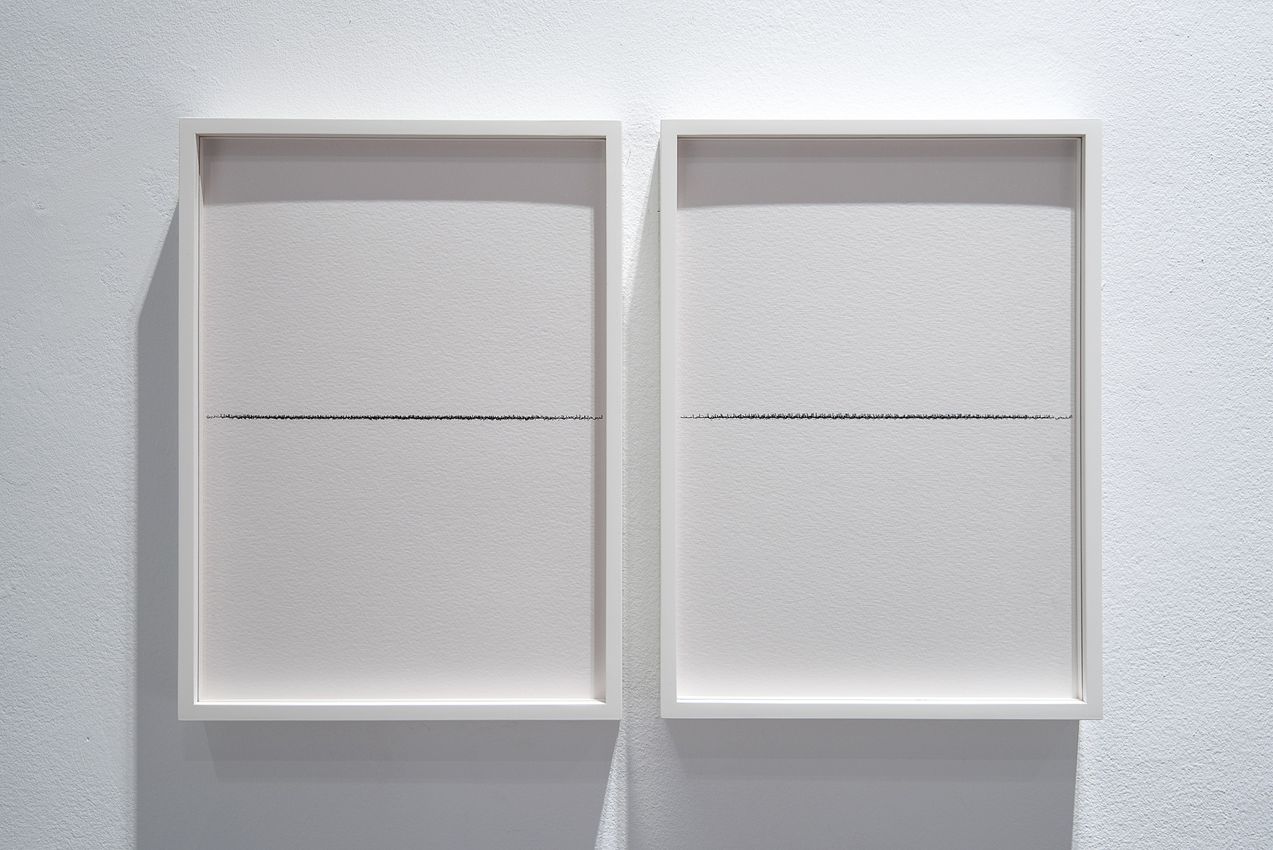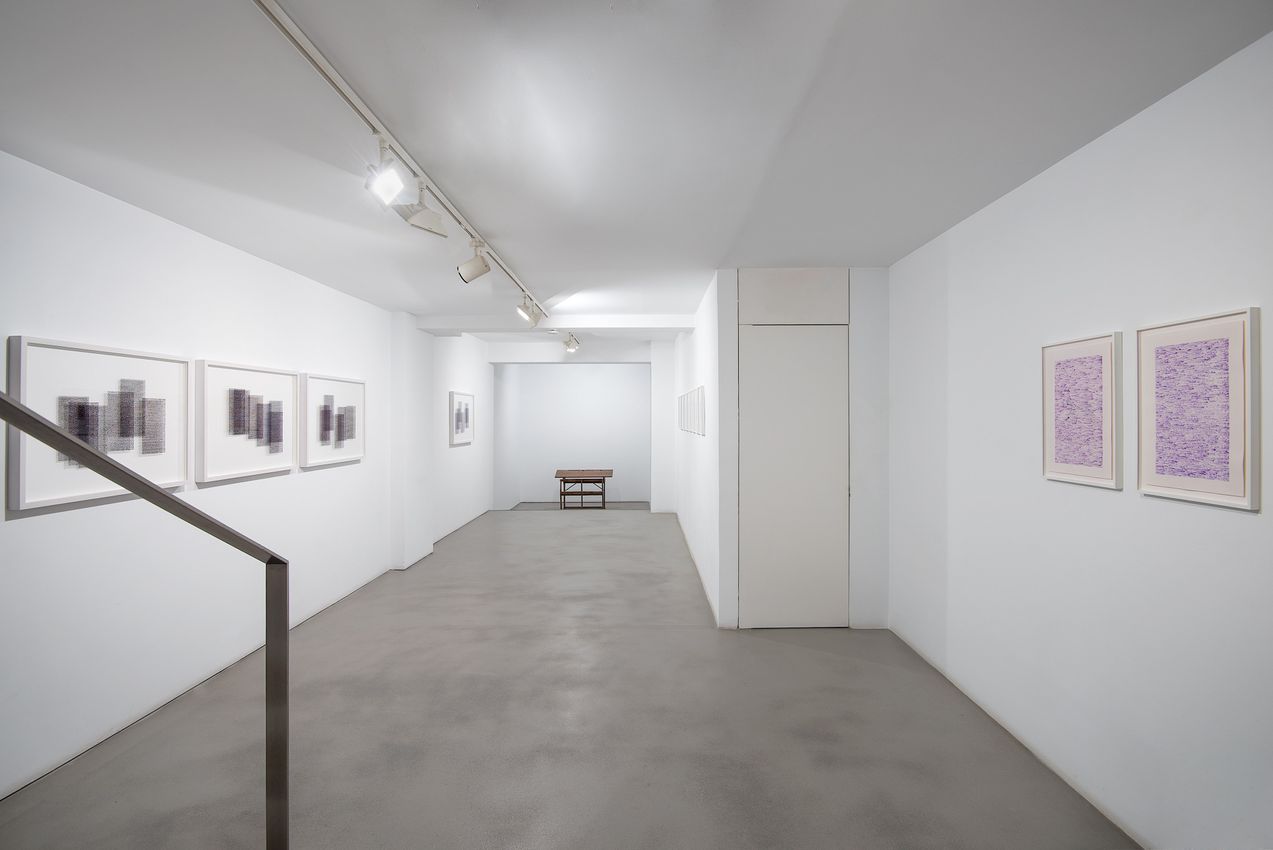
Sabrina Amrani is pleased to present Memorising, Nicène Kossentini’s third solo show at the gallery.
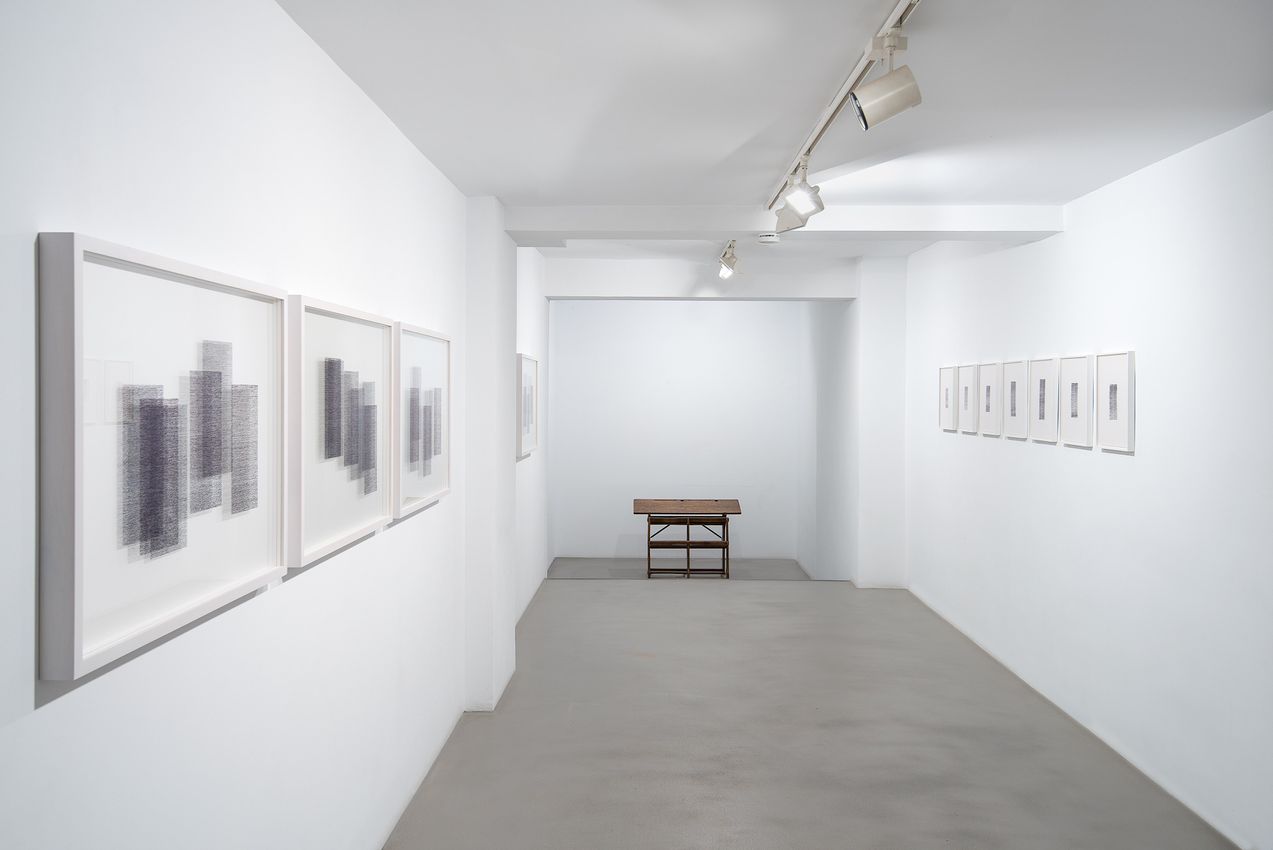
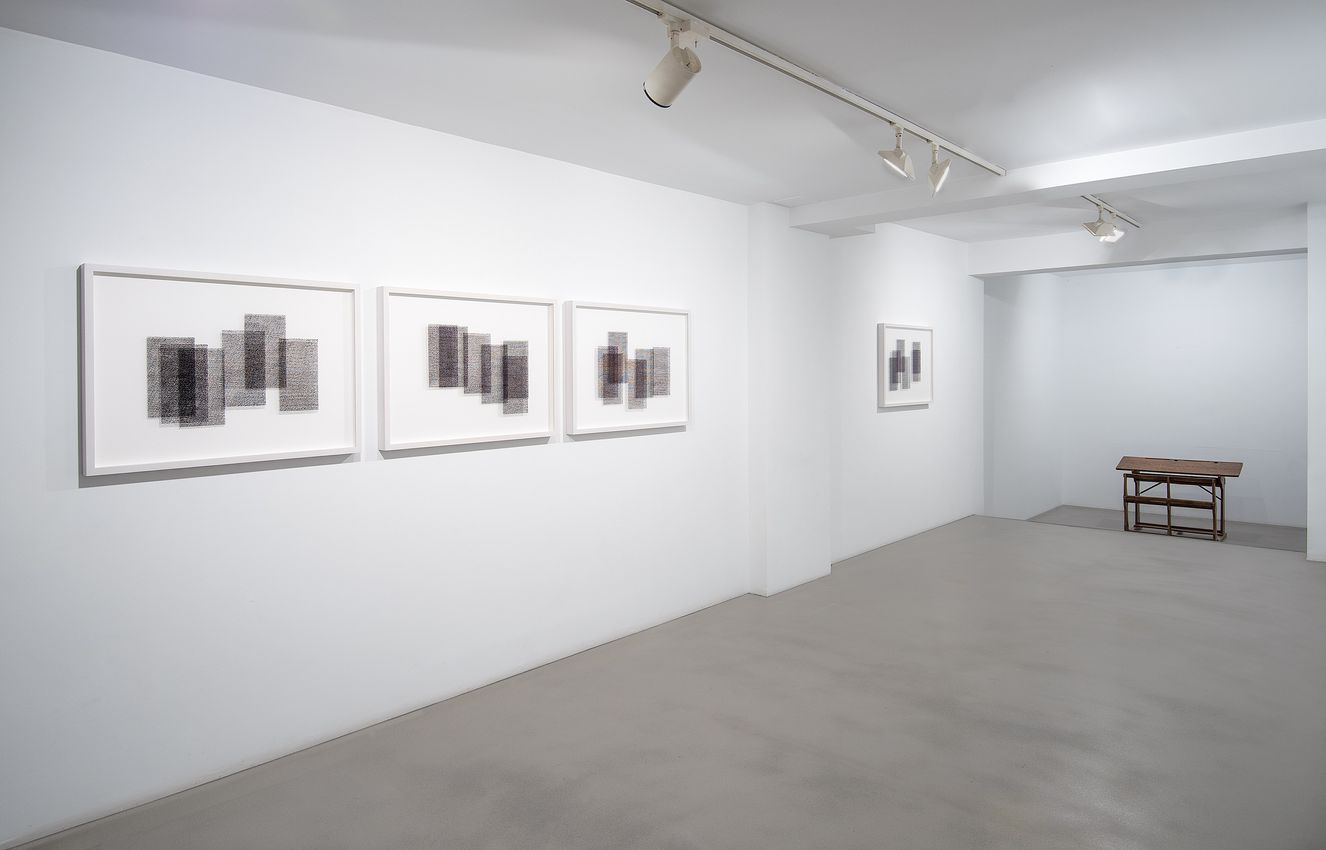
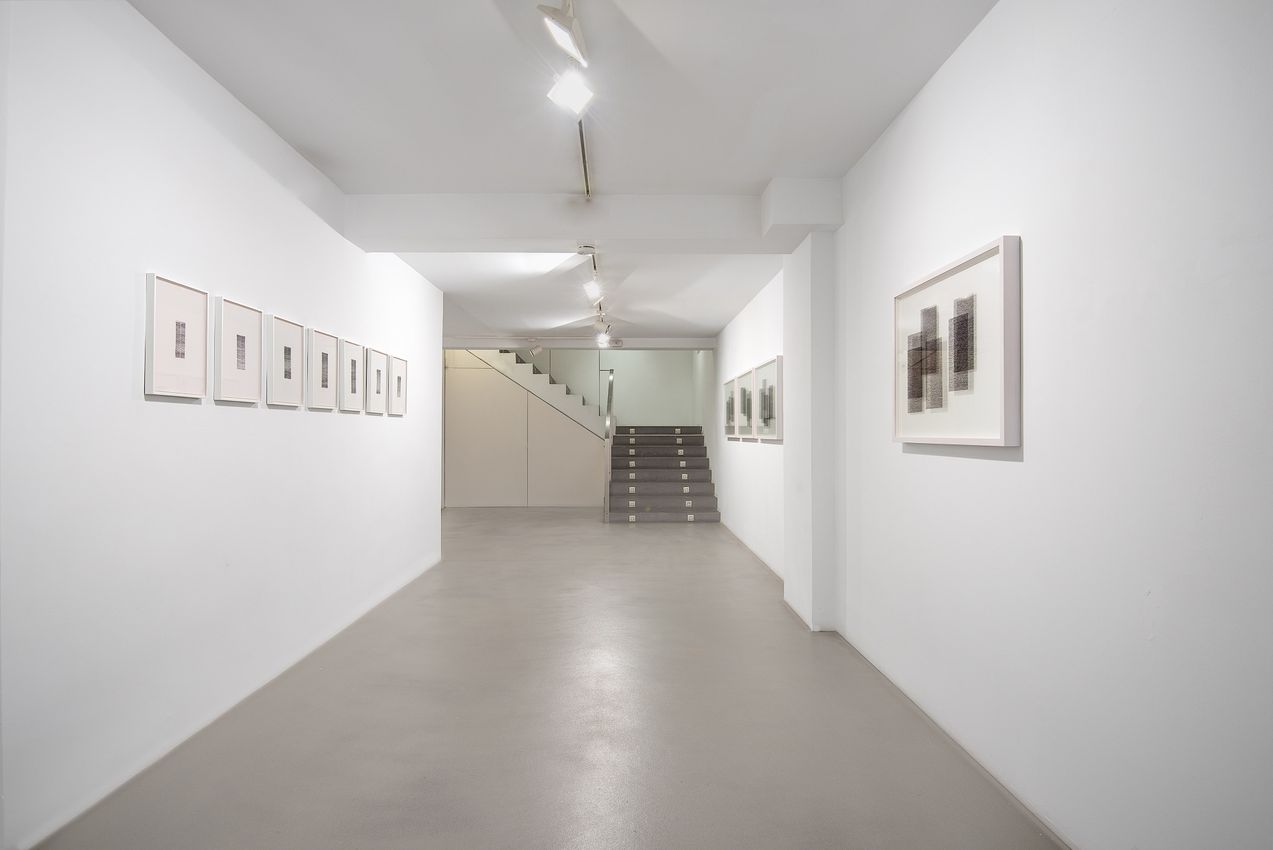
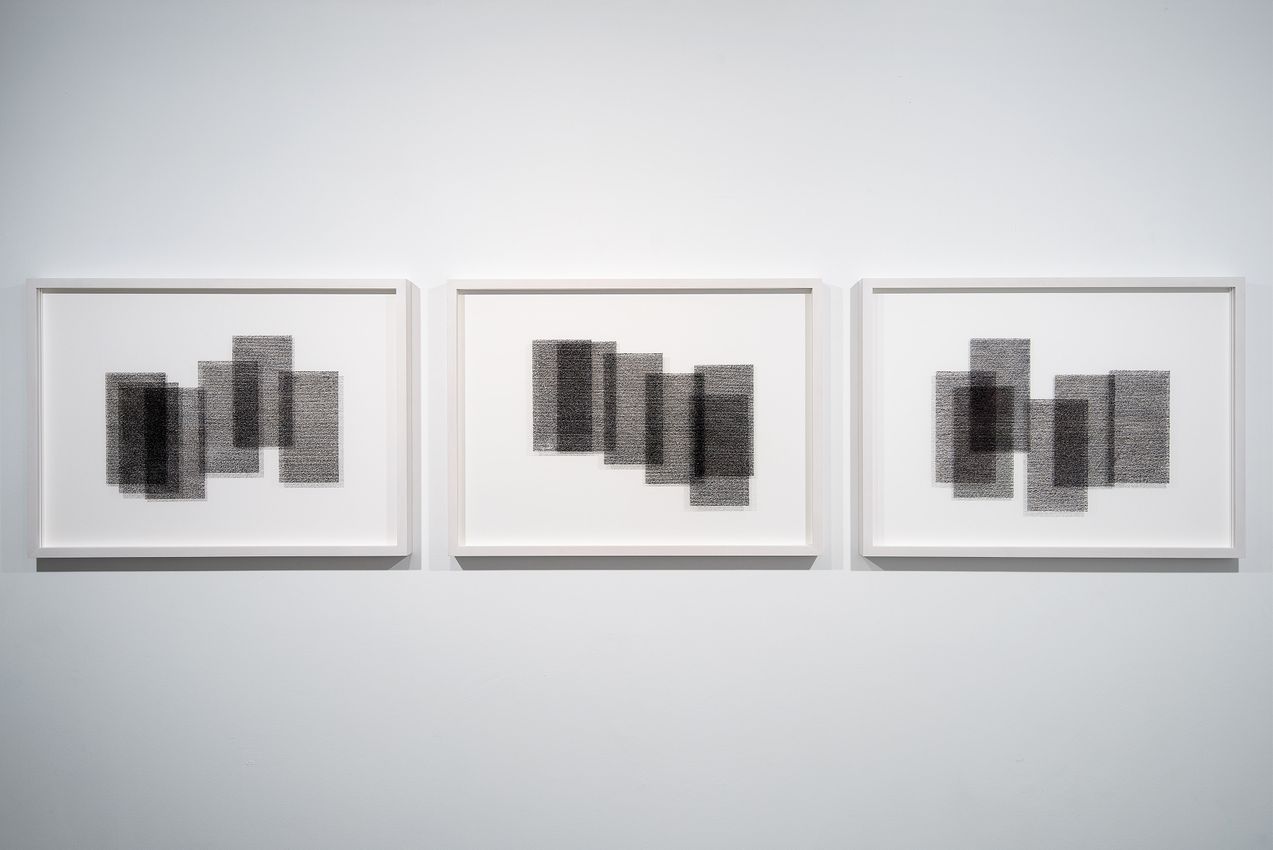
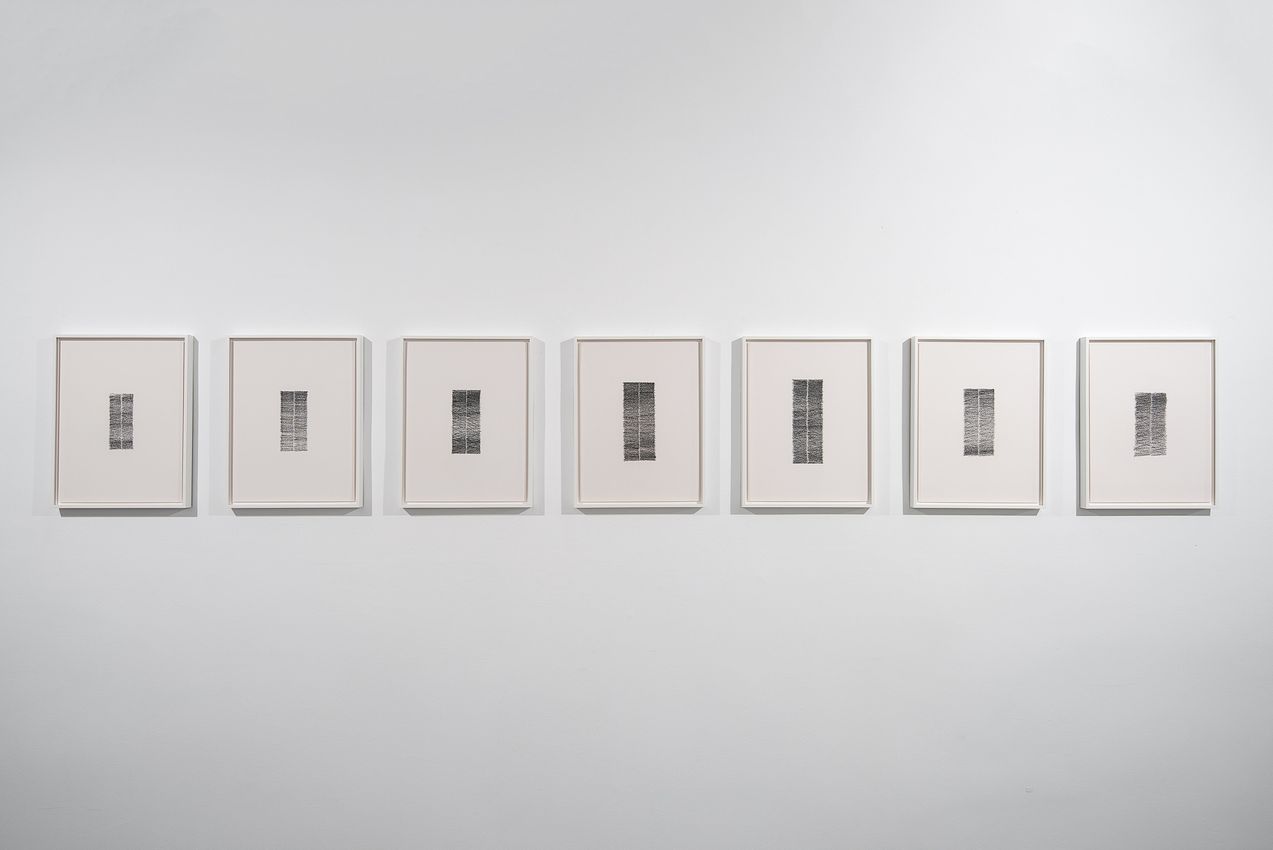
Nicène Kossentini (Tunisia, 1977) continues to explore the social and political dimension of culture. For Memorising, the artist prepared a series of works based on texts by Arab philosophers, thinkers and poets, such as Ibn Khaldun or Khalil Gibran. The calligraphic text shere disappear in an exercise of miniature writing that makes the reading complex and the meaning impossible: works in which famous quotes are intertwined, poems are superimposed,or history texts are dissolved in water. Nicène questions not only the liquid aspect of culture and tradition, but also the concepts of identity, civilisation and history. How does a civilisation survive and evolve when tangible knowledge becomes unintelligible?
In the words of the historian of Al-Andalus and father of political sociology Ibn Khaldun (1332-1406): ‘Language is one of the facets of thought.’ For Kossentini, the gesture of writing is assimilated to the construction of a thought, a time that stretches, a diluted content. The artist poses a contemporary and universal problem: the loss of the meaning of words, and likewise the loss of knowledge. ‘While I was studying, there came a time when I became aware of a break down. All my learning, the literary and poetic heritage that had been transmitted to me,seemed unrelated to my present’ explains Kossentini. The artist explores this feeling, from which her practice becomes a process of investigation of language, its form and its meaning. Far from a demagogic debate, the artist is interested in the protagonism of the container versus content (form versus meaning), in a society where the contemplation of the visual distracts from the importance of meaning.
Nicène Kossentini carefully selected illustrious text fragments, turning them into a landscape of unintelligible characters, even for anyone with knowledge of Arabic script. The manuscripts leave room for a landscape of diluted letters, according to philosopher and art critic ChristineBuci-Glucksman: The thought of the line, its absence in the presence, has invaded everything;past of an illegible writing-memory and present of a floating, indecisive landscape. A nothing about nothing that becomes everything.
Kossentini’s exhibition is summarised in an abstract landscape where knowledge becomes the natural element of a civilisation, something that grows and mutates organically and unconsciously. In the rise of political and social issues, such as the crisis of identities, the artist invites us to reflect on a state of constant loss: of time, of knowledge and of the possibilities for the individual to act in the present and be an actor of the future.
Mindful of her heritage and past, Nicène Kossentini seeks to uncover the lost links and buried truths of its culture and its origins. Her work thus addresses concerns of Tunisian society which have to live with a memory that tends to freeze, to flatten and become lost. In her videos, Kossentini captures, picture by picture, the slow transformation of people and things, to reveal intimate places and bodies.


A respected voice in contemporary art discourse.
Focusing on ambitious storytelling and insightful art-world commentary. Ocula Magazine publishes in-depth interviews, critical essays and timely analysis on the artists, exhibitions and ideas driving the global art world.
Learn more about Ocula Magazine
Showcasing the best of the art world.
Ocula partners with galleries from around the world to highlight their artists, artworks and exhibitions. Gallery membership is by application and invitation, with each member vetted by an independent panel.
Learn more about Ocula Membership

Specialises in the sale of major artworks.
Led by a team with deep ties to the world’s leading auction houses, galleries and collectors. Ocula’s advisory team offers bespoke services to high-net-worth clients from around the world who are looking to acquire the best of contemporary and modern art.
Learn more about our team and services