




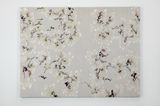
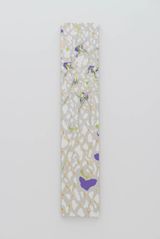
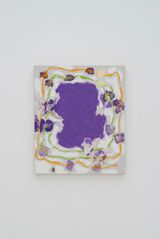
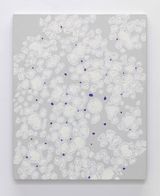
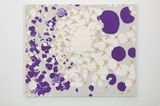
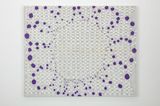
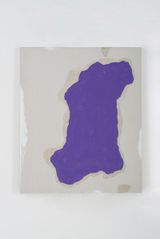
Like a horizontally stretched skin of the membrane, this [Earth’s surface] is so easy to break, tremble and tear. That is where we are located. —Natsuni Nakanishi
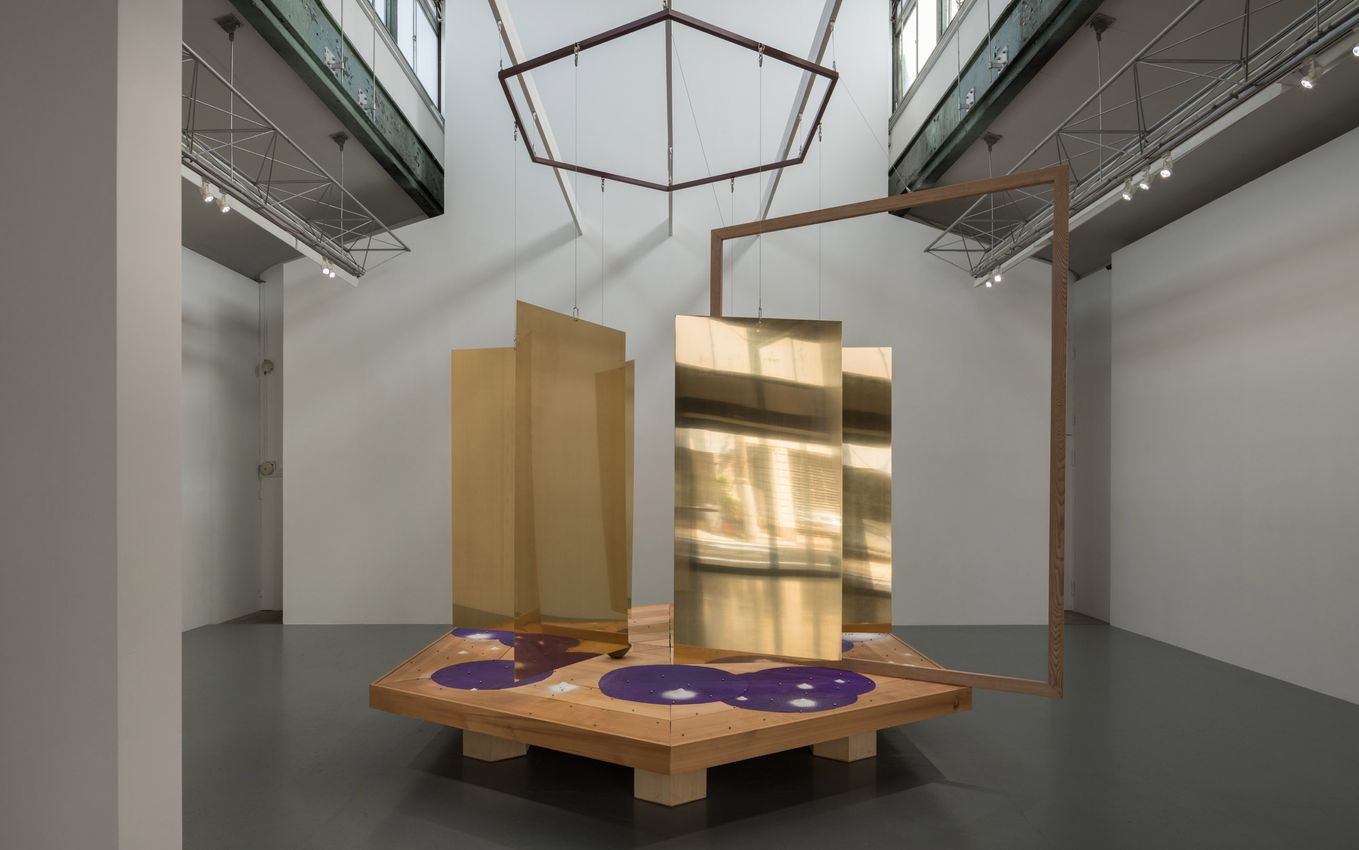
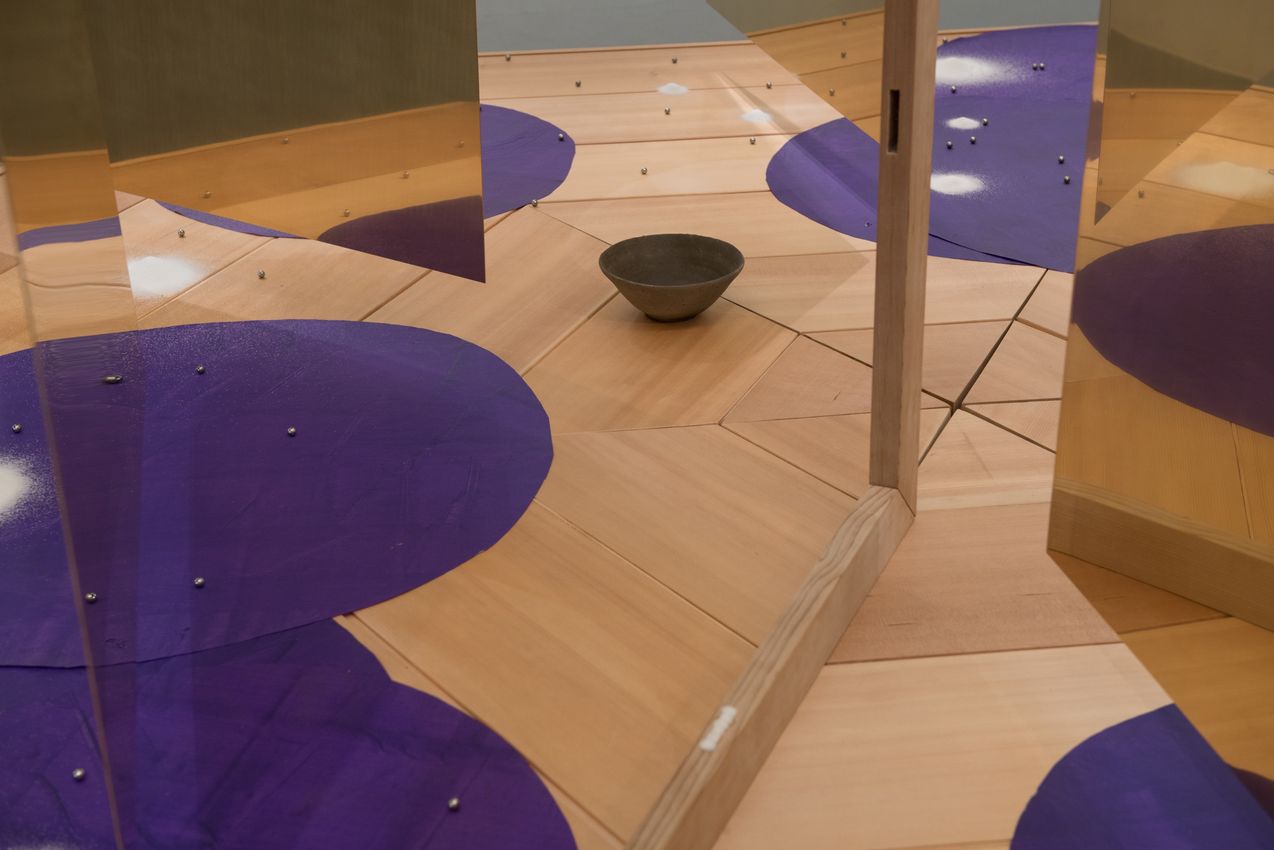
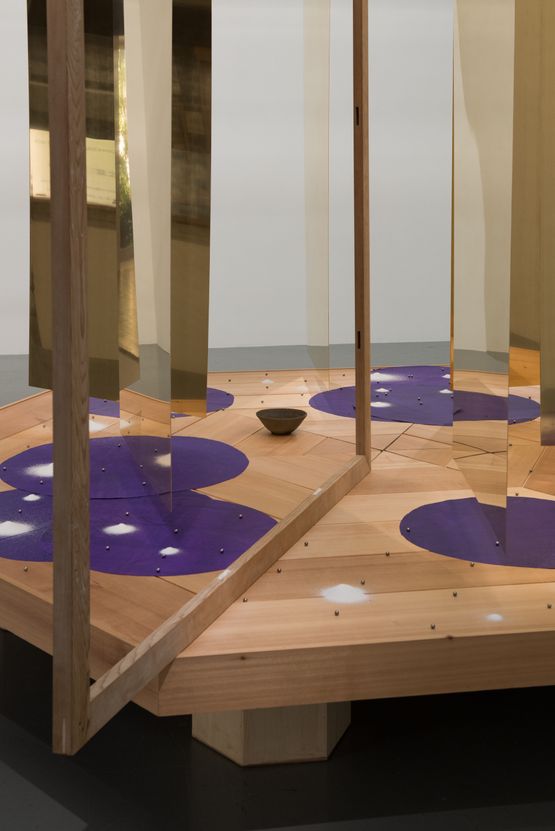
Touching Down on Land and Touching Down on Water XIV: Itsuura Coast made in 2013, is modelled after Rokkakudo, a small hexagonal temple erected on the edge of Itsuura Coast in Ibaraki prefecture. This minimalist temple designed by Okakura Tenshin had the dimension of 4 tatami matts, and Nakanishi’s sculptural work has a foundation of the exact same size with 6 brass rectangular plates hung from above. As the painting stands vertically, it emphasizes the weak and unstable axis of the horizontal plane. In search of the perfect horizon, Nakanishi finds a clue in tea ceremony rituals continued since the Muromachi period. Known for its simplicity of fusing Buddhism and the Way of Tea, this temple was a place of meditation where one could gaze at the flat water plane in a tea cup, while overlooking the horizon of the Pacific Ocean. The work makes a tribute to the Rokkakudo temple, which was destroyed by the Great East Japan Earthquake, through insinuating subtle references: thin brass plates hung vertically and reflections of small metal balls glitter on sand.
Touching Down on Land and Touching Down on Water XIV: Itsuura Coast is conceived from the artist’s profound thoughts about painting. The exhibition aims to reflect the legacy of the artist, who passed away in October last year, and offers an opportunity to reconsider painting, and how it is composed.
Born in Tokyo in 1935, Nakanishi graduated from the National University of Arts, Tokyo in 1958. In 1963, he joined with Jiro Takamatsu and Genpei Akasegawa to form the group High Red Center that together engaged in controversial ‘happenings’ that transcended the frameworks of conventional artistic creation and was thus perceived as anti- art activities at the time. From the 1960s onwards, Nakanishi continued his creation including works for stage design and installation. A series of his abstract painting with signature colors of purple, yellow-green and white continued to question the origin of painting. He had many major his solo exhibitions, Touching Down on Land and Touching Down on Water, The Museum of Modern Art, Kamakura, Japan, 1995, Natsuyuki Nakanishi Toward Whiteness, Intensity, Presence, The Museum of Contemporary Art, Tokyo in 1997, Natsuyuki Nakanishi: Rhyme, Clothespins Assert Churning Action, Passing Each Other: Receding Purple, Emerging White Spots, Kawamura Memorial DIC Museum of Art, Chiba in 2012 etc. His works has been collected by The Museum of Modern Art, New York, The National Museum of Art, Tokyo, The National Museum of Art, Osaka and many museums both in Japan and abroad. Emeritus professor of Tokyo University of Arts.
SCAI The Bathhouse is a contemporary art gallery located in Yanaka, with a town ambience reminiscent of Old Tokyo. In walking proximity to Ueno, an area dense with museums and art schools, the gallery was converted from a venerable 200-year-old public bathhouse. Take a step inside, and you will find a white cube with soft natural light descending from the high ceiling.

A respected voice in contemporary art discourse.
Focusing on ambitious storytelling and insightful art-world commentary. Ocula Magazine publishes in-depth interviews, critical essays and timely analysis on the artists, exhibitions and ideas driving the global art world.
Learn more about Ocula Magazine
Showcasing the best of the art world.
Ocula partners with galleries from around the world to highlight their artists, artworks and exhibitions. Gallery membership is by application and invitation, with each member vetted by an independent panel.
Learn more about Ocula Membership

Specialises in the sale of major artworks.
Led by a team with deep ties to the world’s leading auction houses, galleries and collectors. Ocula’s advisory team offers bespoke services to high-net-worth clients from around the world who are looking to acquire the best of contemporary and modern art.
Learn more about our team and services