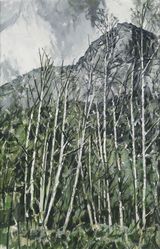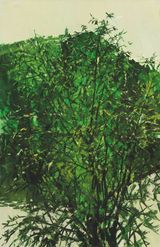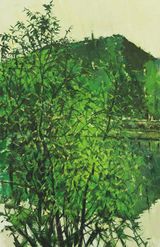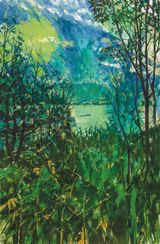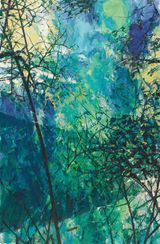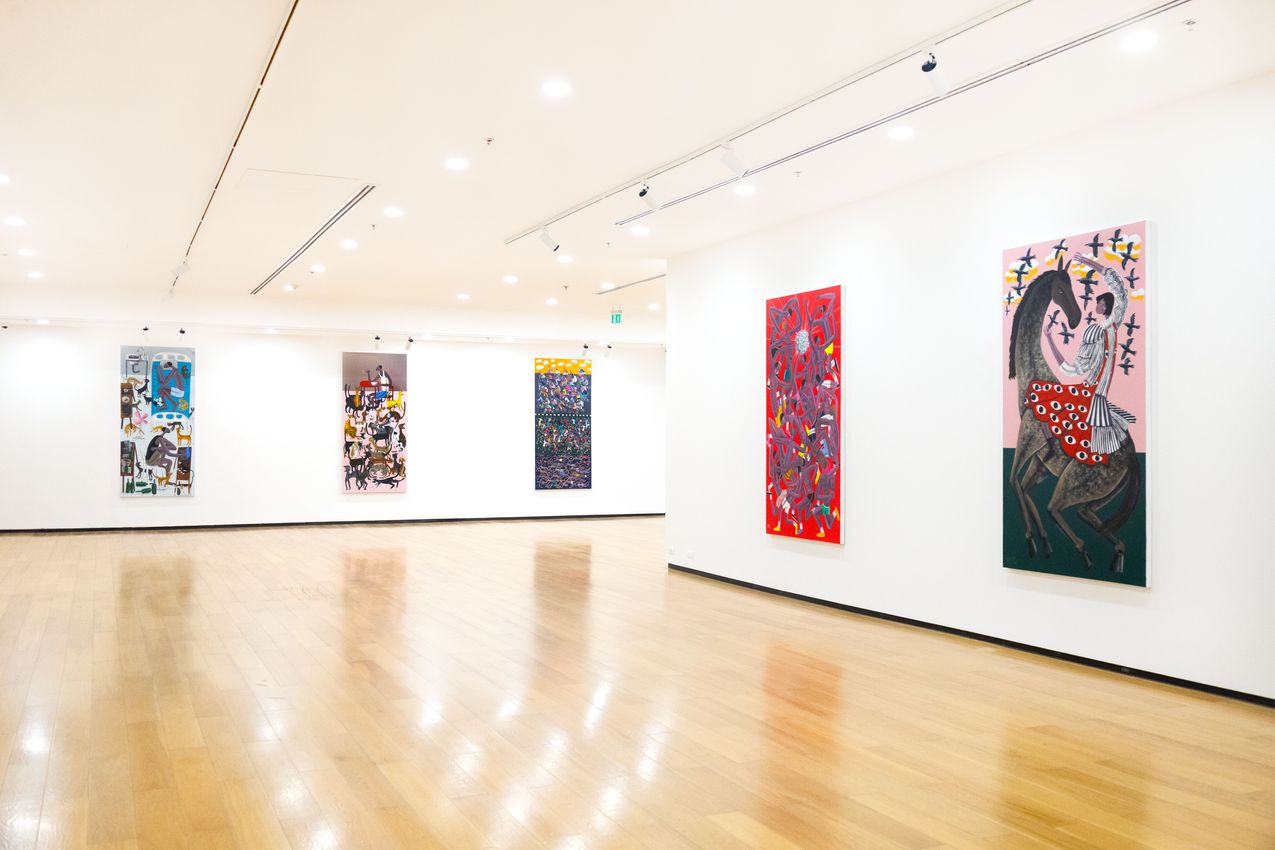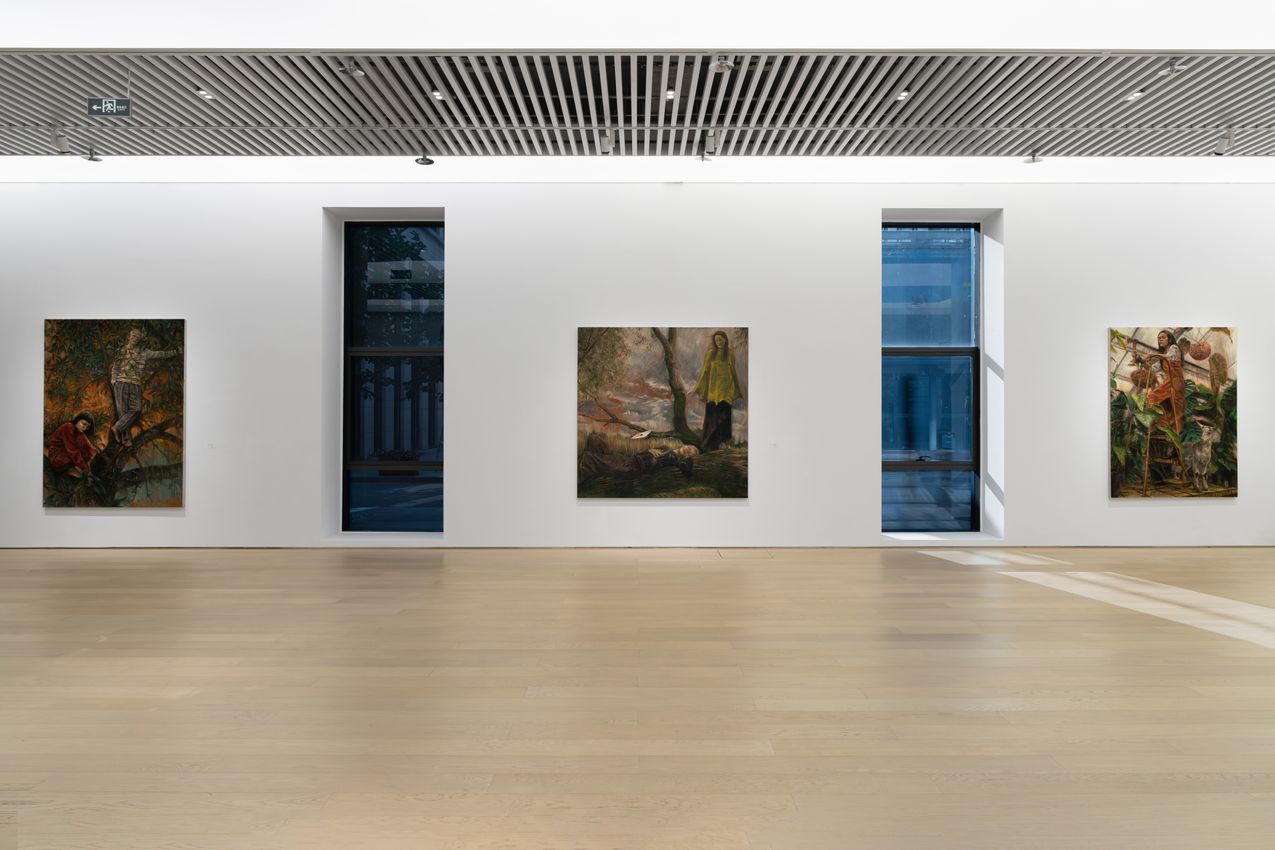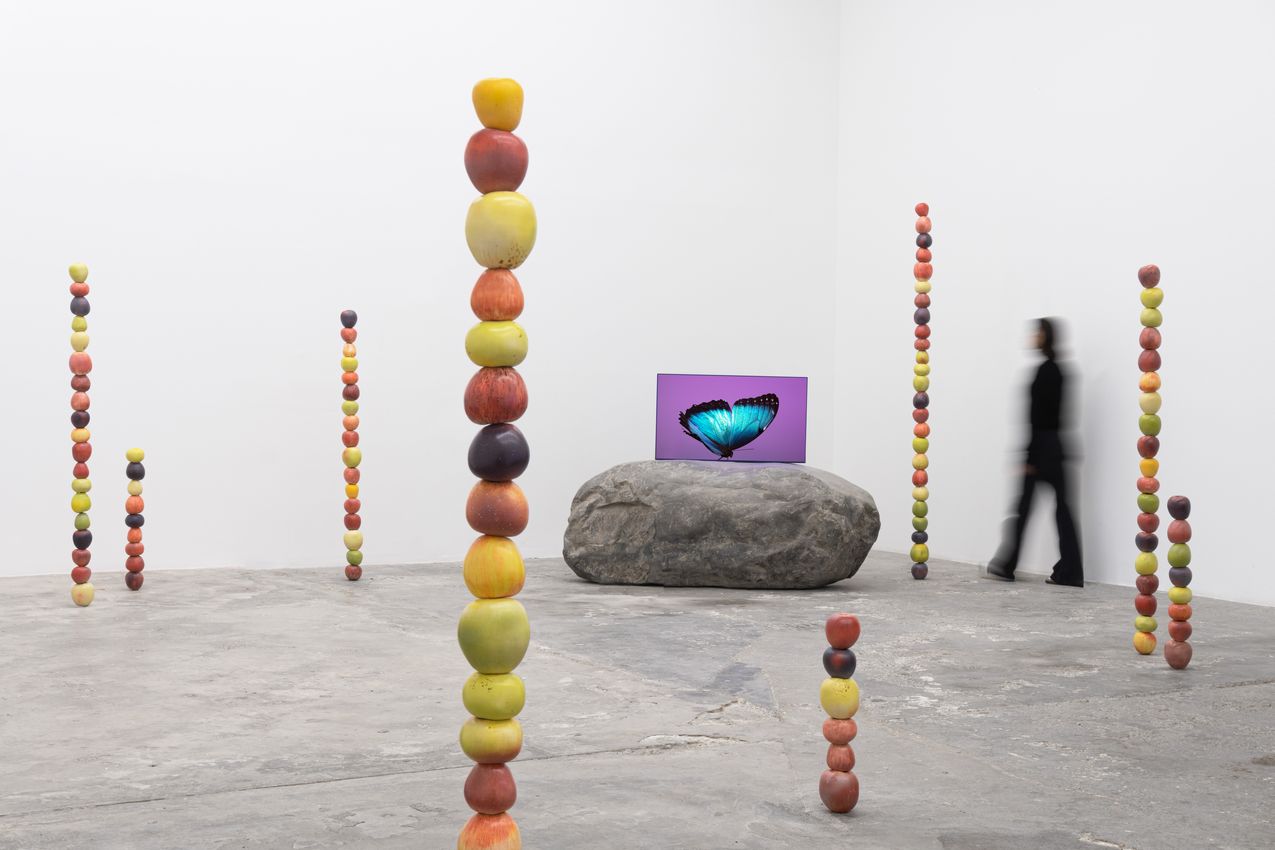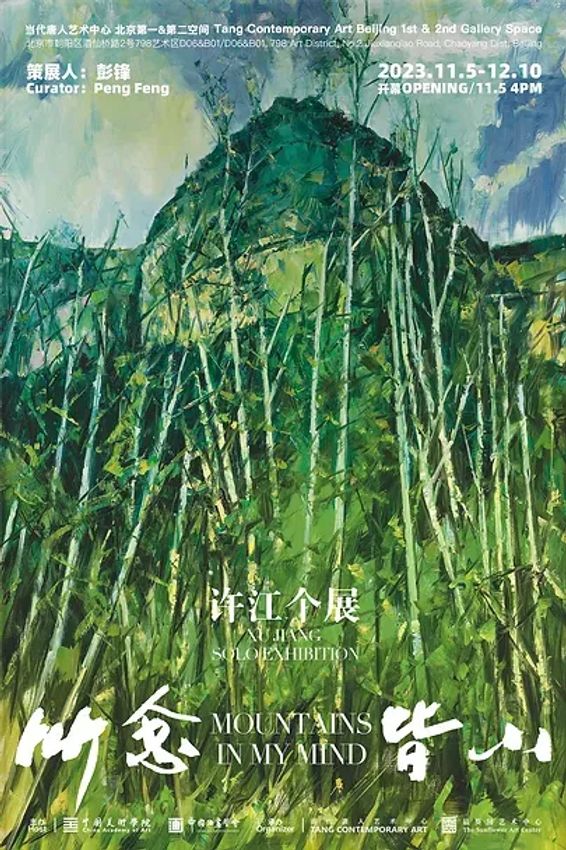
Tang Contemporary Art is pleased to announce the launch of Xu Jiang’s major exhibition, All Thoughts of Mountains, on 5 November 2023 inBeijing’s First and Second Spaces. Curated by Peng Feng, the exhibition will feature more than 100 oil paintings and video works created by XuJiang from 2000 to the present, under the themes of Montiform Sunflower Garden and Mountains in My Mind in each of the two spaces. Theexhibition will open at 4pm on 5 November, with an artist guided tour at 1:30pm.
Montiform Sunflower Garden
Xu Jiang enjoys painting sunflowers, transforming them beyond botanical identities into powerful symbols.
In his artwork sunflowers always appear in groups. Even when depicted as individual blooms, they are often displayed in clusters;creating a majestic and overwhelming spectacle.
The symbolically rich sunflowers are particularly suited for conceptual installations, akin to Xu Jiang’s Is Symbiosis Possible? However, this has not halted Xu Jiang’s painting endeavors, as questions raised in this installation can only be answered through art.
Xu Jiang continues his sunflower odyssey. Portraits of the Sunflower Garden, a composition of clustered sunflower heads, evokesthoughts of Warhol’s iconic Marilyn Portraits. Both are portraits that gain significance through repetition.
In the consumer landscape, where most see materialism, Foucault perceives Zen. Warhol’s works attain their essence throughabundance, the more, the merrier. When identical artworks continuously appear, they point to something beyond the immediate image,transcending the visual, leaning into Zen, and venturing into the realm of ‘void.’
Xu Jiang’s sunflowers not only convey a sense of ‘void,’ but a concept of ‘Unique Existence in True Void,’ more profoundly. Hisartworks may appear similar at first glance, but possess distinct essences. The subject matter may share commonalities, but theirrepresentation varies; the visual portrayal might seem similar, but the techniques employed differ; the artistic execution appears alike,yet the emotional context distinguishes them. The more we contemplate Xu Jiang’s sunflowers, the more we perceive the interplay ofsimilarities and distinctions. Xu Jiang skillfully employs this interplay to accentuate the uniqueness associated with the concept of ‘existence.’
Perhaps this is why Xu Jiang keeps painting sunflowers.
Xu Jiang’s sunflowers suggest that coexistence is possible, through a series of similarities and differences. Conflicts between theindividual and the collective, often seen as unsolvable in theory, can only find resolution in reality. Through his persistent artisticendeavors and the daily toil of creation, Xu Jiang brings us back from the realm of unsolvable concepts to the of solvable realities,demonstrating that the individual can indeed unite with the collective.
Xu Jiang’s sunflowers are a portrayal of a generation.
Mountains in My Mind
Chinese culture reveres the majesty of mountains. These landscapes represent not only the beauty of nature but also carry profoundcultural symbolism. Consequently, mountains and rivers have become central themes in Chinese poetry and painting.
Interestingly, the same visual art, referred to as ‘landscape’ in Western contexts, is denoted as shanshui (literally meansmountains and water bodies) in the realm of traditional Chinese painting.
It’s worth noting that ‘landscape’ is a relatively modern concept, emerging only after people have distanced themselves from theirnatural habitats; this kind of landscape is primarily an object of observation. Shanshui is not merely objects of contemplation; theyconstitute environments for existence, extensions of life. Thus, they are not solely objects of visual appreciation but also sources ofinspiration and sites for dwelling. The difference in landscapes and shanshui extends beyond matters of medium and technique; itholds a different view and ways of life.
Xu Jiang, an accomplished oil painter, prefers to label his creations as shanshui rather than mere ‘landscape.’ Clearly, hisadmiration is no longer limited to the medium and technique employed in oil painting; it ventures into their spirits. However, manyartists prioritize technique, Xu Jiang stands as an exception; he has long since mastered the technical aspects of his craft. Instead, hisfocus is delving into the profound depths of existence — depths that harmonize the self with the world.
While sunflowers are a subject that Xu Jiang consciously selects, mountains and rivers represent his predestined sanctuary, anunconscious collective embodiment. Xu Jiang wears the hats of both painter and poet, readily finding resonance within classical verses,thus allowing him to think across the centuries and witness distant horizons. This world steeped in poetry forms the very foundation ofXu Jiang’s existence.
Thanks to the robust sense of self, Xu Jiang has uncovered his spiritual refuge amidst the mountains and rivers. His canvases havegradually grown more compact, allowing the images to engage in a dialogue between the self and its essence. The self slowly fades andascends, achieving a harmonious union with the natural world. Subject matter no longer dictates his choices. Instead, it becomes avessel for conveying deeper meanings, transcending the self to attain perfect alignment with nature. In Xu Jiang’s shanshui artworks, a new realm unfolds where subject and object merge, evoking a profound sense of unity, aptly encapsulated in the words ofWang Lv, an ancient Chinese painter: ‘Having been a guest for an extended stay, departing hastily is not an option.’
Soul of the Blooming Mountain
Xu Jiang paints sunflowers as he paints mountains. Even in his early works that featured urban themes, the essence of mountains wasever-present.
When seen through the lens of mountains, sunflowers, cities, or ruins, they take on a distinctive allure.
Mountains are the unconscious essence of Xu Jiang, including both his personal, collective and cultural unconscious. In art, theunconscious tends to overcome the control of consciousness and manifest itself inadvertently. So, it’s not unusual to sense the feelingof mountains in Xu Jiang’s paintings.
Certainly, this doesn’t imply that you must discern mountain shapes in Xu Jiang’s art. It’s akin to Wei Shuo’s perspective oncalligraphy. When she speaks of ‘horizontal stroke (in Chinese characters),’ it evokes images of cloud formations stretching overmiles, yet it doesn’t suggest that ‘horizontal stroke’ should be literally represented as clouds. Similarly, when she characterizes ‘dot,’ it inspires ideas of peaks plummeting like rocks, but it doesn’t entail that ‘dot’ should be literally represented as solidstones. In this context, ‘similarity’ isn’t confined to physical resemblance but pertains to an affinity in sensation. Indeed, if theshapes were remarkably alike, the unconscious wouldn’t overcome conscious control. It’s the divergence in shapes that allows theunconscious to elude conscious restrictions. We identify it as the unconscious precisely because it preserves a sense of similarity.
Xu Jiang’s art holds its worth in its innate and unassuming character, authenticity, and professionalism. We admire Xu Jiang’s artbecause these inherent qualities consistently strike a chord with us.
Returning to one’s true self and the essence of authenticity is an absolute command. However, it’s crucial to recognize that not allinstances of the true self or authenticity hold the same value. While individuals can use their talents, and objects may fulf ill theirpurposes, the magnitude and significance of these can vary widely. Xu Jiang’s nature, like a mountain, inherently bears the weight ofmountains. Within his works, the prevailing themes of unwavering determination, tragic consciousness, and romantic sentimentstogether form the most powerful and resonant melody in contemporary Chinese art.


Tang Contemporary Art was established in 1997 in Bangkok, later establishing galleries in Beijing and most recently Hong Kong. Tang Contemporary Art is fully committed to producing critical projects and exhibitions to promote Contemporary Chinese art regionally and worldwide and encourage a dynamic exchange between Chinese artists and those abroad.
1st Gallery Space:
D06, 798 Art District, No.2 Jiuxianqiao Road, Chaoyang Dst, Beijing, China
Tel: 0086 10 59789610
Fax: 0086 10 59789379
2nd Gallery Space:
B01, 798 Art District, No.2 Jiuxianqiao Road, Chaoyang Dst, Beijing, China
Tel: 0086 10 57623060
Fax: 0086 10 59789379
Opening Hours:
Tuesday–Sunday
11am–5:30pm (Nov–Apr)
11am–6:30pm (May–Oct)

A respected voice in contemporary art discourse.
Focusing on ambitious storytelling and insightful art-world commentary. Ocula Magazine publishes in-depth interviews, critical essays and timely analysis on the artists, exhibitions and ideas driving the global art world.
Learn more about Ocula Magazine
Showcasing the best of the art world.
Ocula partners with galleries from around the world to highlight their artists, artworks and exhibitions. Gallery membership is by application and invitation, with each member vetted by an independent panel.
Learn more about Ocula Membership

Specialises in the sale of major artworks.
Led by a team with deep ties to the world’s leading auction houses, galleries and collectors. Ocula’s advisory team offers bespoke services to high-net-worth clients from around the world who are looking to acquire the best of contemporary and modern art.
Learn more about our team and services