



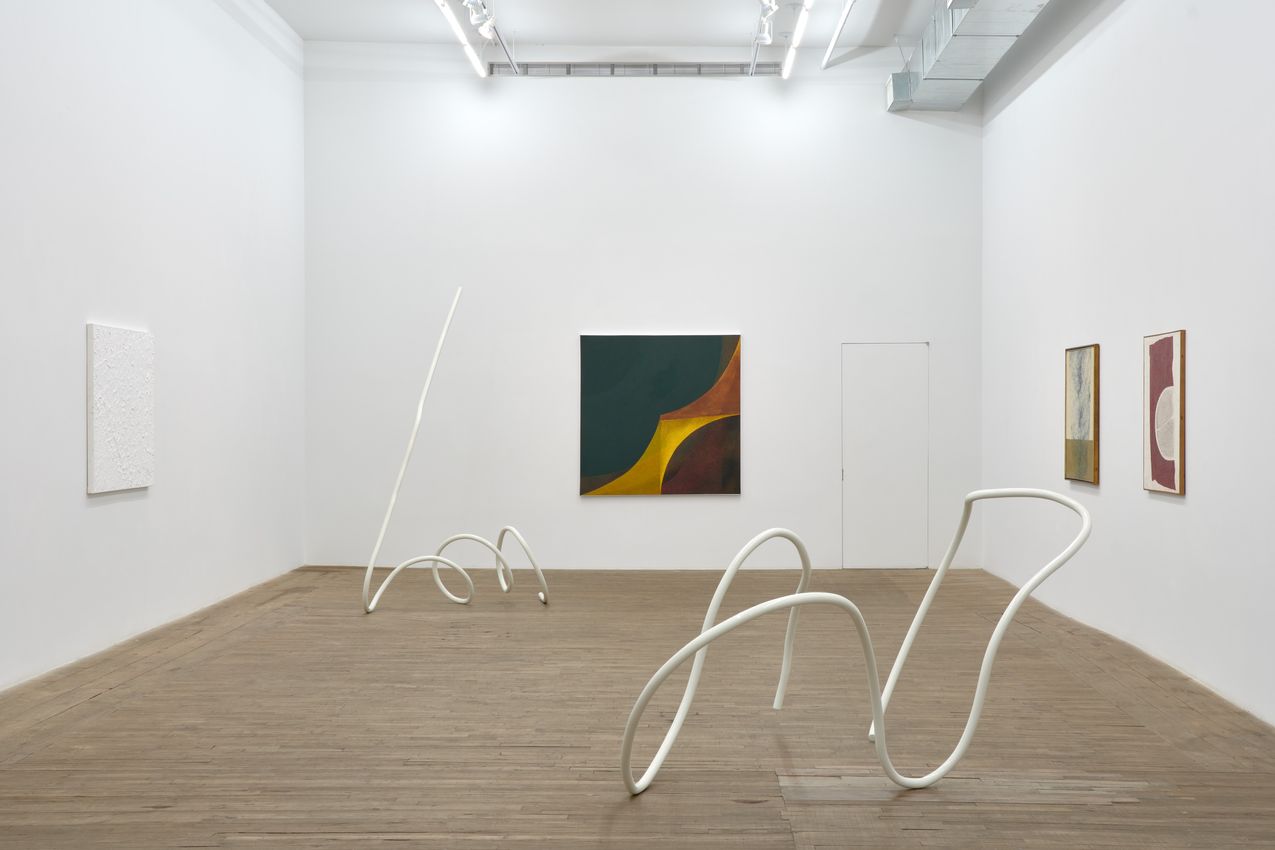
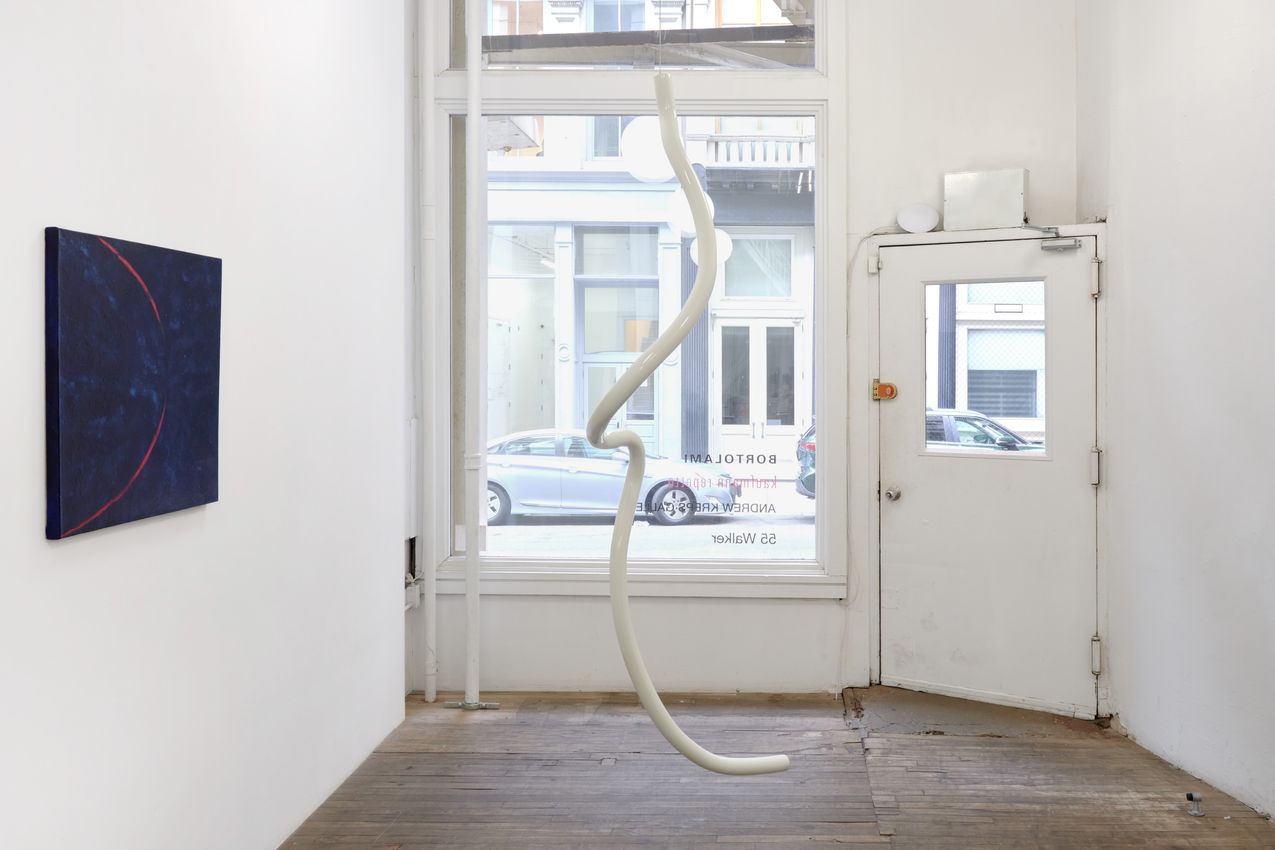
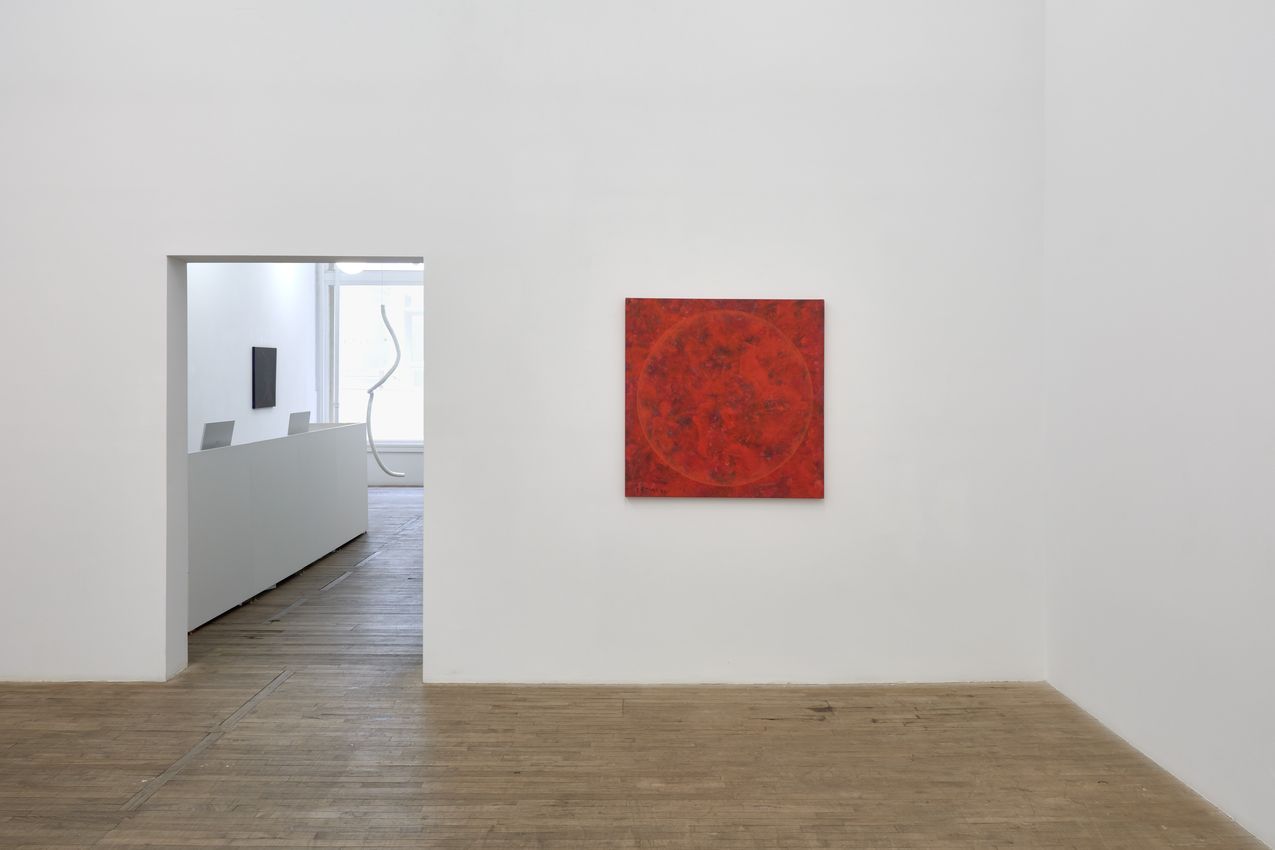
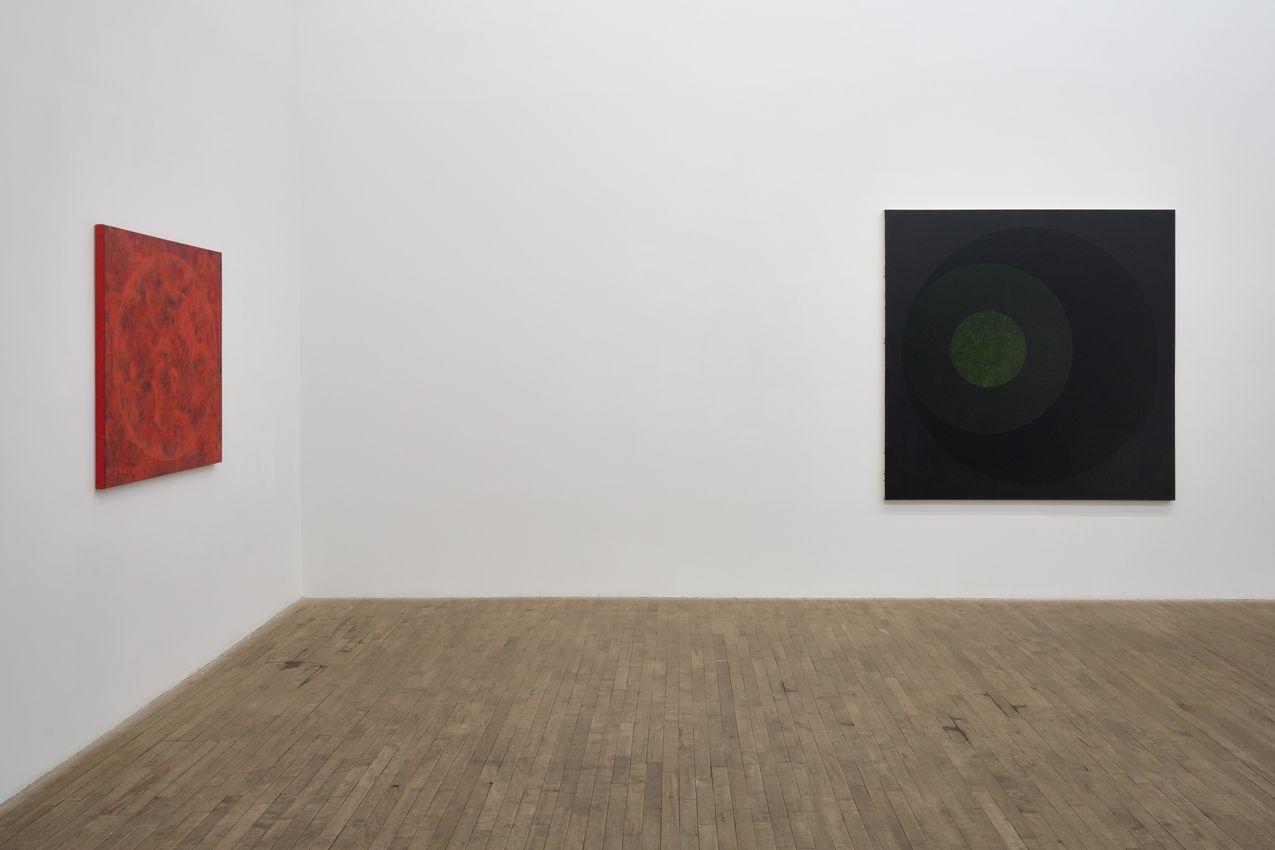
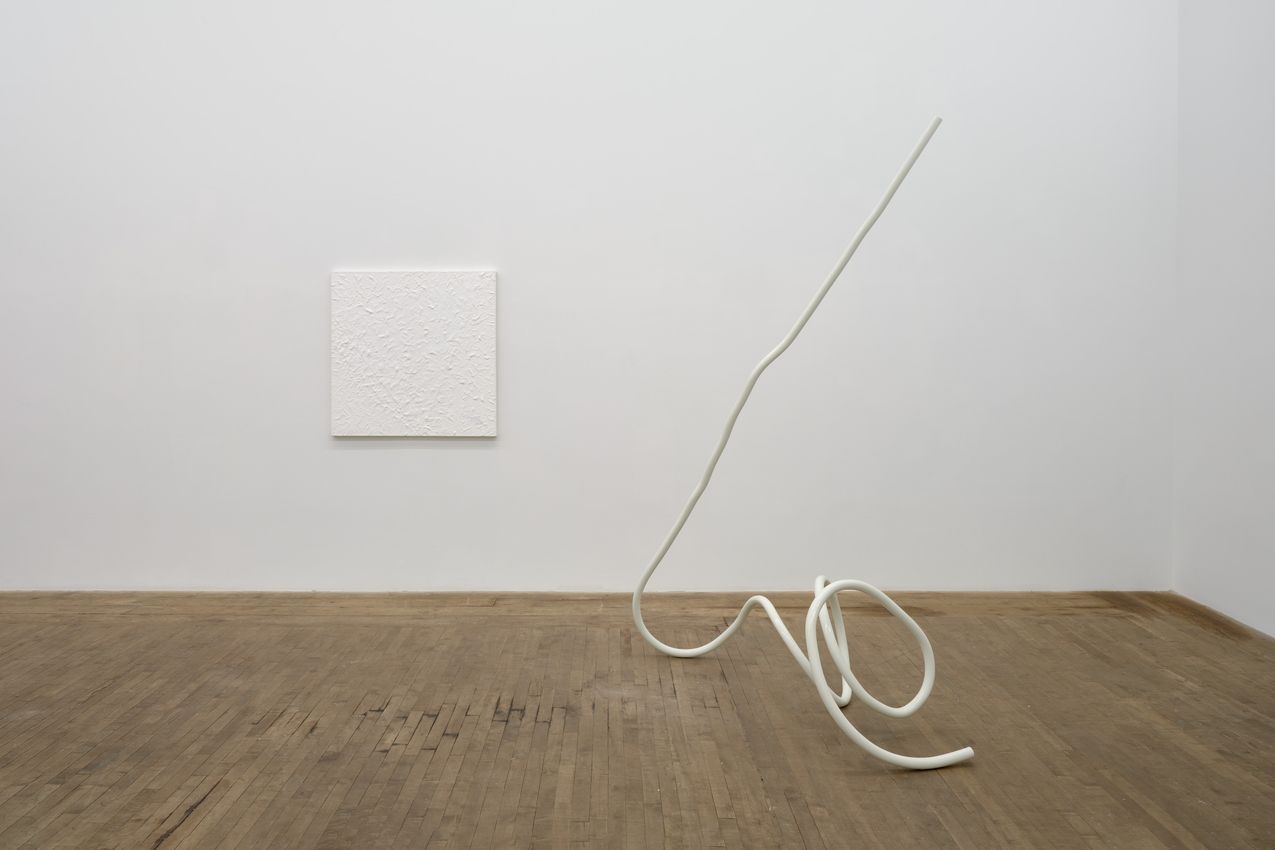
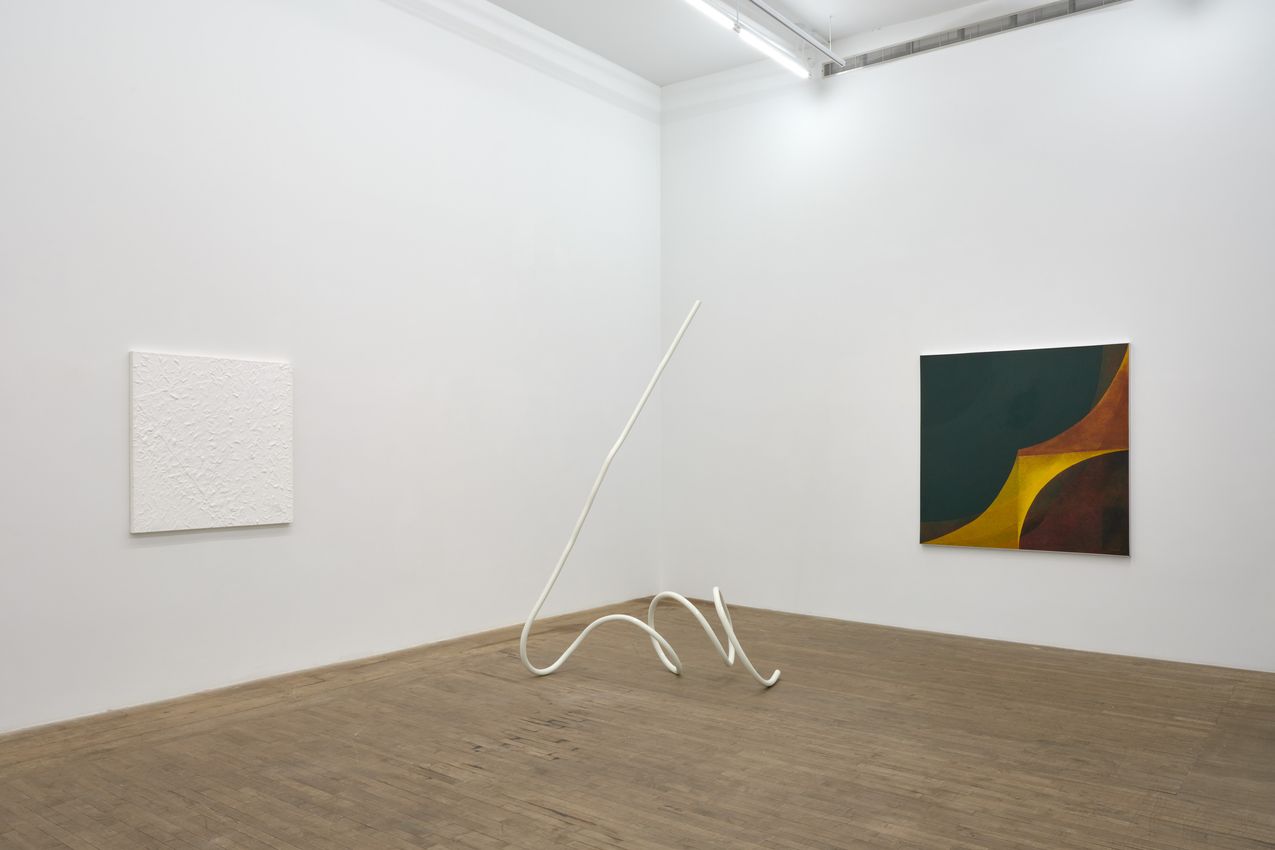
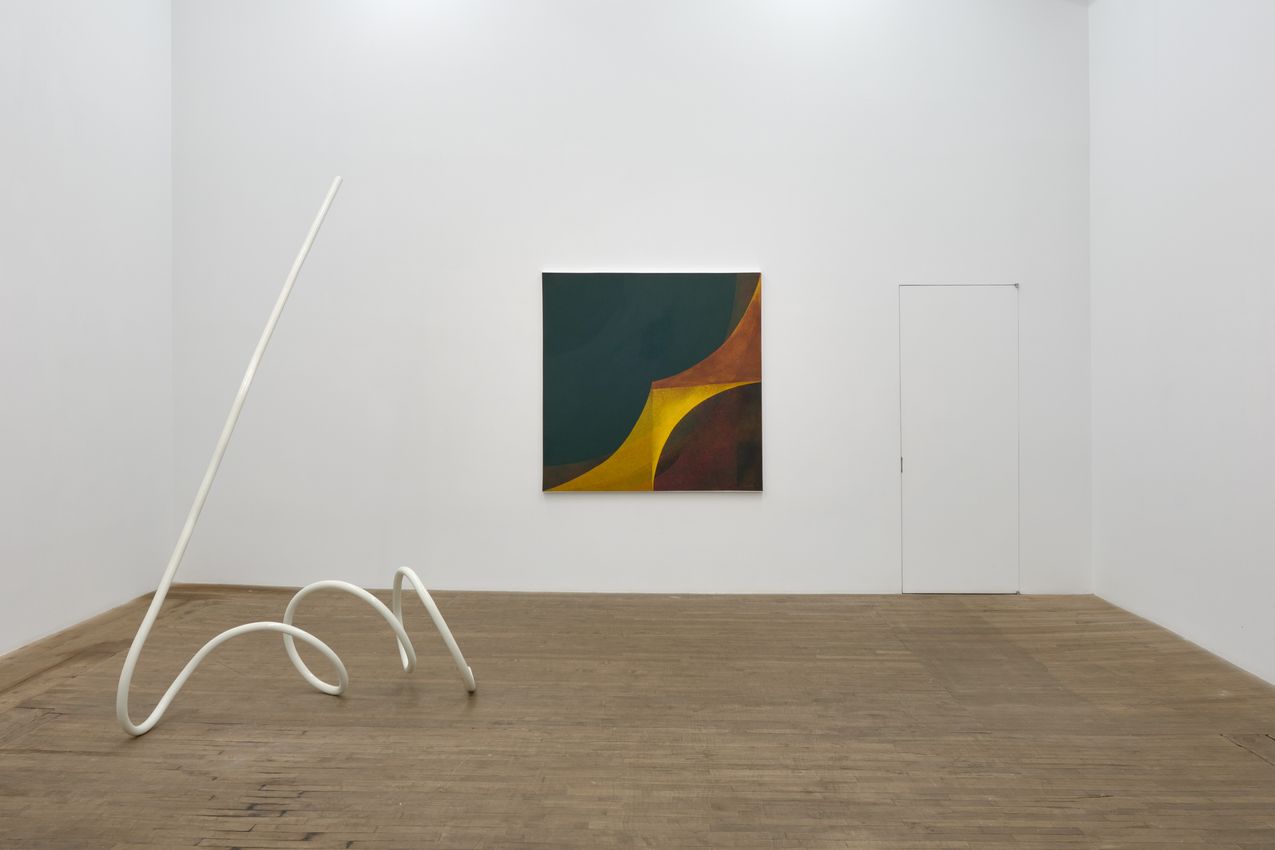
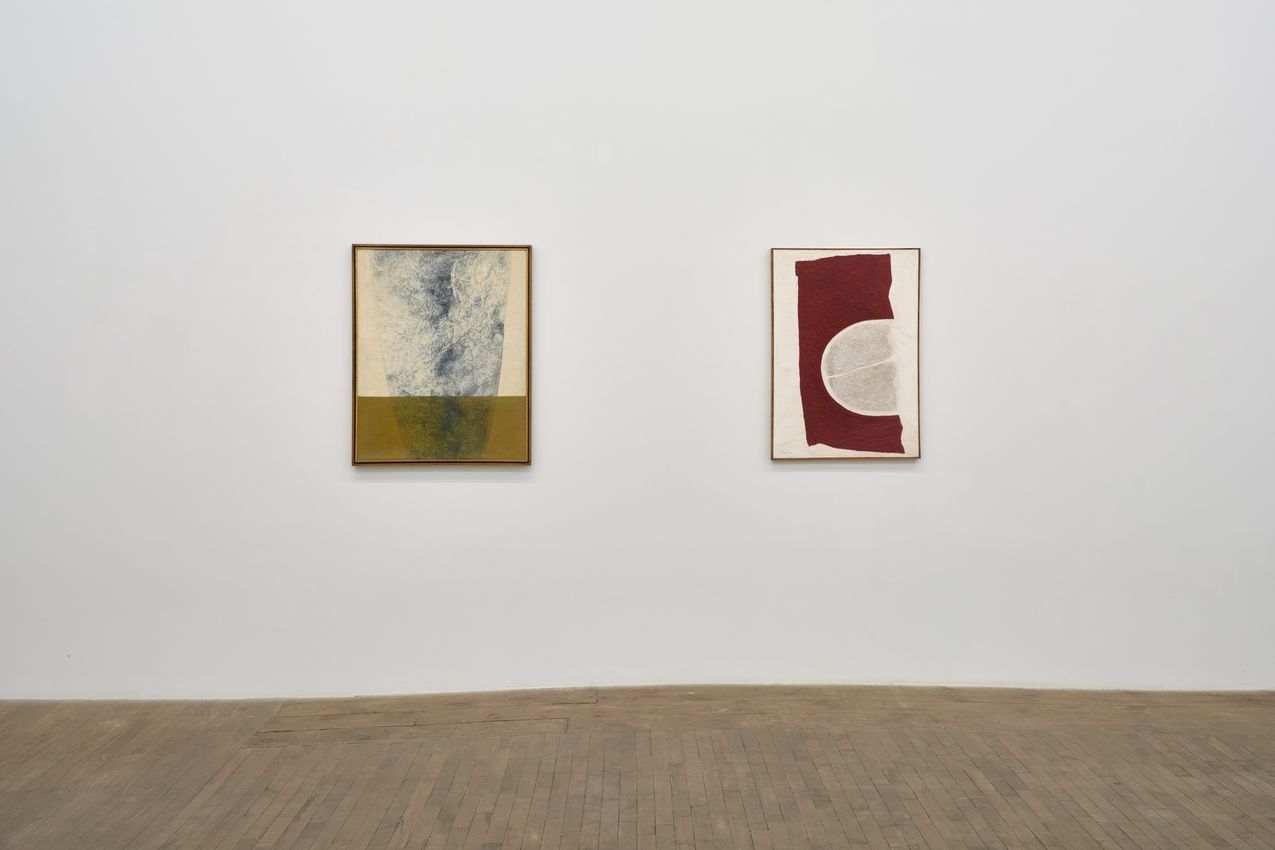
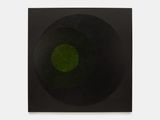
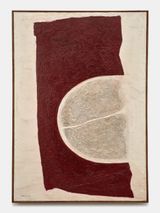
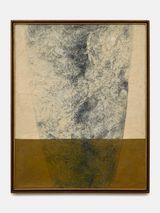
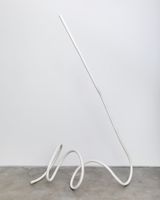
55 Walker (Bortolami Gallery, kaufmann repetto, and Andrew Kreps Gallery) is pleased to announce a survey exhibition of works by Tomie Ohtake (b. 1913, Kyoto, d. 2015, São Paulo), including works made between 1969 and 2014.
At the age of 37, Ohtake made her first artistic works after joining Brazil’s Seibi group, which brought together artists of Japanese descent. While in her first years of painting, she focused on representational works, she would soon immerse herself in abstraction, which would thereafter become a lifelong exploration, spanning over 50 years of production. By the late 1950s, Ohtake would emerge as a key figure within Brazil for her groundbreaking series Blind Paintings, performative works in which Ohtake painted while blindfolded. The resulting compositions directly challenged the logic, and objective approach of Brazil’s Neo-Concrete movement. Focusing on the action of creation, and the larger participation of the body, these works foregrounded the specific sensibility, and reliance on intuition, which would remain integral to Ohtake’s practice.
The earliest works included in the exhibition, produced in the 1960s, represented a shift from the gestural marks that defined her early works to a focus on all-over color field abstraction. Starting with small-scale collages made from torn paper taken from Japanese and Brazillian magazines, Ohtake welcomed chance, and unexpected combinations into the creative process. Translated onto canvases, these paintings were infused with a certain looseness, as well as a richness in texture. Throughout, Ohtake created a tension as she both moved towards, and away from equilibrium in her compositions as quadrangular shapes that were layered with large, uniform colour backgrounds. During this period, repetition became an important strategy, and as well as a focus on chromatic relationships.
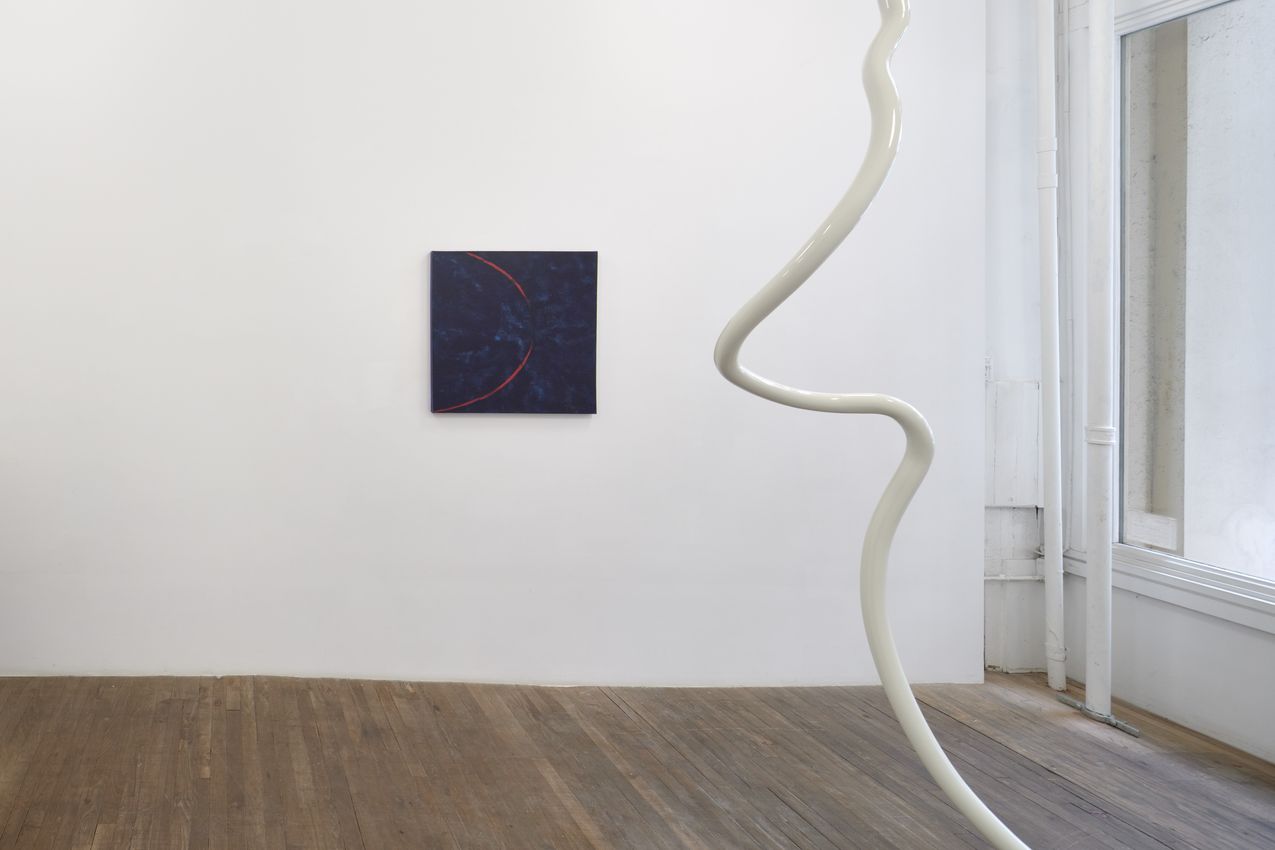
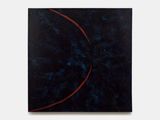
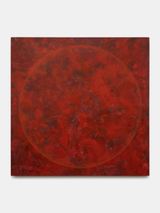
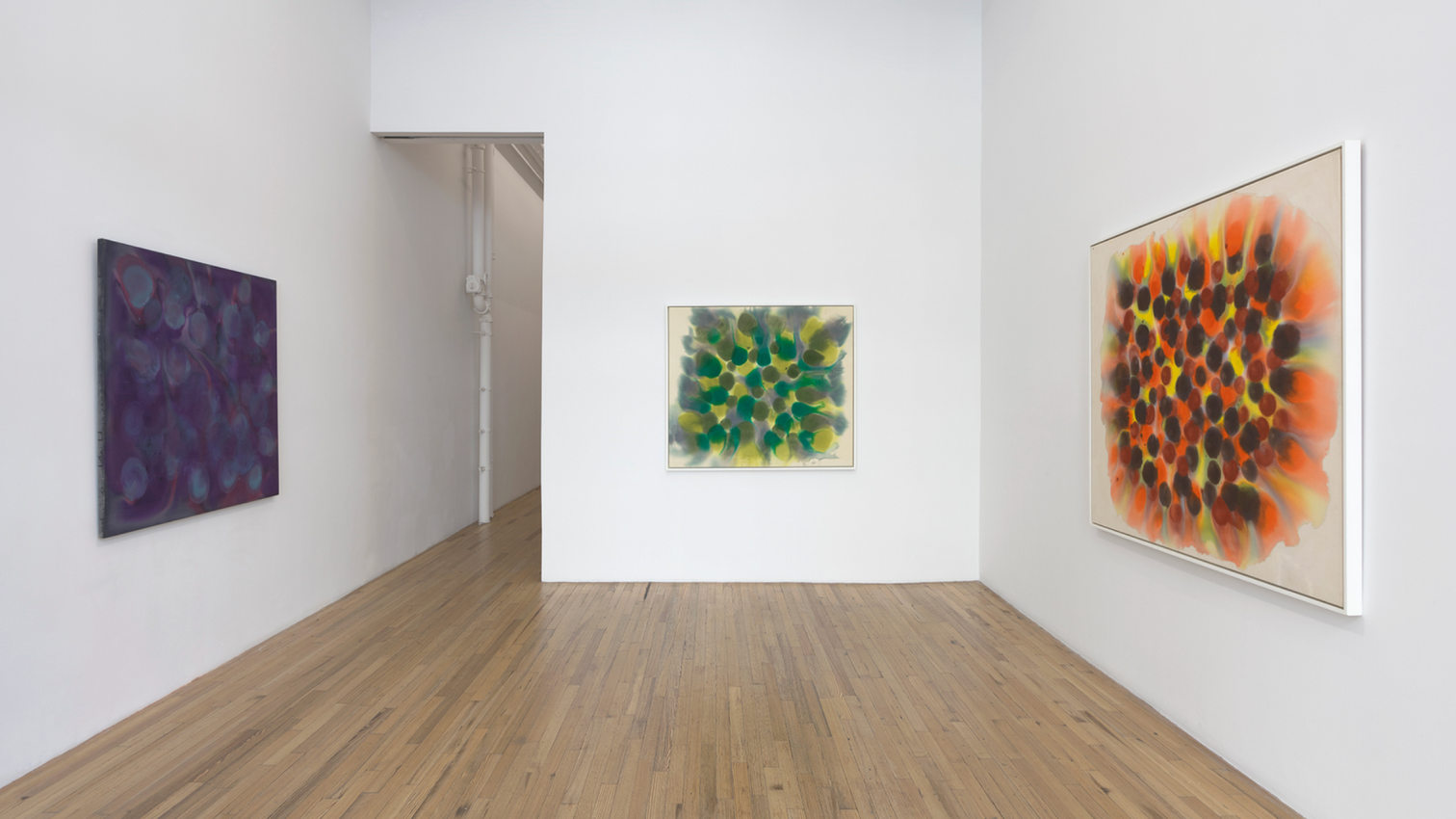
In the 1980s, Ohtake began to use acrylic paint, which she would dissolve in water, allowing the material to flow across the canvas, building color in layers while maintaining a cloud-like transparency. Organising her compositions around a series of curves painted on square canvases, she created both dynamism and geometric balance. Her use of curved shapes would continue through the 1990s, taking on new forms that reference the formation of the universe, such as galactic circles, rings and balls of fire, rosettes, ellipses, and parabolic spirals. Continuing to manipulate her acrylic paint through dilution, Ohtake would build colour through thin layers of glaze, in order to evoke gaseous, foggy, or cloudy matter.
The curve would additionally inform Ohtake’s sculpture, which developed in parallel to her painting practice. Ranging from large scale public commissions, to more intimate studies, Ohtake consistently pursued a weightlessness of form, often in dialogue with architectural spaces and the urban environment. The sculptures included in the exhibition belong to a series of works drawing on gesture, and line. Made from singular tubes of steel coated in white automotive paint, they evoke the realisation of an impulsively drawn line in three dimensions. The absence of colour would play an important role in Ohtake’s final works, a series of monochromatic white canvases created in the year before her death, with relief-like applications of heavy material, allowing the interplay of light and shadow to influence, and dictate her compositions.
Tomie Ohtake’s work was exhibited extensively during her lifetime, and continues to be exhibited widely both in Brazil, and internationally today. Ohtake had her first solo exhibition in 1957 at the Museu de Arte Moderna in São Paulo, at the invitation of critic Mário Pedrosa, which was followed by her participation in the 1961 São Paulo Biennial. Ohtake would additionally participate in the 1963, 1968, 1989, 1993, 1998, and 2013 editions of the São Paulo Biennial. Earlier this year, Ohtake’s work was included in the major exhibition Action, Gesture, Paint: Women Artists and Global Abstraction 1940-70, at the Whitechapel Gallery, London. In 2022, Instituto Tomie Ohtake, São Paulo, presented the solo exhibition, Ohtake Dançante. In recent years, Ohtake’s work has entered the permanent collections of SFMoMA, San Francisco, the Dallas Museum of Art, Dallas, the Metropolitan Museum of Art, New York, Tate Modern, London, Guggenheim Abu Dhabi, and the M+ Collection, Hong Kong, among others.
Tomie Ohtake was a Japanese Brazilian abstract artist whose paintings, prints, and sculptures helped define post-war abstract art in Brazil, and whose monumental public works have become enduring landmarks in São Paulo and beyond. Over a prolific career, Ohtake became one of Brazil’s most celebrated abstractionists, known for a luminous language of colour, curvature, and controlled chance.


A respected voice in contemporary art discourse.
Focusing on ambitious storytelling and insightful art-world commentary. Ocula Magazine publishes in-depth interviews, critical essays and timely analysis on the artists, exhibitions and ideas driving the global art world.
Learn more about Ocula Magazine
Showcasing the best of the art world.
Ocula partners with galleries from around the world to highlight their artists, artworks and exhibitions. Gallery membership is by application and invitation, with each member vetted by an independent panel.
Learn more about Ocula Membership

Specialises in the sale of major artworks.
Led by a team with deep ties to the world’s leading auction houses, galleries and collectors. Ocula’s advisory team offers bespoke services to high-net-worth clients from around the world who are looking to acquire the best of contemporary and modern art.
Learn more about our team and services