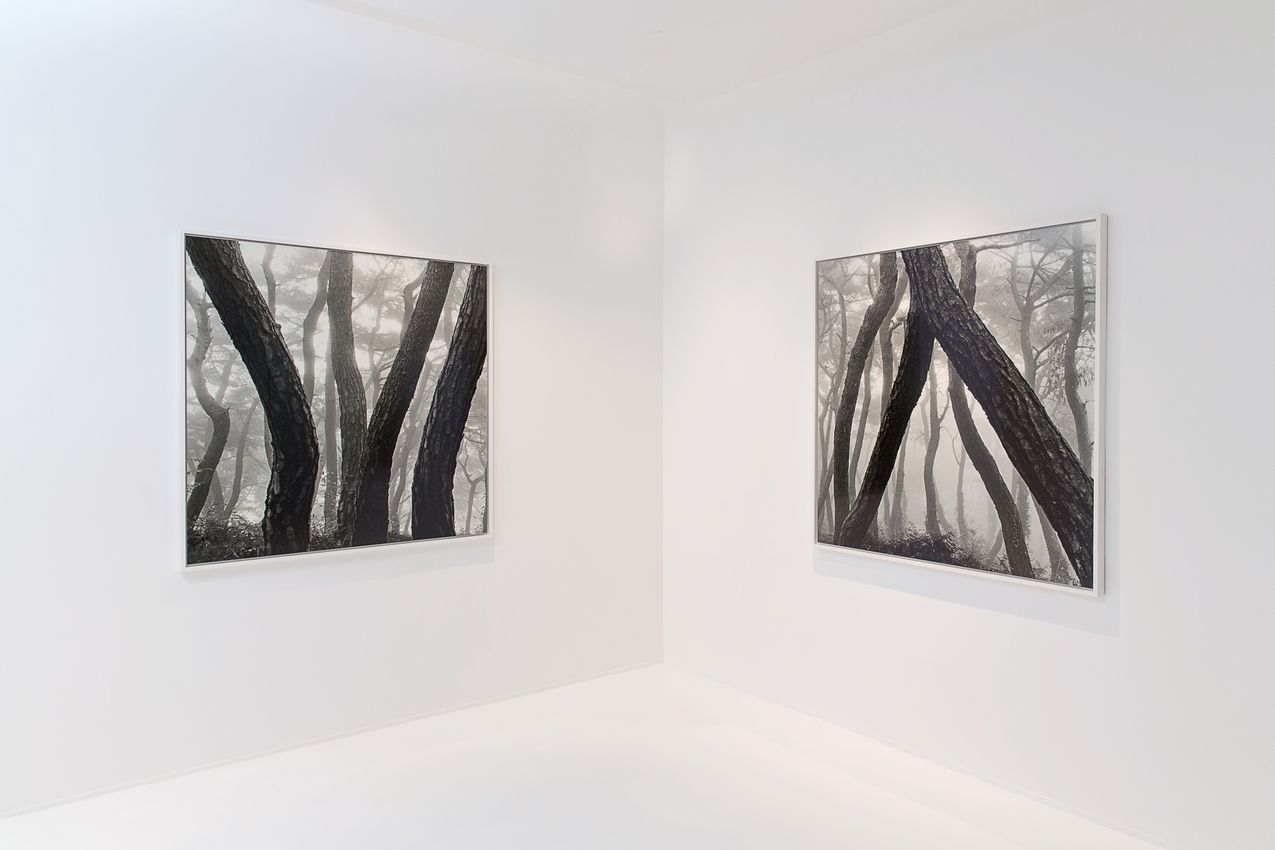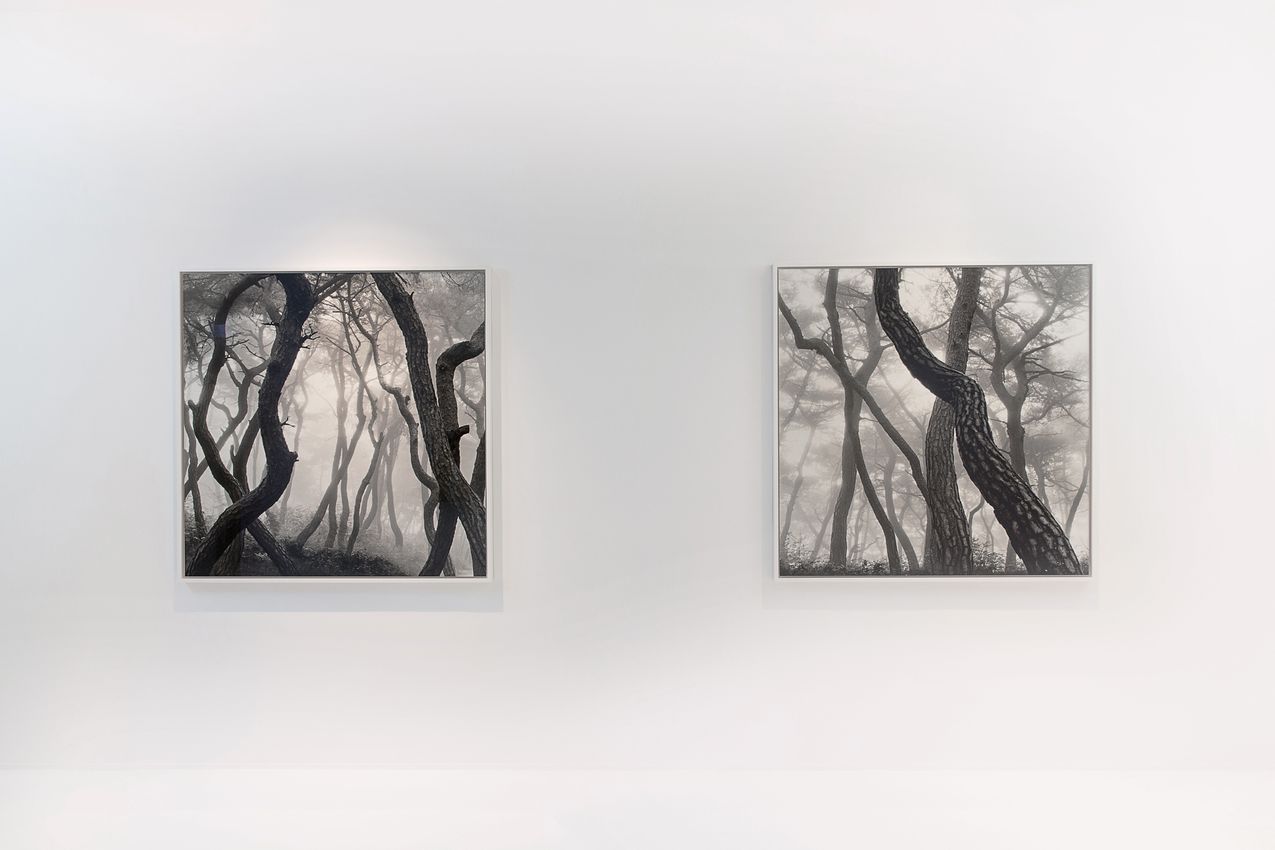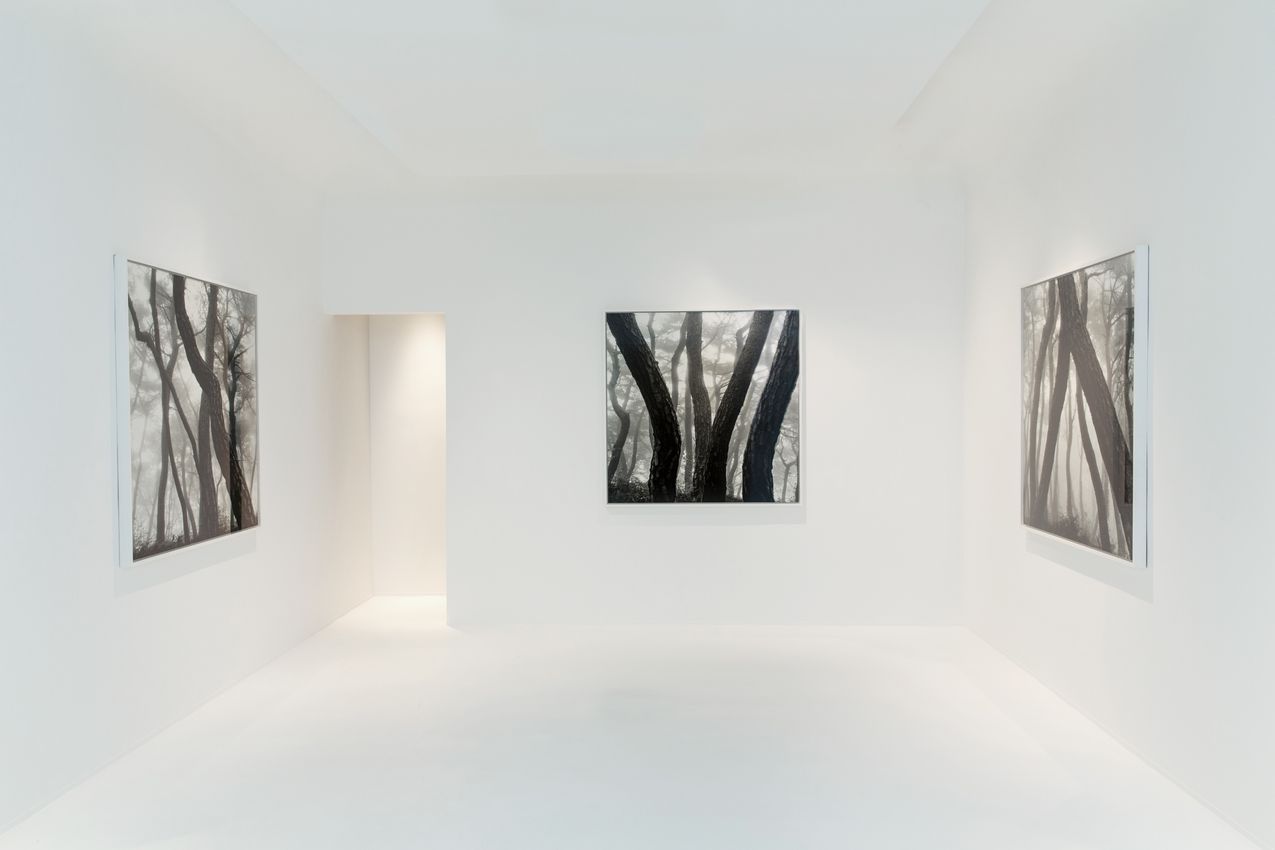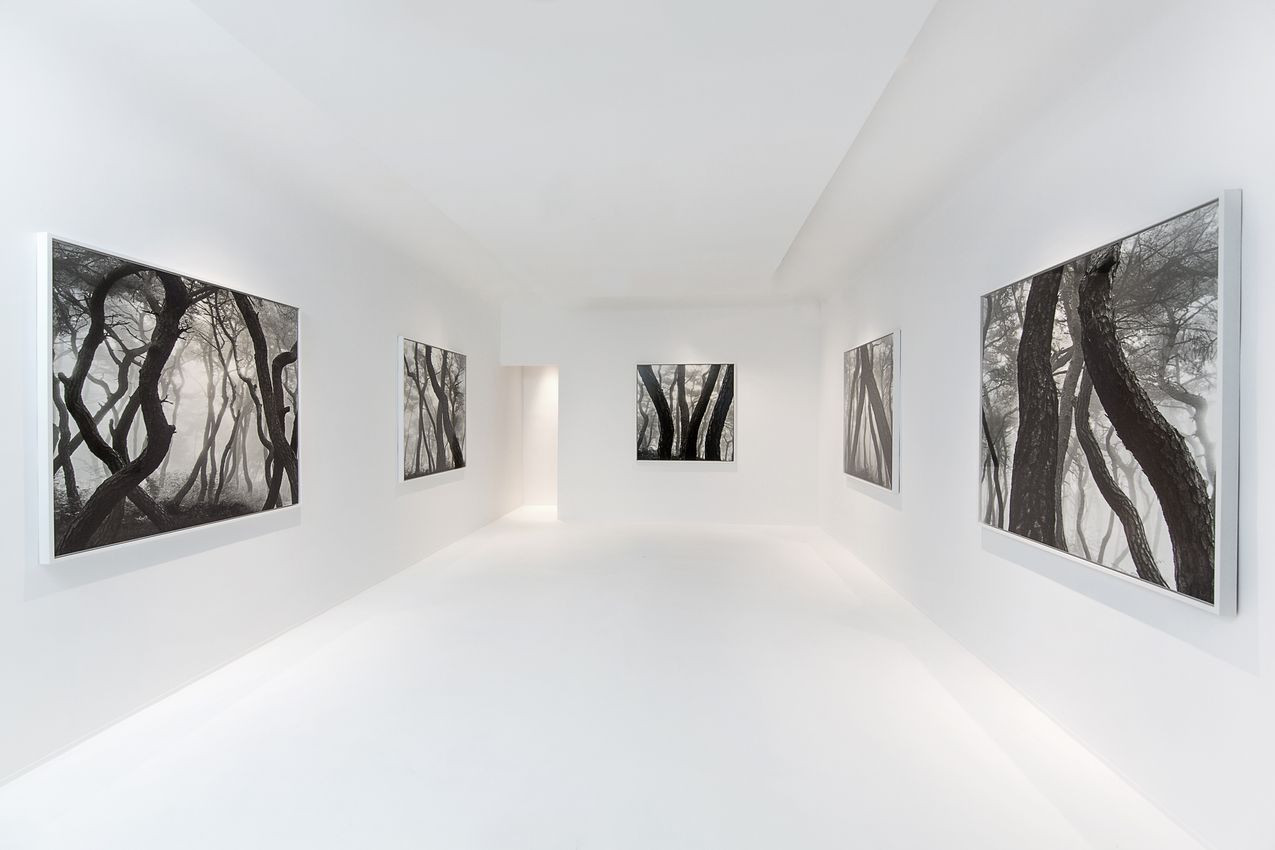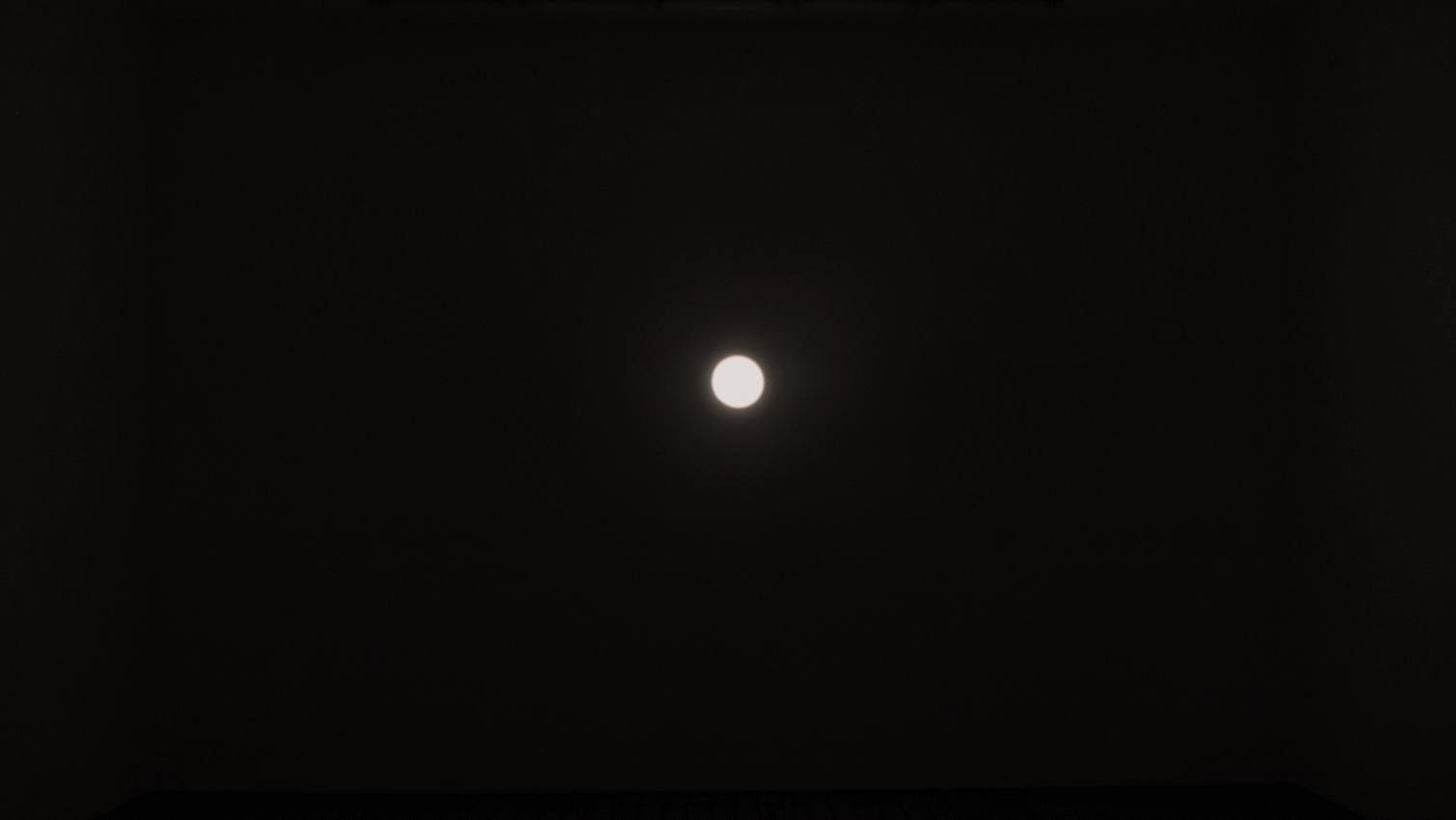




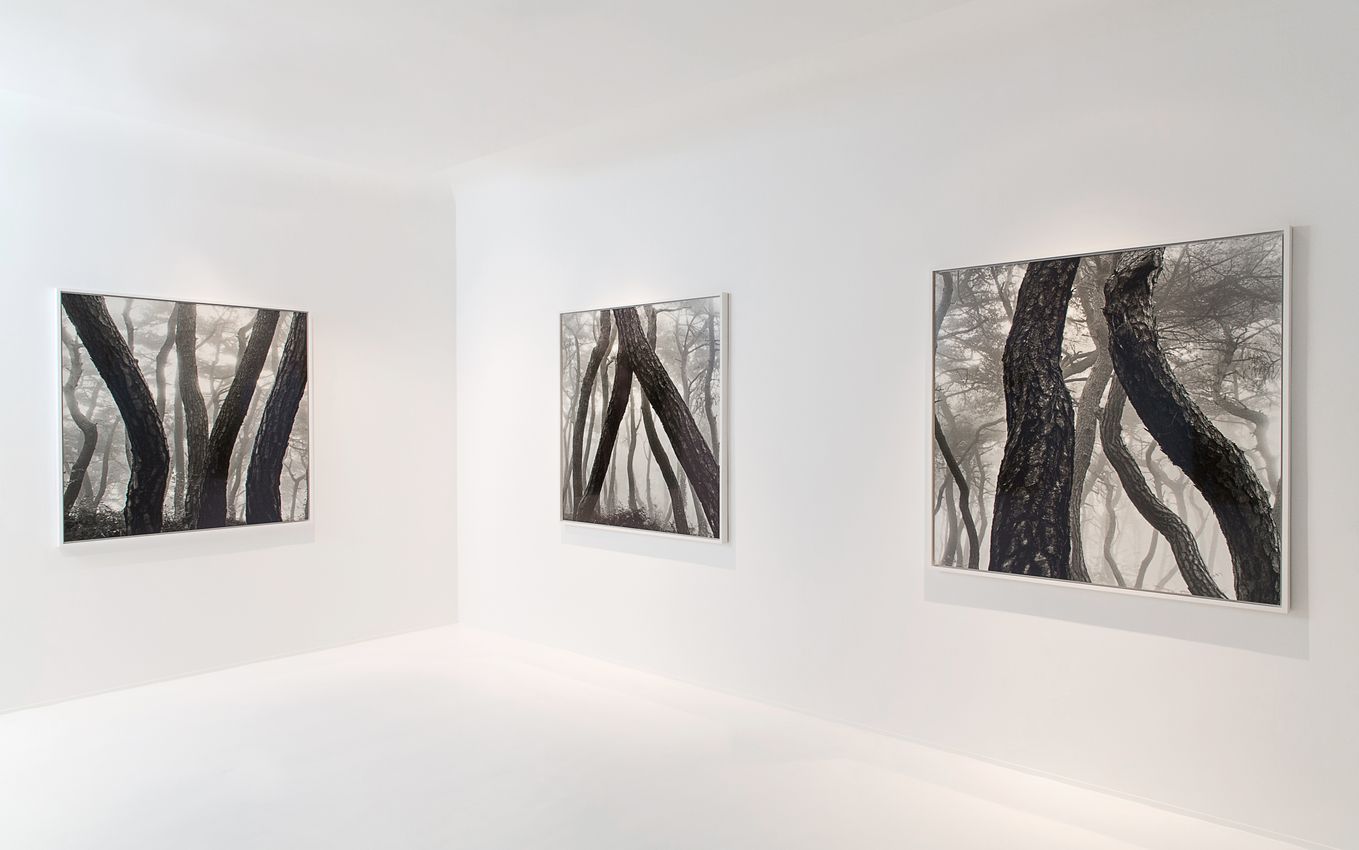
Axel Vervoordt Gallery is proud to present Bae Bien-U’s first solo exhibition in Hong Kong 分合 - PART:MEET in which he will show new works from the Sonamu - Pine Tree series.
From the very beginning of his career as a photographer, the forest in the mountains of Gyeongju, where pine trees surround the royal tombs, has been Bae’s preferred subject. Pines carry a long tradition in Korean culture. The energy of life is believed to pass through them. They mediate between heaven and earth and are important in many rituals of life and death.
The ritual of coming and going, of man’s short “encounter” with and in life and nature, is expressed in the exhibition’s Chinese title 分合 (fēnhé). This phrase refers to a paradoxical meeting. It contains the signs for both separation (分fēn) and incorporation (合hé). An encounter always implies a parting; a presence holds an absence and the visible, what is unseen. (Human) nature is never fixed but always unstable and transforming between counterparts. Beautifully opposing forces are its drive. For Bae the pine tree forest is a metaphor for human society in which different forces continuously interact.
When Bae Bien-U presses the shutter, he captures this invisible process in a split second and condenses it into a photograph. The pine trees are caught in their true “here- and-now-ness”, they do not have a past nor a future but are most of all present in a space that transcends the physicality of real life’s paradoxical forces.
Baes’s ideas are enforced by the proportions of the photographs’ frame. For the first time since the 1980s, he decided to again use 6 by 6 negatives with a 1:1 ratio, instead of the panoramic 6 by 12 negatives. His choice for the 1:1 ratio is inspired by the deeper meaning it holds. 1:1 symbolizes a mystic experience, an opening in life to holiness. In many different cultures this ratio is symbol of (en)light(ment).
Bae’s photographs extend beyond their frames. They are openings. The viewer is invited to step into them, wander through the forest and encounter the equilibrium of nature in boundless transformation.
“According to the German philosopher Immanuel Kant, there is no objective property of a thing that makes it beautiful. However, all living creatures come into existence with perfect balance. Such balance creates proportion and may reach its peak as the golden ratio, fractal or Fibonacci sequence. Yet, as prototypes of beauty, such as animal, plant and nature, grow and develop, this balance could be broken. When the beauty of proportion is maintained amidst such destruction, one can call it an exceptional beauty. Like the beauty of trees, its’ balance transforms as it grows, due to the light, wind, and environment. However, only the body of the tree changes while the original balance of the leaf remains intact. Such balance exists hidden in the roots of the tree and spirit of men.”
(Bae Bien-U)
BAE BIEN, U
Bae was born in Yeosu, Jeollanam-do in 1950, and graduated from Hongik University’s College of Arts in 1974 and the graduate school of the same university in 1976. Renowned as a professional photographer with themes especially concentrated on pine trees, he has become a representative photographer with the reputation of capturing the characteristic sentiments of Korea including the pine trees, oceans and mountains with his camera rather than a brush.
Former South Korean president Lee Myung-bak gave a collection of Bae’s pine tree photographs to U.S. president Barack Obama during a summit held in Washington. He served as professor of the Department of Photography at the Seoul Institute of the Arts.


Boris Vervoordt created the Axel Vervoordt Gallery in 2011. The gallery opened in a historic space in the centre of Antwerp with an exhibition by Günther Uecker. Boris chose to open the gallery in the same exact place where his father had mounted exhibitions for Uecker and Jef Verheyen in the 1970s. The first exhibition—and those that followed—linked this new start to the company’s long history with art and its original home in the Vlaeykensgang. This continued a path of more than 40 years of working closely with artists.
A respected voice in contemporary art discourse.
Focusing on ambitious storytelling and insightful art-world commentary. Ocula Magazine publishes in-depth interviews, critical essays and timely analysis on the artists, exhibitions and ideas driving the global art world.
Learn more about Ocula Magazine
Showcasing the best of the art world.
Ocula partners with galleries from around the world to highlight their artists, artworks and exhibitions. Gallery membership is by application and invitation, with each member vetted by an independent panel.
Learn more about Ocula Membership

Specialises in the sale of major artworks.
Led by a team with deep ties to the world’s leading auction houses, galleries and collectors. Ocula’s advisory team offers bespoke services to high-net-worth clients from around the world who are looking to acquire the best of contemporary and modern art.
Learn more about our team and services