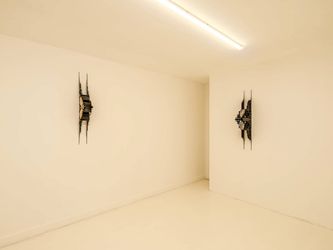
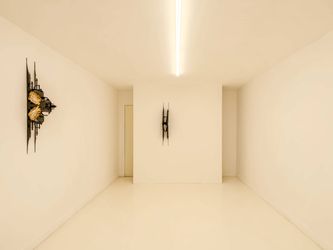
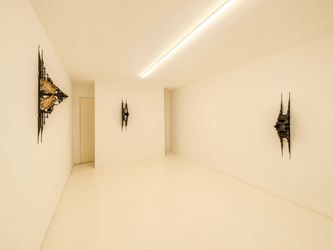
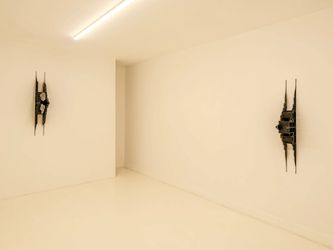
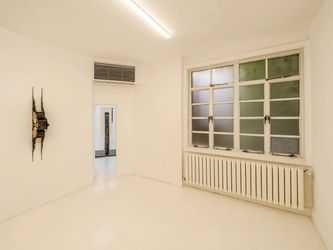
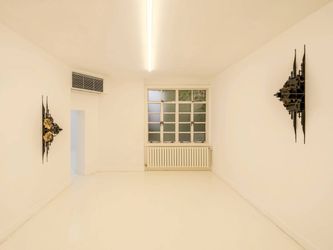
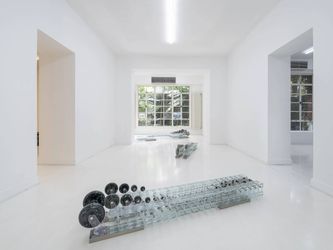
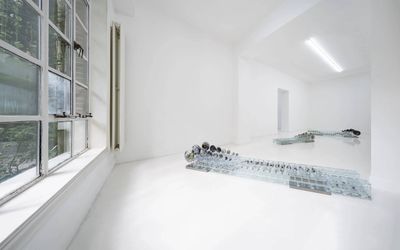
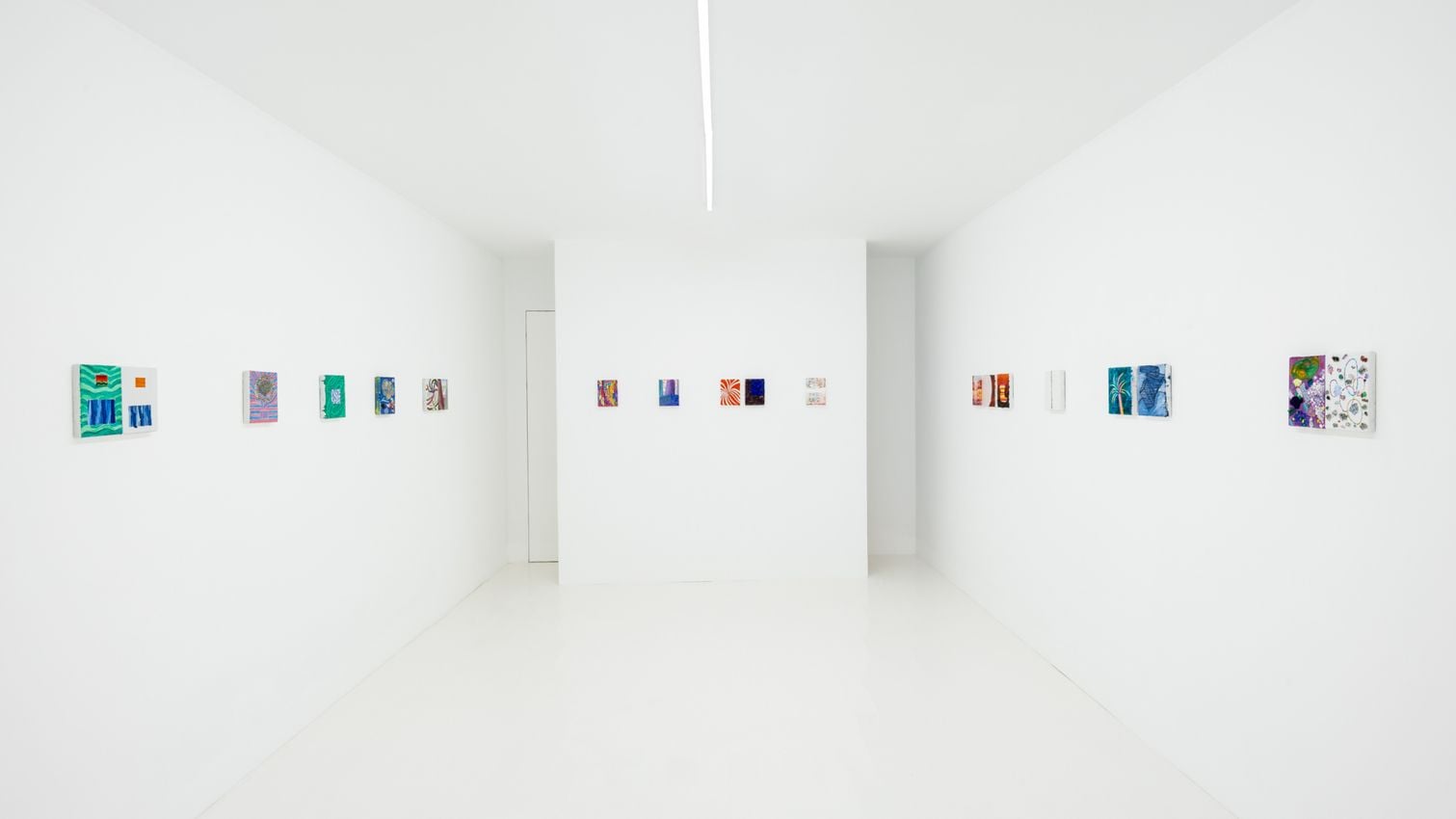
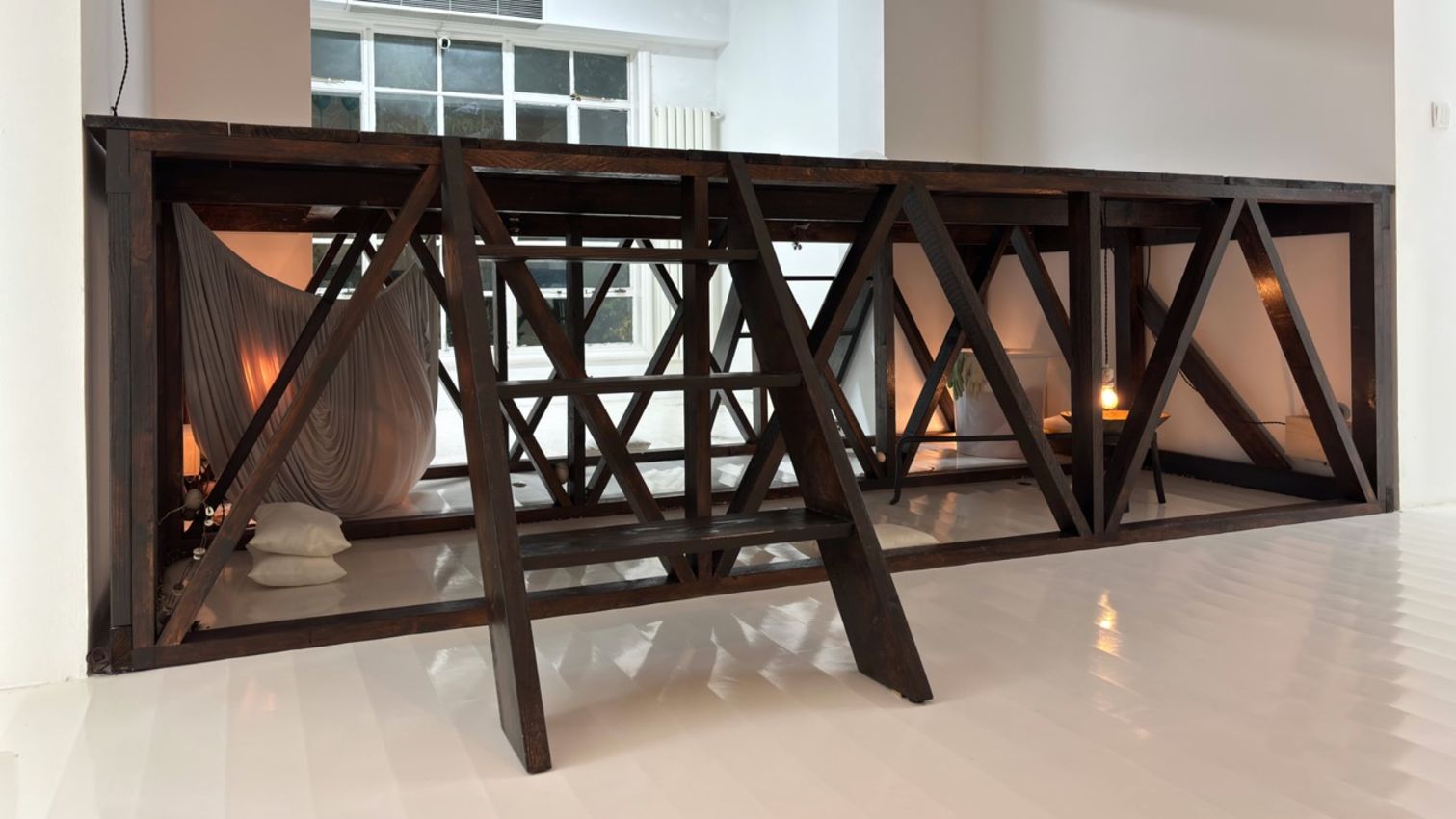
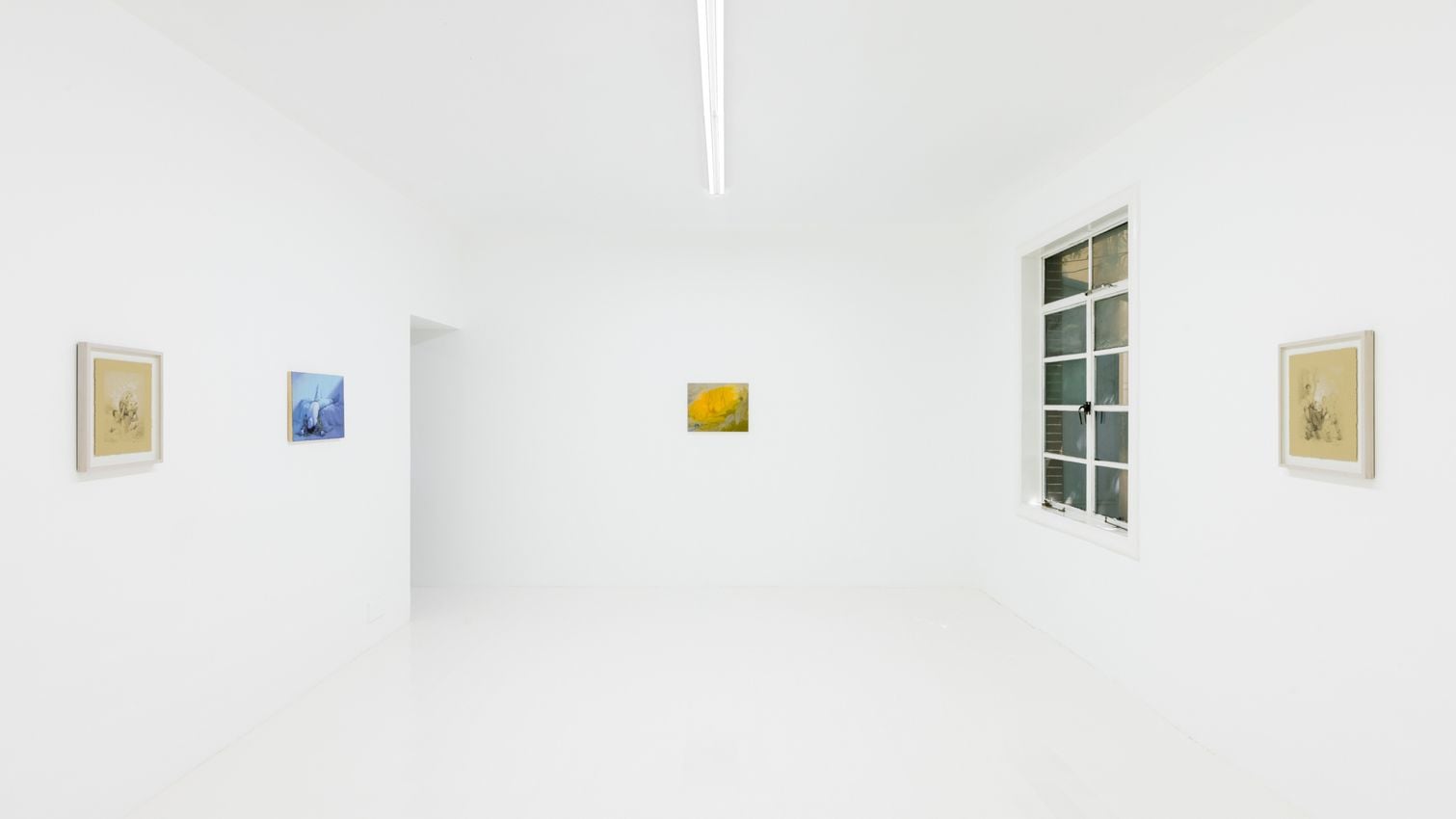
Four years after her solo debut at Capsule Shanghai, Leelee Chan returns with Silica Meadows from September 17th to October 28th. The exhibition features a selection of recent sculptures that deepens the artist’s on-going exploration of how human desire and imagination govern the meaning and value ascribed to material objects, and how geography and culture mutually influence each other. At the core of Chan’s latest inquiry is silica, one of earth’s most abundant chemical compounds found commonly as quartz and in sand, as well as in the obsidian, manufactured glass, petrified wood, and marble varieties that figure in Chan’s sculptural forms. Drawing on the physical properties and cultural meaning of silica’s diverse manifestations, Chan presents a new set of evocative works that intersect the architectural, biomorphic, and geological to reflect on the fate of matter in the face of humanity’s relentless pursuit of material expansion and abundance.
Growing up with parents who restored and dealt ancient Chinese antiques, Chan has long been fascinated by how the evolution of human history is intertwined with the materials that we use to build and improve civilisation. During the COVID-19 pandemic, the artist embarked on her BMW Art Journey around the world in search of different ‘tokens from time’ that have left indelible marks on the development of human society—from Mexican obsidian in the Teotihuacan valley to the Italian marble of Carrara, ancient bronze bell foundry of Agnone to the silver of Taxco, Roman stone mosaics to low-carbon concrete. Learning about the past, present, and future of these materials from the communities who mine, craft, or engineer them has greatly enriched Chan’s sculptural practice with new conceptual and formal rigour.
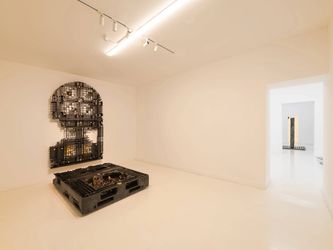
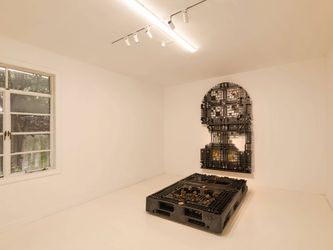
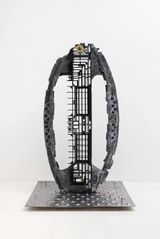
Since her Pallet in Repose series (2019-2021), Chan has been exploring how human perception can be manipulated to view materials and their worth differently. What qualities make an object appear worthy and covetable? How can colour, texture, weight, and volume affect our perception of matter? By inlaying resins and minerals into discarded shipping pallets, Chan transformed humble refuse plastic into aesthetic structures that often recall ancient relics or sacred totems. In her latest presentation, Chan has radically altered the materiality of plastic pallets. In the monumental installation Dark Light, Subterranean Circuit (2023), two pallets form a pair of architectural fittings. Whereas the arched wall mount inlaid with rippled amber resin and lustrous gold-sheen obsidian carved by Teotihuacan craftsmen evokes the luminosity of stained-glass, as with many reworked pallets in Chan’s oeuvre, the cratered floor piece thoroughly sculpted with epoxy clay resembles fossil stone. Showing through its lithic crater and crevices are copper chrome mirror inlays, yellow zinc wheels, and 3D-printed bronze wildflowers that appear like precious ore in an open-pit mine. By masking the pallet’s plasticity with epoxy clay and inlaying various minerals and metals, Chan transforms mass-produced equipment into temporally ambiguous artefacts that intrigue us to rethink the (after)life of materials—if ancient obsidian was once mined for making ceremonial blades and wholesaled today as feng shui crystal, yesterday’s detritus plastic may yet become tomorrow’s treasure according to the whims of human desire.
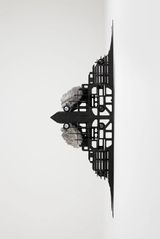
Chan’s manipulation of plastic with epoxy clay also endows her work with a new haptic sensibility that activates our tactile imagination. In Lithic Current (2023), discarded bumper packagings are carefully sculpted to resemble stone, yet their supple bend and hollows hint at a certain plasticity similar to the weight and volume of the sculpture’s central pallet fragment. The indeterminate materiality and physicality draw us closer—could this mysterious ovoid with a mineral “eye” be an ancient animist totem or some futuristic stele? In three other related works Moth (2023), Moth (Blinded Sphinx) (2023) and Moth (Silver Cloud) (2023) installed in a dimmed room through a narrow portal, Chan carves from shipping pallets sharp triangular fragments that hang on the wall like resting moths in a cave. Their plastic surfaces are smoothed over with clay to assimilate petrified wood inlays and natural magnesium. Appearing more viscous than lithic, these sculptures beckon us to once again surmise carefully—could they be strange gothic relics, or organic tar fossils of some winged creature that once fluttered with zest like the short-lived arthropods in Virginia Woolf’s The Death of the Moth (1942)?
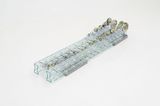
The material charade continues in Chan’s latest additions to the Blindfold Receptor series (2019–present). Inspired by caterpillars of the peppered moth, which have evolved to perceive colour with receptors on their skin, this series features geometric spinal structures that recall both machinery and insect. Whereas Chan had previously used industrial steel supports and plastic wheels covered in marbled clay, Blindfold Receptor (Jewel–Moss) (2023), Blindfold Receptor (Crawling Jewel–Moss) (2023), and Blindfold Receptor (Crawling Jewel–Moss II) (2023) employ glass columns and varieties of green-veined marble that invite more skeletal and biomorphic associations. As the glass structure reflects and refracts light at the same time, it acts as both surface and lustre that constantly changes depending on our point of view. A closer look would also reveal that the sinuous column of transparent omni wheels locked within the glass columns is not as it seems. Less cool to the touch, they are in fact 3D-printed plastic that merely mimic glass. Much like the chameleonic caterpillars that inspired this series, Chan’s latest “Blindfold Receptors” not only engage our visual but also tactile senses to decipher different material stimuli.
As Chan expands her sculptural vocabulary with new materials, she also persistently returns to the same forms such as the grid, the circle, and the triangle—essential geometry that structures our world of matter—and make us wonder, how many ways can we be made to perceive and understand our world differently? While often taking after forms that allude to deep time, Chan’s sculptures contain a multitude of palimpsests—fossils of the ancient past, recent waste spewed out from the global capitalist supply chain, the traces of industrial machinery, the delicate hand of the sculptor. From ashes to ashes, dust to dust; perhaps one of the most pertinent questions posed by Chan’s works is how we may think about the ecology of materials in a world of finite resources.


Leelee Chan’s sculptures reflect her experience with the extreme urbanisation in Hong Kong and are almost always comprised of dumpster detritus household ephemera, and mundane objects from her daily life not generally considered memorable or worth preserving. Derived from an impulse to interrogate these objects’ status and value, Chan imaginatively explores their transformative potential and reconfigures each item according to its unique quality. She purposefully integrates these objects with natural and industrial elements such as mother of pearl tiles and seashells, artificial plants and greenery, asphalt and rocks, while preserving each material’s open dignity. Her sculptures evoke Modernist architecture and anthropomorphic shapes embedded with playful and meticulous details that slowly unfold upon close inspection. Chan’s process-based approach embraces unexpected forms that generate a new living entity driven by their own internal logic–poetic, idiosyncratic, and universally intimate.


Established in late 2016 by Italian gallerist and long-time influential figure of the Shanghai art scene Enrico Polato, Capsule Shanghai is a self-described ‘gallery and art laboratory’ based in Shanghai’s central Xuhui District. Situated on the first floor of a picturesque 1930s garden house in the idyllic greenery of the former French Concession, the gallery works primarily with emerging Chinese and international artists who push the boundaries of contemporary art. Its special focus has been on artists who have personally and professionally migrated between regions, creating unique trans-national and trans-regional links.
A respected voice in contemporary art discourse.
Focusing on ambitious storytelling and insightful art-world commentary. Ocula Magazine publishes in-depth interviews, critical essays and timely analysis on the artists, exhibitions and ideas driving the global art world.
Learn more about Ocula Magazine
Showcasing the best of the art world.
Ocula partners with galleries from around the world to highlight their artists, artworks and exhibitions. Gallery membership is by application and invitation, with each member vetted by an independent panel.
Learn more about Ocula Membership

Specialises in the sale of major artworks.
Led by a team with deep ties to the world’s leading auction houses, galleries and collectors. Ocula’s advisory team offers bespoke services to high-net-worth clients from around the world who are looking to acquire the best of contemporary and modern art.
Learn more about our team and services