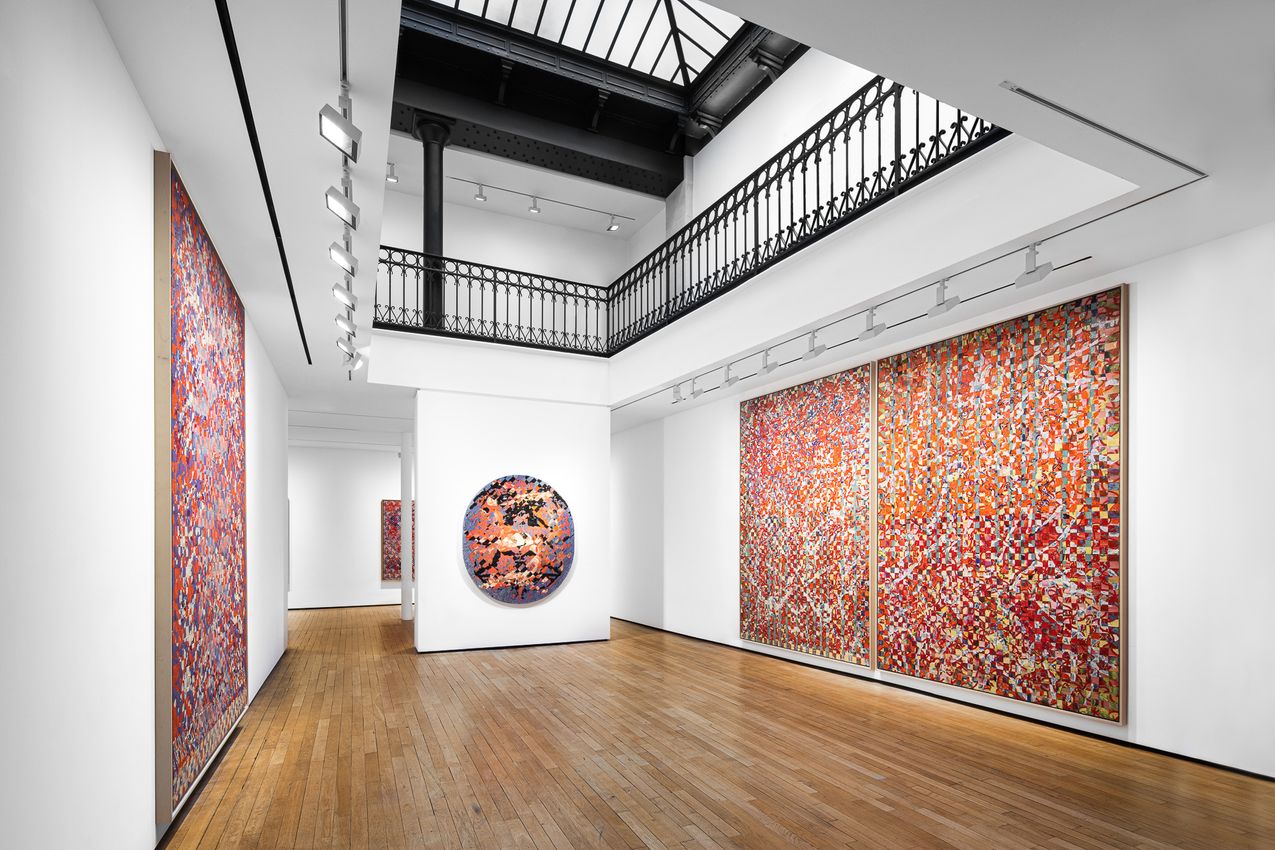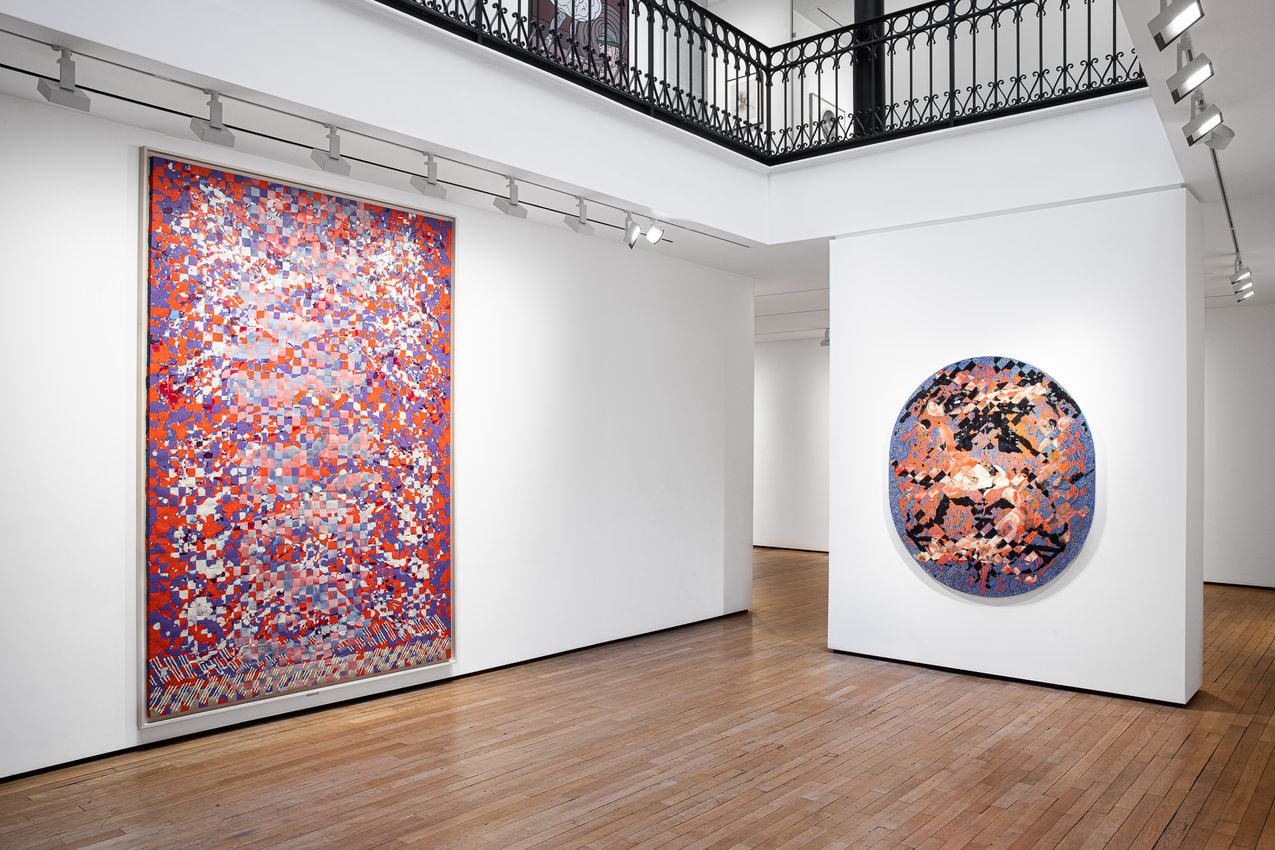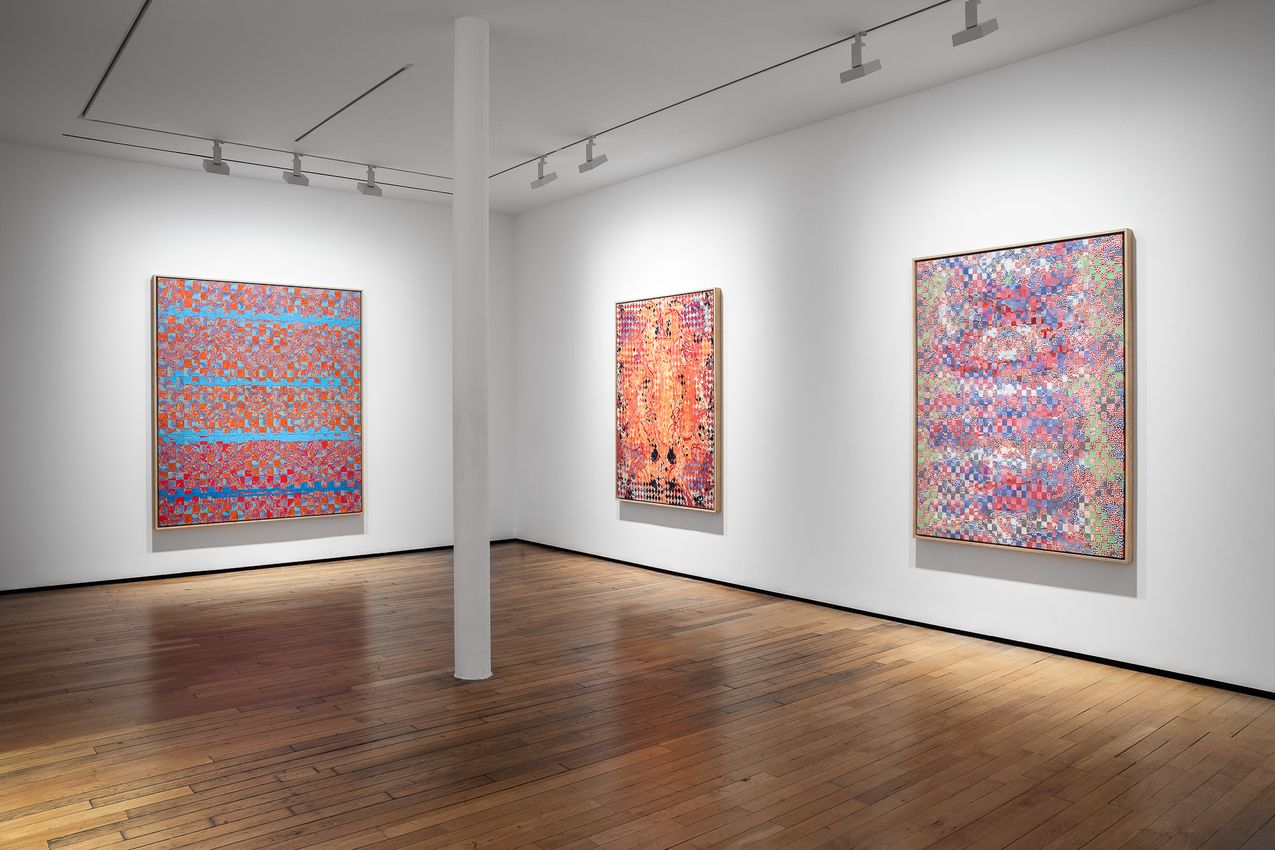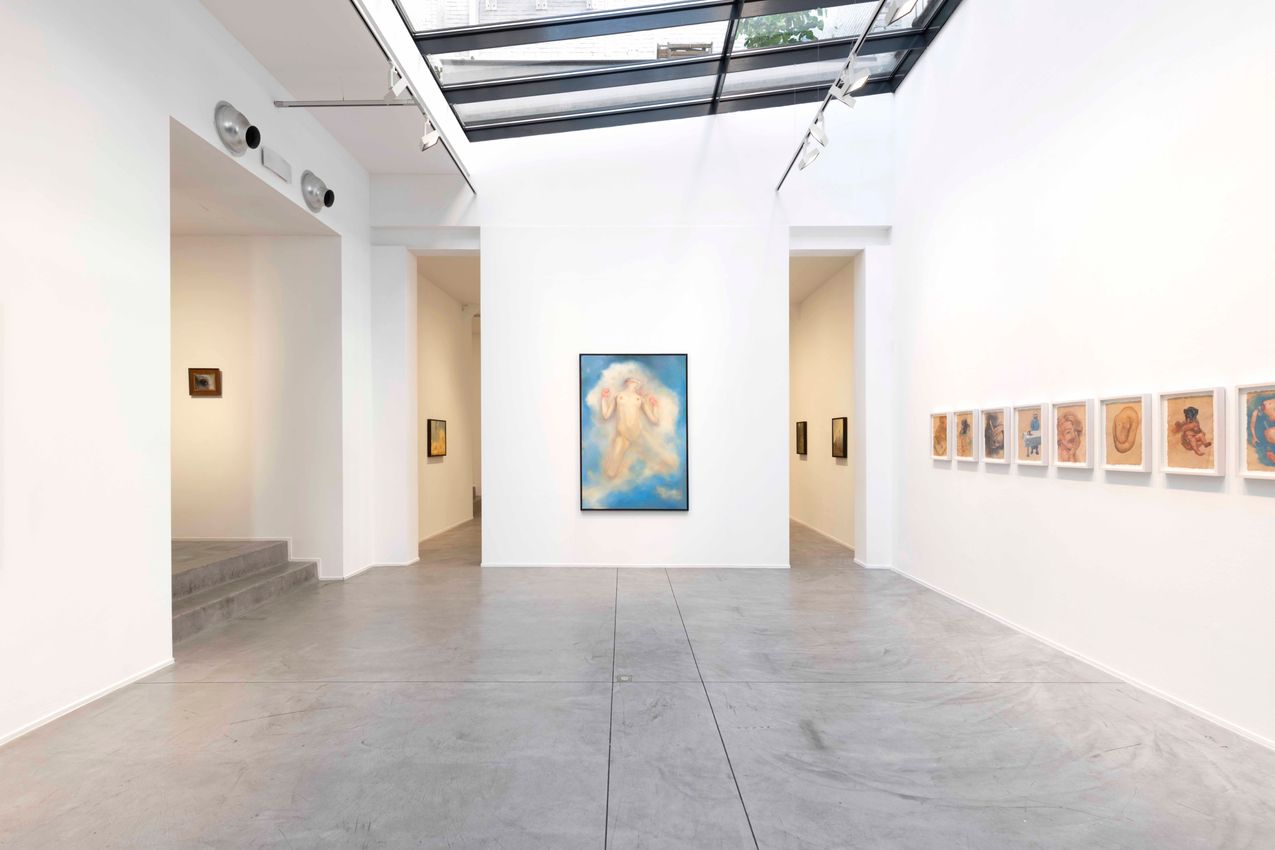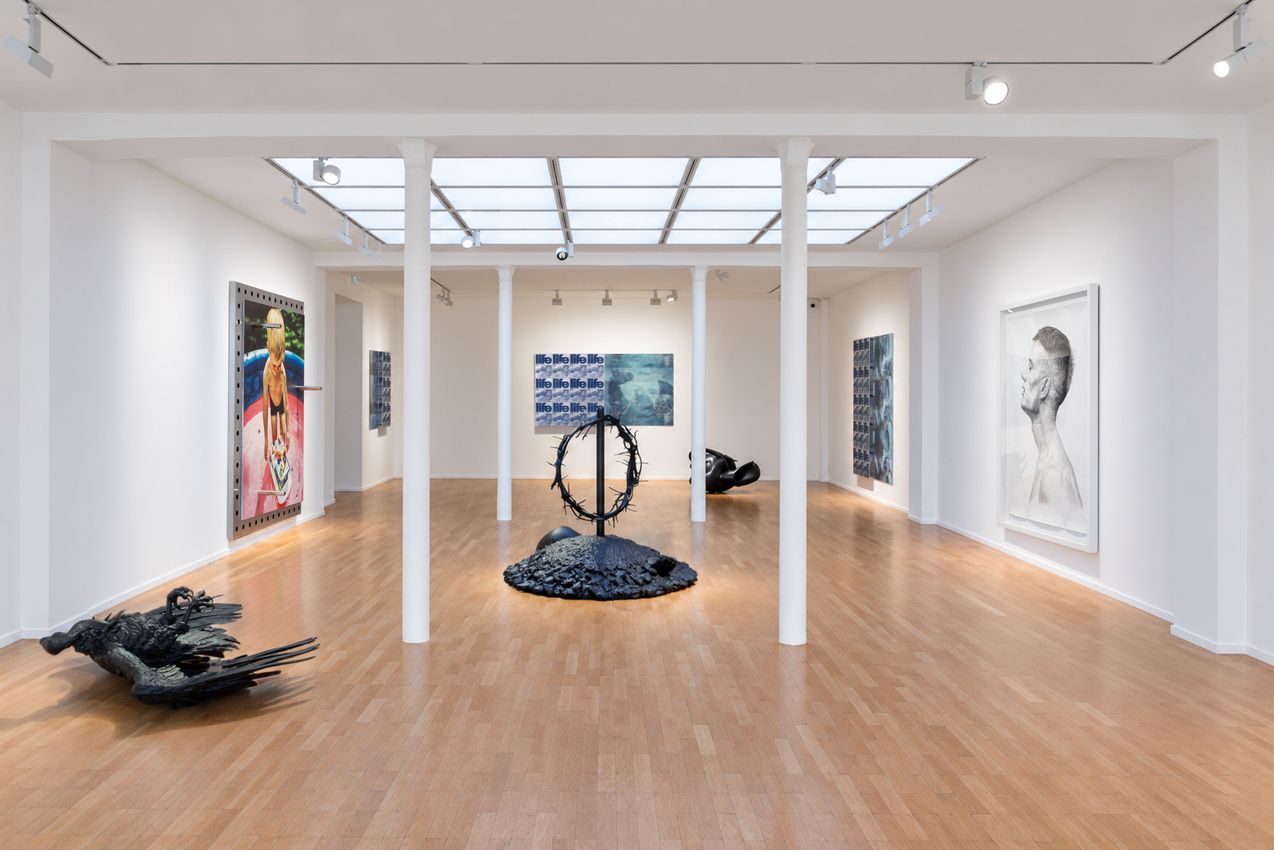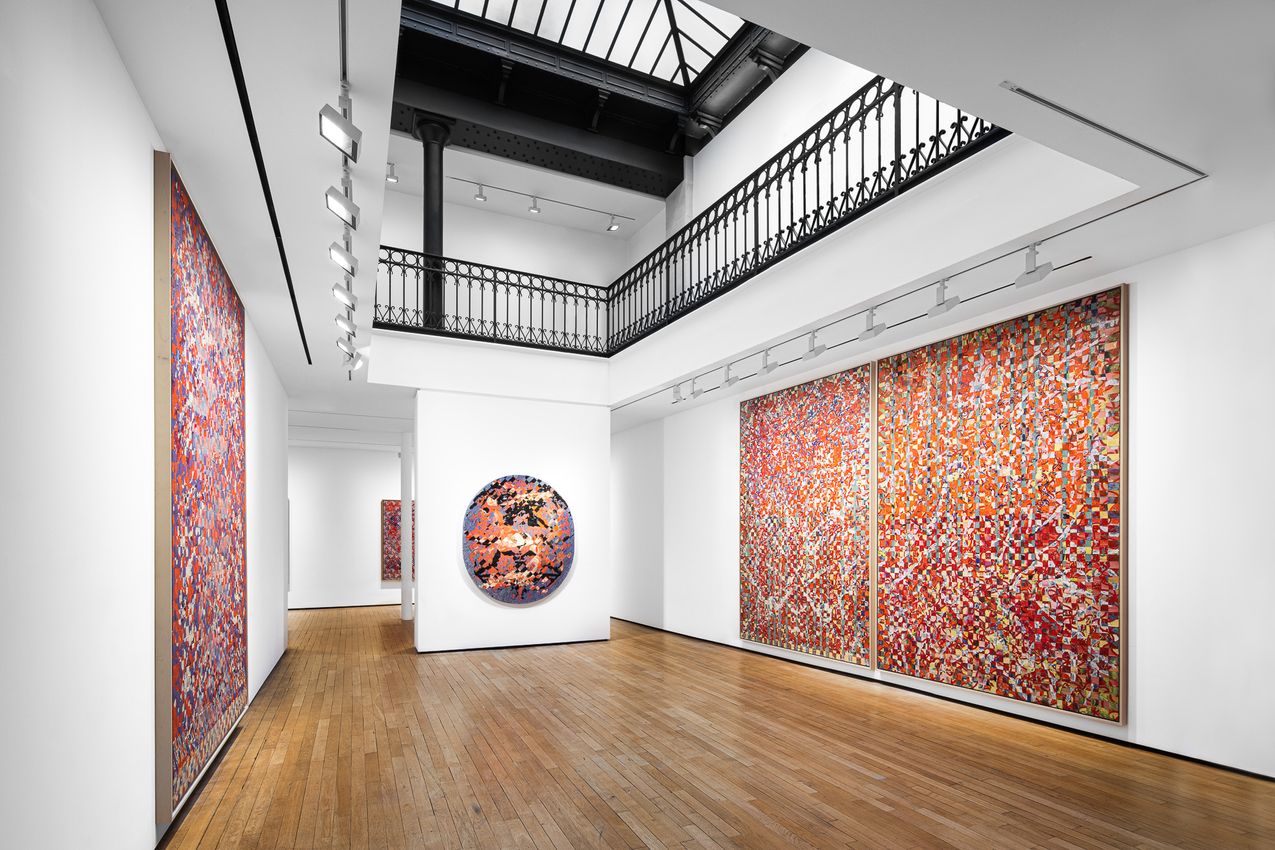
At the age of 80, painter François Rouan is returning to Galerie Templon almost two decades after his last show with a brand new exhibition of recent work.
At the start of his career in the 1960s François Rouan was linked with the Supports/Surfaces movement without officially associating himself with it. Since then he has trodden a unique path, deconstructing the traditional structure of the picture to open up new avenues in contemporary painting.
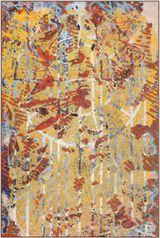
Complex and erudite, his new paintings stay true to thirty years of experimentation and artistic engagement, a ‘political utopia with a humanist dimension.’ His ambiguous figures and iconographic references are ornamented with motifs evoking the abstract fragments that characterise the artist’s core method: braiding. Alternating between relishing the joys of form and colour and posing metaphysical questions, his work resonates particularly strongly with current concerns: our relationship with images, the reverse side of the surface, the capacity painting possesses to reconstruct a fragmental real and mental world.
Born in Montpellier, France, in 1943, François Rouan moved to Paris in 1961 to study at the École Nationale Supérieure des Beaux-arts. His research into collages led to his first experiments with braiding in 1965, initially with gouache-covered paper than painted canvases, cut up then reassembled as a grid. His focus shifted to other techniques, including hatching and wax. He let himself be guided by a diverse array of materials which he combined in his imposing compositions, transforming them into what appear to be homages, thus incorporating the history of art into his work. The powerfully tangible presence of the surface in his art, the fragmentation of light and the coloured rhythms came together to contribute to the emergence of a new space, a picture, an original and instantly recognisable mode of painting.
In 1980 he broadened his practice to encompass other mediums, both photographic and film-based. His images began to play with inversion and opposition between photography and painting, the abstract and the figurative, the true and the false, marking the first appearance of his ‘braiding of negatives’.
The 1990s were devoted to new conversations around the image of the body in particular - female, male, attacked or magnified. His ‘shells’ revealed a palette of new, raw colours – red, magenta and pink – and an unsettling interplay of apparitions and forms. His work in the decade from 2000 to 2010 embraced the same approach and procedures, with a reappearance of the figure.
He was an artist-in-residence at the Villa Medicis from 1971 to 1973 and received the distinction of Commandeur des Arts et des Lettres in 1985.
On the occasion of his exhibition, a 72-page catalogue will be published in march 2023.
His work has been the subject of numerous solo exhibitions and retrospectives, notably at the Centre Pompidou in Paris (1975, 1983 and 1994), Musée d’Art Moderne in Villeneuve-d’Ascq (1995), Abattoirs in Toulouse (2006) and Musée Fabre in Montpellier (2017). He has been exhibited worldwide, including by the Pierre Matisse Gallery in New York (1972), Stadtische Kunsthalle in Düsseldorf (1979), Sezon Museum of Art, Tokyo (1997) and Beijing Institute of Fine Arts (2000). Between 1987 and 2005, François Rouan’s work featured in a dozen exhibitions at Galerie Templon.
In September 2024, the Musée des Beaux-Arts de Lyon is holding a major retrospective of his work.


The gallery was founded in 1966 by Daniel Templon, who was then only 21. It first opened rue Bonaparte, in Saint-Germain-des-Prés in Paris, before moving in 1972 to its current location, rue Beaubourg, in the Marais, close to the Pompidou Center, which opened in 1977. Daniel Templon first gained recognition by exhibiting conceptual and minimal artists such as Martin Barré, Christian Boltanski, Donald Judd, Joseph Kosuth, Richard Serra. In the seventies and eighties, Daniel Templon was one of the pioneers of the contemporary art and introduced many important American artists to the French public: Dan Flavin, Ellsworth Kelly, Willem de Kooning, Frank Stella, Andy Warhol. The gallery quickly became one of the references in contemporary art in France. In 1972, Daniel Templon and Catherine Millet co-founded the monthly art magazine ART PRESS.

A respected voice in contemporary art discourse.
Focusing on ambitious storytelling and insightful art-world commentary. Ocula Magazine publishes in-depth interviews, critical essays and timely analysis on the artists, exhibitions and ideas driving the global art world.
Learn more about Ocula Magazine
Showcasing the best of the art world.
Ocula partners with galleries from around the world to highlight their artists, artworks and exhibitions. Gallery membership is by application and invitation, with each member vetted by an independent panel.
Learn more about Ocula Membership

Specialises in the sale of major artworks.
Led by a team with deep ties to the world’s leading auction houses, galleries and collectors. Ocula’s advisory team offers bespoke services to high-net-worth clients from around the world who are looking to acquire the best of contemporary and modern art.
Learn more about our team and services