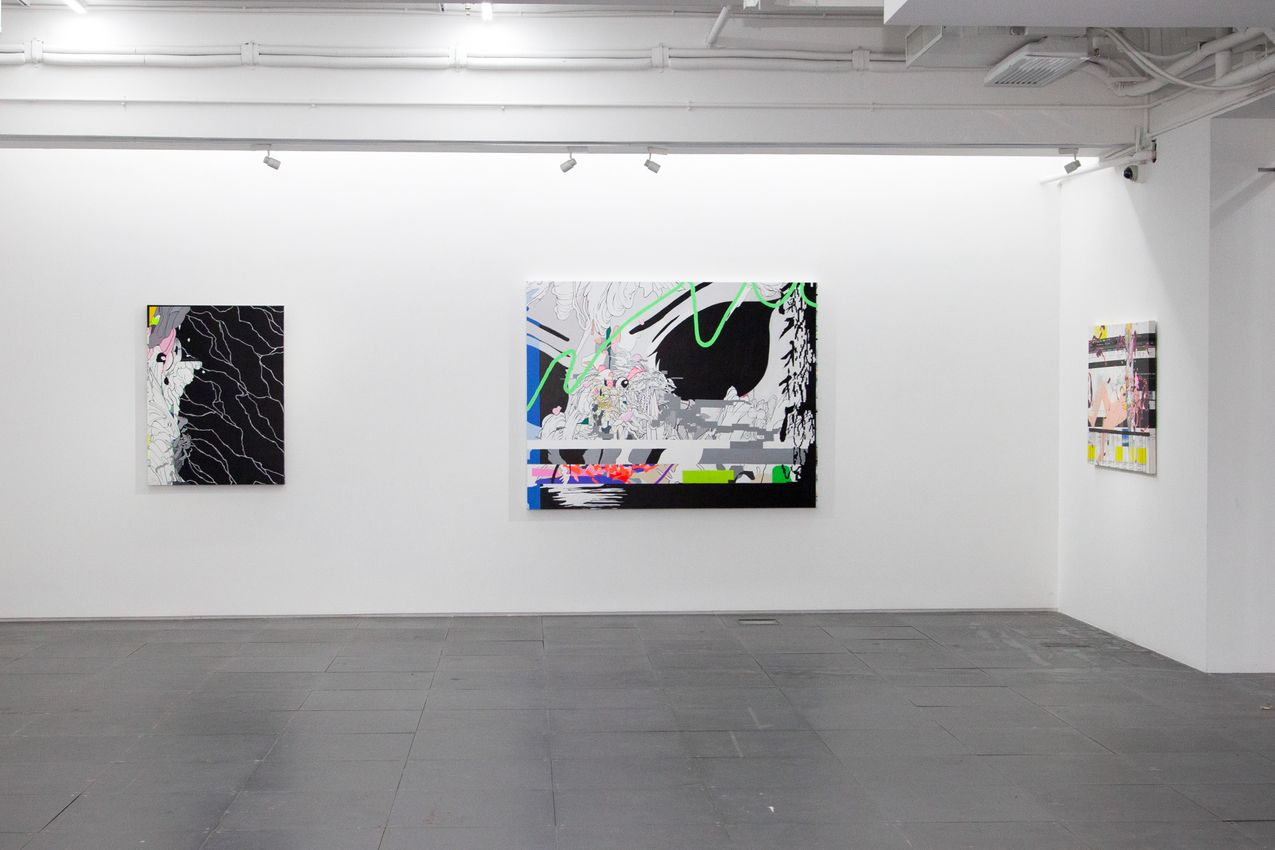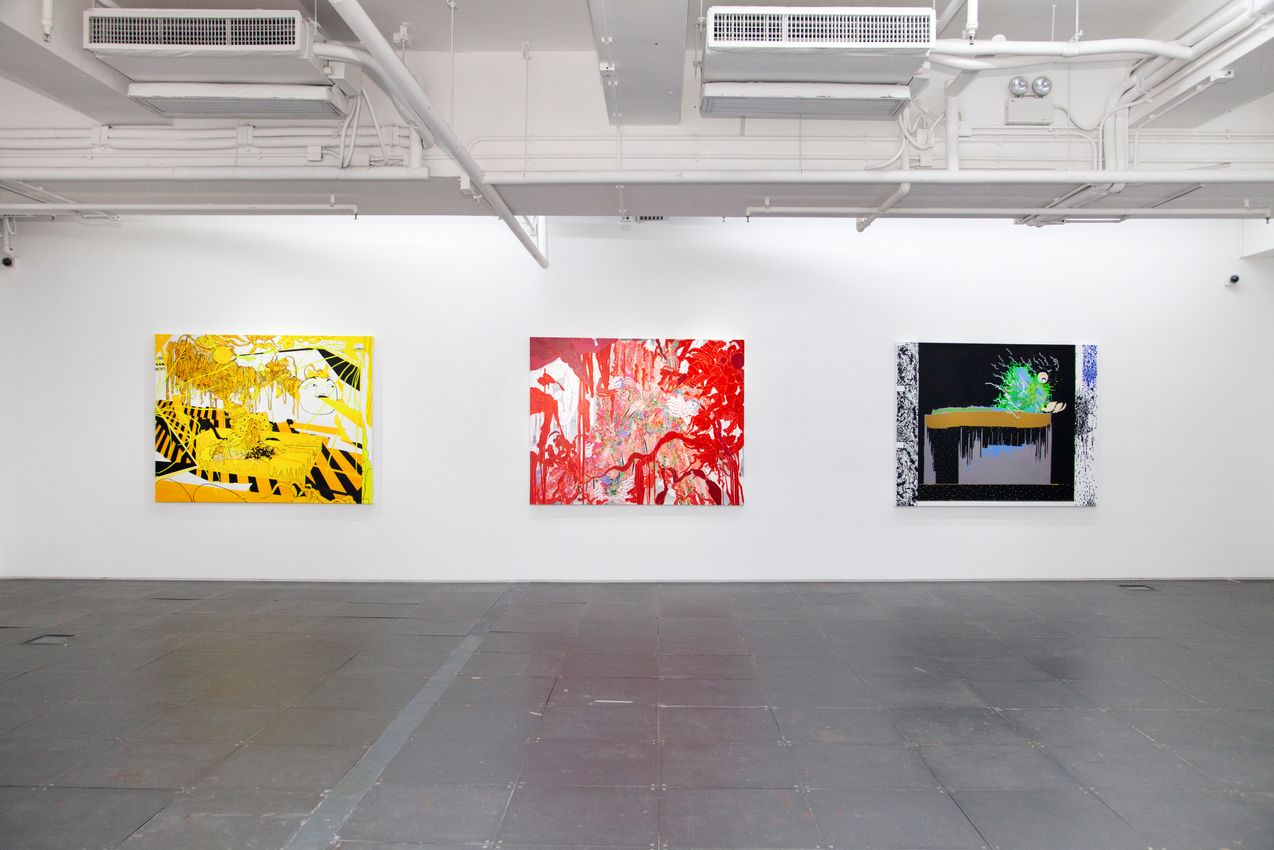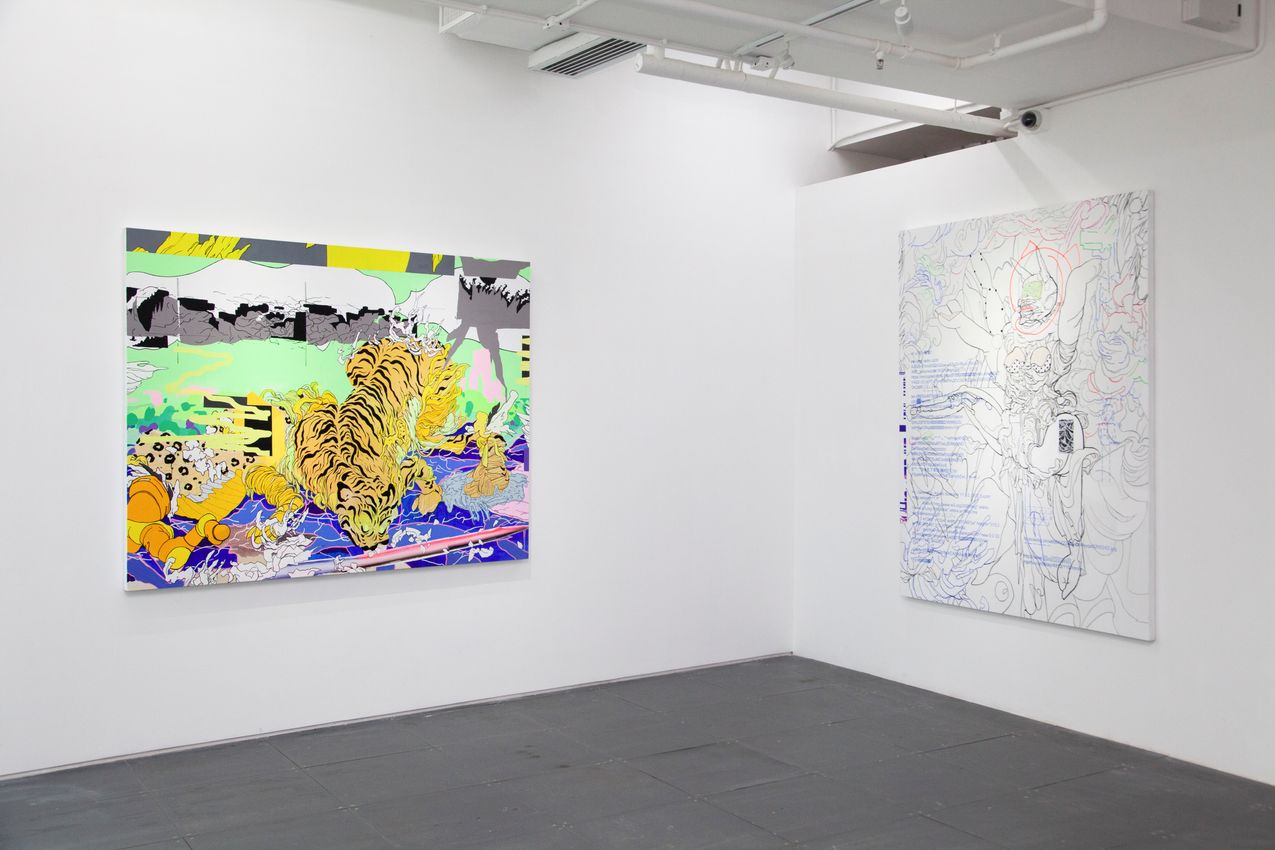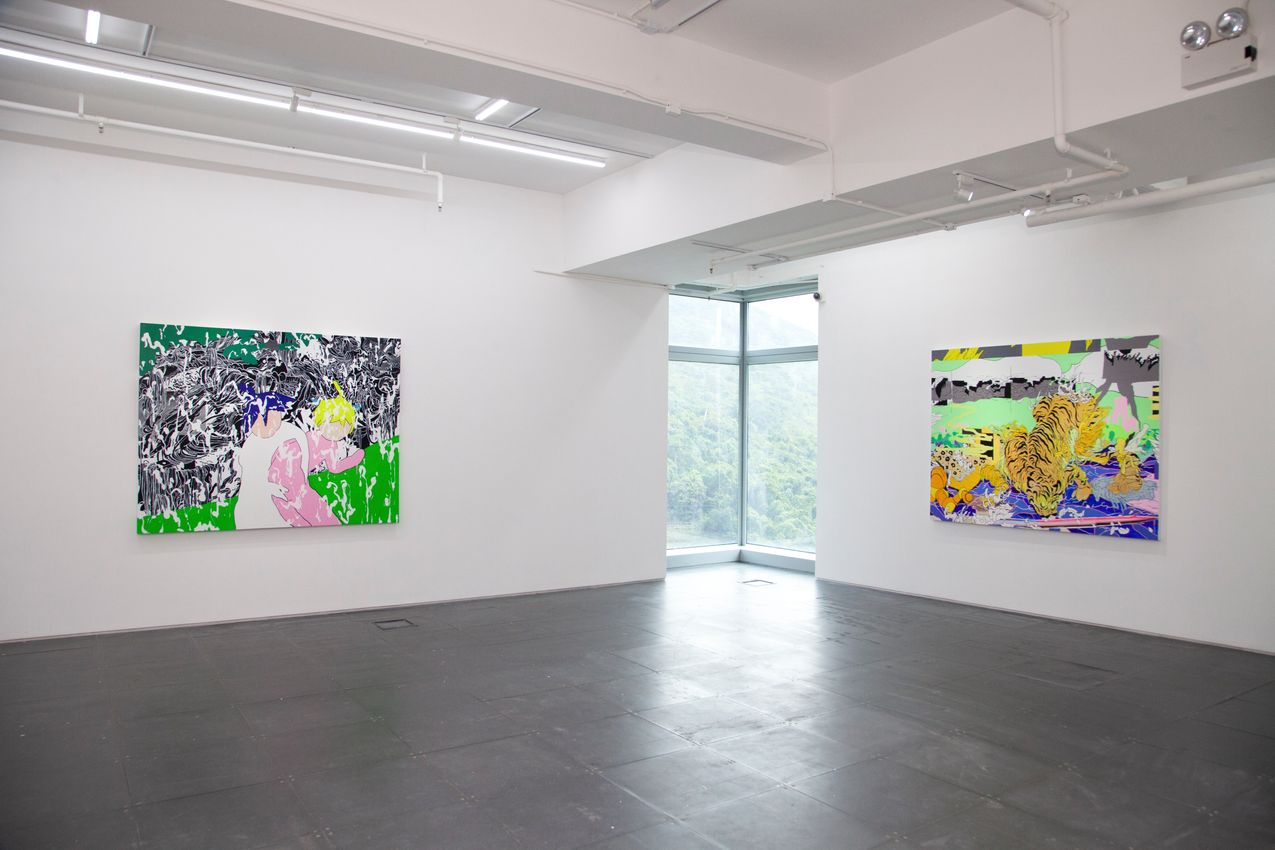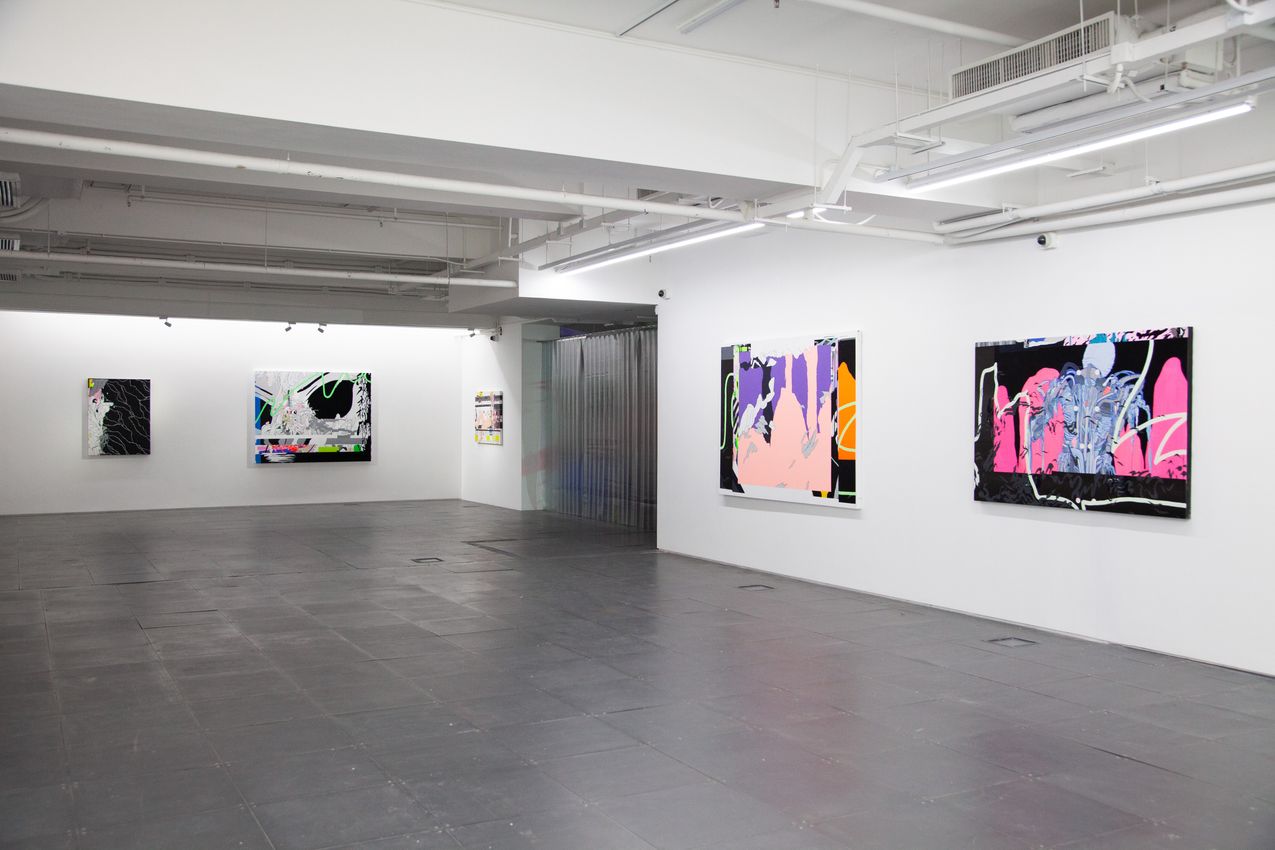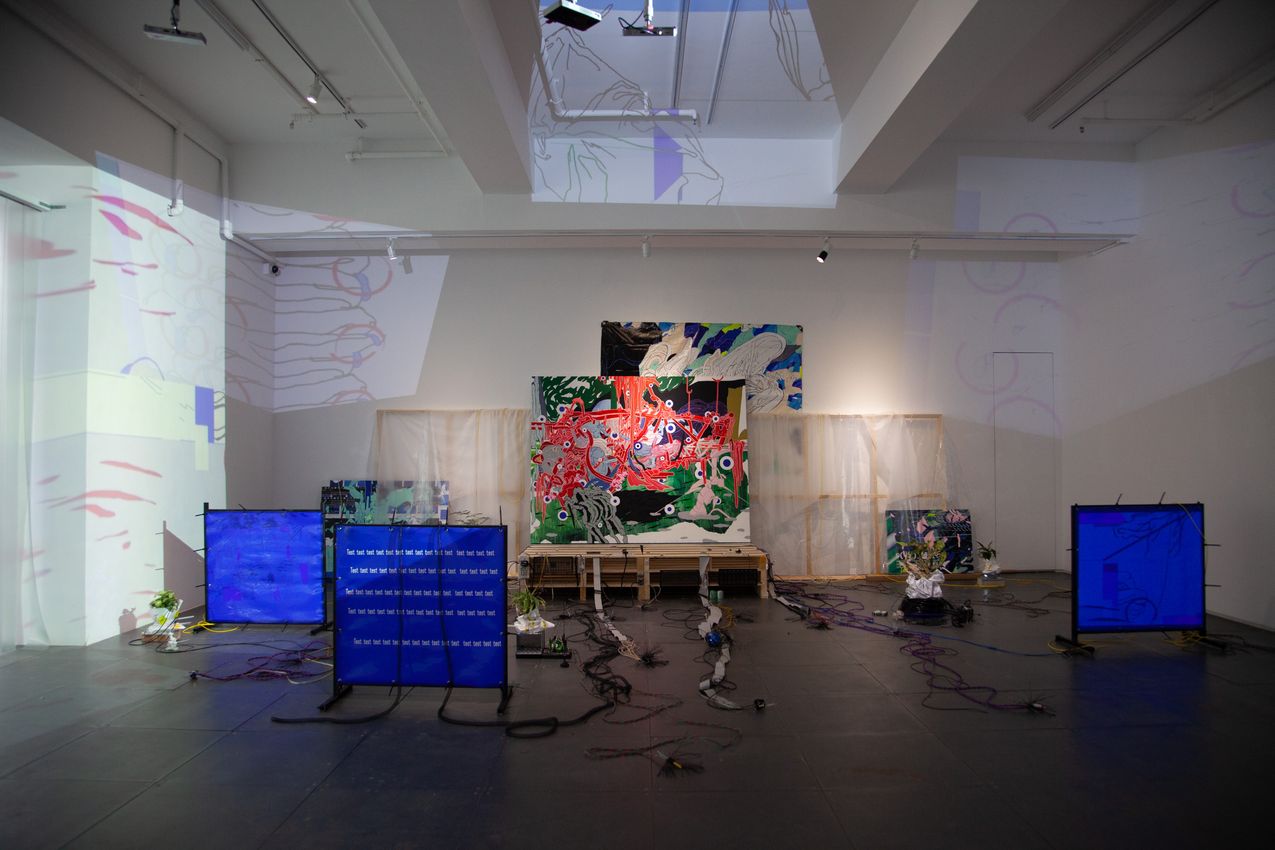
de Sarthe is pleased to present the Beijing-based contemporary artist Zhong Wei’s first solo exhibition titled, 易变 ▒ 耦态°∶Nёメㄒ 乚ěVéし. Featuring a new series of paintings and an immersive installation, the exhibition explores the ripples of the information explosion and the consequential loss of existential substance, a side effect of our indulgence of modern advancements. 易变 ▒ 耦态°∶Nёメㄒ 乚ěVéし opens on September 28 and runs through November 16.
Our current informational environment has grown beyond the perceptive capabilities of humans. Images, videos, and graphics are now inherently embedded within every corner of an expanding online universe, the amount of which is seemingly endless. As both contributors and users, our individual roles are infinitesimal in its macro overview, and we could spend countless hours attempting to discover its entire extent. Yet, through the motion of what the artist describes as ‘coupling’, it is our very interaction with these innumerable factors—in all their unpredictable variations—that generates the energy that drives its exponential evolution.
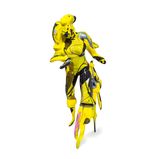
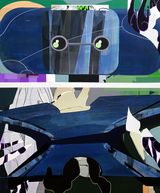
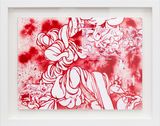
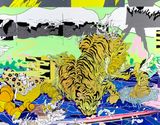
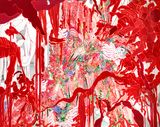
Comprised of appropriated imagery digitally compounded with organic forms, Zhong Wei’s paintings barely remain within the confines of their surface. As popular Internet icons manifest left and right, the uninhibited and near apocalyptic chaos portrayed within each composition consumes its canvas with monstrous momentum. The artist’s vivid use of color fills the surrounding environment with vitality and tingling anticipation. Paradoxically, the artworks evoke both excitement and anxiety and through this Zhong comments on the human fascination of pursuing the infinite despite getting lost within it.
The volatile and contingent nature of his subject means that Zhong Wei works across various mediums. In Zhong’s installation Heap, two lines of PVC curtains form a bubble within the gallery space. In contrast with the clean, clinical exterior of the curtains, the obscured interior houses a mound of scattered wires, concrete, plastic and miscellaneous electrical components with Zhong’s paintings piled amongst them. Borrowing the raw and industrial overtones of the basic building blocks that constitute most man-made creations, Heap illumines the fundamental source and root of technological and information civilization. By elucidating its origin, Zhong hopes to raise questions regarding its end.
The development of technology and the Internet has become self-driven and is rapidly accelerating. Its newfound metabolism is achieved though the perpetual replacement of itself, opting for accumulation over refinement. In 易变 ▒ 耦态°∶Nёメㄒ 乚ěVéし, Zhong speculates the metaphysical implications of the technological era and our hand in its making. By recording the shapes and textures of man-made visual phenomena, he attempts to capture the scenery of our current digital-cultural landscape.
Zhong Wei (b. 1987) is based in Beijing, China. Zhong Wei’s artwork takes form in immersive installations and canvases that speak to China’s vibrant but chaotic Internet-based visual language. Having compiled a massive database of memes and imagery found online, Zhong uses these ubiquitous images as raw materials for his work. While certain icons in his artwork are widely recognized, others exist merely as memorabilia from a specific time within his browser history. Much of his inspiration is drawn from traditional Buddhist art, which is referenced in the innumerable folds seen within many of his works. To Zhong Wei, the complex shapes conceived from these folds reflect the structure of humanity and culture. However, the concept that runs throughout all of Zhong Wei’s work is an idea he refers to as “coupling.” It is the notion that the endless flow of information on the internet generates random pairings, resulting in thoughts and energy that drives our current evolution and shifts in culture.


DE SARTHE is a pioneering platform for boundary-pushing contemporary art from Asia. It has also contained an influential international presence in modern and post-war art since 1977.

A respected voice in contemporary art discourse.
Focusing on ambitious storytelling and insightful art-world commentary. Ocula Magazine publishes in-depth interviews, critical essays and timely analysis on the artists, exhibitions and ideas driving the global art world.
Learn more about Ocula Magazine
Showcasing the best of the art world.
Ocula partners with galleries from around the world to highlight their artists, artworks and exhibitions. Gallery membership is by application and invitation, with each member vetted by an independent panel.
Learn more about Ocula Membership

Specialises in the sale of major artworks.
Led by a team with deep ties to the world’s leading auction houses, galleries and collectors. Ocula’s advisory team offers bespoke services to high-net-worth clients from around the world who are looking to acquire the best of contemporary and modern art.
Learn more about our team and services