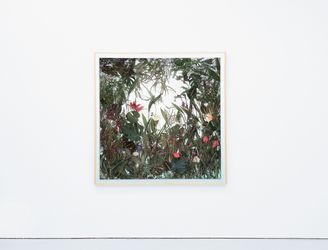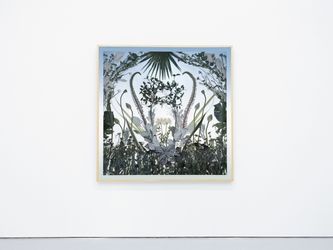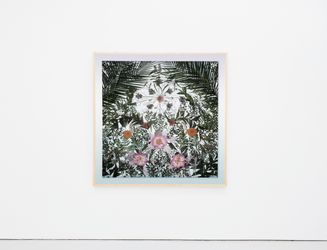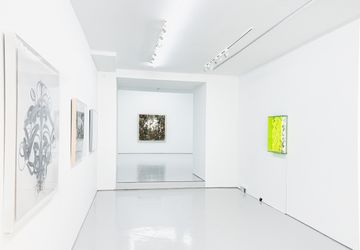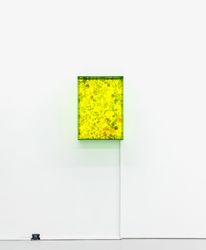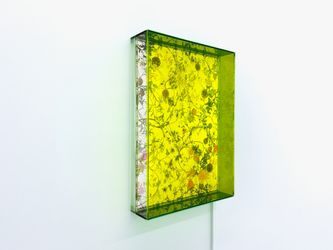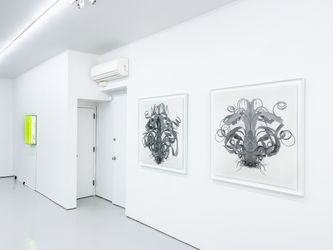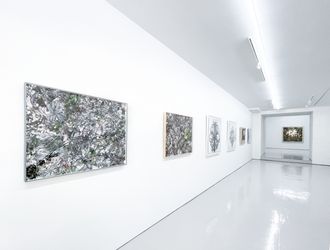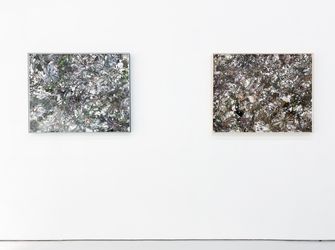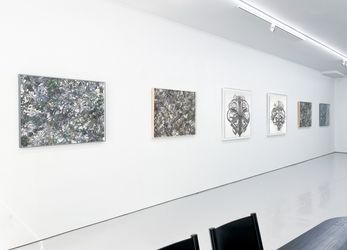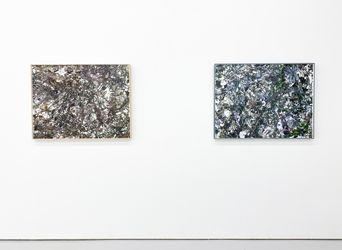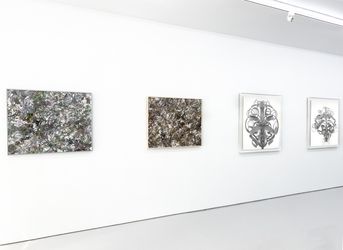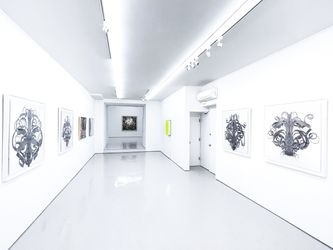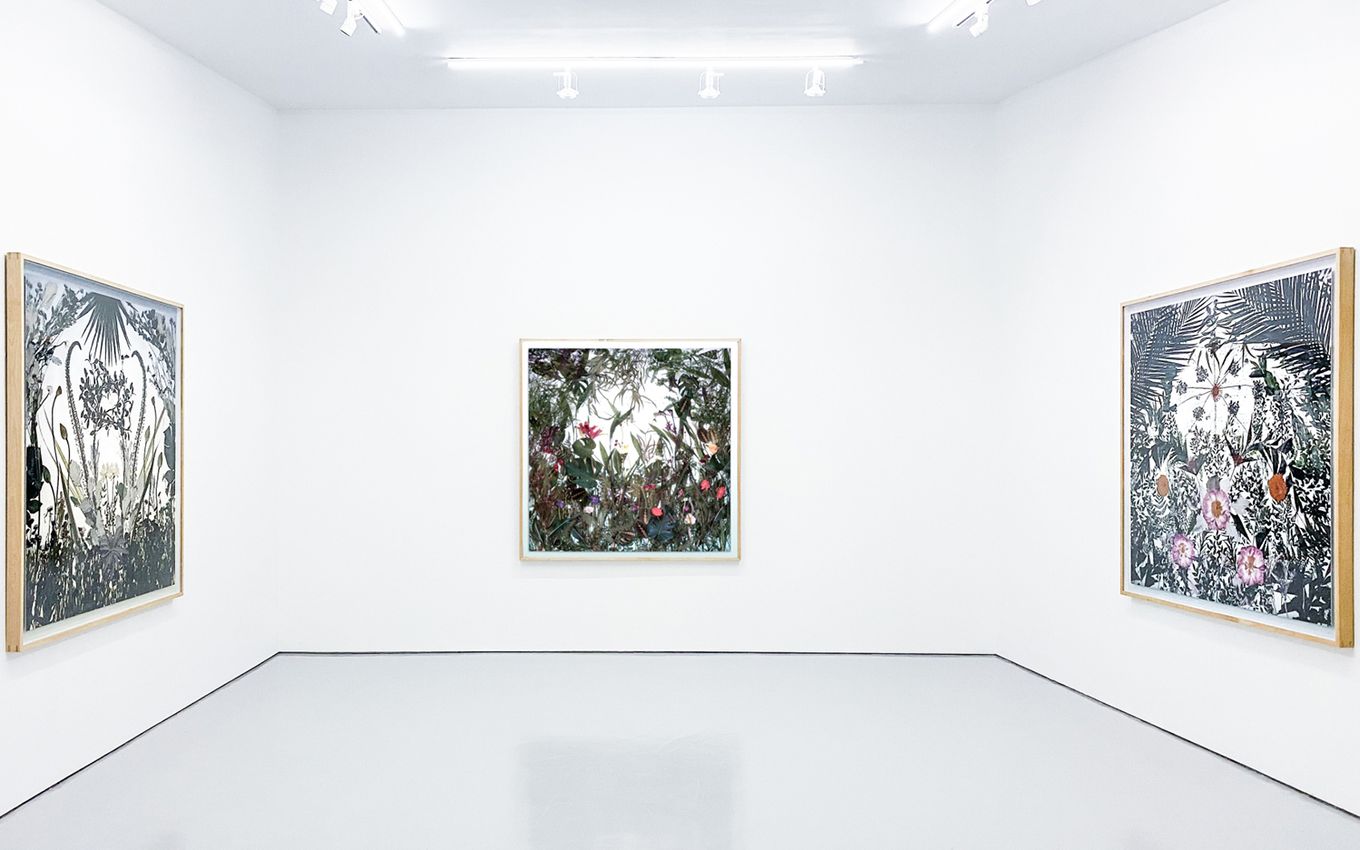
Eli Klein Gallery is proud to present Ji Zhou: Symbiosis–the artist’s third solo exhibition with the gallery. The artist, based on his observation and reflection on the current situation of the contemporary environment, focuses on plants in the works in this exhibition. Every piece was shot and laid out on a specially designed structure, the light from which allows the artist to isolate and inspect each plant, with an emphasis on its pattern. The contrast between the natural plants and the appearance of artificial photography suggests a symbiotic relationship between what is ordinarily provided, and what is altered by humans.
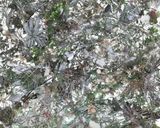
Since Ji Zhou’s 2017 solo exhibition at the Gallery, the world has changed radically due, in part, to the global pandemic. By experiencing this global change, the artist began to shift the focus of his works from urban landscapes to honeysuckle–the flower whose leaves endure the winter–and created the Metempsychosis - 2022 (2022) series. Honeysuckles are very adaptable and are not strictly dependent on soil and climate. When photographed, the flowers can wither faster than they grow naturally, but it is also because of the photography that the flowers can be framed as they once bloomed. The Metempsychosis series is a group of abstract expressionist photographs inspired by Jackson Pollock’s paintings. ‘Vitality in Action’ is the emphasis for these works. The images are given a gradient effect and the plants are brought to life by the illumination of the light. The blooming flowers and the wilted flowers intertwine with each other: they seem to be struggling and blooming in the withering. The real and the illusory captured in these photographs showcase the full cycle of the plants’ lives in one united display.
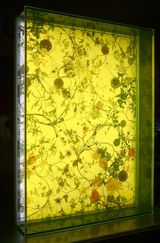
Under a monochromatic filter, Twining Florets (2021), a lightbox work, shows a seemingly contradictory, but intertwined, scene of reality and fantasy. Staying home during the pandemic forced many people to lose direct contact with the natural world, leaving their memories of nature and plants blurred. The sides of the lightbox are left uncoloured, allowing the viewers to see the original colour of the work through the slit. Although the entirety of the image is still inaccessible via this view, it is enough to restore, aided by one’s imagination, the original appearance of the part covered by the filter.
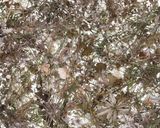
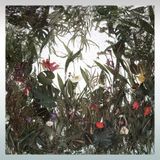
Symmetry and asymmetry, order and disorder, are embodied in Ji Zhou’s works. In Full Bloom (2021) and Prosperity (2021), the artist placed plants and flowers in man-made arrangements, misrepresenting what’s natural. Plants grow wildly around a central pattern composed with flowers and branches to form a vibrant scene and reflect the vitality that plants exude. Although Hasht Bihisht (2021) follows a similar plant placement format, the artist chose to arrange each plant in a more disorderly placement. A few colourful flowers bloom and are intertwined with withered branches and leaves, creating a paradox in which vitality and gloom co-exist. Additionally, the disordered arrangement of plants in Ji Zhou’s works indicates the blurred boundaries amongst plants. The duration required for plants to grow to maturity is concealed when stacking them together; each plays a valuable role in the natural environment and should be respected.
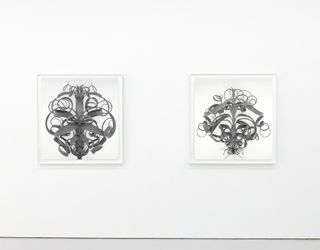
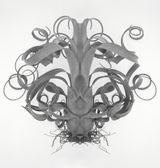
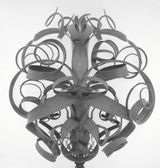
This exhibition is also the debut of the Plant portrait - Tillandsia (2022) series. In contrast to Ji Zhou’s other works in this show, sophisticated plant arrangements are absent. Tillandsia, a tenacious plant that can grow merely by absorbing nutrients and moisture in the air, are presented in monochrome in this series. Even in a ‘hopeless’ environment, this plant can still grow exuberantly. Each work was made by combining two photographs: the left and right half. While both photos seem to match perfectly in each work, there are still subtle dissonances. In fact, Ji Zhou intentionally arranged the photos to create a barely noticeable distinction in each work, creating another layer of artificiality to what at first glance, suggests natural growth. Under this symbiotic setup, different snapshots are fused into a new hybrid.


Ji Zhou graduated from Central Academy of Fine Arts, Beijing majoring in print making. In 2005, he received his graduate diploma, Master of Plastic Arts, from University Paris, Sorbonne.
Eli Klein Gallery is a leading New York–based gallery specializing in contemporary Asian and Asian diasporic art. Founded in 2007, the gallery has played a pivotal role in shaping the institutional landscape for these artists in the West, serving as a vital cultural bridge between Asia and the international art world.

A respected voice in contemporary art discourse.
Focusing on ambitious storytelling and insightful art-world commentary. Ocula Magazine publishes in-depth interviews, critical essays and timely analysis on the artists, exhibitions and ideas driving the global art world.
Learn more about Ocula Magazine
Showcasing the best of the art world.
Ocula partners with galleries from around the world to highlight their artists, artworks and exhibitions. Gallery membership is by application and invitation, with each member vetted by an independent panel.
Learn more about Ocula Membership

Specialises in the sale of major artworks.
Led by a team with deep ties to the world’s leading auction houses, galleries and collectors. Ocula’s advisory team offers bespoke services to high-net-worth clients from around the world who are looking to acquire the best of contemporary and modern art.
Learn more about our team and services