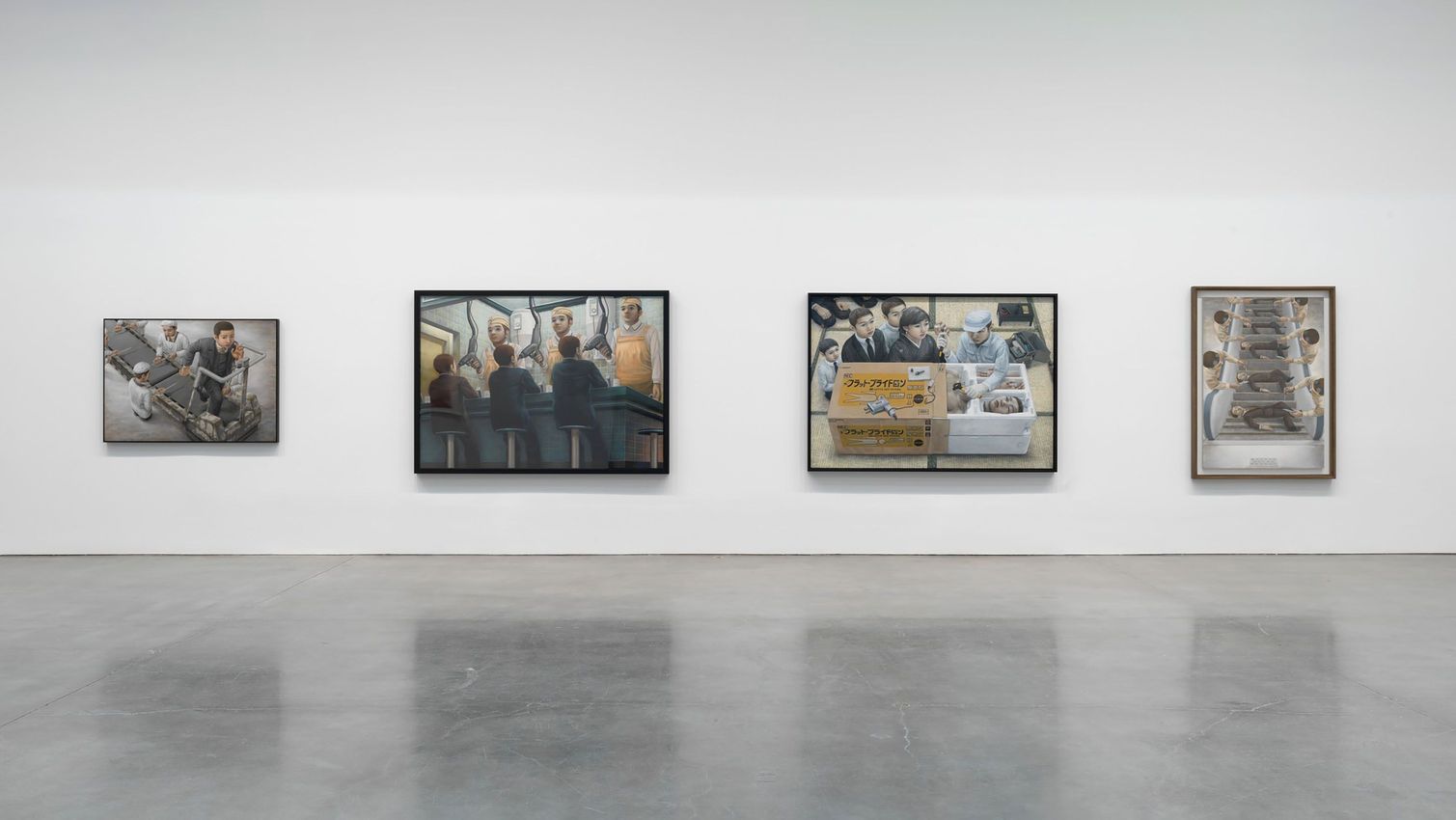
At first, it was a self-portrait. I tried to make myself—my weak self, my pitiful self, my anxious self—into a joke or something funny that could be laughed at. It was sometimes seen as a parody or satire referring to contemporary people. As I continued to think about this, I expanded it to include consumers, city-dwellers, workers, and the Japanese people.—Tetsuya Ishida
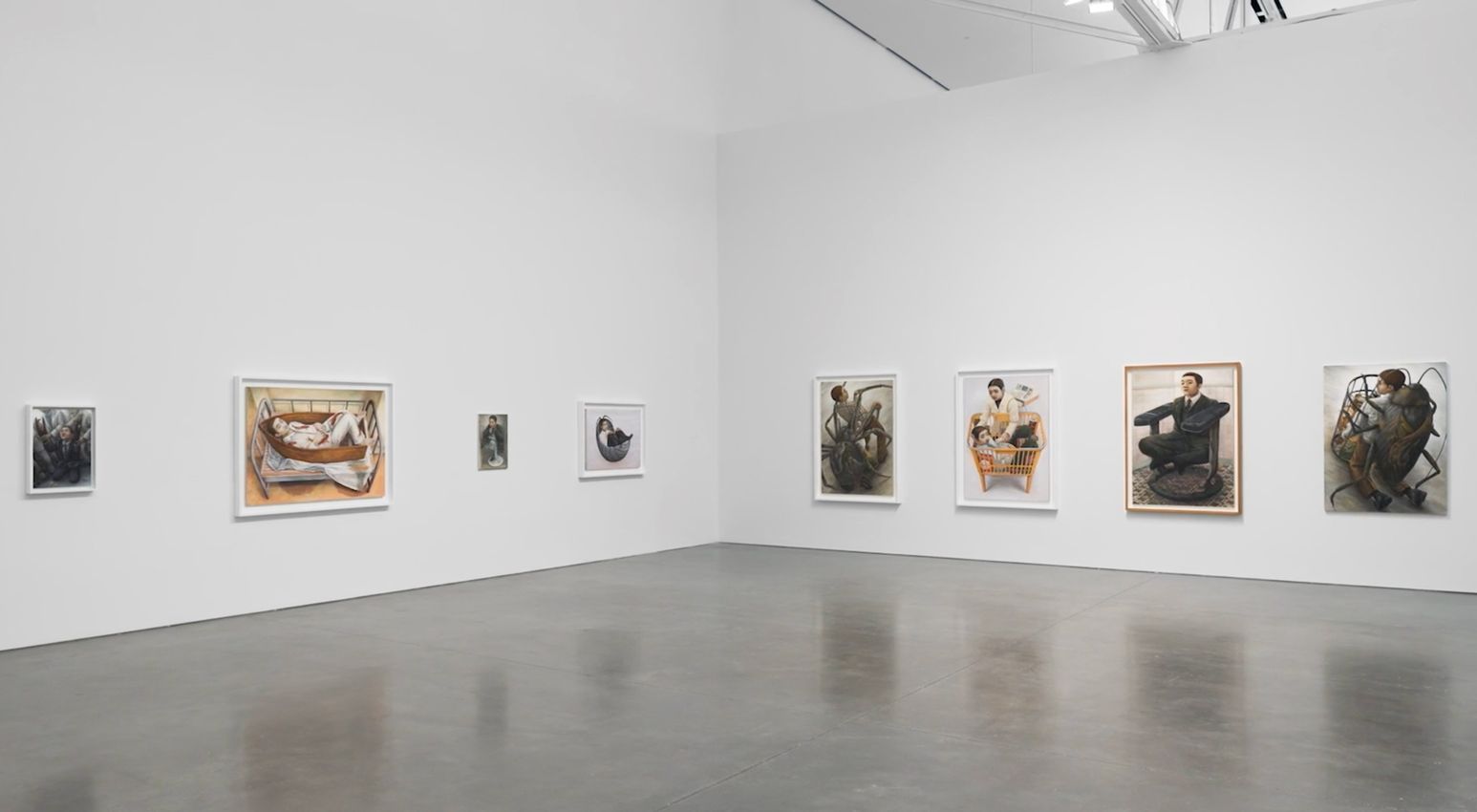
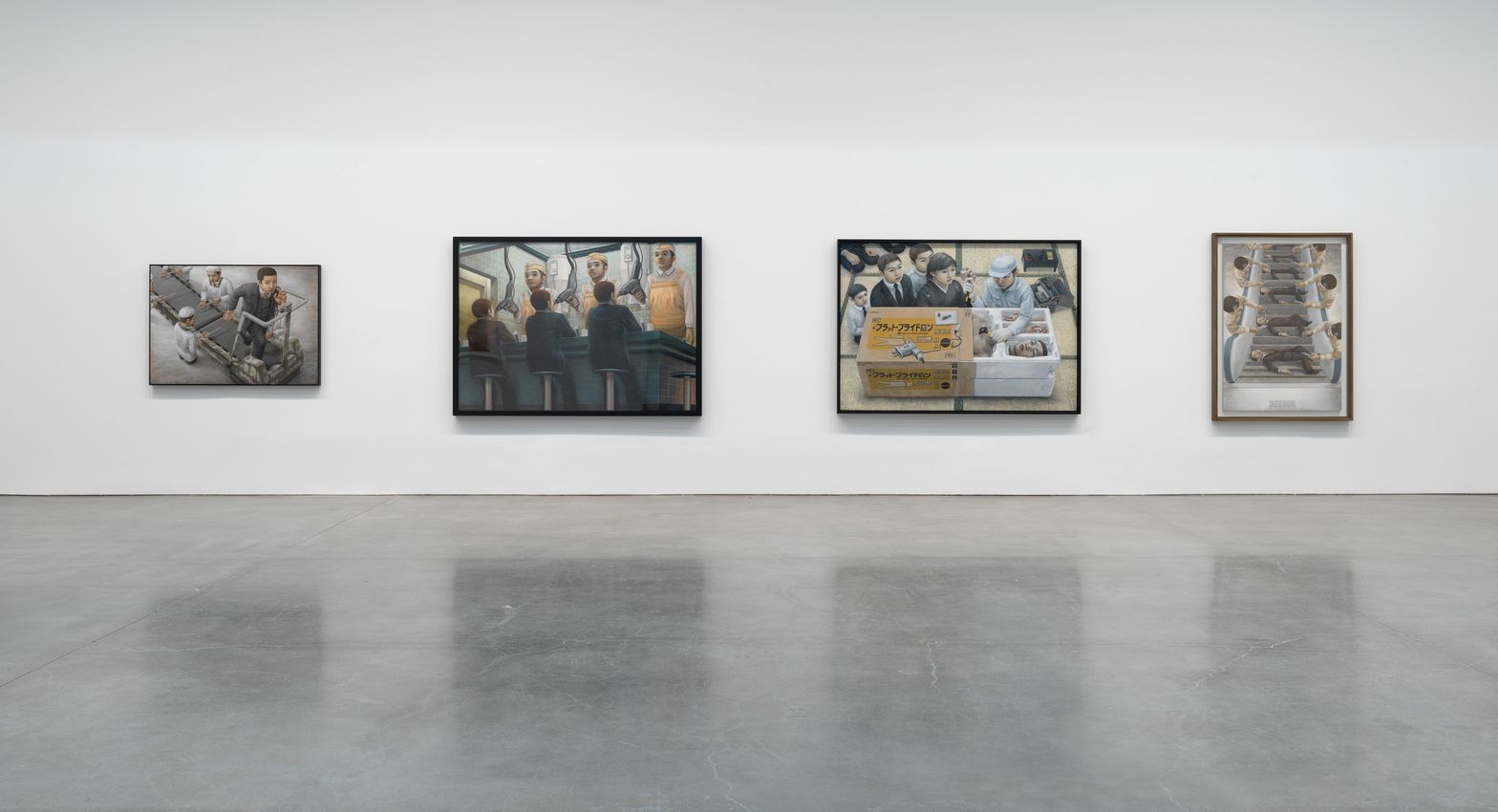
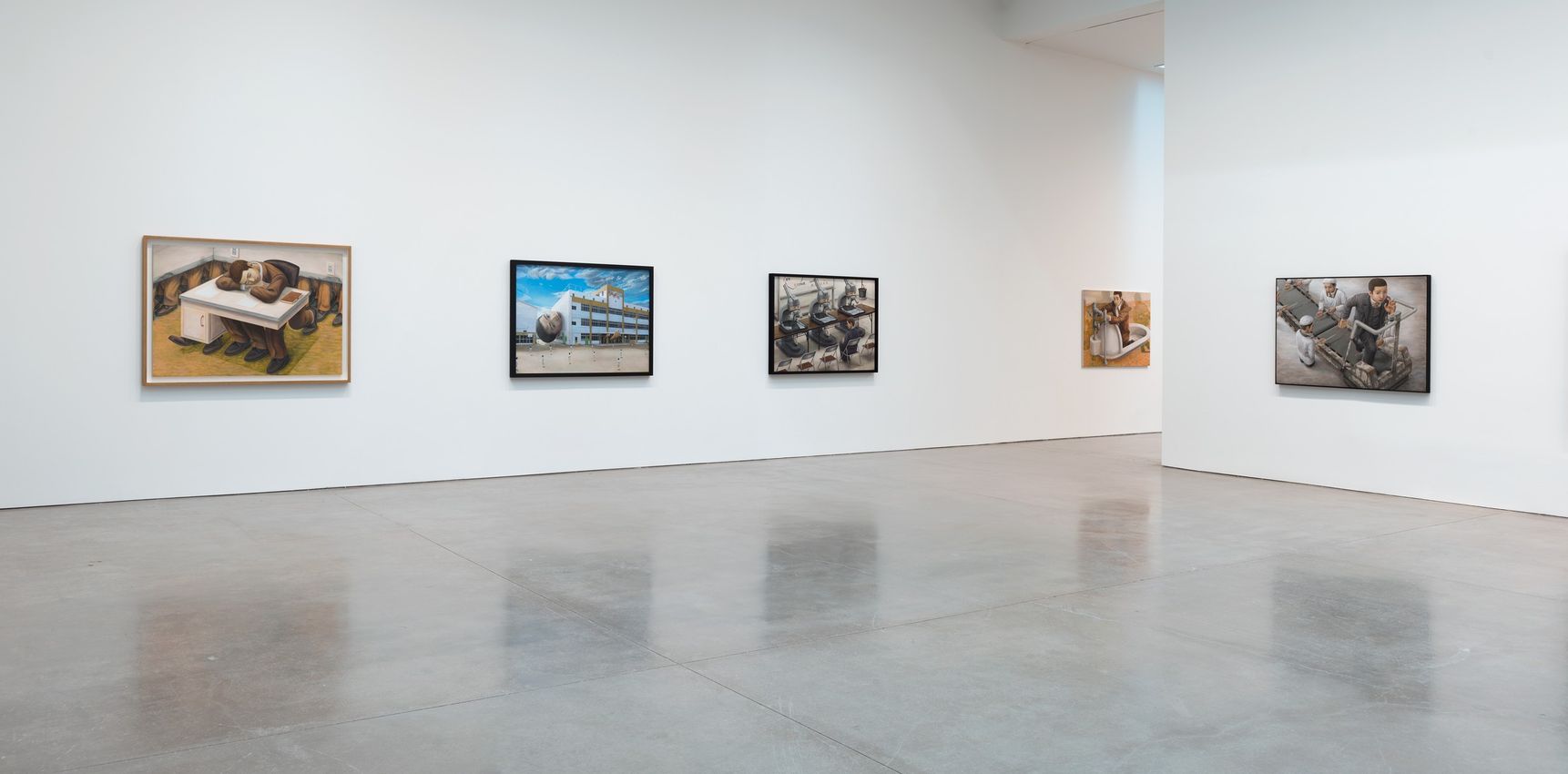
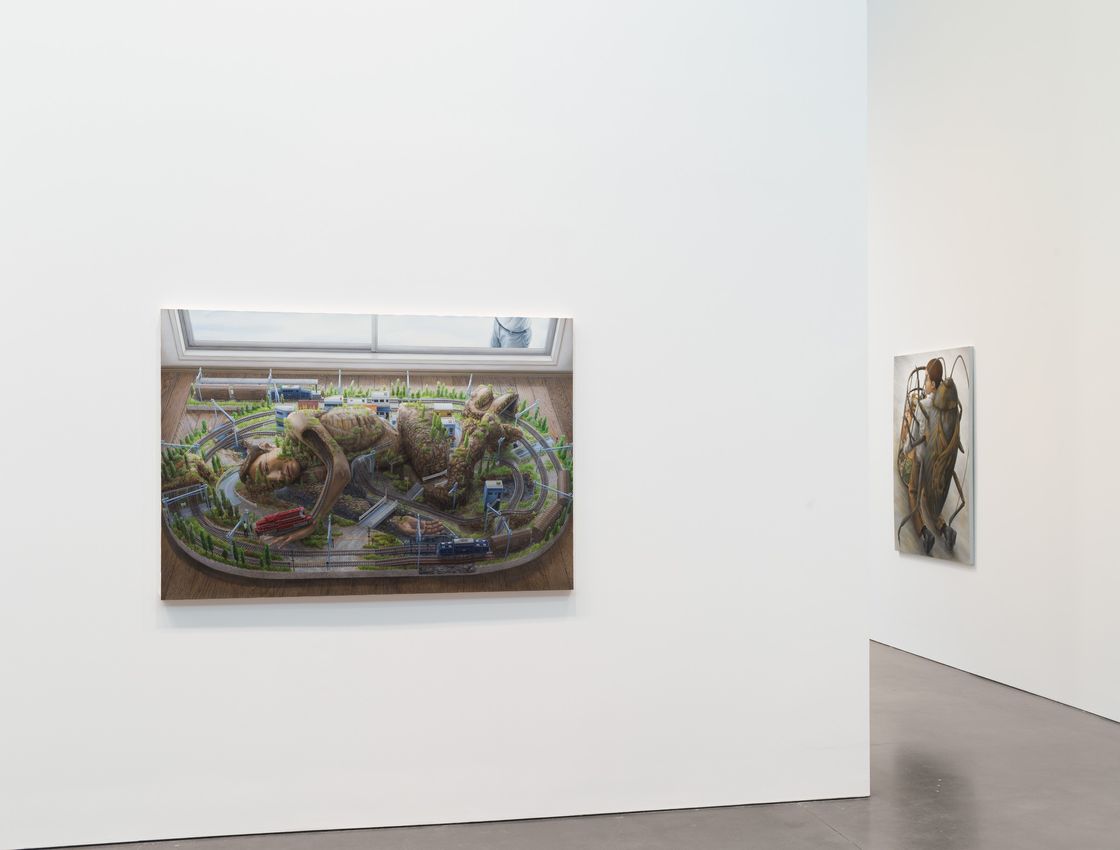
Gagosian is pleased to announce My Anxious Self, an extensive exhibition of paintings by the late Tetsuya Ishida (1973–2005) at Gagosian, 555 West 24th Street, New York, opening on September 12. Curated by Cecilia Alemani, the survey follows the announcement of Gagosian’s global representation of the Tetsuya Ishida Estate, which, along with notable private collections and the Shizuoka Prefectural Museum of Art, Japan, lent more than eighty works to the exhibition. My Anxious Self is the most comprehensive exhibition of the artist’s work to have been staged outside of Japan, and his first ever in New York.
Over the course of just ten years, Ishida produced a striking body of work centered on the theme of human alienation. He emerged as an artist during Japan’s ‘Lost Decade,’ a recession that lasted through the 1990s, and his paintings capture the feelings of hopelessness, claustrophobia, and disconnection that characterised Japanese society during this time—even in the wake of its rapid technological advancement. Before his untimely death in 2005, Ishida conjured allegories of the challenges of contemporary life in paintings and works on paper charged with Kafkaesque absurdity.
In his introduction to the catalogue that accompanies the exhibition, Michiaki Ishida, the artist’s brother, confides, ‘Tetsuya’s wallet, which he kept until the end of his life, contained several American one-dollar bills. Perhaps it was his wish to go to New York, the centre of contemporary art, one day. We are grateful that he finally has a chance to spend them.’ Larry Gagosian, in his foreword to the publication, observes that Ishida’s oeuvre constitutes ‘a grand inquiry into the human condition in a way that feels urgent, timeless, and unusual for an artist so young.’
Nick Simunovic, senior director of Gagosian in Asia, commented: ‘I’ve been captivated by Ishida’s work since first being introduced to it over fifteen years ago. On the fiftieth anniversary of his birth, we are honoured to present his paintings in New York. With a significant selection of over eighty works out of just over two hundred that Ishida created during his lifetime, this exhibition offers a chance for a new audience to encounter his extraordinary oeuvre.’
In his catalogue essay_,_ Diethard Leopold, cofounder and curator of the Leopold Museum, Vienna, and a former psychotherapist, examines Ishida’s frequent use of his own face in his paintings. This notably un-Japanese strategy is applied, he argues, not for the purposes of self-portraiture, but instead as a tool for critical observation of the common ‘salaryman.’ Leopold characterises the motif as an instance of the psychoanalytical meeting the sociological and traces this form of self-portraiture in Ishida’s oeuvre through various categories of image, all of which are represented in Alemani’s selection for the exhibition in New York.
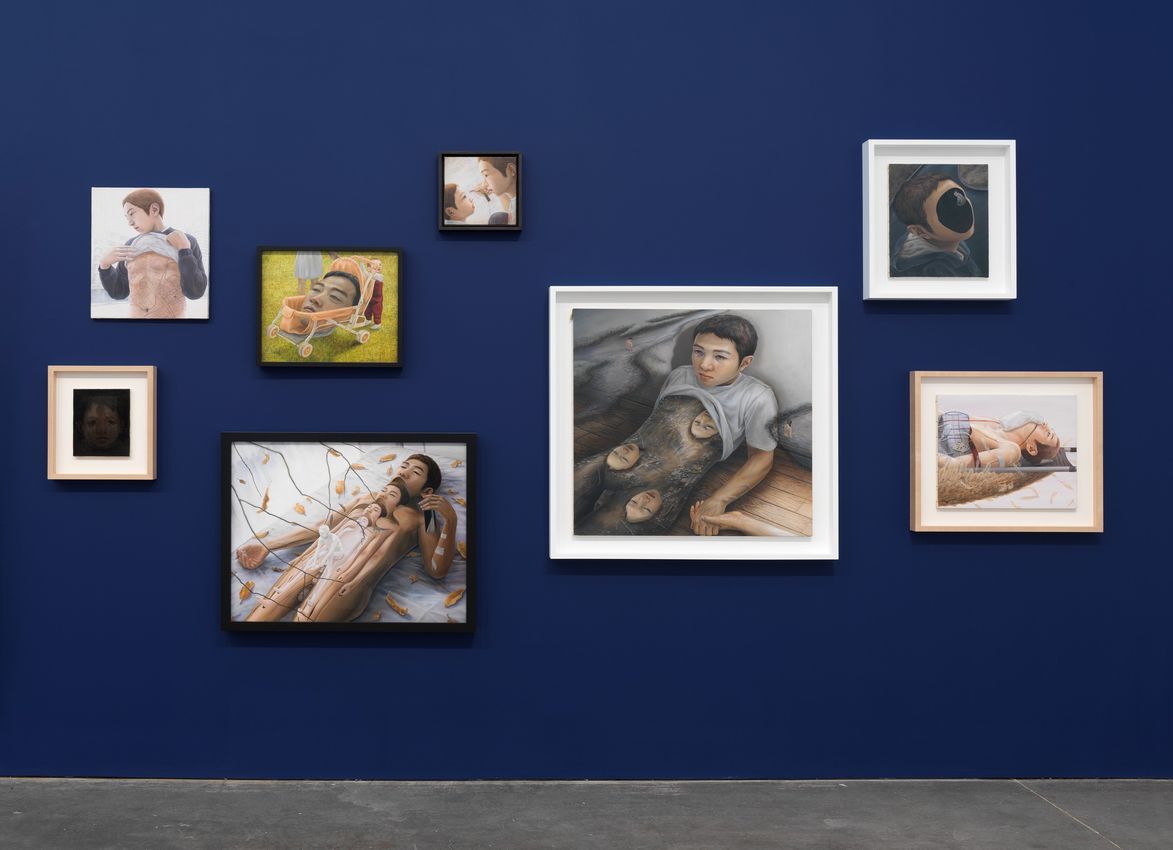
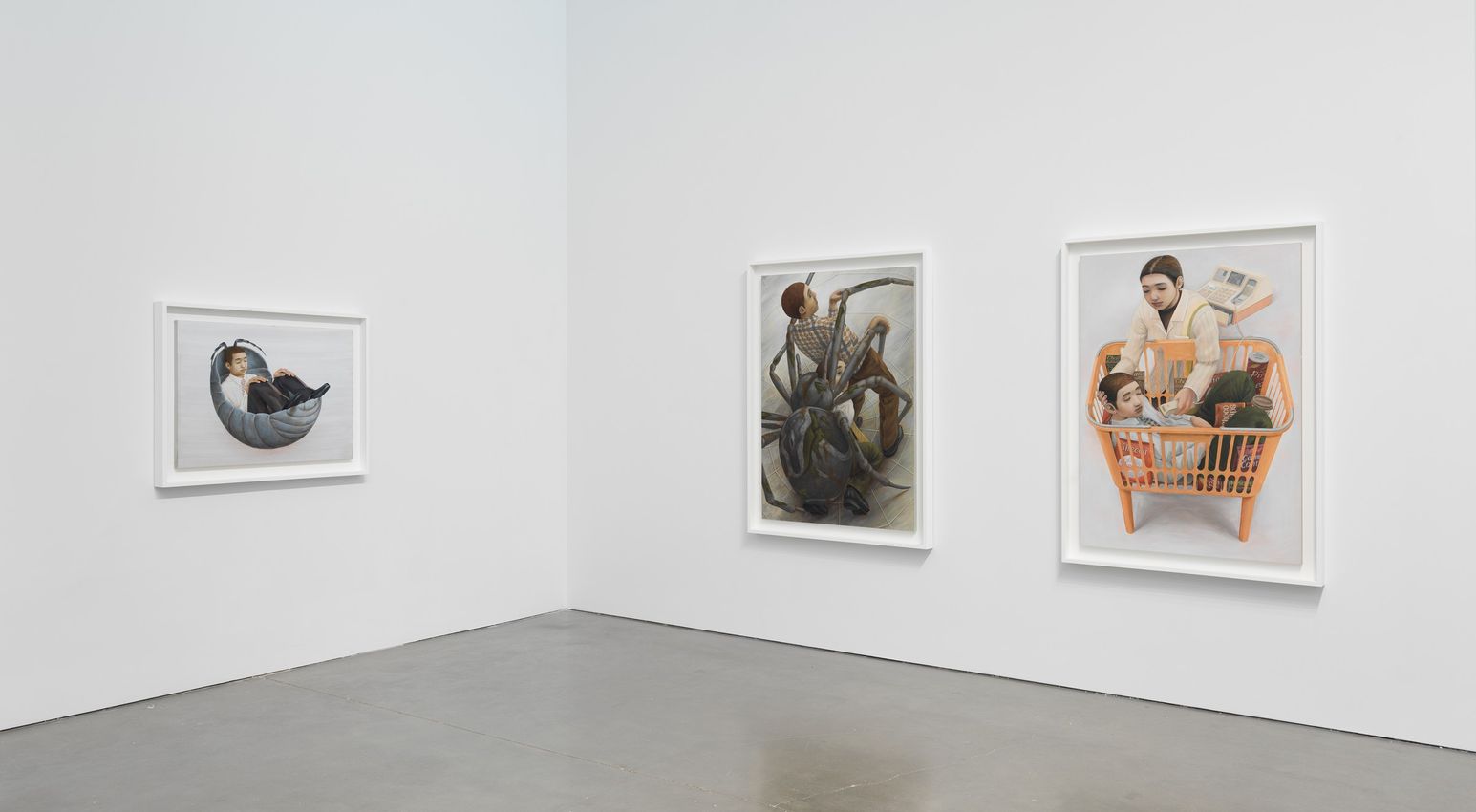
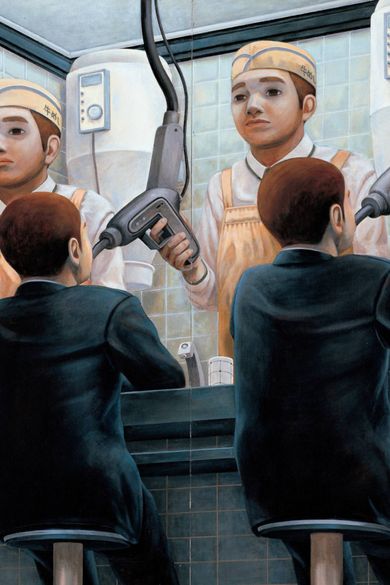
My Anxious Self is divided into five thematic parts, each of which occupies a separate room in the gallery. Waiting for a Chance explores ideas of estrangement and the loss of self through images of assembly lines and regimented worker-consumers. Many of the paintings in this grouping also depict people fused with or partially transformed into machines; Interview (1998), for example, reimagines a trio of interviewers as enormous microscopes preparing to examine a hapless candidate. Another section, ‘Helpless Metamorphoses,’ features works portraying human bodies comingled with animals or objects, strongly recalling the oneiric themes of Surrealism but augmenting that movement’s rangy probing of the unconscious psyche with a social critique specific to Ishida’s millennial time and place.
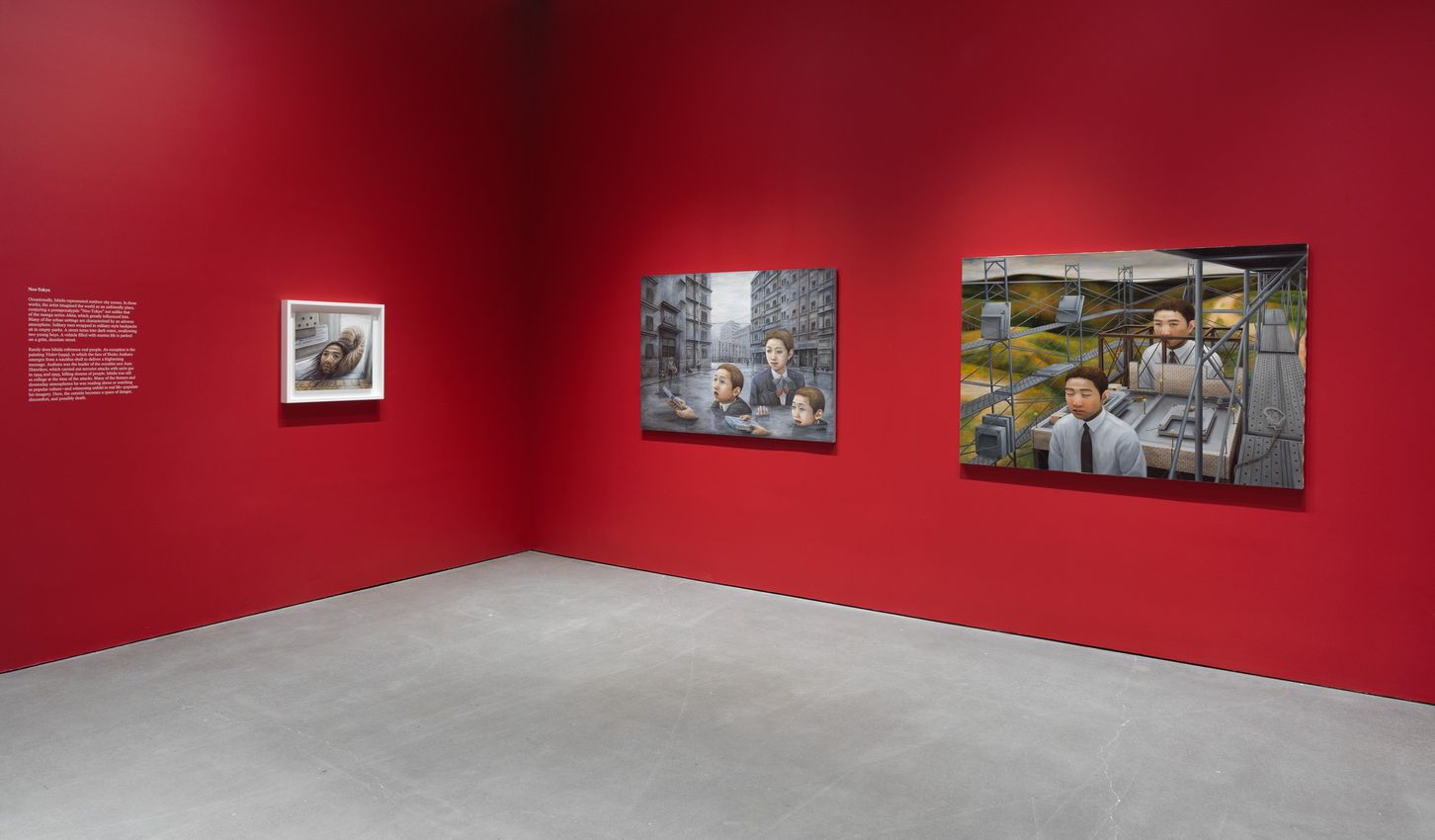
Desperately Lonely focuses on scenes of solitude and isolation set in built interiors that are often also being invaded by nature or merging in other ways with the outside world. In Plant-Eating Dragon (2004), for example, a curled-up man surrounded by drug paraphernalia wraps himself in a blanket that takes the form of a grassy field dotted with trees and crisscrossed by dirt paths. Another section, Neo-Tokyo, concentrates on cityscapes and urban exteriors, additionally featuring source materials for Ishida’s work such as movies, news broadcasts, and the artist’s favourite manga and anime. Finally, Restless Dream comprises paintings dominated by haunting images of maternity and childhood, dreams and death. In Characters (2003), a naked figure—as ever, it could be the artist’s own—lies on a white bed surrounded by falling leaves. Within his body, four progressively smaller and paler versions are nested, matryoshka style, the smallest one sitting up as if ready to take its leave.
The exhibition catalogue features an introduction by Michiaki Ishida, a foreword by Larry Gagosian, essays by Alemani and Leopold, and _The Red Cocoo_n, a short story about a surreal metamorphosis by award-winning Japanese writer Kobo Abe.

Tetsuya Ishida came of age as a painter during Japan’s ‘lost decade’—a time of nationwide economic recession that lasted through the 1990s. In his afflictive paintings, he captured the feelings of hopelessness, claustrophobia, and emotional isolation that burdened him and dominated Japanese society. From his early career until his untimely death in 2005, Ishida provided vivid allegories of the challenges to Japanese life and morale in paintings and graphic works charged with dark Orwellian absurdity.

A respected voice in contemporary art discourse.
Focusing on ambitious storytelling and insightful art-world commentary. Ocula Magazine publishes in-depth interviews, critical essays and timely analysis on the artists, exhibitions and ideas driving the global art world.
Learn more about Ocula Magazine
Showcasing the best of the art world.
Ocula partners with galleries from around the world to highlight their artists, artworks and exhibitions. Gallery membership is by application and invitation, with each member vetted by an independent panel.
Learn more about Ocula Membership

Specialises in the sale of major artworks.
Led by a team with deep ties to the world’s leading auction houses, galleries and collectors. Ocula’s advisory team offers bespoke services to high-net-worth clients from around the world who are looking to acquire the best of contemporary and modern art.
Learn more about our team and services