Nara Roesler São Paulo is pleased to present Abraham Palatnik – Other Rhythms, a solo show by the artist curated by Agnaldo Farias, which brings together a selection of never-before-shown works created at different points in his career. Abraham Palatnik is a central figure in kinetic and optical art in Brazil. His interest in the creative possibilities of machines and the relationship between art and technology helped him develop investigations focused on experimenting with movement and light through different techniques and materials, creating propositions based on visual phenomena that have made his work known over seven decades of production.
Several works featured in Abraham Palatnik, Other Rhythms will be presented to the public for the first time. Abraham Palatnik ended up not showing these works during his lifetime, because he believed they didn’t fit in with his body of work. Bringing them back now is to show other facets of his poetics, other rhythms, thus offering new possibilities for looking at and perceiving his work,’ Farias points out.
One of the highlights of the show is a pair of reliefs from the early 1960s executed on wood, a lesser-known development of his Progressive Reliefs, but one that dialogues with a decisive moment in his career, which was his participation in the ateliers and painting workshops held at the Dom Pedro II Psychiatric Hospital, coordinated by Dr. Nise da Silveira, the psychiatrist responsible for advocating the use of art to maintain mental health. In these workshops, Palatnik came into contact with the pictorial production of the inpatient schizophrenic artists which, fascinated by their creative freedom, gave a new direction to his production. ‘It was an impact that demolished my ideas and convictions about art. [...] From then on, I started researching and experimenting in the field of light and movement, aiming for aesthetic results outside the usual standards and established techniques,’ said the artist in a statement in 2001.
Other unseen works in the exhibition are the paintings he did on glass with synthetic paint in the 1950s and 1960s, examples of the artist’s experimental use of different materials. Glass not only accentuates the luminous and sometimes machinic aspect of these compositions, but it was also important for the artist’s creations in the field of design, especially furniture, exemplifying how his visual research could dialogue with other forms of artistic creation.
As a large part of Palatnik’s production has the viewer and their perception as central aspects, the exhibition also includes works dealing precisely with this relationship, such as Lúdico L-5 (2006), in which the viewer is invited to intervene in a kind of game, creating new combinations and arrangements of the pieces.
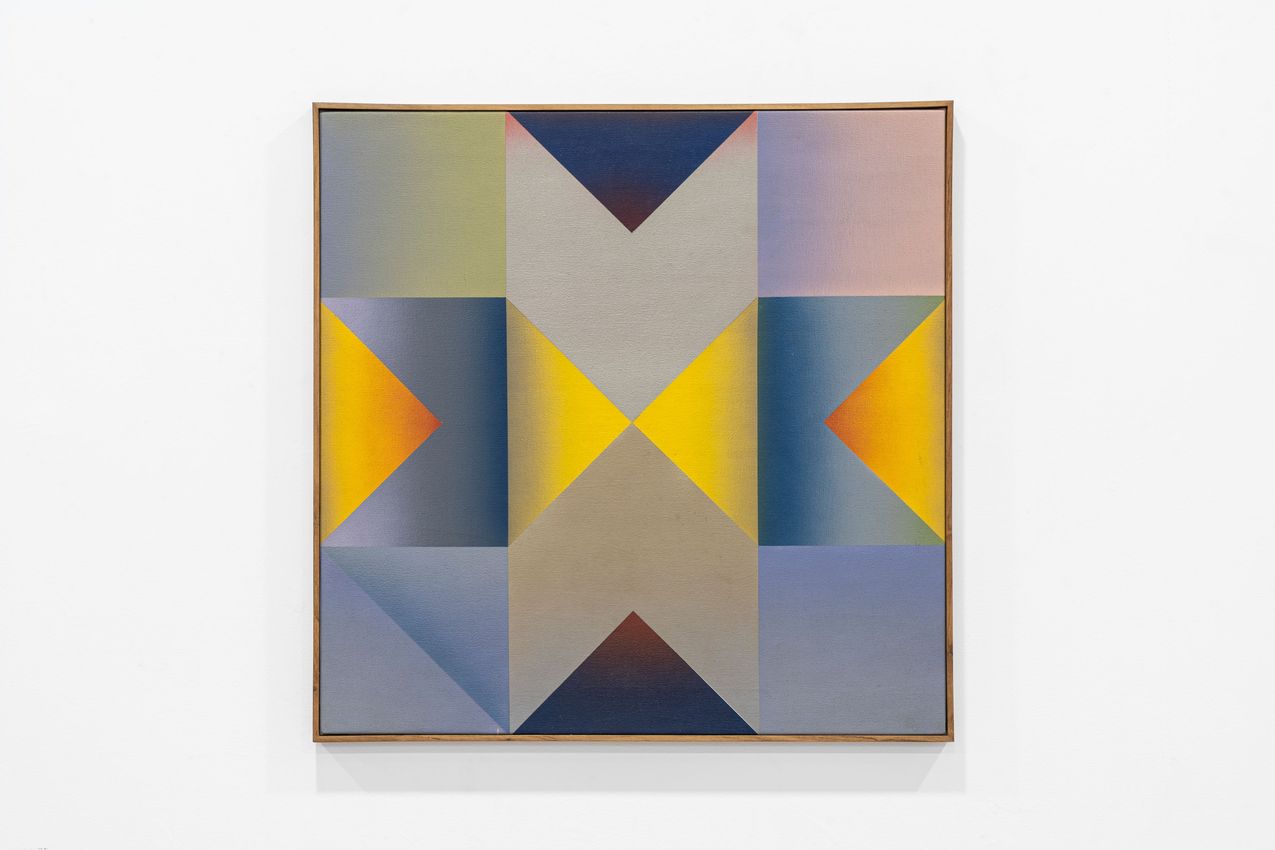
There is also a unique body of work dating from the mid-1990s in which he uses regular shapes in compositions with different shades of the same colour or through sequences of colours that accentuate the kinetic character of the works.
Abraham Palatnik, Other Rhythms seeks to broaden the perception of the artist’s poetics, presenting little-known developments in his career that give the public a broader and more complete view of his unique artistic career.
Abraham Palatnik is a seminal figure of Brazilian kinetic and optical art. His interests lie in technology and the study of motion and light, the realms responsible for the functional, playful, poetic results that made his work known over seven decades’ worth of output. He rose to prominence in the art scene after creating his first Aparelho Cinecromático (Kinechromatic Device, 1949), whereby he set out to reinvent painting practice through light interplay and by relying on technological apparatus to create kaleidoscopic images on screen. Shown in the 1st Bienal de São Paulo (1951), his light installation was not included in the grand prize competition because it didn’t fit any of the art categories then in existence, but its originality won it an honourable mention from the international jury.


Founded in São Paulo in 1989, Galeria Nara Roesler is a leading Brazilian gallery dedicated to showing the work of contemporary Brazilian and international artists. The gallery established another branch in Rio de Janeiro in 2014, followed by its first international outpost in New York City in 2015.

A respected voice in contemporary art discourse.
Focusing on ambitious storytelling and insightful art-world commentary. Ocula Magazine publishes in-depth interviews, critical essays and timely analysis on the artists, exhibitions and ideas driving the global art world.
Learn more about Ocula Magazine
Showcasing the best of the art world.
Ocula partners with galleries from around the world to highlight their artists, artworks and exhibitions. Gallery membership is by application and invitation, with each member vetted by an independent panel.
Learn more about Ocula Membership

Specialises in the sale of major artworks.
Led by a team with deep ties to the world’s leading auction houses, galleries and collectors. Ocula’s advisory team offers bespoke services to high-net-worth clients from around the world who are looking to acquire the best of contemporary and modern art.
Learn more about our team and services