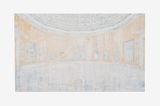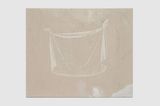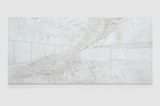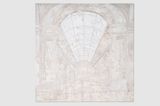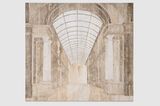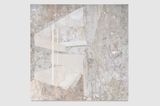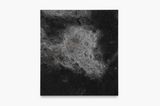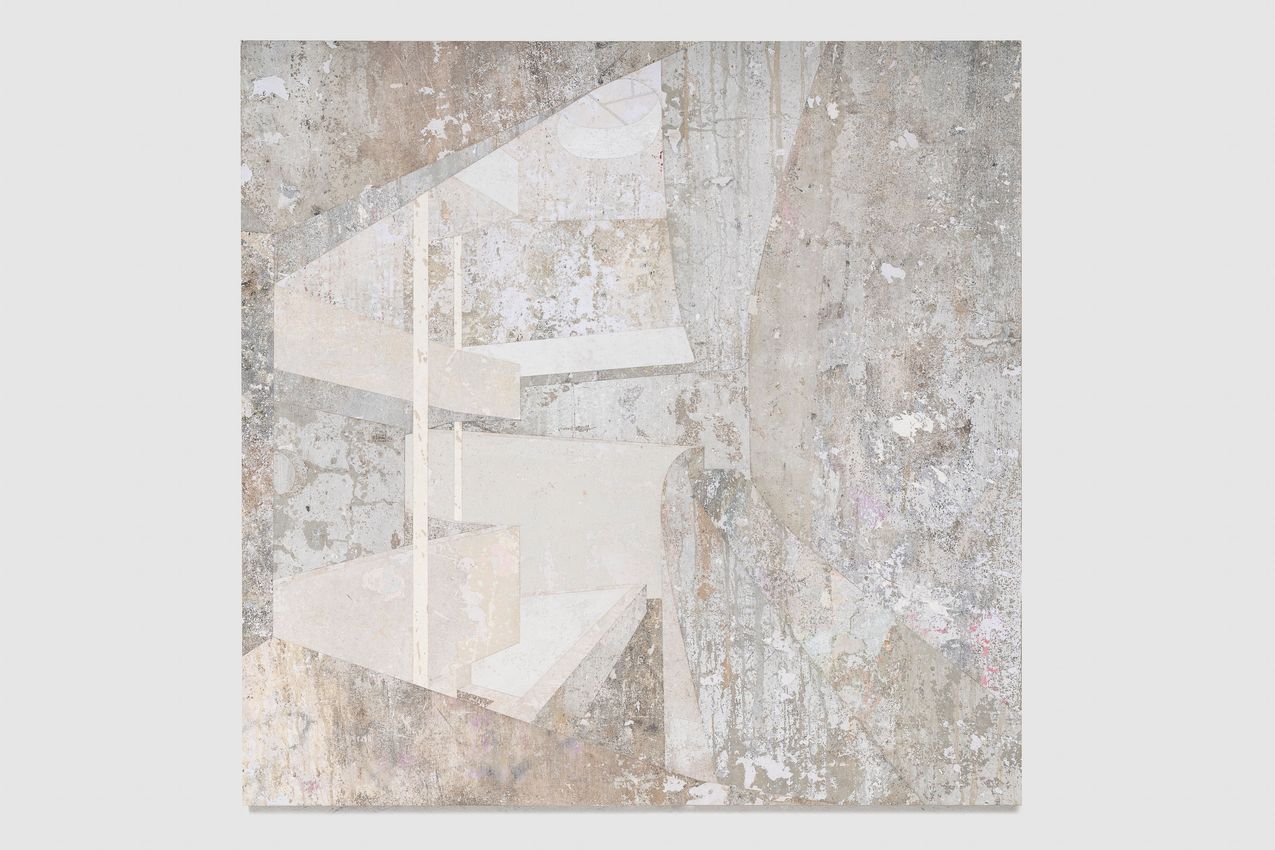
Nara Roesler New York is pleased to present The Site of Images, a solo exhibition by Brazilian artist Daniel Senise curated by Luis Pérez-Oramas that brings together three different series of works produced by the artist between 2020 and 2023.
Daniel Senise (b. 1955, Rio de Janeiro, Brazil), a leading contemporary Brazilian painter and a significant member of Generation 80, has since produced a major body of work addressing painting beyond the traditional brush-stroke-over-canvas convention Since the end of the 1990s, Senise’s practice can be described as a ‘construction of images.’ His process begins with imprinting the textures of surfaces – such as wooden floors or concrete walls – from carefully chosen locations into textiles, using a technique similar to the monotype. This material becomes then the structural base of the work, either as a canvas to be worked on as a collage puzzle, including fragments added to printed photographs in order to create the final image. Frottage, imprinting, tracing, cutting and pasting, and residual texturing are part of the process from which brush and brush-stroke are willfully excluded. In that sense, Senise’s works conceptually mimic an ancient type of image known as acheiropoieta, meaning images produced without the painter’s hand.
Senise‘s repertoire often relates to the memory of places and spaces. He therefore intertwines the representation of a site, with its debris, or in other words, its history –he juxtaposes time, memory, and the physical presence that stems from them. For the current selection of works that constitute The Site of Images–the latest developments from the series Museums and Galleries–it is the painter’s studio, its concrete materiality as dust and debris which becomes the structural spine of images representing empty and monumental museum spaces. When the framed pictures that are usually shown in them are depicted in his paintings they happen to be erased. From the site of images, Senise’s works only show the site itself, the haunting void of the museum or the poignant structure, almost funeral, of their architecture.
It is telling that Daniel Senise has included, among the works depicting phantom images of museum’s interiors, an example of his series devoted to the Vera Icona, the famous linen cloth where the face of Christ was miraculously imprinted. A sacred site of images for Christians, the Vera Icona is also a theoretical object enlightening the power, and the paradoxes, of images. Also, a picture made without human intervention–the very model of acheiropoieta–a prodigious image transfer, resonates with the large paintings carrying by their contact with walls and floors of the artist’s studio the materiality, the fragment-relic of images. The object served as inspiration for several painters throughout the history of art. It is these representations, by artists such as El Greco and Zurbarán, that serve as the foundation for Senise take on it.. The artist adapts these original compositions, recreating them, but without including the face of Christ, so that the focus is on the brackets that support the image, its very material site.
In the third group of works that are part of the exhibition, the artist highlights one of the fundamental techniques of his practice: the monotype of surfaces. Using a mixture of water and glue spread over the flooring of a determined space, the artist manages, with a cloth, to impress the markings to create surfaces stamped with the colors and signs of the place. Accidental images, their power of representation entirely lays on chance and subjective perception. These images, literal in their non-mimetic materiality, complement the ambitious body of abyssal images depicting museums: emptied abysses of images, the museums depicted by Senise are also images of images, images containing (erased) images, as the Vera-Icona itself: the endless site of images.
Daniel Senise (b. 1955, Rio de Janeiro, Brazil), lives and works in Rio de Janeiro. Senise graduated in civil engineering in 1980 from the Universidade Federal do Rio de Janeiro (UFRJ), and studied Arts at the Escola de Artes Visuais do Parque Lage (EAV—School of Visual Arts) from 1981 to 1983. From 1985 to 1996, Senise was a painting professor at the EAV-School of Visual Arts in Rio de Janeiro. His current painting practice revolves around balance and weight of space with the presence and absence of everyday objects. He often incorporates the corrugations of floors onto the canvas, iron dust, lead objects or fabrics. Some of his works have densely worked surfaces while others have very fine layers of paint. In Musée D’Orsay (2014), Senise uses acrylic medium and residues on canvas glued onto aluminium to construct the gallery space of the Paris museum in tones of white and tan. Although the viewer cannot identify the paintings within the space, however, the architectural component of the white cube style of displaying art shine through as a way of manipulating space and its interaction with art. Senise participated in many biennials, including São Paulo’s in 1985, 1989, 1998 and 2010 editions, the Biennial de La Habana in 1986, and also the Venice Biennale in 1990, among others.
Founded in São Paulo in 1989, Galeria Nara Roesler is a leading Brazilian gallery dedicated to showing the work of contemporary Brazilian and international artists. The gallery established another branch in Rio de Janeiro in 2014, followed by its first international outpost in New York City in 2015.

A respected voice in contemporary art discourse.
Focusing on ambitious storytelling and insightful art-world commentary. Ocula Magazine publishes in-depth interviews, critical essays and timely analysis on the artists, exhibitions and ideas driving the global art world.
Learn more about Ocula Magazine
Showcasing the best of the art world.
Ocula partners with galleries from around the world to highlight their artists, artworks and exhibitions. Gallery membership is by application and invitation, with each member vetted by an independent panel.
Learn more about Ocula Membership

Specialises in the sale of major artworks.
Led by a team with deep ties to the world’s leading auction houses, galleries and collectors. Ocula’s advisory team offers bespoke services to high-net-worth clients from around the world who are looking to acquire the best of contemporary and modern art.
Learn more about our team and services