I had thought that I could try to play through motifs like Broodthaers did in his felt-tip pen drawings. The idea of doing it as vigorously and freshly as Broodthaers, if I could do it at all, and then turning it back into painting, seemed completely depressing to me. (A betrayal, so to speak).
The title Esprit de Corps is taken from a book by Kenneth Silver about figuration and classical aesthetics since the beginning of the First World War. In his earlier essay ‘Figures of Authority, Ciphers of Regression’, Buchloh had attacked all returns to figurative painting at this historical moment as politically reactionary. In so doing, he put Picabia in the same category as right-wing painters like Derain.
From the beginning of the 1970s, late Picabia paintings began to appear sporadically in Cologne. I came from a room in which one was aware of how artists such as Derain and Balthus used references to Poussin to promote reactionary ideas – but also how an artist such as Broodthaers used Ingres as part of a left-wing practice. These different approaches were still being tried out, practiced, and combined.
Reading Buchloh’s essay again, and thinking about figurative painting today, I could agree with him that late Picabia represents a new authoritarianism, even if I do not completely accept his argument. But when I compare this to what I remember vaguely as a plea for painting by Dave Hickey in a Picabia catalogue published by Michael Werner, I would not want to stand in between the two.
The retention of all images, ideas – their simultaneous management and disempowerment and a pictorial conception in which mountains are an imposition in themselves and one feels more attracted to plains and a horizon.
I hope that I can use this method to drive a fast machine fast, one that generates images and not painting.
The text from Polke’s Vitrine Piece comes back to me:
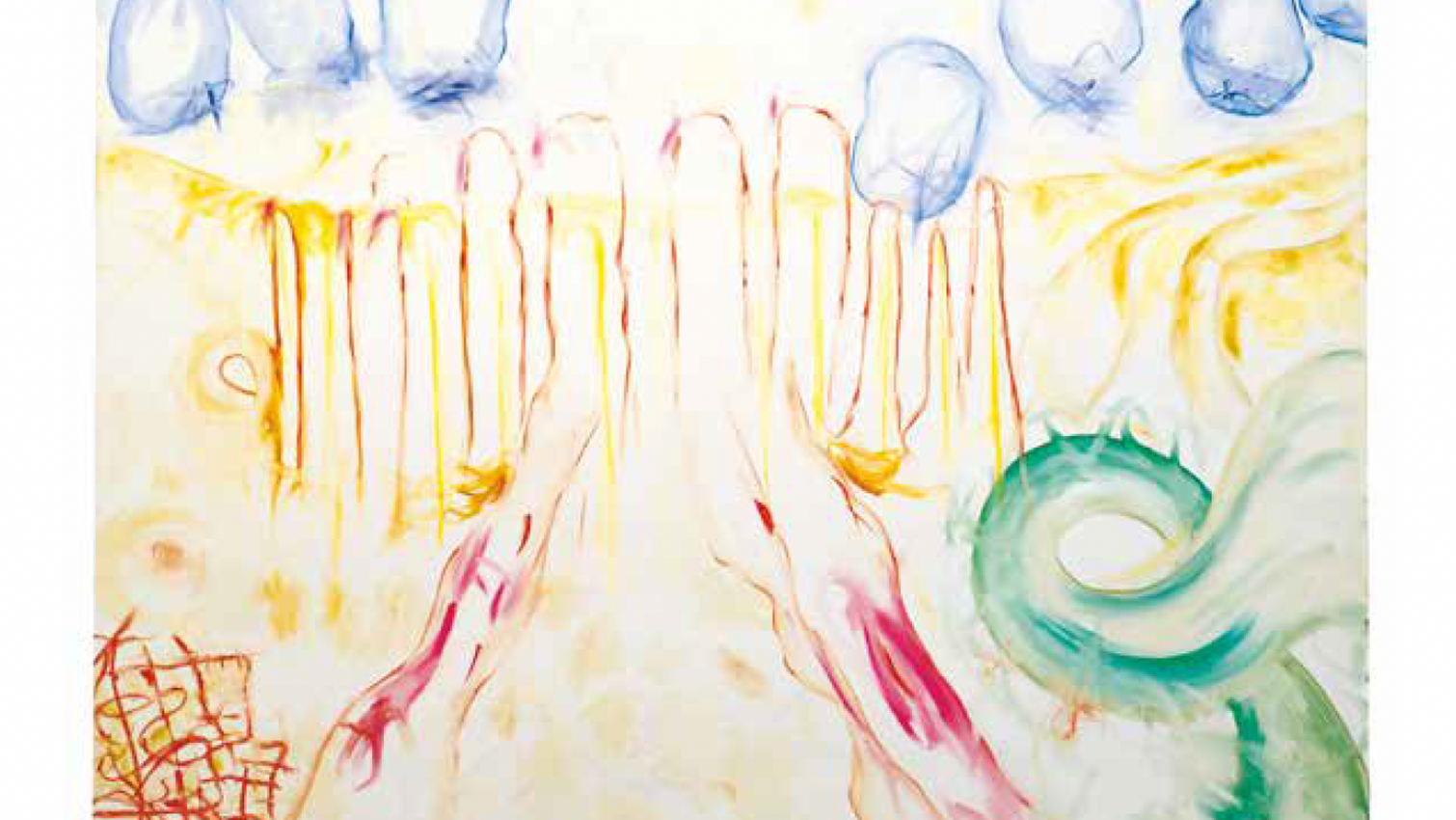
I stood in front of the canvas and wanted to paint a bouquet of flowers.
Then I received the command from higher beings:
No bouquet of flowers! Paint flamingos!
At first I wanted to continue painting, but then I knew they were serious.
__
Michael Krebber
Press release courtesy Galerie Buchholz. Text: Michael Krebber.


Galerie Buchholz is an art gallery specializing in international contemporary art, with exhibition spaces in Cologne, Berlin and New York City. The gallery was founded in Cologne in 1986 by Daniel Buchholz, and today is run jointly with Christopher Müller.

A respected voice in contemporary art discourse.
Focusing on ambitious storytelling and insightful art-world commentary. Ocula Magazine publishes in-depth interviews, critical essays and timely analysis on the artists, exhibitions and ideas driving the global art world.
Learn more about Ocula Magazine
Showcasing the best of the art world.
Ocula partners with galleries from around the world to highlight their artists, artworks and exhibitions. Gallery membership is by application and invitation, with each member vetted by an independent panel.
Learn more about Ocula Membership

Specialises in the sale of major artworks.
Led by a team with deep ties to the world’s leading auction houses, galleries and collectors. Ocula’s advisory team offers bespoke services to high-net-worth clients from around the world who are looking to acquire the best of contemporary and modern art.
Learn more about our team and services