Press Release

Gallery Baton is pleased to present Hugh Scott-Douglas‘s first solo exhibition HARD RAIN from 17th May to 19th June, 2019. Scott-Douglas’ work is concerned with systems of value, trade routes and the circulation of currency and commercial goods, exploring and enacting methods of migration, translation and transaction. He makes use of a wide range of techniques and media, from laser cutting, inkjet printing and photography, to numerical data and satellite mapping software, and his practice is Interrogating tensions between analogue and digital modes of production.

Hugh Scott-Douglas has been committed to a practice that investigates situations where the conditions related to production put the efficacy of the maker into question. This practice has unfolded through the exploration of early cyanotype blueprints, analogue technologies of mechanical reproduction, anti-counterfeiting measures and dissembled watch movements. Since 2016, Scott-Douglas has been engaging with thematic explorations of nature and its relationship to capitalism. This exhibition continues the conceptual arc of his practice, standing as the forth chapter and using the concept of the flood to explore the notion of erasure.

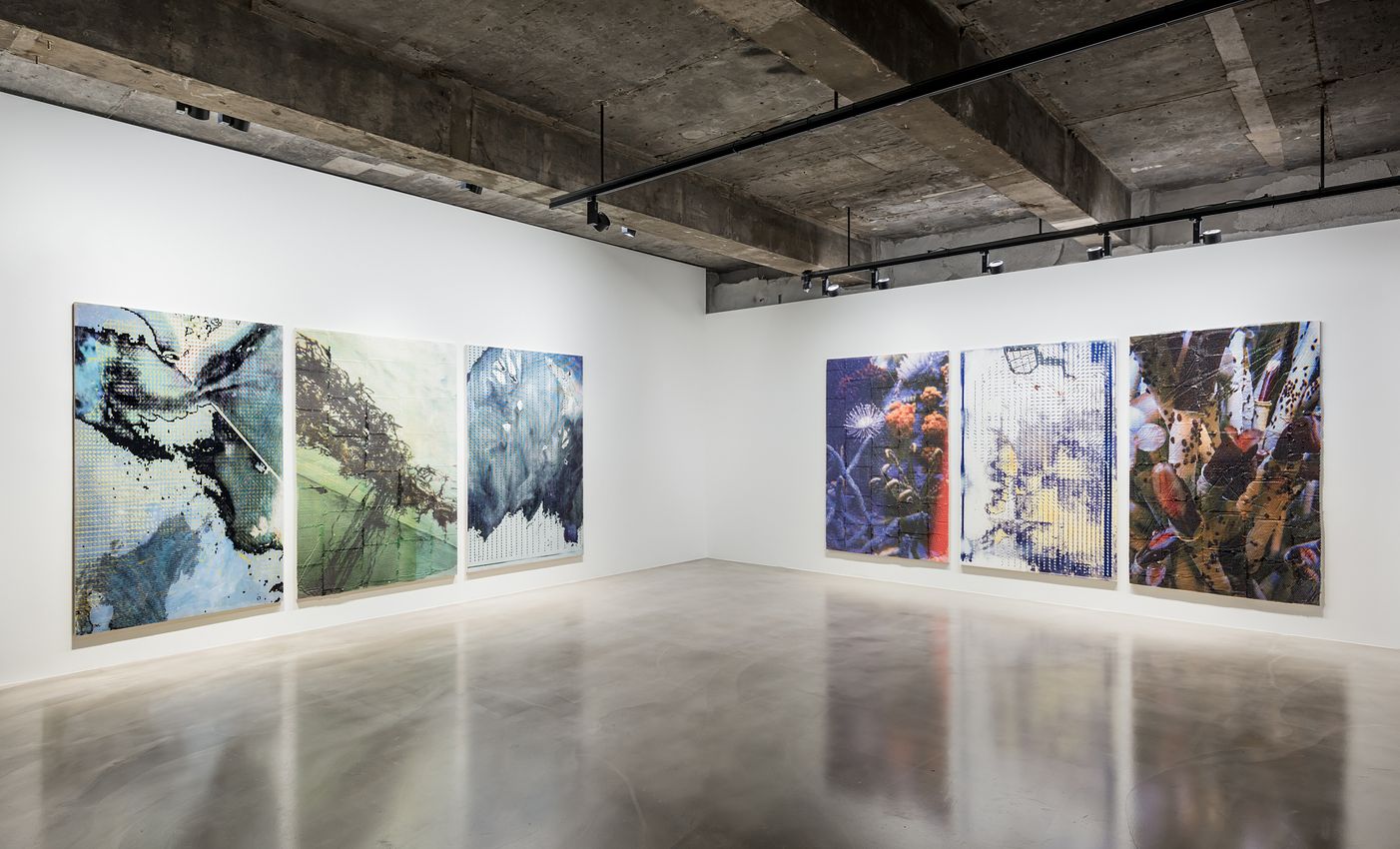
HARD RAIN brings together two bodies of work for the first time. Both series of work employ the tools native to the worlds of industry and commerce in an exploration of capital’s attempt to both abstract and quantify the experiential and the scientific qualities of nature. The works hone in on examples of natural bodies made visible and obfuscated in the service of the production of value and the organization of labour.

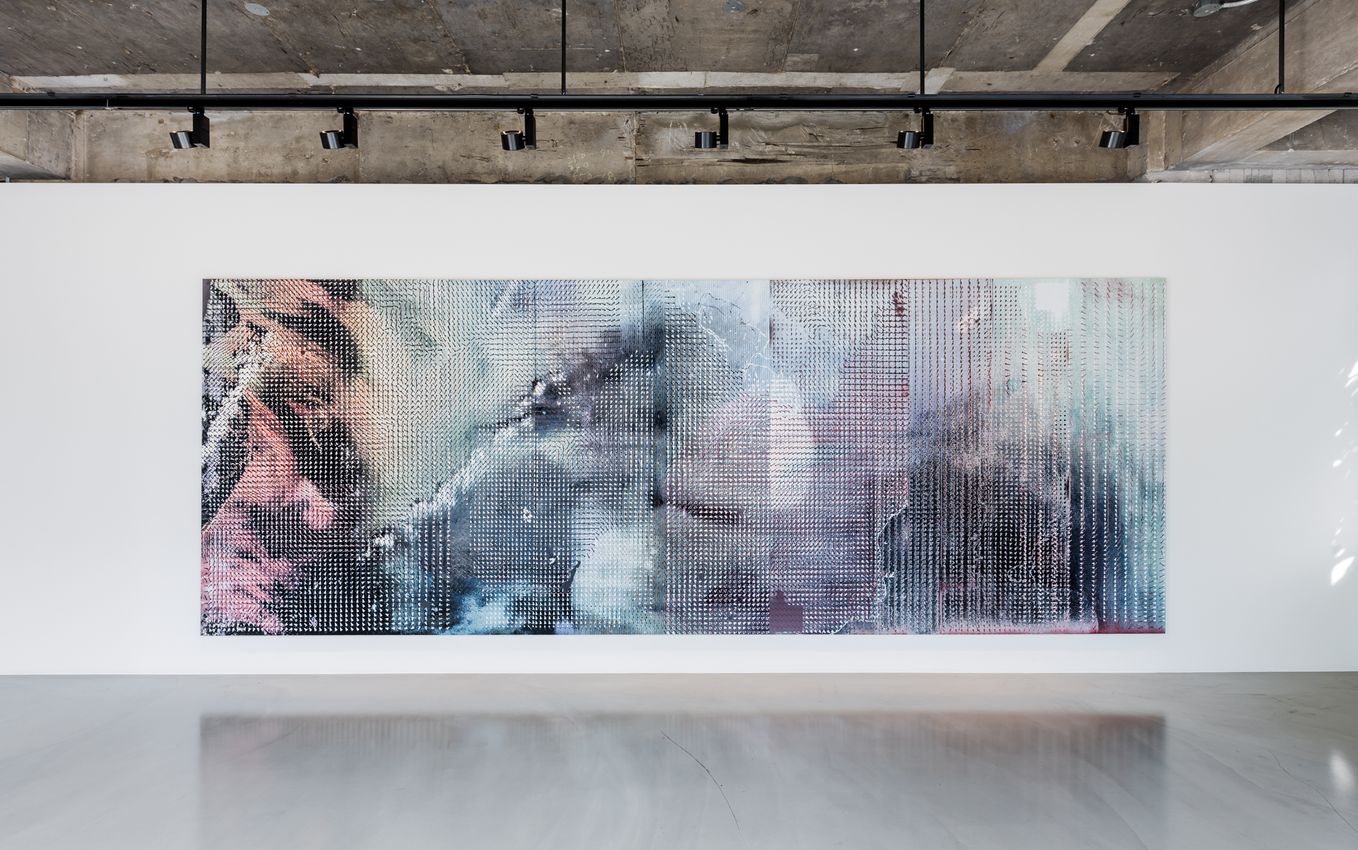
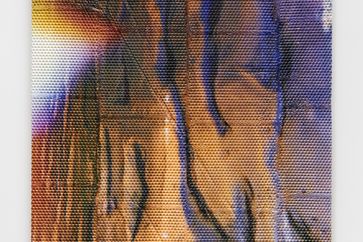
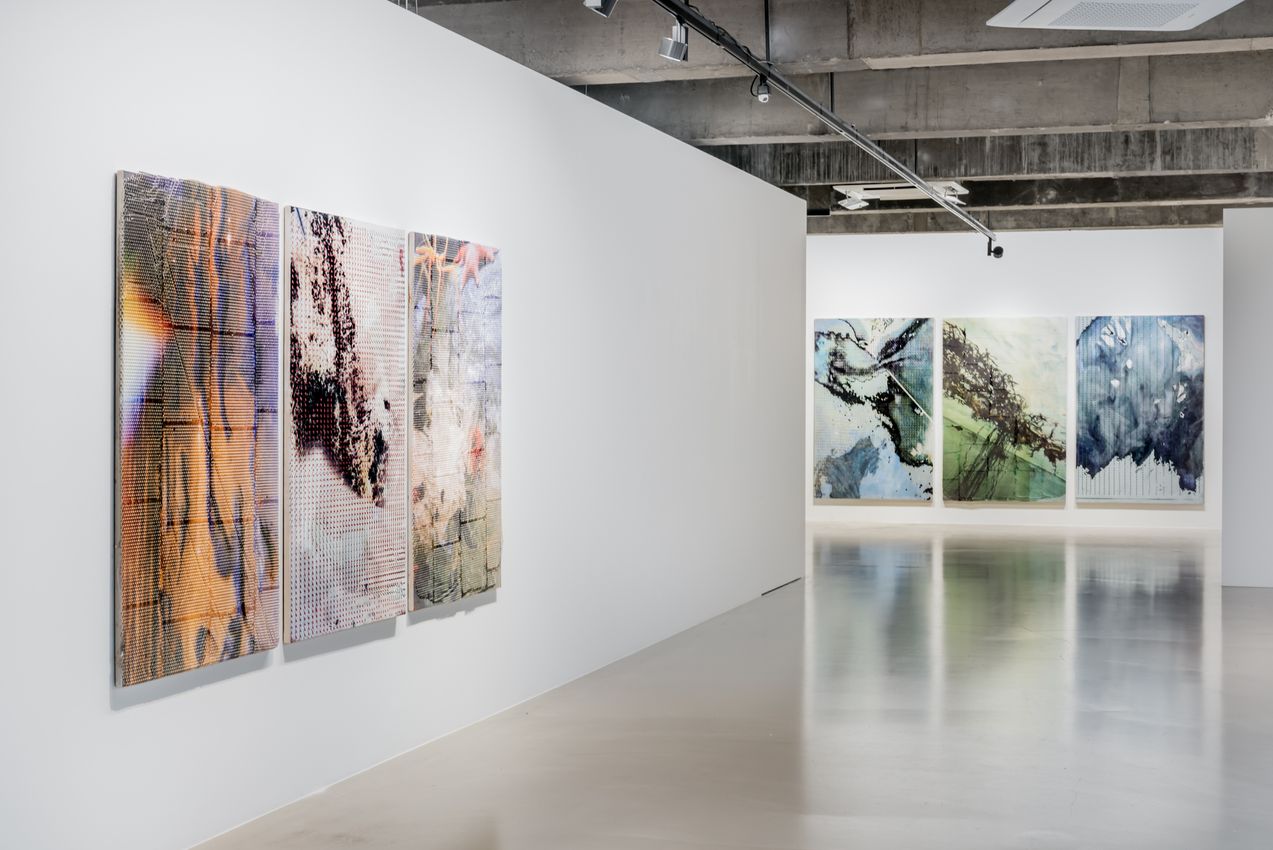
Trade Winds is the umbrella term for an ongoing series of printed paintings born out of Scott-Douglas’ continued interest in images and objects that exist as casualties of material moving through production and distribution networks. For this series, Scott-Douglas uses FleetMon, a piece of logistics industry-specific software normally used to track ships on the ocean. Scott-Douglas programs it to generate images of the ocean’s fundamental weather patterns, which he subsequently captures. Non-graphic, organic and experiential elements of the ocean—the direction of currents and winds, for example—are quantified here through graphemes. These captured images are manipulated, both materially and chromatically, and then printed digitally in a manner that echoes the analogue process of screen-printing further masking what was there in reality. In this latest iteration, subtle white monochromes painted in acrylic polymer, acrylic mediums and oil paint, executed by the artist, are covered by the printed image. The artist’s work is ultimately covered by that of a machine, effectively erasing all trace of it.

The series ‘Natural History’ is a group of printed paintings that originated as digital photographs, which capture the peripheries of the wildlife dioramas of the American Museum of Natural History in New York City, and specifically the Milstein Family Hall of Ocean Life. Opposite to the realities of the ocean, the Museum’s staged plastic environments promote idealised and fixed ecosystems, which exist outside of the perilous reaches of human influence. Like the aerial perspective, the museological lens carries with it a history of colonialism and projects a certain scientific authority. These tableaus function as a sort of promissory note, presenting their viewers with a portal to this alternate and optimistic synthetic planet. Backed by the gold reserve authority of the institution, as it were, they offer a respite from and rebuttal to the reality of the ocean—a counter-narrative offered up for agreeable consumption by the public. Appropriating the protocols of the capitalist’s treatment of images, Scott-Douglas captures and processes these pseudo-worlds with a succession of artificial intermediaries.

Beginning with the glass barrier of the vitrine itself and the lens of the camera, the exercise of effectively erasing what was originally there continues with a digital photograph, which, in turn, is subjected to an algorithm that employs various effects to simulate those typical of a plastic body Leica. This is followed by digital transfer and digital printing. The supports that receive the images are made by the artist in his studio using synthetic material originally purchased to assist in the shipment and protection of works themselves. This multi-tiered process culminates in representations of plastic worlds rendered via plastic technologies—handsome, passive scenes that appear as natural, techniques that simulate analog methods—abstractions of their source material which fully erase the realities of their referent environment.

Hugh Scott-Douglas (b.1988 in Cambridge) received B.F.A in Sculpture from Ontario College of Art and Design, Toronto and studied at Pratt Institute, New York. He has held solo exhibitions at Tochigi Prefectural Museum of Fine Arts, Tochigi (2016). He has participated in group exhibitions at deCordova Sculpture Park and Museum, Lincoln; Columbus Museum of Art, Columbus; Staatliche Kunsthalle Baden-Baden, Baden-Baden; Rennie Museum, Vancouver; San Francisco Museum of Modern Art, San Francisco; Worcester Art Museum, Worcester; Yokohama Museum of Art, Yokohama; and Museum of Contemporary Art, Chicago. His works are in the collections of SFMoMA, San Francisco; Pinault Collection, Venice and Dallas Museum of Art, Dallas.

Read More

Installation Views

About the Artist

Hugh Scott-Douglas is perhaps best known todayfor his abstract, pattern-rich panels and installations. He uses a widevariety of techniques—from photography, laser cutting, to inkjetprinting—that take as their subject and visual language various methodsand networks of production and transaction. Across his practice,Scott-Douglas investigates the possibilities and limitations of theproduction of the photographic image at a turning point in the medium’shistory, as it makes the conversion from modes of mechanicalreproduction towards digital technologies. This series Natural Historyis a group of printed paintings originating from digital photographs ofthe peripheries of the wildlife dioramas of the American Museum ofNatural History, New York City. Instead of exposing the realities of theocean, the museum’s staged plastic environment promotes an idealizedand fixed ecosystem, which exists outside of the perilous realms ofhuman influence. Appropriating the protocols of the capitalist treatmentof images, he captures and processes these pseudo-worlds with asuccession of artificial intermediaries.

View Artist Profile Hugh Scott-Douglas contemporary artist
About the Gallery

Since its founding in 2011, Gallery Baton has gained international recognition as a leading contemporary art gallery in Korea. Distinguishing itself with a dynamic and refined program, Baton consistently strives for an in-depth understanding of current paradigms within the complex and ever-changing landscape of contemporary art.

View Gallery Profile
Address
116, Dokseodang-ro
Yongsan-gu
Seoul
South Korea
Opening Hours
Tuesday – Saturday
10am – 6pm
(1)
Seoul 116, Dokseodang-ro, Yongsan-gu
Gallery Baton
116, Dokseodang-ro, Yongsan-gu, Seoul, South Korea

Opening hours
Tuesday – Saturday
10am – 6pm
The art world in focus