Press Release

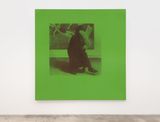
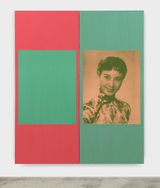
Over the past six decades, David Diao has become a vital figure in the history of painting and a touchstone for fellow artists,known for his formally rigorous works that challenge the tenets of modernism from within. On Barnett Newman, 1991–2023 marks his debut exhibition at Greene Naftali, and attests to Diao’s abiding fascination with the Abstract Expressionist master.Accompanied by a forthcoming catalog with an original essay by Jeffrey Weiss, this focused survey confronts the modernistlegacy with a potent blend of reverence and doubt, tracing the identities of abstraction—and of painting itself—through thelife and work of one key practitioner.

Born in China’s Sichuan Province in 1943, Diao fled with his family to Hong Kong before immigrating to the U.S. in 1955, and that experience of displacement has informed his career-long reckoning with the levers of power that govern the art world.The Newman paintings serve as a fitting introduction to his practice as a whole: as acts of homage that also question thecanon—who it admits and who is excluded.

Diao’s admiration for Newman was forged through an early encounter: as a recent college graduate working as an art handlerto make ends meet, Diao installed Newman’s Stations of the Cross at the Guggenheim in 1966. He credits that signal eventwith setting his own course as a painter, and by the early 1990s he returned to Newman’s example in exacting (if oblique)terms. The cycle began at a moment of deep distrust in painting as a critical art form, but Diao is unwavering in what Weisscalls “his conflicted faith in the medium,” using the tools of abstraction to express his ambivalence toward the painterlyideals Newman professed. That tradition was both ingrained and seemingly irretrievable from Diao’s vantage at the height ofpostmodernism, and he has refined an arm’s-length approach that melds skepticism and wry humor.

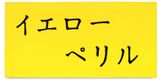
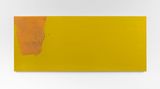
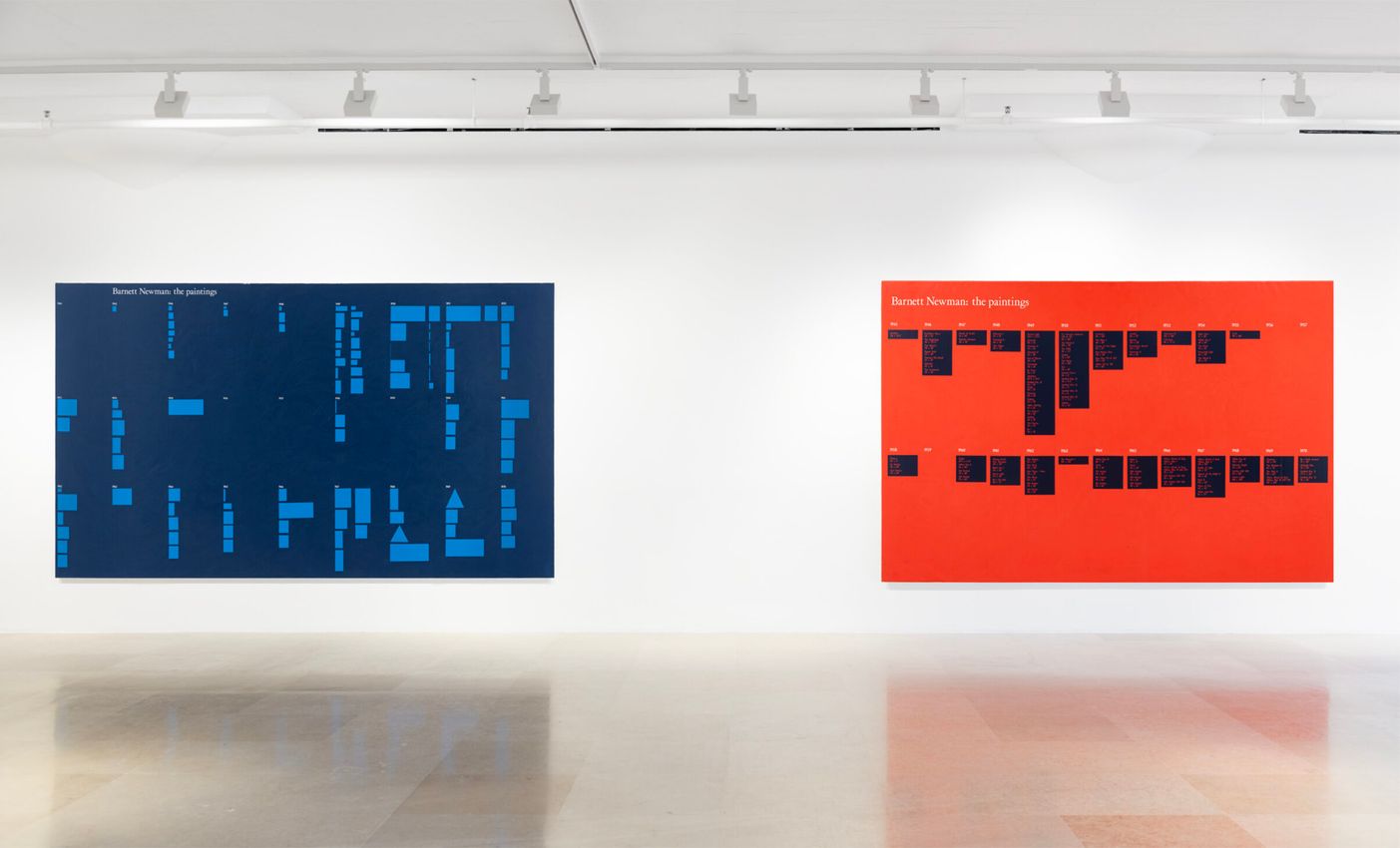
The Newman works shift abstract painting to a more data-driven register, reducing Newman’s singular achievement to a finiteset of metrics—titles, dates, and dimensions of paintings, drawn from published resources like the catalogue raisonné. Diao actsas an unofficial archivist of Newman while subtly channeling his signature style: in the lateral splay of his paintings’ proportionsthat gestures toward Ab-Ex scale, or the columnar alignment of information that riffs on Newman’s “zip.” Diao’s tabulations arecrisp and orderly yet betray a human touch—through the weave of the canvas that occasionally peeks through the even layersof acrylic, or stray pencil marks that rupture tightly regulated fields of straight lines and sharp corners. The paintings are stringentin conception but surprisingly supple in their execution, their lush monochrome surfaces honed with a palette knife that leavesfaint traces of the artist’s hand. Each work is hyperrational on its face but driven by more wayward desires, shot through with atacit longing for the absent originals it recalls but can never yield. “There is something utterly moving about the sheer facticityof names and dates,” Diao has said, and the paintings challenge us to square their cool, administrative logic with an act ofsuch untrammeled devotion. The Newman sequence exemplifies Diao’s broader take on painting’s past: treating the history ofabstract form not as grand narrative or fixed convention, but as an ongoing process of citation and reference, index and selection.

Read More
About the Artist

Over five decades, David Diao’s paintings have dismantled the tenets of modernism from within, exploring the shadow side of its reductive geometries as a source of untapped potential. “Since 1985, if not earlier, I have sought to question that abstract painting has no referent other than itself,” he has said. “Almost all my work has a backstory.” Those accounts stem from a rigorous approach that resists Conceptual art’s veneer of detached neutrality, relying instead on deeply personal investments in art history and his own place within it.

View Artist Profile David Diao contemporary artist
About the Gallery
Founded in 1995, Greene Naftali was among the first contemporary art galleries in New York’s Chelsea neighbourhood. With artists exhibiting worldwide in museums and arts institutions, the gallery has a diverse and influential roster of artists demonstrating a strong conceptual foundation and dedication to art’s discourse and history. Significant contemporary artists include painters Monika Baer, Jana Euler, and Jacqueline Humphries; sculptors Rachel Harrison and Simone Fattal; and new media artists Tony Cokes, Paul Chan, and Cory Arcangel. The gallery’s program also includes critical historical figures Tony Conrad, Konrad Lueg, and Harun Farocki, and a group of innovative emerging artists of a younger generation – Justin Caguiat, Aria Dean, and Walter Price.
View Gallery Profile
Address
508 West 26th Street
Ground Floor & 8th Floor
New York
United States
Opening Hours
Tuesday – Saturday
10am – 6pm
(1)
New York 508 West 26th Street, Ground Floor & 8th Floor
Greene Naftali
508 West 26th Street, Ground Floor & 8th Floor, New York, United States

Opening hours
Tuesday – Saturday
10am – 6pm
The art world in focus