Press Release

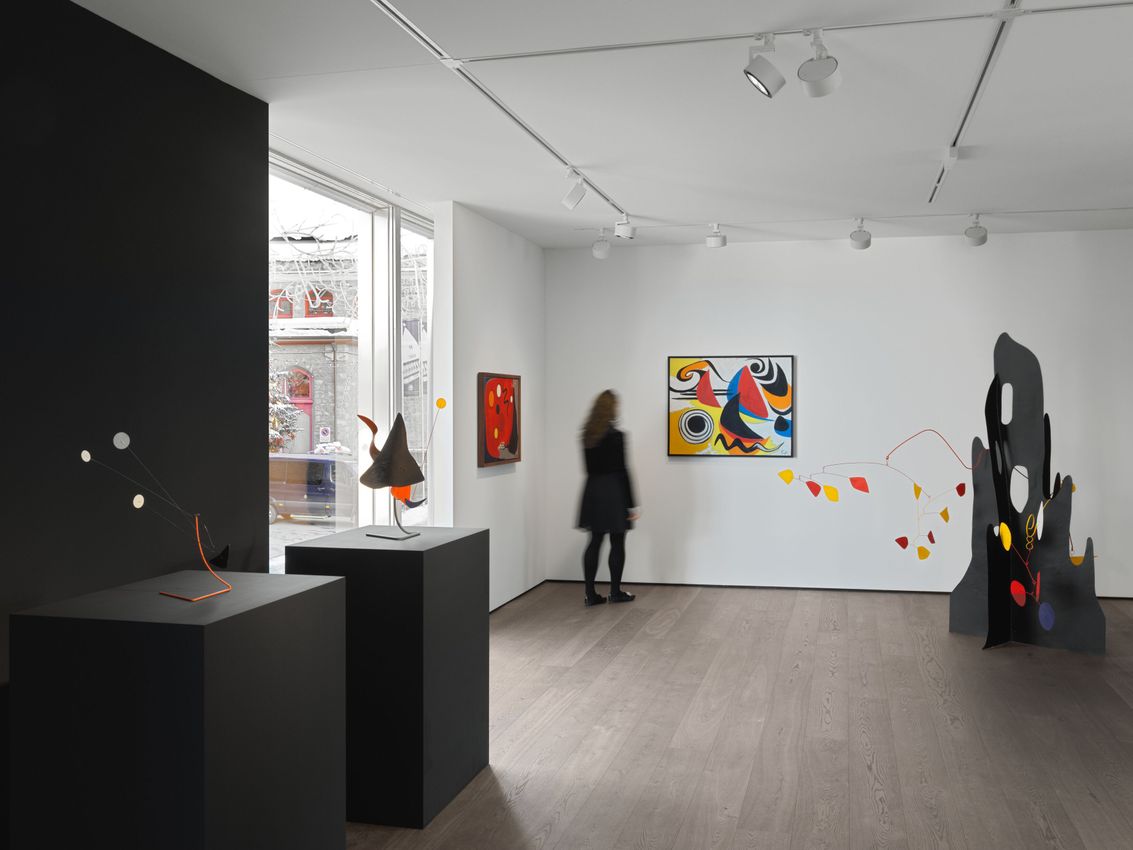
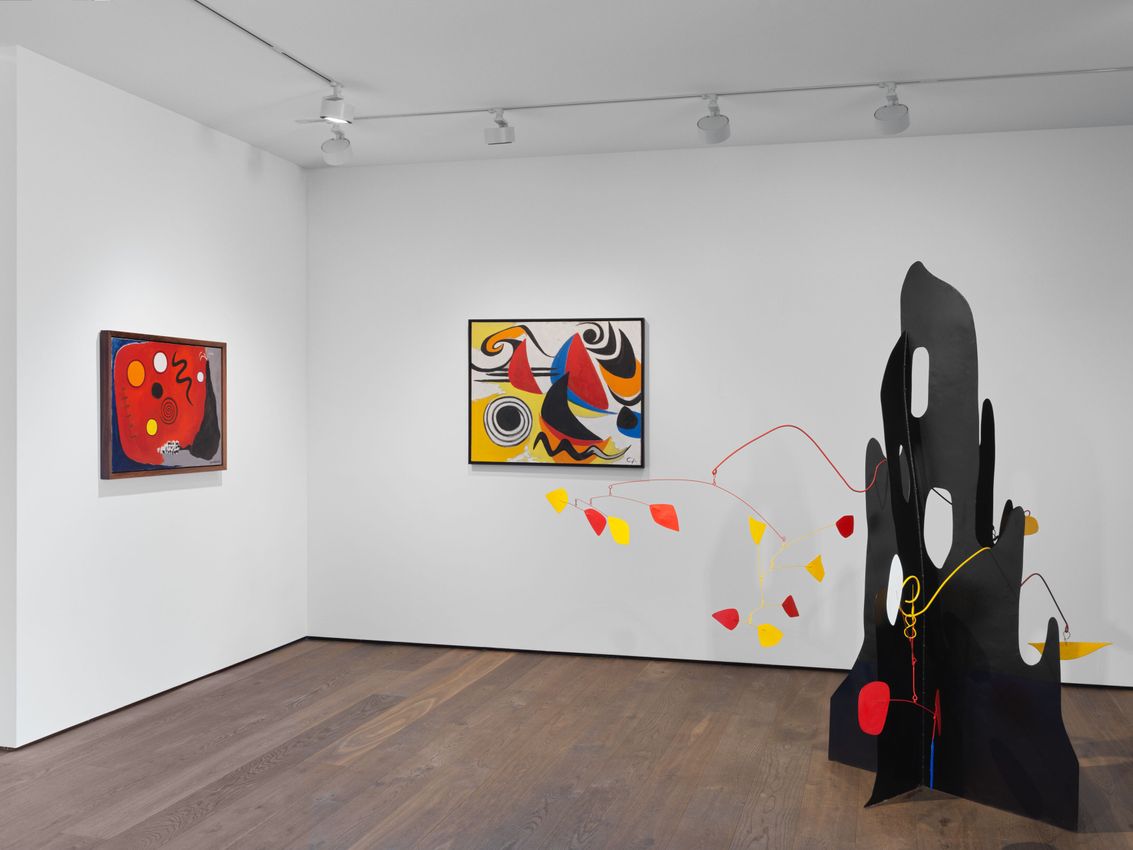
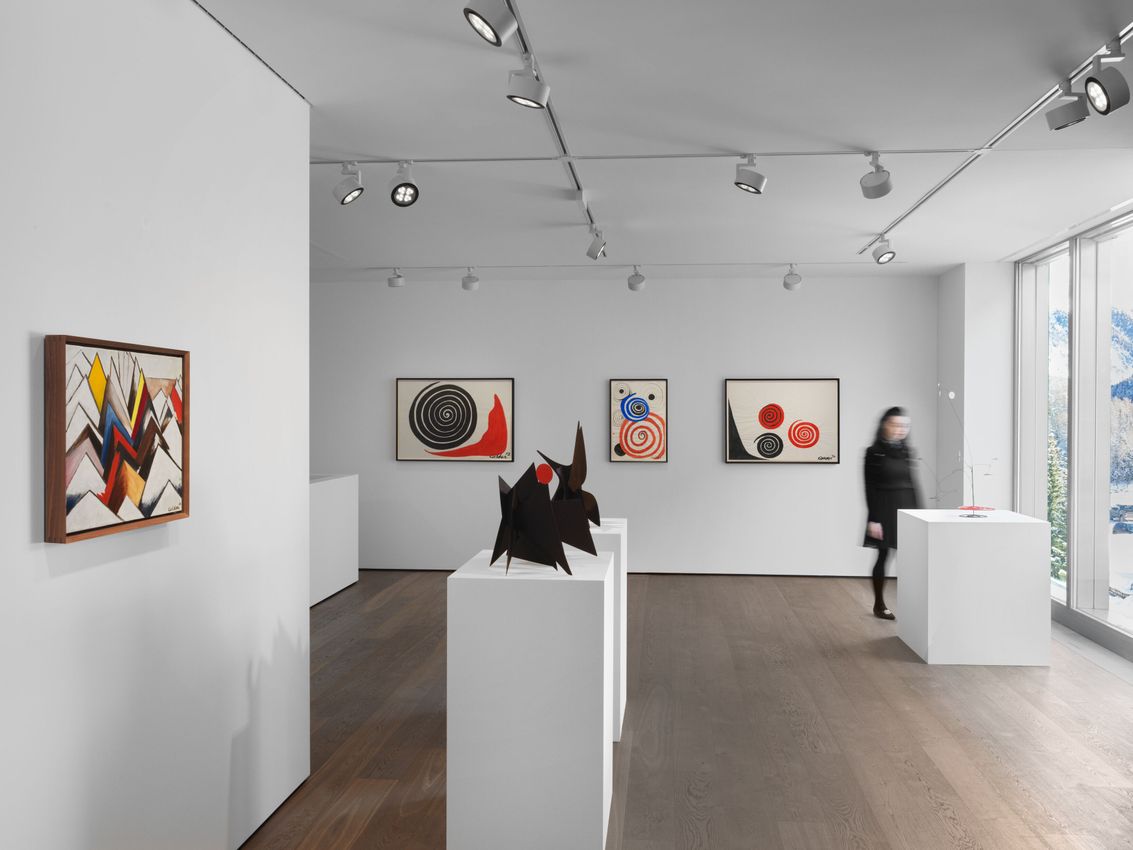
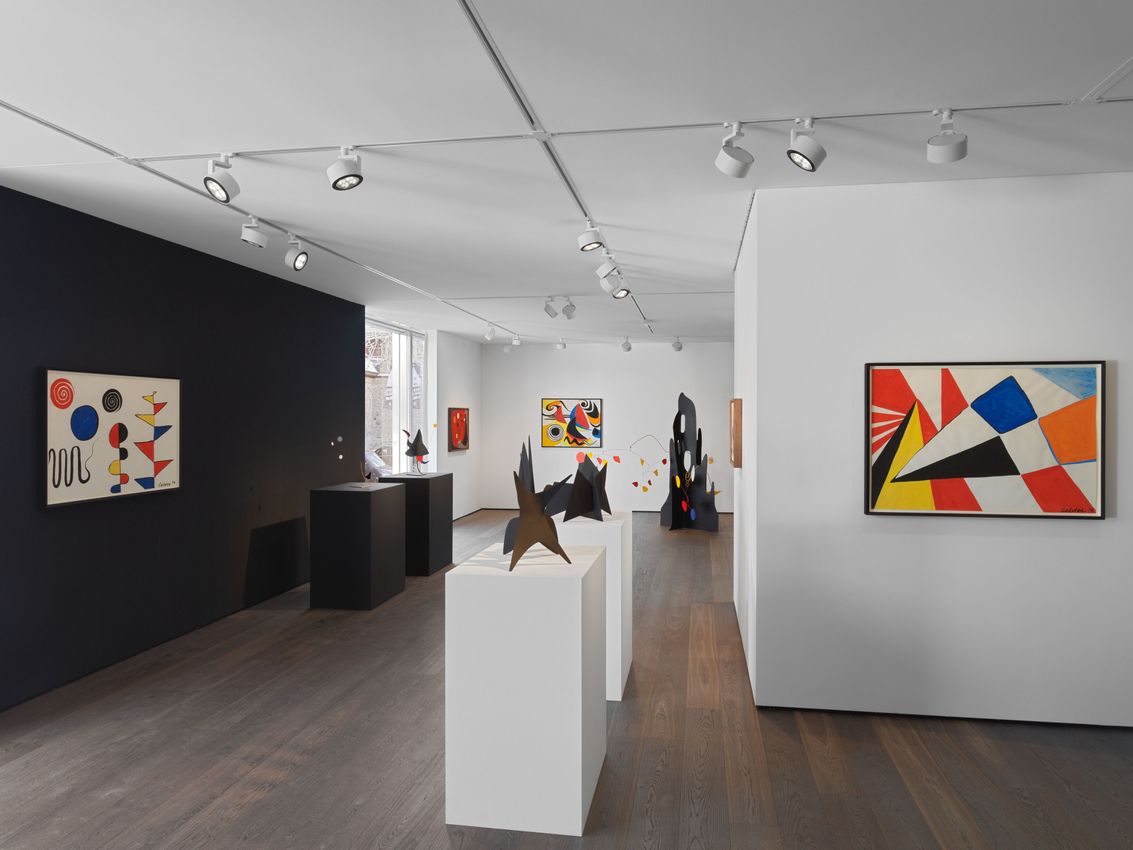
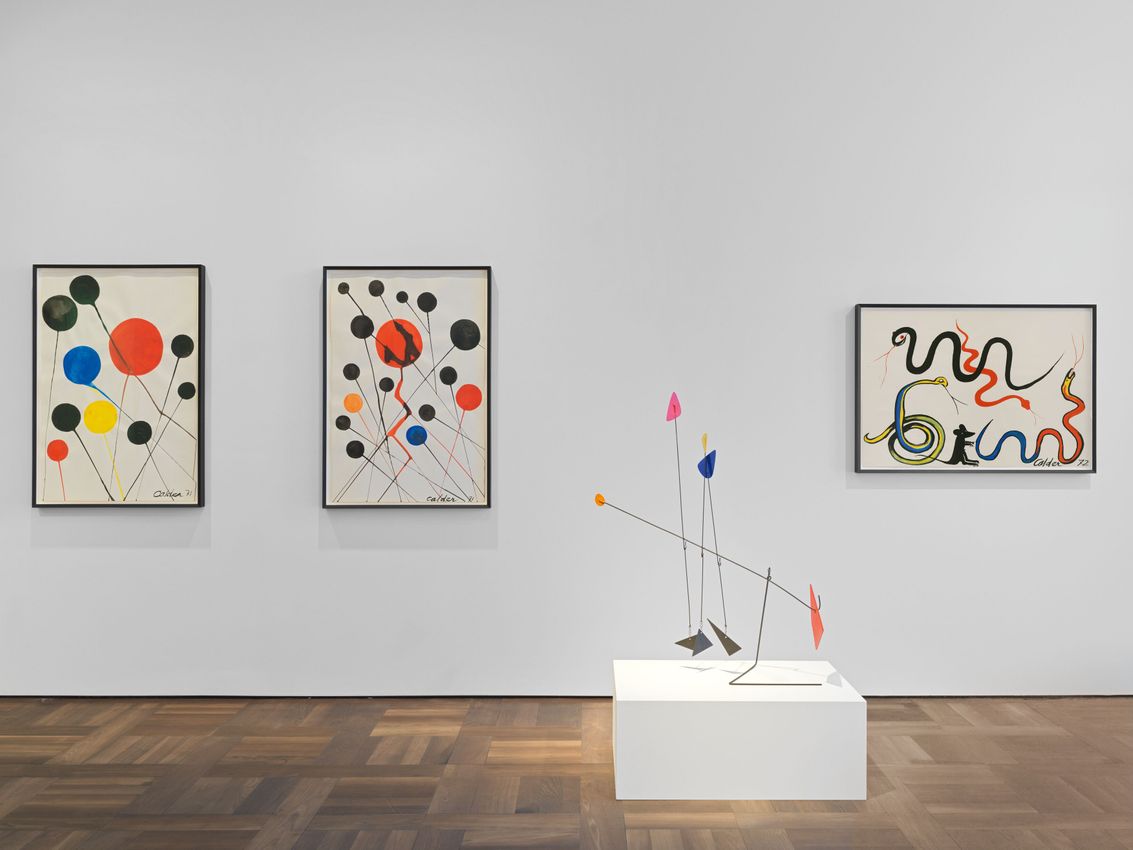
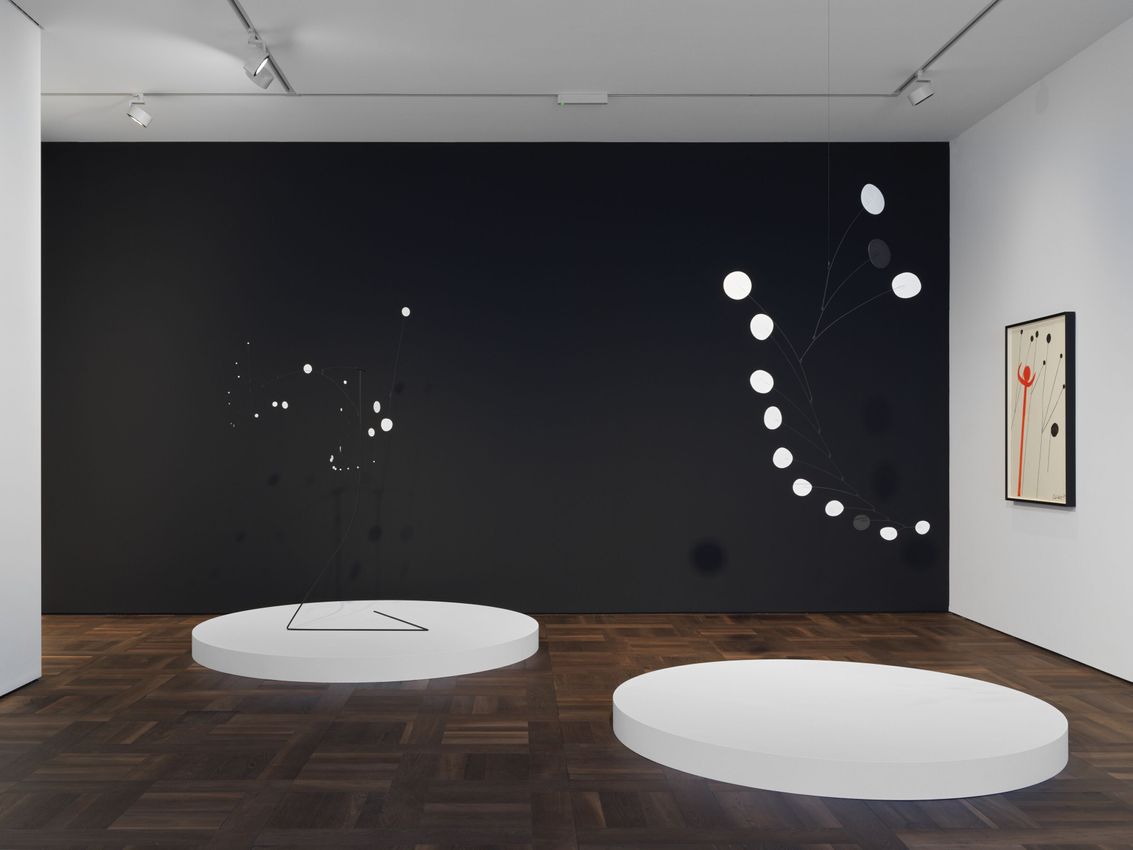
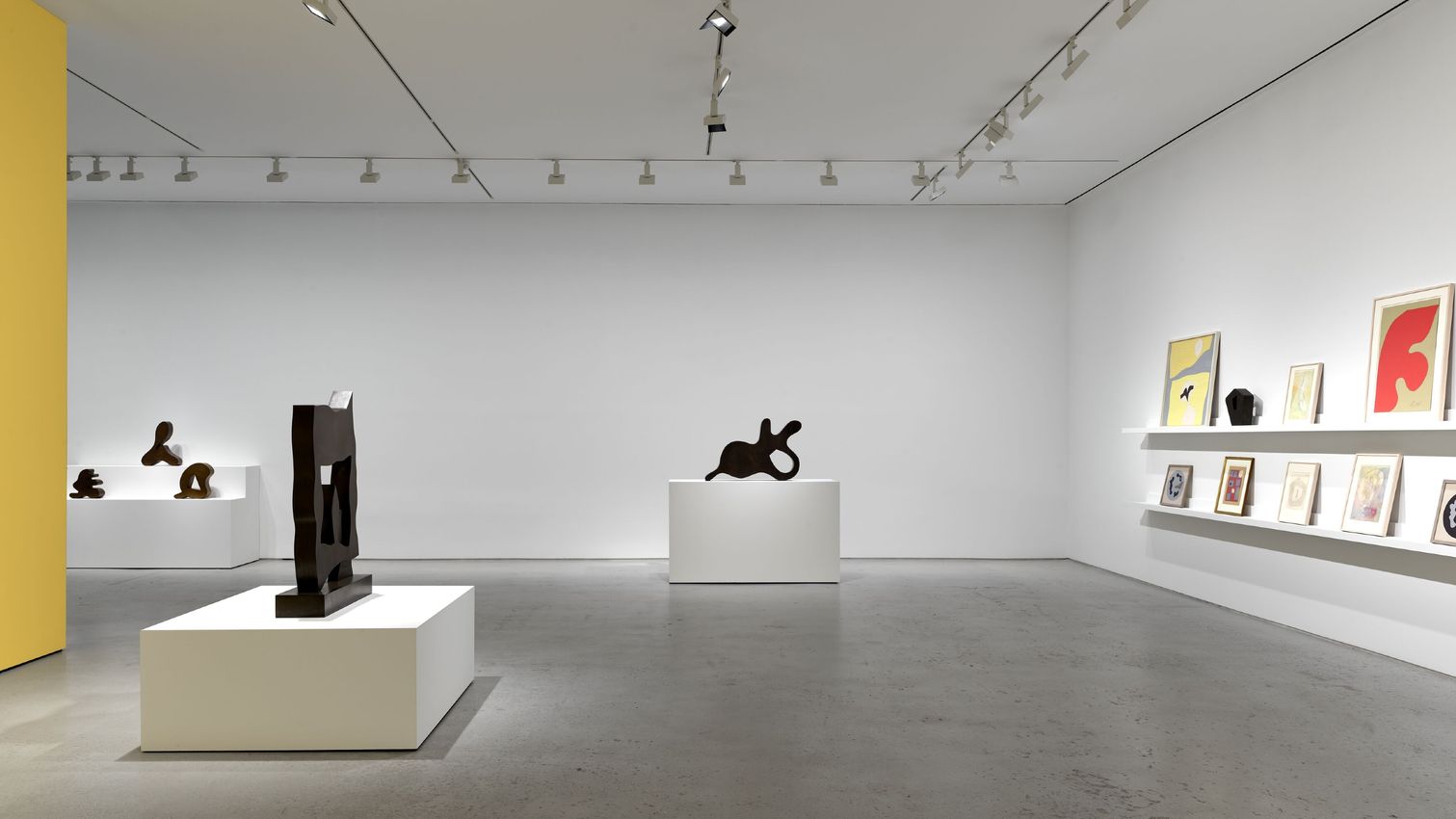
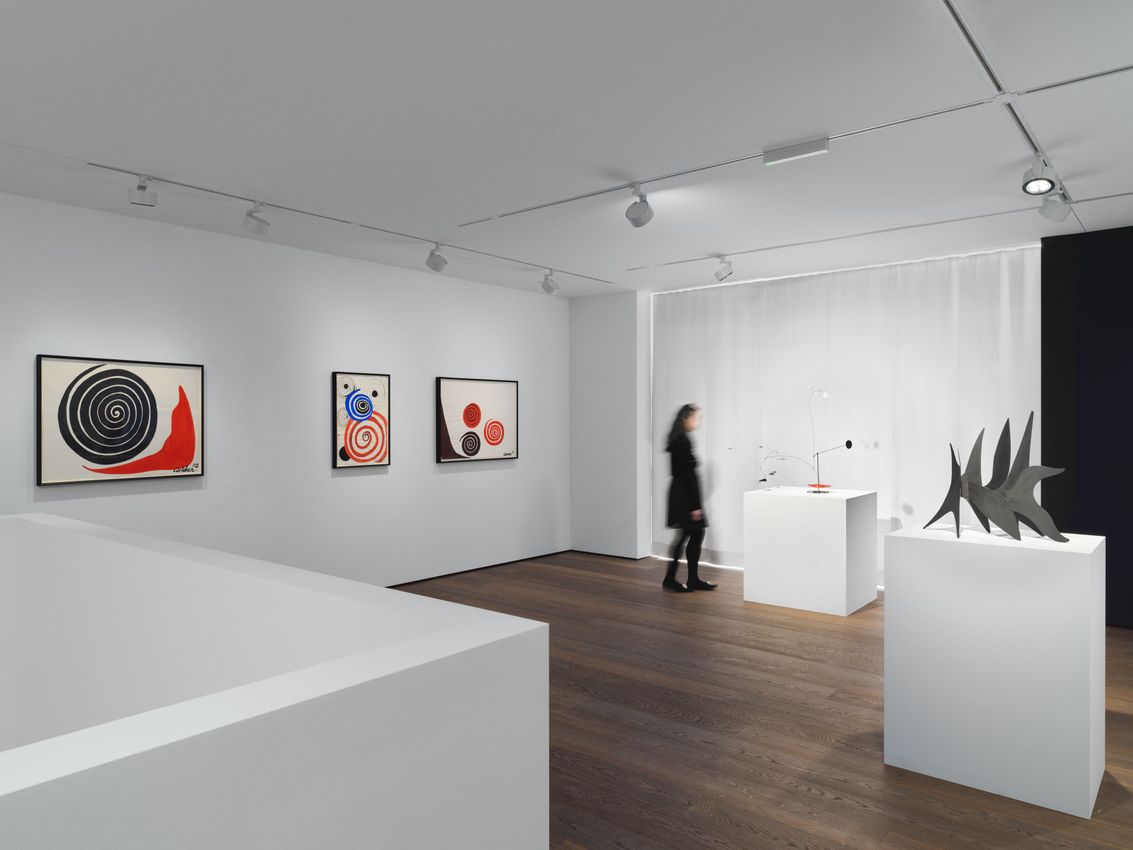
Hauser & Wirth is proud to present a solo exhibition of works by Alexander Calder for its second winter season in St. Moritz. The presentation comprises a selection of the artist’s mobiles, stabiles, standing mobiles, paintings, and a monumental outdoor sculpture, spanning the 1940s to the 1970s. The pieces on view reflect Calder’s direct and innovative approach to art-making, whereby he cultivated a practice that not only explored multiple dimensions but also oscillated between the monumental and the intimate. The show in St. Moritz sees Calder return to the Swiss mountains following Hauser & Wirth’s exhibition of large-scale outdoor sculptures, Calder in the Alps, in Gstaad during 2016–2017.

Calder was one of the most influential and pioneering artists of the 20th century, transforming the very nature of sculpture by introducing the fourth dimension of time into art and the actuality of real-time experience into his work. A master of many materials and techniques, Calder created a diverse body of work that ranged from sculpture and painting to works on paper, jewellery, and domestic objects. Calder’s innovative ‘mobiles’ and ‘stabiles’ solidified his place in the canon of 20th century art. His unique exploration of abstraction–engaging energetic forces, sculpting volumes out of voids–resulted in objects that radically alter our experience of space.

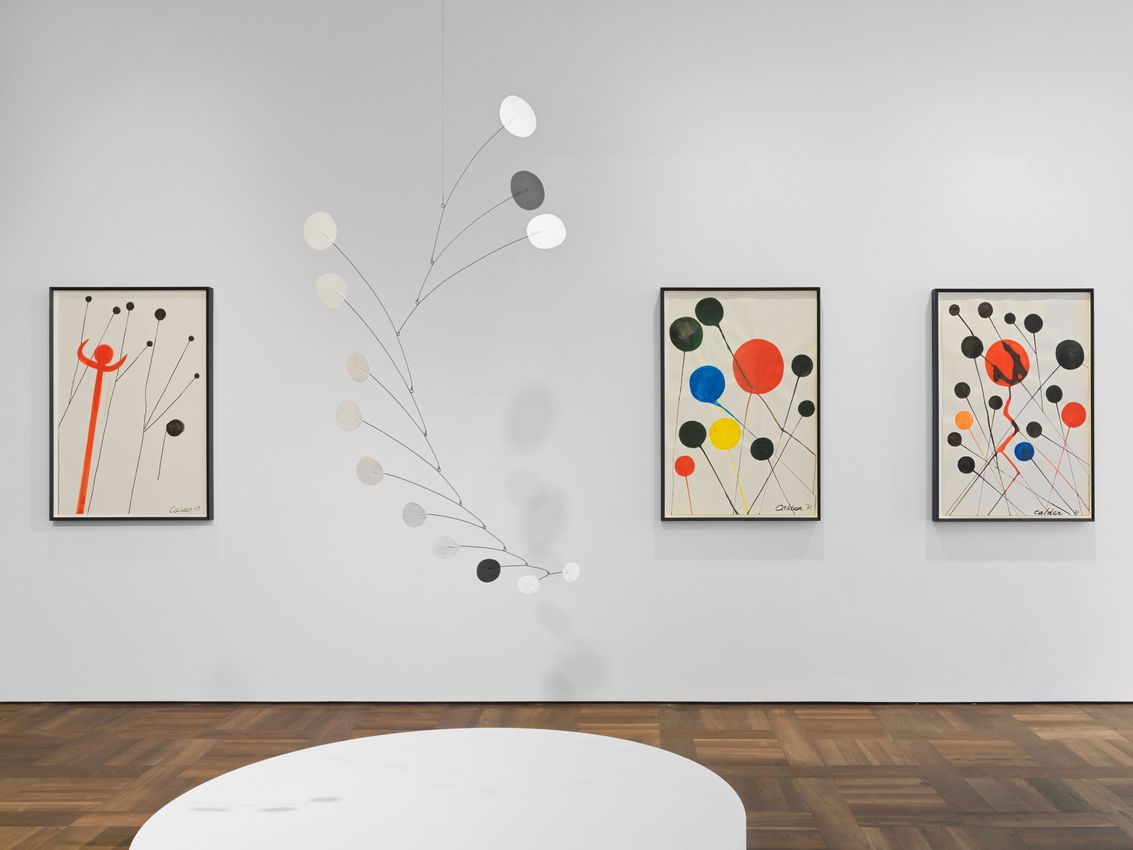
An entirely new art form created by Calder in 1931, the mobile gained its name from the artist’s friend Marcel Duchamp, who was referencing the word’s double meaning in French of both ‘motion’ and ‘motive.’ Undulating in the air’s currents and suspended from the ceiling or a base, these works unfold in a perpetual present. Jean-Paul Sartre described the mobile in 1946 as ‘an object defined by its movement and non-existent without it; a flower that withers as soon as it comes to a standstill; a pure stream of movement in the same way as there are pure streams of light.’ Of the artist’s signature mobiles on view in St. Moritz are Untitled (c. 1942), a light- reflecting work whose unpainted elements emanate radiant energy, and White Ordinary (1976), created in the last year of Calder’s life. A number of standing mobiles will be presented as well, among them Untitled (c. 1940), in which Calder engaged the immaterial notion of sound, and Franji Pani (1955), made by the artist in a makeshift studio at the home of architect Gira Sarabhai in Ahmedabad, India.

Calder’s stabiles–a term coined by Jean Arp for Calder’s stationary works in 1932–transcend their static nature by way of the dramatically diverse forms they embody when viewed from different perspectives. Works like 7 Legged Beast (maquette, c. 1965) and Sun and Mountains (maquette, c. 1965), while entirely non-objective, embody an innate energy akin to forces of nature, echoing the breathtakingly varied viewpoints of the gallery’s alpine surroundings. A key monumental stabile will be installed outside of the gallery in St. Moritz, bringing the exhibition into the main square of the town. Untitled (1976) is an extension of Calder’s ‘Critter’ series from 1974, of which otherworldly figures adopt turbulent postures and characteristics such as multiple arms or legs. By far the largest example from the series, ‘Untitled’ is a grand and exotic creature that stands over 17 feet tall.

The exhibition in St. Moritz also includes a selection of Calder’s oil paintings and gouaches from 1947–1975, an essential if lesser-known element of his oeuvre. While they utilise a complementary visual language, Calder’s oil paintings often appear more deliberately rendered than his gouaches, whose quick execution and fluid compositions align with the artist’s primary subject of kinetic energy. In some of these works, Calder used similar forms to those found in his three-dimensional work, such as Untitled (1975), which resonates with the monumental motorised ‘Universe’–a commission for the Sears Tower in Chicago completed the year prior–and in turn marries the implied motion of his brushstrokes to the actual movement of his sculpture.

Calder is the first of three exhibitions by Hauser & Wirth across two alpine locations this winter season. Following the presentation in St. Moritz, a solo show by Jenny Holzer, titled Jenny Holzer A LITTLE KNOWLEDGE will open at Tarmak 22 in Gstaad and will coincide with the unveiling of new, large, poetic scrolling texts onto the stately Gstaad Palace from 27 December 2019 until 22 January 2020. Also in Gstaad will be a major presentation of Picasso’s ceramic works alongside photographs taken of the artist in his studio by David Douglas Duncan at Le Vieux Chalet, open from 1 February through to the 22 February 2020 (open to the public on Wednesdays and Thursdays 2 - 5 pm and by appointment). Hauser & Wirth is also delighted to return to artgenève with a display of modern and contemporary masters in January 2020.

Read More

Installation Views

About the Artist

Alexander Calder was born in 1898, the second child of artist parents—his father was a sculptor and his mother a painter. In his mid-twenties, Calder moved to New York City, where he studied at the Art Students League and worked at the National Police Gazette, illustrating sporting events and the Ringling Bros. and Barnum & Bailey Circus. Shortly after his move to Paris in 1926, Calder created his ‘Cirque Calder’ (1926–31), a complex and unique body of art. It wasn’t long before his performances of the ‘Cirque’ captured the attention of the Parisian avant-garde.

View Artist Profile

Also Exhibiting at Hauser & Wirth

About the Gallery

Hauser & Wirth St. Moritz will open in December 2018 with an exhibition of works by renowned late French-American artist Louise Bourgeois. In the heart of the Engadin Valley, the new space is a natural extension of the gallery’s activities in its native Switzerland.

View Gallery Profile
Address
Via Serlas 22
St. Moritz
Switzerland
Opening Hours
Tues – Sat, 11am – 7pm
(1)
St. Moritz Via Serlas 22
Hauser & Wirth
Via Serlas 22, St. Moritz, Switzerland
+41 815 521 000
http://www.hauserwirth.com

Opening hours
Tues – Sat, 11am – 7pm
The art world in focus