‘Even in a closed circuit you always have a bit of perspective in front of you.’
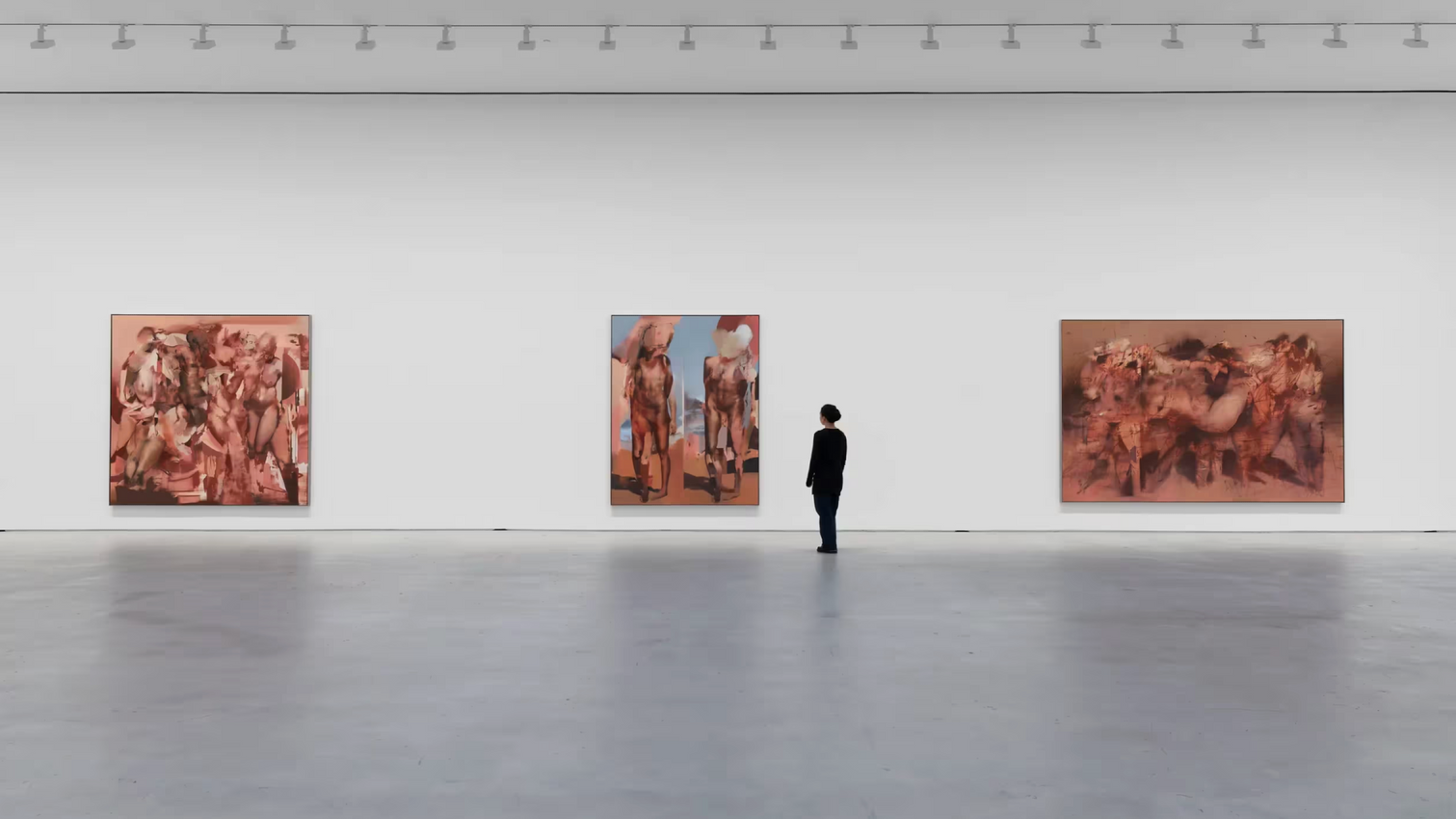
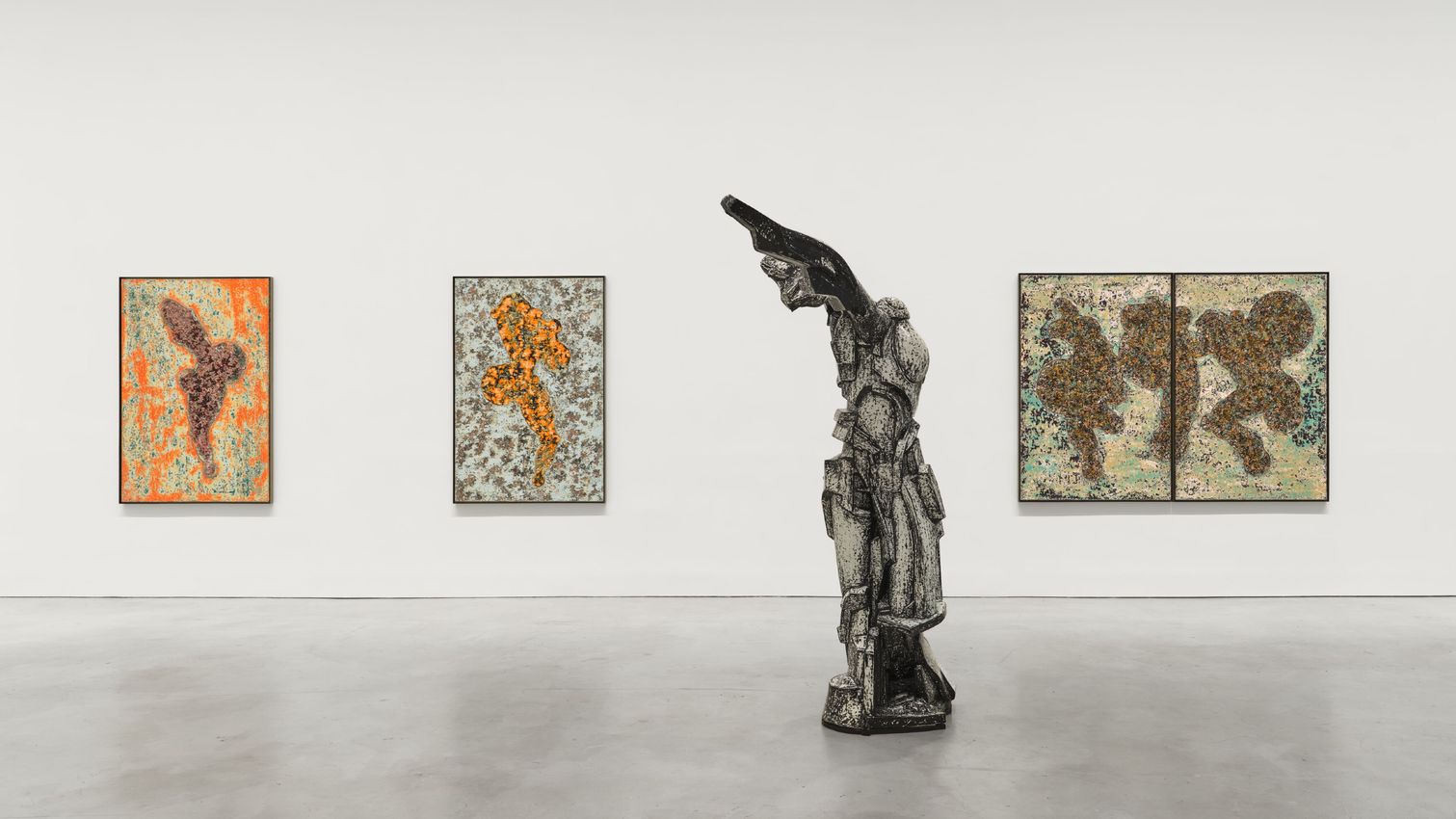
New York... For his first exhibition with Hauser & Wirth and first New York City solo presentation in nearly adecade, Italian artist Roberto Cuoghi will populate the ground floor of the gallery’s 22nd Street building with anentirely new body of work. One of the most celebrated, yet enigmatic, artists of his generation, Cuoghi is knownfor an exacting, almost obsessive, research- and process-driven practice that spans the full spectrum of stylesand genres. ‘Pepsis’* will debut works from Cuoghi’s ongoing, all-consuming project of the same name—acomplex, multi-faceted investigation initiated in early 2020 after a fully immersive stay in New York City. Muchof this body of work focuses on a rarely explored aspect of his ever-expanding practice, a medium infrequentlyassociated with Cuoghi but central in contemporary art discourse now: painting.
‘I’ve been painting exactly how I’ve seen that ‘one paints.’ So not only do these pictures not seem to bea development of my work, they don’t even look like they are mine.’
Deliberately mixing artistic genres, styles and subjects, ‘Pepsis’ is Cuoghi’s attempt to free himself from his ownstylistic and artistic assumptions and experiences, his cultural imprint. In this sense, it is the next step for the artistin his continuous effort to challenge his own practice. A thesis that has become a working method, ‘Pepsis’ isthe application of a troubling idea that has always gone hand in hand with Cuoghi’s mutable work, culminatinghere in a highly varied and emotionally charged presentation of different series and bodies of work. Cuoghi hasdeliberately chosen to think of his work as an exercise in stylisation, reproducing the ‘already seen’ in accordancewith reassuring canons that seem to be warning us of a levelled and polished future.
‘I paint against my intentions. That is, if something of mine appears, I go over it. My way of painting canbe defined only through the form it takes each time. I’m a painter without a mindset.’
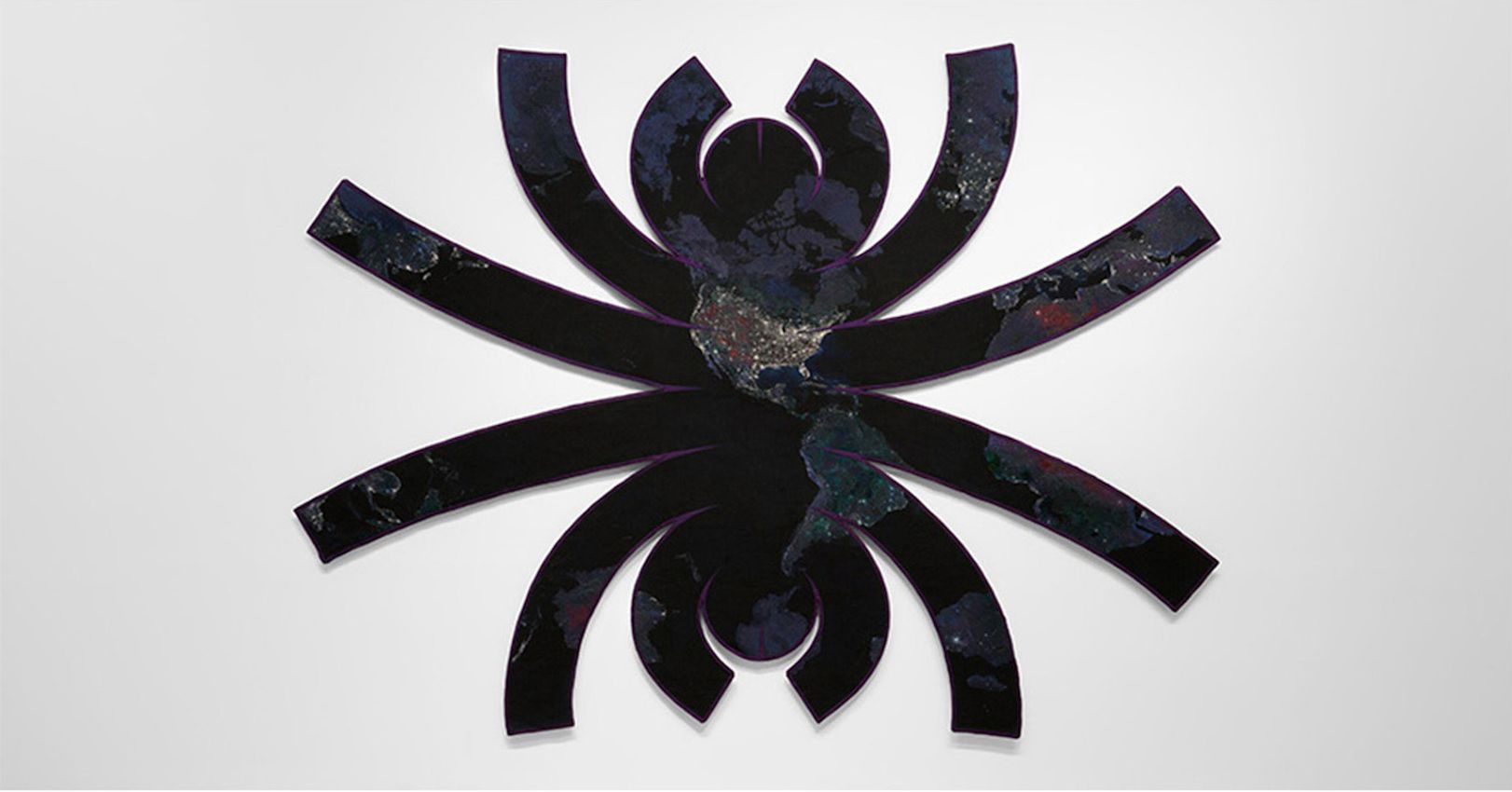
The exhibition begins with an imposing 15-foot-wide tapestry featuring a map of the world made in silk, wool, andgold and silver thread with the United States at the centre. The piece represents a flattened Earth and depictsour planet experiencing night simultaneously––an obvious practical impossibility but presented in a plausible andseemingly scientific manner.
In a series of new paintings on view, Cuoghi focuses on the aesthetic aspect of how we organise our world, evenin the more dismal domain of waste and garbage. Large stacks arranged by different colours in preparation for therecycling process could suggest that prominent environmentally friendly rhetoric is a readymade model for virtuesignalling.
Images of faces published in an issue of TIME magazine at the height of the COVID-19 pandemic inspired Cuoghito begin a portrait series featuring the residue of something that is disappearing. The paintings are simultaneouslyfamiliar and unidentifiable, not citing any particular artistic reference or person.
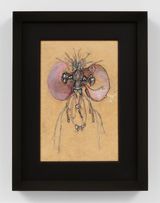
From his series of small watercolours to large-scale paintings, Cuoghi is interested in the appropriation of bothartistic styles and culture, raising the problem of a historical and cultural process that stylises itself, ending up onlyoffering tried and tested models.
Moving beyond painting, Cuoghi embraces the idea of replica to make a series of three-dimensional works thatclash frustratingly with their originals. Cuoghi has painstakingly reproduced the iconic wedding cakes of GraceKelly and Prince Rainier of Monaco, Diana Spencer and Prince Charles, Jacqueline Bouvier and John F. Kennedy,and John F. Kennedy Jr. and Carolyn Bessette. These reproductions act as symbols of false fairy tales andpromises—‘Happily Ever After’ gone off the rails. Amplifying the idea of replica, Cuoghi reproduces PresidentBarack Obama’s 2013 inauguration cake, replicated almost identically, only larger, four years later for PresidentDonald Trump’s inauguration.
Cuoghi uses the term ‘stylisation’ to embody the ancient primordial force of learning by imitation, allowingknowledge and skills to be passed on, while avoiding failure. It is better to remake than to create something thatmight not be successful. Stylising signifies simplifying and lightening, which in turn means impoverishing in orderto conserve and communicate something that becomes a model of reference. The new, unlimited availability ofmodels to guide our aspirations orients our growth, development and socialisation. Cuoghi believes that thisultimately condemns us to digest and repeat inauthentic formulas. No one is exempt from this ever-increasingnumber of references that dull our imagination, not just on an aesthetic level, but also hinder the very idea ofinnovation at its origin. In ‘Pepsis,’ Cuoghi interrogates this hypothesis and its consequences, that ultimately thevery idea of solution is being replaced by stylised forms of solution.
’(...) It regards a supply of information that is no longer proportionate to our cognitive capacities, whichare still the same. We are learning to live in overdose’
*Pepsis is a Greek word linked to the concept of digestion. It is also the scientific name of a parasitoid wasp thatutilises another insect as a source of nourishment for its young, manipulating its behaviour until the death of thehost, which in the meantime has been devoured from within by the Pepsis larva. Observing this phenomenon,Charles Darwin wrote that he no longer had faith in the beneficent and omnipotent God he had been brought upto believe in.
Roberto Cuoghi was born in Modena, Italy in 1973, and lives and works in Milan. Cuoghi’s practice is unique: he has no direct influences, and his work doesn’t fit comfortably within any genre of art. His diverse series of works over the past two decades are united by a preoccupation with process: he develops new techniques and methodologies to execute every work with absolute creative control and the highest degree of craftsmanship. Each new series is vastly different than the last, and Cuoghi moves seamlessly from medium to medium, mastering form without being defined by any singular style.


A respected voice in contemporary art discourse.
Focusing on ambitious storytelling and insightful art-world commentary. Ocula Magazine publishes in-depth interviews, critical essays and timely analysis on the artists, exhibitions and ideas driving the global art world.
Learn more about Ocula Magazine
Showcasing the best of the art world.
Ocula partners with galleries from around the world to highlight their artists, artworks and exhibitions. Gallery membership is by application and invitation, with each member vetted by an independent panel.
Learn more about Ocula Membership

Specialises in the sale of major artworks.
Led by a team with deep ties to the world’s leading auction houses, galleries and collectors. Ocula’s advisory team offers bespoke services to high-net-worth clients from around the world who are looking to acquire the best of contemporary and modern art.
Learn more about our team and services