Press Release

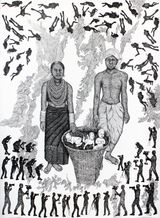
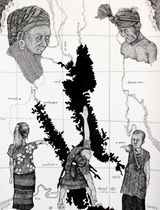
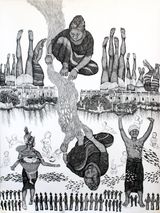
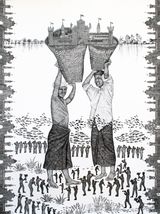
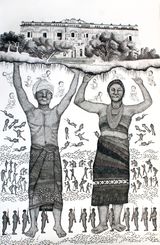
Joydeb Roaja‘s presentation at Art Basel Hong Kong draws from animmersive installation commissioned by Samdani Art Foundationfor the recent edition of Dhaka Art Summit 2023, Bonna. TitledSubmerged Dreams, five large works on paper take as their subject theevents of 1962, when, under Pakistani rule, with American financialand technical support, the construction of the Kaptai dam flooded400 km of Chakma land in what is now Bangladesh, evensubmerging the Chakma royal palace.

Curator Diana Campbell writes: ‘Today, tourists in Bangladesh takeboat rides over these beautiful waters, mostly unaware of the traumasubmerged below the reflective surface that mirrors the sky. To thelocal indigenous Chakma people, this lake is the site of aheartbreaking event called Bor Porong, or ‘the great exodus.’ Over100,000 people from about 18,000 families, mostly from indigenouscommunities, were displaced, resulting in the forced migration toneighbouring India of over 35,000 Chakmas and Hajongs. Damsand flooding are a shared weapon of violence against indigenouspeople all over the world. Roaja’s installation imagines people fromthe Chittagong Hill Tracts raising the submerged palace from thebottom of the lake back up to the surface, a promise of hope forrenewed ways of life after the flood. Part of the artist’s makingprocess involved interviewing multiple generations of indigenouspeople who remember life before the dam, and also youngergenerations who have only heard about life before the dam viastorytelling and oral tradition.’

‘I went to Rangamati for the first time as a college student and sawKaptai Lake,’ writes Roaja. ‘A local friend showed me the location ofthe Chakma palace from a distance, and I saw a tree branch in themiddle of the deep water. From then on, there was a wish that oneday I would dive into the lake with diver’s clothes and see the palacewith my own eyes. Not only Rajbari, if possible we want to seehundreds of flooded villages.’

Joydeb Roaja has an interconnected performance, painting, anddrawing practice that highlights the challenging social and politicallandscape of Bangladesh’s Chittagong Hill Tracts. The area is hometo eleven indigenous groups including Roaja’s community, theTripura. His works are tied to the experiences of indigeneity, oftenemphasising the deep and symbiotic connection of these groupswith their land as well as the fight for recognition and rights in astate that has denied them.

Read More

Also Exhibiting at Jhaveri Contemporary

The art world in focus