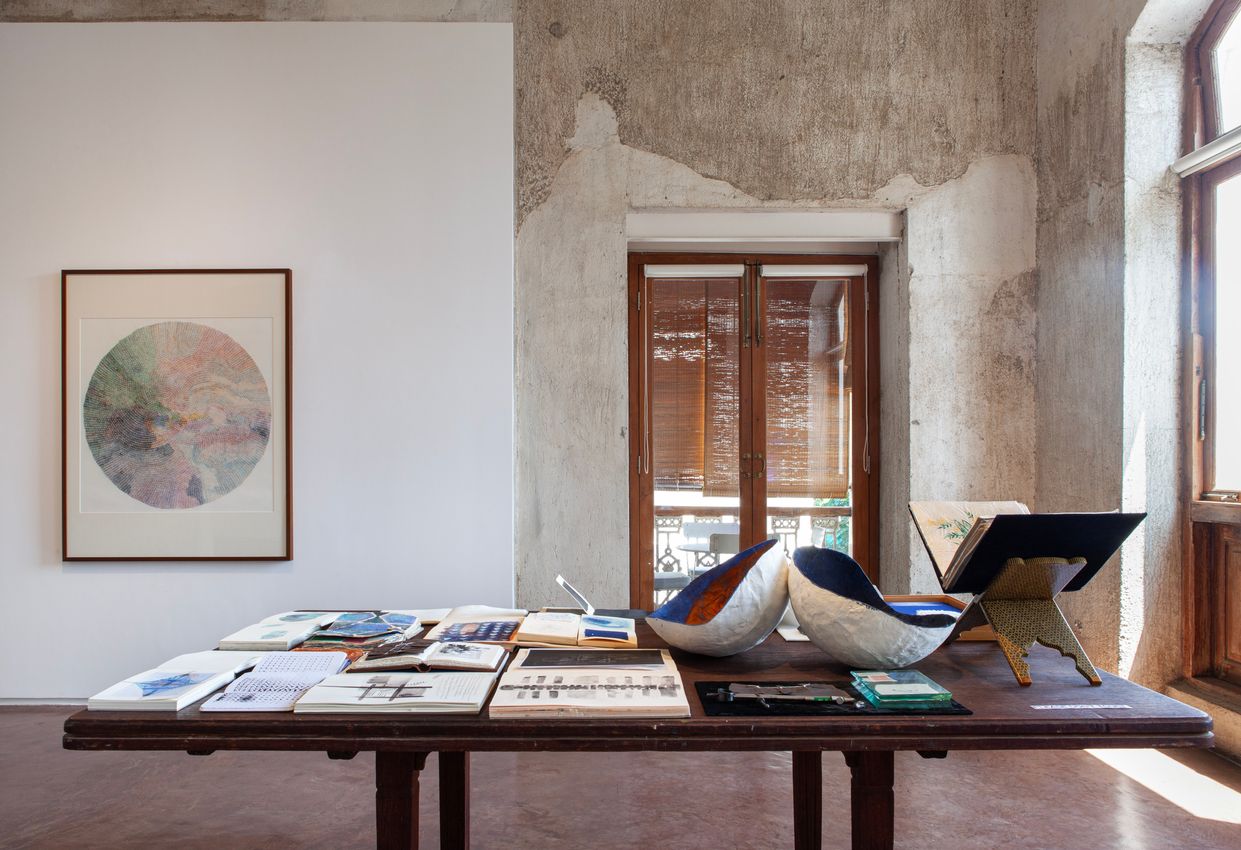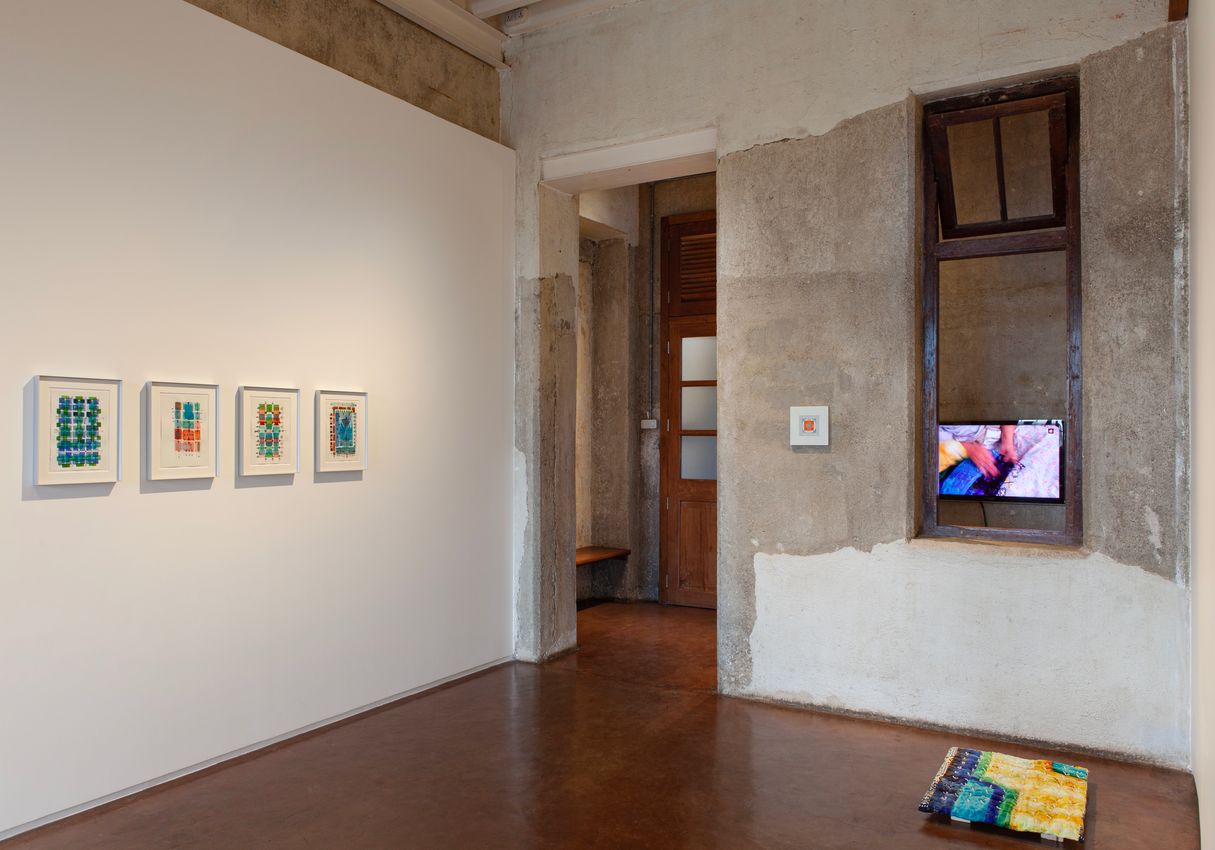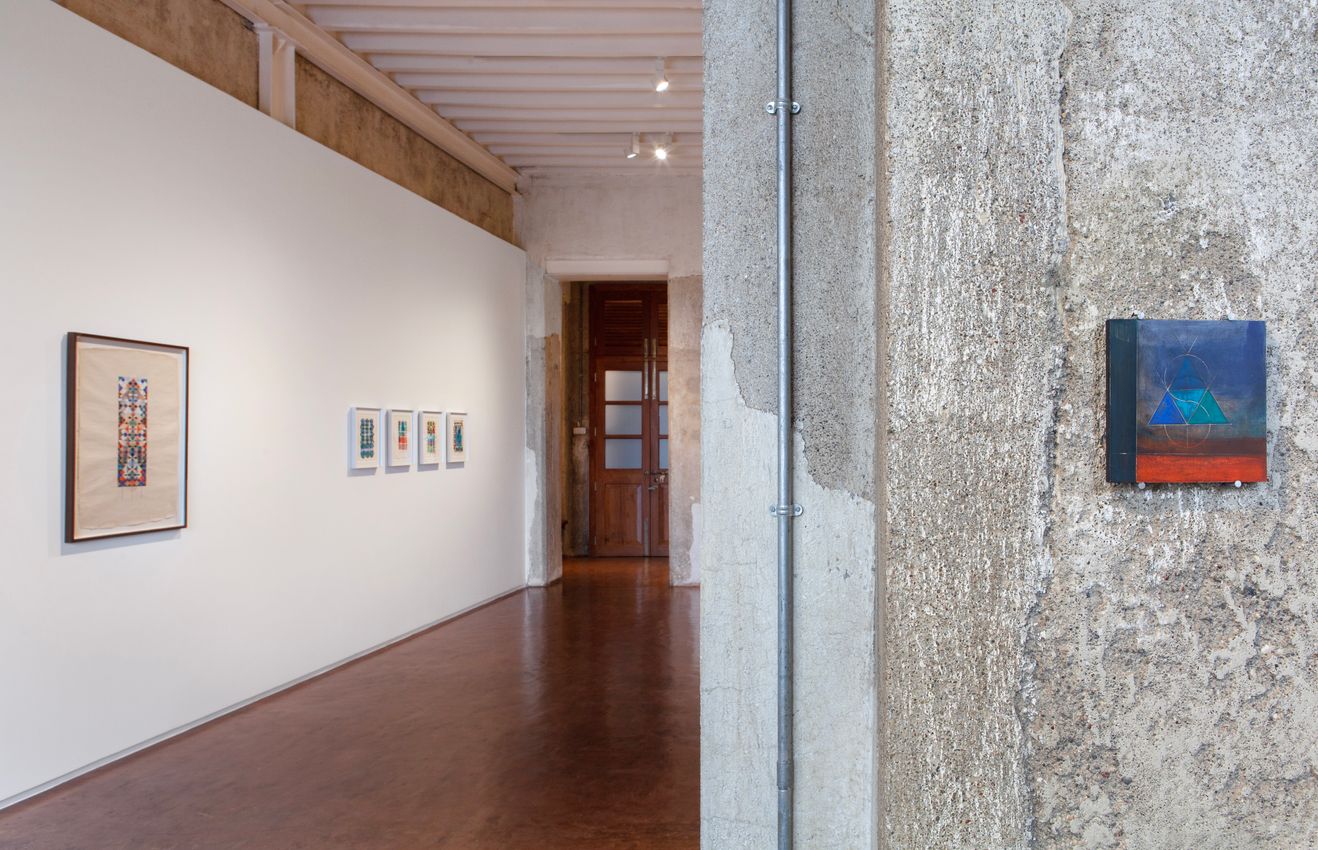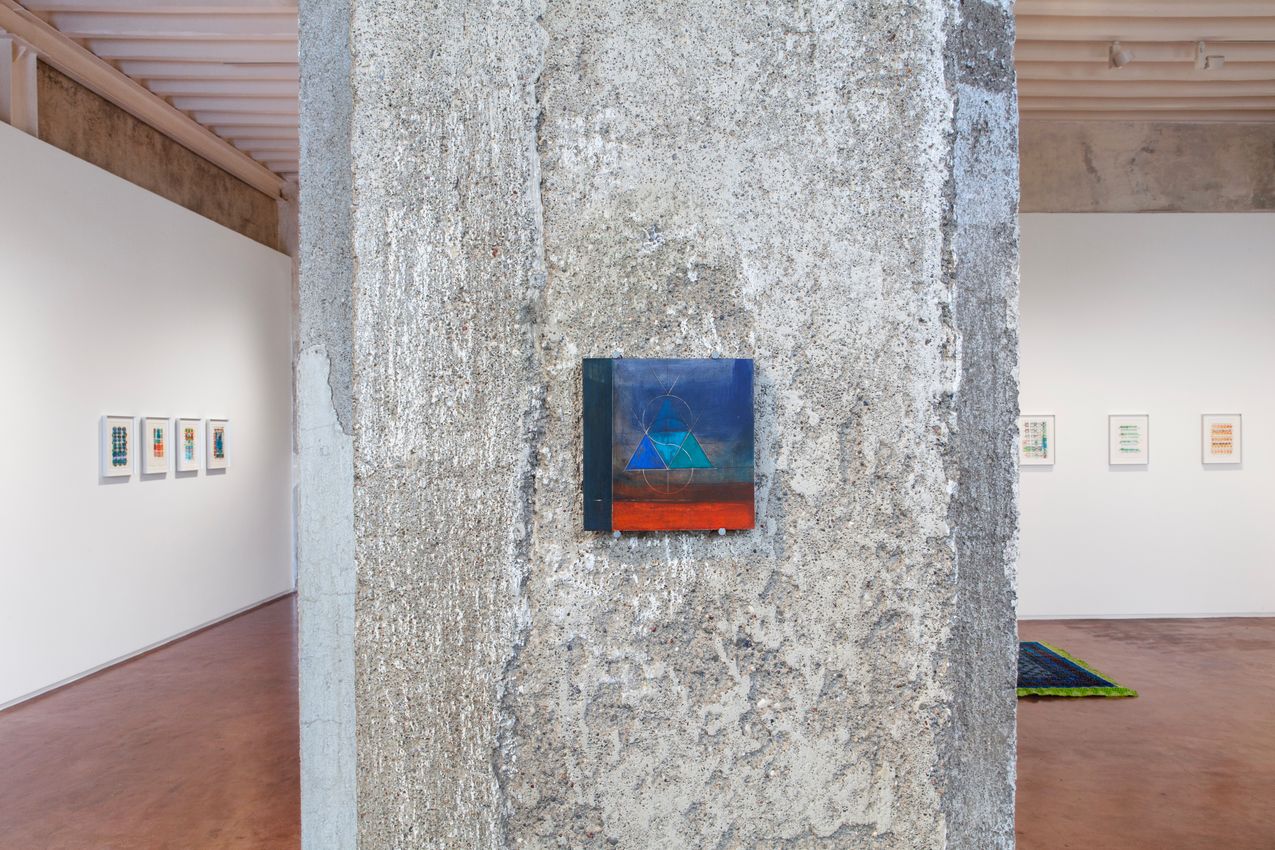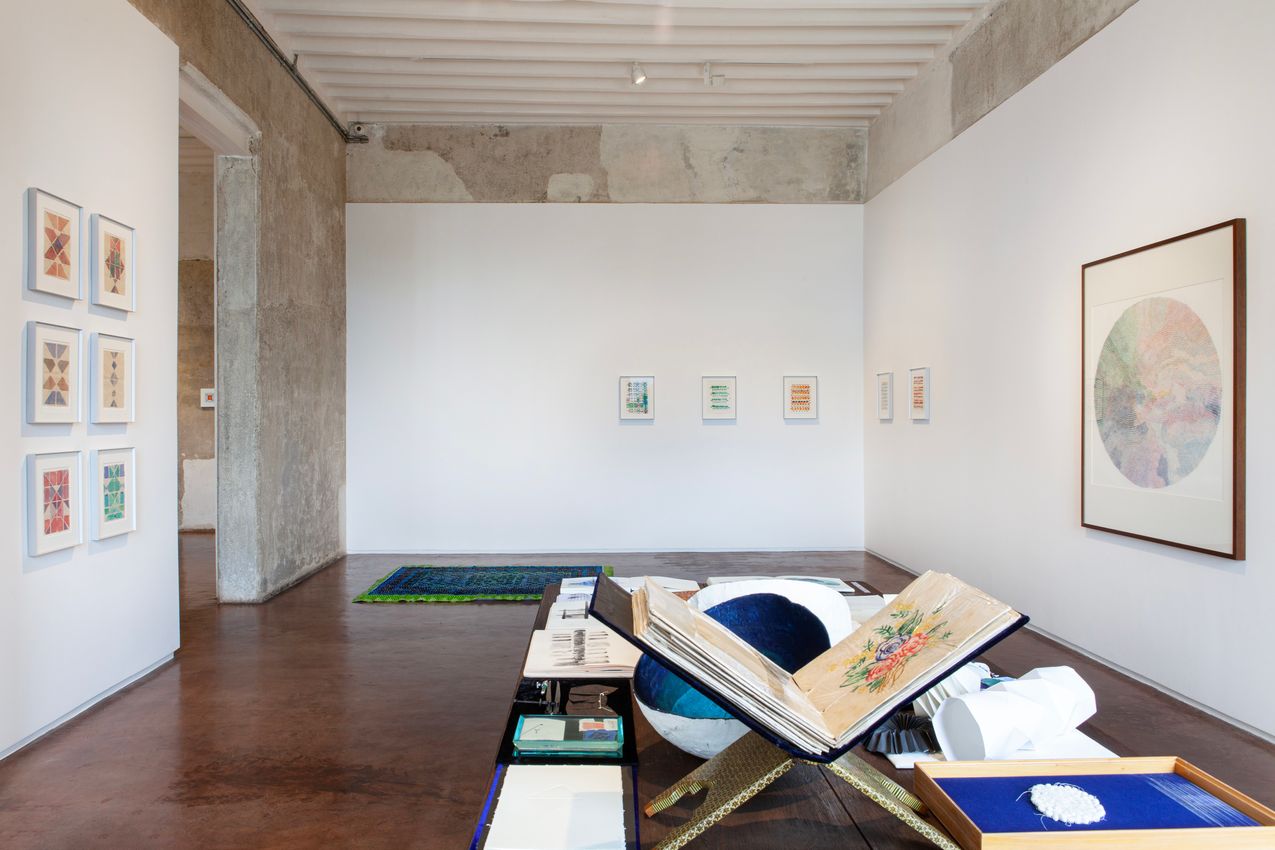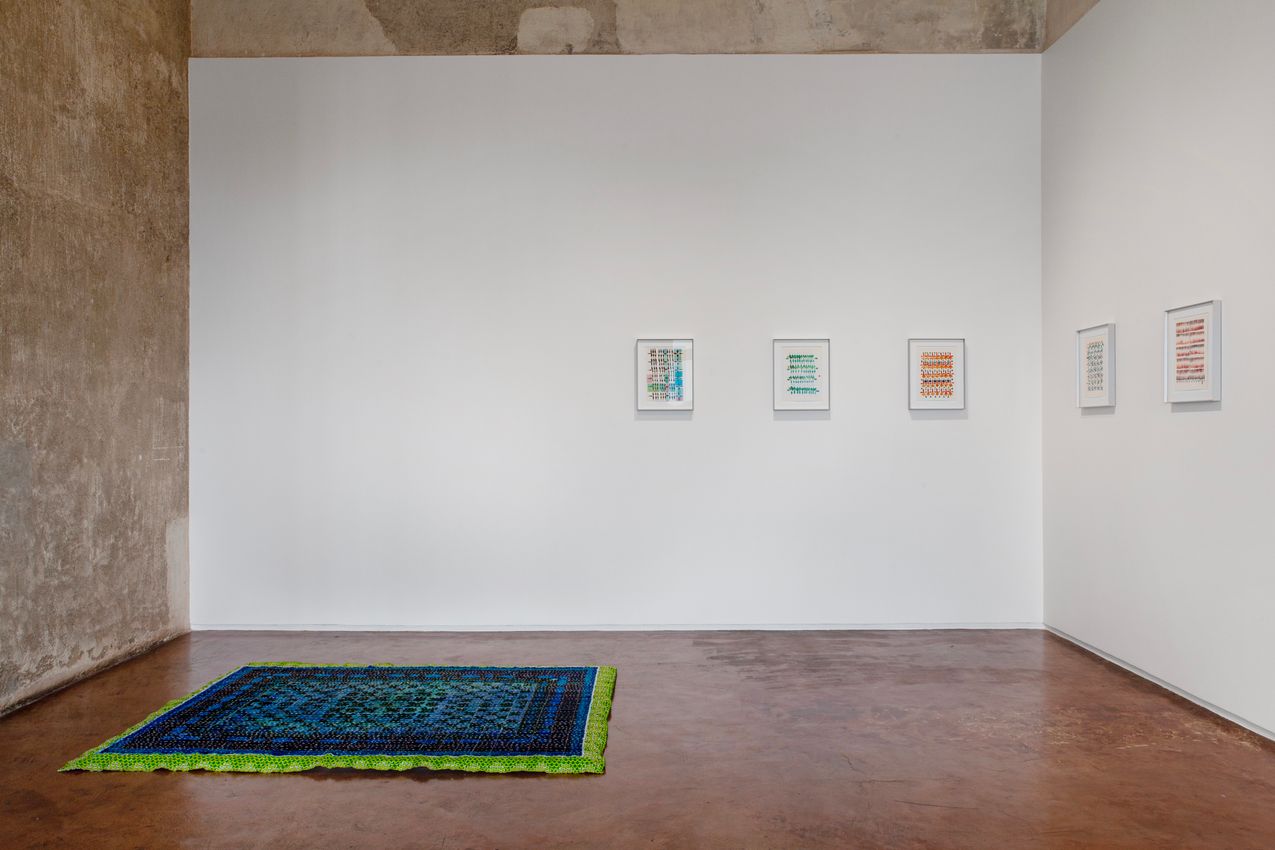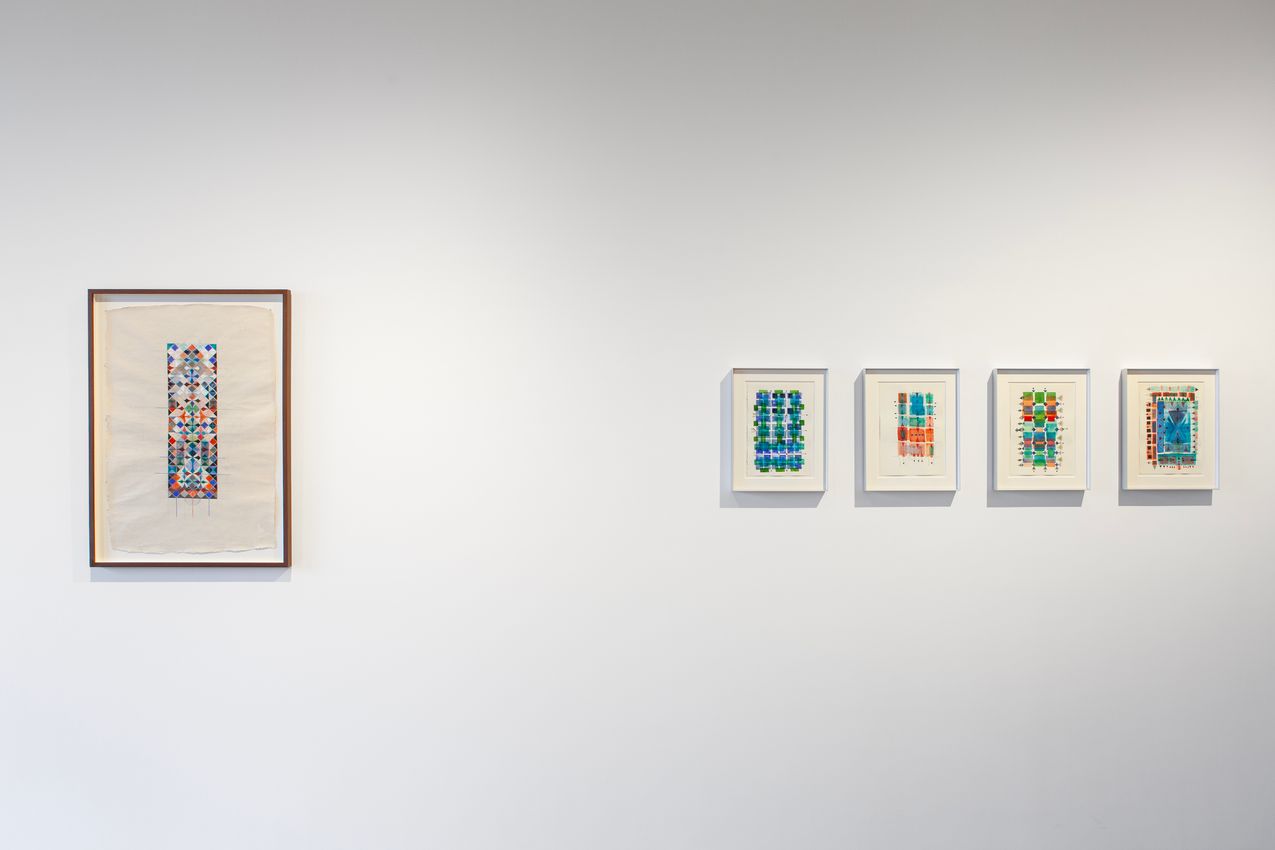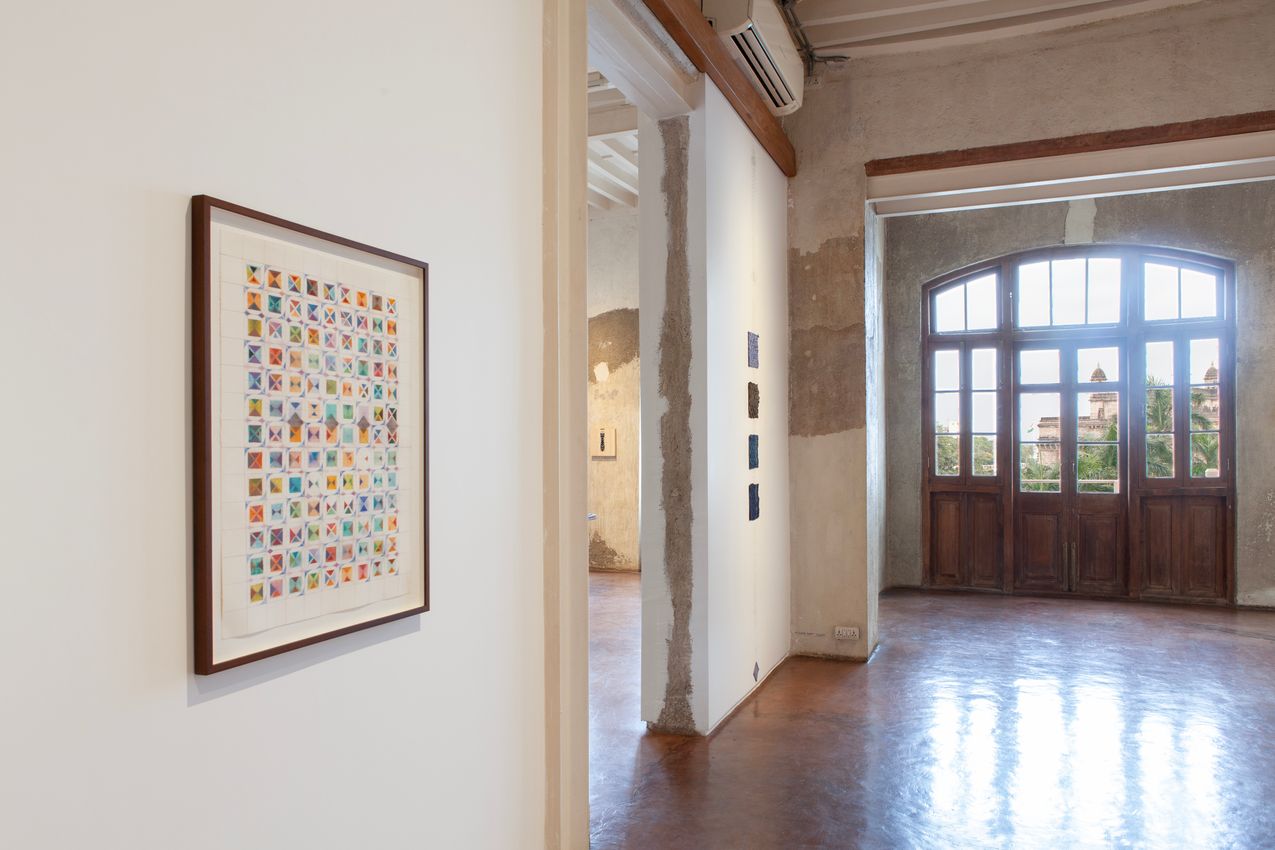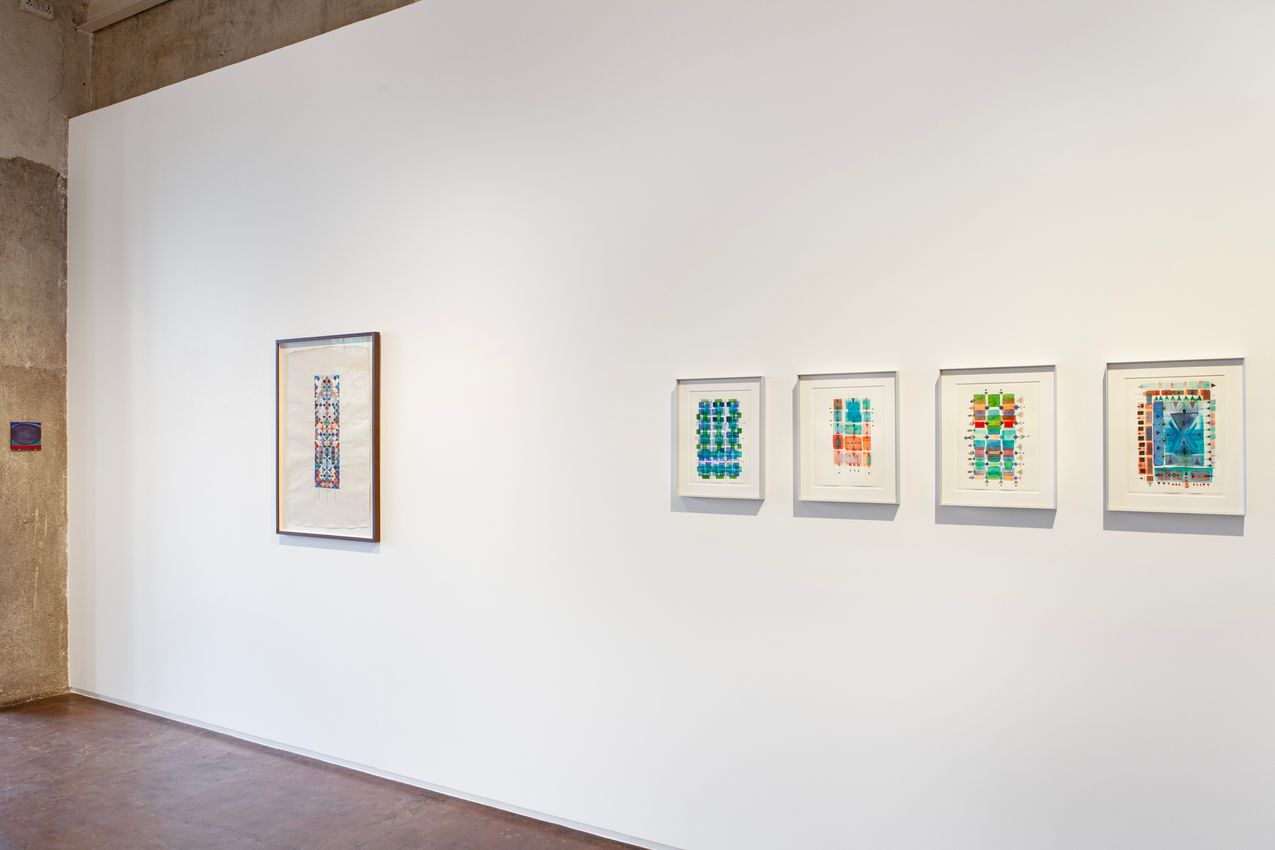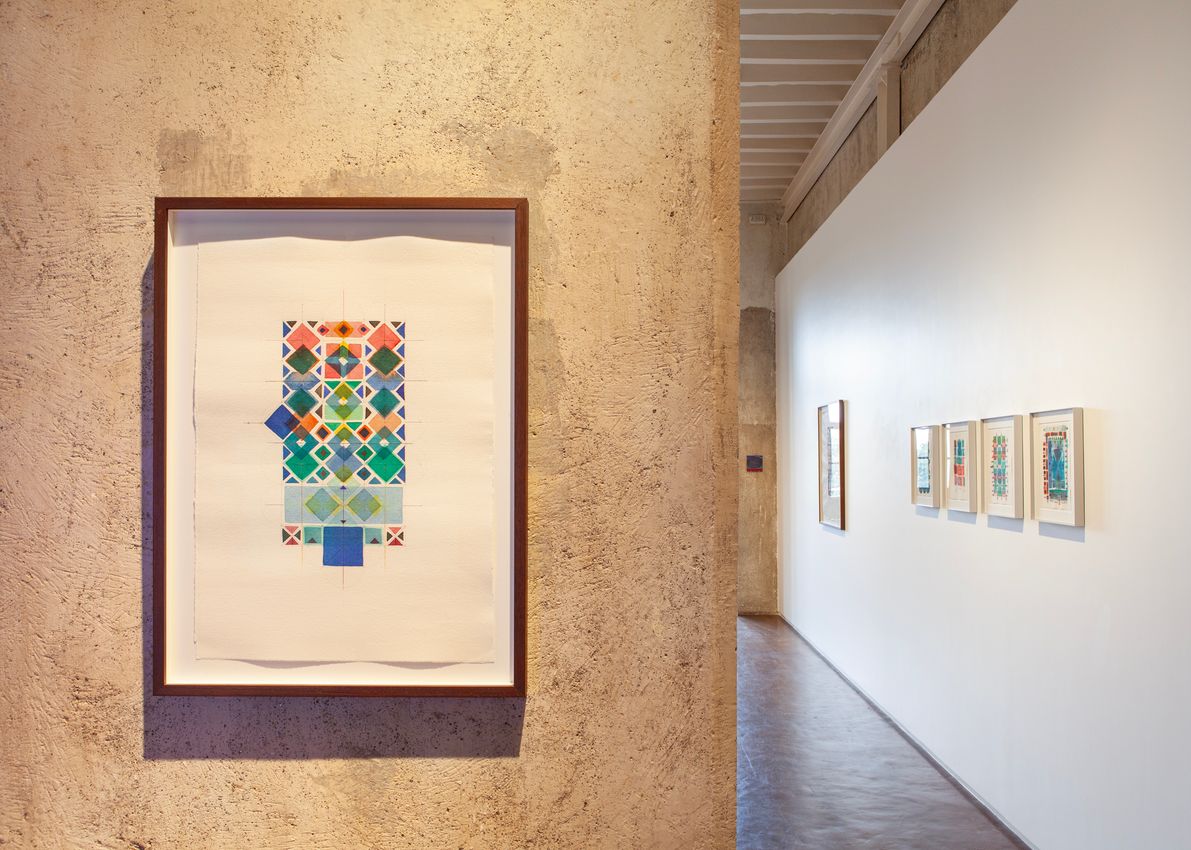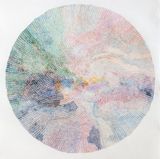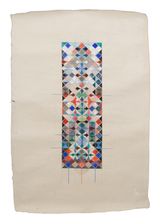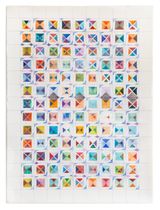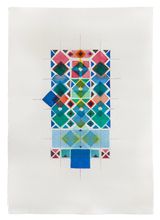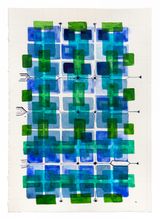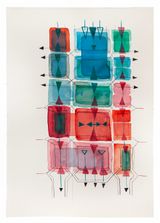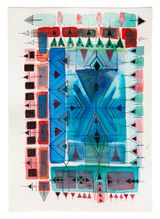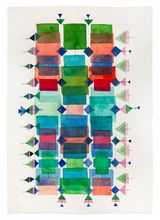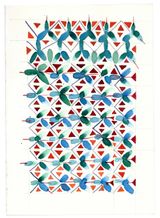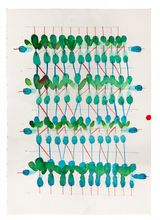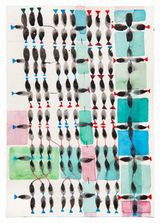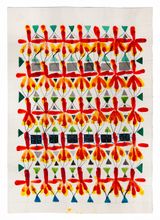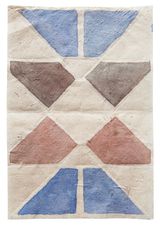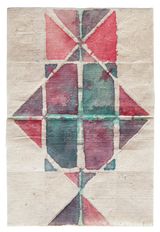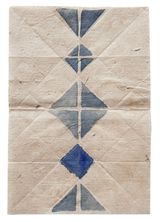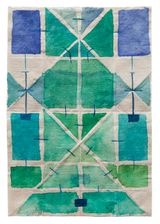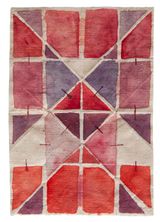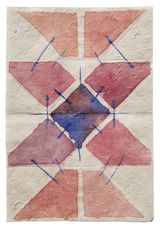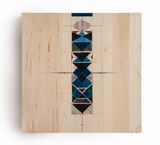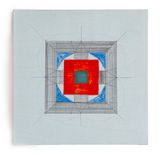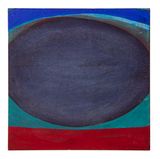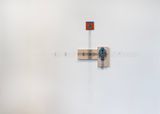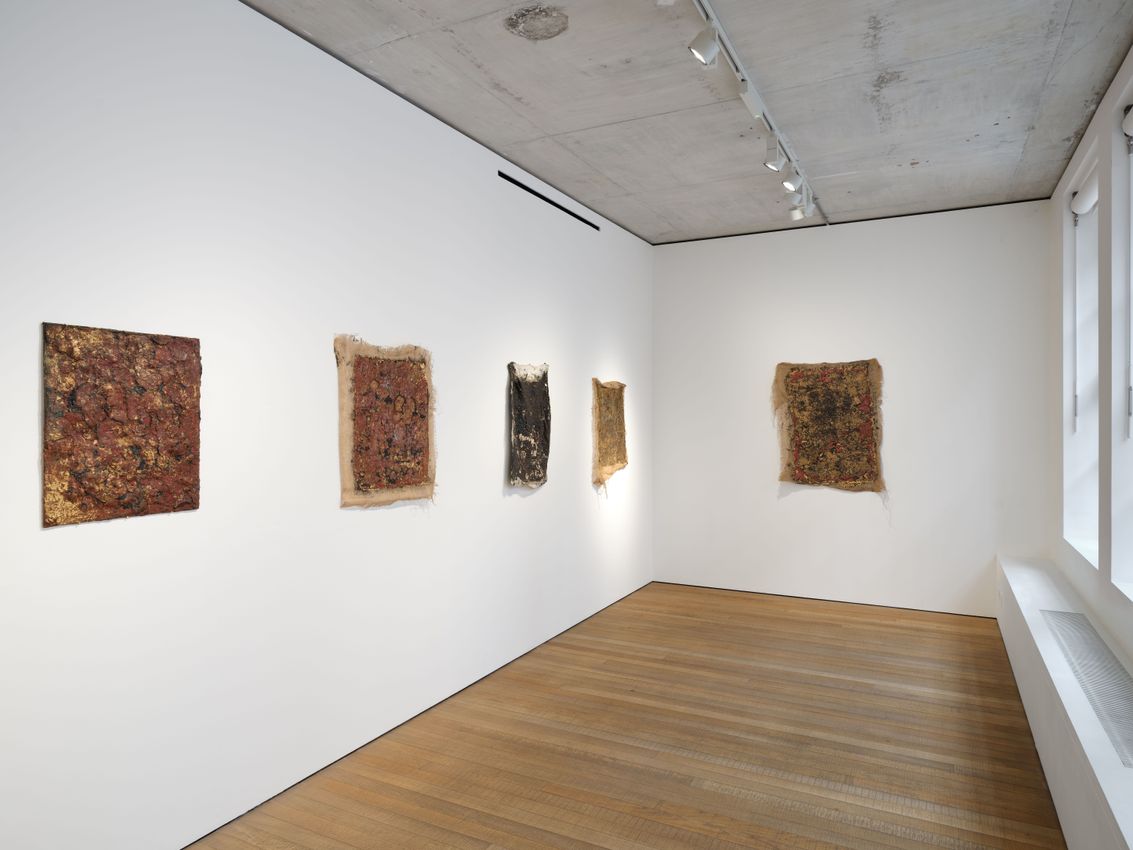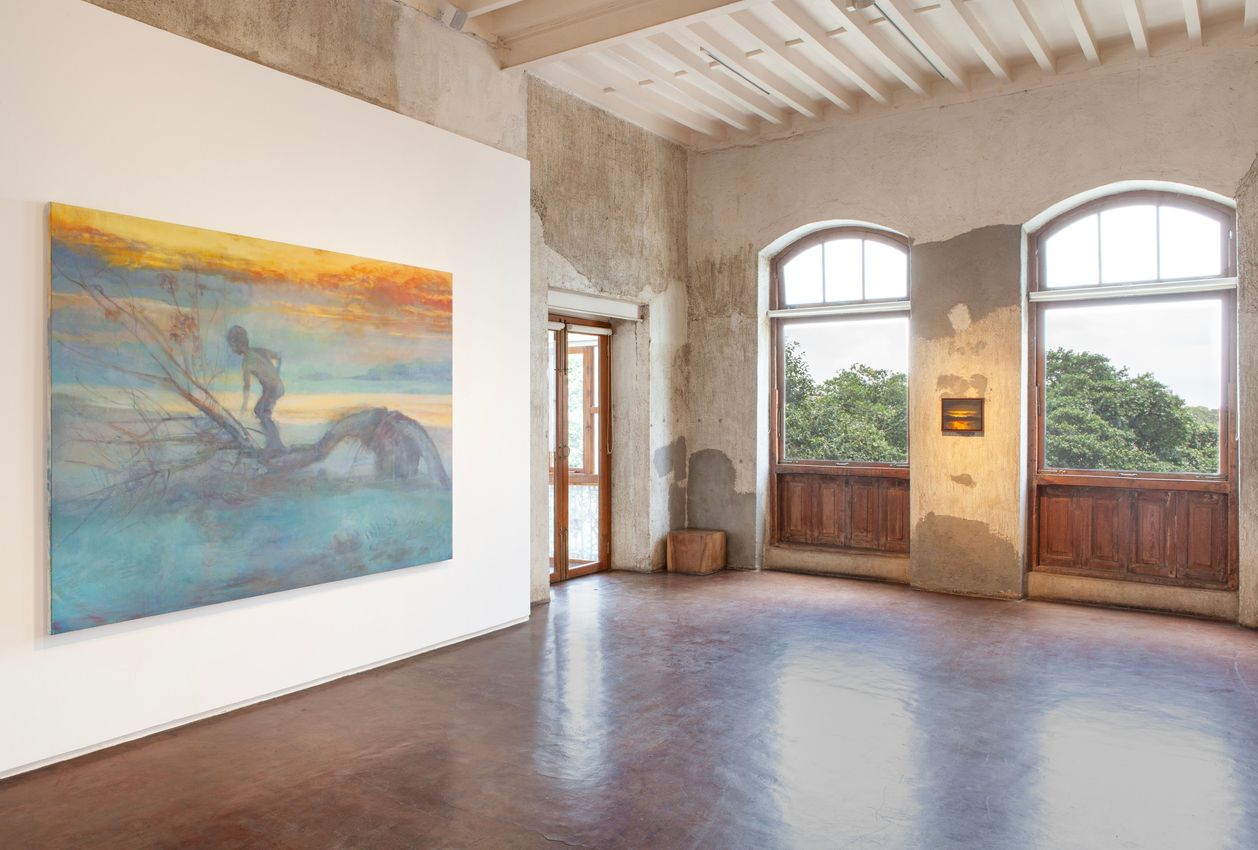
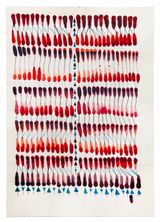
Repetitive shapes of colour are ordered across Amina Ahmed’s works. At meeting points, their pigments saturate each other. Blues infiltrate red. Greens overlap with oranges. Pink leaks across yellow. A pencil scaffolding, faintly apparent, holds the whole together.
Ahmed’s practice is self-defined as ‘geometry in nature’. She is alert to the shapes that are inherent to life and structure our physical reality. ‘In my art I access the patterns, the rhythms, and the pulse of life that I believe permeates all living things’, she explains. Her educational background in Islamic arts has shaped this sensitivity to geometry and led her to find in nature her art.
‘Patterns are universal, they are rooted in nature, in water’, she says. And as much as water is fundamental for life, so too for Ahmed is her creative practice. Her making is her ‘grip on reality (and) reconnection to the origin’. As such, her mark making, while recognisably related to sacred geometry, bears the influence of her ancestors who spanned cultures and ethnicities from present day Uzbekistan, Egypt to India. The family’s material culture guide her works. The fabrics her co-mother, Noor Jahan, collected from Kutch and Pakistan are recounted in her designs and colour palette. The afternoons spent in her childhood home, with her birth mother Zuleikha, where women gathered to sew and quilt are felt in her process and choice of media.
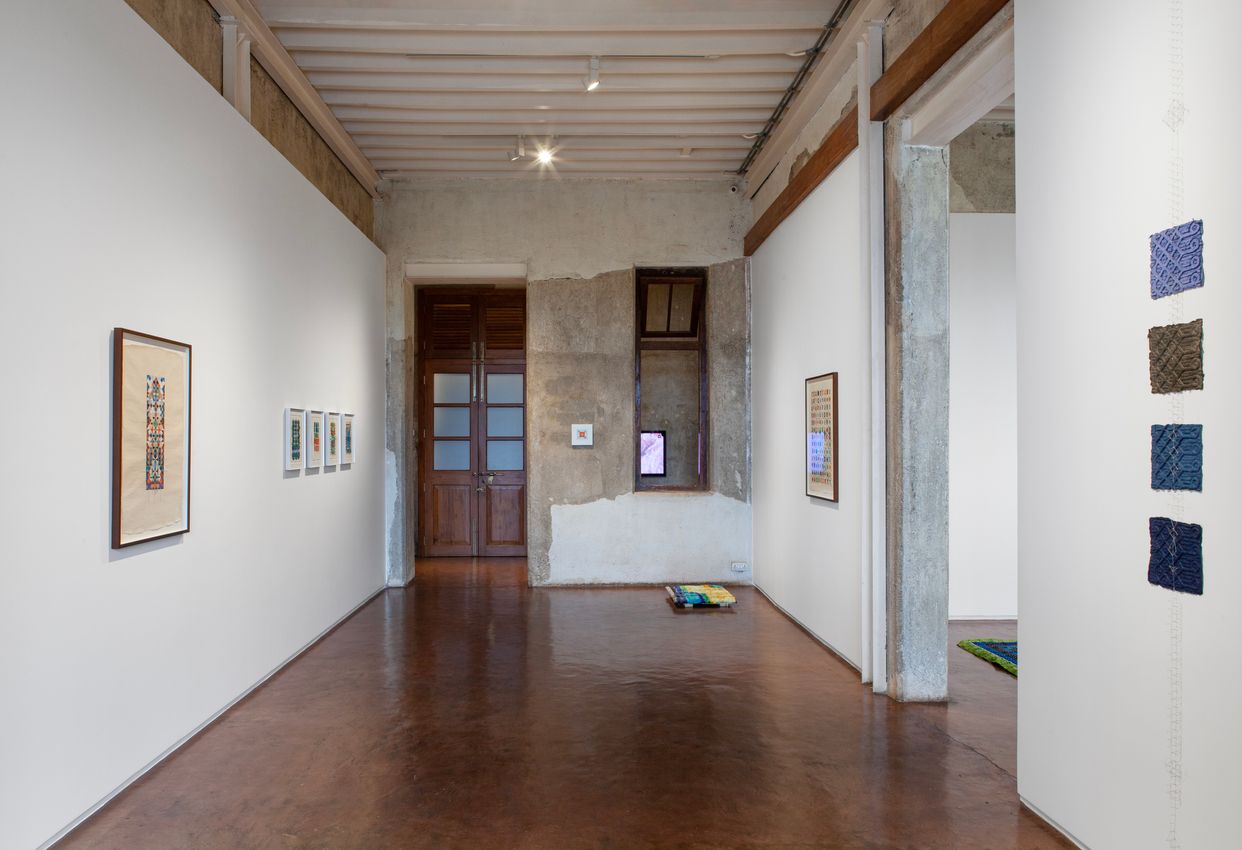
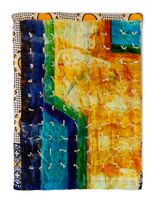
The exhibition opens with a video trained on the hands of Ahmed’s mother Zuleikha. She prepares thread, knots it through velvet and a Congolese kitenge textile while explaining her technique. The final product, a padded and plump quilt, is ceremoniously laid on the floor in the gallery. Nearby, Ahmed’s site-specific drawings evoke the movement, dexterity, and preoccupation of Zuleikha’s hands.
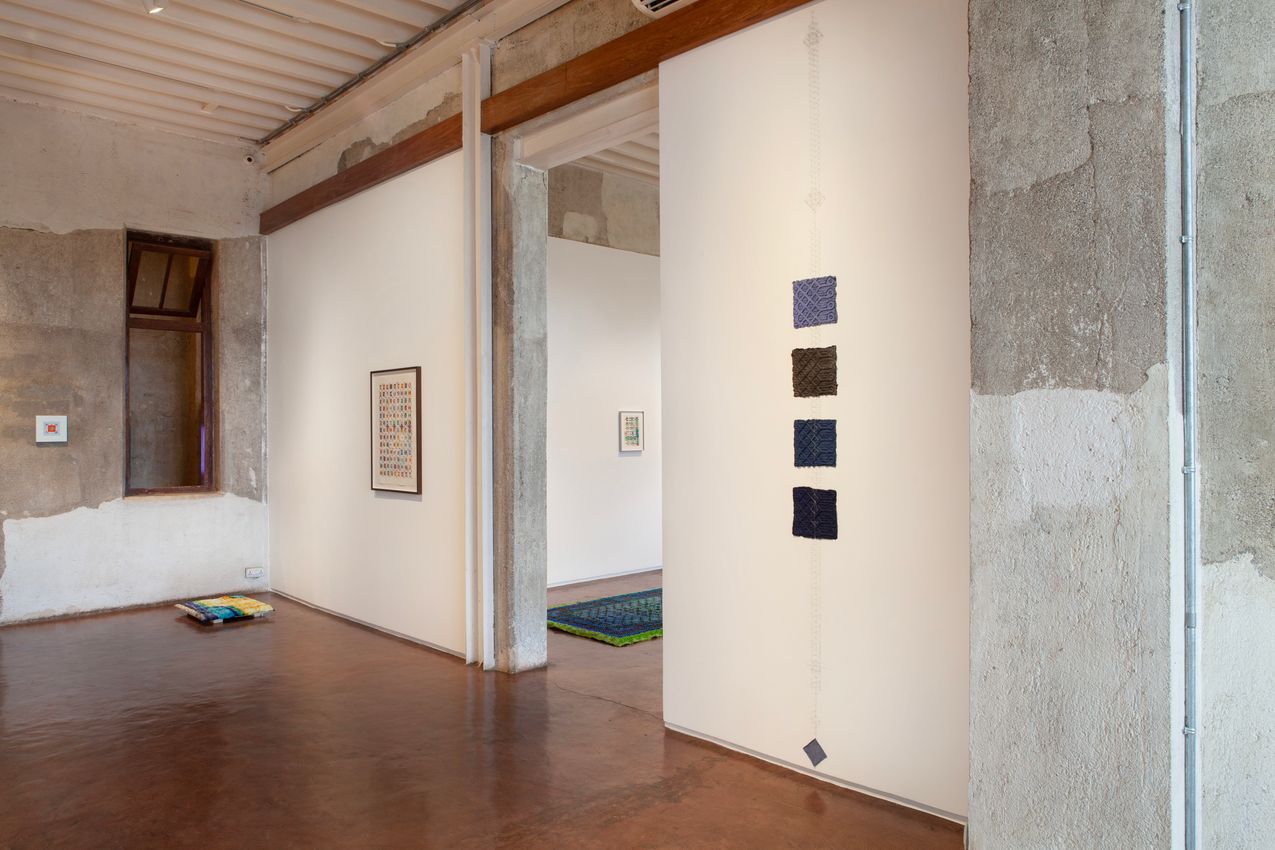
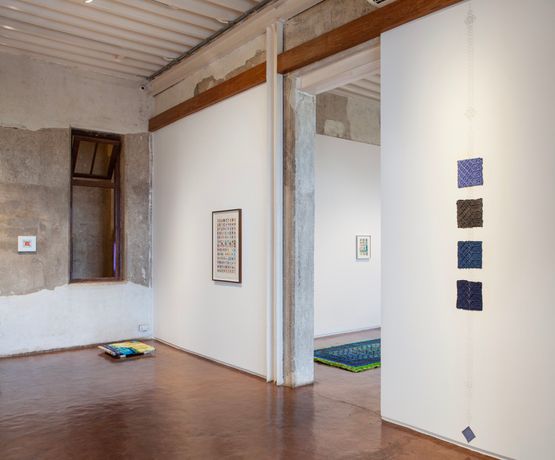
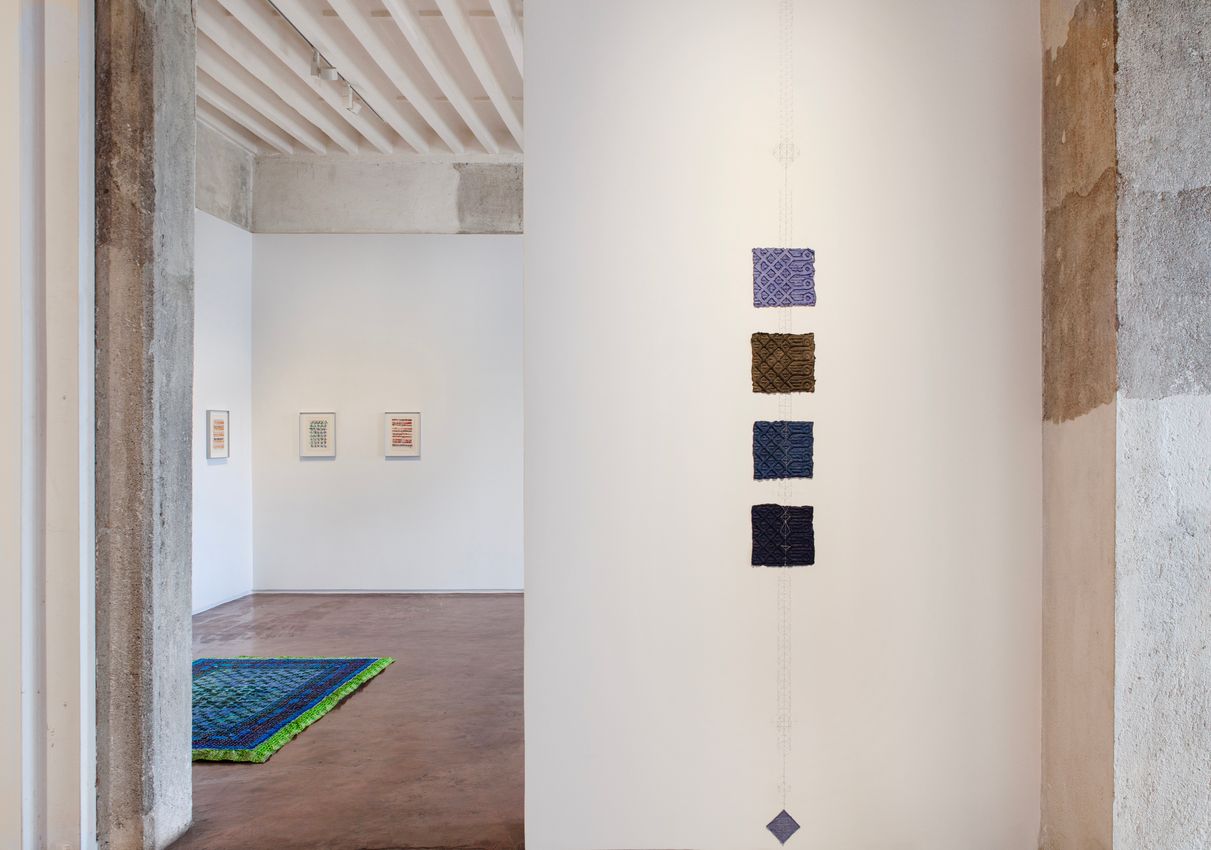
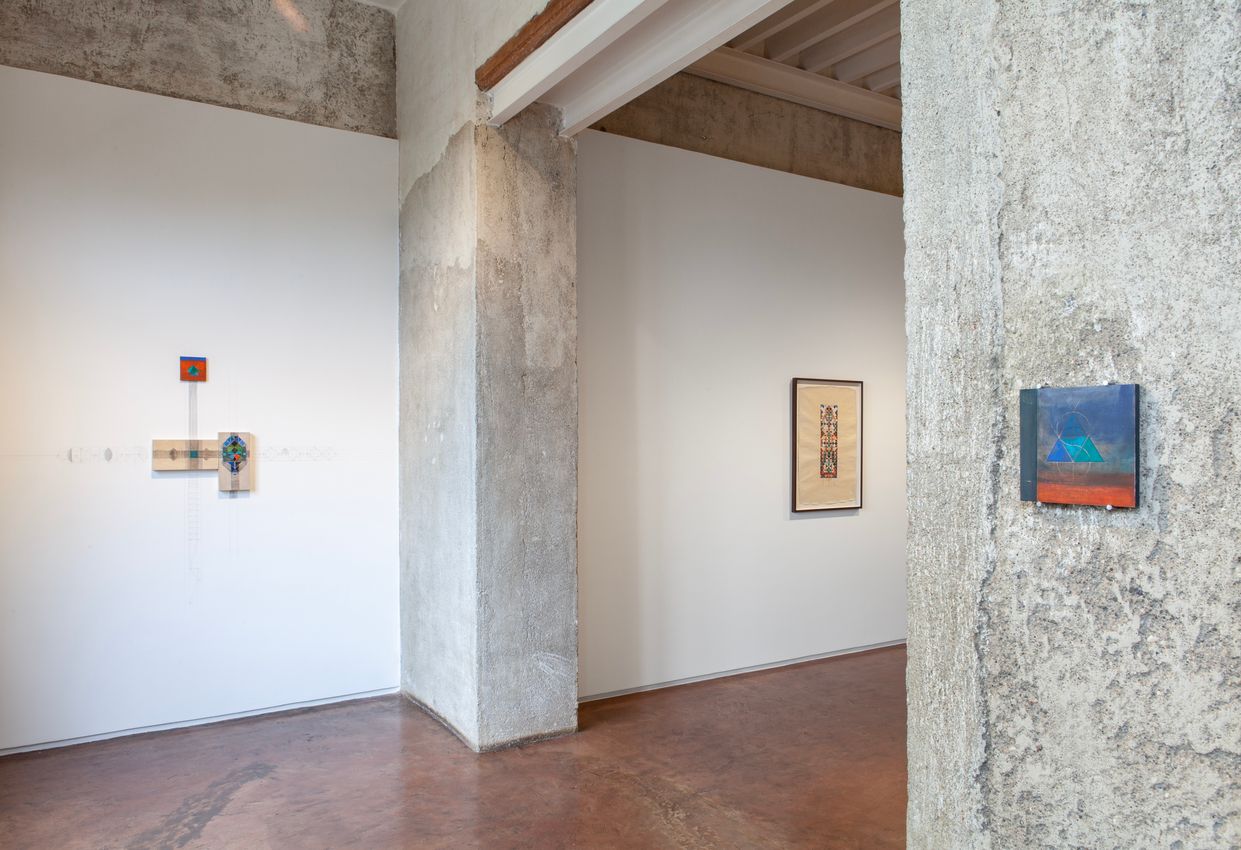
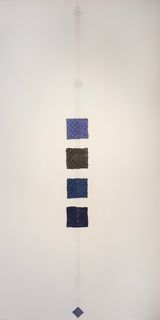
In Time - Staircase of my Spine Ahmed’s geometry articulates itself through an arrangement of pins around which a continuous piece of thread is secured. The pins pierce the gallery wall and run in a vertical column through a backdrop of graphite circles and four pressed paper pulp tablets. The intricate method is a resurrection of her mother’s needle work and the times Ahmed spent watching her stitch fabrics into clothes. But where in sewing the pins are redundant in the final item here they are integral to the image. Only lightly set into the plaster by their tip, their body, along with the whisp of thread, create fine shadow lines.
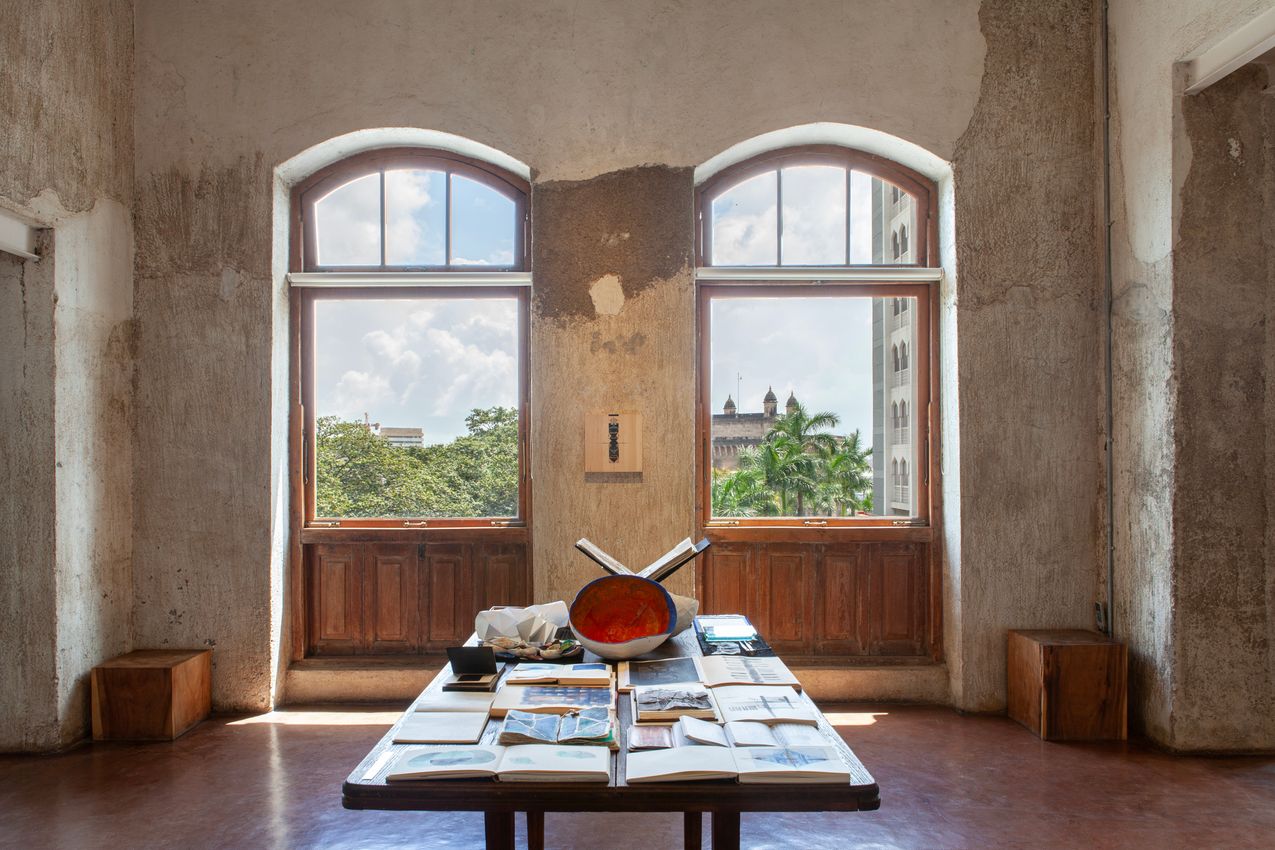
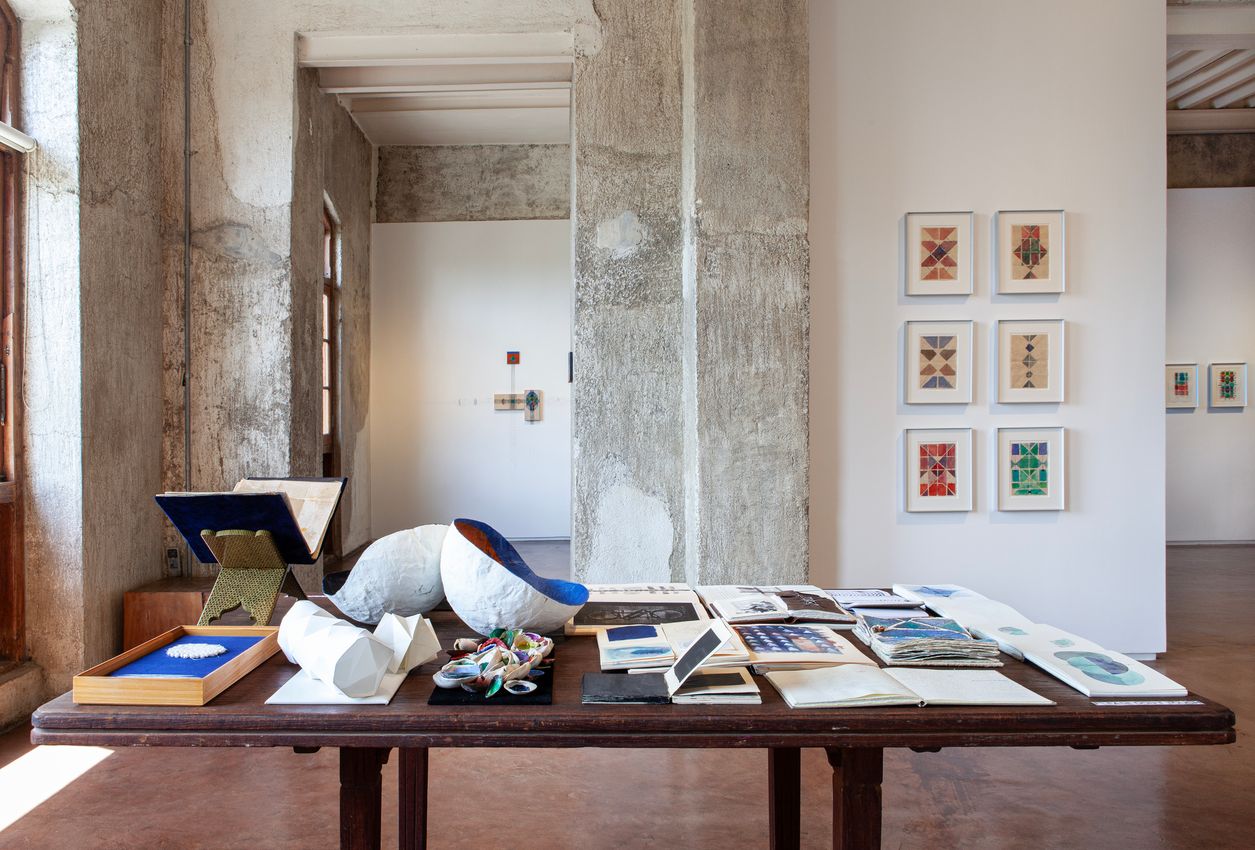
Maternal creativity permeates the show. Embroideries made by her are bound together in book form with Ahmed’s embossed drawings. Shapes are painted on velvet, bordered with a green fabric acquired by her mother in Congo and run over with a kantha stitch. There have been times Ahmed has used dressmaking paper. On a table in the gallery, she exposes her ‘thinking note books’ and the compilations of images and salient words that feed into her final images.
Each of Ahmed’s works is rhythmic and although the exhibition spans from 1989 to 2023, there is resonance, as if pieces some 34 years apart anticipated each other. Residing in this formal unity is also a subtle response to issues of violence and oppression. Ahmed is active in the fight for human rights and her exploration of beauty is, in part, motivated by her belief in its transformative powers. She regards beauty as a necessity and core to the universal connection that underpins her understanding of the world. Joan Kee writes, ‘Geometry compels us to ask what lines might be drawn or undrawn’ and for Ahmed in shapes she finds a language that draws people, cultures, and places closer.
The artist unveils what is hidden and seen all at once. Her gossamer-like drawings made on delicate sheets of dark paper carry the imprint of patterns, journeys and travels still to come. Her works stop the participant in stoic silence – as the blackness envelops the viewer and patterns unravel – quietly becoming visible. The series takes its name from the words Prieta, meaning very dark skin, and pitch meaning “the distance between successive corresponding points or lines”.

Jhaveri Contemporary was formed in 2010 by sisters Amrita and Priya with an eye towards representing artists, across generations and nationalities, whose work is informed by South Asian connections and traditions. The gallery’s dedication to original scholarship, engendered through its carefully crafted shows, is one of the many ways it distinguishes itself. Entwined with this philosophy is another guiding principle: showcasing the heterogeneous practices of long-celebrated luminaries as well as emerging talents, often in generously interrogative conversations. With a focus on mining lesser-known art histories, Jhaveri Contemporary facilitates dialogue between artists, curators and historians to add to the wider field of art. Estates served by the gallery include Mrinalini Mukherjee and Anwar Jalal Shemza.
A respected voice in contemporary art discourse.
Focusing on ambitious storytelling and insightful art-world commentary. Ocula Magazine publishes in-depth interviews, critical essays and timely analysis on the artists, exhibitions and ideas driving the global art world.
Learn more about Ocula Magazine
Showcasing the best of the art world.
Ocula partners with galleries from around the world to highlight their artists, artworks and exhibitions. Gallery membership is by application and invitation, with each member vetted by an independent panel.
Learn more about Ocula Membership

Specialises in the sale of major artworks.
Led by a team with deep ties to the world’s leading auction houses, galleries and collectors. Ocula’s advisory team offers bespoke services to high-net-worth clients from around the world who are looking to acquire the best of contemporary and modern art.
Learn more about our team and services