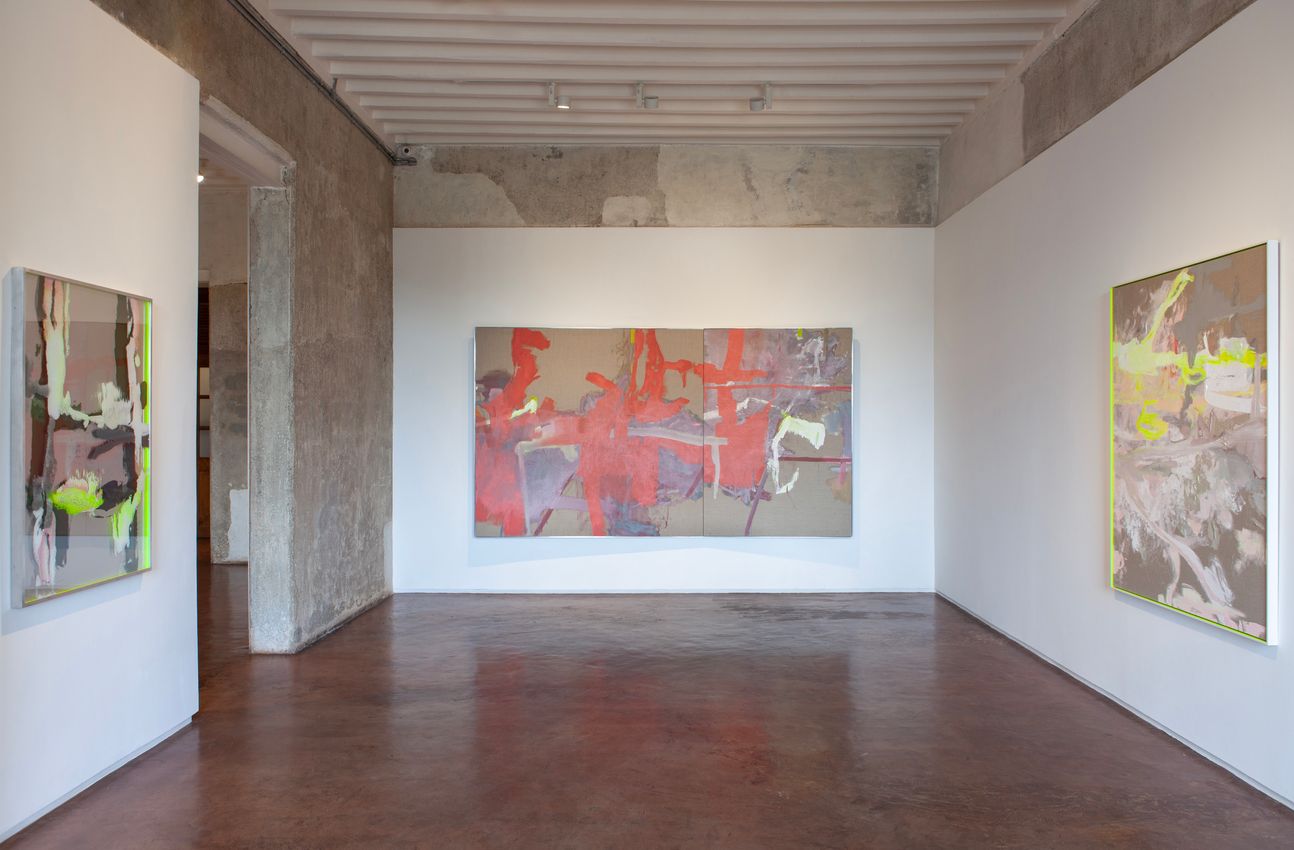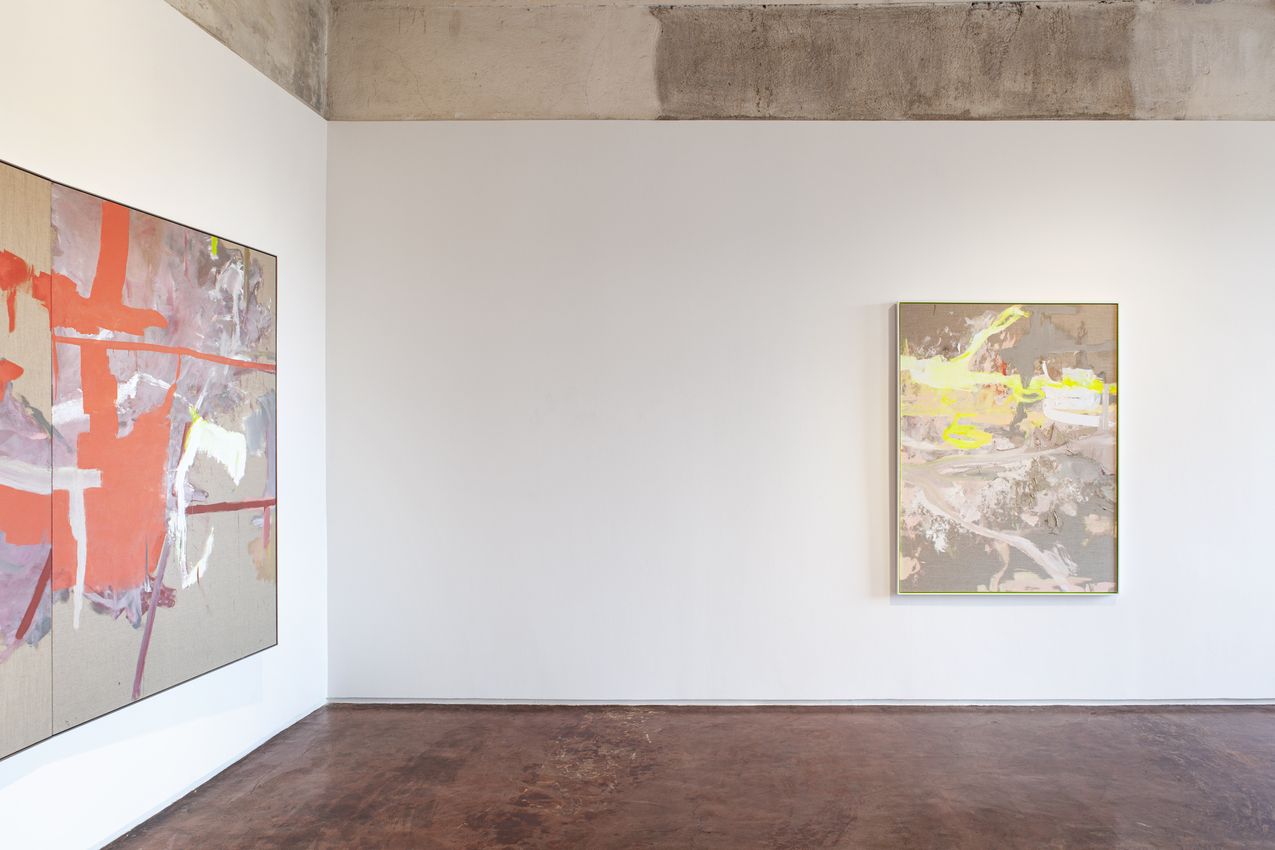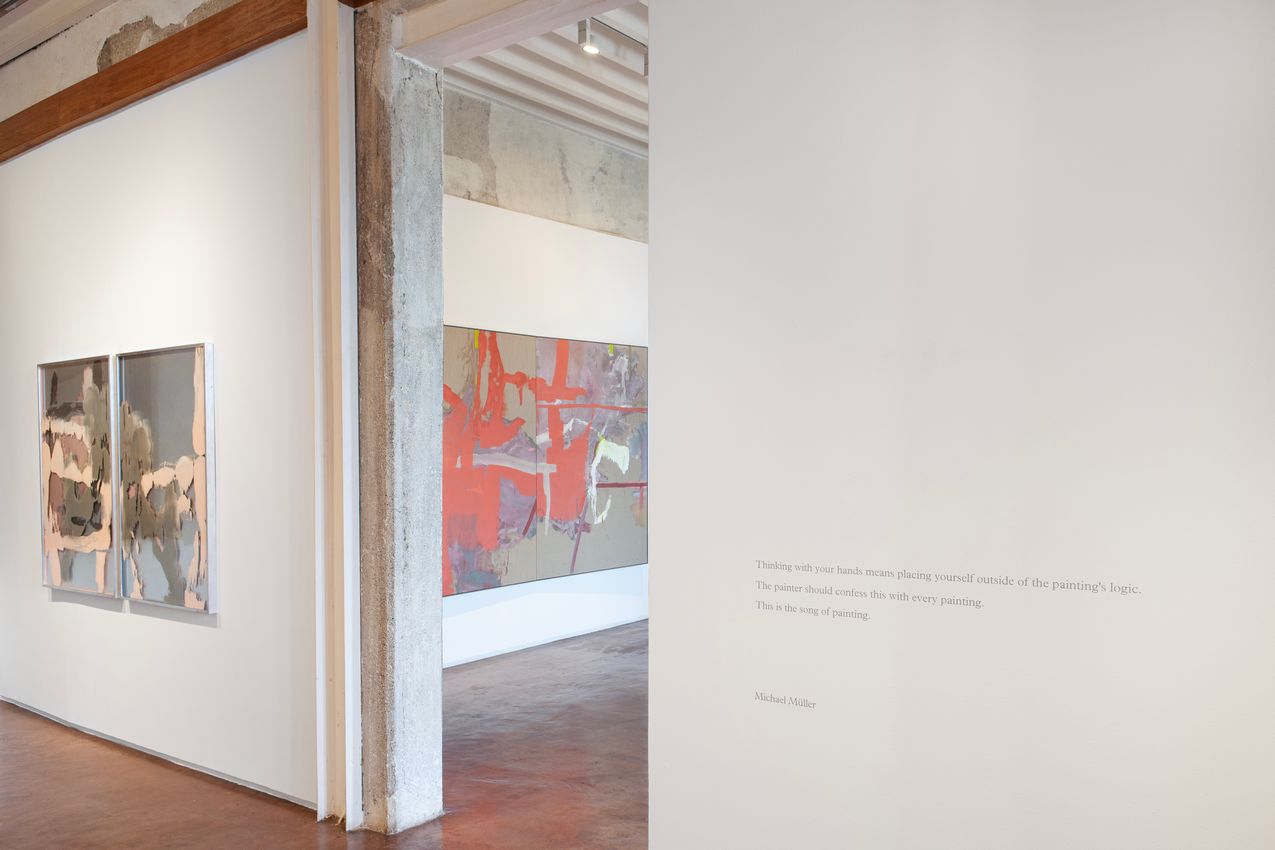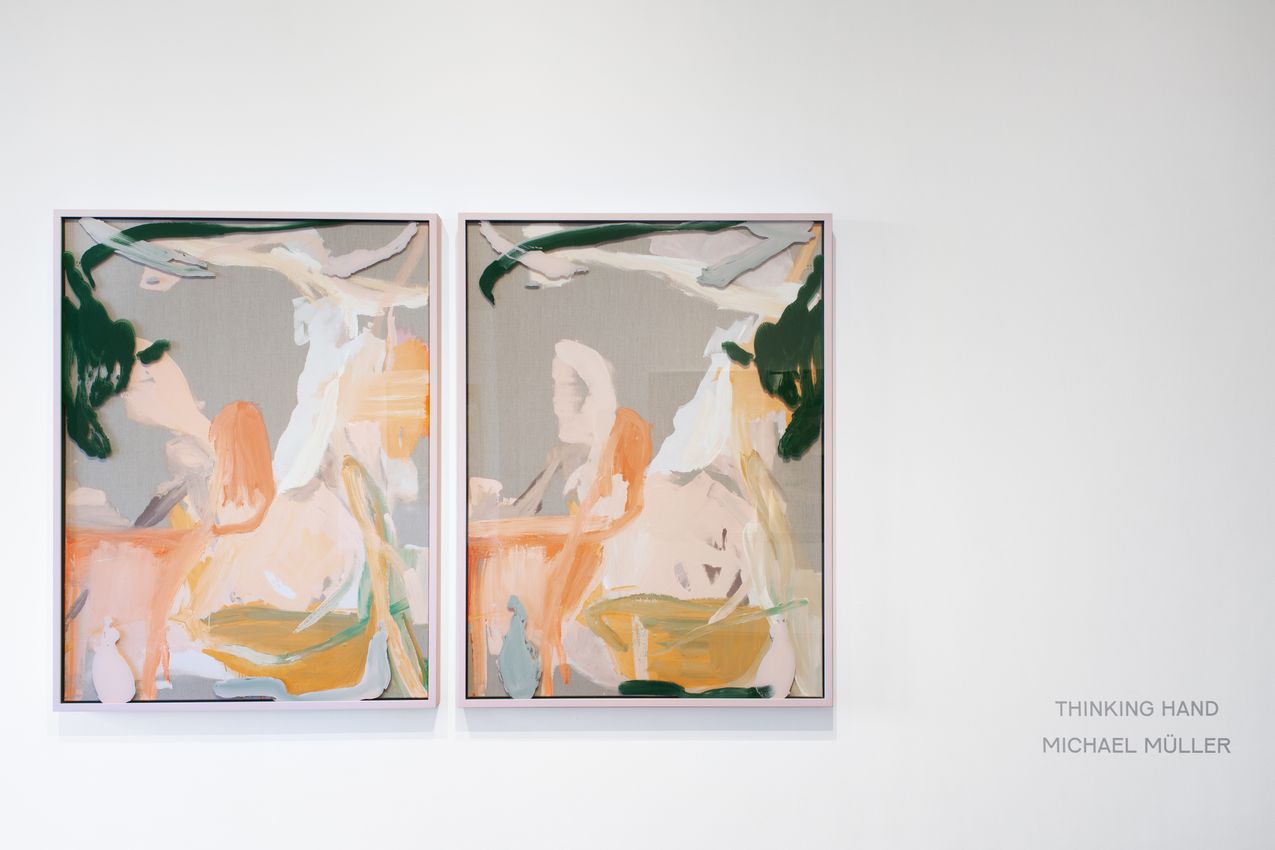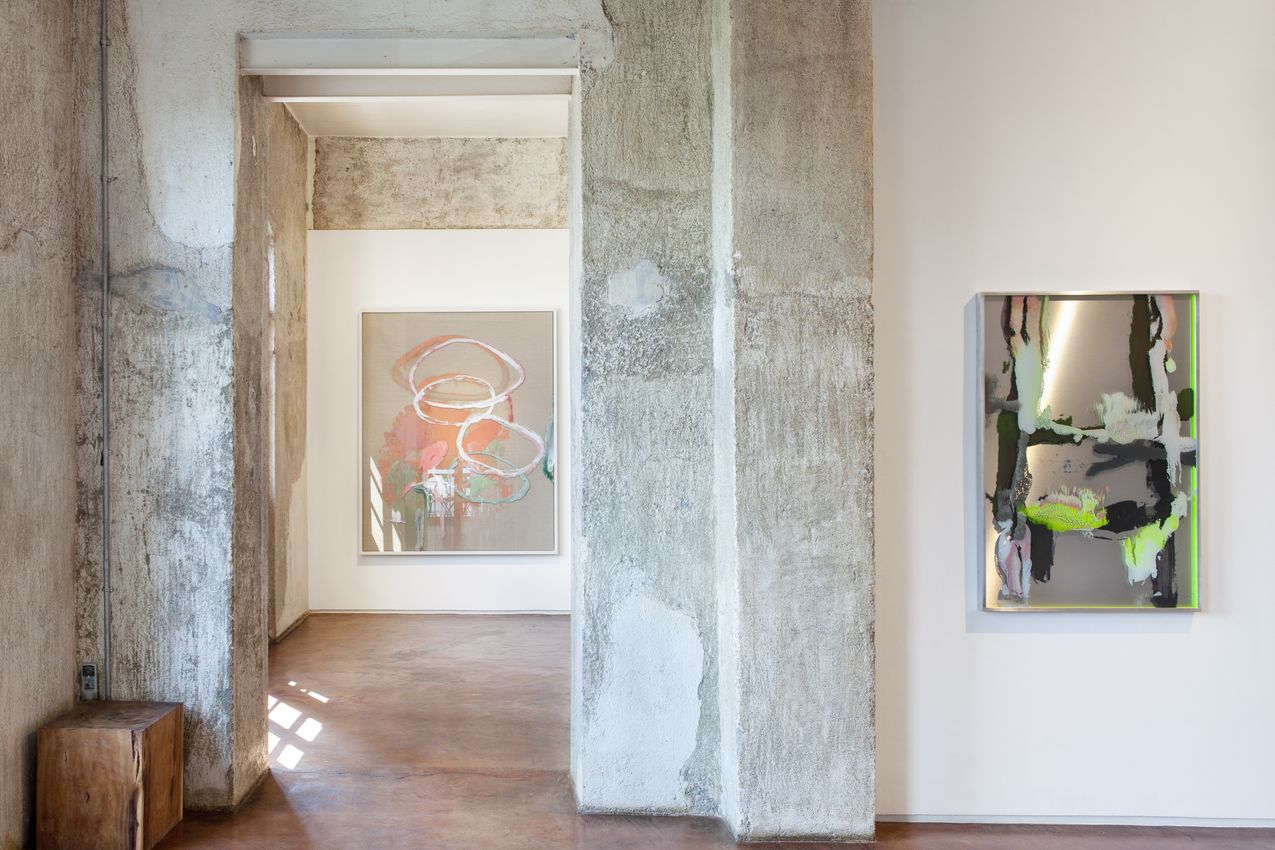
Michael Müller, an artist who has cultivated an oeuvre broad in its materiality, focuses on painting for his third solo show with Jhaveri Contemporary. Working on linen canvas, glass and aluminium, the gestural paintings are conceptually led and explore the intellectual systems—scientific, linguistic and numerical—that structure our understanding of the world.
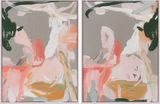
In the series Verschränkte Werke [Entangled Works], Müller looks to quantum physics. In quantum physics, the term quantum entanglement describes the phenomenon, which is not compatible with the means of classical physics, that the state of two interacting atomic particles, such as photons, depends on the other without the possibility of a detectable interaction or causality. Once entangled, the particles continue to respond simultaneously to the measurement of their partner, even when the partner is spatially too far away to transmit the signal at the speed of light, the highest cosmic velocity.
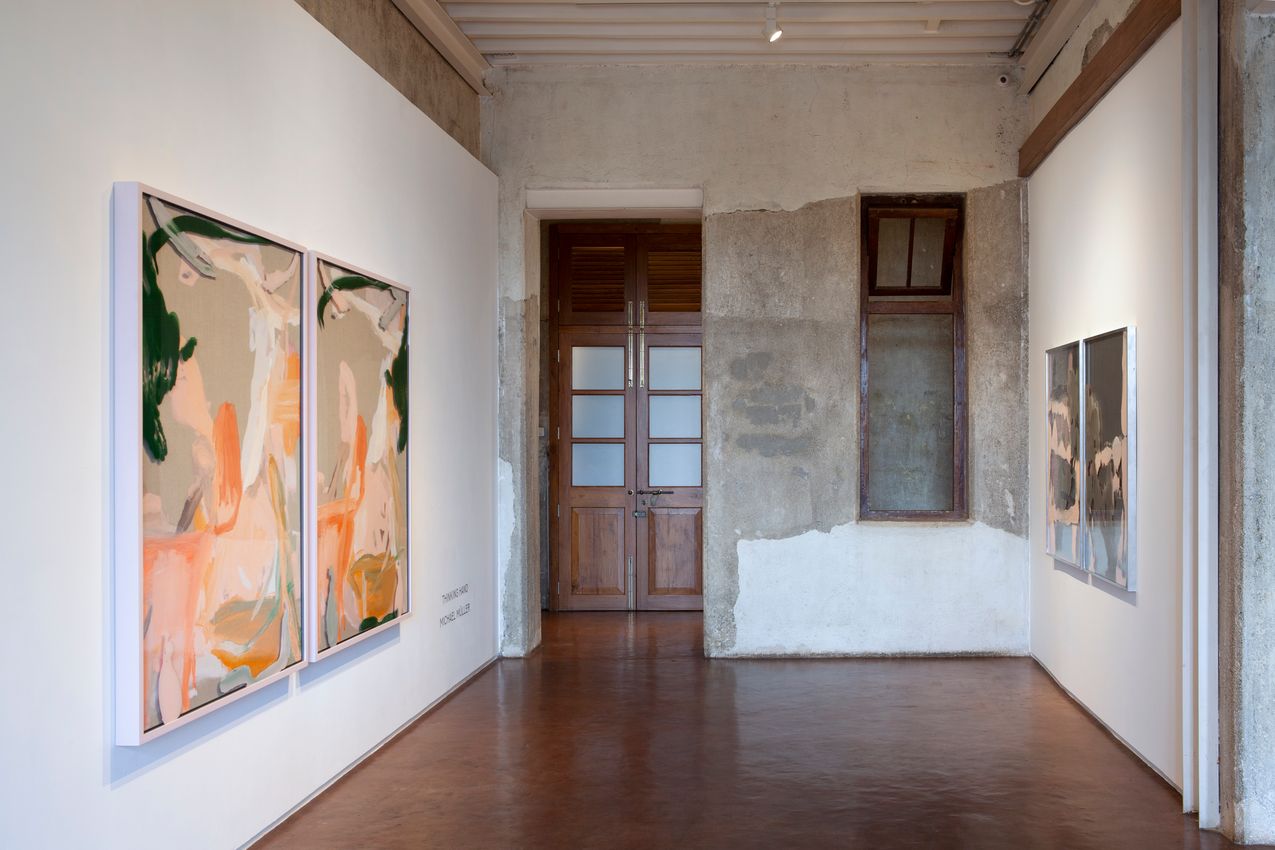
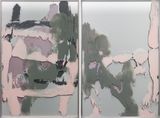
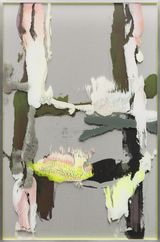
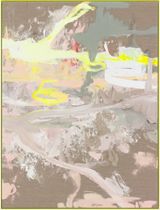
Michael Müller uses the analogy of entangled particles to describe the relationship between the two sides of a diptych: elements applied to one painting during the painting process simultaneously inform the painting process of the other painting. The original elements recur – partly in the same form, partly altered, alienated, in a different place, mirrored, in a different colour or only fragmentarily. Thus, in Schleifensprung [Loop Jump] (2020), the gestural colour applications of the canvas and glass panel of one painting are intertwined with the other, each found in different proportions, overlays, and colour shades on the other. Müller shows in his Verschränkte Werke that the level of autonomy in abstract painting is overestimated and that there are innumerable – at least for the viewer – unknown influences, limitations, and preconditions that subtly restrict and influence an artist’s choices, not to mention the laws of physics, such as gravity and its effects on painting, which are beyond the painter’s control and influence the behaviour of the colours on the carrier material. The same applies to the two works Wanderung von Grau [Walk from Grey] (2021) and Inside out (2022) from the series Digitale Schatten [Digital Shadows]. The paintings are both painted on the reverse of the frame’s glass, hence arranging two parallel pictorial planes one behind the other, which complement, but also disturb and counteract each other. The pictorial motifs are self-referential and echo Müller’s earlier paintings, aspects of which have been photographed, digitally edited and manipulated on the computer.
In this way, a connectedness of supposedly independent images is exposed, which points to the fact that even in the painting process there is no point from which the artist creates genuinely new things. Inside out, for instance, also forms the basis for two other works in an incessant cycle of accumulation and continuation.
Müller’s image circuit is equally a reference to the visual traffic we encounter every day in overwhelming abundance, whether on the Internet, social media, or on the streets as advertisements compete for the viewer’s attention: an escape from this flood of pictures never seems possible; new images are always derived from existing images, which stage themselves as new, but are actually a repetition of the same thing over and over.
__
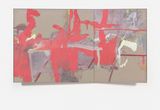
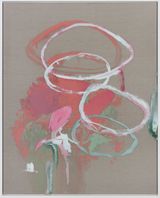
Mata Pita (2022) and Der Verlust der Geschwister [Loss of the siblings] (2020) address the theme of simultaneous connection and separation. Mata Pita is composed of a series of large, separate canvases set in a divided angled frame. In title, the work references familial structures: Mata (mother) and Pita (father), two individuals connected in their parenthood and procreation of an offspring. These bonds and kinship ties, however, are something that can be volatile. Relationships can change, be negated or lost as pointed to in Der Verlust der Geschwister, a single painting.
Benares (2019), on the other hand, takes an entirely different approach. Benares, another name for the city of Varanasi in India, refers to Müller’s Indian origins, his grandmother being from India: by recalling the colours and stylistic idiom of the city in the state of Uttar Pradesh, the artist intertwines this work with a geographical location in a very unique way.
Michael Müller’s (b.1970, Ingelheim am Rhein. Lives and works in Berlin) works neither lend themselves to a common conceptual denominator nor order themselves into an easily identifiable formal language. Instead, exhibitions are marked by variety, heterogeneity, and ambiguity. ‘Languages’ of art are presented side-by-side and with equal emphasis: the result of a process of testing, combining, and varying. An example of Müller’s preoccupation with questions of authorship is the title of his first institutional solo exhibition, ‘Wer Spricht?’ (‘Who is Speaking?’) at the KW Institute for Contemporary Art in Berlin in 2015-2016.

Jhaveri Contemporary was formed in 2010 by sisters Amrita and Priya with an eye towards representing artists, across generations and nationalities, whose work is informed by South Asian connections and traditions. The gallery’s dedication to original scholarship, engendered through its carefully crafted shows, is one of the many ways it distinguishes itself. Entwined with this philosophy is another guiding principle: showcasing the heterogeneous practices of long-celebrated luminaries as well as emerging talents, often in generously interrogative conversations. With a focus on mining lesser-known art histories, Jhaveri Contemporary facilitates dialogue between artists, curators and historians to add to the wider field of art. Estates served by the gallery include Mrinalini Mukherjee and Anwar Jalal Shemza.

A respected voice in contemporary art discourse.
Focusing on ambitious storytelling and insightful art-world commentary. Ocula Magazine publishes in-depth interviews, critical essays and timely analysis on the artists, exhibitions and ideas driving the global art world.
Learn more about Ocula Magazine
Showcasing the best of the art world.
Ocula partners with galleries from around the world to highlight their artists, artworks and exhibitions. Gallery membership is by application and invitation, with each member vetted by an independent panel.
Learn more about Ocula Membership

Specialises in the sale of major artworks.
Led by a team with deep ties to the world’s leading auction houses, galleries and collectors. Ocula’s advisory team offers bespoke services to high-net-worth clients from around the world who are looking to acquire the best of contemporary and modern art.
Learn more about our team and services