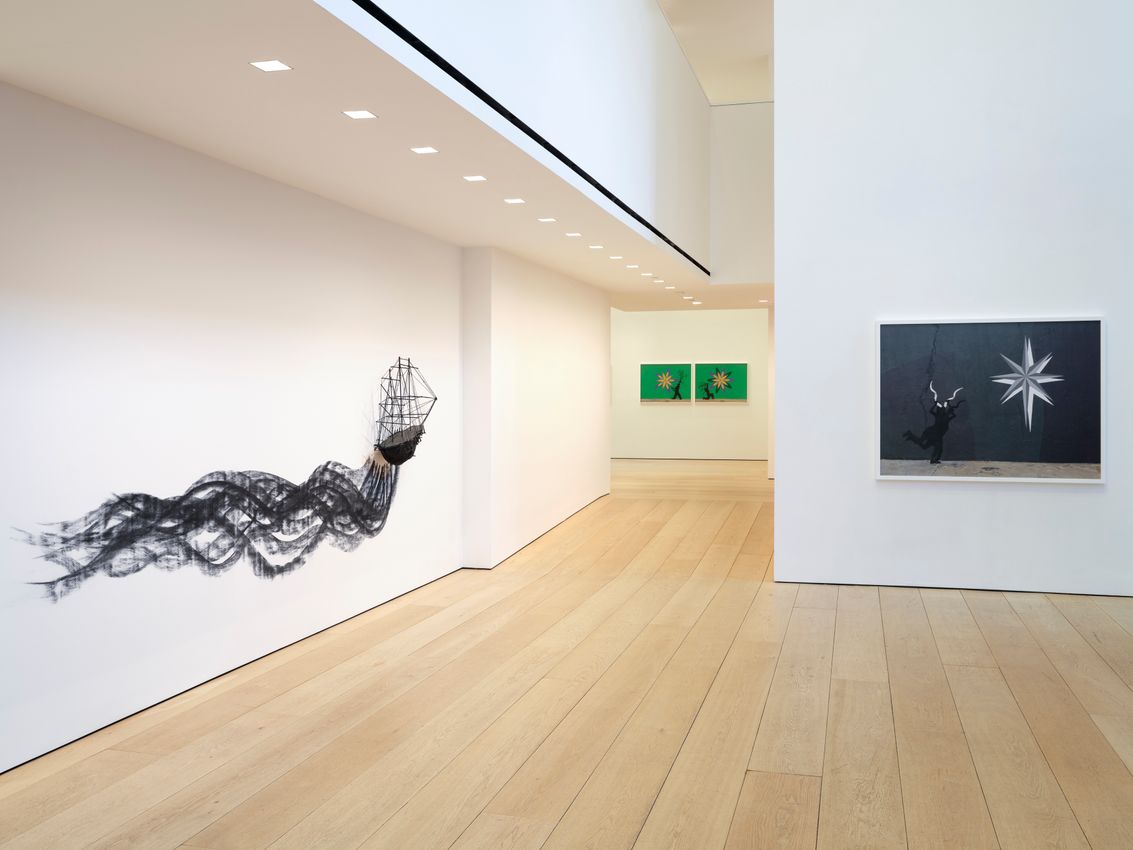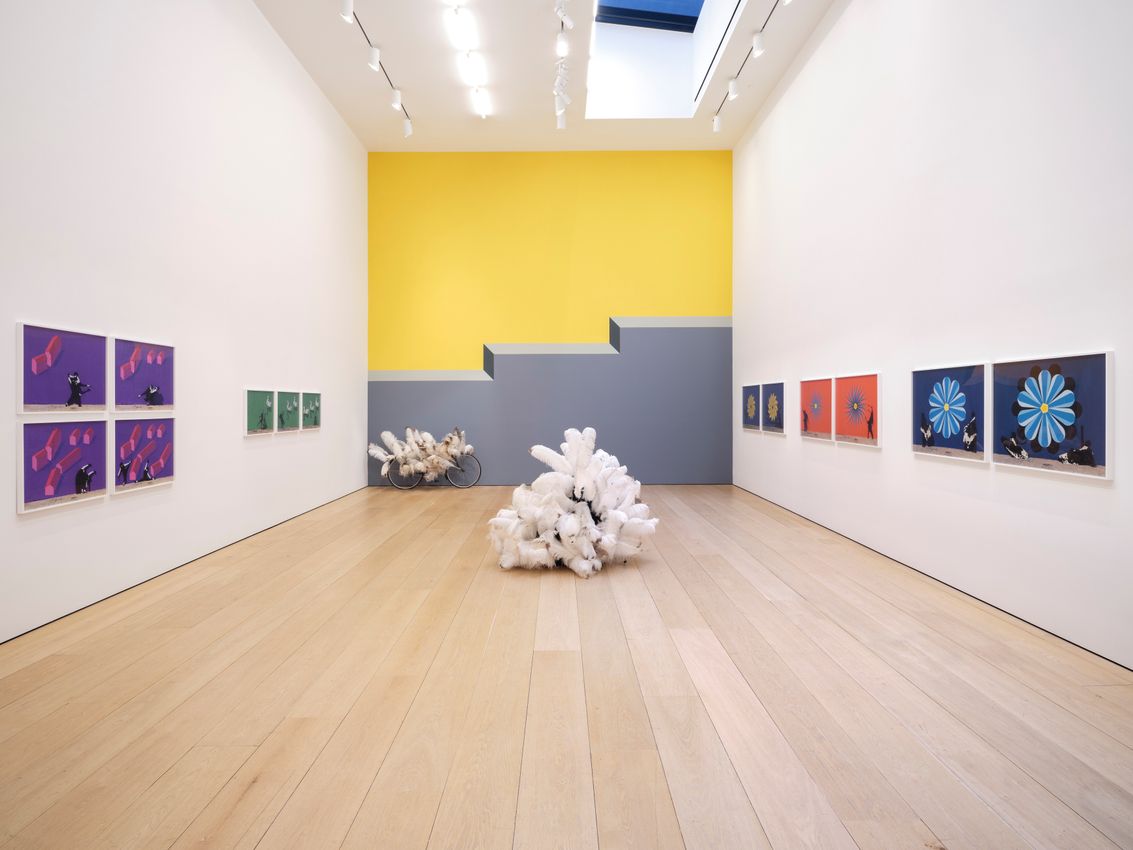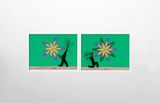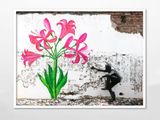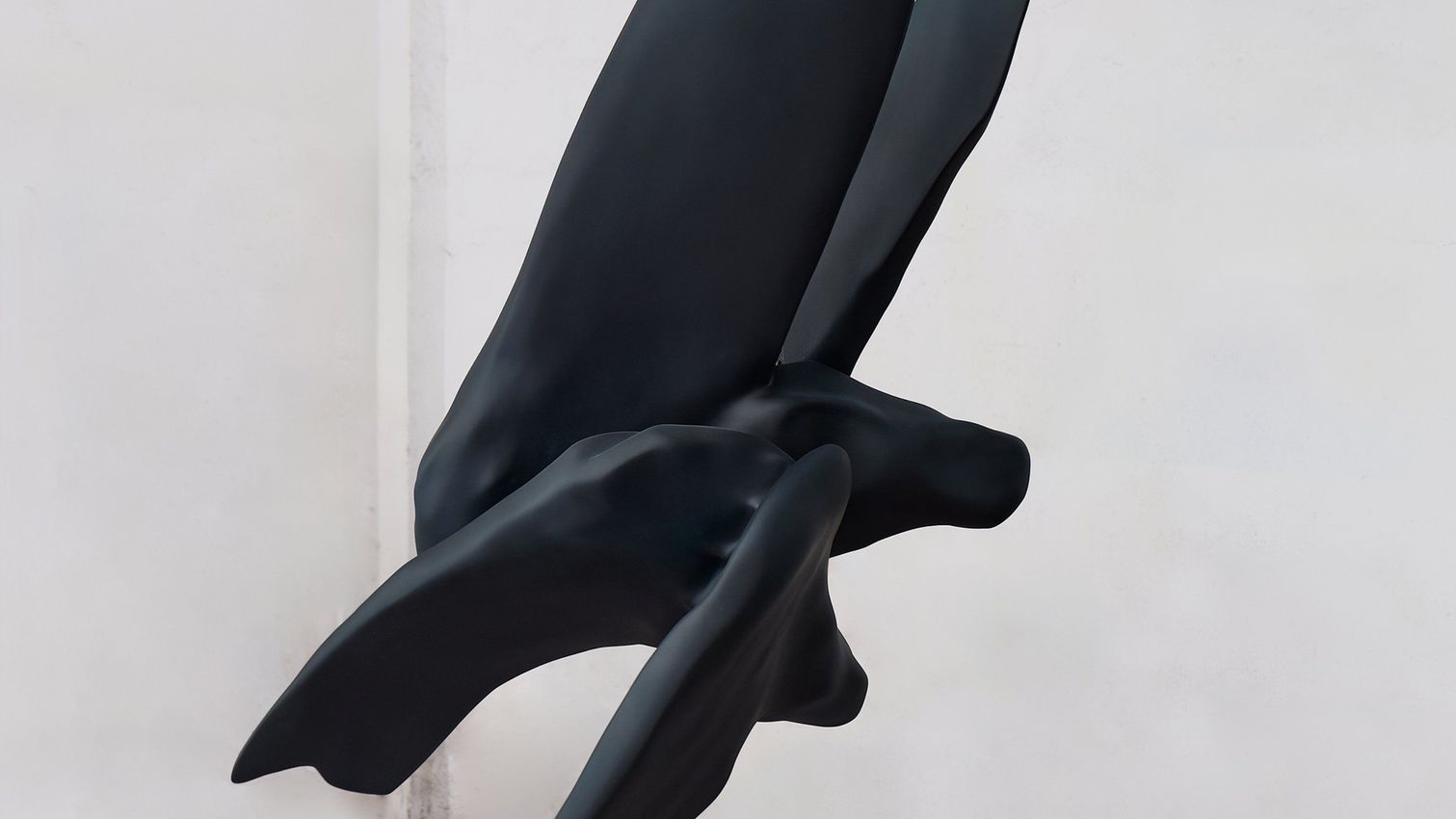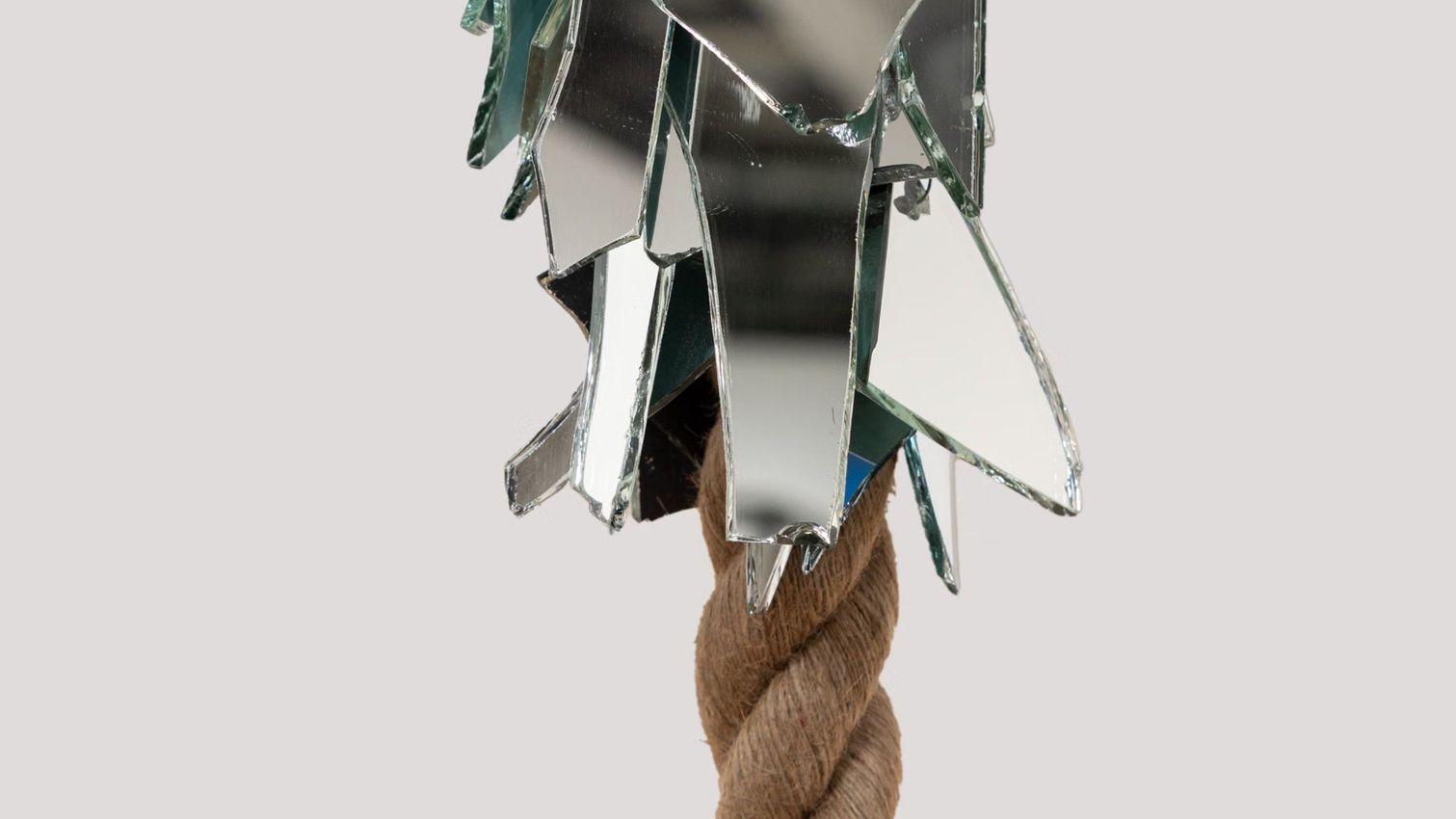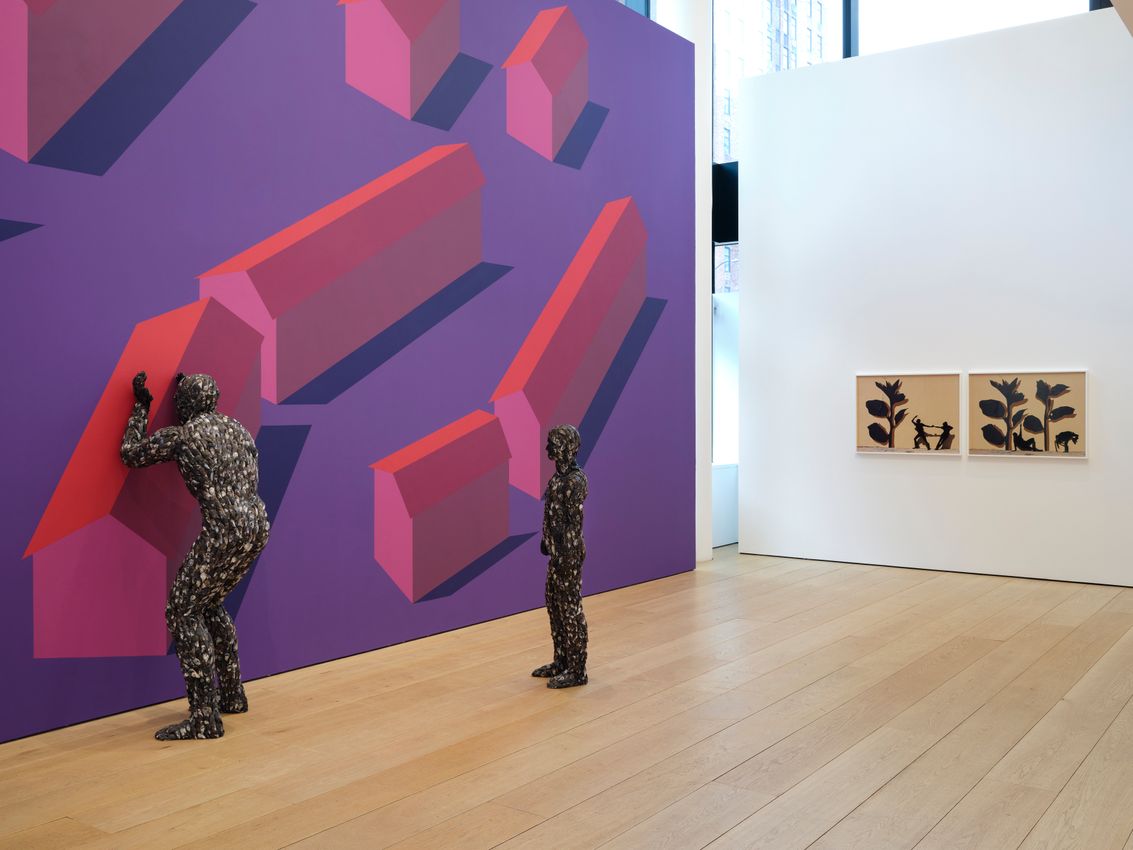
Lehmann Maupin presents African Dream Root, Robin Rhode’s sixth solo presentation with the gallery. The exhibition will feature new photographs, sculptures, installations, and wall paintings inspired by the Berlin-based artist’s extensive research into visual and oral traditions of storytelling in Southern Africa. Born and raised in South Africa, Rhode examines the histories and mythologies of the continental subregion in his newest body of work. With African Dream Root, the artist moves to situate his wall-based works within a distinctly Southern African lineage and reconnect his practice to its ancient art historical roots. Locating his work in relation to ancient rock art and spiritual practices, Rhode considers his wall paintings to be visual interventions in their cultural, political, and ecological environments, and he aims to transform both landscapes and communities. Representing a critical development in Rhode’s practice, African Dream Root marks the first time the artist will create wall paintings (typically shown through photographs documenting the paintings’ production) within a gallery context. As he transposes his wall-based works into the gallery space, Rhode suggests a fluid, mobile mode for representing Southern African diasporic experiences.
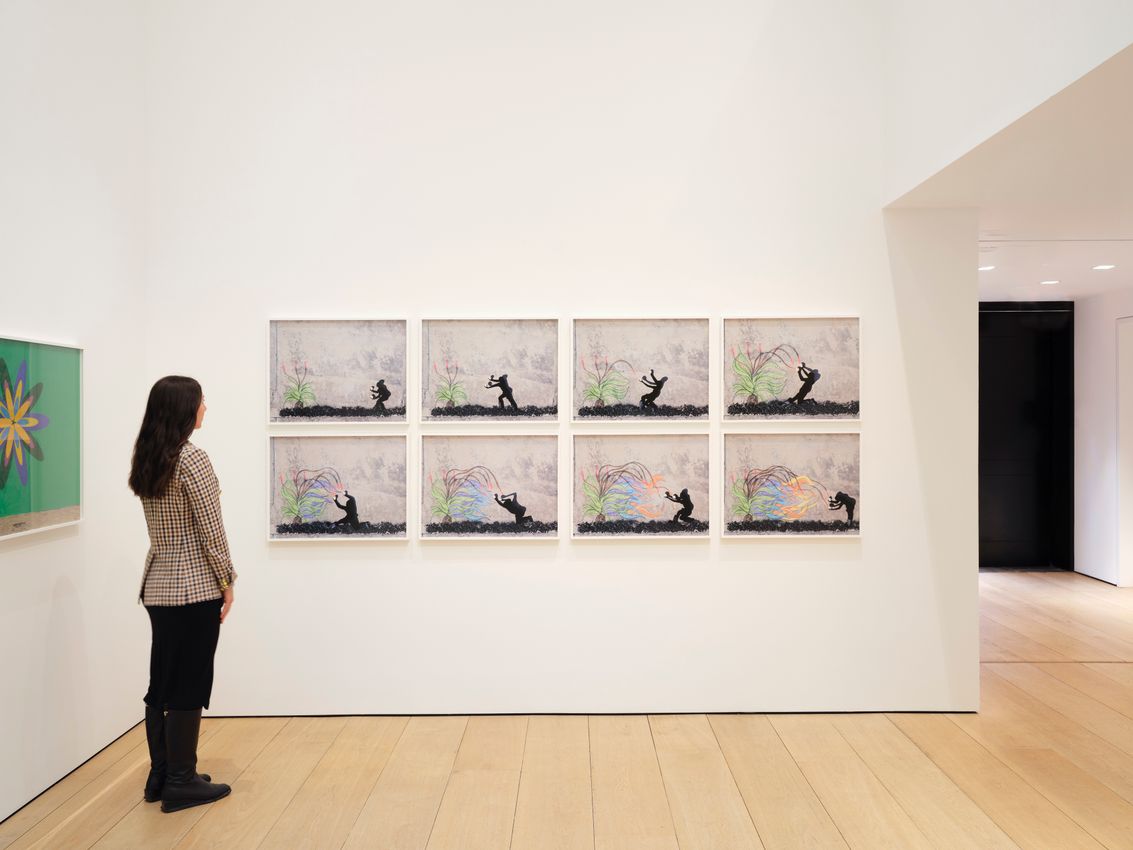
Rhode is best known for his multi-panel works that deftly combine photography, performance, wall painting, and drawing. Negotiating the urban landscape, his work often depicts silhouetted figures interacting with carefully crafted, highly geometric wall paintings that the artist paints in public spaces in Johannesburg and Berlin. In contrast to earlier works that were spread across numerous photographs, many of the new photographic works (all shot in Johannesburg) make use of only two or three panels, and Rhode creates intricate compositions rich in symbolism that compress his complex tableaux into just a few frames. In addition to these photographic series, African Dream Root includes new sculptures and wall paintings. Here, the artist boldly merges street and gallery—bringing his dynamic scenes to life in the gallery space.
Across the exhibition, Rhode draws upon his intensive research into ancient traditions of rock painting and their continued resonances in collective cultural memory. Throughout African Dream Root, Rhode envisions the wall as a portal between everyday experience and imaginative thought, and he examines the wall’s relationship to narrative in various cultural contexts. The artist’s research-based practice is expansive, spanning art history, ethnography, anthropology, and psychoanalytic theory. He incorporates a wide range of references, from ancient rock art in Southern Africa to the concept of the fourth wall, the notion that an invisible threshold separates a mise-en-scène from an audience. In Rhode’s work, the wall’s surface acts as both symbol and substrate, sign and structure. Functioning as a palimpsest, the wall retains the full breadth of its many cross-cultural, transhistorical meanings.
Drawing upon mythological themes and spiritual practices, the artist evokes altered states of consciousness and envisions his works as conduits to a shared ancestral past. The exhibition’s title refers to the common name for Silene Capensis, a sacred, psychoactive herb native to Southern Africa. When consumed, the plant induces vivid, dreamlike states, interpreted as messages from ancestors. With their geometric compositions, many of Rhode’s newest murals and photographs depict various psychoactive botanicals, and they also reference entoptic phenomena, a term which refers to subjective visual effects created within the eye. Geometric patterns often found in ancient rock art are thought to have derived from these phenomena, often experienced during altered states of consciousness. Much archaeological and ethnographic scholarship suggests that rock art was a key component of shamanism; the geometric forms found in ancient rock art depict entoptic phenomena experienced during shamanistic rituals intended to initiate both personal and communal healing. The wall becomes a dynamic, charged surface imbued with cultural memory and spiritual potency—and as Rhode calls upon ancient histories and modes of interpretation in African Dream Root, he offers possibilities for metamorphosis.
Rhode’s compositions carry rich, culturally specific meanings where form and content converge. Creating a paradigm transcending space and time, he offers a hybrid narrative mode that reflects the complexities of urban, post-colonial Southern African diasporic existence and invites new, fluid possibilities for both reckoning with and representing the present.
Robin Rhode (b. 1976, Cape Town, South Africa; lives and works in Berlin) engages photography, performance, drawing, and sculpture in creating visual narratives that are brought to life using quotidian materials such as soap, charcoal, chalk, and paint. Rhode came of age in the newly post-apartheid South Africa, and was exposed to new forms of creative expression motivated by the spirit of the individual rather than dictated by a political or social agenda. The growing influence of hip-hop, film, and popular sports on youth culture as well as the community’s reliance on storytelling in the form of colourful murals encouraged the development of Rhode’s hybrid street-based aesthetic. Rhode is best known for his photographic series that documents a sole protagonist interacting with murals the artist painted on public walls in Johannesburg and Berlin. In the succession of photographs, the movements of the actor appear to alter the two-dimensional renderings, compressing space and time and transforming the urban landscape into a fictional storyboard. Melding individual expressionism with broader socioeconomic concerns, Rhode’s work reveals a mastery of illusion, a rich range of historical and contemporary references, and an innate skill for blending high and low art forms.


Rachel Lehmann and David Maupin founded Lehmann Maupin in 1996. The gallery represents a diverse range of American artists, as well as artists and estates from across Europe, Asia, Africa, South America, and the Middle East. It has been instrumental in introducing numerous artists from around the world in their first New York exhibitions.

A respected voice in contemporary art discourse.
Focusing on ambitious storytelling and insightful art-world commentary. Ocula Magazine publishes in-depth interviews, critical essays and timely analysis on the artists, exhibitions and ideas driving the global art world.
Learn more about Ocula Magazine
Showcasing the best of the art world.
Ocula partners with galleries from around the world to highlight their artists, artworks and exhibitions. Gallery membership is by application and invitation, with each member vetted by an independent panel.
Learn more about Ocula Membership

Specialises in the sale of major artworks.
Led by a team with deep ties to the world’s leading auction houses, galleries and collectors. Ocula’s advisory team offers bespoke services to high-net-worth clients from around the world who are looking to acquire the best of contemporary and modern art.
Learn more about our team and services