Press Release

Lehmann Maupin is pleased to announce Yes Biological, an exhibition of new sculptures by Erwin Wurm. For the last two decades, the Austrian artist has redefined the ways we understand and look at absurdity in his sculptural, performative, and engaging works. For this exhibition, Wurm will combine biological effects to create a new series that pushes the boundaries of sculpture even further. There will be an opening reception for the artist on Thursday, January 16 from 6 to 8 pm.

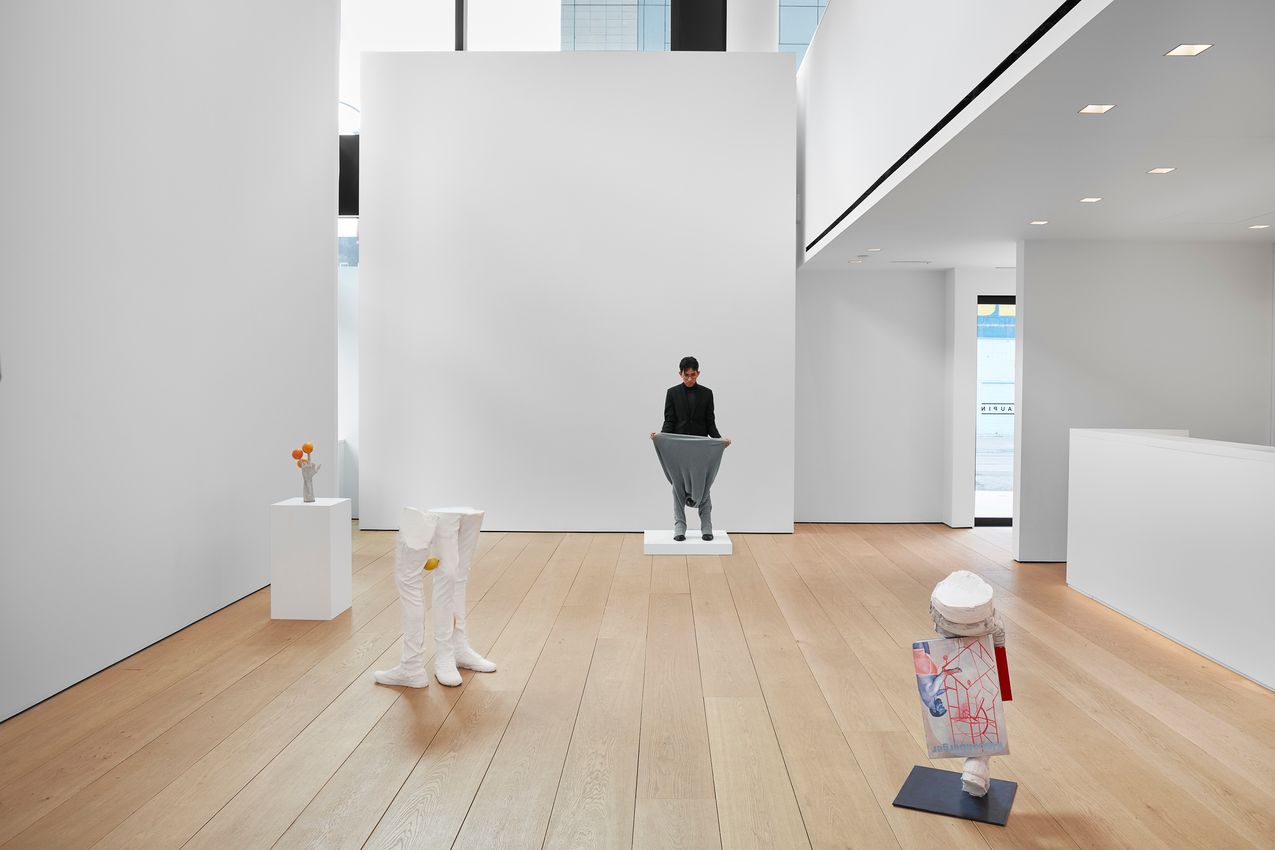
Featured in the exhibition is a work from Wurm’s now-iconic ‘One Minute Sculpture’ series, which highlights the artist’s interest in the absurdity that can be found in mundane scenarios of daily life―a theme that was the focus of Wurm’s presentation for the Austrian Pavilion at the 57th Venice Biennale. For a full minute, audience members actively become a part of the work, as choreographed by the artist. Underlying this physical engagement is a commentary on gallery-goers’ attention span as well as the importance of a viewer’s engagement with works of art as a necessary agent for their completion.

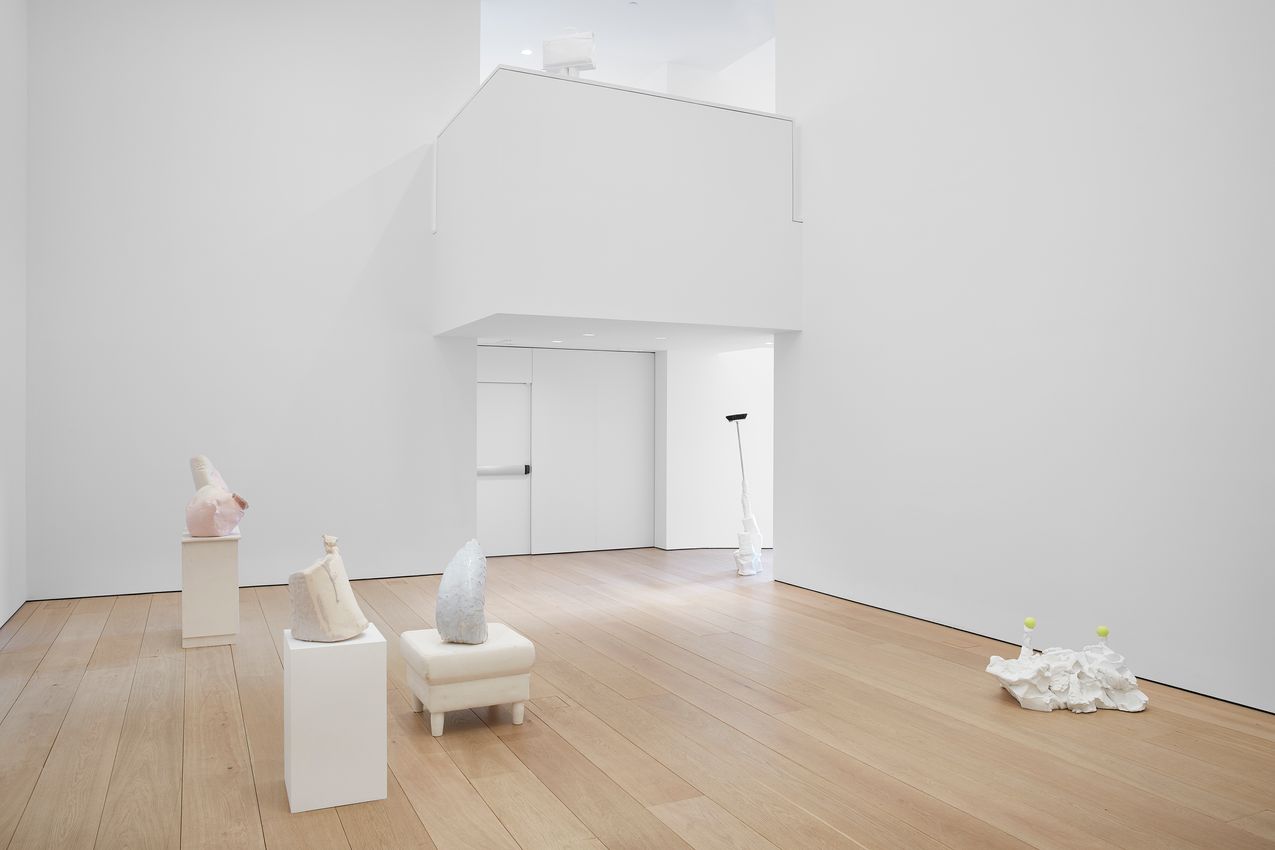
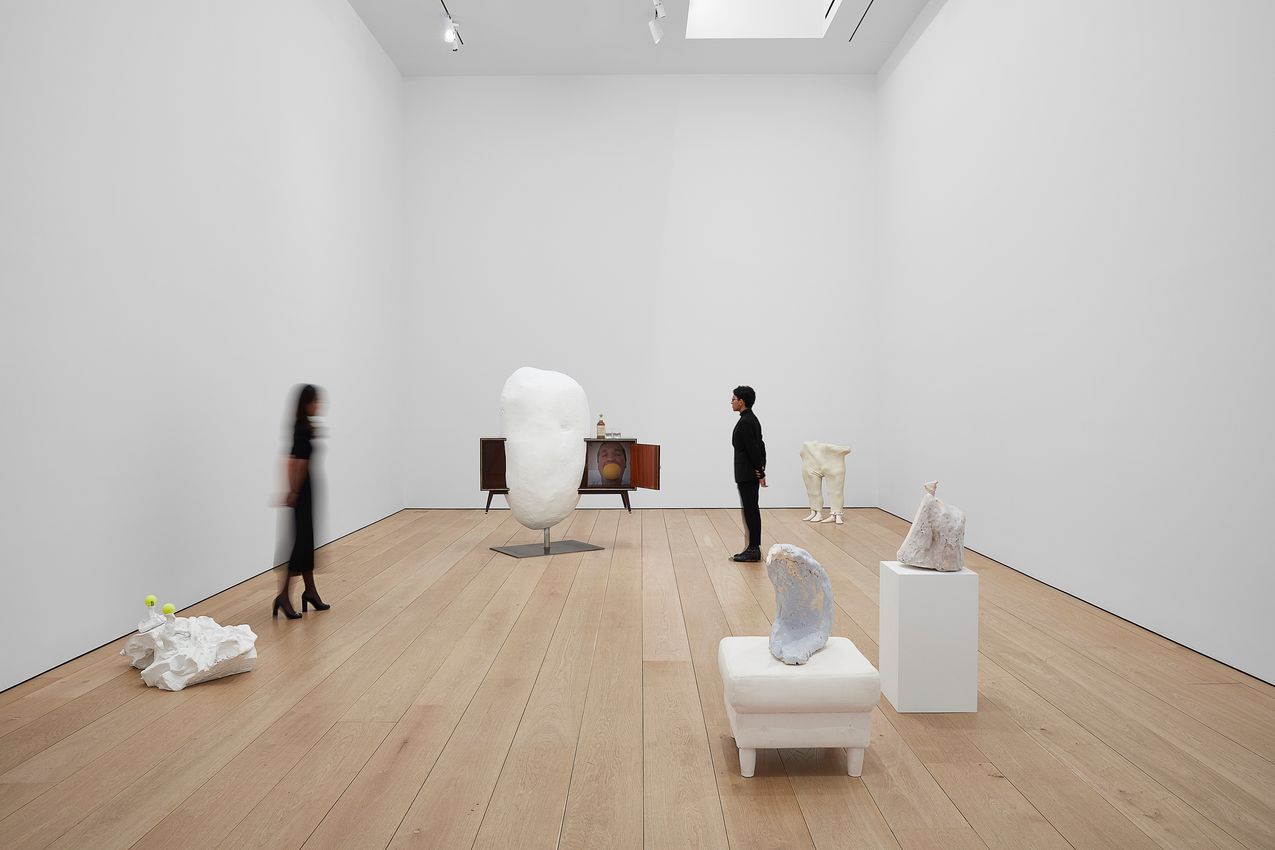
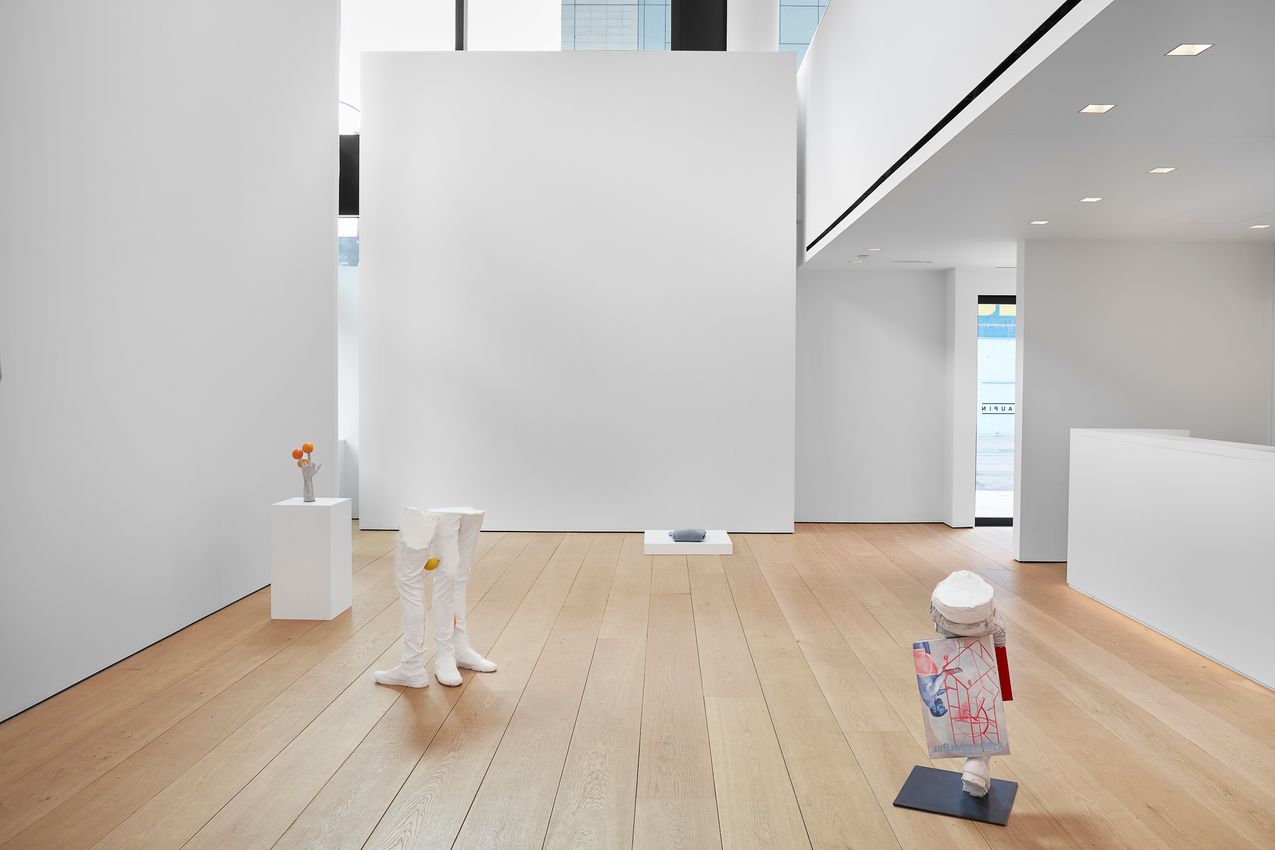
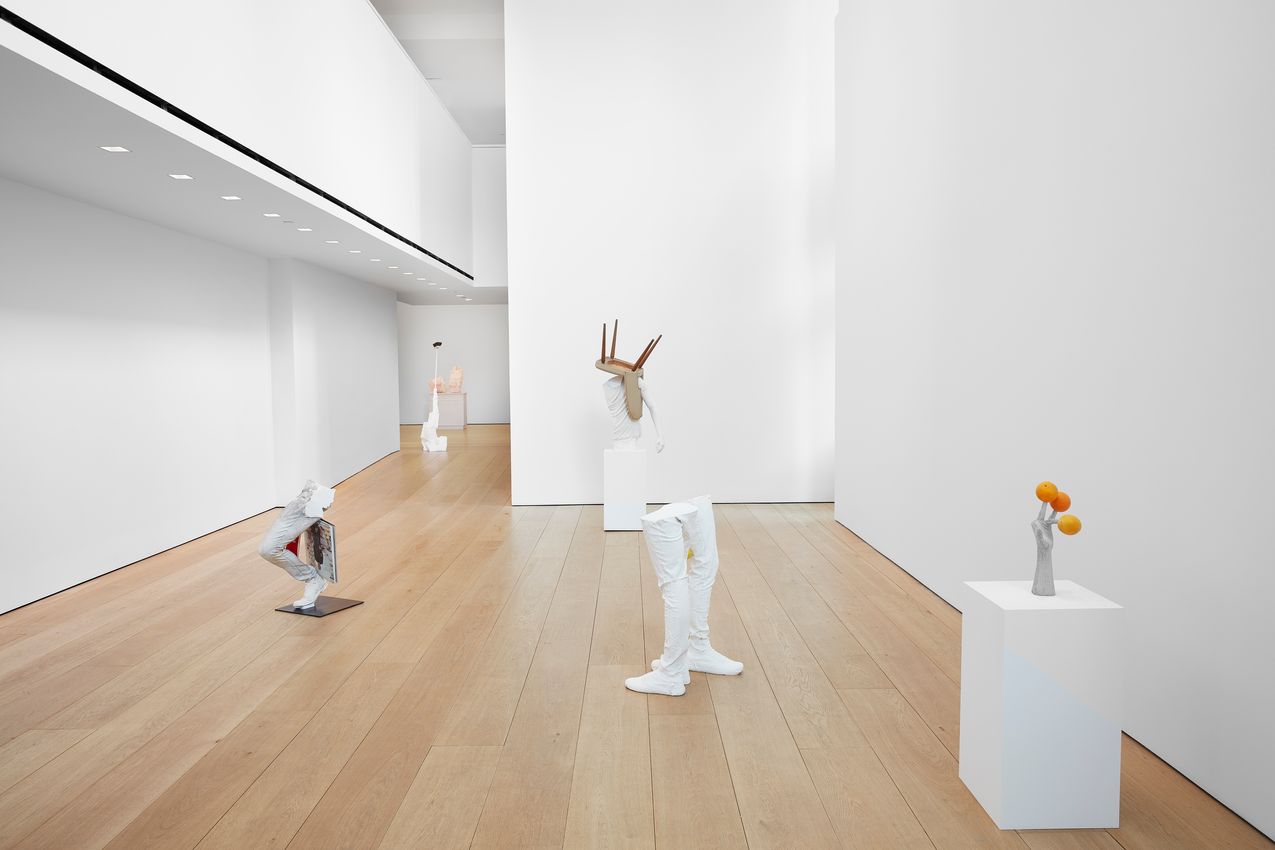
Building on this body of work, Wurm has produced a series of ‘One Minute Forever’ sculptures, where he has substituted the active human body with acrylic versions. Here he incorporates fruits or books held ‘forever’ by disembodied legs and hands, and in one work a torso resembling a Greek sculpture with a chair precariously resting on its shoulder. All of these white-painted sculptures belie a ritualised process that is characteristic of Wurm’s practice where form is abstracted and becomes absurd, thus creating a new sense of realism.

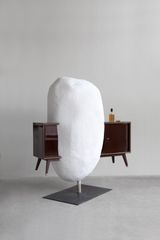
Also on view in this exhibition, Wurm’s ‘Bar’ series deploys found furniture such as a sidebar, a table, or a commode, bisected by a larger-than-life size pickle or potato-shaped white sculpture. The entire work is then used as a bar. Wurm’s disruption of both the original function and organic form of the mid-century modern furniture he employs is an engaging visual social commentary on the preciousness of art objects, antique furniture, and the ways in which we interact with our surroundings. The sculptures become emblematic of a wider history and social class―more specifically that of his native Austria’s 700-year-long monarchy―through the lens of design, manipulated and shaped by the artist.

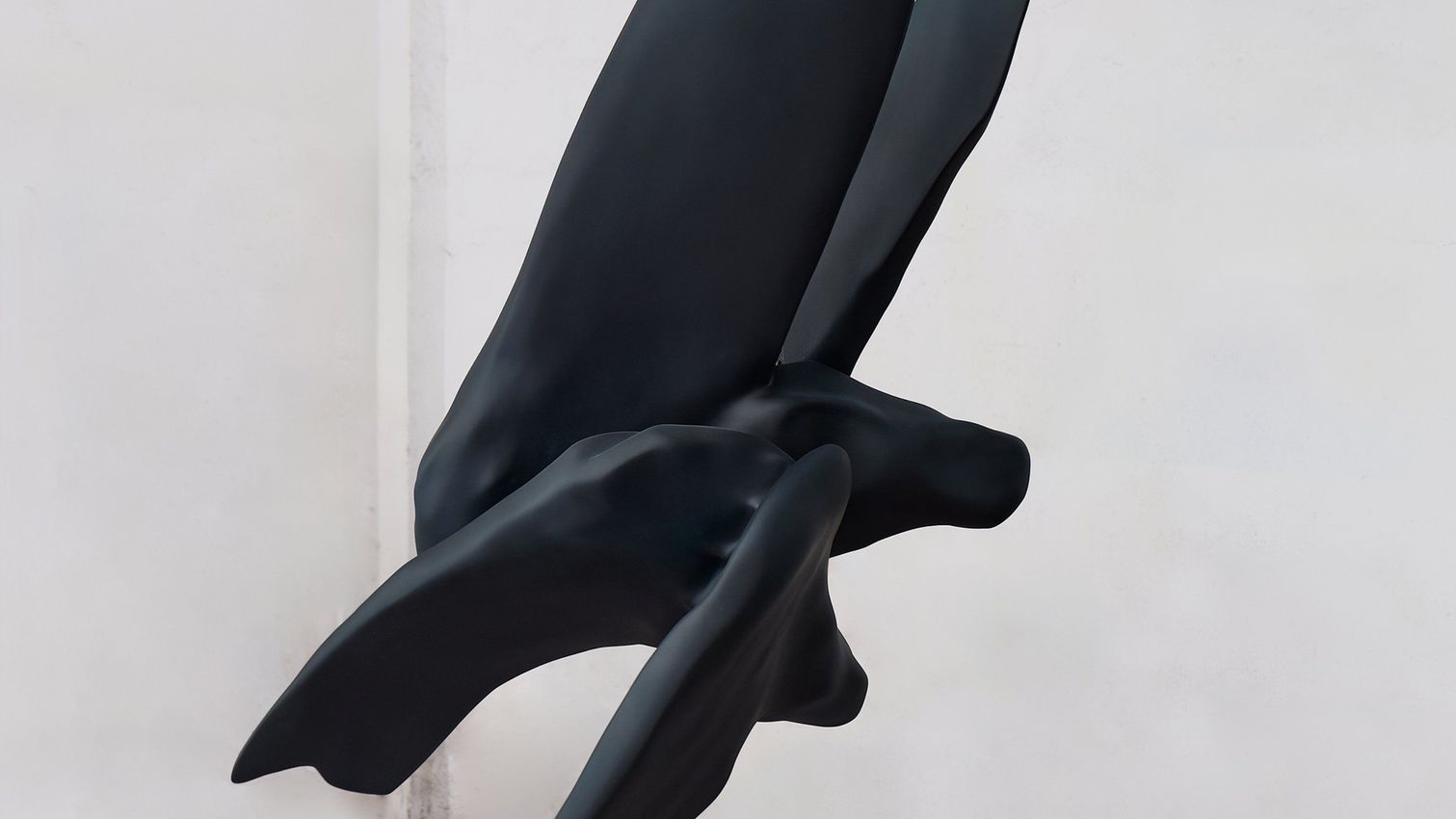
Distortion of forms is further explored in Wurm’s ‘Dissolution’ series, where body parts such as a belly button appear embedded in a sculpture abstracted to the point that new organic forms emerge, seeming both familiar and alien to the viewer. The ‘Self-Portrait’ sculptures are works that the artist shaped using the imprint of his knee onto clay and combined with everyday objects such as a broom, a plunger, or tennis balls. As the title of this body of work indicates, here the artist is reflecting himself in different everyday, mundane roles. These sculptures, as well as Wurm’s practice more broadly, are portraits of society that offer an implicit social critique of contemporary culture, emphasising the banality of the everyday and challenging and extending the possibilities of sculpture.

Erwin Wurm (b. 1954 Bruck an der Mur/Styria, Austria; lives and works in Vienna and Limberg, Austria) graduated from University of Graz, Austria, in 1977, and Gestaltungslehre University of Applied Art and Academy of Fine Art, Vienna in 1982. Recent solo exhibitions of his work have been organised at Musée d’Art Contemporain, Marseille (2019), Musée des Beaux-Arts, Marseille (2019), Musée Cantini, Marseille (2019), Vieille Charité, Marseille (2019), Vancouver Art Gallery (2019), Albertina Museum, Vienna (2018); Storage by HyundaiCard, Seoul (2018); 21er Haus, Belvedere, Vienna (2017); Museum Küppersmühle für Moderne Kunst, Duisburg, Germany (2017); Leopold Museum, Vienna (2017); Centro Cultural Banco do Brasil, São Paulo, Brazil (2017); Berlinische Galerie, Berlin (2016); Schindler House, MAK Center for Art and Architecture, West Hollywood, CA (2016); Bangkok Art and Culture Center, Thailand (2016); Indianapolis Museum of Art, IN (2015); Museum of Contemporary Art in Kraków, Poland (2013); Centro de Arte Contemporáneo de Málaga, Spain (2012); and Dallas Contemporary, TX (2012). Select group exhibitions featuring his work include Performing for the Camera, Tate Modern, London (2016); Precarious Balance, Centre of Contemporary Art, Christchurch, New Zealand (2016); Desire for Freedom, Museum of Contemporary Art in Kraków, Poland (2013); HEIMsuchung: Uncanny Spaces in Contemporary Art, Kunstmuseum Bonn, Germany (2013); The Original Copy: Photography of Sculpture, 1839 to Today, Kunsthaus Zürich, Switzerland, traveled to The Museum of Modern Art, New York (2011); and Temporary Structures: Performing Architecture in Contemporary Art, deCordova Sculpture Park and Museum, Lincoln, MA (2011). Wurm’s work is in numerous international public and private collections, including Tate Modern, London; Albertina, Vienna; Albright-Knox Art Gallery, Buffalo, New York; Centro de Arte Contemporáneo de Málaga, Spain; Centre Georges Pompidou, Paris; Kunsthaus Zürich, Switzerland; Kunstmuseum Bonn, Germany; Museo d’Arte Moderna di Bologna, Italy; The Museum of Modern Art, New York; Solomon R. Guggenheim Museum, New York; Vancouver Art Gallery, Canada; and Walker Art Center, Minneapolis.

In 2011, Wurm’s Narrow House was installed at the Palazzo Cavalli Franchetti as part of Glasstress 2011, a collateral event of the 54th Venice Biennale. In 2017, Wurm returned to Venice for the 57th Biennale, where he represented Austria.

Read More

Installation Views

About the Artist

Erwin Wurm (b. 1954 Bruck an der Mur/Styria, Austria; lives and works in Vienna and Limberg, Austria) came to prominence with his One Minute Sculptures, a project that he began in 1996/1997. In these works, Wurm gives written or drawn instructions to participants that indicate actions or poses to perform with everyday objects such as chairs, buckets, fruit, or knit sweaters. These sculptures are by nature ephemeral, and by incorporating photography and performance into the process, he challenges the formal qualities of the medium as well as the boundaries between performance and daily life and spectator and participant. While in this series he explores the idea of the human body as sculpture, in some of his more recent work, he anthropomorphises everyday objects in unsettling ways, like contorting sausage-like forms into bronze sculptures in Abstract Sculptures, or distorting and bloating the volume and shape of a car in Fat Car. Wurm considers the physical act of gaining and losing weight a sculptural gesture, and often creates the illusion of bodily growth or shrinkage in his work. While Wurm considers humour an important tool in his work, there is always an underlying social critique of contemporary culture, particularly in response to the Capitalist influences and resulting societal pressures that the artist sees as contrary to our internal ideals. Wurm emphasises this dichotomy by working within the liminal space between high and low and merging genres to explore what he views as a farcical and invented reality.

View Artist Profile

Also Exhibiting

About the Gallery

Rachel Lehmann and David Maupin founded Lehmann Maupin in 1996. The gallery represents a diverse range of American artists, as well as artists and estates from across Europe, Asia, Africa, South America, and the Middle East. It has been instrumental in introducing numerous artists from around the world in their first New York exhibitions.

View Gallery Profile
Address
501 West 24th Street
New York
United States
Opening Hours
Tuesday – Saturday
10am – 6pm
(1)
New York 501 West 24th Street
Lehmann Maupin
501 West 24th Street, New York, United States

Opening hours
Tuesday – Saturday
10am – 6pm
The art world in focus