



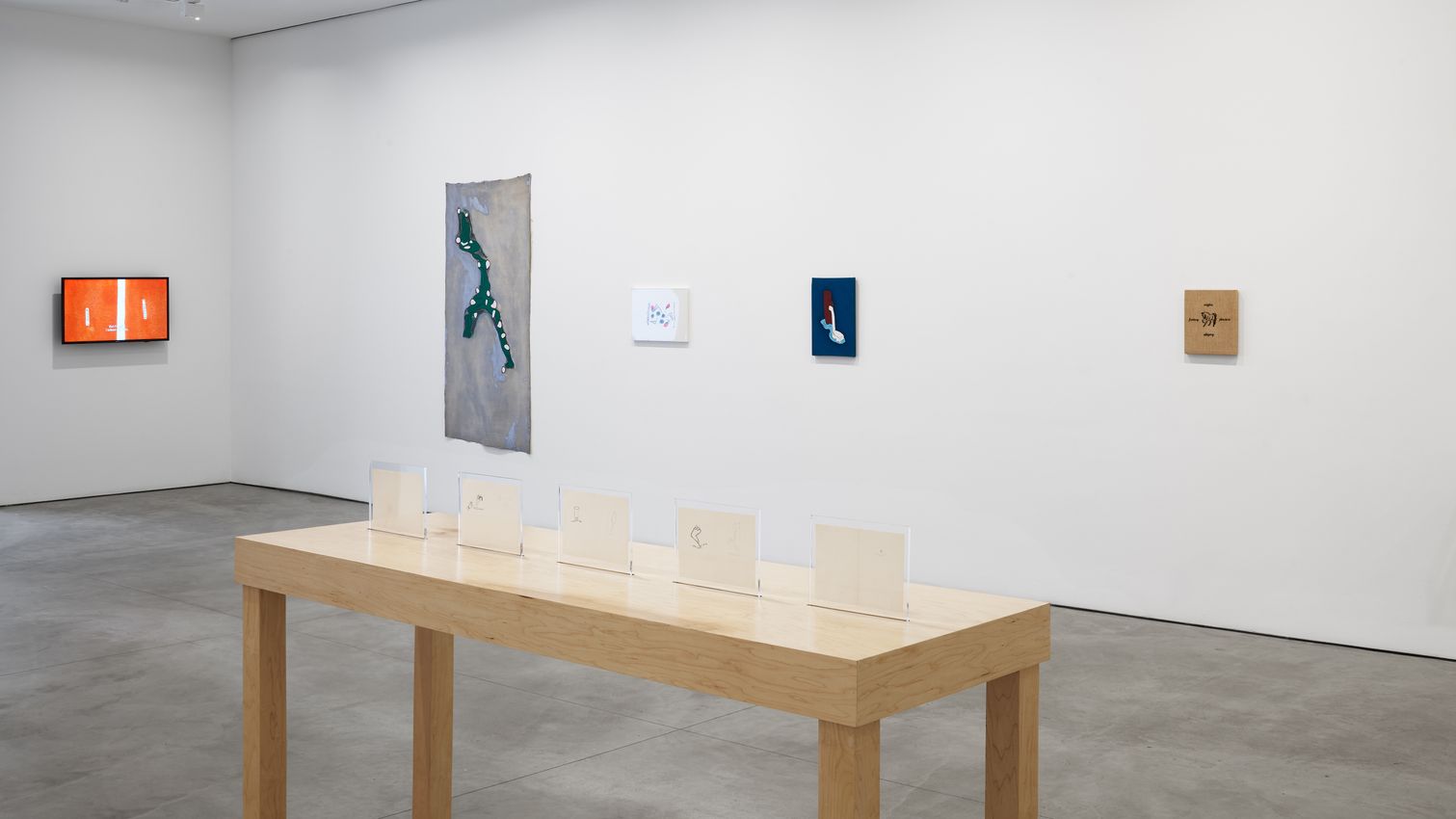
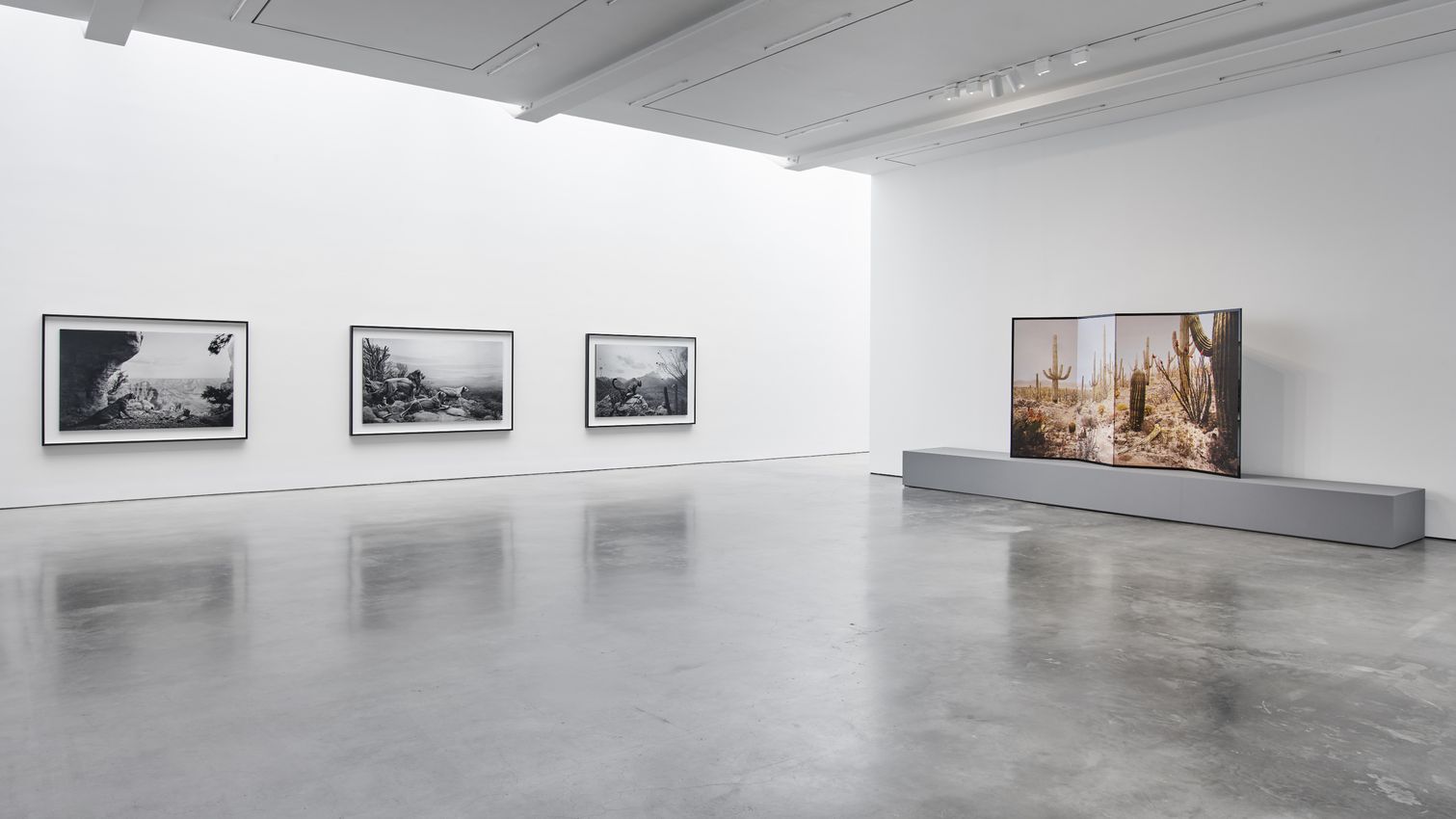
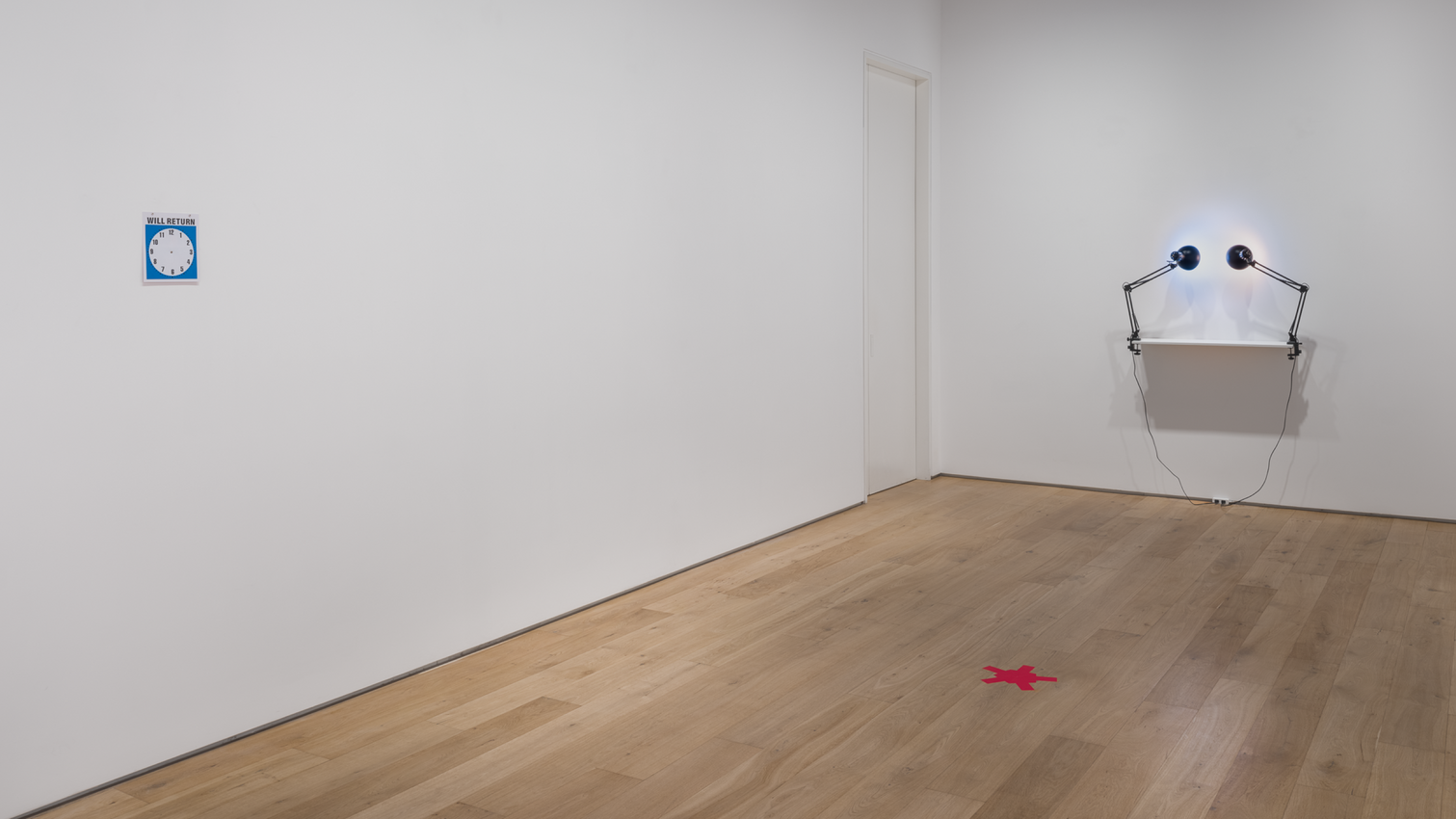
Just over one year ago, we lost a wonderful artist and friend in Dan Graham. The artist will be honoured in a Memorial to be held at the Metropolitan Museum of New York, on March 31st, on what would have been his 81st birthday. Lisson Gallery, 303 Gallery, Marian Goodman Gallery, 3A Gallery, The Museum of Modern Art and Printed Matter are honoured to present works by Graham across their NYC gallery spaces to coincide with the memorial, paying tribute to a figure whose legacy extends beyond his art making and will continue to be felt by the many who encountered Graham while he was alive.
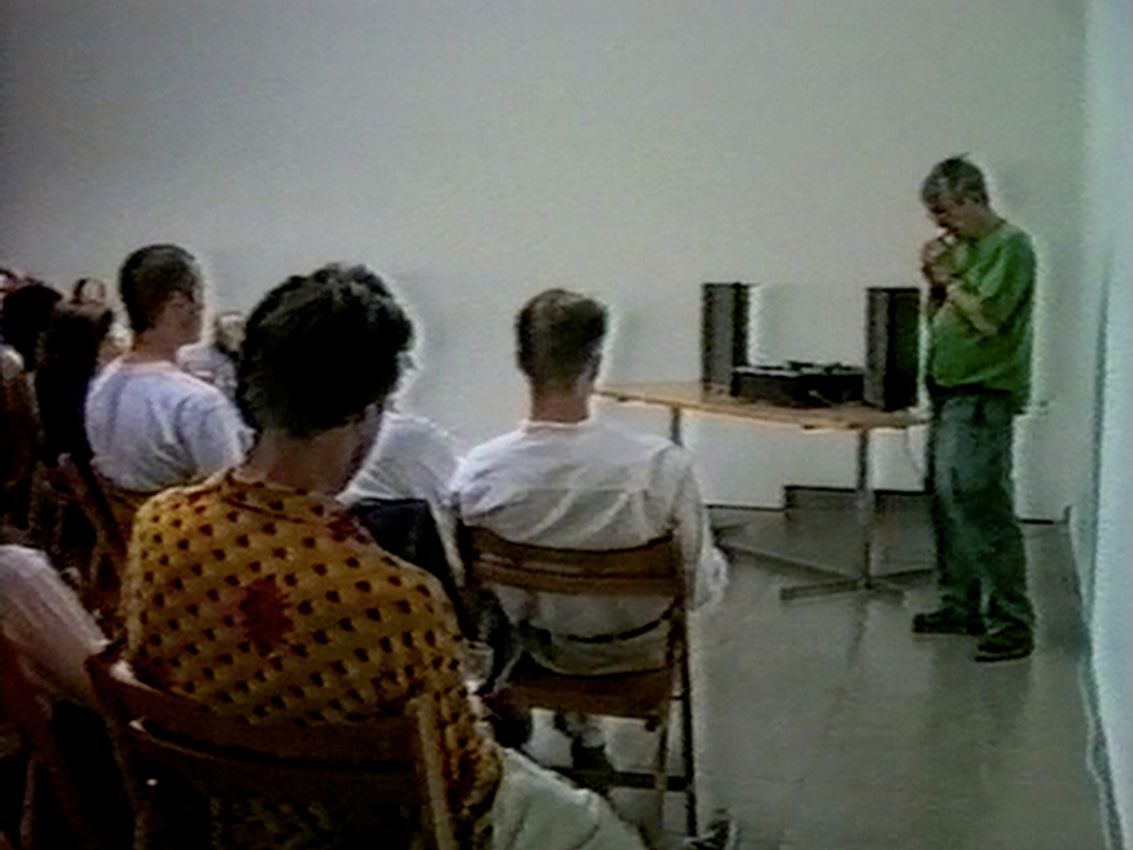
Dan Graham’s work questioned the relationship between architecture and its psychological effects on the spectator. His inquiries remain as poignant today as they did in the 1970’s when Graham first explored issues such as ‘the performative’, exhibitionism, reflection, mirroring and the mundane. Lisson Gallery is pleased to present footage of three seminal performances by Graham: _Past / Future / Split Attention _(1972), Performer / Audience / Mirror (1975), and _Lax / Relax _(1969-1995, footage of performance in 1995). Dan Graham did not view footage of his performances as strictly documentation, but rather as extensions of the performances themselves.
In Past / Future / Split Attention, Graham focuses on the assumption of time in the perception of oneself and others. Performed at Lisson Gallery in London, Graham placed two people in the same space, representing the present. The first person begins by predicting the future behaviour of their counterpart, and the second recounts the past of the first from memory. Graham writes: ‘For one to see the other in terms of the present (attention), there is a mirror reflection or closed figure-eight feedback/feedahead loop of past/future. One person’s behaviour reciprocally reflects/depends upon the other’s, so that each one’s information is seen as a reflection of the effect that their own just-past behaviour has had in reversed tense, as perceived from the other’s view of himself.’
Also performed at Lisson Gallery, Lax / Relax studies the appeal of a modified states of consciousness. Graham presents himself to the audience with a tape recorder and a microphone. A pre-recorded female voice softly announces ‘lax’ and Graham responds with ‘relax’, generating an auditory sensation that mirrors the inhale-exhale practice used in yoga. Inspired by Steve Reich’s phasing technique, Graham creates a minimalist, trance-like rhythm.
The presentation concludes with Dan Graham’s critical Performer Audience Mirror. Introducing audience participation for the first time in his practice, Graham situates himself between a large mirror and the crowd. The audience views themselves as the subject of their gaze usually reserved for artworks themselves. Filmed in his San Francisco studio, Graham first faces the audience and embarks on a stream-of-conscious monologue describing both the audience and himself. He then turns to the mirror and describes the reflected gathering. Graham explained, ‘first, a person in the audience sees himself ‘objectively’ (‘subjectively’) perceived by himself, next he hears himself described ‘objectively’ (‘subjectively’) in terms of the performer’s perception.’
A new essay by Specific Object President David Platzker accompanies the exhibition. Before founding Specific Object, Platzker was the Curator of Drawings and Prints at MoMA, New York from 2013-2018, and Executive Director of Printed Matter from 1998 to 2004. Platzker has curated presentations of John Baldessari, Hanne Darboven, Marcel Duchamp, Guerrilla Girls, Jenny Holzer, Yoko Ono, Raymond Pettibon, Ed Ruscha, and Claes Oldenburg, as well as There Will Never Be Silence: Scoring John Cage’s 4’33” in collaboration with Jon Hendricks at MoMA in 2013.
For fifty years, Dan Graham has traced the symbiosis between architectural environments and their inhabitants. With a practice that encompasses curating, writing, performance, installation, video, photography and architecture, his analytical bent first came to attention with Homes for America, 1966–1967, a sequence of photos of suburban development in New Jersey, accompanied by a text charting the economics of land use and the obsolescence of architecture and craftsmanship. Graham’s critical engagement manifests most alluringly in the glass and mirrored pavilions, which he has designed since the late 1970s and which have been realised in sites all over the world. These instruments of reflection – visual and cognitive – highlight the voyeuristic elements of design in the built world; poised between sculpture and architecture, they glean a sparseness from 1960s Minimalism, redolent of Grahams’s emergence in New York in the 1960s alongside Sol Le Witt, Donald Judd and Robert Smithson. Graham himself has described his work and its various manifestations as ‘geometric forms inhabited and activated by the presence of the viewer, [producing] a sense of uneasiness and psychological alienation through a constant play between feelings of inclusion and exclusion.’ The pavilions draw attention to buildings as instruments of expression, psychological strongholds, markers of social change and prisms through which we view others and ourselves.


Established in 1967 in London, Lisson Gallery is one of the most well-known galleries operating globally. Boasting an influential and continuing legacy, including playing a pivotal role in the careers of many pioneers of historically important art movements, the gallery works with some of the most significant contemporary artists today.

A respected voice in contemporary art discourse.
Focusing on ambitious storytelling and insightful art-world commentary. Ocula Magazine publishes in-depth interviews, critical essays and timely analysis on the artists, exhibitions and ideas driving the global art world.
Learn more about Ocula Magazine
Showcasing the best of the art world.
Ocula partners with galleries from around the world to highlight their artists, artworks and exhibitions. Gallery membership is by application and invitation, with each member vetted by an independent panel.
Learn more about Ocula Membership

Specialises in the sale of major artworks.
Led by a team with deep ties to the world’s leading auction houses, galleries and collectors. Ocula’s advisory team offers bespoke services to high-net-worth clients from around the world who are looking to acquire the best of contemporary and modern art.
Learn more about our team and services
