When I look into the eyes of a primate, I feel like they can see into the depths of my soul and, beyond their silence,there is a knowing that, perhaps, language and numbers have certified our demise. We are looking for somethingthat had already found us, a state of stasis.
– Ryan Gander, June 2021
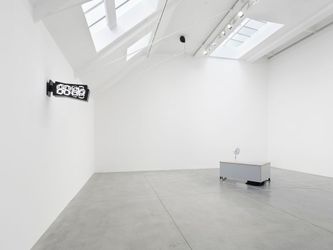
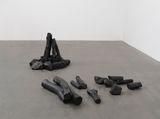
Ryan Gander‘s new exhibition for Lisson Gallery explores the relationship between our evolutionary past and theways in which we live today in societies driven by capitalist growth, speed and progress. The exhibition raisespertinent questions; how would the world look if humans had not learnt to count? How do we place value on timein a 24/7 world that demands our constant attention? Included in the exhibition is a major new animatronicinstallation, a new series of figurative bronze sculptures, several poetic and typographic compositions etched intosteel plates, and an over-animated documentary, originally made for the BBC–all speaking to notions of the Selfand the dramaturgical nature of the masks we choose to wear, and the masks that choose to wear us.
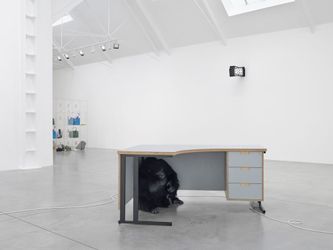
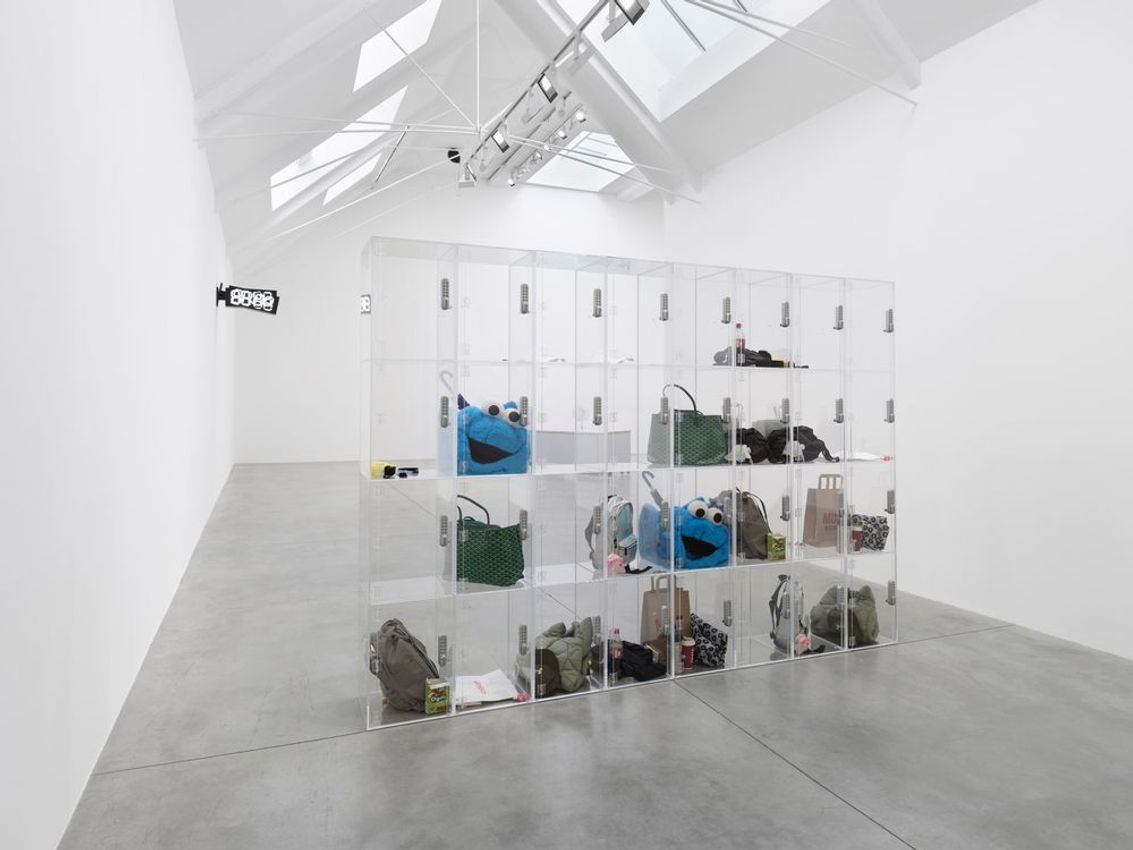
Upon entering the gallery, viewers encounter a wall of transparent lockers containing personal effects, acorporate-looking office desk with an electric floor fan, and a digital wall clock. At second glance, all is not as itfirst appears. The contents of nine of the lockers are duplicated, each replicated and identically arranged acrosstwo units. The wall clock merges two displays into a single object, diverging at odd angles, creating an effect ofdouble-vision. A strong odour of damp and urine emanates from behind the office desk, blown by the whirringfan. Slumped beneath the desktop is a life-size female gorilla. Seemingly timid, she displays a desire to learn,using fingers to notate units. The purpose of her act of recording, whether units of time, currency or anaccumulation or decline of another quantity, remains unclear.
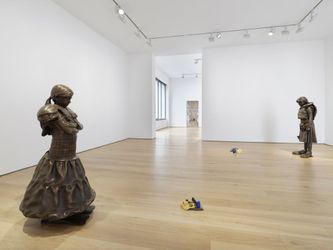
In the front and side galleries are works from a new series:Know not your place in the world (2023). Two life-size bronze figurative sculptures of the artist’s eldest and middle children are dressed up in an amalgamation ofclothes, costumes and props of their own choosing, as opposed to garments suggested by function or socialconvention. Their gaze is fixed on a mask painted in matt and gloss colours, positioned on the floor at their feet.The sculptures relate to Gander’s investigations into ‘play’ and ‘make-believe’ as catalysts for creativity, nomatter your age. This new body of work has expanded from a forthcoming permanent public commission forElephant Park in the London Borough of Southwark, conceived and developed with the local community.
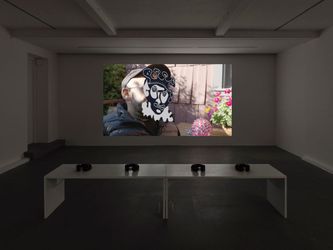
Screened in the lower floor gallery is Only a matter of time (2020), a reworked documentary exploring ouridentity in the age of information, rapid technological advancement and attention economy. Through looking at anumber of contemporary practices of self-fashioning and -preservation, from self-broadcasting to millions offollowers on social media to cryogenically freezing the dead for the future, Gander considers how the enduringquestion–who are we?–is radically redefined in the 21st century, and whether the idea of our actual selves cankeep up with the technology that enables it. Gander revisits the documentary for the gallery context, over-annotating and -animating it so that every time he appears on screen, his face is obscured by a different mask.Each mask takes its style from an abstracted face featured in work by Pablo Picasso–a connection to Gander’swork in the 2017 exhibition Faces of Picasso: The Collection Selected by Ryan Gander at Remai Modern,Saskatoon, Canada.
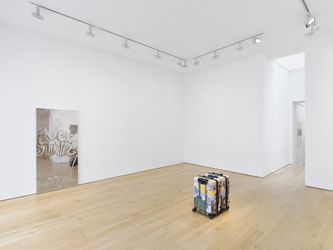
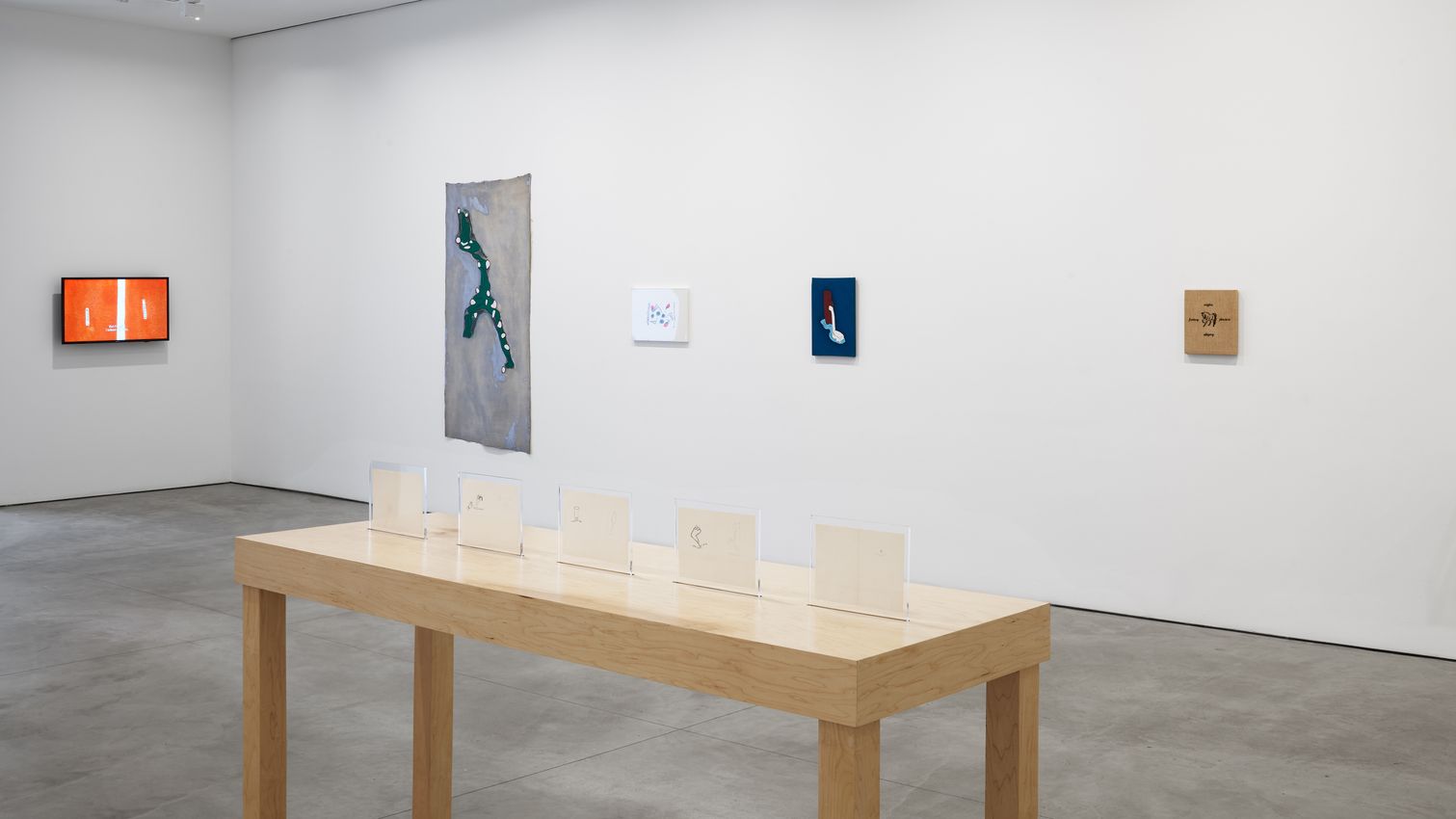
Displayed throughout the exhibition are steel plates bearing Gander’s poetic and typographic compositions.Everyday. You’re my best machine...__(Ee Ouw Arh...) (2023) presents the first sounds humans learnt to make50,000 years ago. Elsewhere in the show, a stainless steel door features a sculptural bas-relief depicting language in multiple registers, from official signage to informal markings and graffiti, as found on a door encountered byGander and referenced in the work’s title (Temporal Departures (37 St James St South, Manchester), (2023).Following fabrication, a spell is cast onto the sculpture by the artist, transforming it into a magic portal with thepotential–dependent on the viewers imaginative and cognitive abilities–to transport one to a desired alternateplace and time.


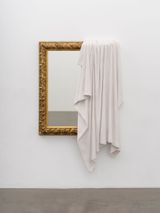
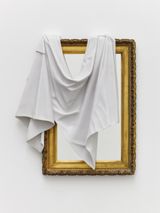
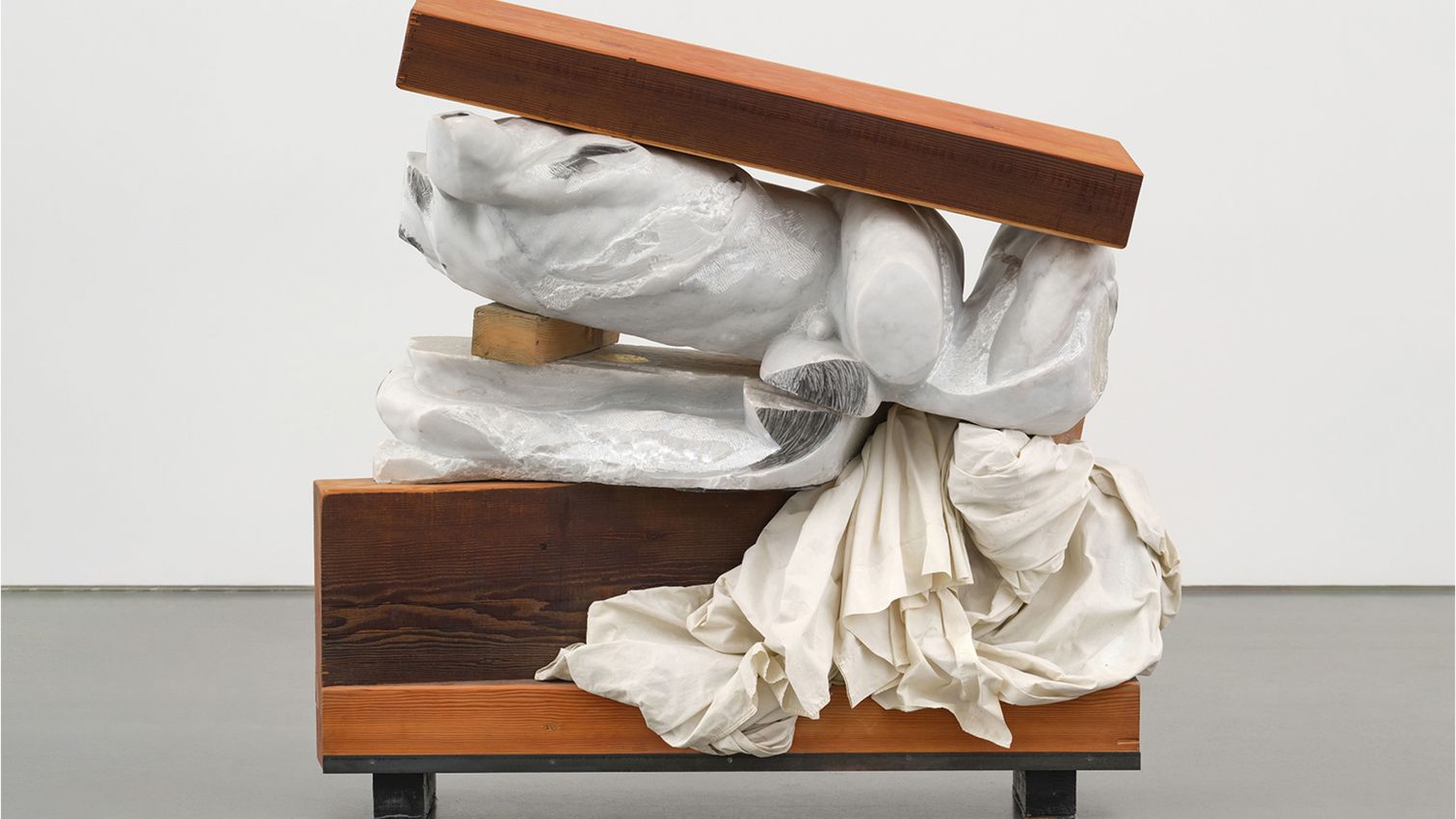
Ryan Gander’s complex and unfettered conceptual practice is stimulated by queries, investigations or what-ifs, rather than strict rules or limits. For example, what if a child’s den of sheets were remade in memorialising marble (Tell My Mother not to Worry (ii), 2012)? What if all the pieces in a chess set were remade in Zebra Wood, so that neither side was entirely black nor white (Bauhaus Revisited, 2003)? Gander is a cultural magpie in the widest sense, polymathically taking popular notions apart only to rebuild them in new ways – perhaps by refilming the same ten-second clip 50 times over, as in Man on a Bridge (A study of David Lange), 2008. Language and storytelling play an overarching role in his work, not least in his series of Loose Association lectures or in his attempt to slip a nonsensical, palindromic new word, ‘mitim’, into the English language. Occasionally his ludic concepts drift into more bodily, relational challenges, especially in This Consequence of 2006, that involved the unsettling presence of a gallery owner or invigilator dressed in an all-white Adidas tracksuit, with an additional sinister red stain embroidered into the fabric. Invitation and collaboration are also at the heart of Gander’s fugitive art – whether he’s exchanging fictionalised newspaper obituaries with an artist-friend or taking pictures of people looking at pictures at an art fair – although arguably every solipsistic action he takes merely holds up yet another mirror to his ceaselessly voracious mind.


Established in 1967 in London, Lisson Gallery is one of the most well-known galleries operating globally. Boasting an influential and continuing legacy, including playing a pivotal role in the careers of many pioneers of historically important art movements, the gallery works with some of the most significant contemporary artists today.

A respected voice in contemporary art discourse.
Focusing on ambitious storytelling and insightful art-world commentary. Ocula Magazine publishes in-depth interviews, critical essays and timely analysis on the artists, exhibitions and ideas driving the global art world.
Learn more about Ocula Magazine
Showcasing the best of the art world.
Ocula partners with galleries from around the world to highlight their artists, artworks and exhibitions. Gallery membership is by application and invitation, with each member vetted by an independent panel.
Learn more about Ocula Membership

Specialises in the sale of major artworks.
Led by a team with deep ties to the world’s leading auction houses, galleries and collectors. Ocula’s advisory team offers bespoke services to high-net-worth clients from around the world who are looking to acquire the best of contemporary and modern art.
Learn more about our team and services