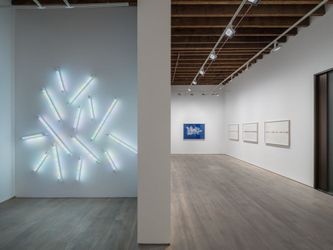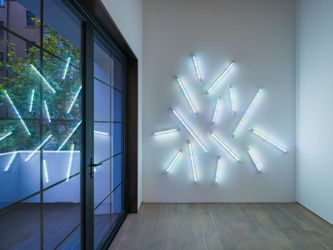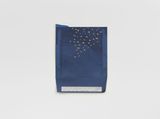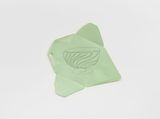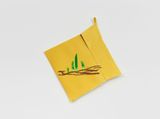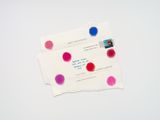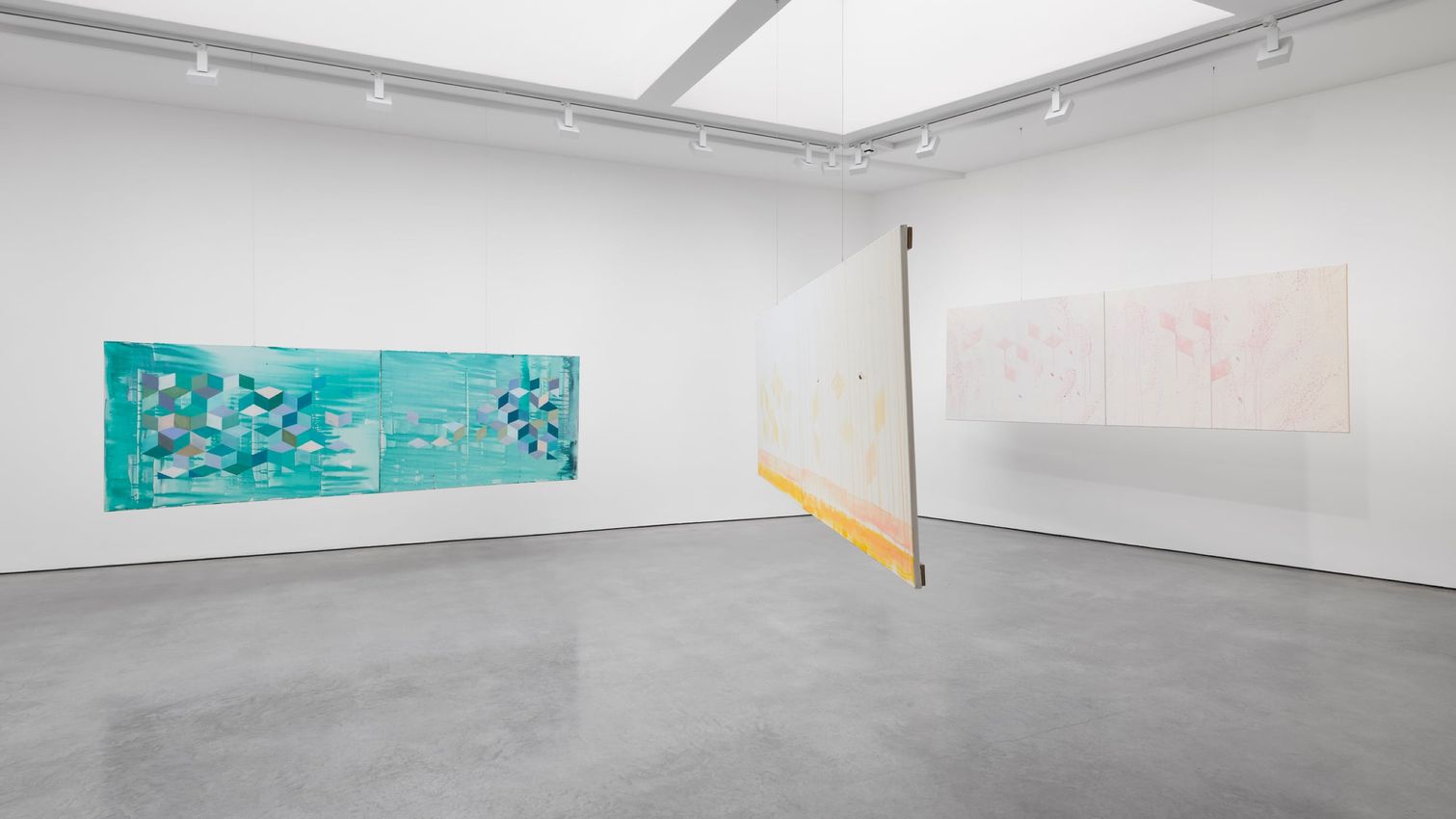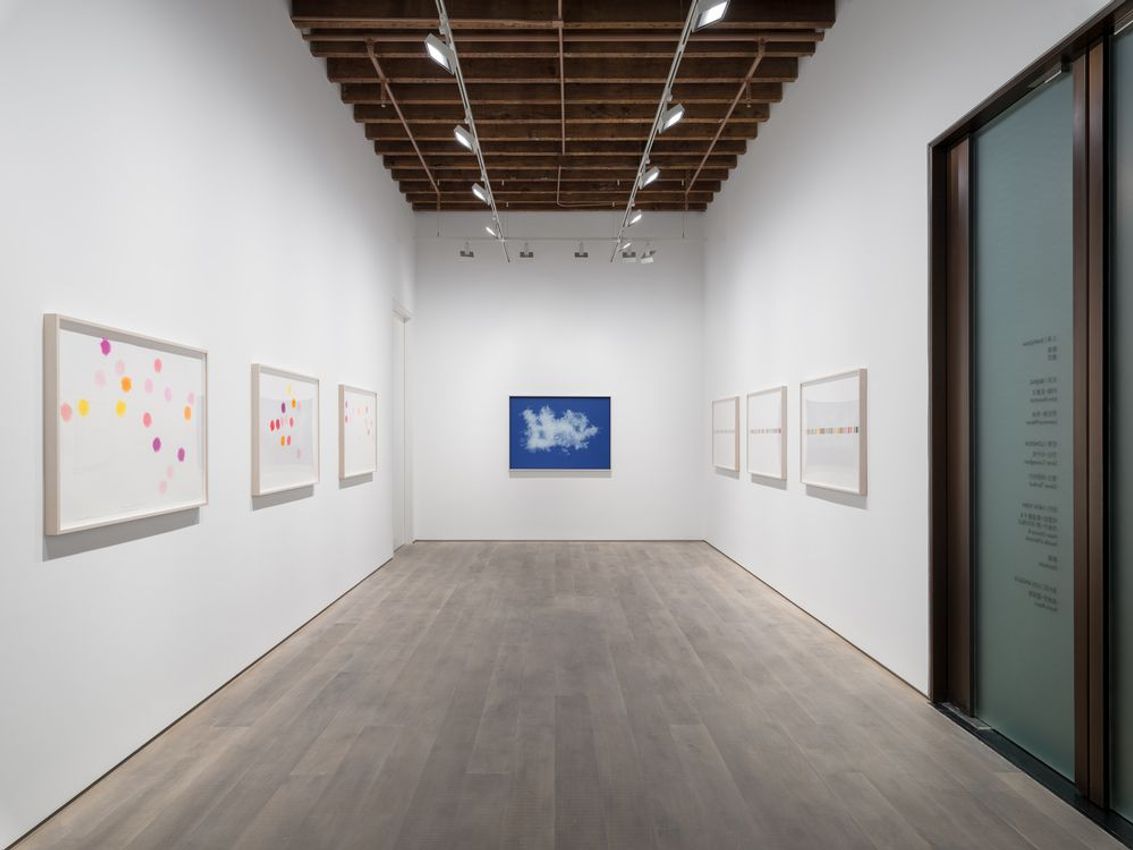
Lisson Gallery is delighted to present the first solo exhibition in China by the New York-based artist,Spencer Finch. The exhibition features new and recent work including an LED light installation, a series ofpastel on paper works, watercolour drawings, and Pantone swatches with pencil on paper. Each work is aconceptually condensed chronicle of a journey or experience, often an interaction between the artist andnature: from the study of the opacity and translucency of a cloud, to the tracing of a bee’s flight pattern as itpollinates flowers in a garden.
The title of the presentation, Forever is composed of Nows, is borrowed from an Emily Dickinson book ofpoems. The title reflects how – while each individual work in the exhibition is an observation of a definedmoment or event – together, these snapshots create a panoptic whole, each a recording of Finch’sextraordinary experiments, challenging himself to capture ineffable temporal and sensory experiences usinga variety of everyday materials and tools.
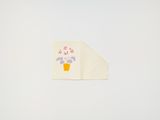
Inspired by Monet’s practice of planting a garden with the express intention of painting it, Finch’s Followinga bee (2021) is a series of drawings centered around a large bunch of zinnia flowers, planted for this purposeby the artist from seeds. Perched on a ladder above the flowers, Finch followed each bee’s flight pattern as itcross-pollinated the zinnia, creating a line in acetate as a surrealistic trace of their journey. Finch thenselected one each of the varieties of zinnias and matched the colours using pastel.
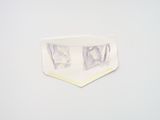
Alongside this is the LED work, Reciting poetry at the greening of spring (2023), produced following arecent visit to The Getty Center in Los Angeles where he saw the Chinese painter Wu Li’s hanging scroll,Reciting Poetry before the Yellowing of Autumn (1674). Finch then recited two poems to the trees in ProspectPark, Brooklyn – There’s a little madness in the Spring by Emily Dickinson, and O sweet spontaneous byE.E. Cummings – and, inspired by J. M. W. Turner’s mastery of light and atmosphere, translated the hues heobserved into a series of LED tubes filtered with bands of colour. Similarly, in Cloud (cumulus, GlacierNational Park) (2023) Finch studied the opacity and translucency of a cloud using 3M ‘magic tape’ toarticulate the subtle changes in cloud formation, serving as a poetic alternative to the hypnotic experience ofgazing into the sky.
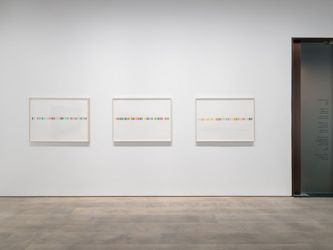
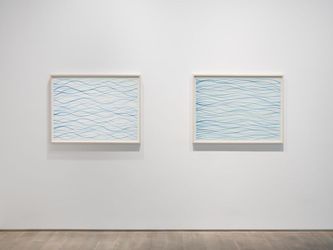
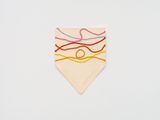
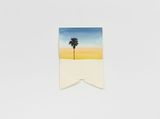
The exhibition also features two watercolour drawings, Pacific Ocean Laguna Beach, LA 7/27/14 (2015) andAtlantic Ocean from Isle au Haut (2017), from an ongoing series based on observations of various bodies ofwater at different times of day, translating the immense, vast forces of nature into delicate, graceful lines.Alongside this are three works from the series titled, Study for Ulysses (Coney Island) (2023), titled afterJames Joyce’s novel, which document a day of wandering as a series of fleeting colour sensations. Frommorning to night, Finch extracted and abstracted colours from his environment using the commercial colour-matching system Pantone. Arranged in the gallery, these works echo not only the artist’s physicalmovements throughout the day, but also the journey of his mind – the shifts in hue and tone mirroring eachnew interruption or encounter in consciousness.


Spencer Finch is best known for ethereal light installations that visualise his experience of natural phenomena. His investigations into the nature of light, colour, memory and perception proceed in watercolours, drawings, video and photographs. Finch distills his observations of the world into glowing abstract colour but also diverts them through cultural and historical filters: in homage to Emily Dickinson’s 1862 poem ‘Before I got my eye put out’, he measured the sunlight in her Massachusetts garden then recreated the effect of a passing cloud by means of fluorescent tubes covered in gel and suspended theatre filters. He has painted the changing shades of grey on Sigmund Freud’s ceiling in Vienna, viewed from the psychoanalyst’s couch and later, in 102 Colors from My Dreams, 2002, recorded the colours he saw in his sleep then colour-matched inks to make a sequence of Rorschach blots. Compelled by what he describes as ‘the impossible desire to see oneself seeing’, Finch holds up an enchanting prism between the outer world and inner thought.


Established in 1967 in London, Lisson Gallery is one of the most well-known galleries operating globally. Boasting an influential and continuing legacy, including playing a pivotal role in the careers of many pioneers of historically important art movements, the gallery works with some of the most significant contemporary artists today.

A respected voice in contemporary art discourse.
Focusing on ambitious storytelling and insightful art-world commentary. Ocula Magazine publishes in-depth interviews, critical essays and timely analysis on the artists, exhibitions and ideas driving the global art world.
Learn more about Ocula Magazine
Showcasing the best of the art world.
Ocula partners with galleries from around the world to highlight their artists, artworks and exhibitions. Gallery membership is by application and invitation, with each member vetted by an independent panel.
Learn more about Ocula Membership

Specialises in the sale of major artworks.
Led by a team with deep ties to the world’s leading auction houses, galleries and collectors. Ocula’s advisory team offers bespoke services to high-net-worth clients from around the world who are looking to acquire the best of contemporary and modern art.
Learn more about our team and services