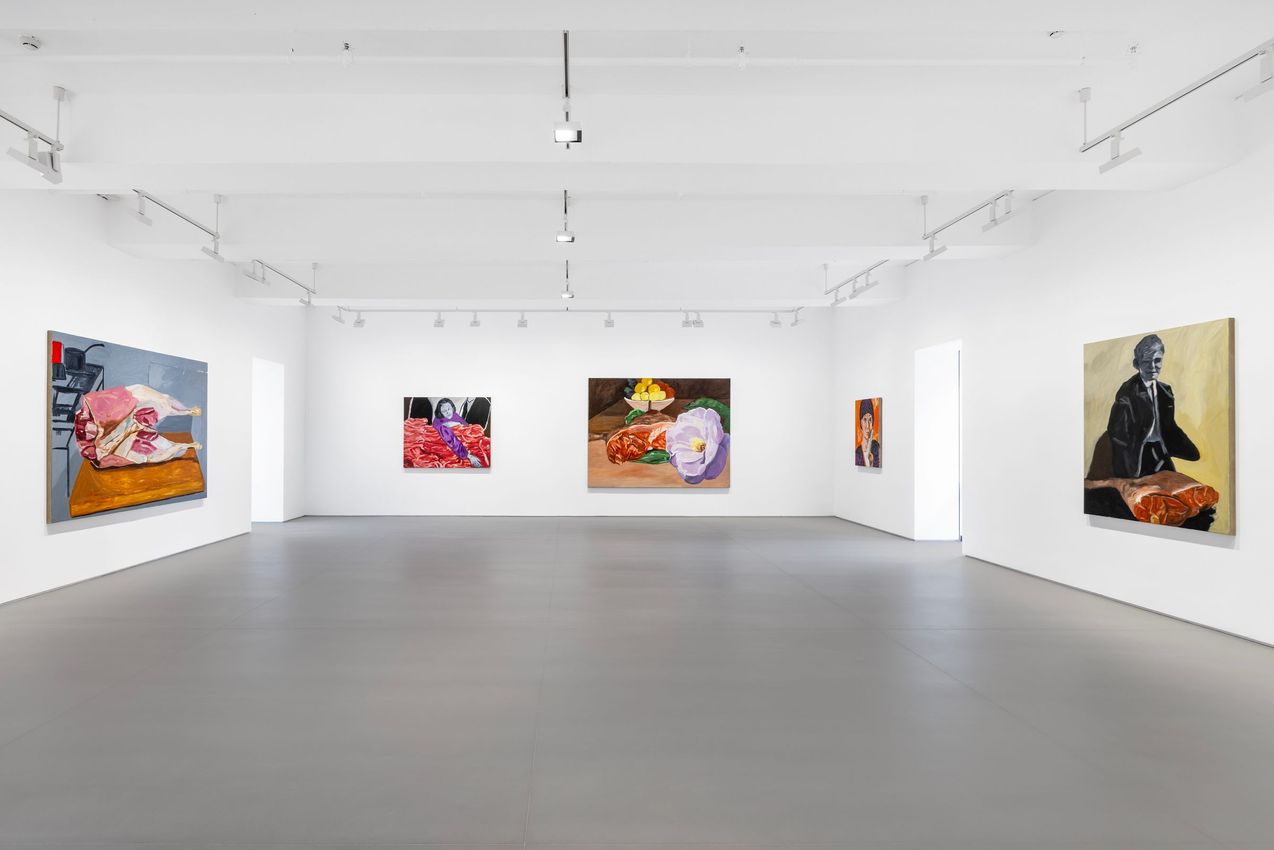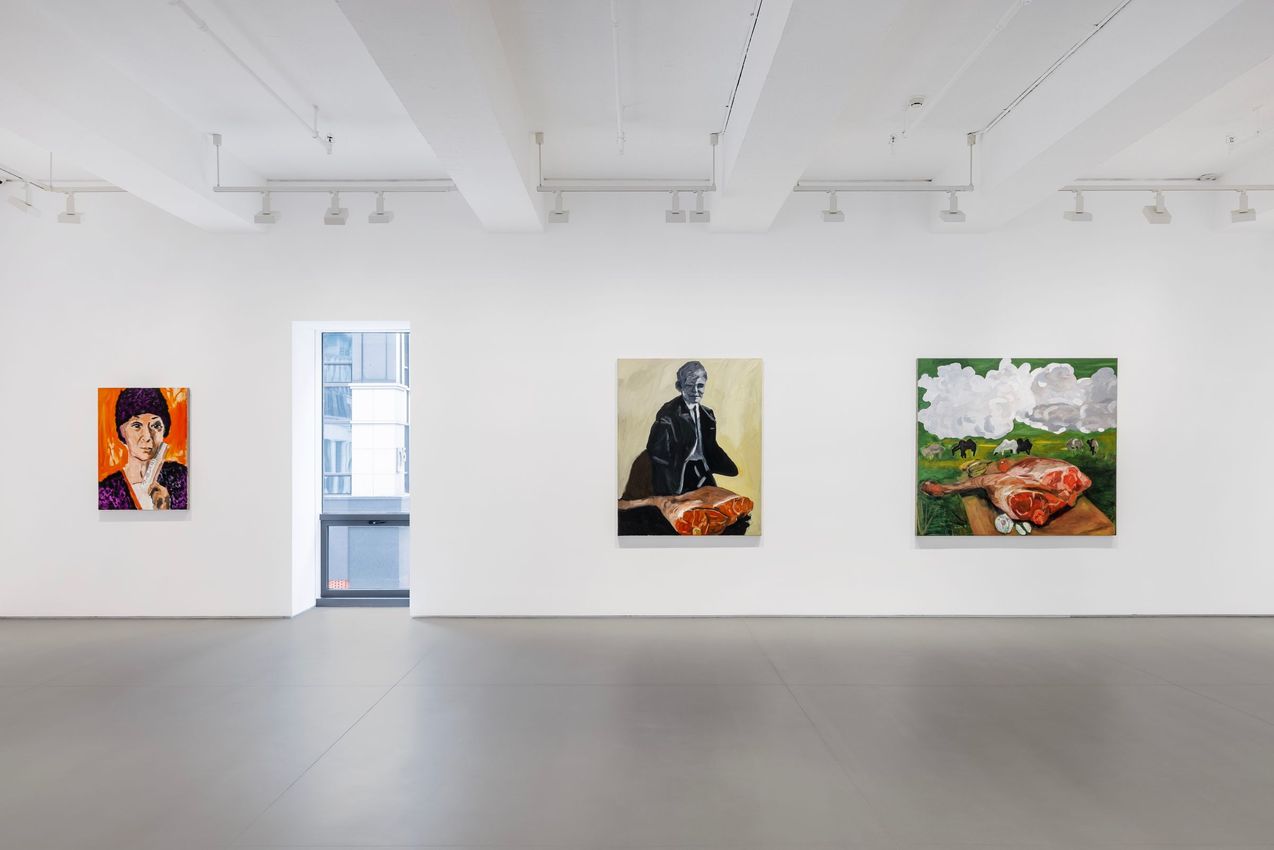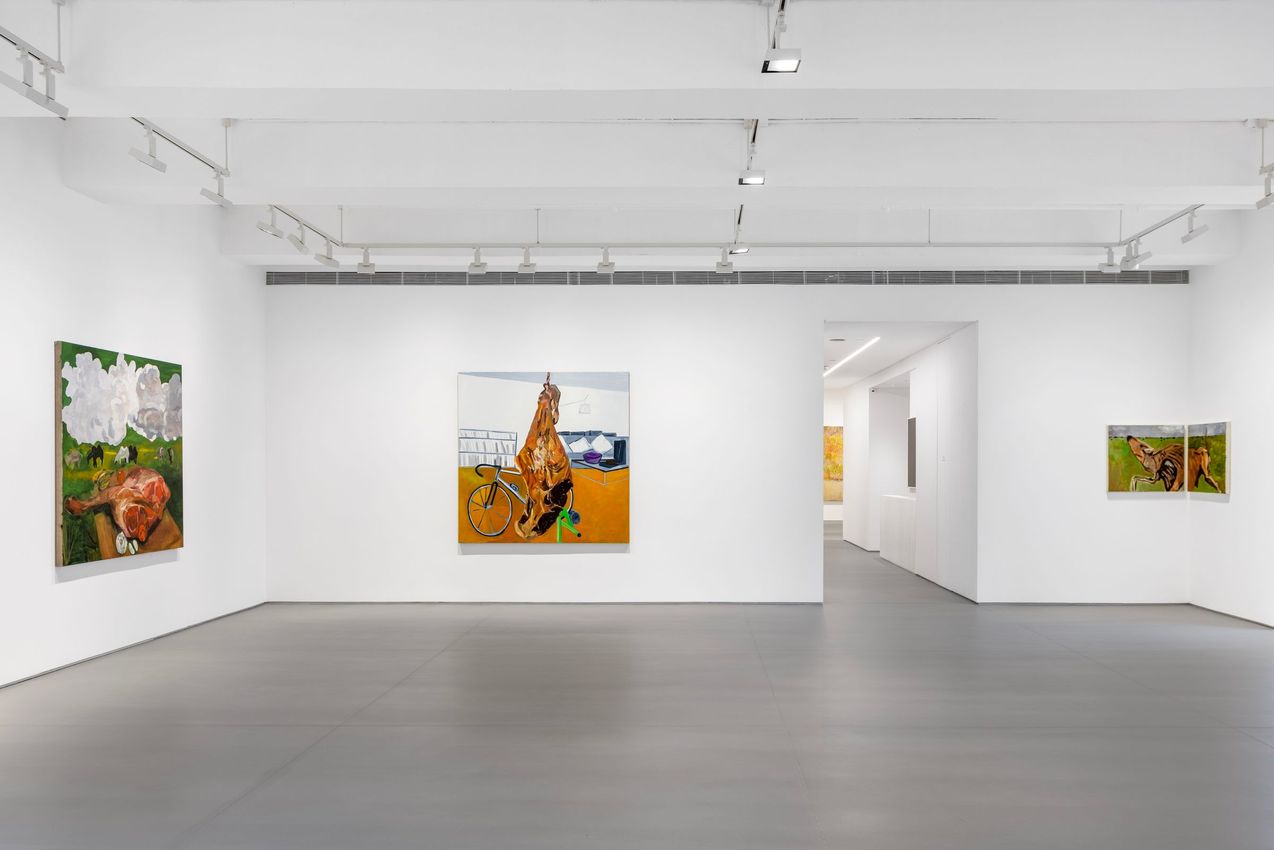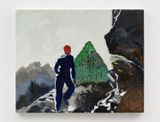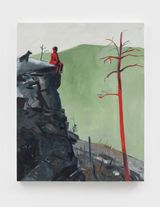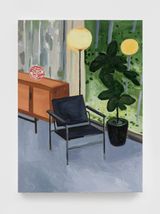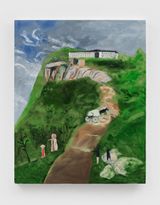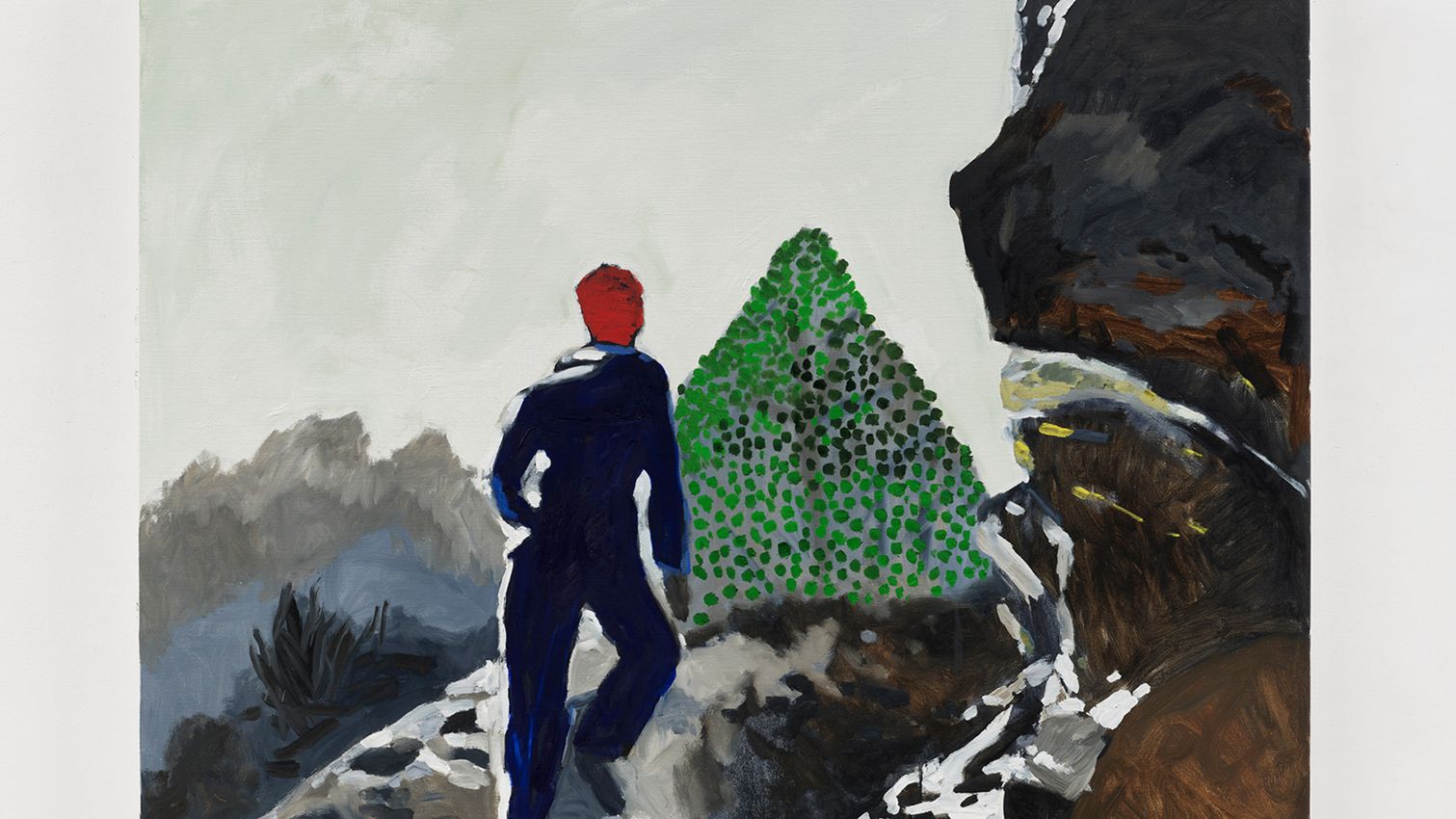




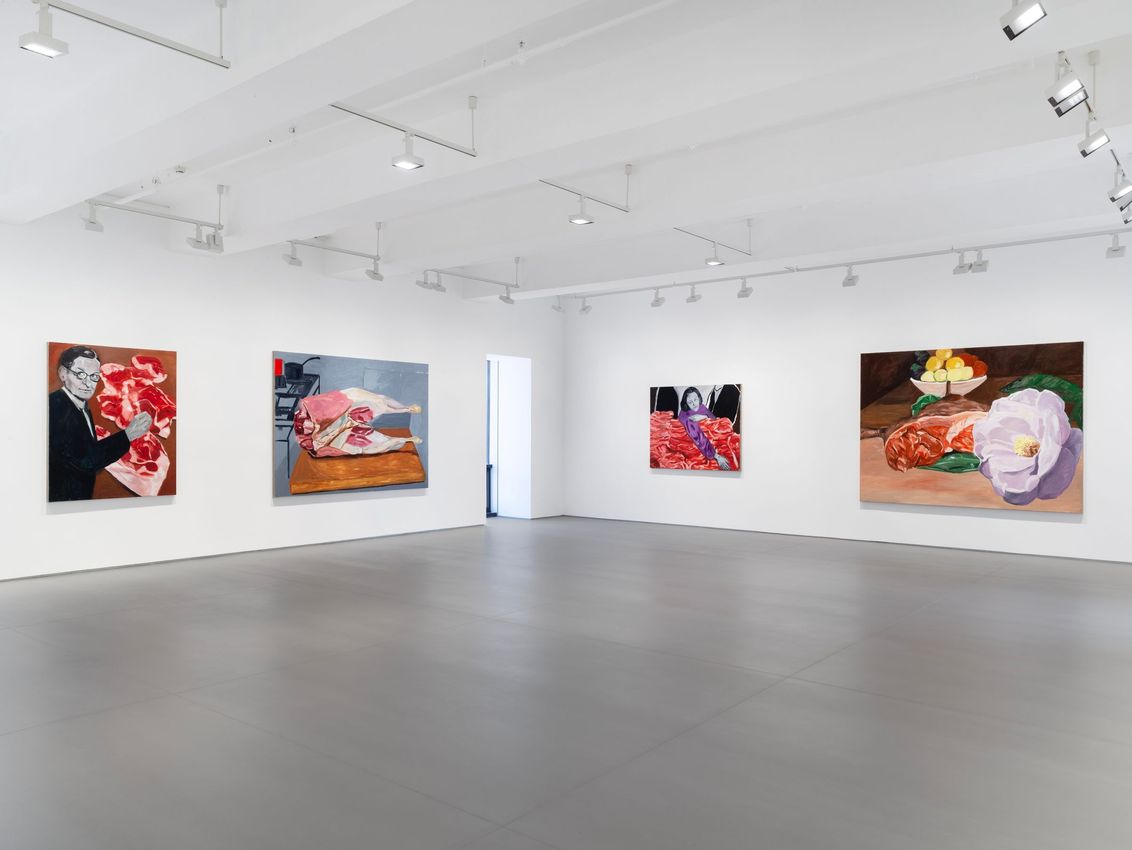
For his first solo exhibition with Lisson Gallery, Zhao Gang presents Carnivore, featuring a series of new paintings that represent the artist’s exploration of the interweaving psychology, emotions, and lifestyles across history and the present. These works delve into the distorted and obscured perceptions and experiences resulting from such interactions, probing the fluidity of individual identity amidst cultural conflicts and historical ruptures.
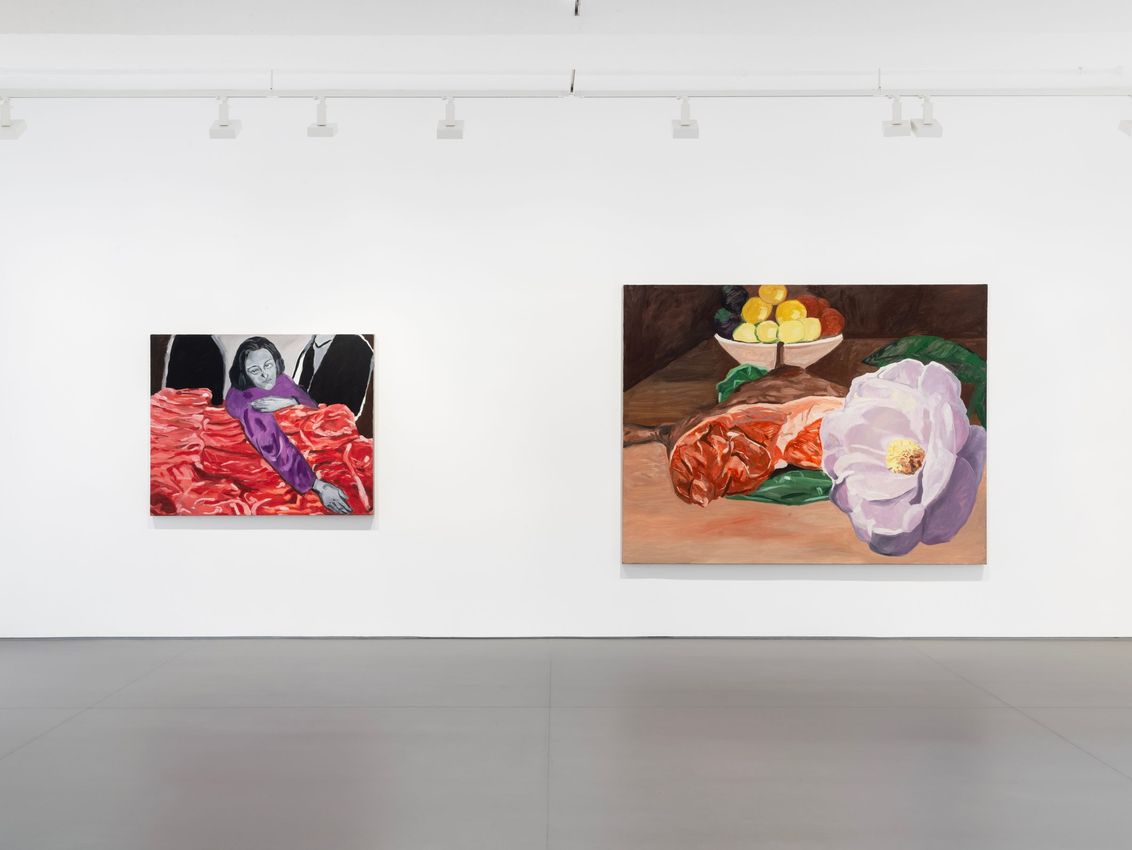
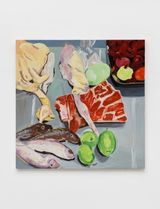
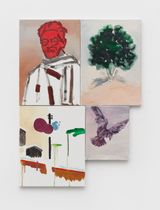
One of the highlights of the exhibition is T. S. Eliot (2024), through which Zhao investigates the American-English poet for first time in his practice. Zhao came across a biography of Eliot from a used bookstore in London, and read it on his flight to New York. The tense relationship between Eliot and his first wife, Vivienne Haigh-Wood, resulted in an extremely difficult marriage, bedevilled by nervous and physical illness on both sides. Eliot’s ‘elite, super-controlled, white male personality’ and the way it tribulated his personal life sparked the artist’s philosophical contemplation on love and intimacy between individuals. In the suite of paintings presented in Beijing, Zhao uses raw pork and lamb legs as primary motifs that symbolically allude to the human form, thereby challenging the audience’s preconceived notions through techniques of deconstructionism reminiscent of the 1980s. Adjacent to slabs of meat, portraits of Eliot and Haigh-Wood are rendered deathly pale, mirroring their dissonant union.
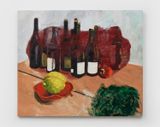
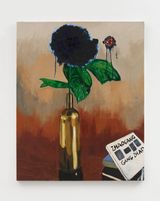
Still life remains a recurring motif in Zhao Gang’s practice. Sequels to his thematic exploration of still life florals and mounds of meat during the pandemic, select works in this exhibition feature various kinds of meat, vegetables, wine glasses, and flowers arranged in domestic settings. These juxtapositions manifest Zhao’s displaced sensibilities amidst his tumultuous emotional landscape. Having recently relocated to a new studio after years of living abroad, Zhao Gang finds solace in solitary contemplation and reveries in between his creative pursuits; with each relocation, he grows increasingly mindful and appreciative of his surroundings. With a disruptive impulse, as seen in Camellia (2023), the artist manipulates the scale and perspective of the cut of meat and flowers within the pictorial plane, elevating the viewers from reality through a super-magnified lens, prompting introspection on one’s own existential fate within this phenomenological experience.
Zhao Gang delves into the fluidity of individual identities, the clash of cultures, and the intricate interplay of fragmented historical events. His works are deeply rooted in a rich and nuanced cultural heritage, drawing inspiration from both classical and contemporary, Western and Chinese influences. Within his work, patterns and concepts gracefully unfurl, expertly deconstructing visual narratives.
A respected voice in contemporary art discourse.
Focusing on ambitious storytelling and insightful art-world commentary. Ocula Magazine publishes in-depth interviews, critical essays and timely analysis on the artists, exhibitions and ideas driving the global art world.
Learn more about Ocula Magazine
Showcasing the best of the art world.
Ocula partners with galleries from around the world to highlight their artists, artworks and exhibitions. Gallery membership is by application and invitation, with each member vetted by an independent panel.
Learn more about Ocula Membership

Specialises in the sale of major artworks.
Led by a team with deep ties to the world’s leading auction houses, galleries and collectors. Ocula’s advisory team offers bespoke services to high-net-worth clients from around the world who are looking to acquire the best of contemporary and modern art.
Learn more about our team and services