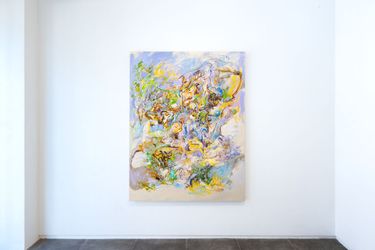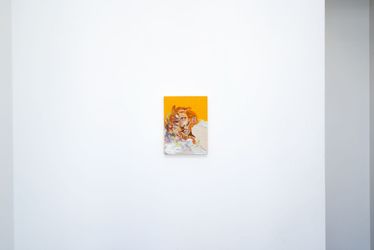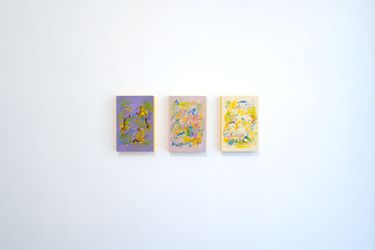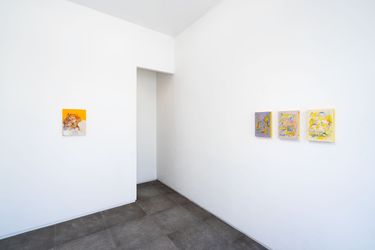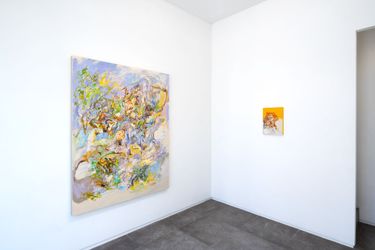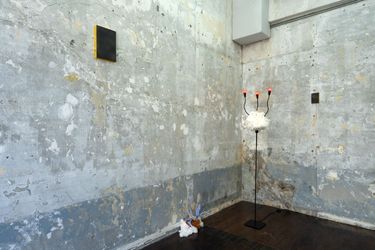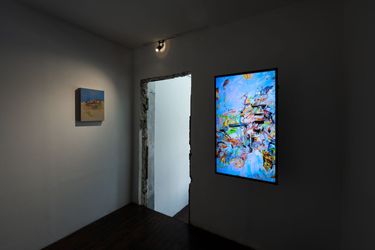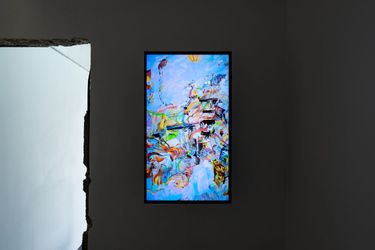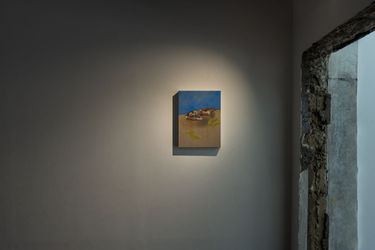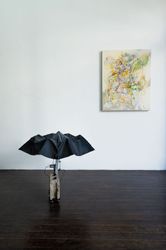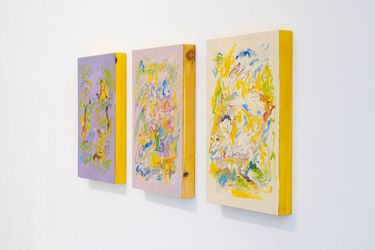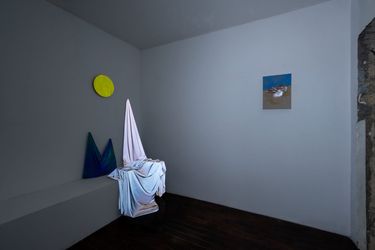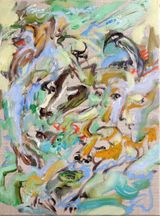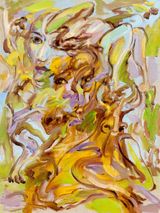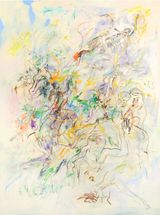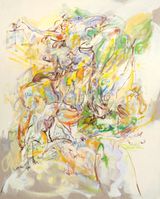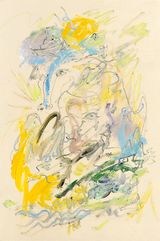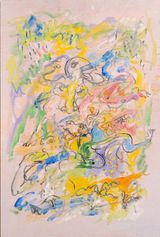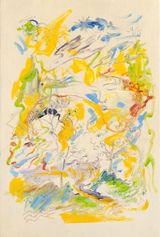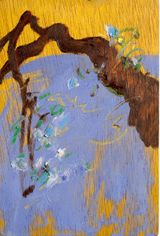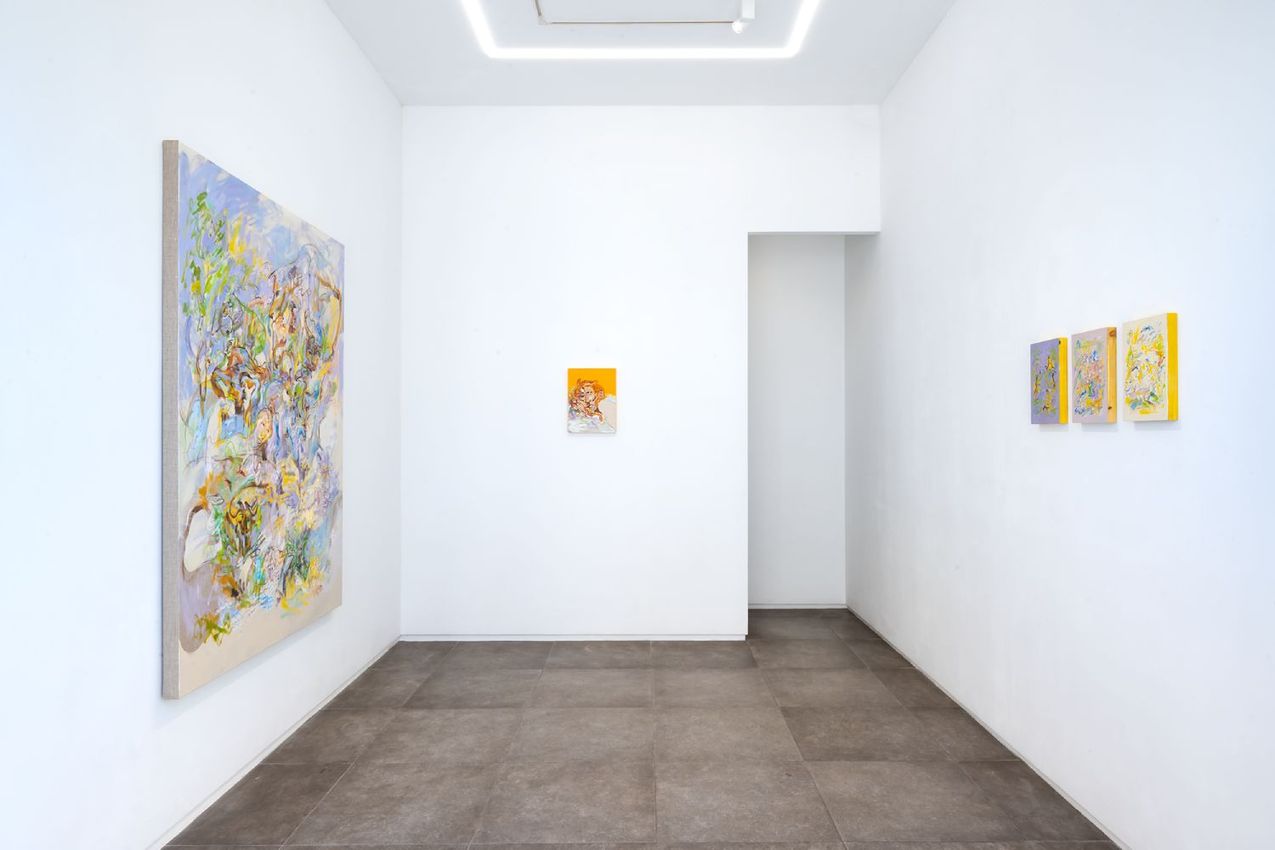
Emotional Device is Wu Jiaru’s first solo exhibition in Korea. The exhibition consists of two parts. P1 exhibits the artist’s recent series of automatic drawing. She uses automatic drawing as a practice of ‘unlearning,’ engaging in a daily routine of repetitive actions and spontaneous drawing in an attempt to enter a state of automatisation, where both her body and thoughts are involved.
As a former pupil of a mainland Chinese art academy, Wu underwent a systematic Soviet-style art training. This system emphasised painting as a technical skill, focusing on the form and structure of objects. It adheres to strict and uniform standards of realistic representation where the expression of emotions was deliberately avoided. Characterised by uniformity, rationality, collectivism, such training left a profound impact on the artist’s self-identity and aesthetic formation.
Wu’s new body of work is a precise effort to break free from the many limitations and boundaries imposed by that training system, unfolding new dimensions for her creativity. She believes that her works carry the historical imprint of socialist realism, a subject that has not been fully understood. After traveling and residing in different places, her ideological perspectives have gradually eased the grip of past drawing experiences. Wu seeks to actively retrace the historical impact of technology on creators/artists by reinvestigating the concept of “automatic drawing.” By such practice, she aims to initiate a process of “unlearning.”
The process of ‘unlearning’ cannot be done by simply employing a method to solve a particular problem. Before the appearance of computational devices, artists were the subjects of automatism. Their works were often seen as products of genius and innate talent, associated with mysticism and abstract expressionism. In response to the rise of artificial intelligence and the emergence of machine learning tools as AI agents, artists nowadays need to consider the subject of automatic drawing: is it humans or AI? The entanglement between humans and machines remains a recurring issue in the creative process.
The artist attempts to combine automatic drawing with installations and video works to explore the entanglement between humans as creative subjects and AI as agents. The paintings in exhibited in P1 were created by the artist in a state close to meditation, without presumptions on an overall structure or a particular final outcome. This results in relaxed visual structures with soft colours and a tight rhythm. The composition exudes a sense of emotional liberation, almost resembling a manifesto.
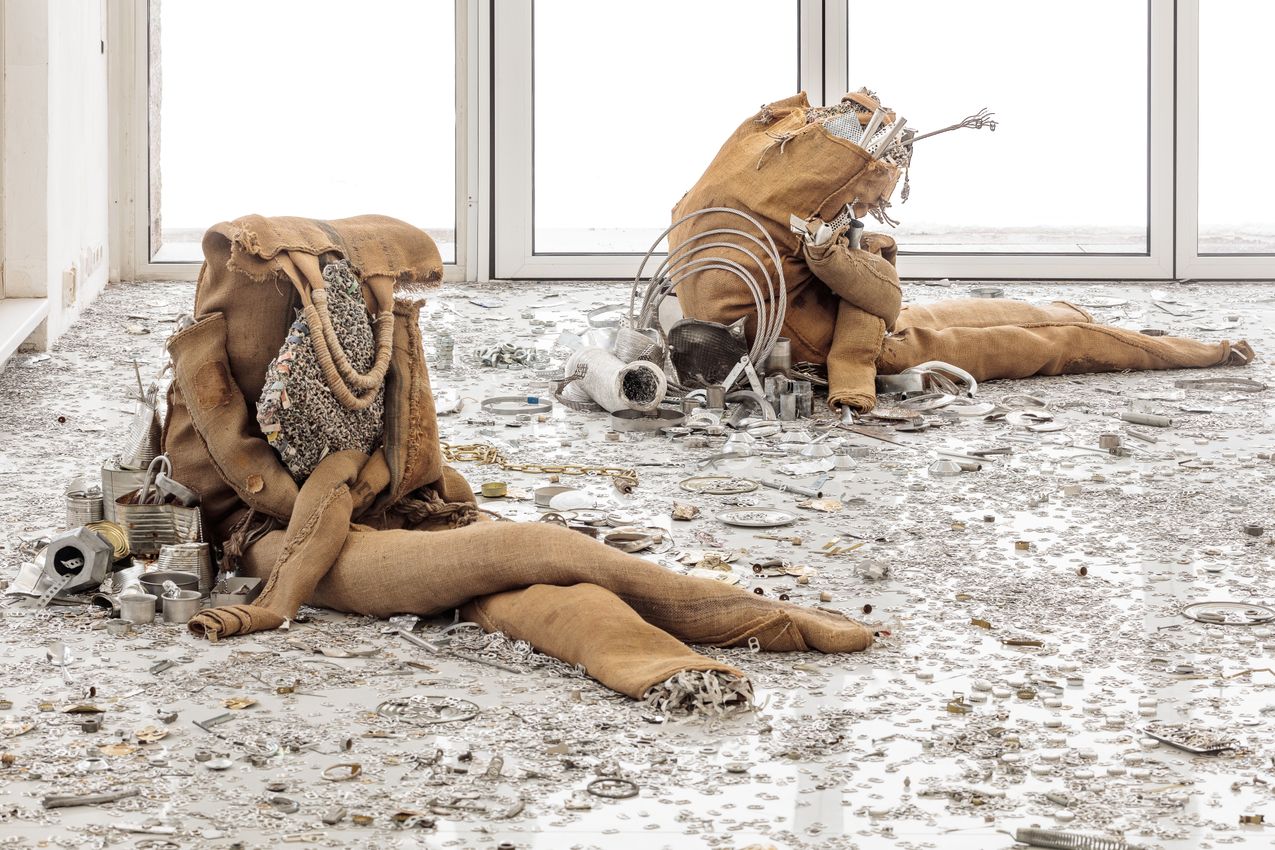
P2 is an extension of automatism from the two-dimensional to the three-dimensional world, composed of a series of ready-made installations and moving images. Within her collection, the artist selects objects related to the concept of destruction, such as shattered glass from protests, banned cotton, damaged umbrellas, and counterfeit crowns of Miss Hong Kong, etc. Using these objects and overlapping moving images as brushstrokes, Wu reconstructs a poetic landscape within the space. Transitioning between dimensional realms, the artist employs automatic drawing as a medium, even a form of counter-control on the technological control in our time, to contemplate the relationship between human subjectivity and the subjectivity of technological objects.


Wu Jiaru (b. 1992) experiments with installation, ready-made, painting, and generative digital images. Her works explore issues such as identity, boundaries, and the individualization of history from the perspectives of mythology, literature, and intimate relationships. She graduated from Tsinghua University in 2014 with a dual degree in Art and English. She received her master degree in Creative Media from City University of Hong Kong in 2017. She is currently based in Hong Kong. Her recent exhibitions include solo show Secrets with an Abundance of Foreign Lines, New York (2023) and To the Naiad’s House, Flowers Gallery, Hong Kong (2022); she has also participated at group exhibitions at Tai Kwun Hong Kong (2023), Axel Vervoordt Gallery, Hong Kong (2021), and Para Site, Hong Kong (2021). Wu was awarded the Asian Cultural Council New York Fellowship in 2022, and her works are collected by Burger Collection, M+ Museum, among others.
P21 was established in 2017 by Soo Choi. Located in Itaewon district, a cultural hub in Seoul, the gallery opened with an inaugural exhibition by Choi Jeong Hwa and continues to promote compelling and original examples of international contemporary art. P21 is known for its unique exhibition space with two separate facades, respectively named P1 and P2, that enable artists to create site-specific works.

A respected voice in contemporary art discourse.
Focusing on ambitious storytelling and insightful art-world commentary. Ocula Magazine publishes in-depth interviews, critical essays and timely analysis on the artists, exhibitions and ideas driving the global art world.
Learn more about Ocula Magazine
Showcasing the best of the art world.
Ocula partners with galleries from around the world to highlight their artists, artworks and exhibitions. Gallery membership is by application and invitation, with each member vetted by an independent panel.
Learn more about Ocula Membership

Specialises in the sale of major artworks.
Led by a team with deep ties to the world’s leading auction houses, galleries and collectors. Ocula’s advisory team offers bespoke services to high-net-worth clients from around the world who are looking to acquire the best of contemporary and modern art.
Learn more about our team and services