After 20 years of collaboration with the gallery, the artists duo Elmgreen & Dragset unveils a new solo exhibition gathering seven sculptures or sculpted groups that depict several potential scenarios. This new project marks the tenth exhibition with the gallery.
Without transition, your eyes glued to the smartphone, you’ve entered the gallery space. You probably didn’t realize it. Your mind was elsewhere, lost in the limbo of an alternate reality, both physical and virtual. This is normal in today’s world, where reality is often filtered through devices, changing the experience of art itself. Interactivity has replaced contemplation, sharing content has replaced absorption. People show themselves experiencing art, whether with an #artselfie or a challenge for #arttok. More profoundly, our access to the real itself has been transformed. The experience is rarely direct, mediated by images, sounds, and texts shared with a swipe of our thumbs. You and I are the Thumbelina1 generation, participating in an all-encompassing collective choreography.
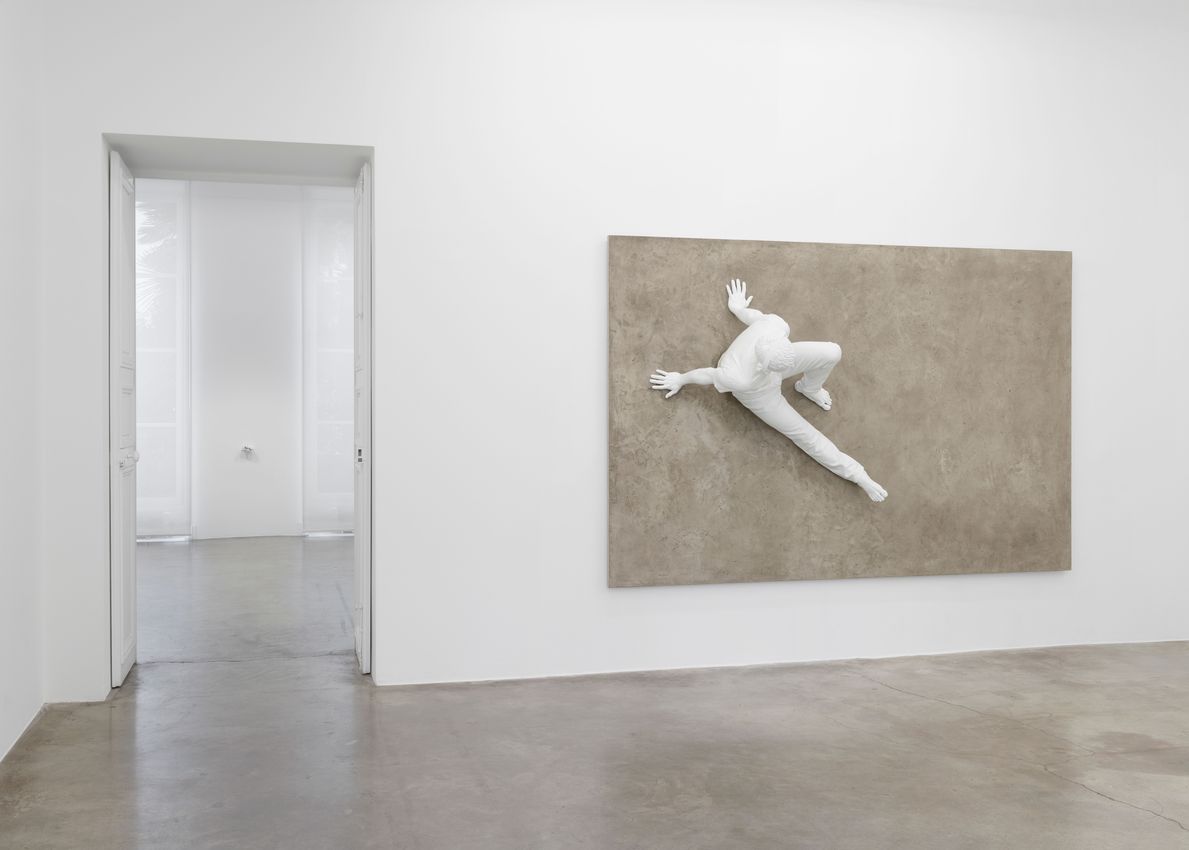
Elmgreen & Dragset’s new exhibition at Perrotin Paris features seven sculptures that depict potential scenarios from this choreography. Across from the entrance, the first lone figure faces us, headphones over his ears, absent gaze, attracting ours but not reflecting it (David, 2023). The young man is sitting on a reproduction of the gallery’s concrete floor. The rectangular piece is hung on the wall like a painting, serving as the base of the human-sized, figurative sculpture; the first encounter with a scene of technological absorption. The two Berlin-based Scandinavian artists depict the emotional effects of life dominated by devices2, a preoccupation that has persisted across time and media. One of their earliest works, 1996’s TRY performance, showed three mute young men sitting on rugs in an exhibition space. They, too, were inscrutable, listening to music on their walkmans, their appearance giving no indication as to their identity.
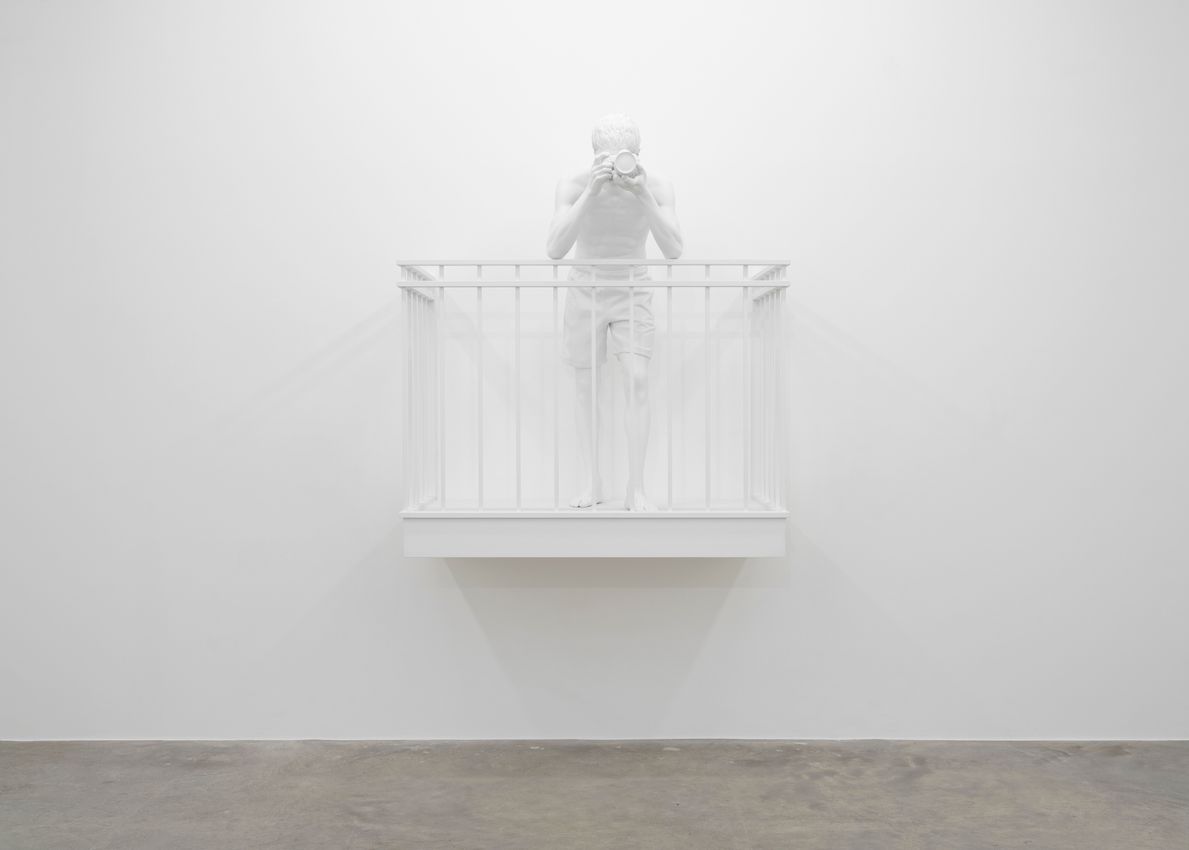
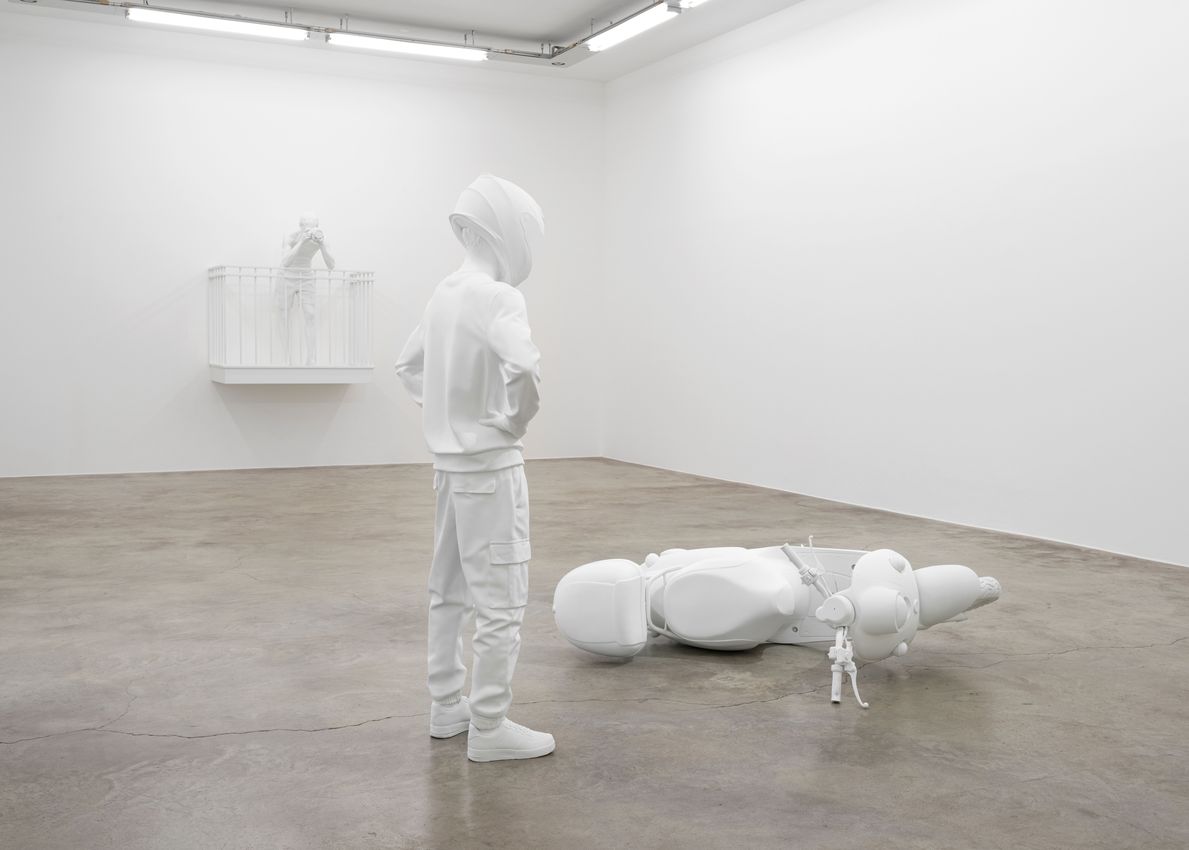
If style says little about identity, attitudes reveal a lot about the state ofthe social contract. In the second space, two white-lacquered bronzefigures show the climax of a commonplace drama. A two-wheeler liesoverturned on the ground, its helmeted driver standing beside it(Delivery, 2023). The cube-shaped box indicates that we arewitnessing a food delivery gone wrong. The scene is both amplifiedand representative of our time by the presence of a sculpture of aphotographer (The Examiner, 2023) in the background. The figure isperched on an elevated balcony, watching the accident and seeminglytaking pictures instead of intervening. Pure voyeurism or Insta-activism? Elmgreen & Dragset’s trademark social satire is encapsulatedhere: this scene is like the Laocoön3 for a society dominated by thegig economy. You’ll likely take a photograph yourself, but any chanceof performative activism is effectively eliminated. This triangulationcompletes and reinforces the idea that art is powerless to trulyintervene and help people get back on their feet.
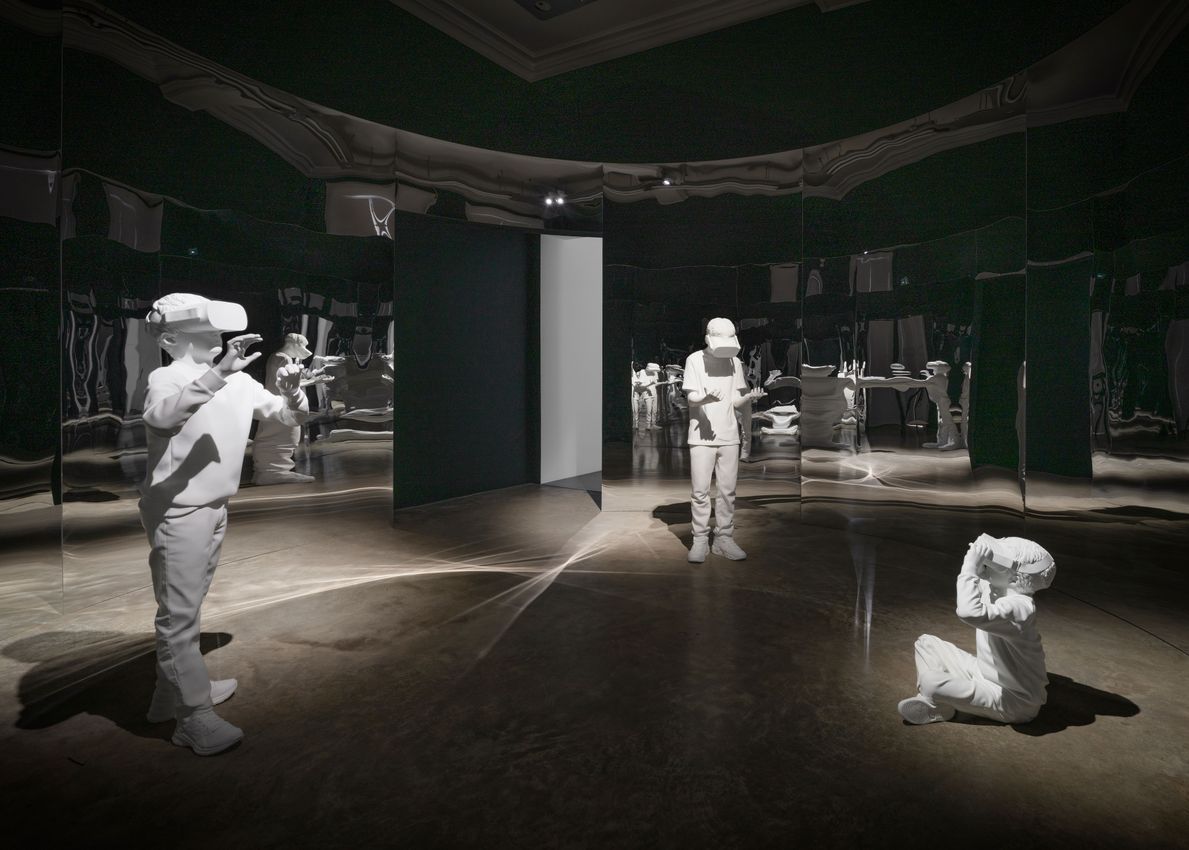
Nevertheless, the duo believes in the transformative power of art. Artcan intervene, albeit only symbolically, proposing experiments indeconditioning to challenge established norms that have becomeentrenched power structures. The third group of sculptures –This IsHow We Play Together, Figs. 2, 3, and 4, 2023– is the most futuristic in its reference yet the most timeless in its philosophical significance. To access it, one must enter a circular structure with a mirroredinterior wall. Three children, two standing and one seated, perform aseries of strange gestures. Perplexed and cautious, they stretch outtheir hands, clutching the void. Their balance is precarious, their posesunnatural. As with all the other characters in the exhibition, one of theirsenses is hidden behind a technological object, in this case, a virtualreality headset covers their eyes. Absorption is at its peak, as is theabsence of reality. They discover a shimmering virtual universe. Wesee them without knowing what captivates them. We share the samephysical space with these representatives of the near future, but wecannot communicate with them. We are in Plato’s allegory of the cave,immersed and with a front-row seat.
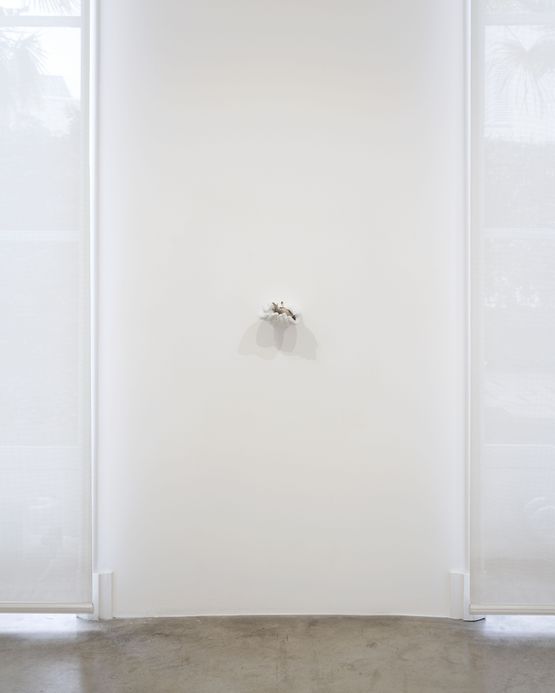
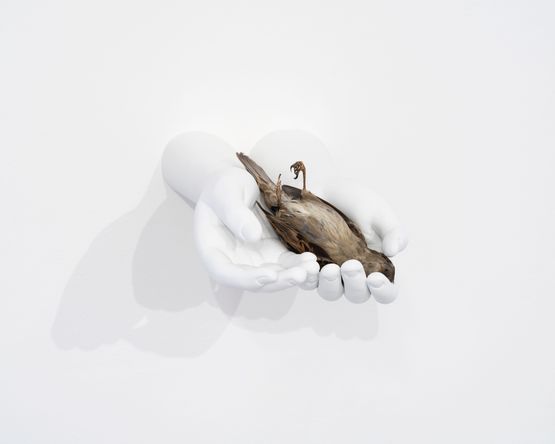
Finally, we need to take a step back and pay attention to what we tendto overlook in the age of the attention economy4. The last work, StillLife, 2023, reveals a tenuous presence as fragile and bare as life itself.Something that simply exists without augmentation or equipment.Protruding from one of the walls, the hands of a child hold a sparrow.The bird’s color and feathered texture make it appear real, but it iscreated with animatronics, like the robotized creatures in films. Here,technology is used in reverse, and the effect is resolutely anti-spectacular. The puny creature is wounded and faintly palpitates, gasping forbreath. Placed at the end of the exhibition, this work adds nuance andcompletes the overall panorama. While all the groups of sculptures inthe preceding galleries inscribe technology in the tradition of classicalsculpture, the bird undermines its high-tech mechanism by mimickingnature. What remains in the overall scenario is the essence ofElmgreen & Dragset’s practice: the interactive observation of thecontemporary human condition, shaped by systems of power,knowledge, and now technology. These totalizing yet eminently arbitrary systems can falter at the slightest glitch or flap of the wings.
1. The expression comes from the philosopher Michel Serres. See his essay Thumbelina:The Culture and Technology of Millennials (Rowman & Littlefield International, 2014).
2. Numerous studies have explored the psychological impact of technological objects onprivate life. Among the first were Sherry Turkle’s Alone Together: Why We Expect More fromTechnology and Less from Each Other (Basic Books, 2012) and Danah Boyd’s It’s Complicated– The Social Lives of Networked Teens (Yale University Press, 2015).
3. This famous marble sculpture, now in the Pio-Clementino Museum in Rome, is a Roman copyof an ancient Greek sculpture dating from around 40 BC. It depicts Laocoön and his two sonsbeing attacked by snakes, a scene vividly captured at the height of the dramatic tension.
4. The notion has entered everyday language. For an analysis of its place in the history ofideas, see Yves Citton, Pour une écologie de l’attention (Seuil, 2014).
Press release courtesy Perrotin. Text: Ingrid Luquet-Gad.
Michael Elmgreen (born 1961, Copenhagen, Denmark) and Ingar Dragset (born 1969, Trondheim, Norway) are a Berlin-based artist duo acclaimed for large-scale sculptures and site-specific installations that confront social conventions and transform public and institutional spaces.


Emmanuel Perrotin founded his first gallery in 1989 at the age of 21. He has opened since then over 17 different spaces, with the aim of continuing to offer increasingly vibrant and creative environments to experience artists work. He has worked closely with his roster of artists, some since more than 25 years, to help fulfil their ambitious dreams and projects.

A respected voice in contemporary art discourse.
Focusing on ambitious storytelling and insightful art-world commentary. Ocula Magazine publishes in-depth interviews, critical essays and timely analysis on the artists, exhibitions and ideas driving the global art world.
Learn more about Ocula Magazine
Showcasing the best of the art world.
Ocula partners with galleries from around the world to highlight their artists, artworks and exhibitions. Gallery membership is by application and invitation, with each member vetted by an independent panel.
Learn more about Ocula Membership

Specialises in the sale of major artworks.
Led by a team with deep ties to the world’s leading auction houses, galleries and collectors. Ocula’s advisory team offers bespoke services to high-net-worth clients from around the world who are looking to acquire the best of contemporary and modern art.
Learn more about our team and services