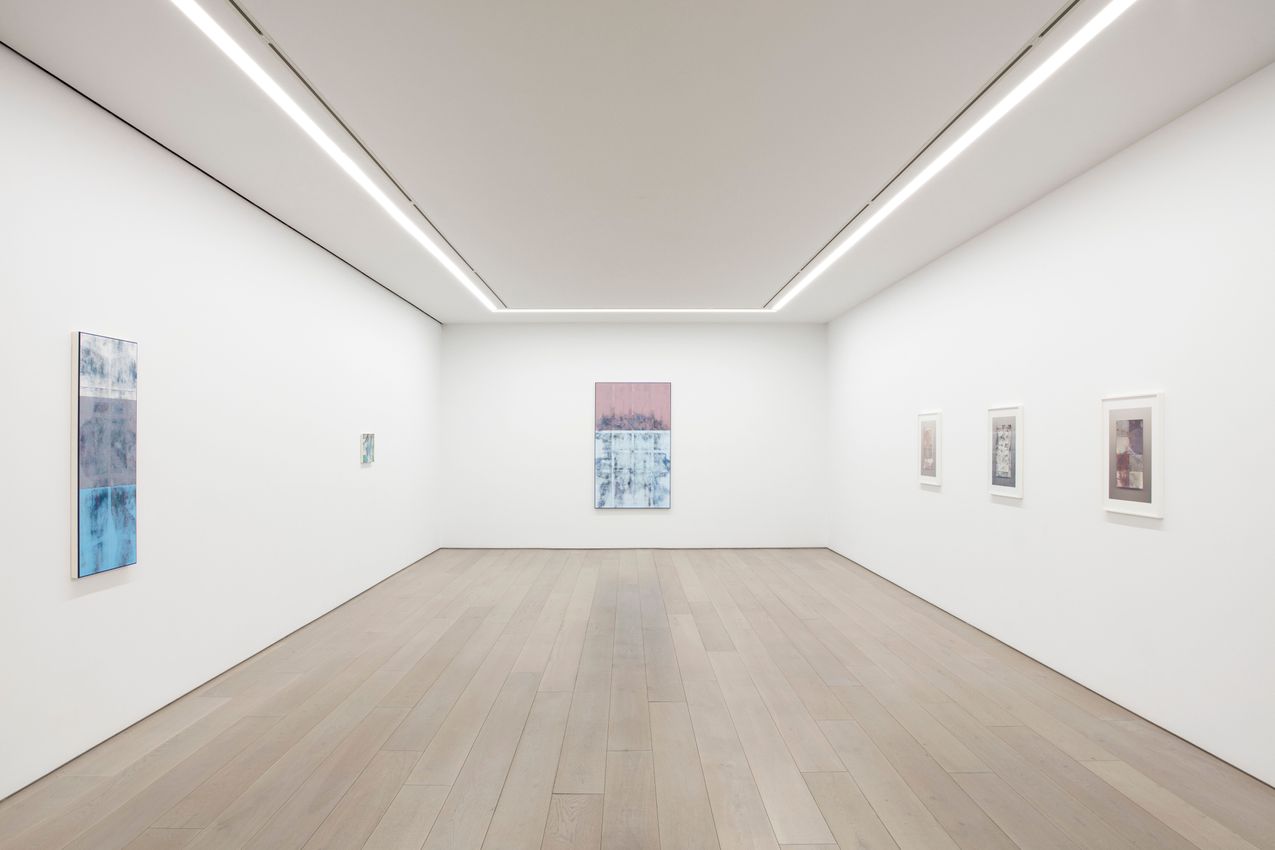
Perrotin is pleased to present enchaînement, John Henderson’sthird exhibition in New York, showcasing new photographs,paintings, and gypsum casts.
Each of the works presented here begins with a gesture. Whether aphotographic snapshot or a stretched canvas, John Henderson subjectshis materials to a series of maneuvers, material translations, andtechnological dislocations that render them anew. In Flowers, a body ofwork that builds from commercially printed photographs, the evidence ofsuch gestures is particularly pronounced, bringing to mind RichardSerra’s well-known, 1967 Verb List: to fold, to rotate, to flip, to draw, topaint, to paste, to scan, to print, to frame. The final work is the result of ahost of manipulative processes, becoming its own form of archive—anaccumulation of Henderson’s dance of materials. To describe thisprocess, we might use the French word enchaînement, literally a”chaining together,” a dance term that refers to a linked sequence ofsteps or gestures. In order to see Henderson’s works, it helps to think ofthem in this way—not as fixed or static conglomerations, but in relationto the mobile and temporal logic of performance. Each work is the resultof a pas de deux between the artist and materials, rehearsed again andagain against the backdrop of Henderson’s studio-as-stage.
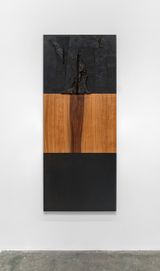
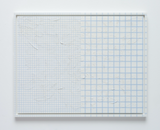
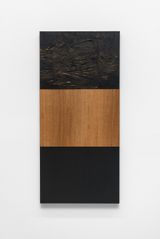
This practice marks a logical and intriguing elaboration of Serra’scataloguing of disparate actions. For Henderson, canonical operationsof the history of abstract painting offer up an array of readymade gesturesand motifs—the expressionist brushstroke, the appropriated image, themonochrome, the grid—moves waiting to be reenacted (performed) andreimagined or dislodged through an enchaînement of materialdisplacements. In a selection of gypsum casts, exaggeratedly impasto-edgestural paintings are transformed into cast plaster, producing a ghostlytopography of white that becomes the freighted grounds for newpainting. The faux tabula rasa performs a double dislocation—ofHenderson’s hand as well as those of his painterly predecessors. As aresult, the final works frustrate our ability to locate a point of origin. Here,as in many of Henderson’s works, his process follows a looped ratherthan linear development: works that begin as paintings are transformedinto sculpture only to be made paintings once again.
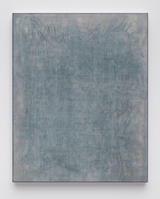
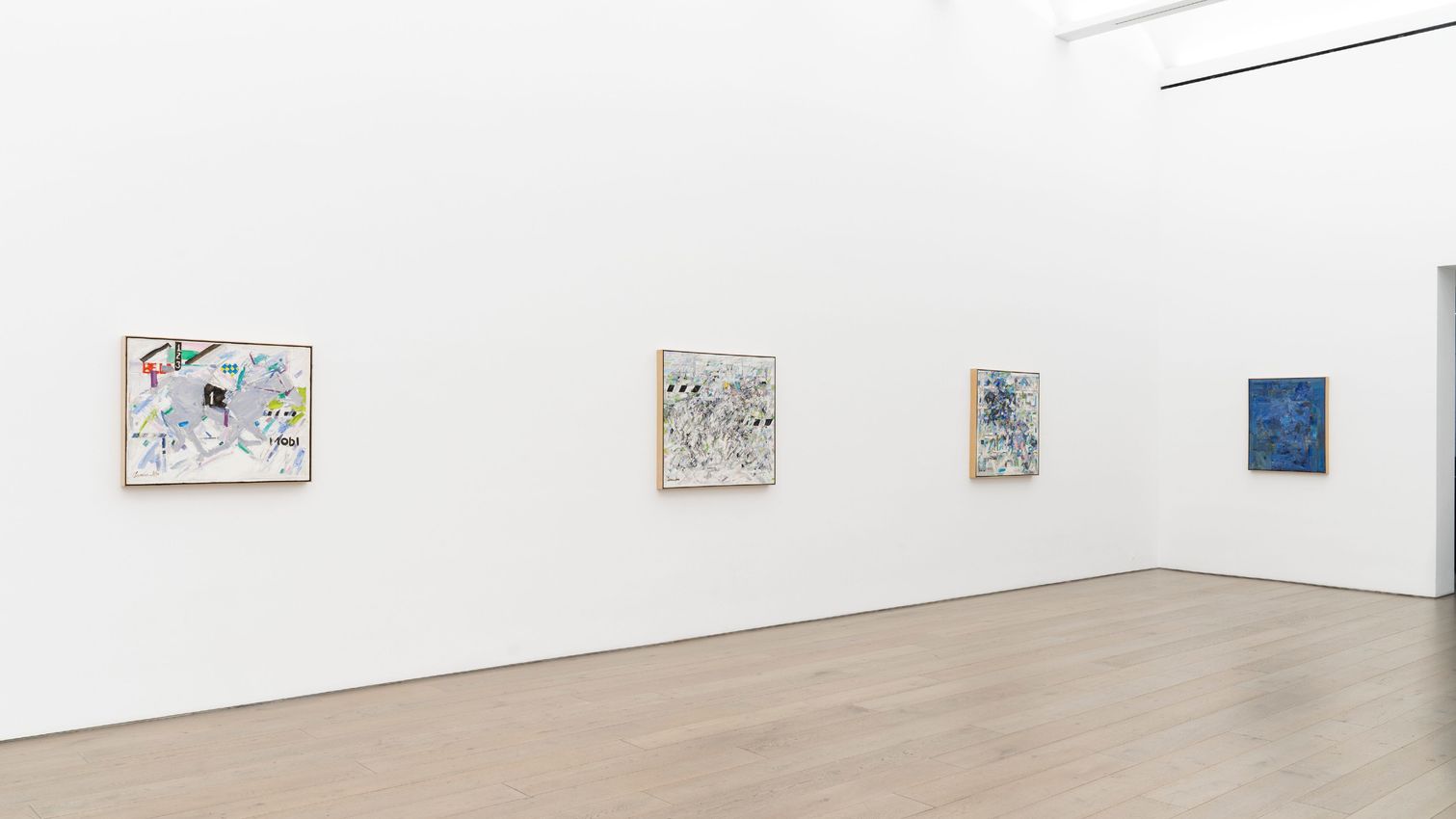
The Untitled Paintings pursue a similar series of switchbacks frompainting to sculpture and back to painting. To make them, Hendersonloads the canvas with layer upon layer of paint, creating an almosttheatrically excessive painting. These over-the-top accumulations are soremoved from their now entirely invisible support that they become more sculptural than painterly. From here, Henderson doubles back: he sandsthe sculptural buildup down until arriving at a flattened surface ofpalimpsestic images, ghostly traces of paintings past. With their crisplypainted edges, these paintings also assert their status as objects, a nodto their quasi-sculptural trajectory.
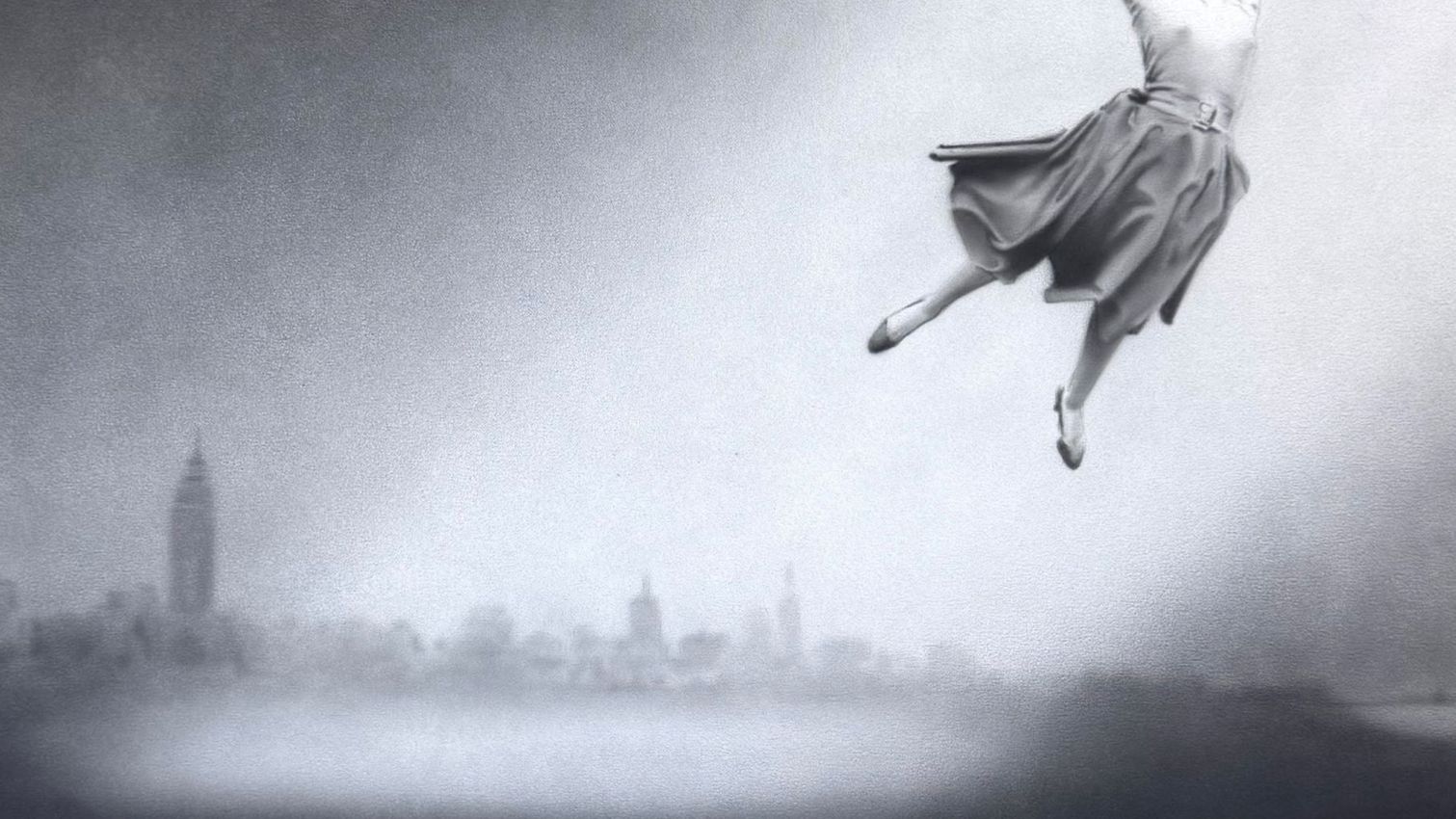
In Flowers, printed photographs are built up into collages only to beflattened back into photographic images. In their incorporation of diverse,overlapping paper materials, and their hybrid status between media, thecollages recall the paintings of postwar American artist RobertRauschenberg. For the art historian Leo Steinberg, Rauschenberg’sworks were exemplary of a new kind of “flatbed picture” resembling “anyreceptor surface on which objects are scattered, on which data isentered, on which information may be received, printed, impressed—whether coherently or in confusion.“1 Like Rauschenberg’s early paintings,the Flowers collages are characterized by the accumulation of assortedmaterial “data”: the back of a photograph, the ink-jet printed image, ascrap of discarded paper. Yet, here and elsewhere Henderson exposeshis materials to technological manipulations that render them less literal,more spatially ambiguous. After drawing, pasting, folding, and painting,he scans his scrappy objects—subjecting them to the contradictoryspatial effects of yet another “flatbed.” On the one hand, the scans renderthe collages impossibly flat, a two-dimensional image rather than a literal buildup of stuff. On the other hand, the scanner’s play of uneven light andshadow places them in a newly theatrical frame. The collages floatmysteriously atop an ambiguous gray gradient, a nowhere space thatsuggests both flatness and internal depth. The resulting image and itsplay of shadows evokes the theatrical set-up of the photoshoot, as if theobject itself is performing for the camera. This is not quite a flatbedpicture plane, nor does it give us Giorgio Vasari’s famous view througha window. Here too Henderson gives us ambiguously-staged documentsof an ephemeral dance.
By mining the canned corners of abstract art’s recent history, Hendersonopens them up to the continuous play of potentially infinite operations.The resulting works create unexpectedly poetic containers of the past—disorienting images in which the actions themselves are scrambledtogether and impossible to trace—scrupulous rehearsals for an unknownfuture.
Press release courtesy Perrotin. Text: Jenny Harris.
Chicago-based artist John Henderson expands and develops an engagement with abstract painting and the conditions for its contemporary practice. Making use of a variety of technologies and techniques—moulds, castings, digital printing, video, and photography—Henderson reforms, revises, and reproduces the manual painterly expression, invoking Minimalism and Abstract Expressionism while acknowledging a distance from their unmediated practice.

A respected voice in contemporary art discourse.
Focusing on ambitious storytelling and insightful art-world commentary. Ocula Magazine publishes in-depth interviews, critical essays and timely analysis on the artists, exhibitions and ideas driving the global art world.
Learn more about Ocula Magazine
Showcasing the best of the art world.
Ocula partners with galleries from around the world to highlight their artists, artworks and exhibitions. Gallery membership is by application and invitation, with each member vetted by an independent panel.
Learn more about Ocula Membership

Specialises in the sale of major artworks.
Led by a team with deep ties to the world’s leading auction houses, galleries and collectors. Ocula’s advisory team offers bespoke services to high-net-worth clients from around the world who are looking to acquire the best of contemporary and modern art.
Learn more about our team and services