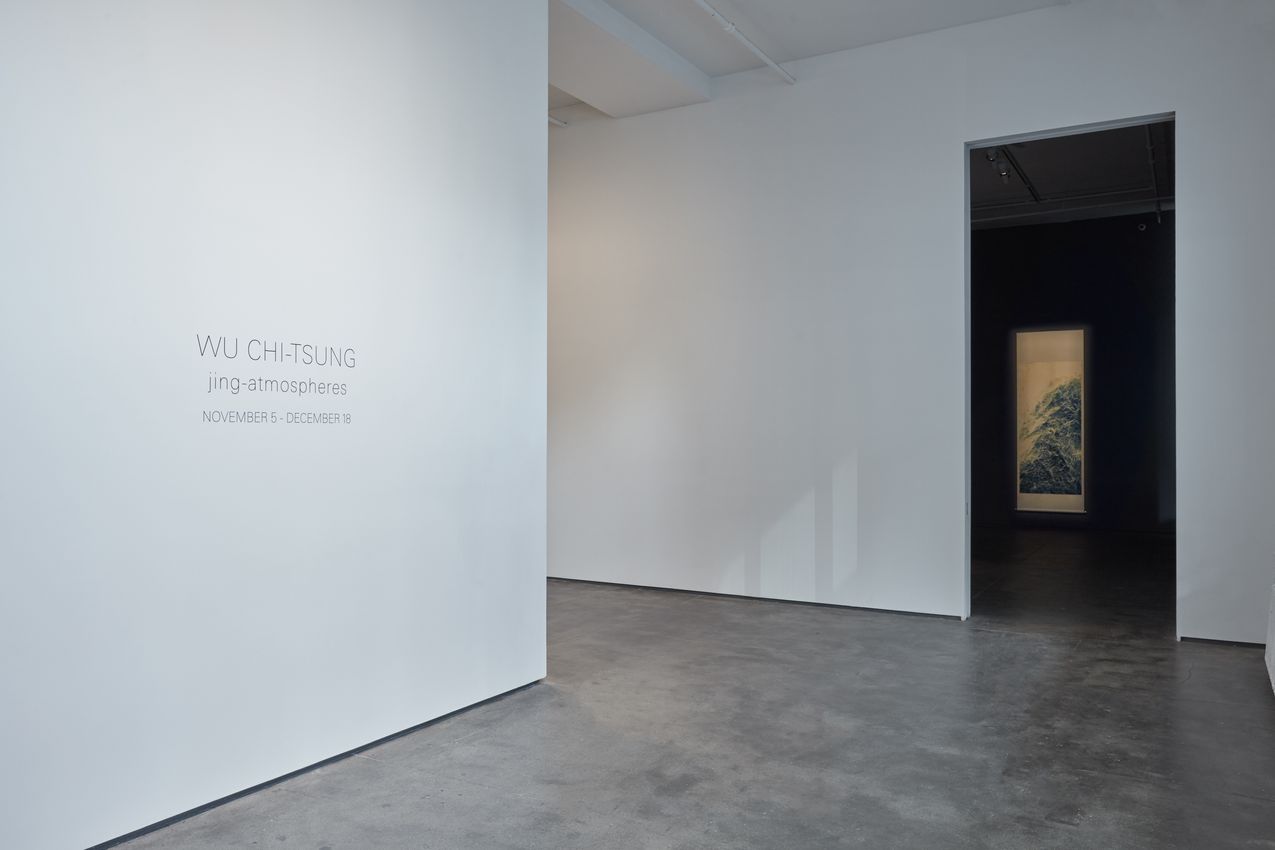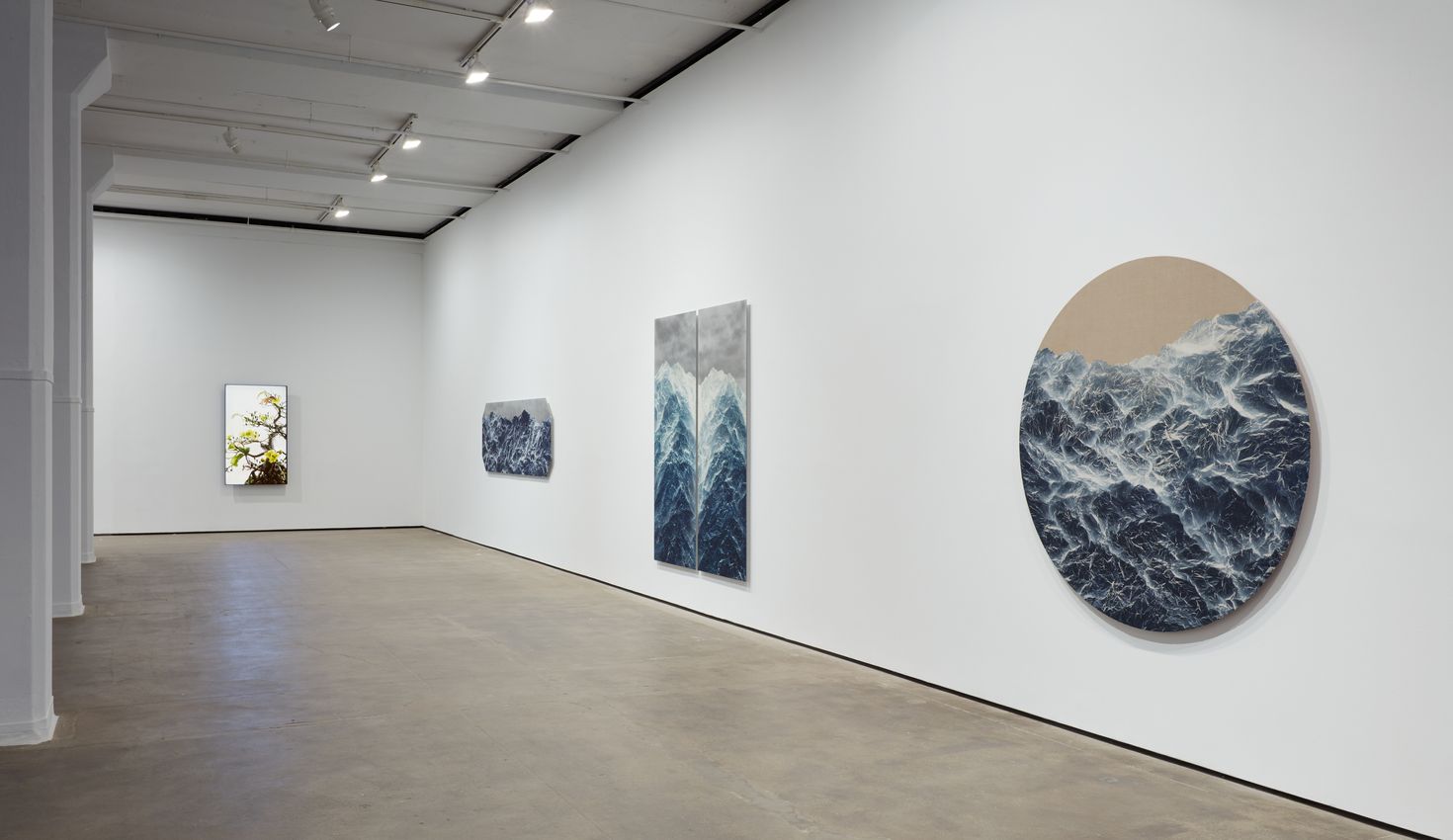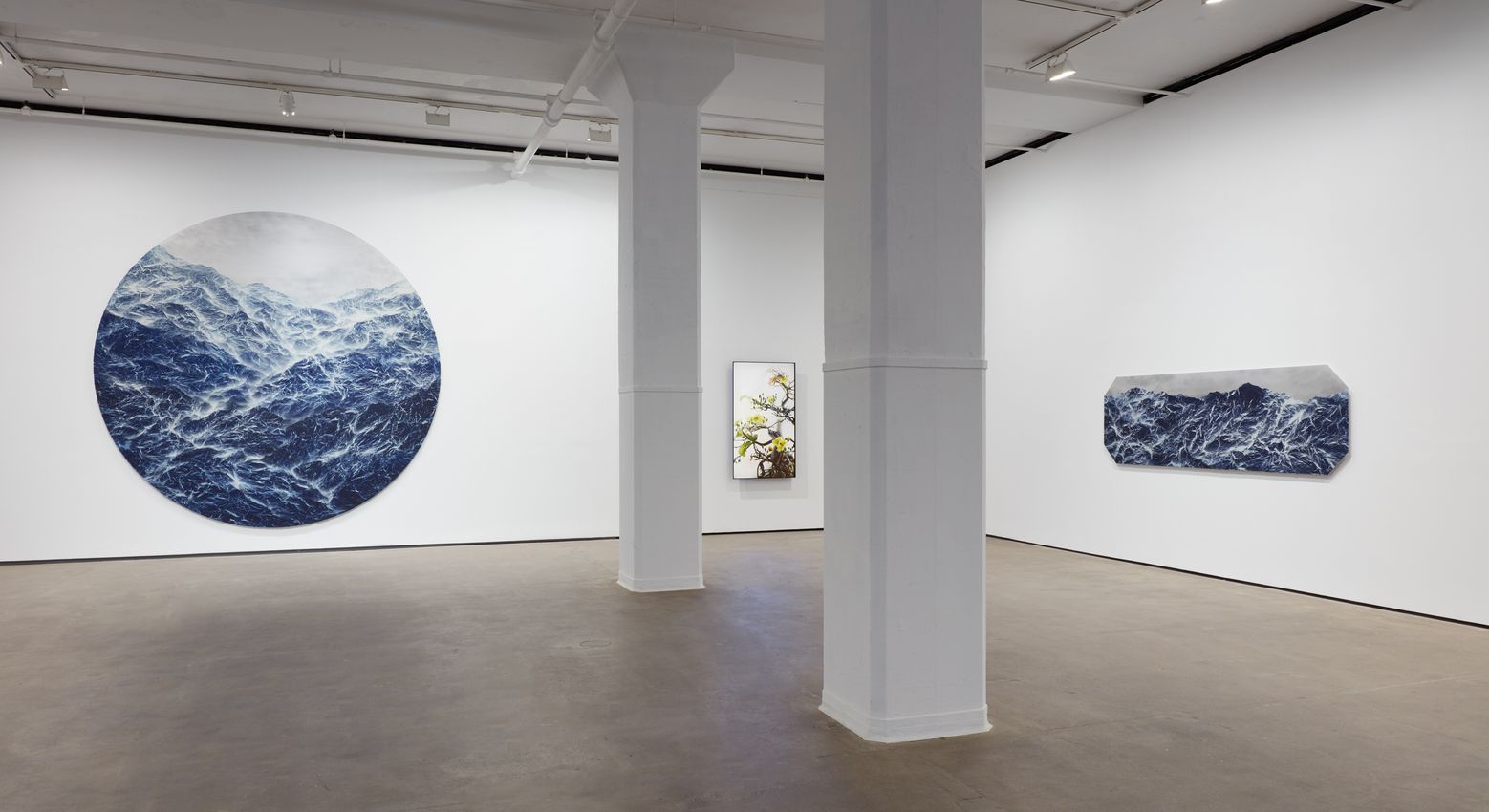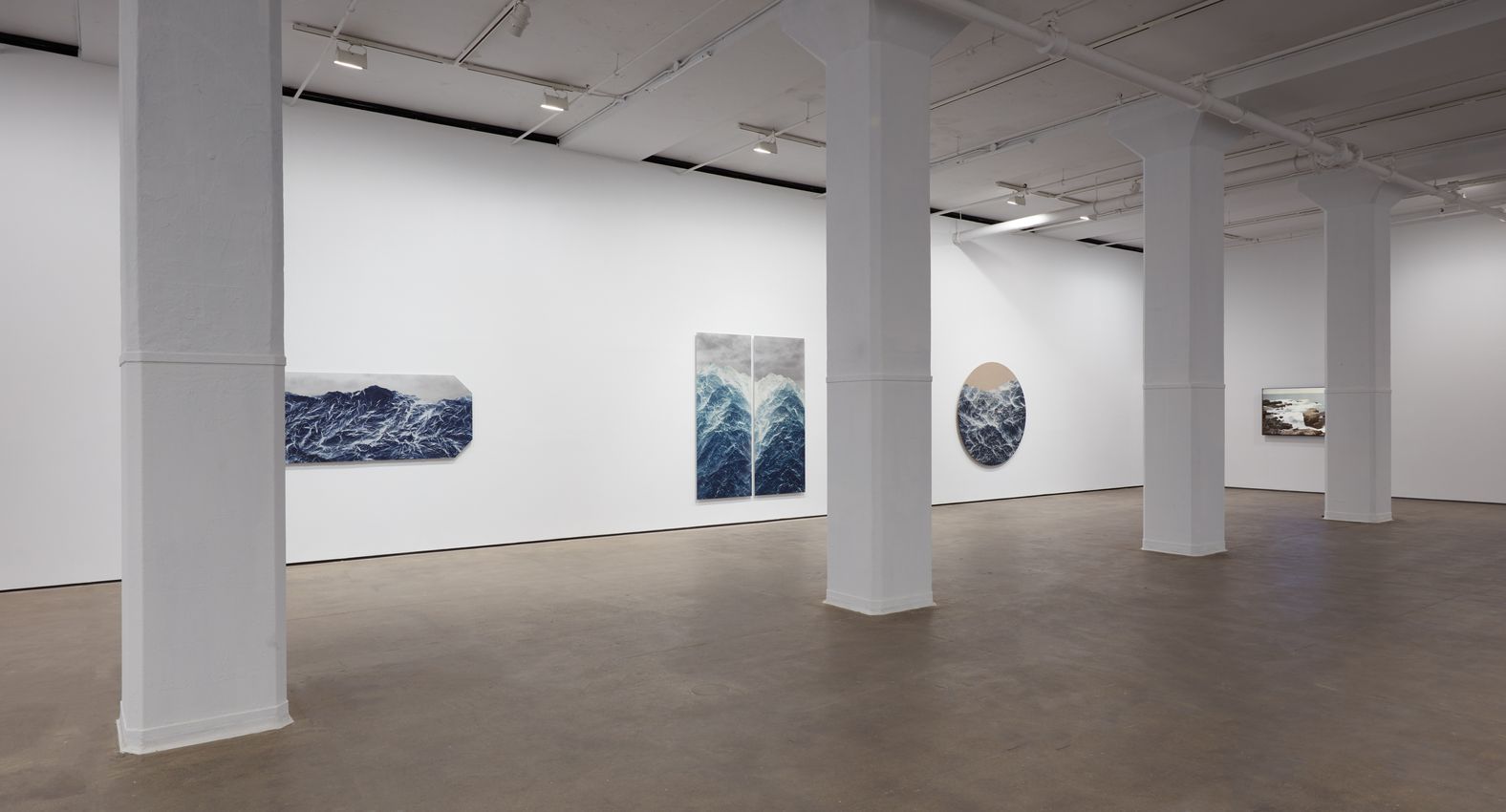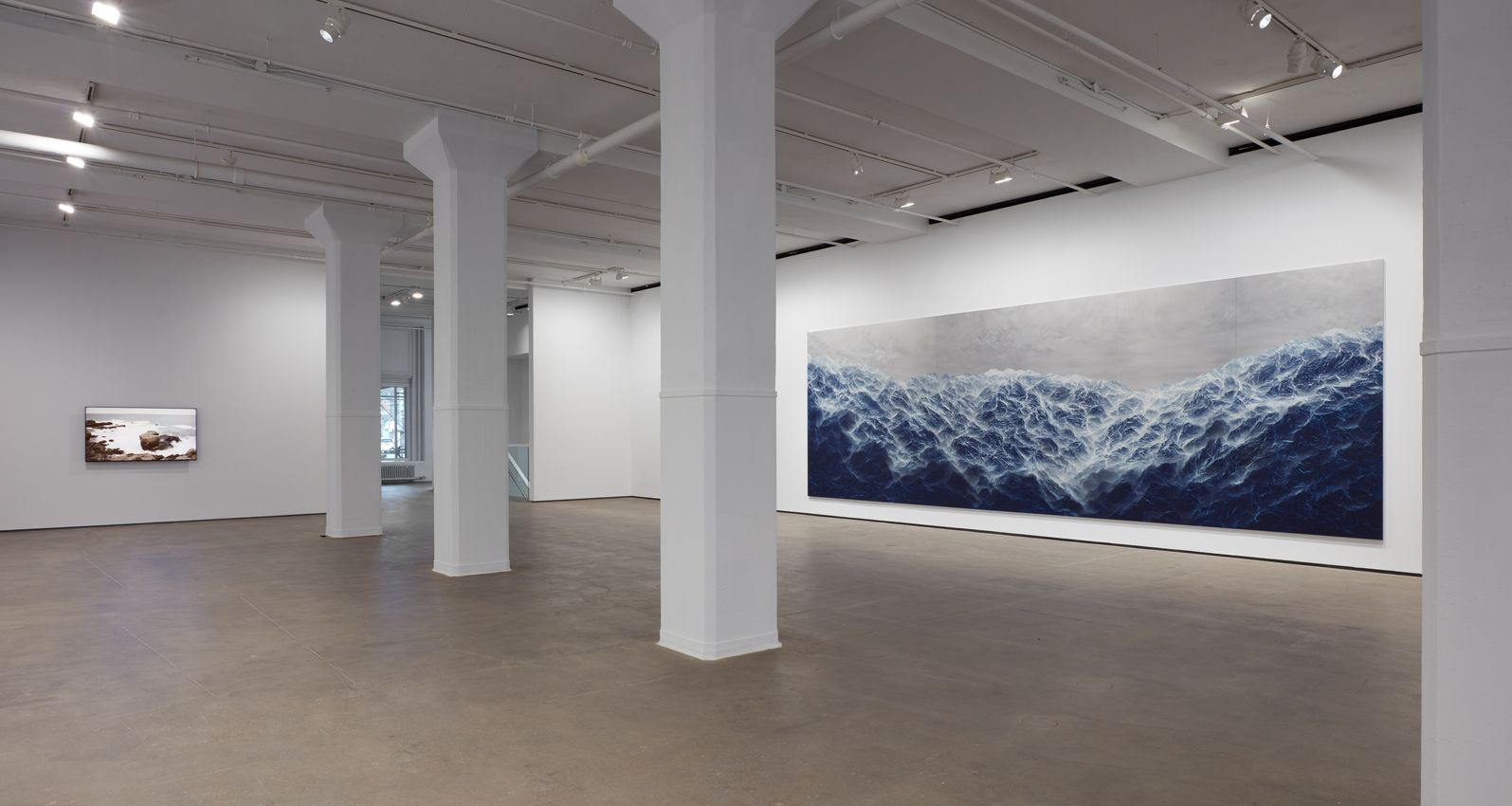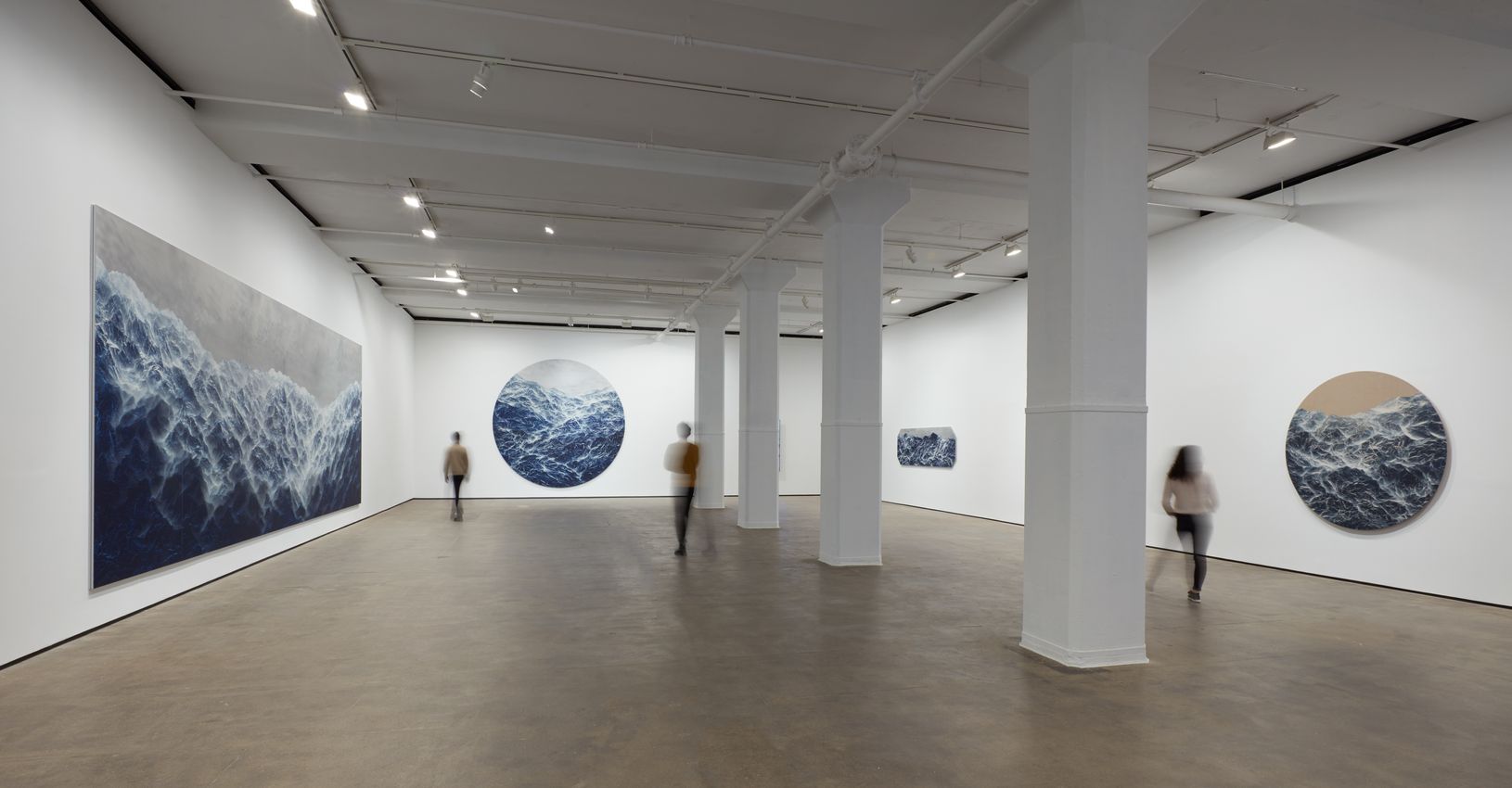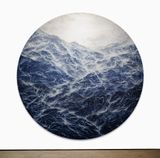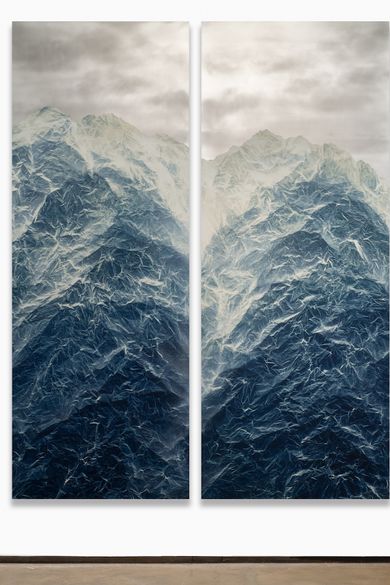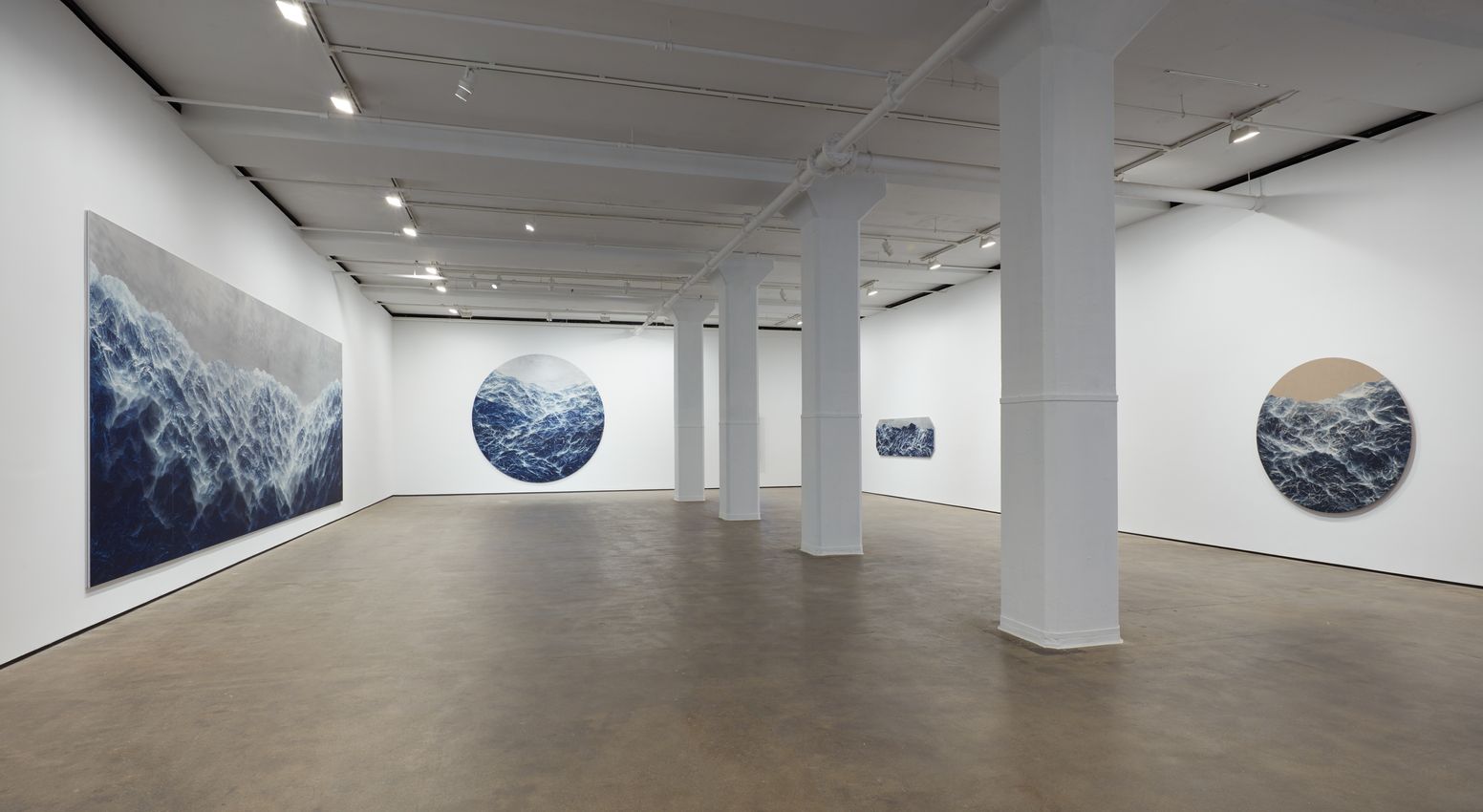
Sean Kelly is delighted to present jing-atmospheres, Wu Chi-Tsung’s first solo exhibition at the gallery and indeed the United States. Chi-Tsung’s innovative body of work encompasses a broad range of media including photography, video, installation, and painting, in which he combines traditional and contemporary forms and methodologies to explore perceptions of the physical and natural worlds. This exhibition features new Cyano-Collages, videos, and an immersive film installation. There will be an opening reception on Thursday, November 4 from 6-8pm, the artist will be present at the gallery.
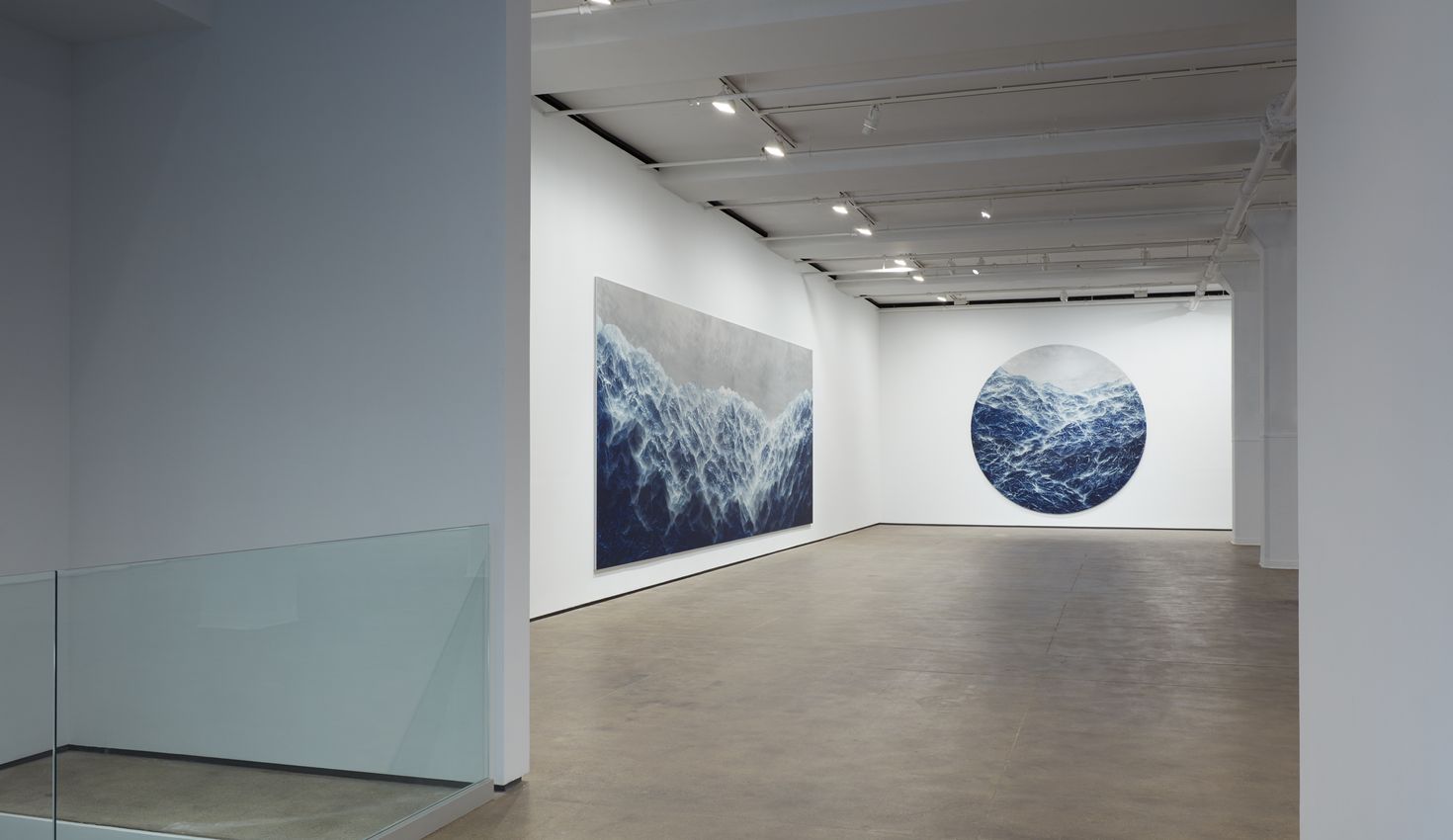
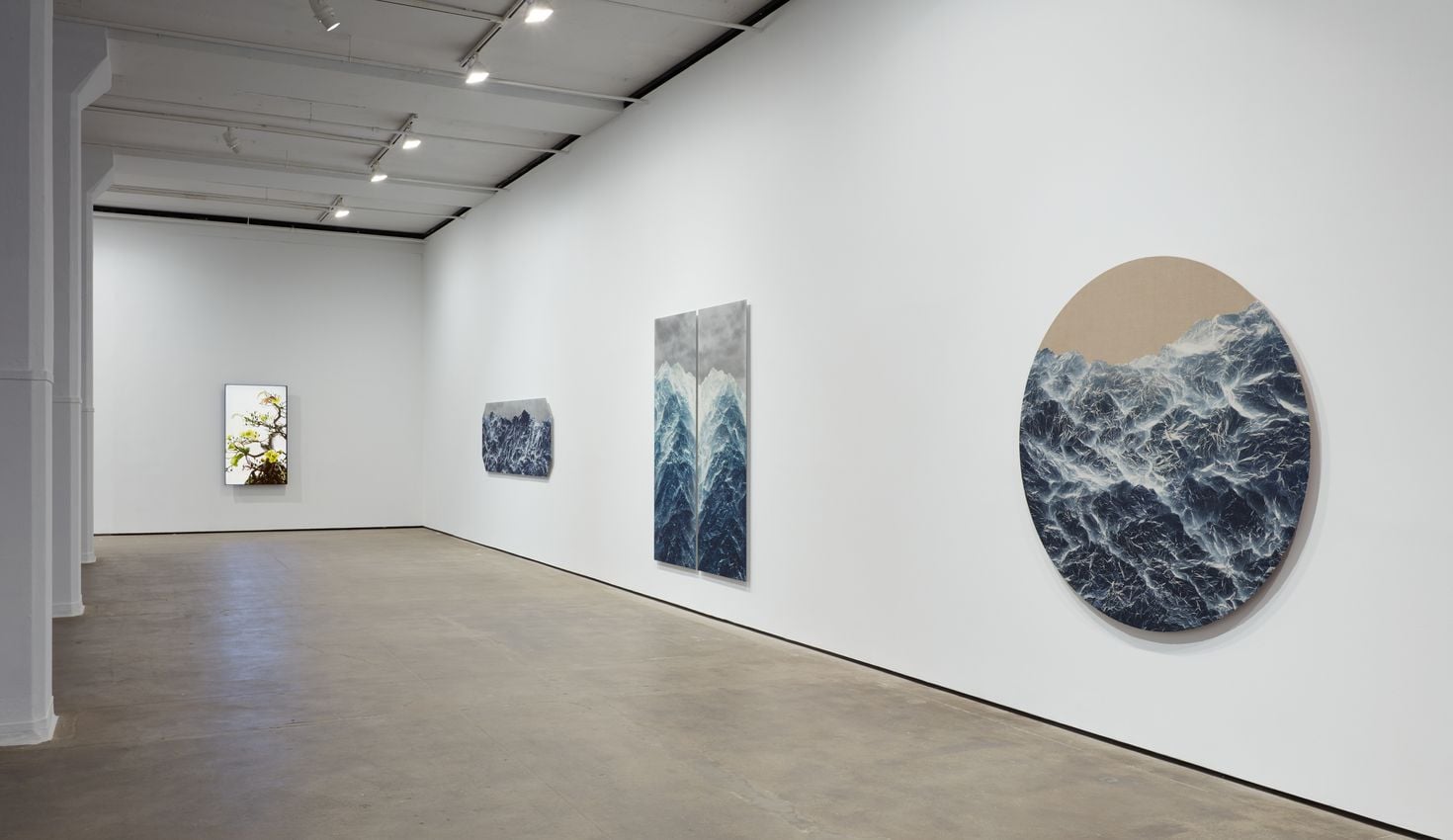
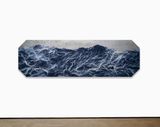
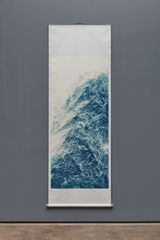
Wu Chi-Tsung was trained from an early age in the traditions of Chinese calligraphy, Chinese ink painting, watercolour, and drawing, and worked in these time-honoured idioms for many years. While those practices still inform his process, Chi-Tsung’s current works seek to understand how media and technology are manipulated to represent our relationship to the world. In the main gallery, there are new iterations of his Cyano-Collage series, in which he connects Eastern and Western culture and art to integrate traditional aesthetics within a striking contemporary language. His Cyano-Collages replace the traditional ink and brush used in Chinese shan shui paintings–literally, ‘mountain-water-pictures’—with experimental photography to reinvigorate the traditional landscape language. To create these stunning images, Chi-Tsung prepares hundreds of cyanotype photographic papers—Xuan paper treated with a photosensitive coating—that are crumpled, exposed to sunlight, and then mounted onto aluminium, creating a spectrum of tonalities. The results are collaged images that resemble the mountainous landscapes often found in Chinese shan shui paintings, but which are produced using a completely contemporary process.
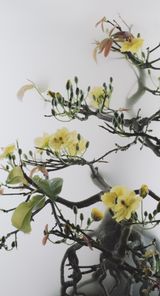
Utilising video, installation, and photography, Wu Chi-Tsung discovered in these new media compelling conceptual stratagems that spurred new and dynamic approaches to image making. Featured in the main gallery are two new films from Wu Chi-Tsung’s Still Life series, that conceptually translate motifs of traditional cut-branch flower painting into time-based moving images. Describing these works, Chi-Tsung stated that they are inspired, ‘by a cherished memory of painting; however, the mourning over this lost memory might not be limited to painting only. Some nameless emotions and memories unconsciously and slowly dissipate until, to our surprise, they are far away and cloaked by a white mist, their appearances obscured.’
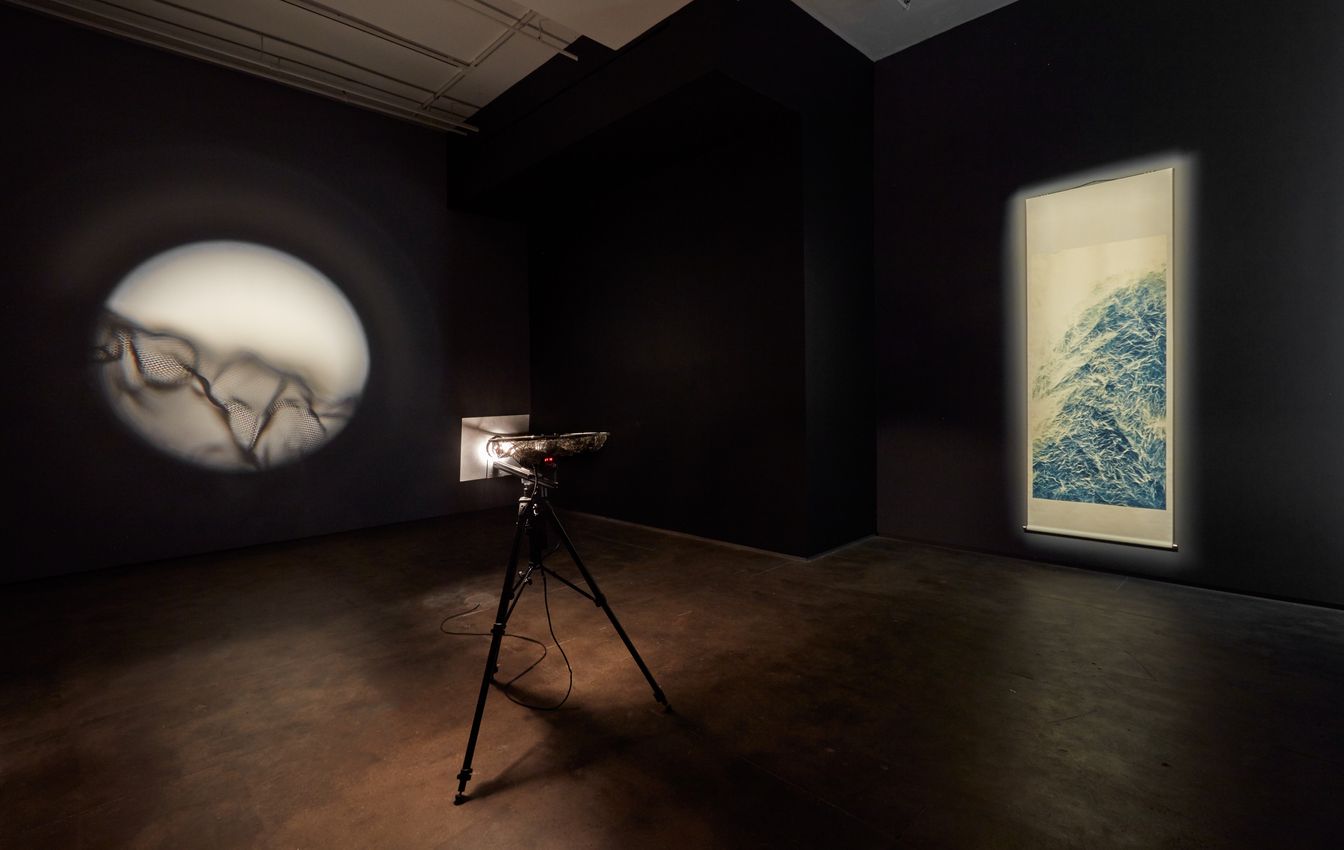
In the front gallery, is a work from Wu Chi-Tsung’s ‘Wire’ series, begun in 2003. Applying a structure similar to a magic lantern–an early type of image projector that used a light source, pictures printed on transparent plates, and one or more lenses–Chi-Tsung’s Wire VI, uses an automated mechanical control to repeatedly adjust the focal length of a camera trained on a single piece of wire mesh. A strong light illuminates the mesh and is directed through a large camera lens that projects a continually evolving image onto the wall. The result is a moving image that suggests an exquisite Chinese landscape. With this work, Wu Chi-Tsung explores how images change the way we see and imagine the outside world.
In the lower gallery, Chi-Tsung’s 2006 installation, Dust, investigates the artist’s deep concern with our relationship to images. A camera, positioned at one end of the darkened gallery, has its lens focused on the light of a projector installed at the opposite end of the room. The camera is focused on the centre of the gallery and sends a live video signal to the projector. Thus, a recording of the reflection of the circulation of dust particles moving about the room are projected on the wall, wavering and glimmering. As viewers progress through the space, disrupting the flow of air, the images of flickering dust change constantly and instantaneously. The emerging and hidden images in Chi-Tsung’s work suggests a new relationship between artist and media, image and viewer.
Born in 1981 in Taipei, Wu Chi-Tsung currently lives and works in Taipei, Taiwan and Berlin, Germany. He was the recipient of the Liu Kuo Sung Ink Art Award, Hong Kong and Taiwan, 2019, the WRO Media Art Biennial, 2013 and the Taipei Arts Award, 2003. He was short-listed for the Prudential Eye Awards, 2015 and the Artes Mundi, 2006. His work has been included in international exhibitions at institutions such as the Mori Art Museum, Japan; the National Museum Cardiff, United Kingdom; the Long Beach Museum of Art, Los Angeles; the Casino Luxembourg – Forum d’art Contemporain, Luxembourg; the Museo Del Palacio De Bellas Artes, Mexico; the Central Academy of Fine Arts (CAFA) Art Museum, Beijing, China; Shanghai Art Museum, China; the Seoul Museum of Art, South Korea; the Minsheng 21st Century Museum, Shanghai, China; the Museum of Contemporary Art Yinchuan, China; the Hiroshima City Museum of Contemporary Art, Japan; the Ullens Center for Contemporary Art (UCCA), Beijing, China and the Taipei Fine Arts Museum, Taiwan amongst others. His work is included in renowned collections such as the Arario Museum, Seoul, South Korea; the M+ Museum, Hong Kong, China; the Borusan Contemporary, Istanbul, Turkey; the Santa Barbara Museum of Art, Santa Barbara, California; the Spencer Museum of Art, Lawrence, Kansas; The University of Salford Art Collection, Salford, United Kingdom; the Ullens Center for Contemporary Art, Beijing, China; the White Rabbit Gallery, Chippendale, Australia; the Yu Hsiu Museum of Art, Nantou, Taiwan and the Post Vidai Collection, Ho Chi Minh City, Vietnam.

Wu Chi-Tsung’s innovative work features a broad range of media including photography, video, installation and painting, in which he combines traditional and contemporary forms and methodologies to explore perceptions of the physical and natural worlds. Trained from an early age in the practices of Chinese calligraphy, Chinese ink painting, watercolour and drawing, Wu Chi-Tsung worked for many years in a traditional idiom. Following a period spent creating experimental ink paintings, he turned to video, installation and photography, finding in these new media compelling conceptual stratagems that spurred new and dynamic approaches to making images. These have included films that conceptually translate traditional cut-branch flower paintings into time-based moving images and his recent ‘Cyano-Collage’ Series, in which he connects Eastern and Western culture and art to integrate traditional aesthetics with startling contemporary language.

Sean Kelly Gallery was founded by its British-born owner in 1991 and operated privately in SoHo until 1995 when its first public space opened at 43 Mercer Street. During these formative years, it established a reputation for diverse, intellectually driven, unconventional exhibitions. The original list of artists represented included Marina Abramović, James Casebere, Callum Innes, Joseph Kosuth and Julião Sarmento – exemplifying the Gallery’s commitment to presenting important, challenging contemporary art.

A respected voice in contemporary art discourse.
Focusing on ambitious storytelling and insightful art-world commentary. Ocula Magazine publishes in-depth interviews, critical essays and timely analysis on the artists, exhibitions and ideas driving the global art world.
Learn more about Ocula Magazine
Showcasing the best of the art world.
Ocula partners with galleries from around the world to highlight their artists, artworks and exhibitions. Gallery membership is by application and invitation, with each member vetted by an independent panel.
Learn more about Ocula Membership

Specialises in the sale of major artworks.
Led by a team with deep ties to the world’s leading auction houses, galleries and collectors. Ocula’s advisory team offers bespoke services to high-net-worth clients from around the world who are looking to acquire the best of contemporary and modern art.
Learn more about our team and services