Press Release
Sundaram Tagore Chelsea is pleased to present The Nature of Perception, a solo exhibition of new paintings and sculptural installations by New York-based artist Miya Ando.

A descendant of Bizen sword makers, Miya Ando spent her childhood among Buddhist priests in a temple in Okayama, Japan, and later, in California. Ando combines the traditional techniques of her ancestry with modern industrial technology, skillfully transforming sheets of metal into ephemeral, abstract paintings suffused with colour.

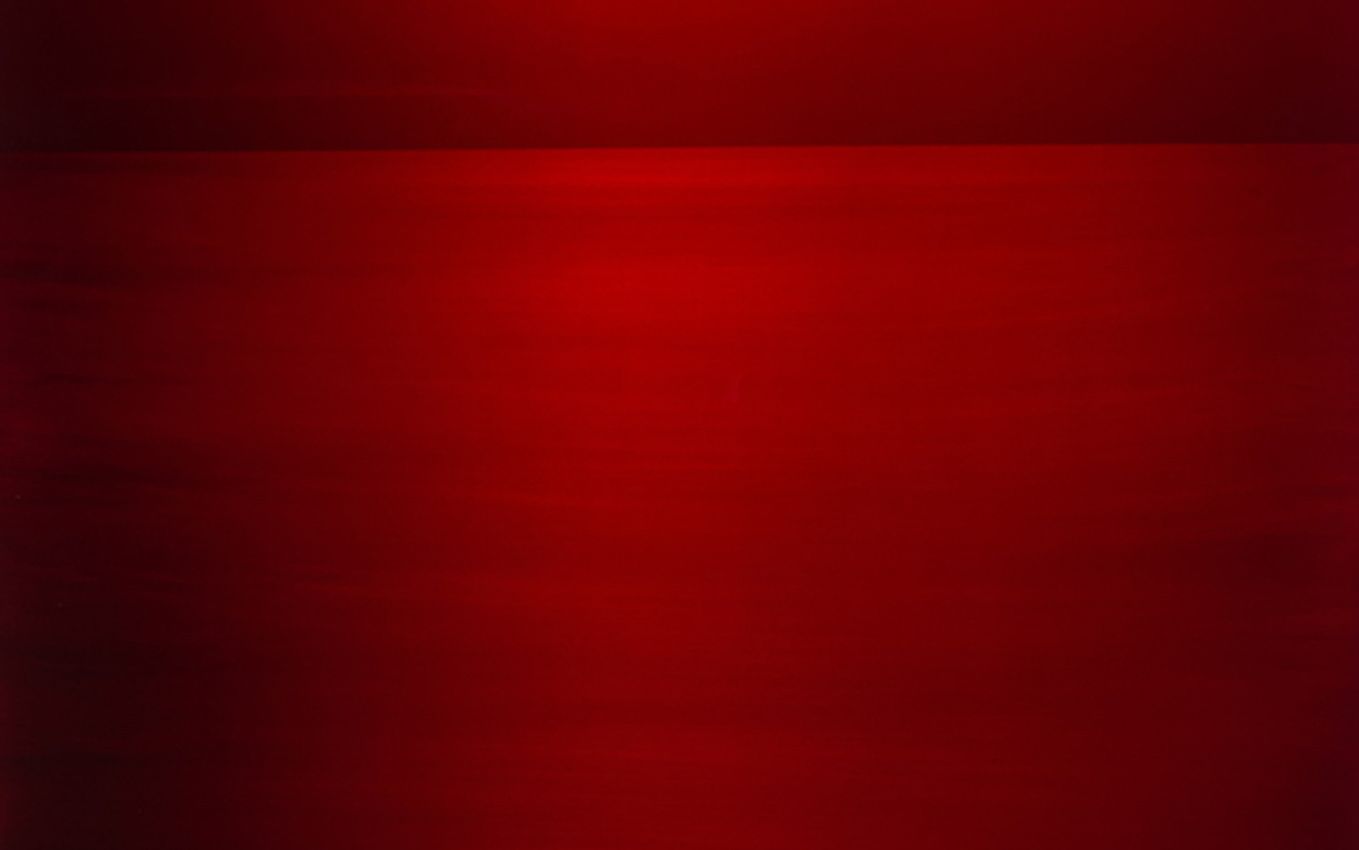
Transformation—both in the physical and the metaphysical sense—is the unifying element of the work in this exhibition. To produce the light-reflecting gradients on her metal paintings, Ando applies heat, sandpaper, grinders and acid to the metal canvases, irrevocably altering the material’s chemical properties. It is by an almost meditative daily repetition of these techniques that Ando is able to subtract, reduce and distill her concept until it reaches its simplest form. The resulting works explore the duality of metal and its ability to convey strength and permanence, yet in the same instance, capture the fleetingness of light and the transitory nature of all things.

For this exhibition, Ando is introducing two new bodies of work that build on the concept of transformation. The first is the Phenomenon series, characterised by an understated iridescence, where the surface of the metal painting appears to change colour depending on light and movement. For the viewer, examining these works is not a passive experience, but rather an interactive one, shaped by environmental conditions—the subtle shift of light throughout the day and the viewer’s movement as he or she navigates the space transform the appearance of the work and as a result, the encounter itself.

Ando’s second new series, Kintsugi, was inspired by a centuries-old Japanese form of restoration. Kintsugi, which translates as ‘gold joinery,’ is a process in which a mixture of lacquer and gold dust is used to patch cracks in broken pottery. It is a method not meant to disguise flaws, but rather emphasise them as part of a piece’s history. Ando employs a process similar to this ancient technique to fill crevices between slats of shou-sugi-ban, a charred wood often used as an exterior building material in Okayama. Recalling memories of local Buddhist temples from her childhood in Japan, Ando uses the gold fill as an allusion to a golden light emanating from within a sacred structure.

Additionally, Ando is presenting newHamon’ paintings, a series she’s been working on for the past decade, which examines the transitory nature of things. The name refers to an ancient sword-smithing technique unique to Japan in which the repetitive process of quenching and tempering a forged blade results in a cloud-like pattern along the edge of the sword. Subtly echoing the ephemeral, abstracted landscapes of the artist’s earlier works, theHamon’ series explores the juxtaposition of seemingly opposing forces—in this case, a poetic visual element gilding an object intended to end human life.

The focus of Ando’s artistic practice is the intrinsic connection between the human sphere and the natural world. ‘My interest is in creating work that allows the viewer to experience a relationship to nature and to truly be in the moment as they encounter the transitory qualities of light,’ Ando says. ‘I want to draw people into a slowed-down environment with work that is experiential and employs the visual vocabulary of natural phenomena and transformation.’

Miya Ando has a Bachelor of Arts degree in East Asian Studies from the University of California, Berkeley, and attended Yale University to study Buddhist iconography and imagery. She apprenticed with the master metalsmith Hattori Studio in Japan, followed by a residency at Northern California’s Public Art Academy. Her work has been shown worldwide, including at the de Saisset Museum, Santa Clara University, California, in a show curated by Nat Trotman of the Guggenheim Museum, and an exhibition at the Queens Museum, New York. In 2015, a large shou-sugi-ban installation by the artist was featured in Frontiers Reimagined, a collateral event of the Venice Biennale.

Miya Ando has produced numerous public commissions, most notably a thirty-foot-tall sculpture in London built from World Trade Center steel to mark the ten-year anniversary of 9/11, for which she was recently nominated for a DARC Award in Best Light Art Installation. Awards include the Pollock-Krasner Foundation Grant, 2012. She lives and works in New York.
Miya Ando: The Nature of Perception Spotlight Miya Ando: The Nature of Perception Ando began talking, bubbling over with enthusiasm and passion for light and the natural world, their transformative powers and the harmony that can be created between them and the man‑made world. Read the story

Artists Exhibiting

Also Exhibiting at Sundaram Tagore Gallery

About the Gallery

Established in 2000 in New York City, Sundaram Tagore Gallery represents established and emerging artists from around the globe, specialising in work that is aesthetically and intellectually rigorous, infused with humanism and art historically significant. The gallery was founded with a mission to show that some of the best and most meaningful art was being created by artists deeply engaged in cross-cultural explorations. Our international roster of artists cross cultural and national boundaries, synthesising Western visual language with forms, techniques and philosophies from Asia, the Subcontinent and the Middle East. More than twenty years later, we continue to champion artists, particularly women and those from underrepresented cultures, whose work exemplifies our interconnectedness.

View Gallery Profile
Address
542 West 26th Street
New York
United States
Opening Hours
Tuesday – Saturday
10am – 6pm
(1)
New York 542 West 26th Street
Sundaram Tagore Gallery
542 West 26th Street, New York, United States

Opening hours
Tuesday – Saturday
10am – 6pm
The art world in focus