Press Release

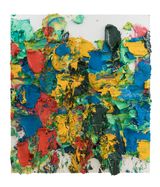
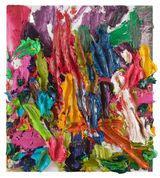
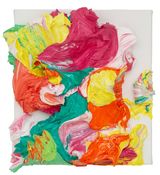
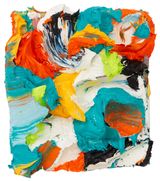
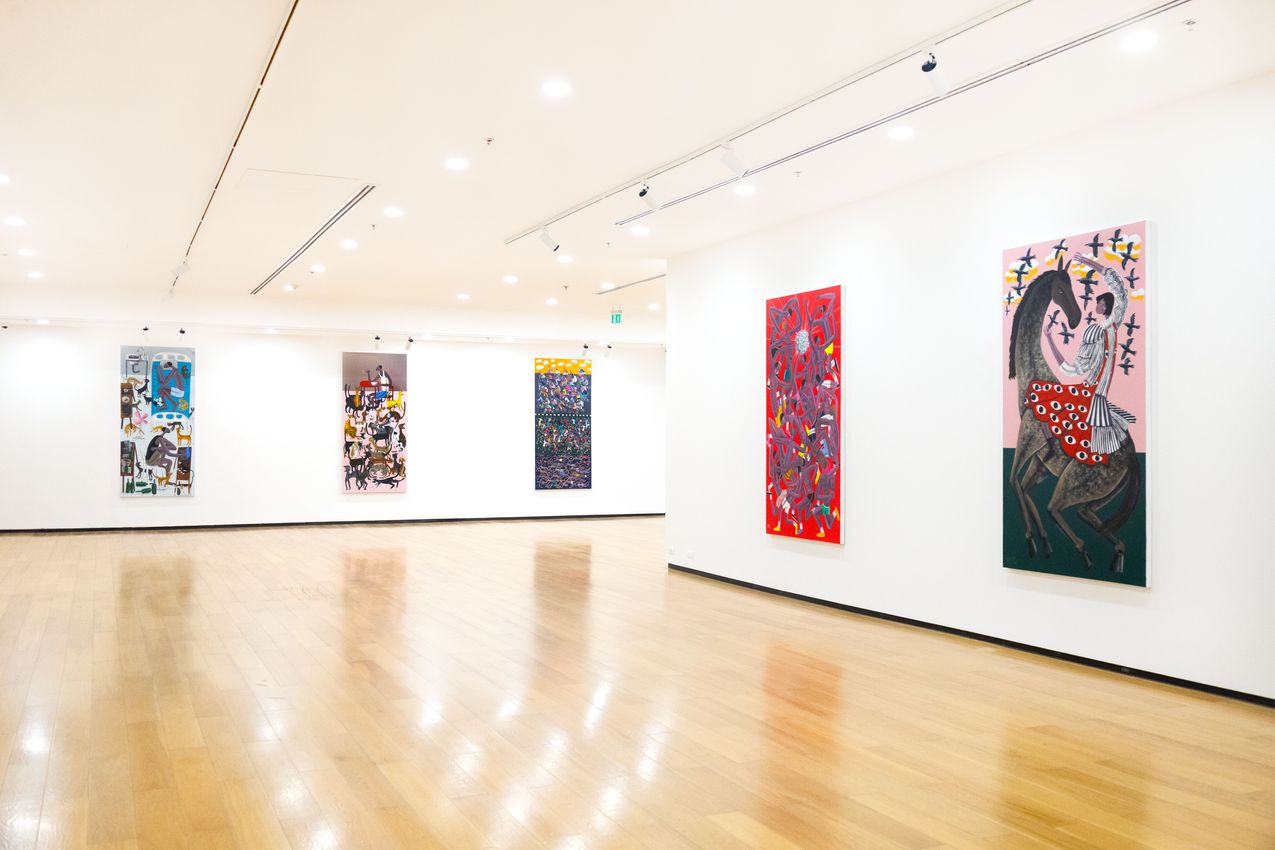
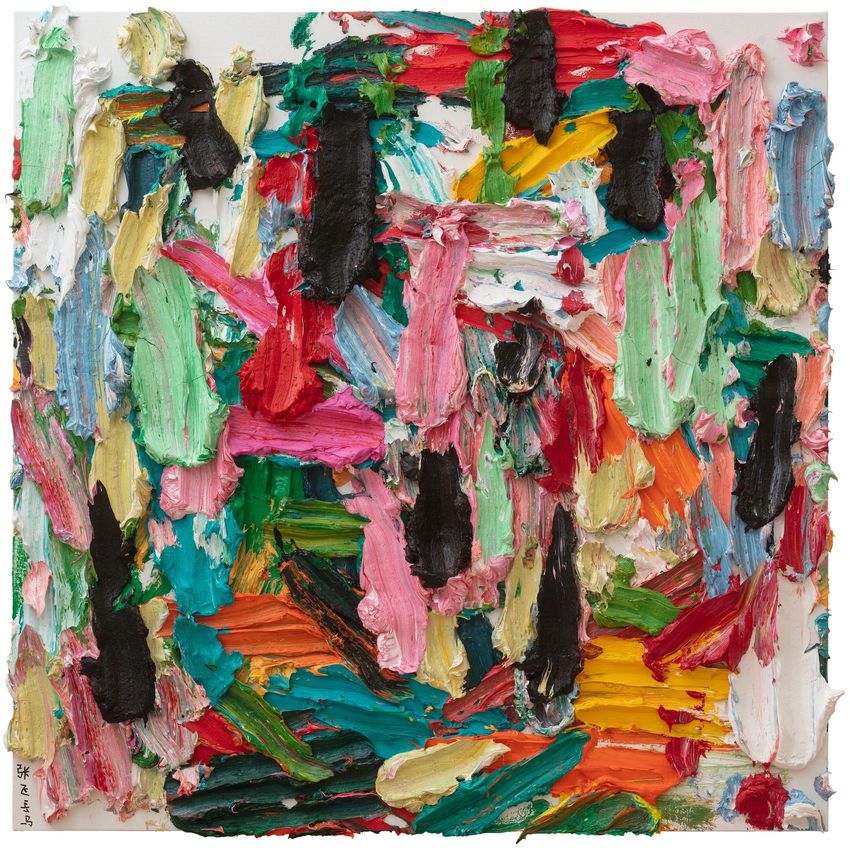
Tang Contemporary Art is honored to announce Painting Sociology, a solo exhibition by renowned artist Zhu Jinshi, opening on April 29th, 2023. The exhibition will focus on the artist’s abstract paintings, including his expanding “thick painting” series, while also adding acrylic-based “thick painting” works and small-scale oil paintings, presenting more than 30 pieces in total.

Since the times of Max Weber, sociology has been centered around the research themes of politics, economics, ideology, power and regulations. This includes the theories of Marx before him, and the post-modern philosophical discourse after him. Harrington states, “Art is inclined towards the scientific image which overturns the world, whereas sociology dedicates itself to dispelling the intoxicating mysteries within social life; art opposes the interpretation of life through materialism, while the primary interest of sociology is to unveil how seemingly unique objects are in fact constructed and reproduced by society.” Aesthetic sociology performs interactive research on the juxtaposing studies of art and sociology. Instead of analyzing society through painting, it can become the direct investigative objective of sociology. This is also the migration of Becker’s social imagery into the art realm, which demonstrated the understanding of aesthetic sociology through the theory of symbolic interactions. We are able to then hypothesize that it is viable to seek a theoretical discourse to Chinese contemporary art through the observation of different phenomena demonstrated by painting on the art market; or, we can also use such an observation to build up an art historical narrative. This form of conjecture wields a directive: the contemporaneity of painting. Since the essence of life is to create new organisms through existing conditions, materials, forces and opportunities, we will also have to understand the existing conditions that cause the artists’ intuitive creative processes before attempting to uncover the potential fate of Chinese contemporary art. Zhu Jinshi said, “To this day, contemporary Chinese painting is but the product of the market. Not only do we view it as such, the West too doubles down on this notion. Therefore, unlike the West which generates many a show with global influence, we do not boast any. This is not because of issues with our paintings, but because of a lack of trustworthy theory. This is exactly the viewpoint that aesthetic sociology attempts to express.”

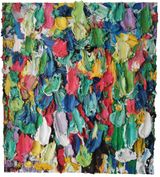
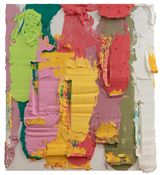
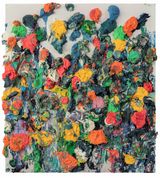
It is then apparent that Zhu Jinshi is anything but a simple painter, he mostly thinks about “the history of easel painting”. As a conceptual artist who investigates the form and structure of painting, this is a mental attitude, a idealistic operation. We can subsequently hold a better understanding of his works. As one of China’s earliest practitioners of abstract painting and installation art, his “thick painting” style stood out in 2000, and Shi Tao Quotes is a classic at the time. “Thick painting” reached its height during the 2010s: many works from this period were presented here, such as Volcanic Rocks (2010), Wind from Western Suburbs and Express A View No.1(2013). The triptych work Lost Clouds represents the artist’s polyptypch style beginning in the 1980s. Miserable June No.1 and A Promise Near the Mountain No.2 are both works from 2017 that metaphorically depict the historic circumstances of both society and the self. Valley in the Mirror, Did not Burn the Linked Camp and Sadness Floats over the Pond are works completed after the pandemic, provoking the imagery of a new world. “Thick paintings” after 2020 connect with reality and promise an inescapable entanglement between painting and sociology. In short, painting sociology differs from that of installations: the times of Duchamp and Beuys have passed, while the advantages of contemporary painting—passion, meditation, obsession, conflict, sadness, loss, pain and happiness—have shaped society into becoming more sentimental, spontaneous and coincidental. Zhu Jinshi uses the techniques of “piling”, “stirring” and “lifting” to achieve thickness, aggressiveness and three-dimensionality. The pigment’s materiality is thus accentuated. Overwhelming aesthetics and tridimensional viewpoints revolutionized the compounded bearings between oil color and the canvas, while the interactivity among medium, volume, time and space formulated the work’s immense receptivity.

During the past two years, Zhu Jinshi also introduced the new acrylic medium. This is not only a challenge to the self based on past painting practices, but also an extension of perceptions. The artist used undiluted acrylic paint to cover the canvas directly, presenting an industrial peculiarity diverging from oil painting. A more emanative spatial structure is formed through over-saturated hues, flowing paint and multilayered density. The small-scale “thick painting” works, on the other hand, are the results of the artist’s many studies used to strengthen his systematic methodology. He is able to strategize on these remarkably limited spaces, transforming them into exceptional compositions that compete with one another under a new light.

The paintings of Zhu Jinshi begin in theory, then utilize both form and structure to illustrate the philosophy of pigmentary narrative. This trail of practices showcases the path of discovery tread by abstract artists from his generation. Till this day, he still deliberates on the contemporaneity of painting, opening up a prelude to the discussions on painting sociology followed by a brand new wave of self-introspection.

Read More
About the Artist

Zhu Jinshi (b.1954, Beijing) produces abstract paintings whose surfaces are built up with thick, near-sculptural layers of oil paint. Resembling colourful landscapes, Zhu’s images range in palette and scale, but the artist is known to always apply his oil paint with spatulas and shovels. Producing dense lashings of colour, the artist’s method recalls the style and techniques espoused by the German Expressionists, who Zhu was profoundly influenced by during his years living in Berlin. Zhu belonged to a group of Chinese avant-garde artists named the Stars, which formed in 1979 to challenge aesthetic conventions and exhibit their work publicly. The group, which included the famous dissident artist Ai Weiwei, was granted an exhibition in 1980 at Beijing’s National Gallery, a breakthrough in Chinese cultural expression that helped to establish the creative force of the individual. ‘Although I operate within the realm of form,’ Zhu has said, ‘my idea is to go beyond the limitations set by form and break free.’ He has also produced photographic, video, installation, and performance works.

View Artist Profile

Also Exhibiting at Tang Contemporary Art

About the Gallery

Tang Contemporary Art was established in 1997 in Bangkok, later establishing galleries in Beijing and Hong Kong. Tang Contemporary Art is fully committed to producing critical projects and exhibitions to promote Contemporary Chinese art regionally and worldwide, and encourage a dynamic exchange between Chinese artists and those abroad.

View Gallery Profile
Address
B01, 798 Art District
No.2 Jiuxianqiao Road
Chaoyang District
Beijing
China
Opening Hours
Tuesday – Sunday
11am – 5:30pm
(1)
Beijing B01, 798 Art District, No.2 Jiuxianqiao Road
Tang Contemporary Art
B01, 798 Art District, No.2 Jiuxianqiao Road, Chaoyang District, Beijing, China

Opening hours
Tuesday – Sunday
11am – 5:30pm
The art world in focus