For his first solo exhibition at The Modern Institute, Tokyo-based Gardar Eide Einarsson presents a new body of work exploring the themes and notions of obscurity, disguise and hiding-from-plain-view as a metaphor for how one negotiates one’s own visibility, ideas and agency in face of impending authoritarianism, age of surveillance and political ideologies and power structures increasingly at odds with one’s own.
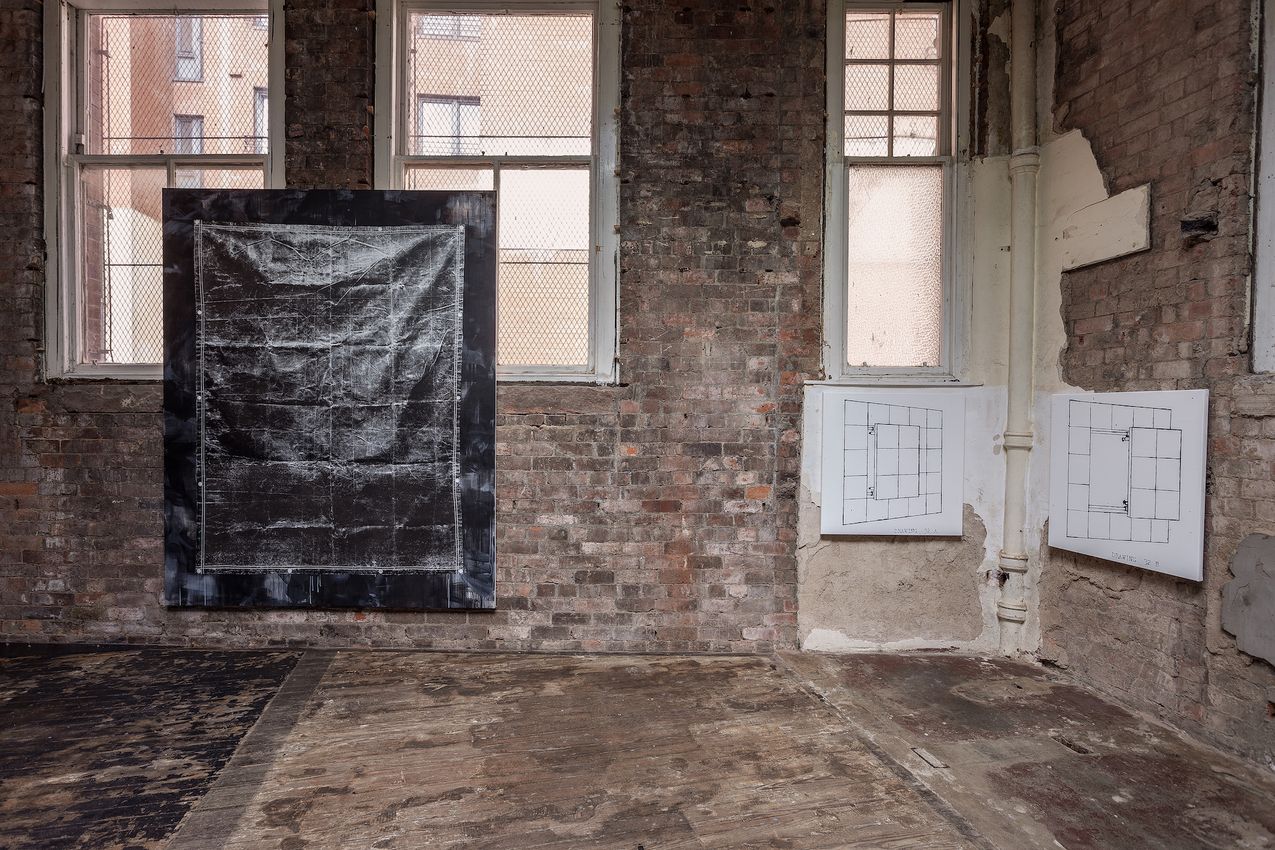
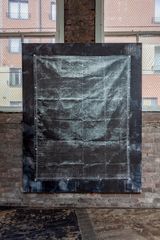
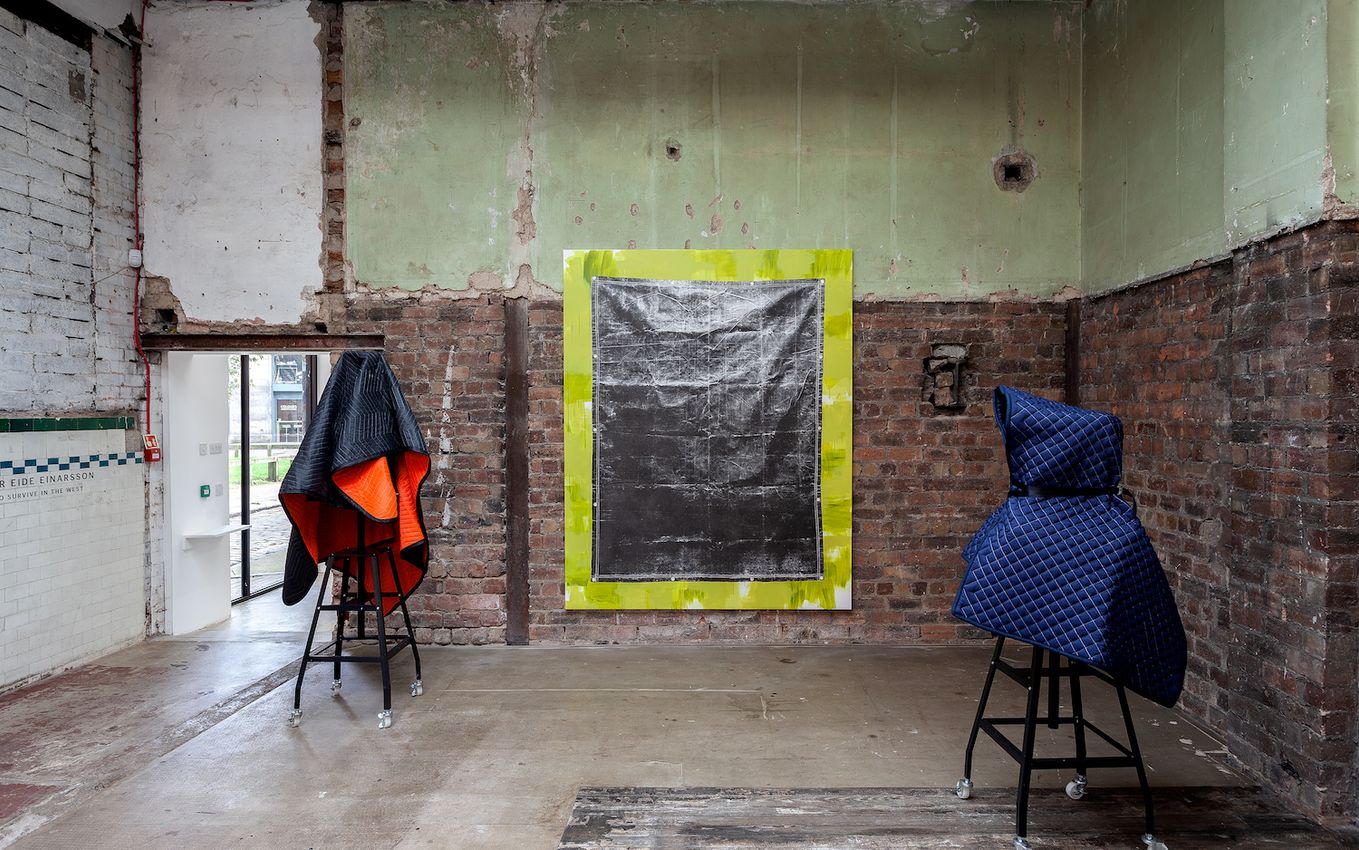
In How to Survive in the West, Einarsson begins with objects commonly used for protective purposes or cover as a starting point for a new series of paintings and sculptures. Silkscreened images of tarpaulin on painted canvas mask the underlying picture plane beneath, referencing the tarpaulin’s design to shield. As painting in essence covers the open surface of a canvas, the superimposed print of the tarp here in turn covers the paint.
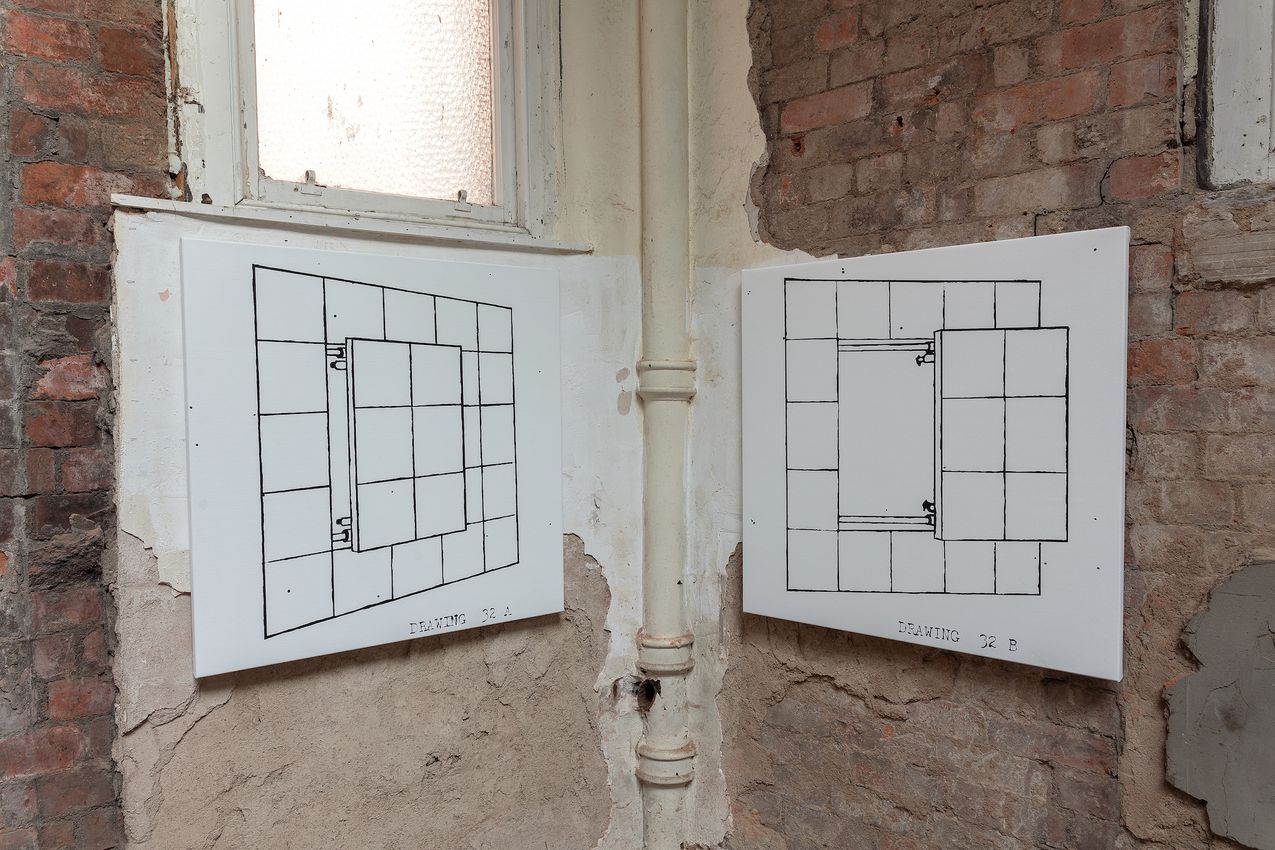
Further, two smaller canvases depict instructional diagrams on how to build covert hiding spaces in one’s home, reproduced from an underground publishing pamphlet titled Secret Rooms Secret Compartments. Graphically illustrating the surface of a recognisable modernist grid in the form of a tiled wall, it reveals an (imaginary) recessed hiding space, calling the flat paintings’ surfaces into question in a nod to the age-old trope of a painting hiding a safe.
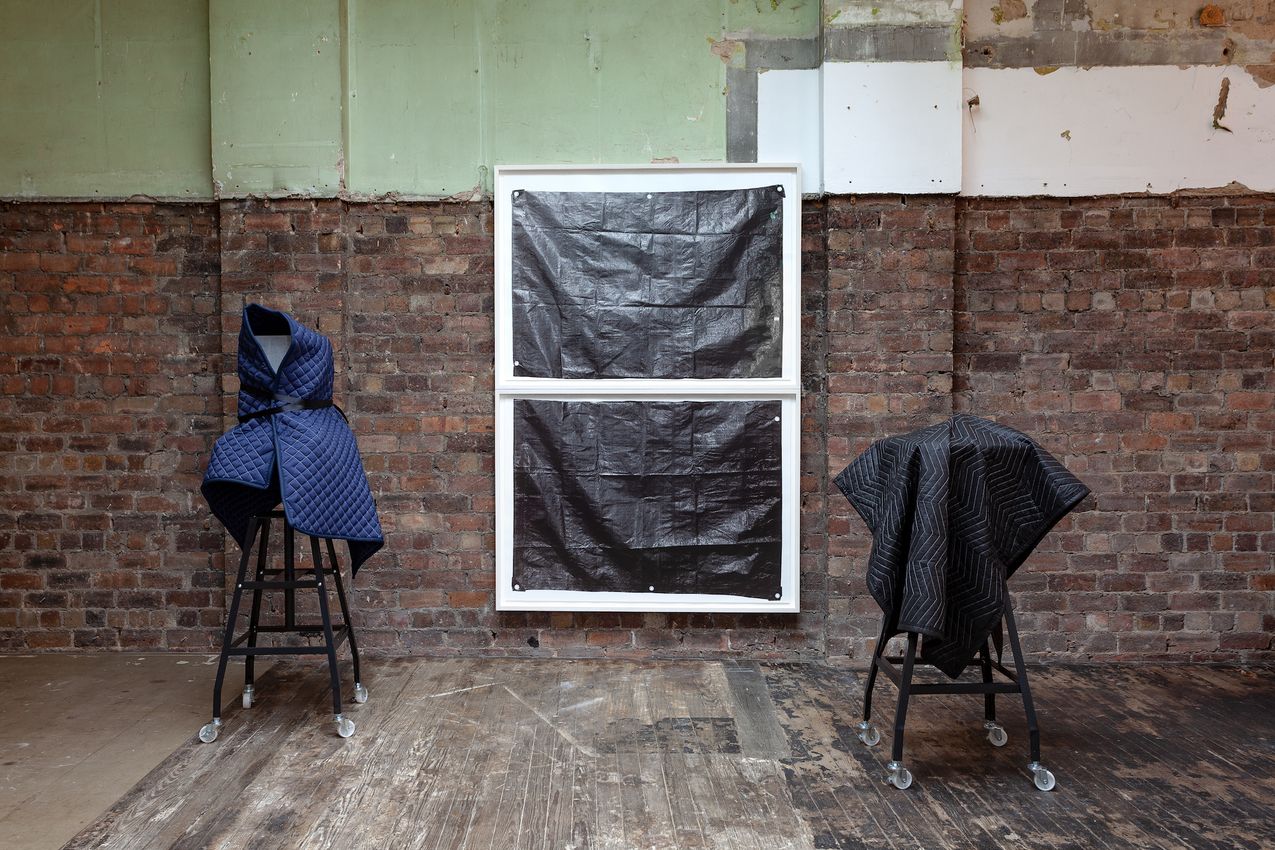
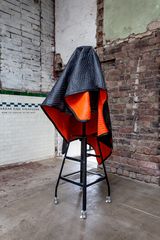
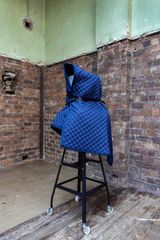
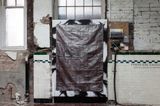
A group of sculptures placed in the gallery’s Bricks Space take their basis from found photographs of public statues wrapped and prepared for removal. Once erected in reverence, since then, by way of history, have decidedly been rendered condemnable and to be removed. An assemblage of sculptural mediums–ranging from traditional materials such as bronze and marble to the readymade–are propped on easels and then concealed or partially wrapped in moving blankets typically used to protect sculptures in transit, positioning them between the state of production (on the easel) and the state of obsolescence (in the moving material). The concealing nature of the blankets over the sculptures brokers a relationship between these three dimensional forms and the two dimensionality of the wall-based pieces, creating a lapse between genres and formats. The blankets suggest a two-dimensionality akin to the print of the tarp emphasising the flatness of the painting whilst simultaneously presenting a trompe l’oeil. A push and pull between the two forms mirrors the tension between covering and revealing–reality and metaphor.
Gardar Eide Einarsson (B. 1976 in Oslo; Lives and works in Tokyo). He received his education from the National Academy of Fine Art, Bergen; Staatliche Hochschule für Bildende Kunste - Städelschule - Frankfurt and the Whitney Museum Independent Study Program in New York City. Institutional solo shows include Frankfurter Kunstverein; Museum of Modern Art, Fort Worth; Astrup Fearnley Museum of Modern Art; Reykjavik Art Museum; Centre d’Art Contemporain, Geneva; Bonniers Konsthall, Stockholm, ARoS Aarhus Art Museum, Aarhus; Bergen Kunsthall and Kunsthalle Fridericianum, Kassel.
He has also exhibited in venues including Museum Moderner Kunst Stiftung Ludwig, Vienna; Kunsthalle Wien; Louisiana Museum of Modern Art; Stedelijk Museum Amsterdam; MoMA PS1; The Museum of Contemporary Art, Oslo; MARCO Museo de Arte Contemporaneo, Vigo; Moderna Museet, Stockholm; Serralves Museum of Contemporary Art, Porto; Contemporary Art MuseumSt. Louis; Museo Tamayo, Mexico City; Kiasma Museum of Contemporary Art, Helsinki; Istanbul Museum of Modern Art; Palais de Tokyo, Paris and Witte de With Center for Contemporary Art and has participated in the Whitney Biennial, the Istanbul Biennial and the Sydney Biennial among others.
Einarsson’s work is represented in a number of public collections including the Museum of Modern Art (MoMA), New York; Los Angeles County Museum of Art (LACMA), Los Angeles; Los Angeles Museum of Contemporary Art (LA MoCA), Los Angeles; Berkeley Art Museum, Berkeley; Museum for Moderne Kunst Frankfurt (MMK), Moderna Museet, Stockholm; Malmö Art Museum, Malmoe; Astrup Fearnley Museum of Modern Art, Oslo and the Norwegian National Museum of Art, Oslo.


The Modern Institute was founded in Glasgow in 1997. The gallery works with 45 internationally established and emerging artists including Martin Boyce, Jim Lambie, Richard Wright, Anne Collier, Cathy Wilkes, Simon Starling, Urs Fischer, Luke Fowler and Nicolas Party.

A respected voice in contemporary art discourse.
Focusing on ambitious storytelling and insightful art-world commentary. Ocula Magazine publishes in-depth interviews, critical essays and timely analysis on the artists, exhibitions and ideas driving the global art world.
Learn more about Ocula Magazine
Showcasing the best of the art world.
Ocula partners with galleries from around the world to highlight their artists, artworks and exhibitions. Gallery membership is by application and invitation, with each member vetted by an independent panel.
Learn more about Ocula Membership

Specialises in the sale of major artworks.
Led by a team with deep ties to the world’s leading auction houses, galleries and collectors. Ocula’s advisory team offers bespoke services to high-net-worth clients from around the world who are looking to acquire the best of contemporary and modern art.
Learn more about our team and services