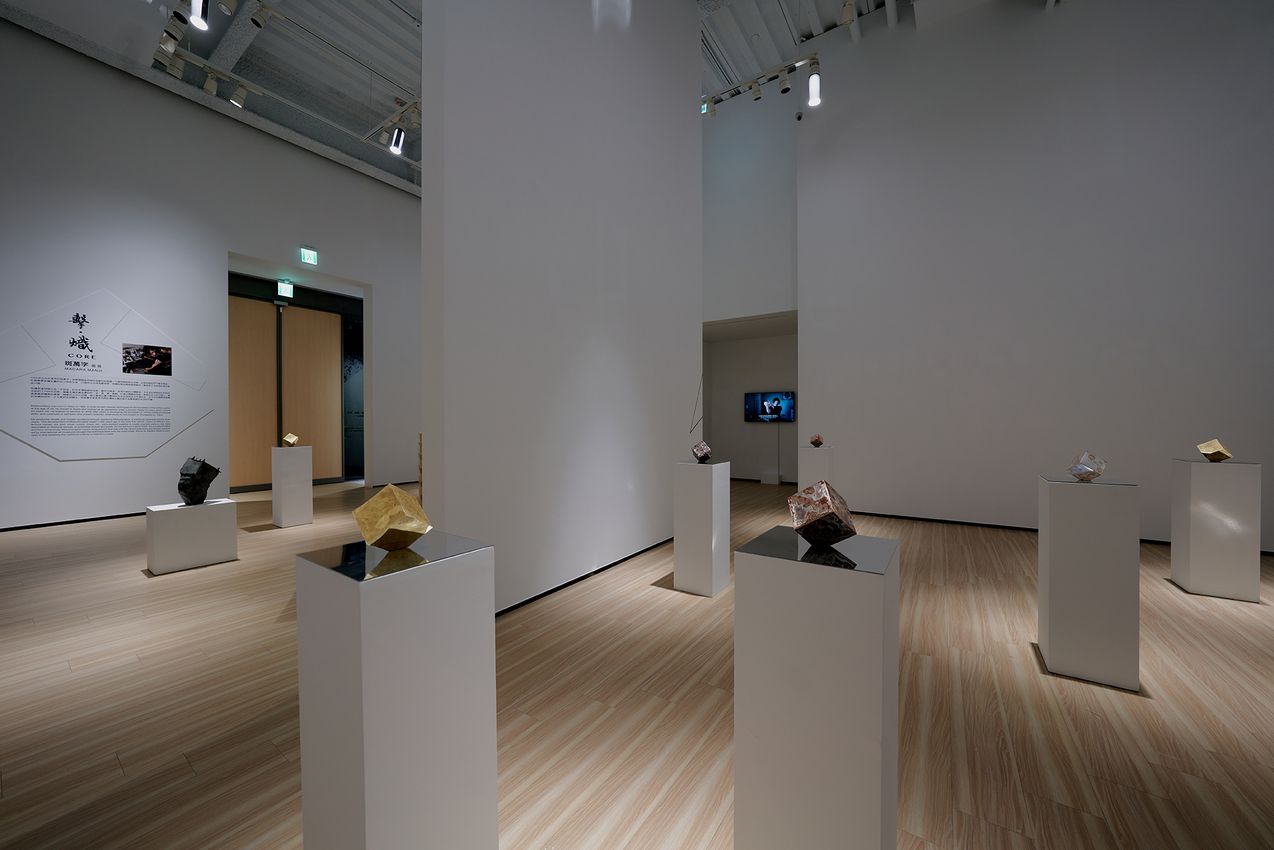
Madara Manji was born in Tokyo in 1988. In order to learn toreutic techniques for the foundation of his further works, at the age of 19, he moved to Kyoto and worked as an apprentice under a toreutic master for many years. Turned 23 years old, he aspired to become an artist after years in developing the foundation in various metal-processing skills, and continues to self-learn and present artworks. Artist studio is now located in Shinagawa-ku, Tokyo.
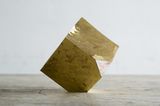
He produces simple and modern sculpture through mastering Mokume-gane, a traditional Japanese toreutic technique. The development of Mokume-gane began c.400 years ago in the early Edo period. Layers of different metals were stacked together to create exquisite patterns that were decorated on Samurai swords, to symbolise beauty and power. As the Samurai culture faded, the procedure-heavy and time-consuming ‘Mokume-gane’ nearly disappeared, that was until the recent collections and studies conducted by international art museums brought the technique back onto the world stage. Above all, Madara Manji is a pioneer in first adopting the traditional craft as a method to create.
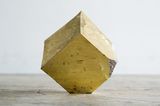
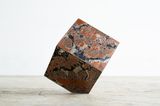
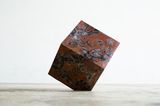
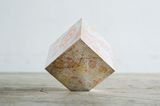
Madara Manji’s works are made of a mixture of various materials. The three-dimensional works, which are formed by repetitively beating and mixing mainly metal materials, are clothed in abstract painting-like patterns, which represent the complexities of the human mind.
The multiple materials contained in his cube works interfere with each other, and there is both repulsion and sympathy. While the equilibrium between the two is exquisitely maintained, the different species inherent in each other form their own unique visuals.The representation of work, which is based on a dangerous balance that seems to be about to collapse, seems to embody human beings themselves as they continue to struggle in the midst of modern society.
In his works, Madara Manji expresses the complexity and fascination of the human psyche, where emotions, experiences, ethics, instincts, and various other factors blend together.


Established in 1967, Whitestone Gallery is a leading Japanese gallery presenting a broad spectrum of Japanese art from the post-war to contemporary in spaces across East Asia.

A respected voice in contemporary art discourse.
Focusing on ambitious storytelling and insightful art-world commentary. Ocula Magazine publishes in-depth interviews, critical essays and timely analysis on the artists, exhibitions and ideas driving the global art world.
Learn more about Ocula Magazine
Showcasing the best of the art world.
Ocula partners with galleries from around the world to highlight their artists, artworks and exhibitions. Gallery membership is by application and invitation, with each member vetted by an independent panel.
Learn more about Ocula Membership

Specialises in the sale of major artworks.
Led by a team with deep ties to the world’s leading auction houses, galleries and collectors. Ocula’s advisory team offers bespoke services to high-net-worth clients from around the world who are looking to acquire the best of contemporary and modern art.
Learn more about our team and services