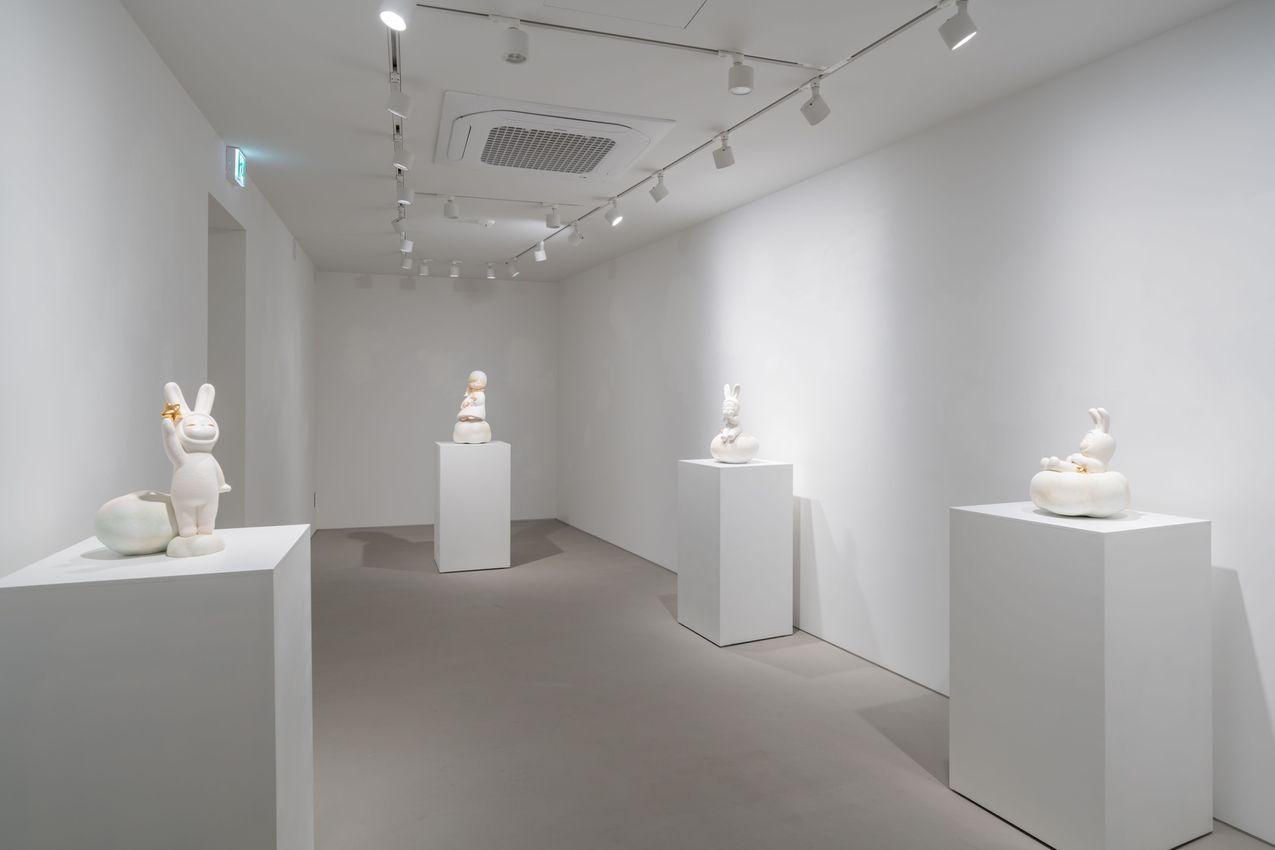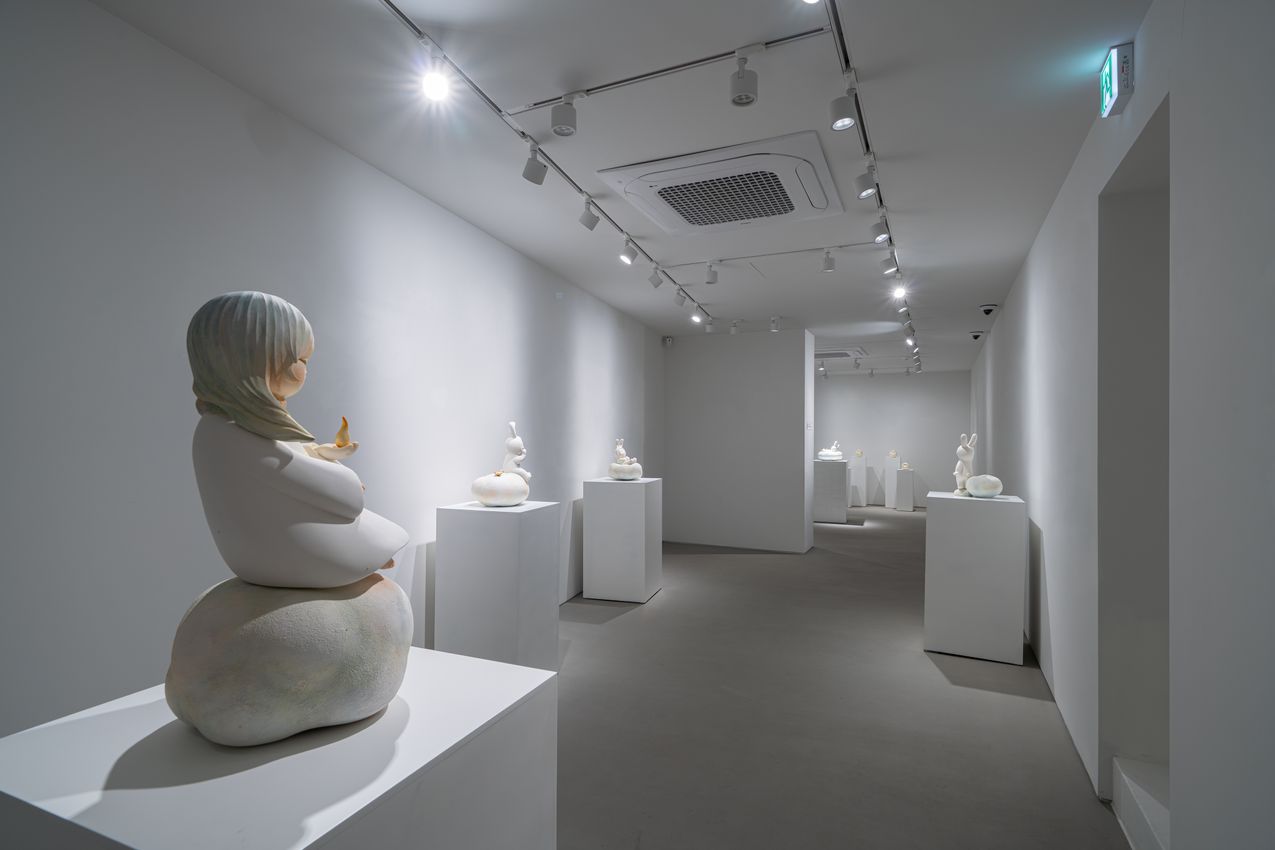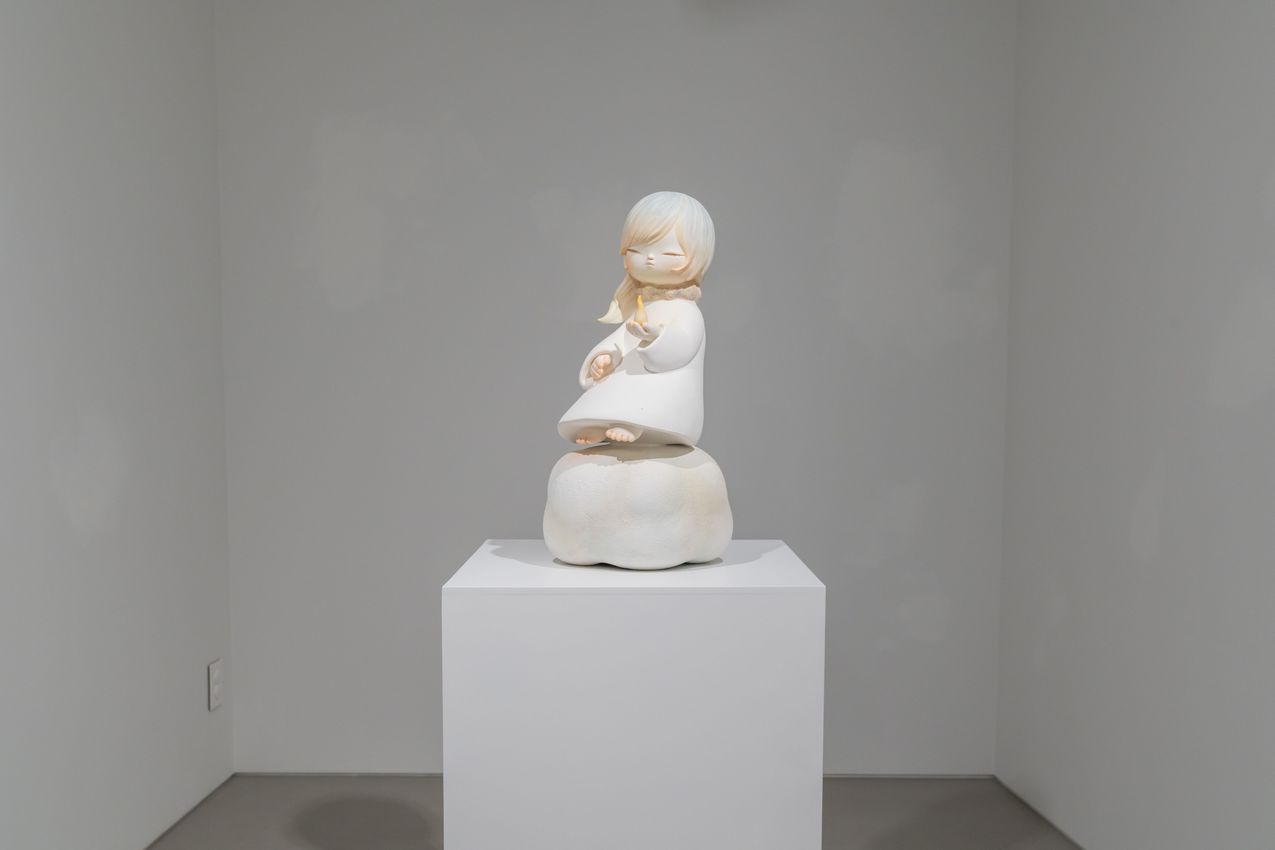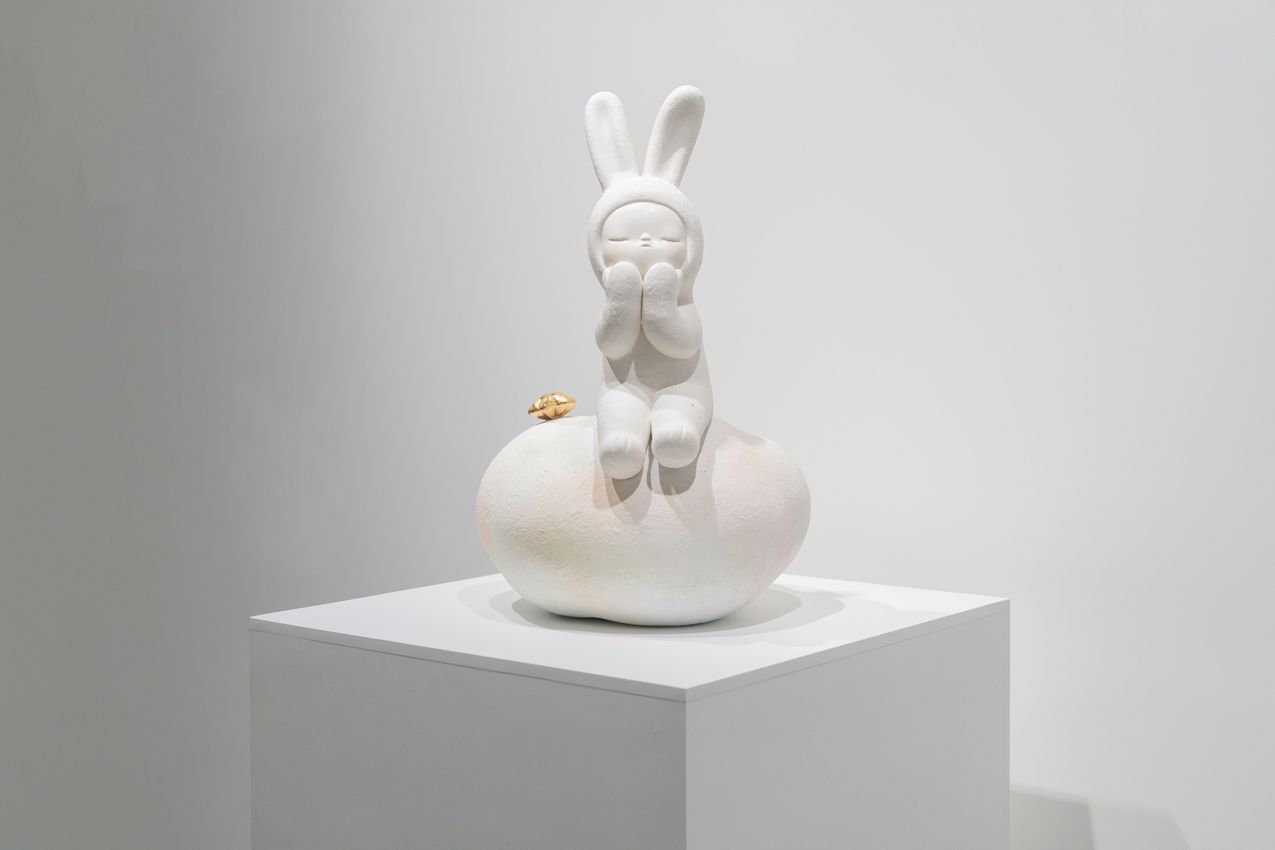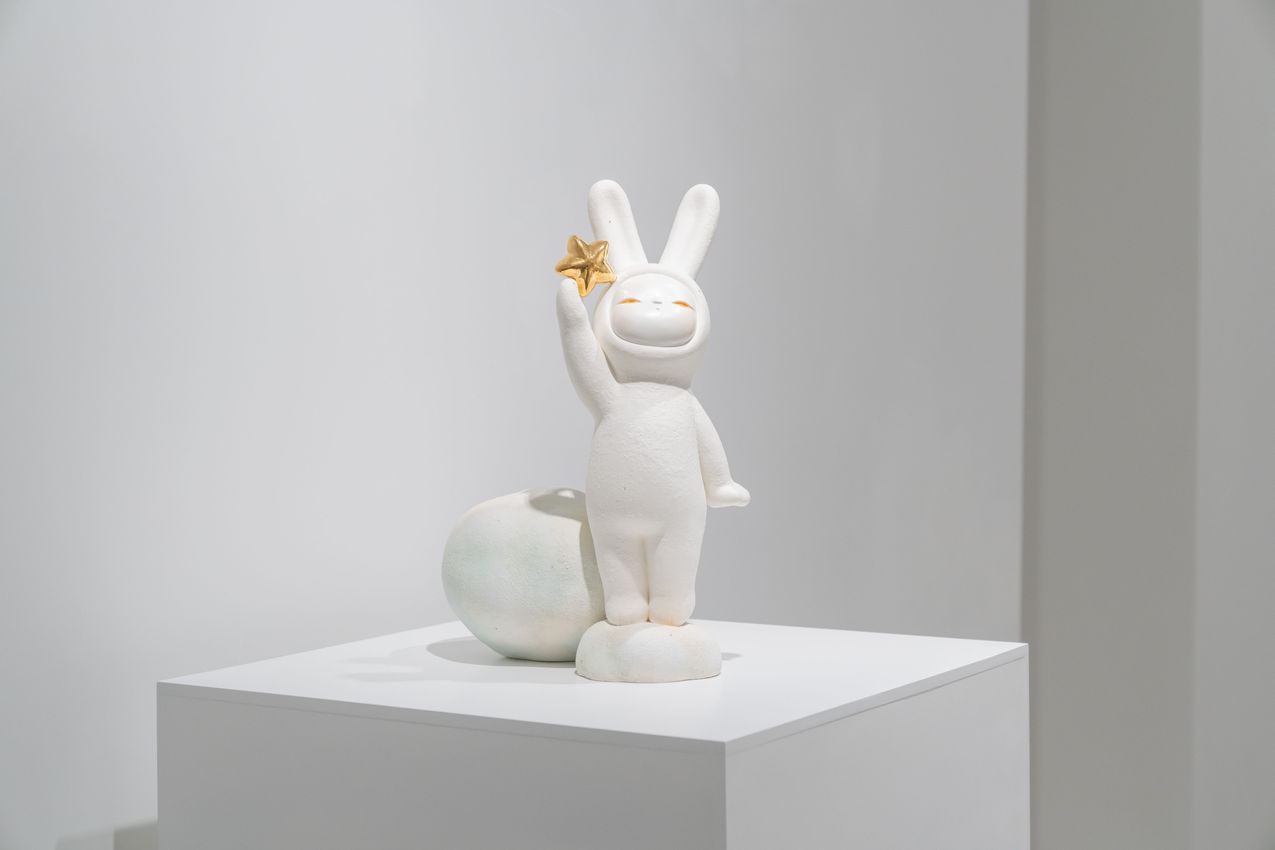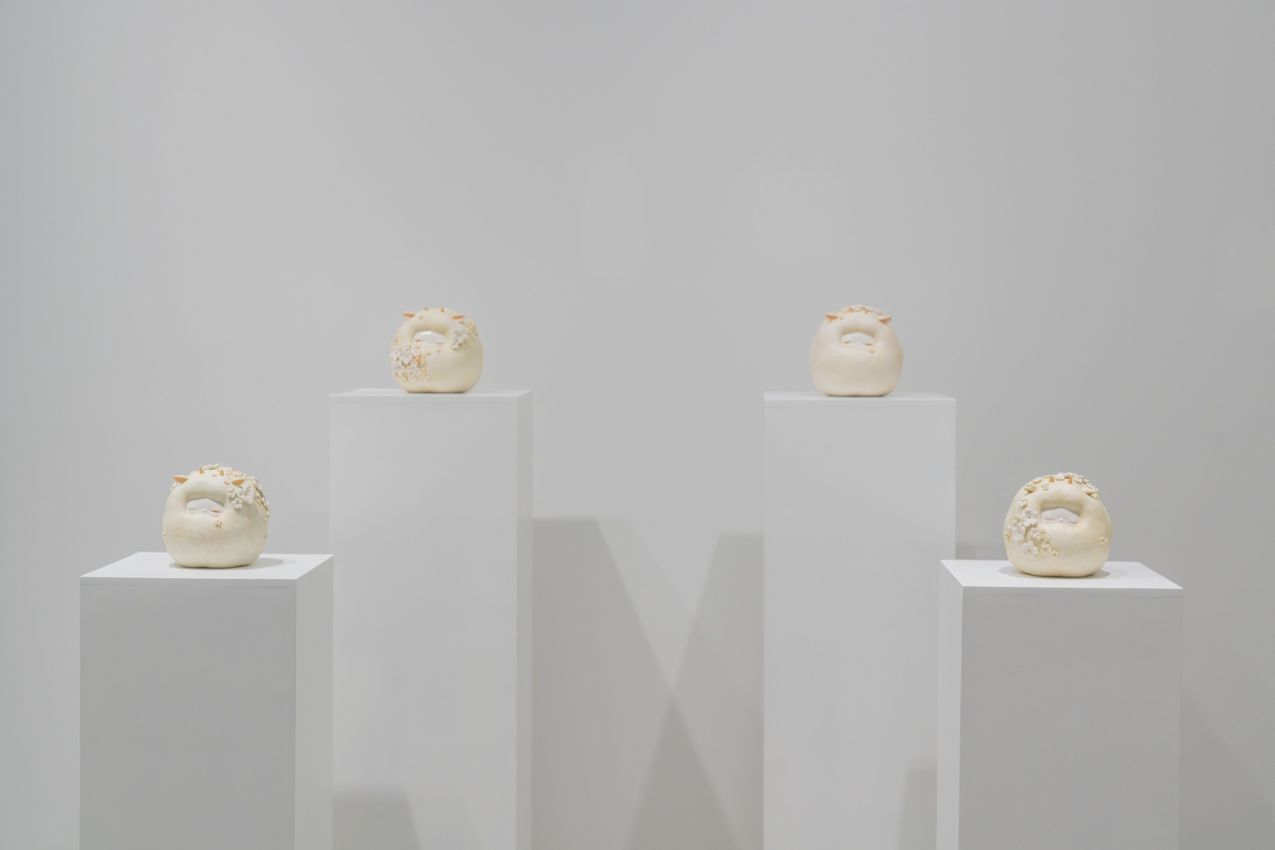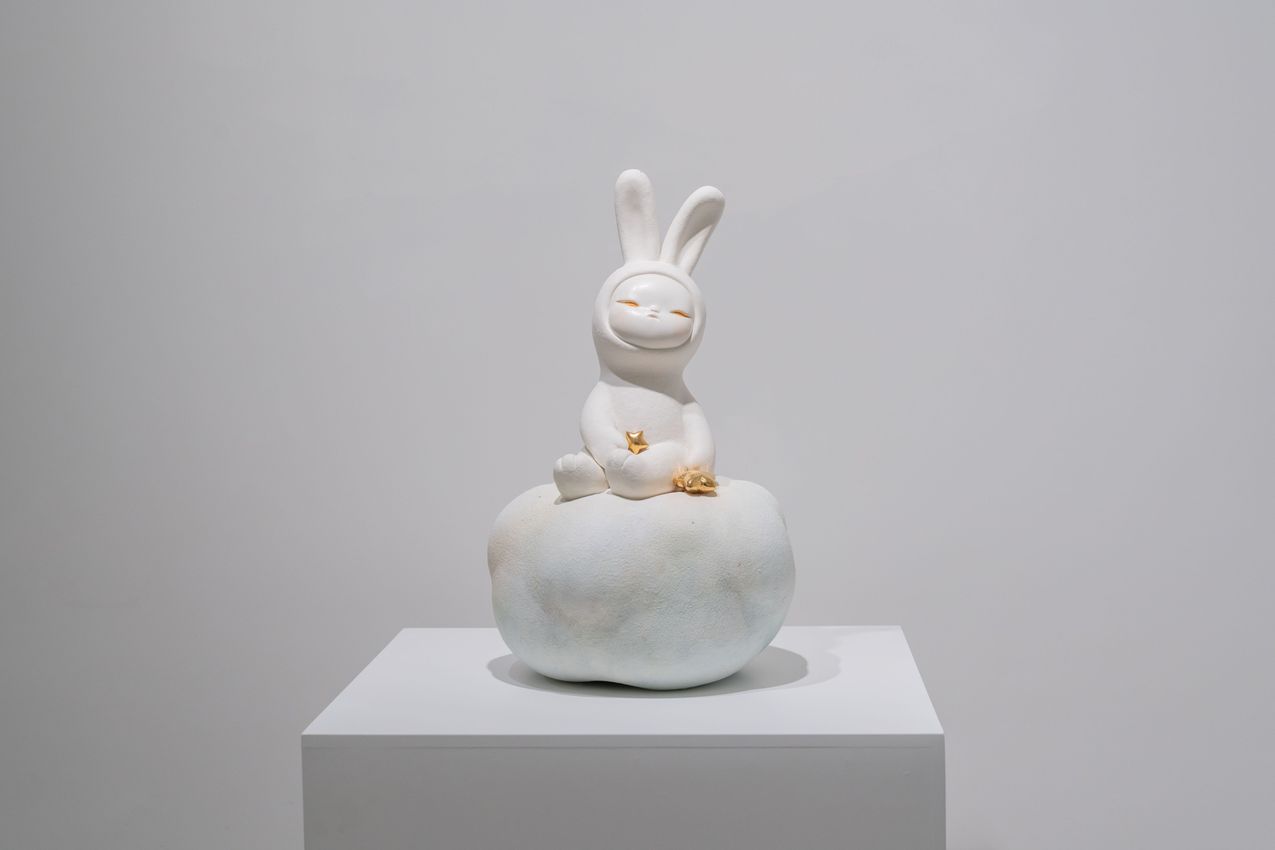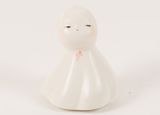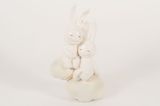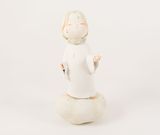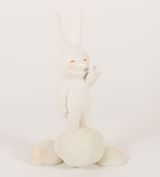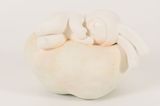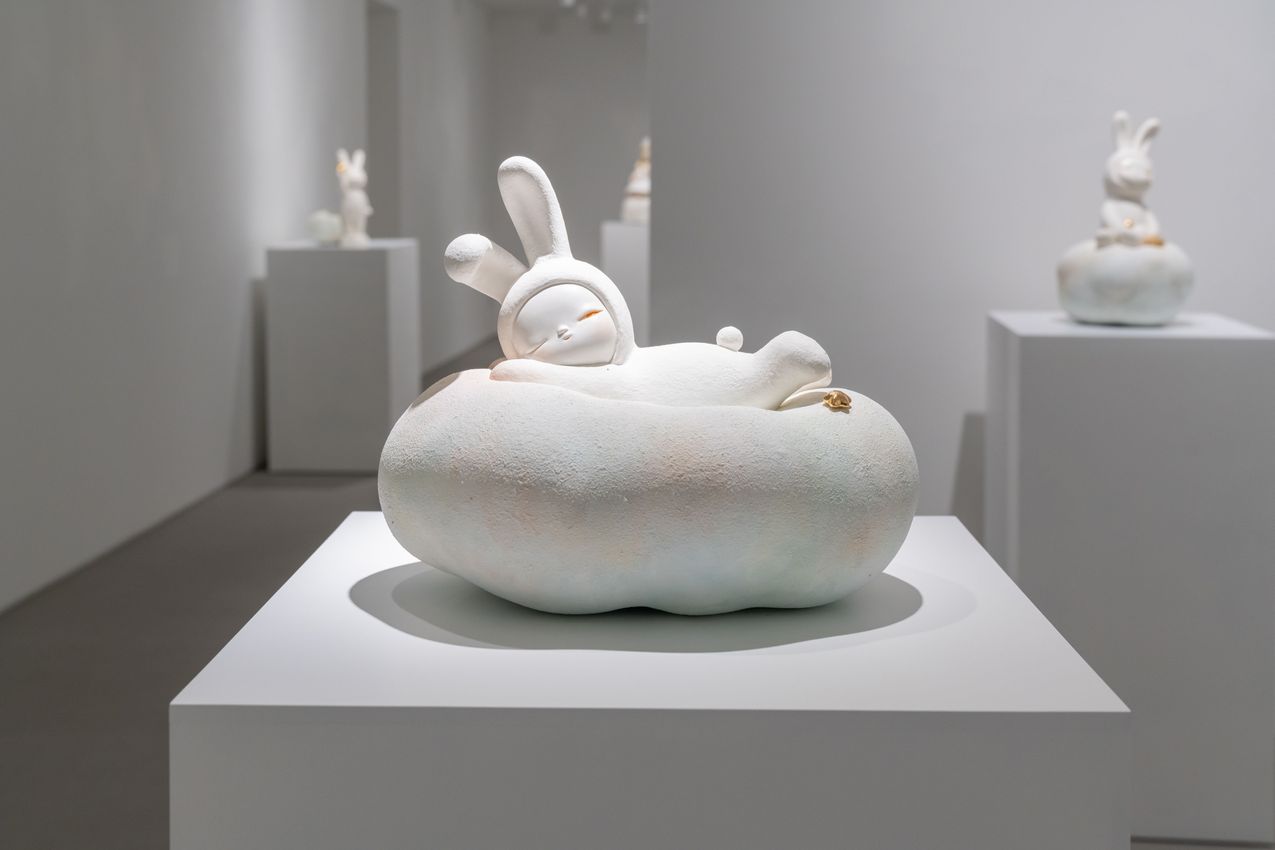
Miyako Terakura was born in 1994 in Gifu Prefecture, Japan. She graduated from Tokyo University of the Arts in 2017 and completed a master’s degree in sculpture-making in 2020. She combines hand moulding and slip casting techniques to create her works, and she uses the motif of child or baby-like figures for these works. They convey messages of ‘healing’ and ‘hope’ to viewers.
Using the traditional technique of hand moulding to create forms as a base, the artist can freely make entirely new shapes. Repeatedly scraping and polishing to make soft curves and delicate expressions, she strives to make figures that are not simply replications of each other, although she makes use of the technique of casting. To change the expression on each piece slightly, she gives eyes more brightness and, to add a rosy glow, adds a glaze of enamel to cheeks, noses, and lips, giving each piece individuality and a ‘heart.’ Terakura puts a particularly large amount of effort and emotion into painting the eyes on her sculptures, and it is as if this effort imbues each figure with a soul.
The appeal of ceramic art lies in its transformational and unpredictable qualities. From the inside of a hot kiln, what was once clay completely transforms into a different ceramic material, and thus an artist gives up their artwork to a different ‘power,’ and the result has a degree of uncertainty. This fact is what Terakura claims is part of the charm of ceramic art while at the same time a difficulty to overcome.
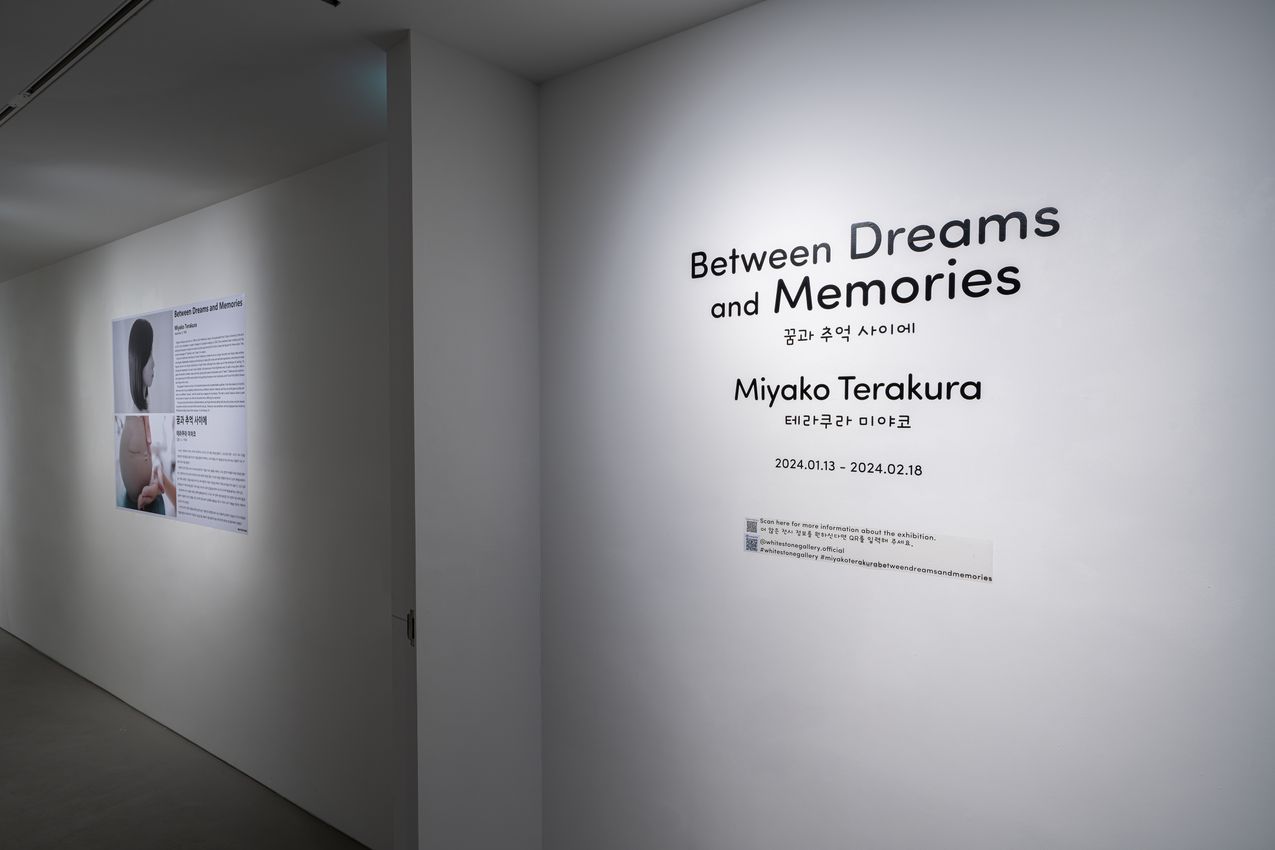
The pure roots and emotions, delicate textures, and high technical ability that the artist shows remind viewers of positive emotions and send forth warmth and joy. Terakura’s solo exhibition will be displayed next month at Whitestone Gallery Seoul from January 13 to February 18.


Miyako Terakura was born in the Japanese city of Gifu in 1994. She completed her master’s degree in craftsmanship (ceramic art) from Tokyo University of the Arts in 2020. She combines clay moulding techniques and manual work to create sculptures inspired by babies and young children. It is precise because babies and young children represent innocence, and as Le Petit Prince says, ‘all grown-ups were once children’. In this chaotic modern age, we can project our thoughts and have an object to place our wishes on. It is hoped that by producing pottery clay that can be transformed into a solid substance after being fired at high temperatures, it can be sublimated into a work of spiritual symbol for people to pray for luck and peace.


A respected voice in contemporary art discourse.
Focusing on ambitious storytelling and insightful art-world commentary. Ocula Magazine publishes in-depth interviews, critical essays and timely analysis on the artists, exhibitions and ideas driving the global art world.
Learn more about Ocula Magazine
Showcasing the best of the art world.
Ocula partners with galleries from around the world to highlight their artists, artworks and exhibitions. Gallery membership is by application and invitation, with each member vetted by an independent panel.
Learn more about Ocula Membership

Specialises in the sale of major artworks.
Led by a team with deep ties to the world’s leading auction houses, galleries and collectors. Ocula’s advisory team offers bespoke services to high-net-worth clients from around the world who are looking to acquire the best of contemporary and modern art.
Learn more about our team and services