Press Release

DROWSE MURMURS is Sterling Ruby’s most comprehensive exhibition with the gallery to date. Featuring four distinct bodies of new work—drawings, sculptures, paintings and ceramics—it provides a broad overview of the latest developments in his oeuvre. The presentation not only highlights the sweeping nature of his practice but also its material and thematic complexity. The contrasts that have shaped Ruby’s life—between his European roots and American upbringing, between rural Pennsylvania and urban Los Angeles, and between his father’s work for the military and his parents’ involvement with the hippie subculture—all serve as a catalyst for works in which the personal and political coincide. The title is borrowed from Allen Ginsberg’s poem Drowse Murmurs (1965) that echoes some of the most prescient themes of the exhibition, most notably the dialectic between war and peace, destruction and beauty.

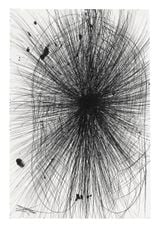
Central to the exhibition are Sterling Ruby’s monochrome drawings, which he is showing for the first time. Executed in ink or graphite, they constitute an entirely new body of work. Raw and volatile energy fills each sheet in the same way Ginsberg’s excoriating words hit the page. The Beat Poet coined the phrase ‘first thought, best thought’ to describe a type of truth-telling born from naked experience. Ruby’s stream-of-consciousness images, which also eschew artistic self-censorship, evoke explosions, cyclones, and nets. Yet fragile glimpses of nature can also be detected amidst their frantic lines, such as a spider’s web or flower.

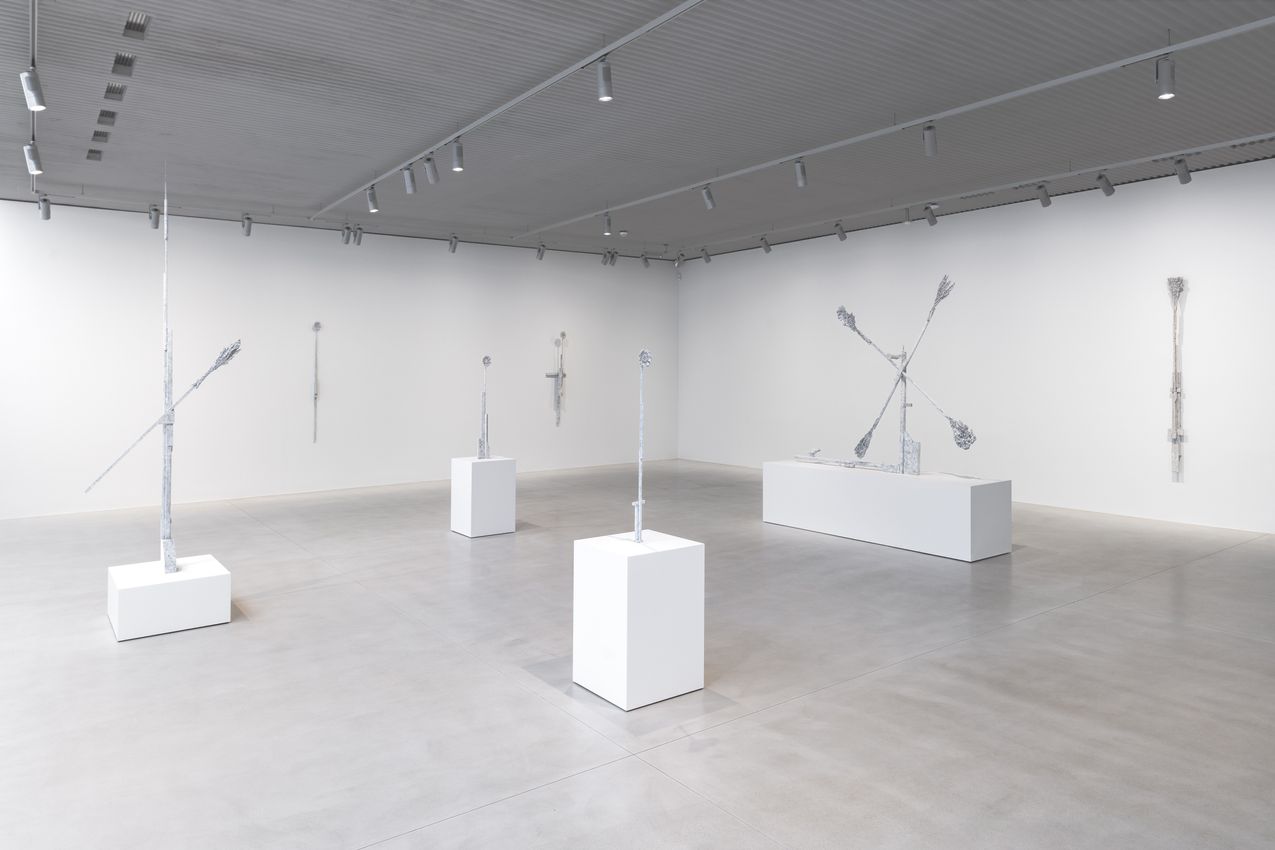
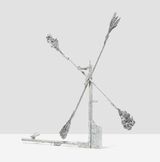
Flowers also appear in the artist’s cast aluminium sculptures. The FP in the title stands for ‘Flower Power’, a slogan used in the 1960s and 70s to denote passive resistance to the Vietnam War. Ginsberg invented the phrase in 1965, the year in which he wrote Drowse Murmurs, and it served to transform war protests into peaceful affirmative spectacles. An iconic photograph of a man placing a carnation inside the barrel of an M14 rifle, taken by Bernie Boston in 1971, captures the ethos. This image also featured on a poster in the Ruby household. Ruby’s sculptures are permeated with the same uneasy tension. Their slender forms—which reference his earlier wooden reliefs—resemble gun shafts and bayonets. They are typical examples of the artist’s regenerative practice and cast from assemblages of wood and other materials. Ruby salvages scrap from his creative projects and endlessly repurposes it, meaning that old works give rise to new. The flowers and foliage, all gathered from around the artist’s home and studio, were cast from life. Through these sculptures, Ruby also introduces a modern material into his work: aluminium. Synonymous with the space age, it is now a ubiquitous part of everyday life, thanks to its lightness and strength. But it also has extensive military applications. The metal played a significant role in the Vietnam War, for example, when it was used to manufacture people carriers and bombs. With their skeletal, almost spectral appearance, Ruby’s sculptures stand on the threshold of past and present. By establishing an analogy between militarism and activism, the works also raise questions about the conflicts that define our own epoch.

Other aluminium sculptures are shaped like windmills, a structure symbolic of progress and sustenance. Historic examples still punctuate European landscapes as reminders of a bygone age. Different versions arose in the US: the distinctive water-pump windmills that allowed farmers to conquer America’s ‘breadbasket’, the Great Plains. Both are turbines, although the latter have all but disappeared from the American landscape. On another level, Ruby’s sculptures also speak to rich visual and literary traditions. From the windmills of Hobbema and Vermeer to those of Malevich and Mondrian, or from Don Quixote to Alfred Daudet’s Letters from My Windmill, this is a machine whose power reverberates down the ages.

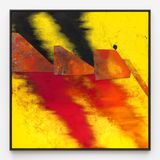
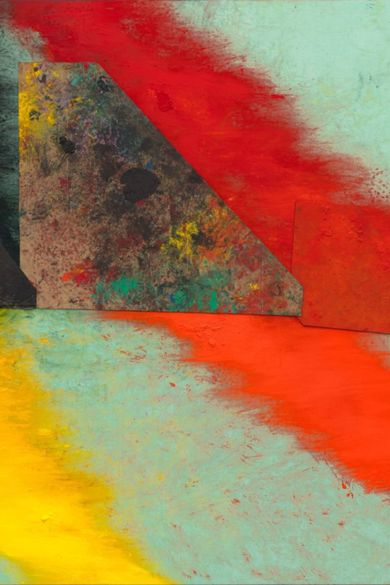
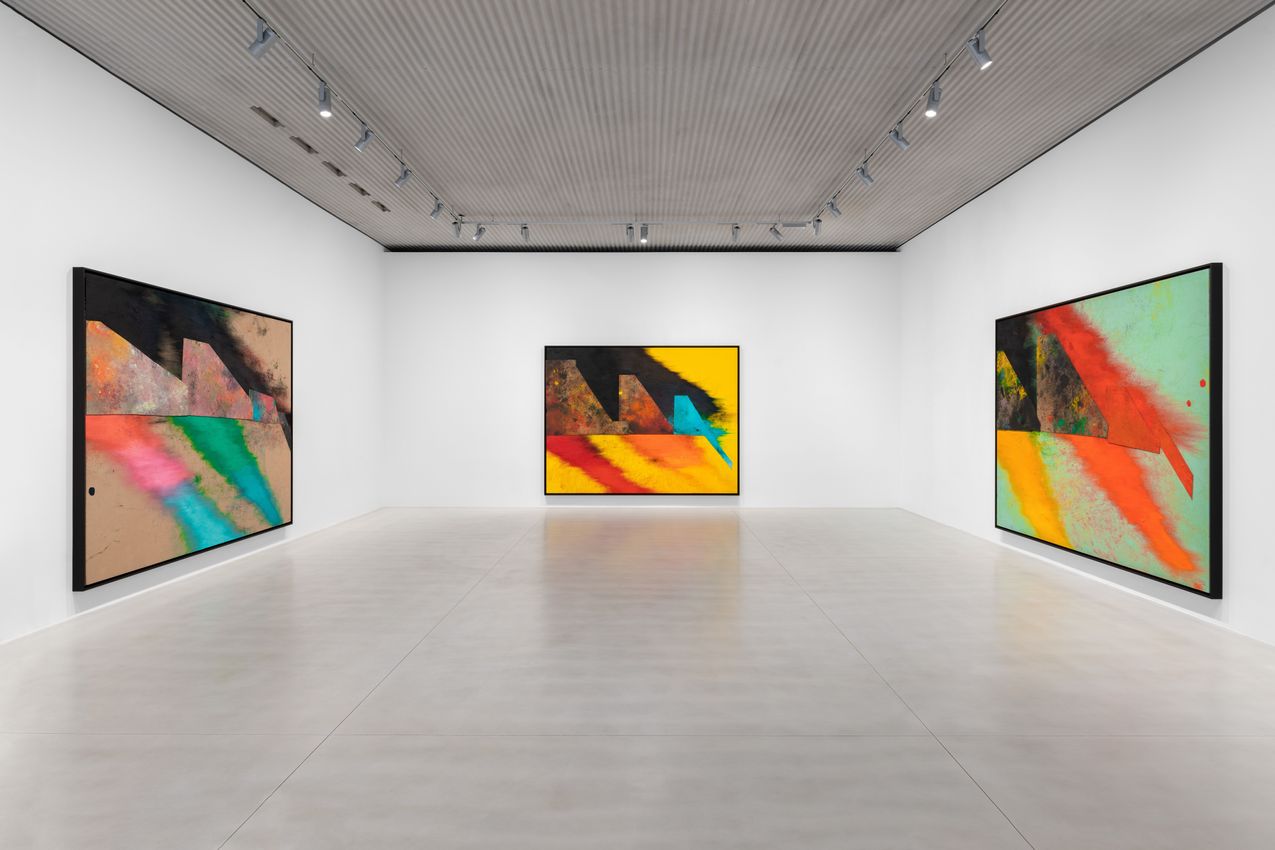
Ruby’s latest TURBINE paintings also include windmill-like forms. They relate to his earlier WIDW series, which included a motif that resembled a window. The shape has now acquired a rotational axis and been set in motion. The transformation is open-ended: are these blasted out windows, propellers or wind turbines? Devoid of references to time or place, the cruciform structures carve the pictorial plane into quadrants. Bold colours, some menacing and others more hopeful, create an indeterminate and volatile visual field. Clouds, wind, fire, smoke, smog, storms and dust all spring to mind. If these are indeed wind turbines, then they are ambiguous emblems. Whilst promising clean and sustainable energy, they also bear witness to the ecological ramifications of turbine-driven industrialisation and war. Other paintings in the series contain coruscating bands of colour, which Ruby achieves by pounding pure pigment into the canvas. It creates the impression of speed and velocity, or explosions and bombs. Here, the collaged motifs are geometric shapes that suggest airplane fuselages, border fortifications such as dragon’s teeth, or nodding donkey oil pumps.

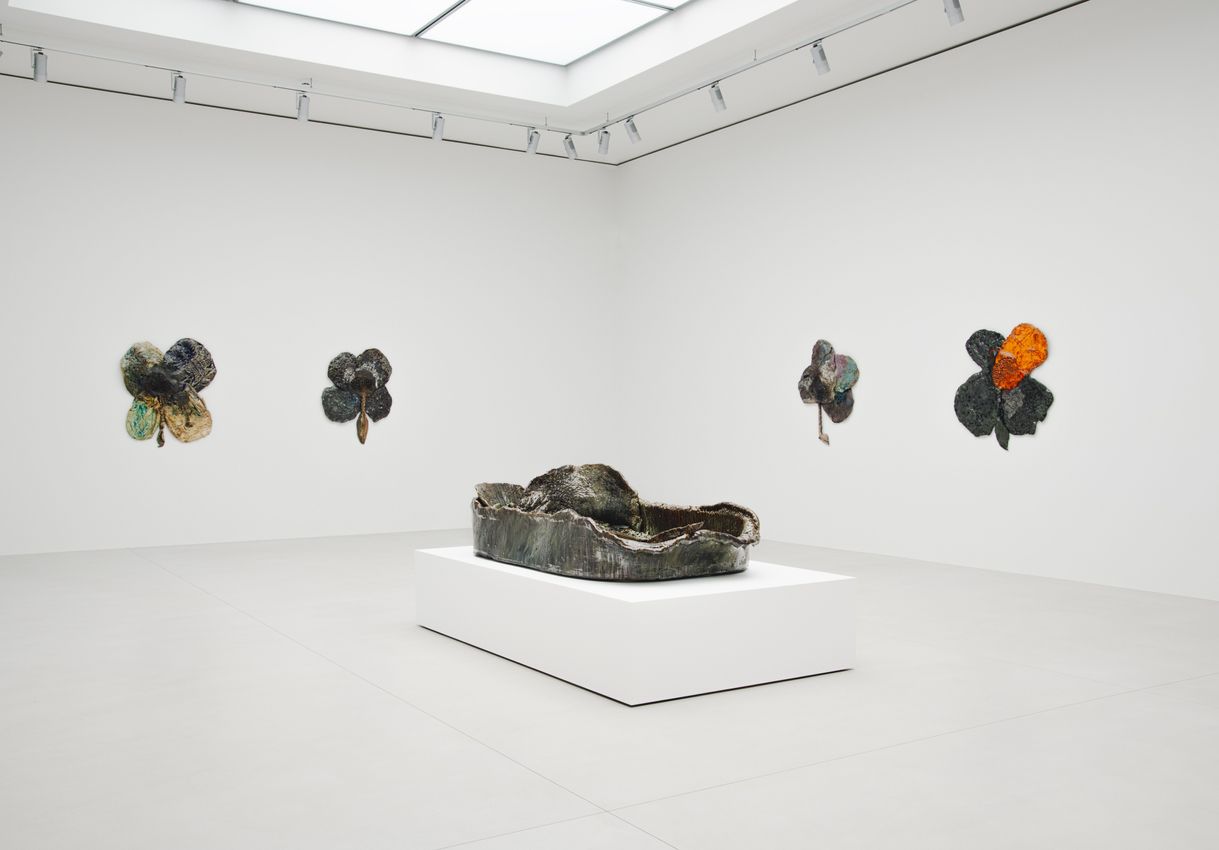
In his recent ceramics, Ruby continues his exploration of the four-petalled flower motif, or quatrefoil. This archetypal image has multiple spiritual and heraldic connotations, including an association with the four cardinal winds. Ruby has also made a visceral series of ‘flowers’ with lobe-like ‘petals’, and articulated stems that resemble vertebrae. With their gnarled and pockmarked surfaces, and their similarity to arrowheads, they resemble archaeological finds from a post-apocalyptic age. Luciano Fontana’s ceramic crucifixes, in which form and matter dissolve through the pressings and mouldings of the artist’s hands, were a reference point when making these works. Ruby has worked the clay just as intensely, pounding it in the open air so that it gathers traces, both positive and negative, of the world outside the studio. Like excavations or aerial views of ravaged landscapes, they follow on from the shattered topographies of the artist’s Basin Theology series.

DROWSE MURMURS features works that are not pictorial, figurative or didactic, but which still contain identifiable and thought-provoking elements that say something about the world right now. The formal and material contrasts, together with the slippages between past and present, build into a rich visual terrain that touches upon some of the most burning issues of the day. When Ginsberg published Drowse Murmurs in 1967, it was part of his Planet News collection: a penetrating and an unflinching reportage on his life and times. Ruby channels that same spirit, anno 2023.

Sterling Ruby was born in 1972, holds American and Dutch citizenship, and lives and works in Los Angeles. Collections include the Museum of Modern Art, New York; Solomon R. Guggenheim Museum, New York; Whitney Museum of American Art, New York; Museum of Contemporary Art Chicago; Museum of Contemporary Art, Los Angeles; Los Angeles County Museum of Art; San Francisco Museum of Modern Art; Tate, London; Centre Pompidou, Paris; and Moderna Museet, Stockholm. Ruby’s sculpture DOUBLE CANDLE (2018) is installed permanently at the Hirshhorn Museum and Sculpture Garden, Washington, DC. Exhibitions include DROPPA BLOCKA, Museum Dhondt- Dhaenens, Deurle, Belgium (2013); STOVES, Musée de la Chasse et de la Nature, Paris (2015); Belvedere, Vienna (2016); Ceramics, Des Moines Art Center, Iowa (2018, travelled to Museum of Arts and Design, New York); and Institute of Contemporary Art, Miami (2019–20, travelled to Institute of Contemporary Art, Boston). In 2014 he participated in the Gwangju Biennale, Taipei Triennale, and Whitney Biennial.

Read More

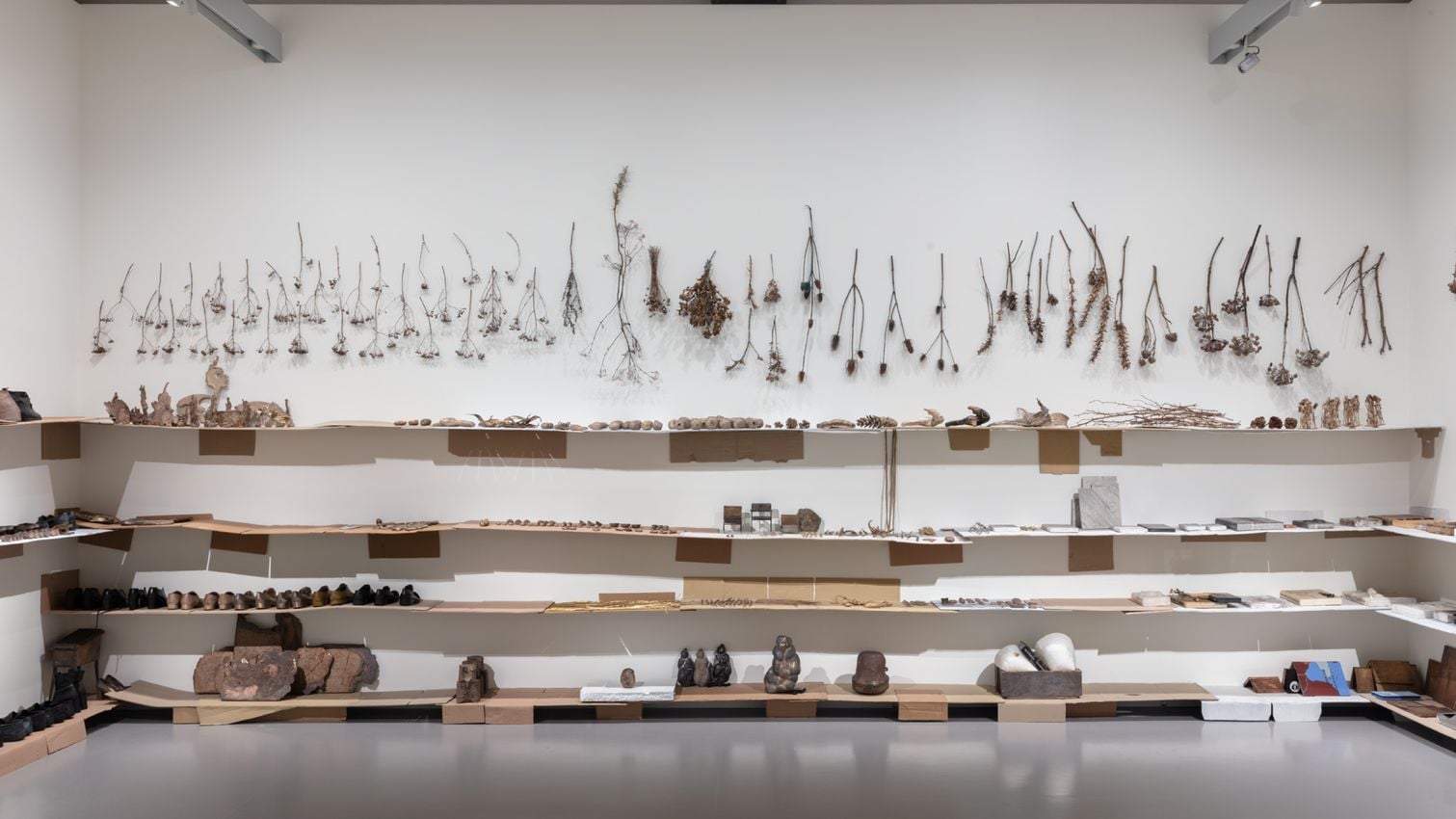
Installation Views

Sterling Ruby’s Tug of War at Xavier Hufkens Opinion Sterling Ruby’s Tug of War at Xavier Hufkens In a presentation of new work, the Los Angeles‑based artist introduces various paradoxes that have shaped his life. Read the story
About the Artist

Sterling Ruby uses a wide range of aesthetic strategies in his practice, from saturated, glossy, poured polyurethane sculptures, to drawings, collages, richly glazed ceramics, graffiti inspired spray paint paintings, and video. In opposition to the minimalist artistic tradition and influenced by the ubiquity of urban graffiti, the artist’s works often appear scratched, defaced, camouflaged, dirty or splattered.

View Artist Profile

Also Exhibiting at Xavier Hufkens

About the Gallery
Xavier Hufkens is one of Europe’s leading galleries for contemporary art. Located in Brussels, the gallery maintains a diverse exhibition programme with solo exhibitions of the gallery artists as well as group exhibitions and special projects. The gallery deals in a distinctive combination of painting, drawing, sculpture, photography, video and installation-based work.

The origins of the gallery date back to 1987, when Xavier Hufkens opened a gallery space in an un-refurbished warehouse in the neighbourhood of the South Station (Midi) in Brussels. During the early years, the focus of the gallery was upon mid-career and emerging artists and the gallery is known for having introduced some of the most influential contemporary artists to Brussels at a time when they were still relatively unknown. British sculptor Antony Gormley, who is still affiliated with the gallery, Felix Gonzalez-Torres and Rosemarie Trockel all showed in Belgium for the first time with Xavier Hufkens (Gormley in 1987; Gonzalez-Torres in 1991 and Trockel in 1993).

In 1992, the gallery moved to a 19th-century townhouse at 6 rue Saint-Georges, close to the Avenue Louise. Completely renovated by Belgian architects Paul Robbrecht, Hilde Daem and Marie-José Van Hee, the house quickly gained a reputation for being not just one of the most beautiful contemporary art spaces in the Belgian capital, but also one of the most interesting. The expanded exhibition programme coincided with the additional representation of a number of established artists from Belgium and abroad, including Richard Artschwager, Thierry De Cordier and Jan Vercruysse. In 1997, Hufkens expanded the gallery further by annexing the adjacent building and a number of new artists joined the gallery, including Louise Bourgeois, Roni Horn and Thomas Houseago.

A second space in the same street, at 107 rue Saint-Georges, opened in spring 2013. Located in the Galerie Rivoli, a mixed-use commercial development from the 1970s, the new gallery space was designed by Swiss architect Harry Gugger, who was previously in partnership with Herzog and De Meuron. Slegten & Toegemann, Brussels, managed the project. A third space opened in spring 2020, located at 44 Rue Van Eyck, designed by architect Bernard Dubois.

An eclectic but very clear vision underpins all of the gallery’s activities: ‘The definition of the gallery was established from the start. The common thread, then and now, is quality over and above everything else, which I find more intellectually challenging than a forced definition. From the early days I juxtaposed established artists such as Michelangelo Pistoletto with someone like Felix Gonzalez-Torres when he was totally unknown. Today I still mix my work: I have no problem showing Malcolm Morley … alongside Robert Ryman, or Willem de Kooning.’ [Xavier Hufkens in The Art Newspaper, Issue 220, January 2011, published online: 20 January 2011]

Xavier Hufkens represents some thirty artists from different generations. He was part of the six-member selection committee for Art Basel during seven years and also participates in up to five international Arts Fairs annually. The gallery has partnerships with the estates of Louise Bourgeois, Willem de Kooning, Robert Mapplethorpe and Alice Neel.
View Gallery Profile
Address
6 rue St-Georges
St-Jorisstraat
Brussels
Belgium
Opening Hours
Tuesday – Saturday
11am – 6pm
(1)
Brussels 6 rue St-Georges
Xavier Hufkens
6 rue St-Georges, St-Jorisstraat, Brussels, Belgium

Opening hours
Tuesday – Saturday
11am – 6pm
The art world in focus